
Latest
More than 90% of Iranian missiles intercepted, but a dangerous imbalance is emerging

EXCLUSIVE: As U.S., Israeli and allied forces continue to intercept the vast majority of Iranian missiles and drones, a new report and expert analysis reveal a growing concern behind the headline success: the cost and sustainability of the defense itself.
More than 90% of Iranian projectiles have been intercepted during the war, according to a report obtained by Fox News Digital from the Jewish Institute for National Security of America (JINSA), thanks to a layered regional air defense system built during years of coordination.
But beneath that success lies a widening imbalance that could shape the next phase of the conflict.
The report highlights a critical trend: Iran’s least expensive weapons are proving the most disruptive and are draining costly U.S. and Israeli interceptors.
IRAN’S REMAINING WEAPONS: HOW TEHRAN CAN STILL DISRUPT THE STRAIT OF HORMUZ
The current air defense architecture, integrating U.S., Israeli and Arab systems, has proven highly effective at stopping incoming threats. Early warning systems, shared radar coverage and pre-positioned assets have allowed multiple countries to work together to defeat Iranian missiles and drones.
During a press briefing on Wednesday, press secretary Karoline Leavitt said, “More than 9,000 enemy targets have been struck to date … Iran’s ballistic missile attacks and drone attacks are down by roughly 90%,” she said, adding that U.S. forces have also destroyed more than 140 Iranian naval vessels, including nearly 50 mine layers.
A surge of U.S. assets before the war, including Terminal High Altitude Area Defense (THAAD), batteries, Patriot systems, two carrier strike groups and roughly 200 fighter aircraft, helped absorb Iran’s opening salvos and maintain high interception rates, according to JINSA’s report.
But Ari Cicurel, associate director of foreign policy at JINSA and author of the report, said focusing only on interception percentages misses the bigger picture.
“Overall high missile and drone interception rates have been important but only tell part of the story,” Cicurel told Fox News Digital. “Iran came into this war with a deliberate plan to dismantle the architecture that makes those intercepts possible. It has struck energy infrastructure to upset markets and used cluster munitions to achieve higher hit rates.”
IRAN’S DRONE SWARMS CHALLENGE US AIR DEFENSES AS TROOPS IN MIDDLE EAST FACE RISING THREATS
Danny Citrinowicz, a Middle East and national security expert at Institute for National Security Studies and a nonresident fellow at the Atlantic Council, said that imbalance is at the heart of the problem.
“There needs to be a change in the equation,” he told Fox News Digital. “The Iranians are launching drones that cost around $30,000, and we are using missiles that cost millions of dollars to intercept them. That gap is a very problematic one.”
He added that the same dynamic applies to ballistic missiles.
“Building a missile in Iran may cost a few hundred thousand dollars, while the interceptor costs millions, especially when we talk about systems like Arrow,” he said. “It’s easier and quicker to produce missiles than it is to build interceptors. That’s not a secret.”
This cost imbalance is feeding into a broader concern: interceptor depletion.
The JINSA report warns that stockpiles across the region are already under strain. Some Gulf states have used a significant portion of their interceptor inventories, with estimates suggesting Bahrain may have expended up to 87% of its Patriot missiles, the United Arab Emirates and Kuwait have used roughly 75% and Qatar has used roughly 40%.
Israel is also facing mounting pressure. While officials have not publicly confirmed stockpile levels, the report notes signs of rationing, including decisions not to intercept certain cluster-munition threats in order to conserve more advanced interceptors.
Citrinowicz said that dynamics become more acute the longer the war continues.
“We are now several weeks into the war, and even if the salvos are limited, the issue of interceptors becomes more significant over time,” he said.
Iran has adapted its tactics accordingly, shifting from large barrages to smaller, more frequent attacks designed to maintain constant pressure while gradually draining defensive resources.
These persistent salvos, even if limited in size, force defenders to remain on high alert and continue expending interceptors, accelerating the depletion of already finite stockpiles.
The report underscores that drones pose a unique challenge compared to ballistic missiles.
Unlike missiles, which rely on large launchers and leave detectable signatures, drones can be launched from mobile platforms and can fly at low altitudes that make them harder for radar systems to detect.
For example, A Shahed-136 weighs roughly 200 kilograms and launches from an angled rail mounted on a pickup truck, after which the crew can quickly relocate. That simpler launch profile makes it easier for Iran to disperse, conceal and fire under pressure, the report stated.
Iran also has incorporated lessons from the war in Ukraine, deploying more advanced drones, including those guided by fiber-optic cables that are immune to electronic jamming, and faster variants powered by jet engines.
These innovations complicate interception timelines and increase the likelihood of successful strikes, even against otherwise effective defense systems.
INSIDE THE ISRAELI DRONE UNIT TAKING ON IRAN AND HEZBOLLAH
Despite these challenges, the report emphasizes that the defensive architecture has not failed.
“The architecture has held, but the trajectory is moving in the wrong direction,” Cicurel said. “Reversing it requires moving assets to where the pressure is greatest, hunting Iranian launchers and drones more aggressively, and convoying ships through the Gulf.”
Even with high interception rates, the broader impact of the attacks is being felt.
Iranian strikes on energy infrastructure and shipping have driven oil prices higher and disrupted traffic through the Strait of Hormuz, demonstrating that air defense alone cannot prevent economic and strategic consequences.
The emerging picture is not one of failing defenses, but of a system under growing strain.
As long as Iran can produce cheap drones and missiles faster than the U.S., Israel and their partners can produce interceptors, the balance may gradually shift.
“As long as the war continues,” Citrinowicz said, “the key question will be whether Iran can produce missiles faster than we can produce interceptors.”


UFC fighter Josh Hokit delivered the biggest victory of his professional career Sunday night during UFC Freedom 250 on the South Lawn of the White House, but it was his post-fight comments—not his performance inside the cage—that quickly became the most talked-about moment of the evening.
The historic event, held as part of celebrations marking America’s 250th anniversary and President Donald Trump’s 80th birthday, drew a massive audience and created one of the most unique settings in UFC history. With the White House serving as the backdrop, the event featured a series of high-profile bouts and attracted significant national attention.
Following his victory over heavyweight contender Derrick Lewis, Hokit took the microphone for a post-fight interview and delivered a remark that immediately generated reactions both inside the venue and across social media.
Addressing the crowd, Hokit shouted, “Michelle Obama is a man. Am I right, America?”
Josh Hokit just called Michelle Obama “a man” on the mic after winning at UFC Freedom 250.
HOKIT: “Hey, shout out to Trump for having the balls to put some sh*t like this on!”
“And if I’m going to say anything, there’s only person more incredible than the Incredible Hulk and… pic.twitter.com/ydNPIEEHww
— Overton (@overton_news) June 15, 2026
He then exited the ring as many spectators cheered and reacted to the unexpected statement.
The comment quickly sparked discussion online, where supporters and critics debated both the appropriateness of the remark and the long-running rumors it referenced.
Claims regarding former First Lady Michelle Obama have circulated on the internet for years. The allegations have repeatedly appeared on social media, podcasts, and alternative media platforms despite a lack of evidence supporting them.
Various public figures, including media personalities Alex Jones and Jason Whitlock, have discussed the claims over the years, helping keep the topic alive among some audiences. However, major fact-checking organizations and news outlets have consistently reported that there is no evidence supporting the allegation.
According to Snopes, versions of the theory have been circulating since at least 2008. Interest in the claim increased significantly in 2014 after a video surfaced showing late comedian Joan Rivers making comments about Michelle Obama and former President Barack Obama while speaking with a passerby in New York City.
Since then, the rumor has periodically resurfaced online, often gaining traction during election cycles or major political events. At one point, the claim even appeared on the social media page of a Republican state lawmaker in Kentucky, further fueling public discussion.
Several media organizations, including Snopes, PolitiFact, USA Today, Agence France-Presse, and Reuters, have published reports examining and disputing various aspects of the allegations. Despite those reports, the rumors have continued to circulate among some segments of the public.
Hokit’s comments ensured the topic would once again receive national attention. The timing was particularly notable given the size of the audience watching UFC Freedom 250 and the symbolic nature of the event itself.
For many viewers, the focus remained on Hokit’s upset victory and the celebration surrounding America’s 250th anniversary. Others, however, immediately shifted their attention to the fighter’s controversial remarks, which quickly spread across social media platforms and political commentary programs.
Whether viewed as political commentary, a provocative joke, or a genuine statement of belief, Hokit’s post-fight comments became one of the most widely discussed moments of the night, ensuring that an event already destined to make headlines would generate even more attention in the days that followed.
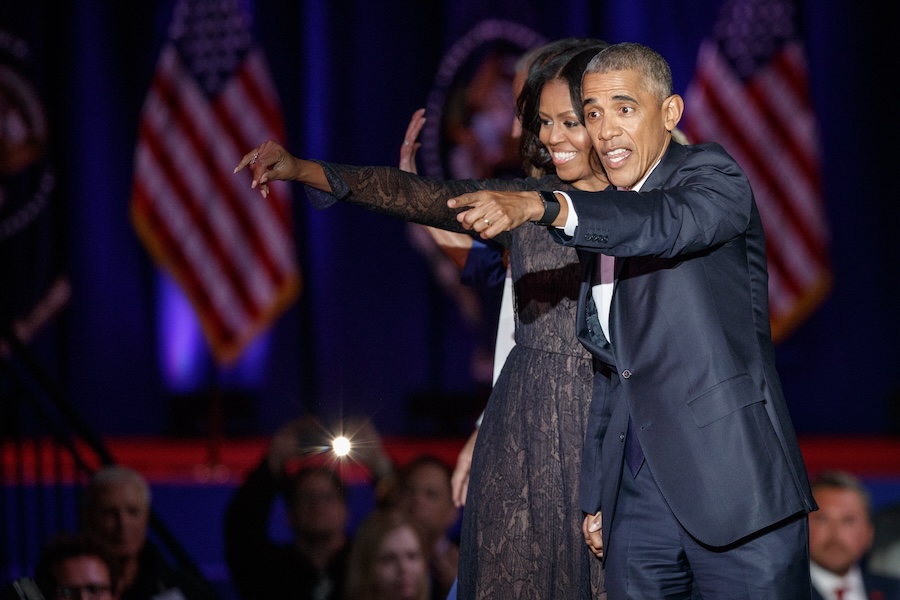
New questions are being raised about the financial future of the Obama Presidential Center as critics warn that taxpayers could ultimately be left footing the bill if the project encounters long-term financial trouble.
The concerns stem from growing scrutiny over a promised $470 million endowment that was intended to shield Chicago residents and Illinois taxpayers from future liabilities associated with the massive presidential center. According to reports, the Obama Foundation has yet to fully fund the reserve despite earlier commitments made as part of its agreement with the city of Chicago.
At the same time, a Fox News Digital investigation has uncovered complaints from multiple contractors and subcontractors who claim they have suffered significant financial losses while working on the project. Some businesses reportedly say they remain locked in payment disputes involving hundreds of thousands—and in some cases millions—of dollars.
The allegations have fueled fresh concerns about the project’s financial management as the center moves closer to opening.
Under the agreement negotiated with Chicago officials, the Obama Foundation was granted a 99-year lease on approximately 19.3 acres of publicly owned land within Jackson Park. In exchange, the foundation agreed to establish a substantial endowment intended to cover future operating and maintenance expenses, ensuring taxpayers would not be responsible if the project encountered financial challenges down the road.
The lease itself reportedly required only a one-time payment of $10, making the promised endowment one of the key safeguards designed to protect the public.
However, questions continue to linger about whether that commitment has been fulfilled.
According to previously reported financial disclosures, the Obama Foundation contributed just $1 million to the reserve fund in 2021. Publicly available filings suggest the amount has remained largely unchanged since then, despite the foundation’s earlier pledge to establish a fund worth hundreds of millions of dollars.
The issue has become even more significant as construction costs have dramatically exceeded initial projections.
When first announced, the Obama Presidential Center was expected to cost roughly $330 million. That estimate later ballooned to at least $850 million, according to figures released in 2021. Despite the sharp increase, no updated final project cost has been publicly disclosed, leaving many observers questioning how much the project will ultimately cost and whether adequate financial protections are in place.
Illinois Republican Party Chairman Robert Grogan says the lack of progress on the endowment raises serious concerns.
“One of their core promises was they were supposed to create an endowment as basically an insurance policy so the taxpayers wouldn’t get stuck with the bill,” Illinois GOP Chair Robert Grogan told Fox News Digital outside the center last week.
“They promised hundreds of millions of dollars for it. It’s still sitting at the $1 million mark [where it stood] when they opened it up. So I don’t believe that they’ve kept that promise,” he added.
Critics argue that the growing disputes involving contractors only add to concerns about the project’s overall financial stability. Several businesses reportedly claim they remain engaged in lengthy payment battles, creating additional questions about how the center’s finances are being managed.
The Obama Foundation has pushed back against suggestions that taxpayers face any immediate risk. Foundation officials have repeatedly emphasized that the presidential center is being funded through private donations and that public funds are not being used to finance construction or operations.
Nevertheless, critics remain skeptical.
Grogan argued that if the center eventually struggles financially, taxpayers could still find themselves responsible for maintaining the property due to its location on public land.
“The fact that they have created this probably unsustainable edifice to an ego and then, eventually, if it goes under, who’s going to be caught with the bill time and time again?” he asked.
“It’s the taxpayers of the city, citizens of Chicago, and the state of Illinois.”
Legal experts who have followed the project for years say the endowment was specifically designed to address those concerns.
Richard Epstein, a New York University law professor who has challenged aspects of the project in court, argued that the reserve fund serves as a critical financial backstop.
“The whole point of an endowment is to fund future expenses,” Epstein told Fox News Digital.
According to Epstein, if future fundraising efforts fail to generate sufficient revenue and the endowment remains underfunded, the property could eventually fall into disrepair.
“If the endowment hasn’t been filled, the building [could] fall into neglect, it then becomes a safety risk, and it turns out that nobody’s going to pay the bill,” Epstein said.
“The city, therefore, is going to have to assume additional obligations to make sure that thing is kept in place.”
As the Obama Presidential Center nears completion, the debate over its finances is unlikely to fade. Supporters continue to defend the project as a privately funded landmark and economic investment for Chicago’s South Side. Critics, however, say unanswered questions about the endowment, rising construction costs, and contractor disputes deserve greater public scrutiny before taxpayers are asked to trust that they will never be left holding the bill.
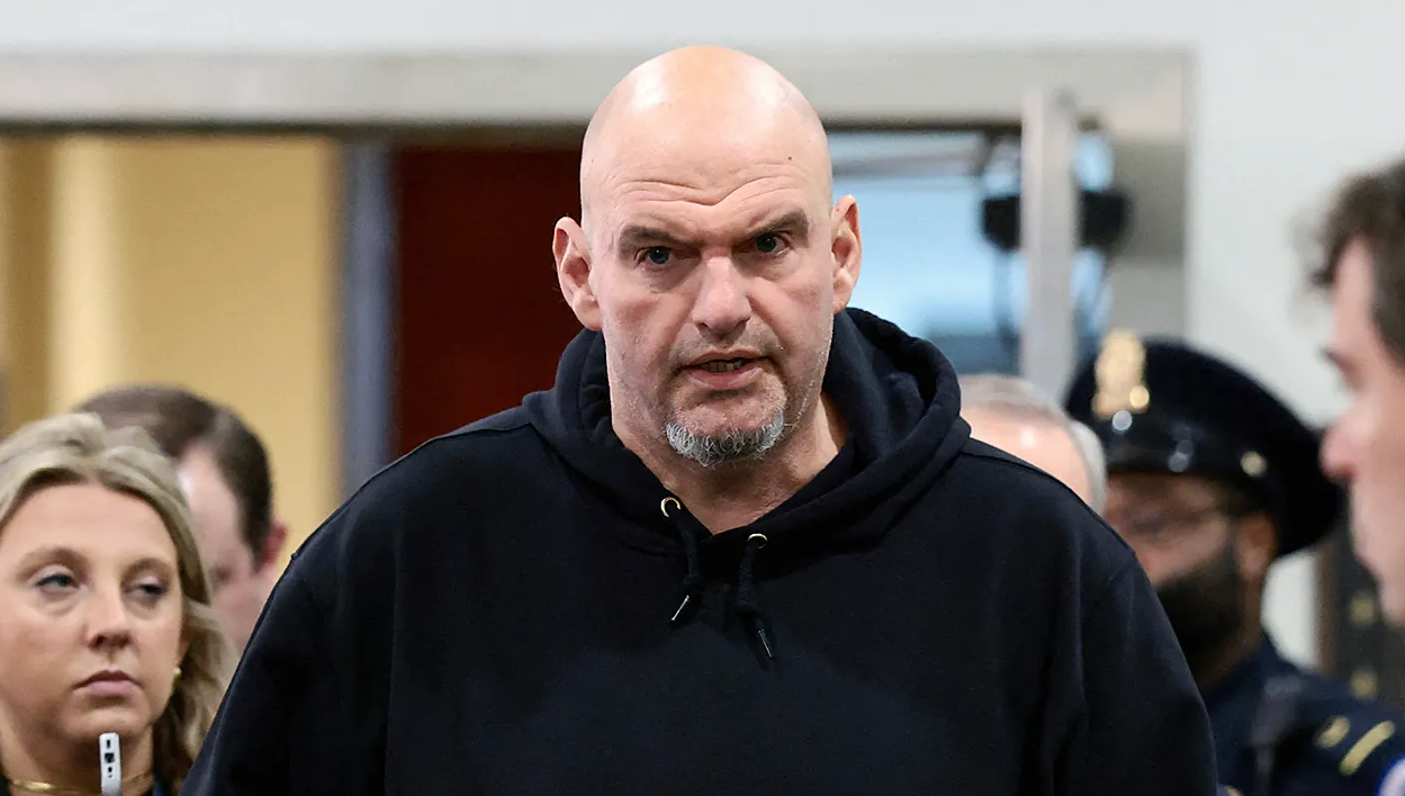
Sen. John Fetterman is once again finding himself at odds with his own party, highlighting the growing divide between establishment Democrats and lawmakers willing to challenge the far-left direction of the modern Democratic Party.
Since arriving in Washington in 2023, the Pennsylvania Democrat has repeatedly broken ranks with party leaders on several major issues, earning criticism from progressive activists while drawing praise from Republicans who see him as one of the few Democrats willing to speak candidly about the party’s growing ideological problems.
Those tensions have only intensified ahead of the 2026 midterm elections, as Democrats fight to regain control of the Senate and Republicans look to protect their majority.
In recent months, several prominent Republicans have openly discussed the possibility of Fetterman switching parties, citing his increasingly independent positions on issues ranging from immigration and government spending to support for Israel.
Pennsylvania Republican Party Chairman Greg Rothman suggested last month that Republicans could potentially support Fetterman’s reelection if he were willing to join the GOP. President Donald Trump has also publicly expressed admiration for Fetterman’s willingness to challenge Democratic orthodoxy.
During an appearance with Fox News host Sean Hannity, Trump even joked that Hannity should encourage Fetterman to become a Republican in exchange for presidential support.
The relationship between Trump and Fetterman has become one of the more surprising political developments in Washington. Shortly after Trump’s decisive victory in the 2024 presidential election, Fetterman and his wife visited the president at Mar-a-Lago, sparking speculation that the Pennsylvania senator was continuing to distance himself from his party’s activist wing.
Despite those rumors, Fetterman has repeatedly insisted he has no intention of leaving the Democratic Party.
“Being an independent voice that works with the other side to deliver for Pennsylvanians might put me at odds with the party that I have stayed committed to and have no plans to leave — but I will continue to put the commonwealth and the country first,” Fetterman wrote in a recent opinion piece.
“Plus, I’d be a terrible Republican who still votes overwhelmingly with Democrats,” he added.
Still, Fetterman acknowledged that his party has increasingly abandoned positions that were once mainstream Democratic priorities, specifically citing support for Israel and efforts to keep the federal government open and fully funded.
While he continues to vote with Democrats on many issues, Fetterman has emerged as one of the most vocal critics of the party’s progressive wing. He has frequently challenged left-wing activists over immigration enforcement, national security issues, support for Israel, and efforts to shut down the government during budget disputes.
His frustration with fellow Democrats was on full display during a recent appearance on Fox News’ “The Ingraham Angle,” where he blasted Maine Democratic Senate nominee Graham Platner and questioned why Democrats appear willing to overlook behavior they would normally condemn.
“If he was a Republican, how would Democrats describe him?” Fetterman asked.
“And the descriptions would be accurate for all of those things. They would declare that this guy is a degenerate.”
Fetterman was referring to several controversies surrounding Platner, including allegations involving his personal conduct and a tattoo that Platner later covered after learning of its association with Nazi symbolism.
“You know, he cheats on his wife, and he has Nazi tattoos,” Fetterman said.
“We’re the party of pearl-clutching, and now we’ve embraced it because, well, we don’t have a choice,” Fetterman added.
Platner recently secured the Democratic nomination for Senate in Maine and will challenge longtime Republican Sen. Susan Collins in what is expected to be one of the most closely watched races of the 2026 election cycle.
The campaign has already been dogged by controversy. In addition to scrutiny surrounding the tattoo, Platner has faced criticism over old online comments, reports of sexually explicit text messages exchanged with multiple women while he was married, and allegations regarding his personal behavior.
Fetterman suggested Democrats are applying a clear double standard by defending Platner simply because he carries the party’s banner.
“You can excuse all this because he’s got a D after his name,” Fetterman said. “But he’s not even a Democrat.”
While Fetterman stopped short of endorsing Collins, his comments once again underscored the growing frustration many Americans have with partisan hypocrisy in Washington. At a time when Democrats are hoping to retake the Senate, one of their own senators is publicly calling out what he views as blatant double standards within the party.
The remarks are likely to further fuel speculation about Fetterman’s political future, even as he continues to insist that he remains a Democrat.
For Republicans and Trump supporters, however, Fetterman’s willingness to challenge his own party serves as further evidence that even some Democrats are becoming increasingly uncomfortable with the direction the party has taken in recent years.
With Republicans currently holding a 53-47 Senate majority and Democrats needing four seats to regain control, races like Maine’s could play a pivotal role in determining the balance of power in Washington. But if Fetterman’s comments are any indication, Democrats may have to overcome divisions within their own ranks before they can focus on defeating Republicans in November.


Michelle Obama Brutally Humiliated During White House UFC Event

$470 Million Obama Scandal Just Blown Wide Open

Dem Senator Fetterman Drops Stunning News On Switching Parties

Vance Leaves Meeting, Looks Straight Into Camera, Announces Stunning Arrest

Adam Schiff Facing 30 Years In Prison After Bank Records Leak

Supreme Curt Sides With Trump — He Can Remove The All
-
 Latest2 months ago
Vance Leaves Meeting, Looks Straight Into Camera, Announces Stunning Arrest
-
 News2 months ago
Adam Schiff Facing 30 Years In Prison After Bank Records Leak
-
 Latest2 months ago
Supreme Curt Sides With Trump — He Can Remove The All
-
 News2 months ago
All Hell Breaks Loose On Fox When Jesse Watters Asks Fetterman One Question
-
 News2 months ago
NBC Stops LIVE Broadcast — Breaks Big Trump News
-
 Latest2 months ago
Trump Pulls Off Miracle Of A Lifetime — It’s Permanently Open
-

 News2 months ago
Swalwell Facing Jail Time After Sickening New Video Leaks
-
 Latest1 month ago
Barack Obama Just Made Insane Announcement About His Marriage