Latest
Trump rejects American Bishop Robert Barron’s call to apologize to Pope for ‘disrespectful’ comments

President Donald Trump rejected American Bishop Robert Barron’s call to apologize to the Pope on Monday for comments he made on Truth Social, arguing that it was the Pope who is “wrong.”
Trump sparked a row with the Roman Catholic Church when he called Pope Leo out for his stance on the Iran war. Barron, while expressing gratitude for Trump’s defense of religious liberty, responded by politely suggesting that the president should apologize to the Pope for these comments.
Trump was asked by a reporter whether he planned on making such an apology.
“No I don’t, because Pope Leo said things that were wrong. he was very much against what I’m doing with regard to Iran, and you cannot have a nuclear Iran,” Trump replied. “Pope Leo would not be happy with the end result. You have hundreds of millions of people dead. And it’s not going to happen. So again, I think he’s very weak on crime and other things.”
POPE WARNS ESCALATING IRAN CONFLICT COULD TIP MIDDLE EAST INTO ‘IRREPARABLE ABYSS’
Trump went on to recall that he had praised the Pope’s brother, saying he likes him “better than I like the Pope.”
“You have to have law and order in our country. And that’s what we have now,” Trump said. “We have the lowest crime numbers we’ve had in a long time, despite the fact that many criminals were allowed into our country. But we’ve gotten a lot of them out. We’ve done a great job on crime. So we have the lowest murder rate in 125 years, since 1900, the lowest murder rate.”
“So we believe strongly in law and order,” Trump concluded. “And he seemed to have a problem with that. So there’s nothing to apologize for. He’s wrong. And the other thing is he didn’t like what we’re doing with respect to Iran. But Iran is a — wants to be a nuclear nation. So they can exterminate the world. Not gonna happen.”
“Pope Leo is WEAK on Crime, and terrible for Foreign Policy,” Trump had written previously on Truth Social. “He talks about ‘fear’ of the Trump Administration, but doesn’t mention the FEAR that the Catholic Church, and all other Christian Organizations, had during COVID when they were arresting priests, ministers, and everybody else, for holding Church Services, even when going outside, and being ten and even twenty feet apart.”
Trump went on to make numerous other controversial statements in the post, such as declaring that he prefers Louis Prevost, Pope Leo XIV‘s brother, more than the Pope himself, saying “”He gets it, and Leo doesn’t! I don’t want a Pope who thinks it’s OK for Iran to have a Nuclear Weapon.”
VATICAN DECLINES TO JOIN TRUMP’S GAZA ‘BOARD OF PEACE,’ CALLS FOR UN LEADERSHIP
“The statements made by President Trump on Truth Social regarding the Pope were entirely inappropriate and disrespectful,” Barron responded in an X post. “They don’t contribute at all to a constructive conversation. It is the Pope’s prerogative to articulate Catholic doctrine and the principles that govern the moral life. In regard to the concrete application of those principles, people of good will can and do disagree.”
“I would warmly recommend that serious Catholics within the Trump administration — Secretary Rubio, Vice President Vance, Ambassador Brian Burch, and others — might meet with Vatican officials so that a real dialogue can take place,” he continued. “This is far preferable to the statements on social media.”
“I am very grateful for the many ways that the Trump administration has reached out to Catholics and other people of faith,” Barron added. “It has been a high honor to serve on the Religious Liberty Commission. No President in my lifetime has shown a greater dedication to defending our first liberty. All that said, I think the President owes the Pope an apology.”
CLICK HERE FOR MORE COVERAGE OF MEDIA AND CULTURE
Shortly after feuding with the Pope over the weekend, Trump upset many Christians by posting what many have called a “blasphemous” AI art image of what many said appeared to be a portrayal of himself as a Jesus-like figure healing the sick. Some speculated that this was an attempt to troll the Pope, having been posted amid the administration’s feud with Roman Catholic leadership.
While Trump has denied he was trying to portray himself as the messiah, arguing of his image where he is in white and red robes with what appears to be holy light emanating from his hands that he was trying to portray “me as a doctor.” He has since deleted the post.
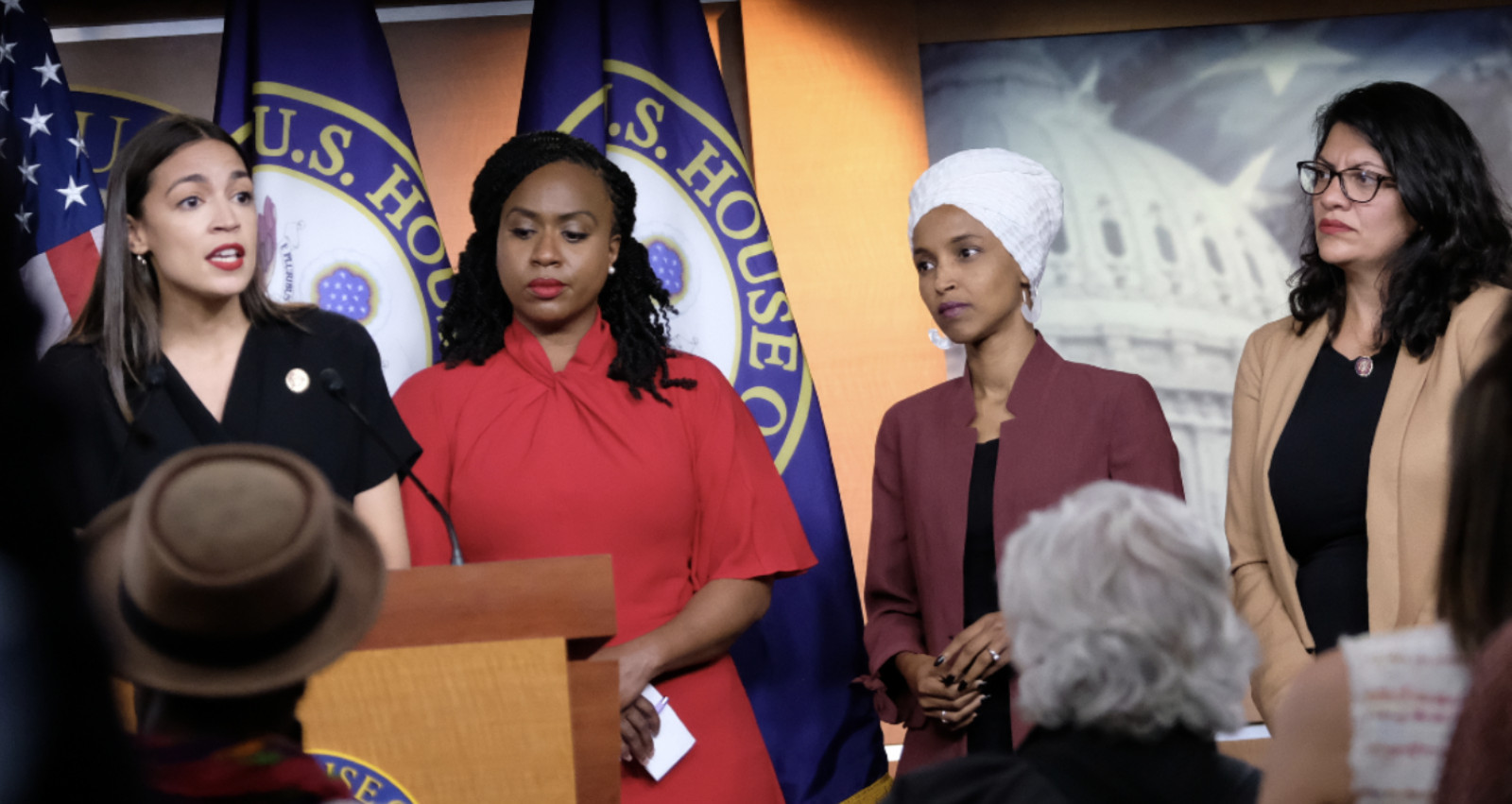
A closely watched Democratic primary battle in Arizona ended decisively, with incumbent Rep. Greg Stanton defeating progressive challenger Kai Newkirk and securing his party’s nomination for another term in Congress.
The race in Arizona’s 4th Congressional District attracted national attention because it highlighted a widening debate inside the Democratic Party over Israel, U.S. military assistance and the influence of pro-Israel political groups.
Newkirk, a progressive organizer and democratic socialist, made those issues a major part of his campaign against Stanton.
It wasn’t enough to unseat the incumbent.
Final results showed Stanton receiving 35,551 votes, or 62.3%, compared with Newkirk’s 21,544 votes, or 37.7%.
Stanton, a former Phoenix mayor who was first elected to Congress in 2018, emerged from the primary with the Democratic nomination and will face Republican Zuhdi Jasser in the November general election.
Following the primary, Stanton portrayed the result as a broader decision about the direction Democratic voters want their party to take.
“This campaign presented voters with a real choice about how Democrats should lead,” Stanton said in a statement posted to his campaign page.
“Tonight,” Stanton continued, voters “chose proven leadership that fights back, delivers real results, and brings our party together.”
The primary drew particular attention because of the stark disagreement between the candidates over Israel.
Newkirk campaigned on ending U.S. military assistance to Israel and imposing an arms embargo.
He has accused Israel of committing genocide in Gaza and argued that Democratic lawmakers should take a dramatically different approach to the U.S.-Israel relationship.
Stanton took a different position.
The incumbent has supported continued U.S. assistance to Israel and recently voted against an amendment offered by Republican Rep. Thomas Massie of Kentucky that would have cut military aid.
Newkirk seized on that vote during the campaign.
“Greg Stanton has taken over $300K from AIPAC,” Newkirk wrote.
Newkirk argued that Stanton’s support from the American Israel Public Affairs Committee raised questions about the influence of outside political spending on his positions.
Stanton rejected that framing and defended his record.
The contest unfolded against a larger national debate inside the Democratic Party, where attitudes toward Israel have become increasingly divided and several progressive congressional candidates have made opposition to Israeli military policy a central campaign issue.
Newkirk attempted to turn that shift into an electoral challenge against an established Democratic incumbent.
His campaign also received support from prominent figures on the party’s progressive flank.
Sen. Bernie Sanders endorsed Newkirk, saying the challenger represented the kind of candidate needed to confront corporate influence in Washington.
“We need strong progressive voices in Congress who are prepared to stand up to powerful corporate interests and fight for working people,” Sanders said in announcing his endorsement.
Newkirk also received support from progressive organizations and activists who viewed the Arizona contest as an opportunity to push the Democratic caucus further left on foreign policy and economic issues.
But Stanton entered the race with substantial advantages.
As an incumbent congressman and former mayor of Phoenix, he had significantly greater financial resources, an established political organization and years of name recognition in the district.
Federal campaign-finance filings showed Stanton had raised more than $2.1 million by early July, compared with roughly $151,000 raised by Newkirk.
The money gap underscored the challenge facing Newkirk as he attempted to defeat a four-term incumbent.
Still, the campaign became a visible test of whether progressive dissatisfaction over Israel could translate into enough Democratic primary votes to topple an established member of Congress.
In Arizona’s 4th District, it did not.
Stanton survived the challenge and advanced to the general election.
Newkirk’s campaign nevertheless demonstrated that Israel policy is likely to remain a source of significant disagreement inside the Democratic coalition.
The two candidates offered Democratic voters sharply different approaches.
Newkirk called for cutting military assistance to Israel and sought to challenge the influence of AIPAC and other established political organizations.
Stanton defended his record and argued for continuity in his approach to both domestic and foreign policy.
When the votes were counted, Stanton retained the nomination.
The primary may be over, but the argument that drove much of it — over Israel, U.S. military assistance and the ideological direction of the Democratic Party — remains unresolved nationally.
The White House found itself in an escalating legal confrontation Thursday after journalists from CNN, MS NOW and Politico said they were still being denied entry just hours after a federal judge ordered the administration to restore their press credentials.
U.S. District Judge Timothy Kelly issued a temporary restraining order directing White House officials to “immediately return, reinstate, and restore” the hard passes that had been revoked from journalists working for the three organizations.
The order is scheduled to remain in effect for 14 days while the larger constitutional battle over the administration’s decision moves forward.
But Thursday morning, the dispute took another dramatic turn.
Reporters from all three organizations said they were again prevented from entering the White House grounds despite Kelly’s order.
That prompted attorneys for CNN, MS NOW and Politico to return to court and request an emergency hearing, alleging that the administration had failed to comply with the judge’s directive.
The controversy began after President Donald Trump announced that CNN, MS NOW and Politico would be barred from the White House, accusing the organizations of spreading “fake news.”
The outlets responded by suing the administration.
Their lawsuit alleges that the White House retaliated against the organizations because of their reporting and revoked their access without constitutionally adequate due process.
The administration has defended its authority to control access to the White House and has argued that the outlets’ reporting raised national-security concerns.
Kelly, however, found that the news organizations had demonstrated a likelihood of succeeding on at least their Fifth Amendment due-process claim.
The judge also expressed skepticism about the government’s national-security justification, finding that the existing record did not adequately support the argument that restoring the journalists’ credentials would pose a security threat.
That made what happened Thursday morning particularly significant.
CNN reported that members of its staff attempted to enter the White House grounds around 6 a.m. and were denied access.
MS NOW White House correspondent Laura Barrón-López and a producer were also turned away and reportedly had their passes confiscated, although another producer for the network was permitted to enter.
A Politico reporter was similarly denied access and had his credential taken.
The inconsistent treatment left unanswered questions about whether the continued denials represented deliberate resistance to the court order or a delay in implementing it.
The outlets nevertheless moved quickly.
Their attorneys asked Kelly to intervene again, arguing that the administration was already violating the temporary restraining order.
Kelly then ordered the government to respond to the allegations.
The confrontation marks the latest chapter in a rapidly escalating battle between the Trump administration and several major news organizations.
Trump has repeatedly attacked media outlets he considers hostile or inaccurate, frequently describing their coverage as “fake news.”
But CNN, MS NOW and Politico argue that whatever objections the president has to their reporting, the government cannot retaliate against news organizations by selectively stripping them of access because officials dislike their coverage.
That argument is now being tested in federal court.
The White House maintains that access to the presidential complex is a privilege rather than an unrestricted constitutional right and has cited national-security concerns in defending its decision.
The outlets counter that once the government establishes a credentialing system for journalists, it cannot administer that system in a way that violates constitutional protections.
For now, Kelly’s ruling is temporary.
It does not represent a final judgment on every constitutional question raised by the lawsuit.
But it does require the administration to restore the affected credentials while the litigation continues.
The broader media industry has also entered the fight.
Fox News, ABC, CBS and NBC were among the television organizations that joined a protest over the restrictions, disrupting the traditional television pool system used to cover presidential events.
The White House Correspondents’ Association condemned the original decision as well.
“The president said it plainly in the Oval Office, describing his own planned action as a ‘ban on the free press,” Jacqui Heinrich, WHCA president, said in a statement.
She continued:
“The Constitution protects the freedom of the press from government interference. That protection does not depend on whether the president likes a news organization’s coverage, agrees with its reporting, or approves of the questions its journalists ask.”
Trump has maintained that the administration has the authority to determine who receives access to the White House and has continued criticizing the three organizations.
The courts are now being asked to determine where that authority ends and constitutional protections begin.
But the immediate dispute became much simpler Thursday morning.
A federal judge ordered the credentials restored.
Journalists from the affected outlets showed up at the White House.
Several said they were still turned away.
And their attorneys went straight back to court.
What began as a fight over three news organizations’ access to the White House has now become a separate question over compliance with a federal court order — with Judge Kelly demanding answers as the legal showdown intensifies.
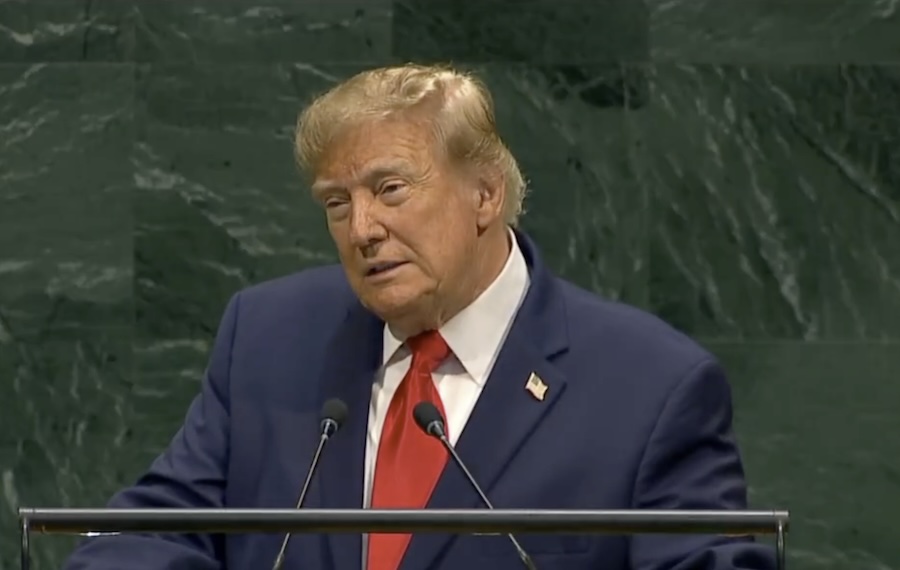
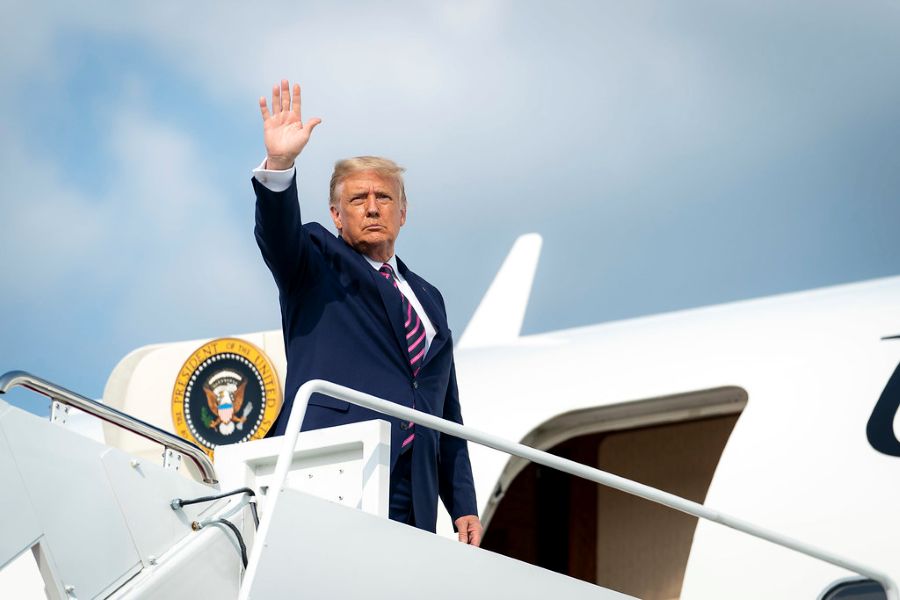
President Donald Trump put Iran on notice before the United Nations General Assembly Tuesday, presenting Tehran with two dramatically different paths: reach an agreement with the United States or risk another devastating round of American military action.
Speaking before world leaders in New York, Trump said he is approaching a consequential decision over the future of the conflict with Iran.
“I have a big decision to make,” Trump said. “Will a deal be made with Iran that lets them rebuild and create a far greater country?”
The alternative Trump raised was unmistakably severe.
The president said he could instead use American military power to “annihilate the Islamic Republic,” delivering one of his most direct warnings to Tehran since the United States began its military campaign earlier this year.
Trump’s message was not simply a threat of additional sanctions or diplomatic isolation. He made clear that renewed military action remains on the table if negotiations fail.
At the same time, Trump maintained that diplomacy could still produce an agreement.
He predicted that a deal with Iran could potentially emerge after the November 3 midterm elections, while insisting that domestic political considerations are not dictating his decisions.
The remarks came after months of direct military confrontation and escalating economic pressure against Tehran.
Trump has repeatedly maintained that Iran will never be permitted to obtain a nuclear weapon, a position he again emphasized before the United Nations.
The White House characterized Trump’s broader message as one of confronting threats before they are allowed to grow, with the president telling world leaders that the United States would use its power when necessary to defend its interests.
But Trump also made clear that military force is not the only pressure Washington intends to apply.
He called on governments around the world to further isolate Tehran economically in an effort to force Iranian leaders back to the negotiating table.
The Trump administration has already imposed sweeping sanctions intended to restrict Iran’s access to the international financial system and make it more difficult for Tehran to rebuild military capabilities damaged during the conflict.
Iran, meanwhile, has indicated that it remains open to negotiations while demanding that Washington ease its military and economic pressure.
That leaves enormous differences still separating the two governments.
Among the biggest points of contention are Iran’s nuclear program, its ballistic missile arsenal and control of shipping through the Strait of Hormuz.
Trump has repeatedly said Iran cannot be permitted to acquire a nuclear weapon.
His administration has also identified Tehran’s missile production, naval capabilities and support for armed groups throughout the Middle East as major security concerns.
The Strait of Hormuz remains another critical flashpoint.
The narrow waterway is one of the world’s most important energy corridors, connecting major Persian Gulf oil producers with global markets.
Disruptions there have pushed energy prices higher and intensified international concern that the conflict could spill further into the global economy.
Trump urged Iran to fully reopen the strait while pointing to American naval operations intended to protect commercial shipping.
He argued that a lasting agreement could ease pressure on oil markets while allowing Iran to begin rebuilding its battered economy.
Oil markets have remained volatile as traders attempt to determine whether diplomacy can prevent another escalation between Washington and Tehran.
But Trump’s address made one point particularly clear: he does not view the current situation as an indefinite stalemate.
The president said he is approaching a decision.
His comments also expanded on remarks made during a recent interview in which he said he would soon determine whether massive attacks against Iran should resume.
Trump has maintained that communication between Washington and Tehran continues and that Iranian officials remain interested in reaching an agreement.
He did not announce a deadline Tuesday for Tehran to accept a deal.
That leaves the timing uncertain — but not the stakes.
Iran can pursue negotiations with Washington and potentially gain an opportunity to rebuild its economy, or it can reject the terms the United States is demanding and risk another major military confrontation.
Trump’s message at the United Nations was built around that stark choice.
Diplomacy remains available.
So does American military power.
And Trump told world leaders that he is preparing to decide which path comes next.

BREAKING OVERNIGHT: Socialist Dem Suffers Humiliating Defeat

Trump Defies Federal Judge’s Order, Sparks New Showdown

Trump Issues Chilling Ultimatum

Popular News Anchor Arrested By ICE

Obama Calls It QUITS After Wild Video Goes Viral

Ilhan Omar Removal Vote Is In — Decided By Razor Thin Margin

‘The Five’ Gets Emotional As Greg Gutfeld Announces Tragic News

Removed From the Country — Ilhan Omar Hit With Horrid News

‘EFFECTIVE IMMEDIATELY’ — Barack Obama Gets Devastating News

Schumer Loses! Court Sides With Trump In Historic Move

Everyday Americans Being Treated As Criminals — Including You, Right Now

HUGE: 9/11 Widow Goes Rogue, Makes Damning Call Out During Ground Zero Ceremony
-
 Economy5 months ago
Vance Leaves Meeting, Looks Straight Into Camera, Announces Stunning Arrest
-
 Economy5 months ago
Adam Schiff Facing 30 Years In Prison After Bank Records Leak
-
 Economy5 months ago
Supreme Curt Sides With Trump — He Can Remove The All
-
 Culture3 months ago
Michelle Obama Drops Nasty Bomb About ‘Useless’ Daughter
-
 Economy6 months ago
All Hell Breaks Loose On Fox When Jesse Watters Asks Fetterman One Question
-
 Economy4 months ago
Prayers Pour In After Fox Host Dies: ‘Senseless Murder’
-

 Latest3 months ago
Fox News Stuns With Announcement About 5 Fired Hosts
-
 Border & Security2 months ago
Top Trump Admin And Wife Found Dead — Chilling Update Just Released