
Latest
Anti-ICE demonstrators detained after protesting arrest of illegal immigrant facing assault, drug charges

Nearly 10 people were detained in New York over the weekend as anti-ICE demonstrators were protesting against the arrest of an illegal immigrant accused of assault and drug possession, according to officials.
The protests erupted in Brooklyn’s Bushwick neighborhood after ICE arrested Chidozie Wilson Okeke, an illegal immigrant from Nigeria with previous arrests for assault and drug possession, according to the Department of Homeland Security.
Okeke entered the U.S. on a tourist visa in 2023 and overstayed his visa that required him to leave the country by Feb. 26, 2024, DHS said.
During an immigration enforcement operation on Saturday, Okeke refused to comply with ICE agents’ commands to exit his car and attempted to hit them with the vehicle, according to the agency. He is then accused of being “physically combative” and attempting to punch and elbow ICE agents.
“Our officers followed their training and used the minimum amount of force necessary to make the arrest,” DHS said in a statement.
After his arrest, Okeke was taken to Wyckoff Heights Medical Center for a medical evaluation. Okeke “remained non-compliant during the medical evaluation, throwing himself to the floor and screaming,” DHS said, adding that he was eventually cleared by medical staff.
Video shows ICE agents dragging Okeke out of the hospital following his medical evaluation.
During the medical evaluation, a crowd of anti-ICE protesters gathered outside the hospital. DHS says the group damaged several ICE vehicles and assaulted agents, causing minor injuries.
HAITIAN MAN CHARGED IN NC TRIPLE MURDER FLEW INTO US UNDER BIDEN MIGRANT FLIGHTS PROGRAM: ICE
The NYPD said officers responded to reports of disorderly protesters outside the hospital between Stanhope and Stockholm streets on Saturday at around 10:25 p.m. Officers reported observing several people acting disorderly, obstructing vehicle traffic and blocking emergency entrances and exits to the hospital.
Officers issued repeated verbal warnings for the protesters to disperse and return to the sidewalks, according to the department.
Nine people were then taken into custody, including eight who were arrested and charged with resisting arrest, obstructing governmental administration, reckless endangerment and criminal mischief, the NYPD said. One person was issued a summons and released.
The NYPD said it does not participate in civil immigration enforcement and had no prior awareness of the ICE operation.
New York City Mayor Zohran Mamdani told a Gothamist reporter after the incident on Saturday that ICE raids are “cruel and inhumane” and “they do nothing to serve in the interest of public safety, and I’ve said that even directly to the president.”

A Democratic congressional nominee who defeated a sitting member of Congress earlier this year was arrested Thursday during a major protest against Israeli Prime Minister Benjamin Netanyahu outside the United Nations in New York City.
Darializa Avila Chevalier, the Democratic nominee for New York’s heavily Democratic 13th Congressional District, was taken into custody as demonstrators gathered near U.N. headquarters ahead of Netanyahu’s address to the General Assembly.
Avila Chevalier defeated five-term Rep. Adriano Espaillat in June’s Democratic primary after campaigning as a critic of U.S. support for Israel and receiving the backing of New York City Mayor Zohran Mamdani.
Now, just months after that upset victory, she was among the politicians, activists and entertainers arrested during Thursday’s demonstration.
The protest, organized by Jewish Voice for Peace, drew roughly 250 people to First Avenue and East 39th Street, just blocks from U.N. headquarters.
Demonstrators sat in the roadway while protesting Netanyahu’s appearance and U.S. support for Israel’s military operations in Gaza.
Police arrested protesters who blocked the road and refused orders to move.
Video of the moment congressional candidate Darializa Avila Chevalier, New York City Council Member Chi Ossé and comedian Caleb Hearon were arrested by NYPD while protesting Israeli Prime Minister Benjamin Netanyahu's UNGA speech today. pic.twitter.com/Oe5OEb5t2A
— Shannon Ryan (@_shanryan) September 24, 2026
Avila Chevalier defended her decision to participate and sharply condemned Netanyahu.
“As the Democratic Nominee for New York’s 13th Congressional District, I refuse to allow a war criminal to roam the streets of our city unchallenged,” she said.
“I refuse to play host to a man who has overseen the slaughter or injury of more than 64,000 children in Gaza with American taxpayer dollars.”
The description of Netanyahu as a “war criminal” reflects Avila Chevalier’s position. Netanyahu and the Israeli government have rejected accusations that Israel’s military campaign constitutes genocide and have maintained that Israel is targeting Hamas while seeking to minimize civilian casualties.
The International Criminal Court has issued an arrest warrant for Netanyahu alleging war crimes and crimes against humanity. Netanyahu and Israel reject the allegations and dispute the court’s jurisdiction.
Avila Chevalier’s arrest comes after a Democratic primary campaign in which U.S. policy toward Israel emerged as a significant dividing line between her and Espaillat.
She has advocated ending U.S. military support for Israel and has aligned herself with the Democratic Party’s democratic-socialist and pro-Palestinian wing.
Espaillat’s support for Israel became one of the issues Avila Chevalier used to challenge the longtime incumbent.
She ultimately defeated him in the June Democratic primary, securing the nomination in a district covering parts of northern Manhattan and the Bronx.
Thursday’s demonstration showed that she has no intention of softening her position after winning the nomination.
As police led her away, Avila Chevalier told reporters:
“We’re standing against war. Stop the genocide. U.S. dollars for health care, for housing, for education. Not for bombing children.”
She was not the only New York political figure taken into custody.
New York City Council Member Chi Ossé was also arrested during the demonstration.
Ossé similarly condemned U.S. financial support for Israel.
“I’m sick and tired of my taxpayer dollars going towards an active genocide,” Ossé said.
Council Member Alexa Avilés was also among those arrested.
The protest attracted a number of prominent activists and entertainers as well.
Actor Hannah Einbinder and whistleblower Chelsea Manning were among those taken into custody, while other reports identified actor Susan Sarandon among those arrested.
The NYPD said more than 100 people were arrested during the protests surrounding Netanyahu’s appearance.
The demonstration unfolded as Netanyahu addressed the United Nations amid intense international criticism of Israel’s military campaign in Gaza.
Netanyahu used his appearance to defend Israel’s conduct and push back against allegations surrounding the war.
The Israeli government maintains that its military campaign is directed against Hamas and points to the Oct. 7, 2023, Hamas attack on Israel, in which about 1,200 people were killed and 251 were taken hostage, as the catalyst for the war.
Palestinian health officials say more than 73,000 people have been killed in Gaza during the ensuing Israeli military campaign. Those figures do not distinguish in their topline count between civilians and combatants.
The political fight over the war has increasingly spilled into Democratic electoral politics in the United States.
Avila Chevalier’s primary victory over Espaillat was one of several 2026 races in which candidates critical of U.S. support for Israel defeated established Democratic politicians.
Her victory also positioned her to potentially become another democratic-socialist voice in Congress if elected in November.
Thursday’s arrest underscored how central the issue remains to her political identity.
Avila Chevalier did not merely issue a statement condemning Netanyahu’s appearance.
She joined demonstrators in the street outside the United Nations and was taken into police custody alongside other protesters.
For a congressional nominee only months away from the general election, it was an unusually visible act of protest.
And it offered voters a clear look at the kind of politics Avila Chevalier intends to bring to Washington if she wins the seat in November.
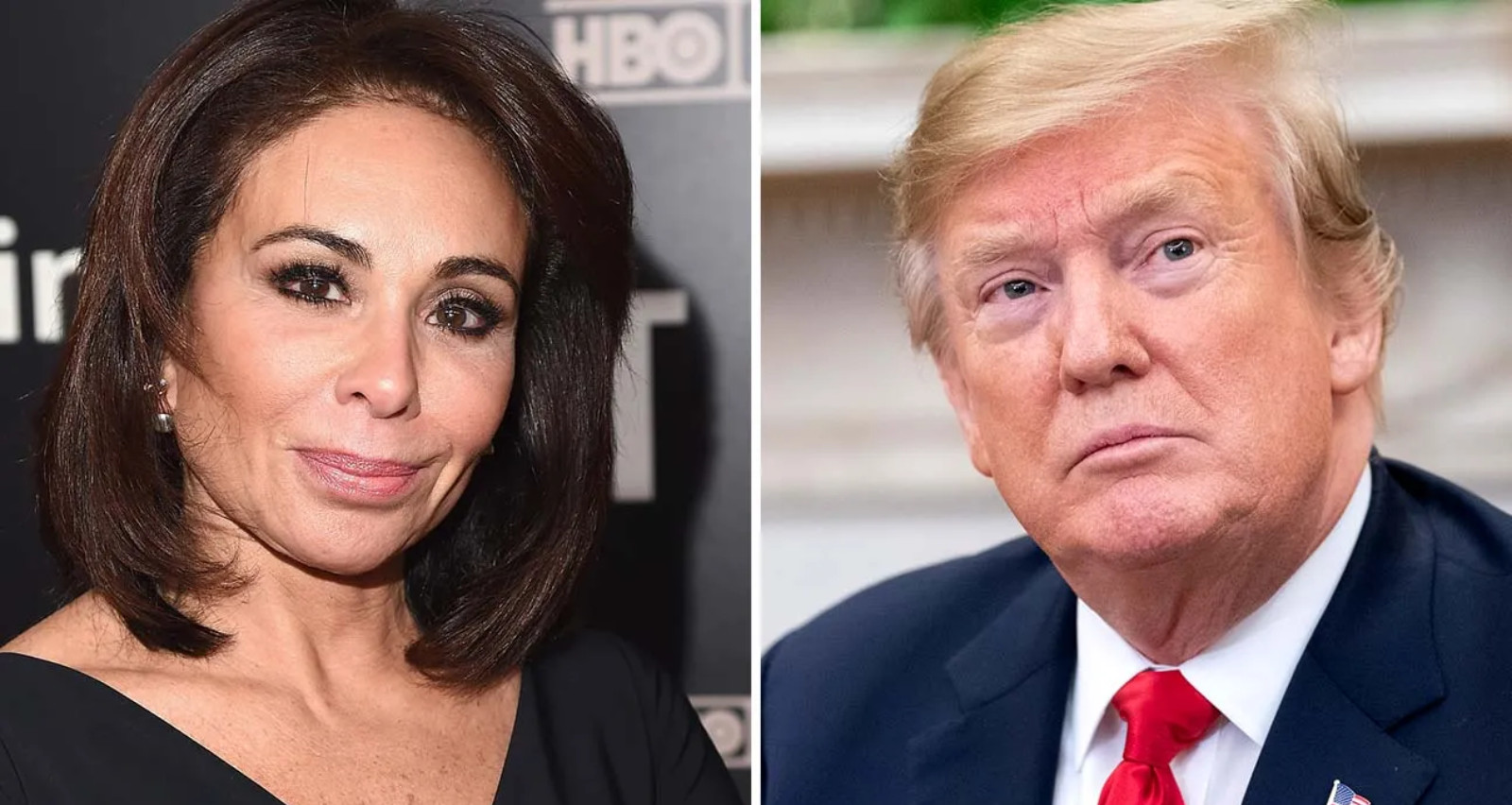
U.S. Attorney Jeanine Pirro is launching a new federal division in Washington dedicated to pursuing fraud against the government and recovering taxpayer money.
The U.S. Attorney’s Office for the District of Columbia announced Wednesday the creation of its new Fraud and Asset Recovery Division, a specialized unit that will bring prosecutors, investigators, auditors and support personnel together to pursue civil fraud cases.
The new division will put a particular emphasis on the False Claims Act, one of the federal government’s most powerful tools for recovering money lost through fraud.
Pirro tied the sweeping reorganization directly to the Trump administration’s campaign against fraud, waste and abuse throughout the federal government.
“President Trump has prioritized the elimination of fraud, waste, and abuse involving federal agencies and programs,” Pirro said.
“This new Fraud and Asset Recovery Division will reinforce and consolidate our resources to hold fraudsters accountable and recover taxpayer dollars.”
Pirro then delivered an unmistakable warning to anyone attempting to defraud the government.
“We are sending a clear message: those who cheat the federal government will face decisive, coordinated action,” Pirro said.
The new division represents a significant restructuring inside one of the country’s most consequential U.S. Attorney’s Offices.
Pirro’s office is expanding and realigning resources from its existing Affirmative Civil Enforcement unit, which had operated within the Civil Division.
Officials said the change is intended to separate proactive civil enforcement work from much of the Civil Division’s massive defensive caseload.
That workload, according to the Justice Department, had limited the personnel and resources available to launch affirmative investigations and pursue fraud litigation.
The new structure is designed to change that.
Rather than forcing fraud investigations to compete with defensive civil litigation for resources, prosecutors and investigators will now have a dedicated division focused on finding fraud, pursuing cases and recovering federal money.
Assistant U.S. attorneys will work alongside investigators, auditors and support staff inside the new operation.
Dan Schiffer will serve as chief of the Fraud and Asset Recovery Division, while Sean M. Tepe will serve as deputy chief.
One of their primary weapons will be the False Claims Act.
Originally enacted in 1863 amid widespread fraud involving Civil War government contractors, the law allows the federal government to pursue individuals and companies that knowingly submit false claims for government money.
Those found liable can face triple the government’s damages along with additional civil penalties.
The law also contains powerful whistleblower provisions allowing private individuals to bring lawsuits on behalf of the federal government and potentially receive a portion of money successfully recovered.
And the amount of money involved is enormous.
False Claims Act settlements and judgments exceeded $6.8 billion during fiscal year 2025 — the highest single-year total in the law’s history.
Whistleblowers filed a record 1,297 qui tam lawsuits during the same year, while the federal government opened 401 new investigations.
Since Congress substantially strengthened the False Claims Act in 1986, settlements and judgments have surpassed $85 billion.
Pirro’s office already has experience pursuing major civil fraud cases.
According to the Justice Department, previous cases handled by the Washington office have involved allegations against government contractors accused of improperly billing commercial and international costs to federal contracts, software manufacturers accused of false disclosures and intentional overbilling, medical-device companies accused of misbranding and off-label marketing, and pharmaceutical manufacturers accused of violating federal medication regulations.
The new division will go beyond False Claims Act cases.
Its responsibilities will also include civil collections for federal agencies, enforcement of agency and inspector-general subpoenas and civil asset forfeiture actions.
The U.S. Attorney’s Office Financial Litigation Unit is also being folded into the Fraud and Asset Recovery Division.
That unit is responsible for collecting money already owed to the federal government, including criminal fines, special assessments, restitution, civil judgments and settlements.
It also handles certain debts owed to federal agencies, including student-loan debts owed to the Department of Education.
The result is a division with responsibilities on both sides of the government’s financial enforcement system: investigating suspected fraud and pursuing money already determined to be owed.
The restructuring comes as the Justice Department intensifies federal fraud enforcement nationwide.
But Pirro’s Fraud and Asset Recovery Division is specifically housed inside the U.S. Attorney’s Office for the District of Columbia, placing a dedicated civil fraud operation in the nation’s capital and at the center of the federal government.
The announcement itself does not accuse any newly identified company, contractor, nonprofit or individual of wrongdoing, and the Justice Department has not announced the division’s initial investigative targets.
Officials also have not publicly specified the division’s total staffing level or additional budget.
What the Justice Department has made clear is its objective.
Pirro is consolidating prosecutors, investigators, auditors and financial-enforcement personnel into a single operation charged with aggressively pursuing fraud against federal programs and recovering money for taxpayers.
The numbers illustrate the potential stakes.
More than $6.8 billion was recovered through False Claims Act settlements and judgments in fiscal 2025 alone.
More than $85 billion has been recovered since the law was strengthened in 1986.
And now Pirro’s Washington office is establishing an entire division dedicated to expanding that work.
For individuals and companies doing business with the federal government, Pirro’s message was direct:
Those who cheat the government should expect a coordinated response.
The SAVE America Act secured 50 votes in the U.S. Senate during a dramatic late-night showdown, giving supporters of the Republican-backed election legislation a significant boost even as a procedural hurdle prevented the measure from advancing.
The 50-49 vote came during the Senate’s marathon June 4-5 “vote-a-rama,” when Sen. Mike Lee of Utah brought forward the voting provisions of the House-passed legislation.
At the center of the proposal are two major changes to federal election law: requiring documentary proof of U.S. citizenship to register to vote in federal elections and requiring eligible photo identification when casting a ballot.
The proposal also includes provisions directing states to verify voter rolls and remove noncitizens who are found to be improperly registered.
Lee’s amendment drew 50 votes in support and 49 against.
But that was not enough.
Because the amendment faced a budget point of order under the Senate’s reconciliation rules, Lee needed 60 votes to waive the objection.
His motion fell 10 votes short.
The result meant the proposal could not be added to the broader reconciliation package despite attracting 50 Senate votes.
The late-night tally nevertheless marked an improvement for supporters following an earlier attempt by Sen. Lindsey Graham of South Carolina.
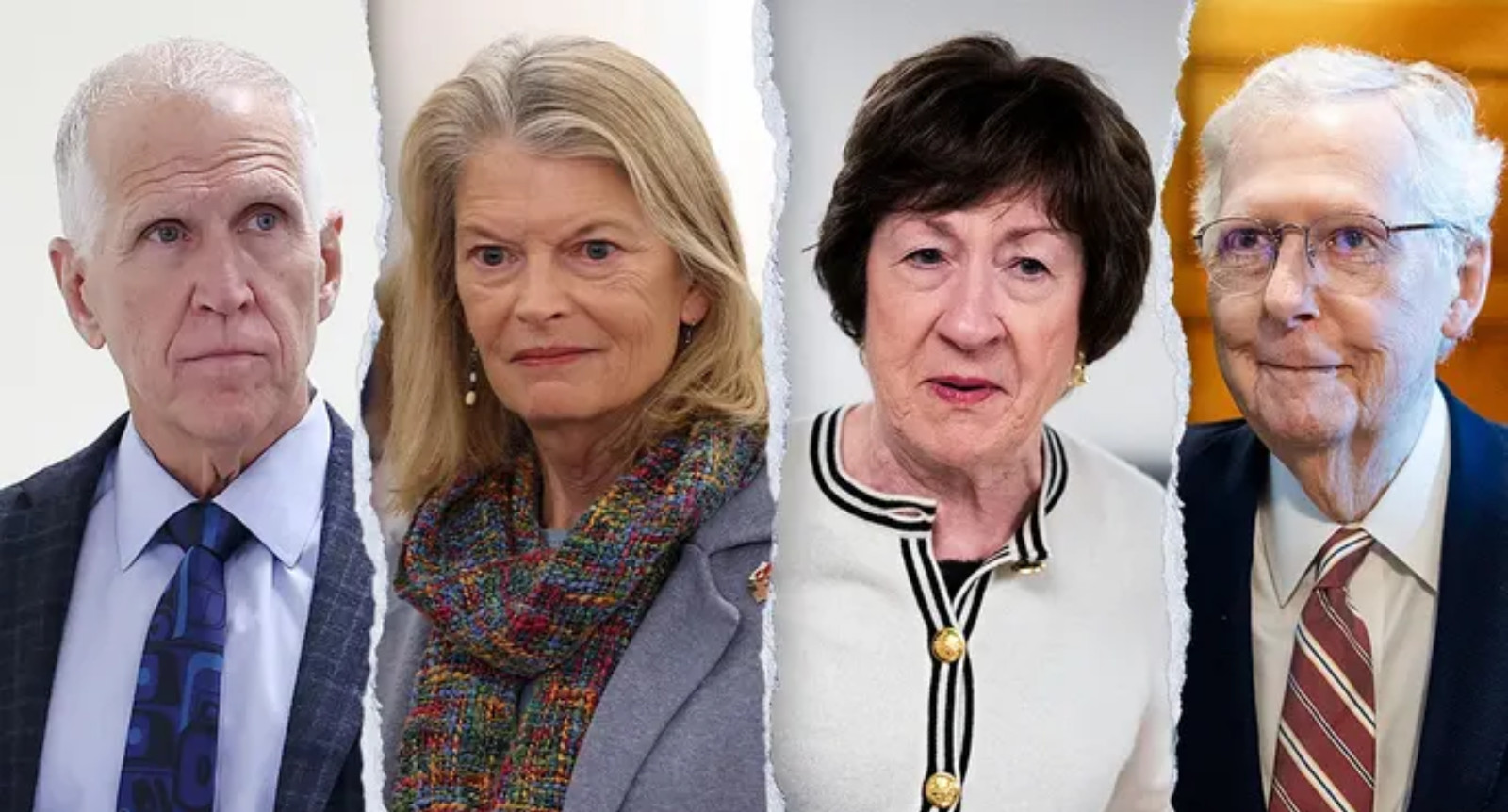
Graham’s broader amendment failed 48-50 after four Republicans — Susan Collins of Maine, Lisa Murkowski of Alaska, Mitch McConnell of Kentucky and Thom Tillis of North Carolina — joined Democrats in opposing the effort.
Lee then brought forward a narrower version focused on the SAVE America Act’s voting provisions.
This time, Collins voted in support.
Murkowski, McConnell and Tillis remained opposed.
The result: 50-49.
That distinction quickly became a major talking point for supporters of the legislation.
They had demonstrated that 50 sitting senators were prepared to vote for the proposal, but Senate procedural rules still stood between those votes and adoption of the amendment.
Vice President JD Vance has the constitutional authority to break a 50-50 Senate tie when one occurs. But the vote before senators Thursday night required 60 votes to waive the budgetary objection, meaning a vice-presidential tiebreaker could not overcome that particular hurdle.
The fight is therefore far from over.
The SAVE America Act has become one of the Republican Party’s major election-policy priorities heading toward the 2026 midterms.
Supporters argue that requiring documentary proof of citizenship would strengthen enforcement of the existing prohibition against noncitizen voting in federal elections and increase confidence that voter rolls contain only eligible voters.
Opponents see the legislation very differently.
Federal law already prohibits noncitizens from voting in federal elections, and critics argue that requiring additional citizenship documentation could make registration more difficult for some eligible American citizens who do not readily possess the required documents.
Those competing arguments have fueled an increasingly intense battle over the legislation.
The House previously approved the SAVE America Act, while President Donald Trump, Vice President Vance and Republican lawmakers have pushed for its enactment.
But the Senate has been the major obstacle.
The chamber voted earlier this year to begin consideration of the legislation, yet supporters have not demonstrated the 60 votes generally needed to overcome a filibuster and bring contested legislation to a final vote.
Republicans subsequently attempted to use the reconciliation process to advance the election provisions alongside a massive immigration and border-security package.
That strategy created a different obstacle.
Senate reconciliation rules restrict the types of provisions that can be included in budget legislation, allowing senators to raise points of order against provisions considered outside those limits.
Overcoming such an objection requires 60 votes.
That is precisely where Lee’s amendment failed.
The underlying proposal attracted 50 votes.
The motion needed 60.
The outcome immediately renewed Republican debate over Senate procedure and the future of the legislation.
Lee has argued that the 50-vote showing demonstrates that the original House-passed proposal has simple-majority support in the Senate, even though supporters remain short of the votes necessary to overcome the chamber’s procedural barriers.
The dispute also places renewed attention on the filibuster.
Republican leaders have repeatedly acknowledged that the 60-vote threshold remains a central obstacle to moving the SAVE America Act through the Senate under ordinary procedures.
But eliminating the legislative filibuster would itself require sufficient support among Republican senators, and GOP leaders have not demonstrated that those votes exist.
That leaves supporters searching for another path.
For now, the SAVE America Act remains stalled.
But the late-night vote established an important piece of the Senate math surrounding the legislation.
An earlier attempt attracted only 48 votes.
Lee’s narrower proposal attracted 50.
That still wasn’t enough to clear the 60-vote procedural threshold.
But it demonstrated that 50 senators were willing to back the voting provisions when they were put before the chamber — a result supporters are certain to point to as they continue pushing for another vote.
The immediate effort failed.
The broader fight over the SAVE America Act did not.

JUST IN: ‘Squad’ Congressional Candidate Arrested

Jeanine Pirro Makes Massive Announcement – WH In Total Shock

Senate Vote 50-49 On Save America Act — Dems Stunned!

Police Rush To Kamala Harris’ House On Urgent Call

BREAKING OVERNIGHT: Socialist Dem Suffers Humiliating Defeat

Trump Defies Federal Judge’s Order, Sparks New Showdown

‘The Five’ Gets Emotional As Greg Gutfeld Announces Tragic News

Removed From the Country — Ilhan Omar Hit With Horrid News

Joe Biden’s Daughter Just Dropped Massive Public Bombshell On Her Dad

Get Ready — Mike Pence Makes Stunning 2028 Announcement

‘EFFECTIVE IMMEDIATELY’ — Barack Obama Gets Devastating News

Schumer Loses! Court Sides With Trump In Historic Move
-
 Economy6 months ago
Vance Leaves Meeting, Looks Straight Into Camera, Announces Stunning Arrest
-
 Economy5 months ago
Adam Schiff Facing 30 Years In Prison After Bank Records Leak
-
 Economy6 months ago
Supreme Curt Sides With Trump — He Can Remove The All
-
 Culture3 months ago
Michelle Obama Drops Nasty Bomb About ‘Useless’ Daughter
-
 Economy6 months ago
All Hell Breaks Loose On Fox When Jesse Watters Asks Fetterman One Question
-
 Economy4 months ago
Prayers Pour In After Fox Host Dies: ‘Senseless Murder’
-

 Latest3 months ago
Fox News Stuns With Announcement About 5 Fired Hosts
-
 Border & Security2 months ago
Top Trump Admin And Wife Found Dead — Chilling Update Just Released