
Latest
Coast Guard caught on camera rescuing federal agents, boaters after 2 vessels capsize off Puerto Rico

A U.S. Coast Guard rescue mission off Puerto Rico turned perilous Tuesday night when two boats capsized, leaving five people — including three federal agents — stranded in rough seas before all were safely rescued.
Officials said all three agents and the two boaters are safe, and there are no other people missing.
Coast Guard watchstanders at Sector San Juan were notified by Puerto Rico Police Joint Forces of Rapid Action about a capsized vessel off Isla de Cabras in Toa Baja, Puerto Rico, just after 9 p.m. Tuesday, prompting an urgent marine information broadcast (UMIB) alert to vessel traffic in the area, according to authorities.
The Guard directed the launch of a Station San Juan 45-foot Response Boat Medium and a Coast Guard MH-60T Jayhawk helicopter to provide rescue assistance.
DESPERATE SEARCH FOR TWO MEN AS FISHING BOAT FOUND EMPTY 70 MILES OFF FLORIDA COAST
A U.S. Customs and Border Protection (CBP) Caribbean Air and Marine Branch Marine Unit and a Puerto Rico Police Joint Force of Rapid Action (FURA) helicopter were also dispatched.
A short time later, a good Samaritan reported seeing a 22-foot capsized vessel and two people holding onto the boat, officials said. He provided a position for response units, while a Puerto Rico police helicopter crew tracked down the capsized vessel.
As the CBP marine unit approached the boaters in 10-foot swells to attempt the rescue, their vessel also capsized, throwing the three agents into the water.
The Station San Juan boat crew tried to reach the agents and boaters but were unable due to the deteriorated sea state and the original capsized vessel being beyond the reef line.
COAST GUARD RESCUE SWIMMER DIES AFTER MEDICAL EVACUATION MISSION OFF WASHINGTON COAST TURNS TRAGIC
As the Coast Guard helicopter responded, the Puerto Rico police helicopter crew rescued one of the boaters and one of the CBP agents, taking them to Isla de Cabras.
The Coast Guard aircrew then deployed their rescue swimmer and safely hoisted the remaining two agents and boater safely aboard the aircraft.
The survivors were taken to the Fernando Luis Ribas Dominicci Airport in San Juan, where they were received by awaiting Puerto Rico Emergency Medical Service personnel and treated for minor injuries.
“The quick actions by FURA and CBP AMO allowed for constant eyes on all five people in the water and their prompt rescue,” said Lt. David Tirado-Tolosa, Coast Guard Air Station MH-60T Jayhawk helicopter aircraft commander.
“This mission highlights the high-risk environment our crews, federal and local partners face every time they respond to a search and rescue. We are very glad everyone made it home safely, as this could have easily had a different outcome.”
Cmdr. Zach Geyer, Coast Guard Sector San Juan Search and Rescue mission coordinator, added the case highlights the dangers rescue professionals face coming to the aid of mariners in peril.
“The responding CBP asset crew exemplified the courageous effort our federal and local responders make in a deliberate and calculated risk decision to save two individuals in immediate danger of death,” Geyer said.
“Through strong coordination across agencies, including CBP, FURA, the Caribbean Air and Marine Operations Center and the Federal Aviation Administration, responders safely de-conflicted a congested airspace and ultimately saved lives.”
Oil prices took a sharp turn Monday, tumbling to their lowest levels in 11 days as traders reacted to signs of possible diplomatic movement between the United States and Iran — while Saudi Arabia finds new ways to keep massive amounts of crude flowing despite mounting turmoil across the Middle East.
Brent crude for November plunged $2.69, or 2.6%, to $101.18 a barrel by 12:54 p.m. GMT after briefly touching its lowest level since September 10.
U.S. crude fell even harder.
West Texas Intermediate’s October contract, which expires Tuesday, dropped $2.69, or 2.7%, to $97.61 a barrel. The November WTI contract stood at $93.49.
The sudden retreat came despite continued fighting across the Middle East and another exchange of threats between Washington and Tehran over the weekend.
But markets received a potentially significant signal Sunday.
President Donald Trump said he would be open to meeting Iranian President Masoud Pezeshkian, who is expected to travel to New York for this week’s United Nations General Assembly.
Iran has also reportedly conveyed conditions to mediators for potentially reopening negotiations, according to a report citing Iranian security chief Mohsen Rezaei.
Those signals raised the possibility of renewed talks between Washington and Tehran, reducing some of the immediate fears that further escalation could threaten global energy supplies.
But on the ground, the situation remains volatile.
Iran-backed Houthi forces in Yemen said they attacked Riyadh and a Saudi Aramco facility in the Red Sea city of Yanbu while continuing efforts to expand their control in Yemen.
China has also pressed Iran to help restrain the Houthis following an appeal from Saudi Arabia, according to sources familiar with the discussions.
Meanwhile, Saudi Arabia is making major adjustments to keep its oil moving.
Attacks disrupted the kingdom’s East-West pipeline and complicated shipments through Yanbu, but Saudi Aramco has responded by increasing exports through the Strait of Hormuz this month and next.
That shift appears to be having a significant impact on global supply concerns.
“Middle East oil flows remain surprisingly strong despite the disruption to Saudi Arabia’s East-West pipeline,” JPMorgan analysts said in a September 18 note.
The numbers behind the shift are dramatic.
“The most notable pivot has come from Saudi Arabia,” the analysts said, as satellite data indicated Saudi oil moving through the Strait of Hormuz averaged 2.9 million barrels per day over the previous six days.
In August, that figure had been just 700,000 barrels per day.
That massive increase has helped ease immediate fears that the escalating conflict could trigger a much more serious supply crunch.
Oil producers are also increasingly turning to ship-to-ship transfers near Oman to keep crude moving through the region.
Those workarounds have helped prevent a more severe disruption in global supplies, but they aren’t coming cheaply.
Shipping costs have surged as tankers navigate increasingly complicated and potentially dangerous routes.
There are supply concerns elsewhere as well.
Libya’s National Oil Corporation said production at the country’s Sharara oilfield had been partially reduced, although officials did not provide a reason for the reduction.
Monday’s selloff leaves Brent hovering just above the closely watched $100-per-barrel threshold after prices surged above $108 last week.
That puts global oil markets at a critical point.
On one side, continued fighting, attacks on energy infrastructure and disrupted shipping routes are keeping geopolitical risk elevated.
On the other, Saudi Arabia’s ability to reroute enormous quantities of crude — combined with the possibility of renewed diplomacy between Washington and Tehran — is easing fears of an immediate supply shock.
Now traders are turning their attention to New York.
This week’s United Nations meetings could provide the next major signal about whether Washington and Tehran are moving toward negotiations or whether tensions will escalate again.
At the same time, Saudi Arabia is racing to keep crude flowing through one of the world’s most strategically important — and increasingly volatile — energy corridors.
With Brent sitting barely above $100, either development could quickly send oil markets moving again.
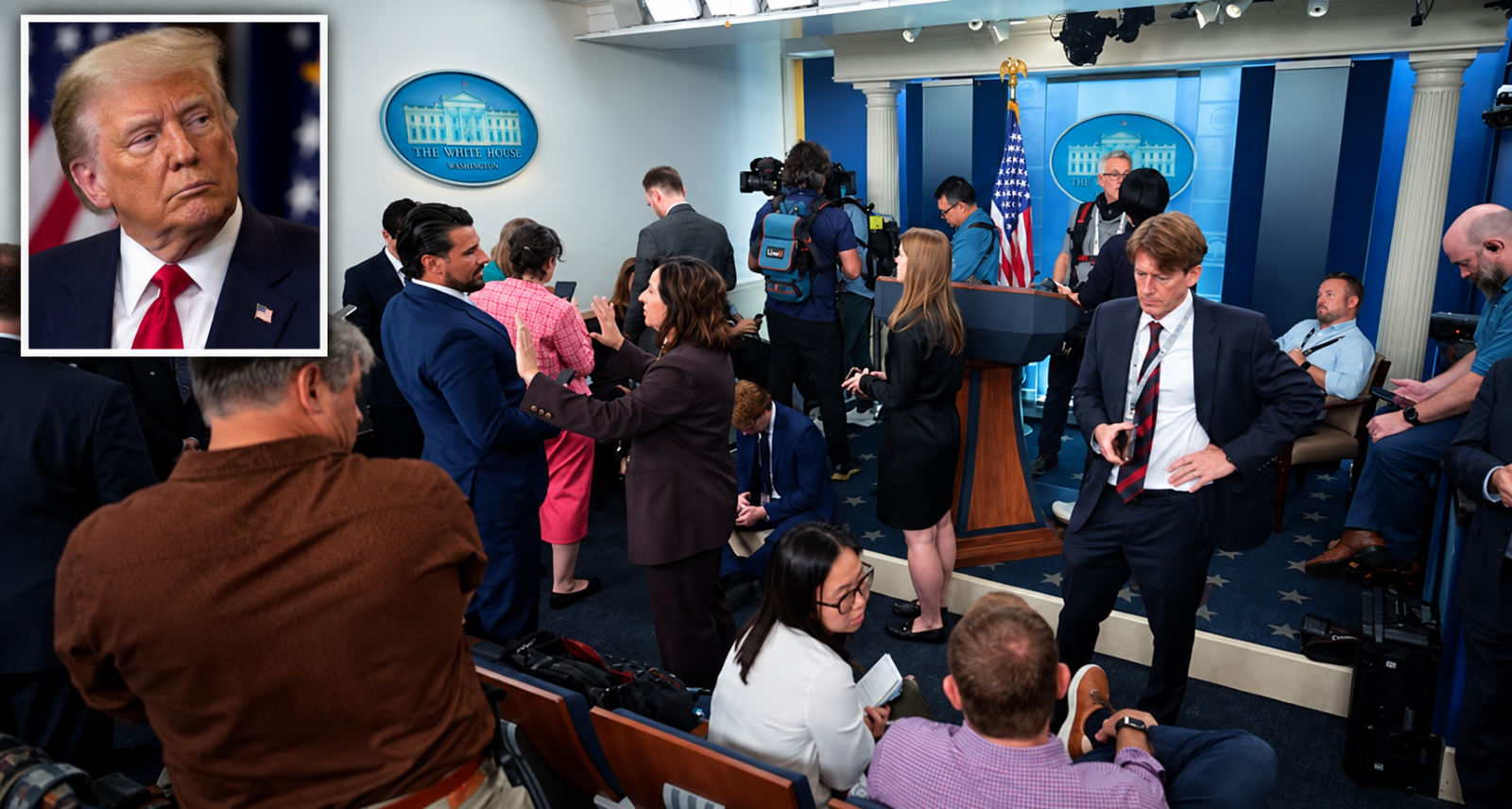
President Donald Trump’s escalating battle with the national media has exploded into a full-blown legal showdown after his administration barred CNN, MS NOW and Politico reporters from the White House — a move prominent Republicans are now publicly defending.
Trump announced Friday that the three organizations would no longer be permitted inside the White House, accusing them of repeatedly publishing what he described as “fake news” and unfair coverage of his administration.
By Saturday, the threat had become reality.
Reporters from all three organizations were denied entry to the White House, with some saying their credentials had been deactivated or confiscated.
Now Republicans are lining up behind the president, arguing that news organizations do not have an automatic right to coveted access inside the White House complex.
House Majority Leader Steve Scalise, R-La., defended Trump during an appearance Sunday on ABC’s “This Week.”
“There are literally thousands of media outlets in America,” Scalise said.
Scalise pointed to the obvious physical limitations of the White House press operation, arguing that only a fraction of America’s news organizations can operate from inside the complex and that the administration has authority over who receives that access.
Sen. Bernie Moreno, R-Ohio, also defended Trump’s decision, pointing to what he described as years of inaccurate and unfair coverage of the president.
Other Republicans have made a similar argument: barring reporters from physically entering the White House does not prevent CNN, MS NOW or Politico from continuing to report on the Trump administration.
And Trump has indicated the crackdown may not end with those three organizations.
“Other Fake News Media Outlets to follow,” Trump wrote.
Asked about other organizations that could potentially lose access, Trump criticized The New York Times and The Washington Post but stopped short of announcing additional bans.
The media organizations targeted by Trump aren’t backing down.
CNN, MS NOW and Politico filed a federal lawsuit Monday seeking restoration of their White House access, arguing that the administration retaliated against them because it objected to their journalism.
The organizations are seeking a temporary restraining order that could quickly force the constitutional fight before a federal judge.
“This morning, we notified the government that we are filing a lawsuit today to protect our First Amendment rights and defend the principle that the government does not decide what the press reports or publishes,” the organizations said in a joint statement.
The White House Correspondents’ Association has also pushed back.
WHCA President Jacqui Heinrich, a Fox News anchor, called on the administration to restore the organizations’ access, arguing that allowing the government to exclude journalists because officials object to their reporting could establish a precedent affecting other news organizations.
And the criticism isn’t coming exclusively from Trump’s political opponents.
Some prominent conservatives have openly broken with the president over the decision.
Former White House press secretary and Fox News contributor Ari Fleischer argued that conservatives should confront media organizations they believe are biased rather than remove their access.
“Argue and defeat them,” Fleischer said. “Don’t ban them. Or one day they’ll ban us.”
Fox News contributor and legal scholar Jonathan Turley similarly called excluding disfavored media organizations from the White House a “terrible precedent and practice.”
The showdown is the latest front in Trump’s continuing fight with the national press.
Early in Trump’s second term, the White House took control over decisions involving which journalists participate in the presidential press pool — a responsibility traditionally handled by the White House Correspondents’ Association.
The administration also previously restricted Associated Press access following a dispute over the organization’s decision to continue using the name Gulf of Mexico while acknowledging Trump’s executive order renaming it the Gulf of America.
That dispute also landed in federal court.
And there is significant history surrounding fights over White House press credentials.
During Trump’s first term in 2018, his administration revoked CNN correspondent Jim Acosta’s press pass following a contentious exchange with the president.
CNN sued.
A federal judge subsequently ordered the White House to temporarily restore Acosta’s credentials while citing due-process concerns.
An even older case could also loom large over the current fight.
In the 1977 case *Sherrill v. Knight*, a federal appeals court held that once the White House establishes press facilities, decisions involving credentials are subject to constitutional protections and cannot be made arbitrarily.
That precedent could become a major issue as CNN, MS NOW and Politico attempt to convince a federal court that Trump’s latest restrictions crossed a constitutional line.
For Trump and his Republican defenders, the argument centers on whether any particular media organization is entitled to special physical access to the White House.
For the three news organizations, the issue is fundamentally different: they contend the government cannot selectively revoke access in retaliation for reporting it dislikes.
Now that fight is moving from the White House briefing room to a federal courtroom — where a judge could determine just how far a president can go when deciding which journalists are allowed through the gates.
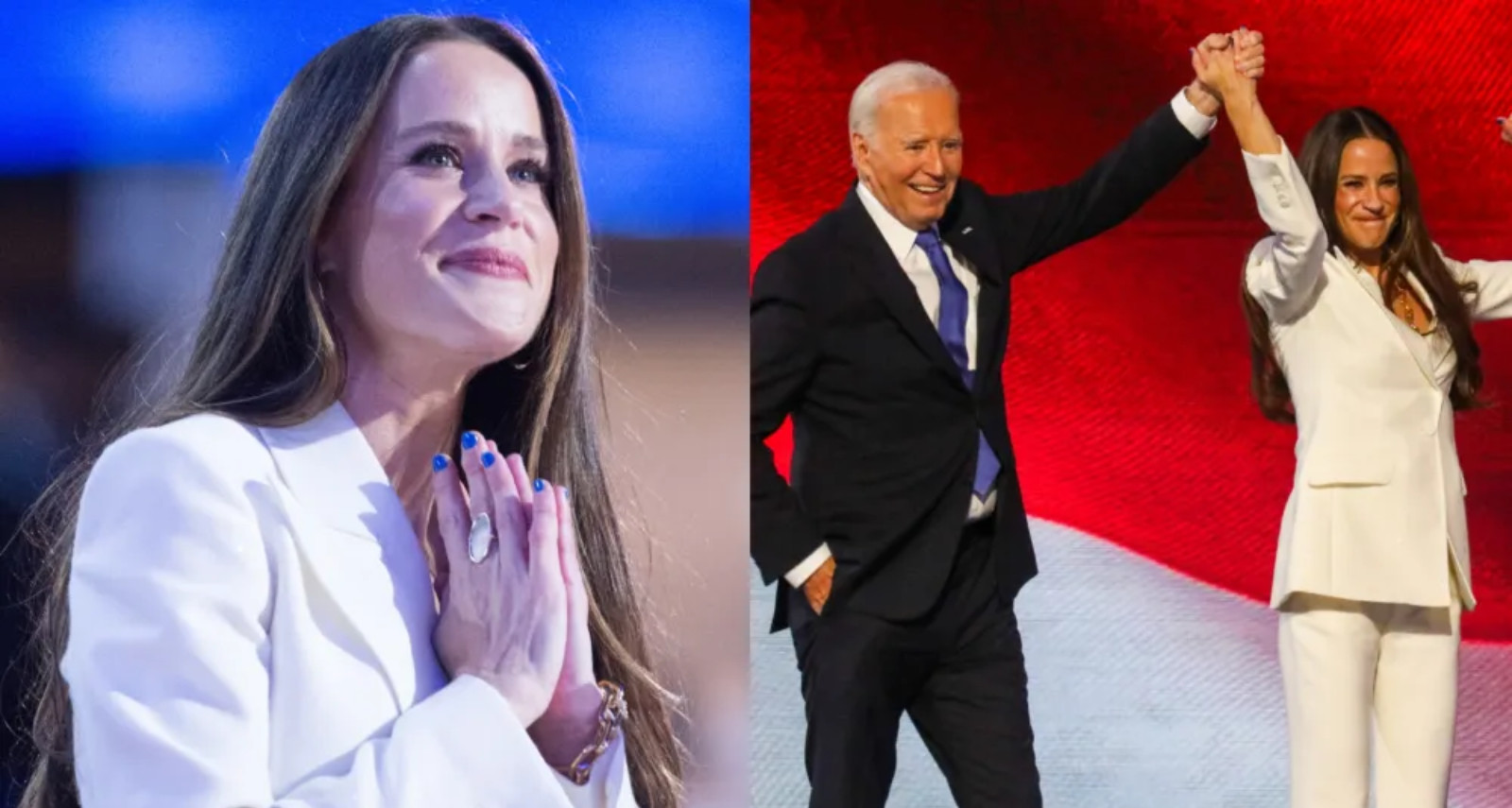
The Biden family is facing another round of scrutiny — this time after a former Democratic insider revealed that Ashley Biden threatened her with legal action over allegations involving the 2024 presidential campaign.
Lindy Li, a former Democratic fundraiser with deep ties to the party’s donor network, says Ashley Biden threatened to sue her after Li began publicly alleging that Democratic officials and people close to former President Joe Biden concealed concerns about his condition while he was seeking reelection.
“They wanted to scare me. That was the goal,” Li told Fox News Digital.
Li, who previously raised money for Biden, former Vice President Kamala Harris and other Democrats, details the confrontation in her new book, “Unburdened.”
According to Li, the clash erupted in February 2025 after she began speaking publicly about what she described as serious internal concerns surrounding Biden’s age and his ability to continue campaigning for another term.
Li has since become one of the Democratic Party’s most outspoken former insiders, alleging that senior figures failed to adequately confront concerns surrounding Biden before he ultimately abandoned his reelection campaign.
Ashley Biden strongly disputed Li’s allegations and threatened legal action in a since-deleted Instagram post, according to screenshots Li provided to Fox News Digital.
Li described the tone of the message as so aggressive that it “bordered on parody.”
According to Li, Ashley Biden called her a liar and asked whether she was “ready for a lawsuit.”
But the threatened courtroom showdown never happened.
Li said the Instagram post disappeared roughly a day later, and no lawsuit was ultimately filed.
Li also challenged Ashley Biden’s apparent claim that she did not know her. She provided Fox News with photographs showing the two women together on multiple occasions.
“Doesn’t even pass the smell test,” Li said.
Li’s accusations carry added significance because she was not simply an outside observer of Democratic politics.
Before her break with the party, she operated inside influential Democratic fundraising circles, working with major donors and Democratic National Committee officials while helping raise money for both Biden and Harris.
According to Li, everything changed when she began publicly questioning whether Biden should remain the Democratic presidential nominee in 2024.
Li said she appeared on Fox News host Shannon Bream’s program on the same day Biden ultimately announced that he was ending his reelection campaign. During the appearance, Li argued that Biden needed to step aside.
“When I went on Shannon’s show to say Biden needs to step aside — and three hours later he did — my access immediately vanished and all my fears about speaking up were justified,” Li told Fox News.
Before that, Li said, she had been invited to White House events as frequently as every few weeks.
After she spoke out, she said those invitations stopped.
Li has characterized the abrupt loss of access as retaliation for her criticism. Fox News reported her account but did not independently establish that she was deliberately punished for speaking out.
The legal threat from Ashley Biden also prompted Li to consult attorneys.
According to Li, her lawyers did not believe a lawsuit was likely to move forward. She said one attorney suggested litigation could potentially open the door to discovery involving internal discussions about the former president.
Li maintains that her public statements about Biden and the Democratic Party were truthful and says she still does not know what specific statement Ashley Biden believed could form the basis of a legal case against her.
The episode adds another chapter to the continuing dispute over what Democratic officials and Biden’s inner circle knew about concerns surrounding the former president during the 2024 campaign — and how those concerns were handled publicly.
Biden ended his reelection campaign on July 21, 2024, following weeks of mounting pressure from fellow Democrats after his June debate against Donald Trump. He endorsed Harris shortly afterward, and she became the Democratic nominee before losing the November election to Trump.
But Biden’s withdrawal did not end the controversy.
Former aides, journalists and Democratic officials have since offered differing accounts of what senior figures knew, when they knew it, and whether concerns surrounding Biden were adequately disclosed to voters.
Li’s account now puts a deeply personal dimension on that broader dispute: a former Democratic fundraiser says that after she began speaking publicly about what she witnessed, the president’s own daughter threatened to take her to court.
The lawsuit never came.

FINALLY! Americans Get Some MUCH Needed Good News

Trump Bans Lib Outlets – You Won’t Believe What Happened Right After!

Joe Biden’s Daughter Just Dropped Massive Public Bombshell On Her Dad

Democrat Congressman Stuns Party, Endorses GOP Colleague

Trumps Drops Brilliant Midterm Plan That Dems Feared The Most

He’s ALL In — Barack Obama Stuns Nation With Sudden Announcement

‘The Five’ Gets Emotional As Greg Gutfeld Announces Tragic News

‘EFFECTIVE IMMEDIATELY’ — Barack Obama Gets Devastating News

Everyday Americans Being Treated As Criminals — Including You, Right Now

Schumer Loses! Court Sides With Trump In Historic Move

Removed From the Country — Ilhan Omar Hit With Horrid News

HUGE: 9/11 Widow Goes Rogue, Makes Damning Call Out During Ground Zero Ceremony
-
 Economy5 months ago
Vance Leaves Meeting, Looks Straight Into Camera, Announces Stunning Arrest
-
 Economy5 months ago
Adam Schiff Facing 30 Years In Prison After Bank Records Leak
-
 Economy5 months ago
Supreme Curt Sides With Trump — He Can Remove The All
-
 Culture3 months ago
Michelle Obama Drops Nasty Bomb About ‘Useless’ Daughter
-
 Economy6 months ago
All Hell Breaks Loose On Fox When Jesse Watters Asks Fetterman One Question
-
 Economy3 months ago
Prayers Pour In After Fox Host Dies: ‘Senseless Murder’
-

 Latest3 months ago
Fox News Stuns With Announcement About 5 Fired Hosts
-

 Border & Security2 months ago
Top Trump Admin And Wife Found Dead — Chilling Update Just Released