
Latest
Dinghy route taken by missing American woman and jailed husband recreated as details of disappearance emerge

GREAT ABACO ISLAND, Bahamas — As more details emerge about Brian Hooker’s final moments with his wife before she disappeared into the sea, Fox News Digital recreated the route Brian and his wife Lynette took moments before disaster struck.
Mo Monestime, who has spent 15 years chartering boats in the Great Abaco Island area, guided the excursion through the tropical Bahamian waters. He first exited a small harbor across from the Abaco Inn, where the Hookers had drinks before attempting to return to their boat.
The route calls for a turn southwest after clearing the harbor, and followed by a short ride between the western coastline of Elbow Cay and the eastern coastline of Lubbers Quarters. That was the route the Hookers attempted to take at around 7:30 p.m. on Saturday, April 4.
LYNETTE HOOKER MISSING IN BAHAMAS: TIMELINE OF MICHIGAN WOMAN’S DISAPPEARANCE, HUSBAND’S ARREST
According to digital maps reportedly drawn by Brian and sent to his friends, the Hookers’ return trip ended abruptly near the southwestern turn, about halfway through the ride to their anchored yacht, which sat in a popular channel used by tourists and locals alike.
The water surrounding the cays is clear enough to see to the bottom and sometimes as shallow as only four feet, Monestime said. At high tide, he estimated the water rises to about 10 feet.
The small channel between the two cays is rife with activity, as boaters motor through, anchor, and maneuver their dinghies in and out of shallow waters. Nearby is Tahiti Beach, along with a large sandbar that features a floating bar when weather conditions allow.
The ride from the harbor to the popular anchoring spot took only about four minutes.
But wind gusts may have created choppy waters before Brian said his wife fell overboard, separating the pair.
In a recording of a phone call Brian made to a friend on April 7 obtained by CBS, Brian gave the most detailed account yet about what he says is an accident that led to Lynette’s disappearance.
“She basically just bounced off the dinghy in the middle of a little blow, like 20-something knot winds that popped up,” he said on the call, adding that he and his wife were not wearing life jackets.
“It was sun down, and the sun set like basically 10 minutes after she fell over,” he said. “The dinghy key went over with he because it wasn’t clipped to anything or anybody, and she had the spare dinghy key in her dry bag, which was with her.”
Brian continued, saying the wind rapidly blew the couple apart and that he thinks Lynette tried to swim back to the yacht, which he said was about 1,000 yards or so from where the incident occurred.
“I yelled to her that I lost an oar, and then I threw the anchor out, anchored the dinghy, and just, yeah, I yelled. I couldn’t see her anymore because the moon had not risen yet,” he said.
Later, he said he threw a flotation cushion toward Lynette right after she went into the water, but he couldn’t tell whether she was able to grab it. He said he yelled for her for about an hour.
“By the time I got the anchor set, I was probably a quarter to a half a mile away from her, and I decided that I had to go get help,” he said, “but I could not get to the island, so I paddled.”
“And it was a cascade of failures, and it’s something I’m never going to forgive myself for,” he said. “We stayed to long, we left too dark, all kinds of s—. No life jackets. I f—ing threw the dinghy out last— the anchor out last — instead of first. Can’t really explain it, you know?”
Eventually, Brian claims, he washed ashore about four miles northeast of where the incident reportedly occurred, on a beach covered with jagged rocks, adjacent to a boat repair and storage facility called Marsh Harbor Boatyard. There, he was met by a security guard who eventually called the police.
Brian was arrested at around 7:30 p.m. on Wednesday, four days after the incident.
He is currently being held in jail in Freeport, a separate Bahamian island, while police continue to investigate Lynette’s disappearance. Bahamian law allows a 48-hour initial hold time before filing charges against a suspect, which can be extended under certain circumstances. The first deadline for his release was Friday night, but his detention was extended by 72 hours. He is expected to be released or charged with a crime by Monday night.
Lynette’s fate remains uncertain, but local authorities have announced that their investigation has shifted to a recovery effort.
Butler said Brian has been cooperating with authorities and “categorically and unequivocally denies any wrongdoing.”
Brian has maintained throughout the investigation that he is innocent of any criminal wrongdoing, and issued a statement on Wednesday mourning his wife’s disappearance.
“I am heartbroken over the recent boat accident in unpredictable seas and high winds that caused my beloved Lynette to fall from our small dinghy near Elbow Cay in the Bahamas. Despite desperate attempts to reach her, the winds and currents drove us further apart. We continue to search for her and that is my sole focus,” he said on Facebook.
“Not being found, that’s the mystery,” Monestime told Fox News Digital.
“It is very hard to disappear, because, again, we’re so close to land,” Monestime told Fox News Digital. “So if you do fall overboard [and] drown, somebody will see you the next day. Again, we can see bottom, you know? I’ll be driving the boat, I will see stingrays, I will see turtles, so I would see a human body. Somebody would see something. Somebody would say something, like, ‘Hey, we just saw something strange in the water.'”
Monestime said drownings happen occasionally near Elbow Cay, but then reiterated that victims are recovered quickly.
“Again, you could see land all the way, the whole time,” he said. “Even if you fall overboard in pitch dark, you still could see the lights from the shore.”

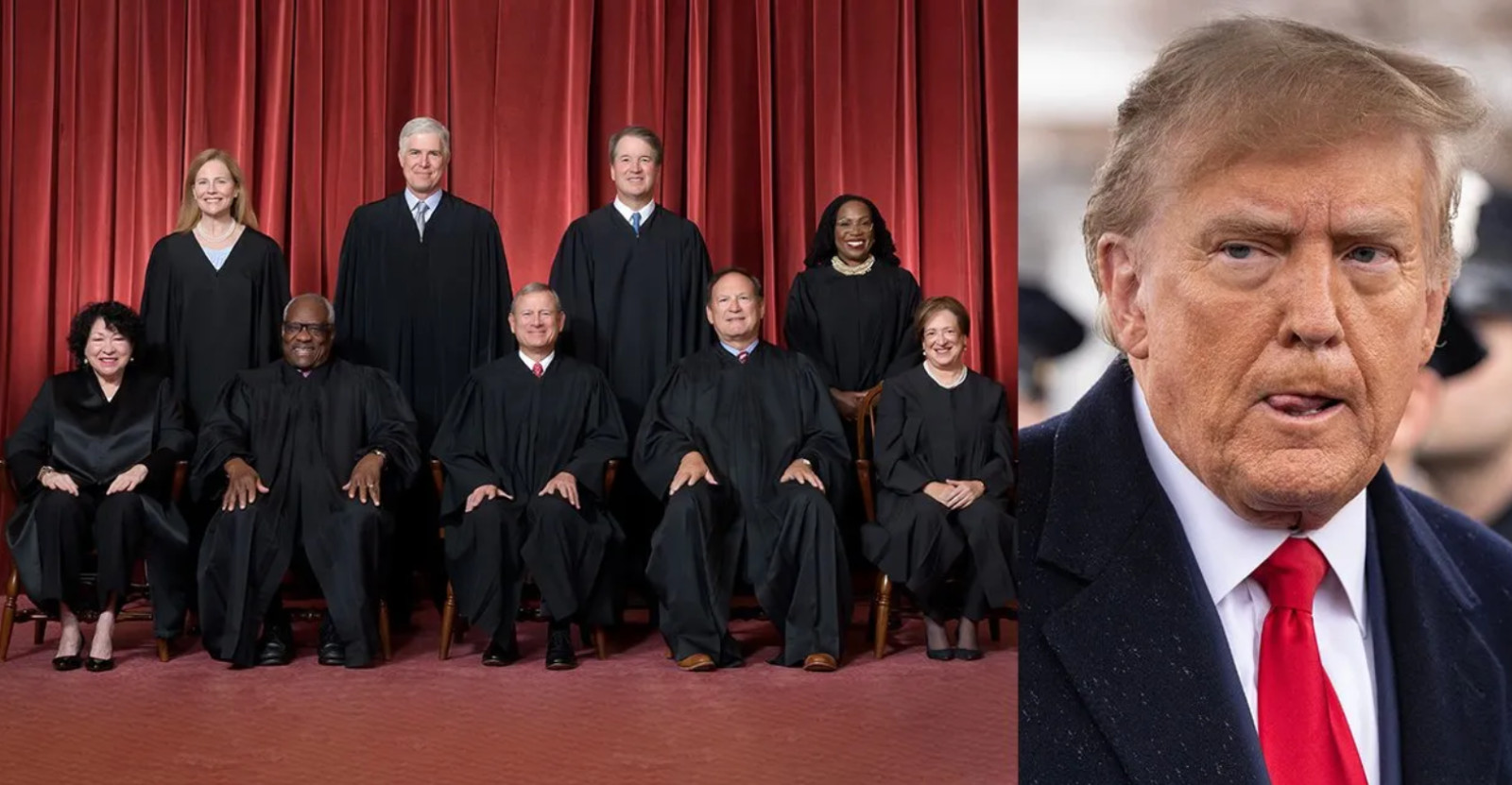
President Donald Trump scored another significant legal victory Monday after the U.S. Supreme Court sided with his administration in a case challenging controversial Biden-era energy regulations that critics say would have reduced consumer choice and driven popular appliances out of the marketplace.
The ruling marks the latest setback for former President Joe Biden’s regulatory agenda and comes as the Trump administration continues working to roll back federal rules that conservatives argue placed unnecessary burdens on businesses and American consumers.
In *American Gas Association v. Department of Energy*, the Supreme Court vacated a lower court ruling that had upheld Biden administration regulations targeting non-condensing furnaces and commercial water heaters. The decision sends the case back for further review and opens the door for the Trump administration to pursue a different approach.
At the center of the dispute were Department of Energy efficiency standards that industry groups argued would effectively eliminate certain categories of gas-powered appliances by making compliance nearly impossible.
The American Gas Association and a coalition of trade organizations challenged the regulations, contending that the federal government had exceeded its authority and ignored statutory protections designed to preserve consumer choice.
Solicitor General John Sauer, representing the Trump administration, argued that federal law does not permit regulators to wipe out entire classes of products through aggressive efficiency mandates.
“The Department may not adopt standards that effectively eliminate from the market products that have distinct ‘performance characteristics,’” Solicitor General John Sauer wrote in a brief to the high court.
The Supreme Court ultimately agreed that the lower court should reconsider its ruling, delivering an important win for businesses, manufacturers, and consumers who opposed the regulations.
The Trump administration has already indicated that it intends to revisit the rules entirely.
“The Department has determined that the rules at issue are factually and legally flawed, and the agency is considering a new rulemaking in which it would correct those errors,” Sauer wrote.
The decision represents another major blow to Biden’s environmental and energy agenda, which frequently sought to use federal agencies to push stricter efficiency standards across a broad range of household products and appliances.
The legal victory comes just days after Republicans in the House of Representatives approved legislation targeting another Biden-era regulation that became a symbol of government overreach for many Americans.
Lawmakers voted 226-197 to pass the Saving Homeowners from Overregulation with Exceptional Rinsing Act, commonly known as the SHOWER Act.
The legislation attracted support from 11 Democrats and aims to reverse restrictions affecting multi-nozzle shower systems.
Republicans argued that Biden administration regulations unnecessarily reduced water pressure by limiting the combined flow rate of multiple shower heads connected to a single fixture.
Representative Russell Fry of South Carolina, who introduced the legislation, framed the issue as one of personal freedom and consumer choice.
“Washington bureaucrats have gone too far in dictating what happens in Americans’ own homes,” said Rep. Russell Fry (R-SC) who sponsored the legislation.
“This is about defending consumer choice, pushing back on regulatory overreach, and standing up for commonsense policy,” Fry added.
Supporters of the legislation argued that the rule reflected a broader pattern of federal agencies attempting to regulate everyday aspects of American life.
“It seems like the Democrats want to tax you out of existence and overregulate you,” said Rep. John McGuire (R-VA). “So, this is a step in the right direction. Less regulation.”
The SHOWER Act would permanently codify an executive order signed by President Trump that restored a more consumer-friendly interpretation of federal law. Under Trump’s order, each nozzle in a multi-head shower system is treated individually rather than having all nozzles combined under a single flow-rate limit.
House Energy and Commerce Committee Chairman Brett Guthrie praised the legislation as a practical solution that returns decision-making power to consumers.
“By codifying how different nozzles are categorized, the SHOWER Act offers a commonsense fix that will allow households to choose what meets their needs, not what Washington mandates,” said Rep. Brett Guthrie (R-KY) chairman of the House Energy and Commerce Committee.
Fry echoed those concerns and argued that the Biden administration’s approach had become a symbol of excessive federal interference.
He said, “The SHOWER Act reaffirms that each nozzle is a shower head — plain and simple — and that homeowners, not the federal government, should decide how much water pressure they want.”
Taken together, the Supreme Court’s ruling and the House vote represent major victories for President Trump’s broader effort to reduce federal regulations, expand consumer choice, and rein in what supporters view as years of bureaucratic overreach by Washington agencies.
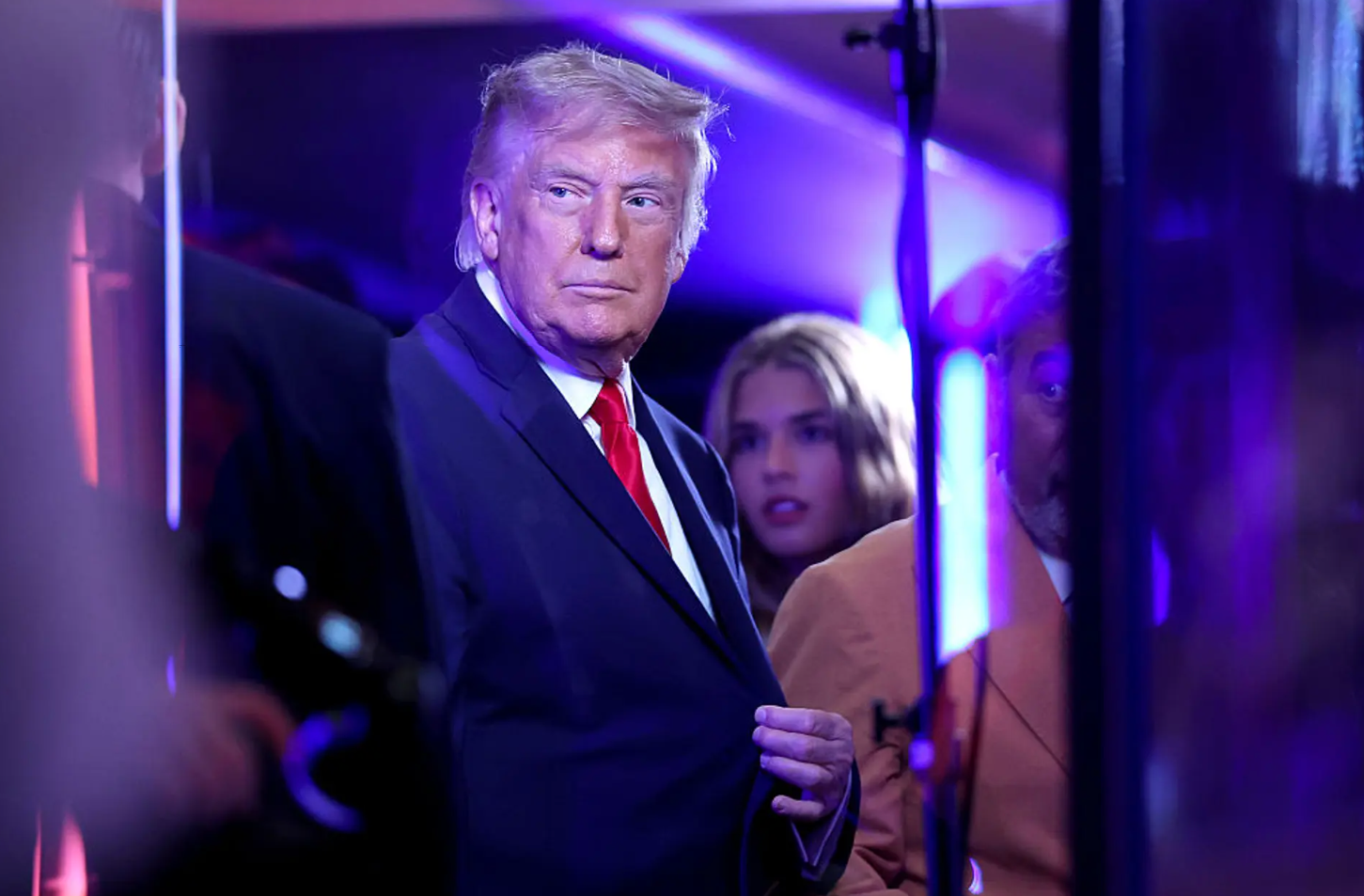
President Donald Trump made a high-profile appearance Monday night at Madison Square Garden as the New York Knicks hosted Game 3 of the NBA Finals, bringing national attention to an already historic evening for New York City.
The Knicks entered the game with a commanding 2-0 series lead over the San Antonio Spurs and stood just two victories away from capturing their first NBA championship in decades. The matchup marked the first NBA Finals game played at Madison Square Garden since 1999, creating enormous excitement throughout the city.
Security around the arena was significantly heightened as President Trump attended the game alongside members of his administration, close advisers, and longtime allies. The increased security presence came just one day after six people were injured during a stabbing incident at nearby Penn Station, located directly beneath Madison Square Garden.
The president arrived to a packed arena and watched the game from a private suite alongside a number of prominent administration officials and advisers.
Among those reportedly attending with the president were:
Sec. Sean Duffy
Sec. Doug Burgum
Administrator Lee Zeldin
Deputy COS Dan Scavino
Jared Kushner
Envoy Steve Witkoff
Walt Nauta
Boris Epshteyn
Natalie Harp
🔥 BREAKING: PRESIDENT TRUMP just WALKED OUT to look over the NBA Finals at Madison Square Garden
There he is, 47 becomes the FIRST US sitting president to attend the Finals in history 🇺🇸
The man is peak New York, in his element! pic.twitter.com/4ZFo616Z7m
— Eric Daugherty (@EricLDaugh) June 9, 2026
The appearance highlighted Trump’s continued visibility on the national stage while also underscoring his deep connection to New York City, where he built his business career long before entering politics.
Meanwhile, as the president attended one of the biggest sporting events of the year, he continued drawing attention to another issue that has become a central focus of his administration: election integrity.
Trump has repeatedly criticized California’s election system as state officials continue counting ballots from last week’s primary elections. The prolonged counting process has reignited debate over election administration and voter confidence in the nation’s most populous state.
The controversy intensified after U.S. Attorney Bill Essayli disclosed that the Department of Justice has spent more than a year attempting to review California’s voter registration records.
“For over a year, the Department of Justice has been trying to audit California’s voter rolls,” Essayli said.
“Federal law gives the Attorney General the authority to review state voter files and confirm that only eligible U.S. citizens are voting in federal elections,” he added.
The dispute comes as California election officials continue processing large numbers of ballots days after polls closed. Unlike many states that report nearly complete election results within hours, California’s system routinely requires days or even weeks to finalize outcomes.
The lengthy process has fueled concerns among many voters who question why election results remain unresolved long after Election Day.
Essayli also highlighted several aspects of California’s voter registration policies that have attracted attention from federal officials.
Among the forms of identification accepted for certain voter registration purposes are gym membership cards, employer identification cards, credit and debit cards, prescription drug labels, and insurance cards.
Critics argue that such policies deserve closer scrutiny, while supporters maintain that safeguards are already in place to protect election integrity.
The issue has also renewed discussion surrounding the SAVE America Act, legislation supported by many Republicans that would establish nationwide proof-of-citizenship requirements for federal voter registration.
California officials continue to defend the state’s election system and insist that existing safeguards adequately protect the voting process. They also maintain that there is no evidence that widespread non-citizen voting has affected election outcomes.
Nevertheless, the Justice Department’s ongoing efforts suggest that federal scrutiny of California’s election practices is likely to continue in the months ahead.
As President Trump watched the Knicks pursue a championship before a national audience, the broader debate over election security, voter roll maintenance, and ballot-counting procedures remained front and center in American politics.
For the administration, both issues reflect themes that have become central to Trump’s presidency: public safety, government accountability, and restoring confidence in institutions that many Americans believe deserve greater transparency.
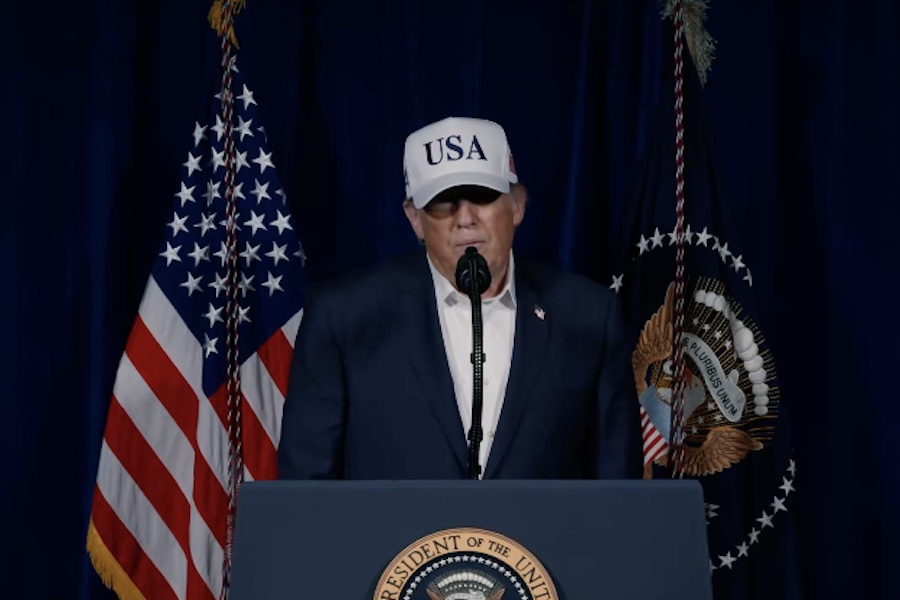
New details released by Iran’s own foreign minister are shedding light on the operation that eliminated Supreme Leader Ali Khamenei and reshaped the balance of power in the Middle East.
The account, offered by Iranian Foreign Minister Abbas Araghchi during a televised interview, provides one of the clearest descriptions yet of the strike that launched Operation Epic Fury. According to counterterrorism experts, the remarks serve as powerful evidence that the joint U.S.-Israeli operation was not designed to indiscriminately destroy an entire complex but instead to surgically target the leadership at the center of Iran’s regime.
Araghchi revealed that he survived the February 28 strike because he was located in a different section of Khamenei’s compound when the attack occurred.
“Well, the building we were sitting in was targeted, but the wing we were in remained intact while the other wing of the building was destroyed,” Araghchi said in an interview that aired June 4 on the Lebanon-based, Hezbollah-backed Al Mayadeen television network.
The revelation immediately drew attention from military analysts, who pointed to the extraordinary accuracy required to destroy one section of a heavily protected compound while leaving another standing.
According to Araghchi, Khamenei was in his office at the time of the attack. Other officials inside portions of the compound also survived because they were not located in the targeted area.
Dr. Omar Mohammed, a counterterrorism expert and director of the Antisemitism Research Initiative at George Washington University’s Program on Extremism, said the description confirms what many military observers suspected from the beginning.
“In the Arabic version, Araghchi says he was in a different wing of the compound, briefing another official, and his wing survived while the leader’s office was destroyed,” Mohammed explained.
Araghchi also disclosed that he had arrived at the compound for a meeting related to negotiations in Geneva and indicated that Khamenei was expected to be present in his office according to standard procedures.
Based on those details, Mohammed argued that the operation demonstrated an unprecedented level of intelligence gathering and precision targeting.
“They did not flatten a building; they took one wing and left the one next to it standing. That is President Trump’s whole doctrine in a single strike — he does not want a war of occupation, he wants to show the United States can reach the center of a hostile regime with precision and then offer it a way out,” Mohammed said.
Military officials later confirmed that the strike involved Israeli aircraft employing dozens of precision-guided munitions alongside advanced air-launched ballistic missiles. The attack reportedly killed Khamenei, Defense Minister Amir Nasirzadeh, IRGC Commander Mohammed Pakpour, and several additional senior security officials.
President Trump later publicly acknowledged U.S. involvement in the operation.
“He was unable to avoid our intelligence and highly sophisticated tracking systems, and, working closely with Israel, there was not a thing he or the other leaders killed alongside him could do,” the president wrote.
Mohammed believes the strike sent a message that Tehran should have immediately understood.
“Iran was handed the clearest message an adversary can get — we can reach your leader in his own office, and here is the off-ramp,” Mohammed noted. “A rational state takes the exit. Tehran did the opposite. It fired on Israel, killed a civilian in Bahrain, struck Kuwait, Qatar and the United Arab Emirates, and closed the Strait of Hormuz, setting off a global energy crisis. The surgical strike was American. The months-long war that followed was Iran’s choice.”
Following Khamenei’s death, leadership passed to his son, Mojtaba Khamenei, a transition that Mohammed believes revealed deeper contradictions within Iran’s political system.
“In Arabic, Araghchi calls the new leader ‘the young Khamenei in place of the elderly Khamenei.’ That is the language of a monarchy, not a republic of clerics,” Mohammed observed. “They are rewriting the theology on air to fit a son who lacks the religious rank, who was wounded in the same strike and who then vanished for weeks. A revolution that came to power by ending a monarchy is handing the throne from father to son.”
For many analysts, the operation has become a defining example of President Trump’s national security philosophy: use overwhelming precision to neutralize threats, avoid prolonged military occupations, and leave adversaries with a clear opportunity to de-escalate.
“The real story is not that Iran is strong,” Mohammed continued. “It was shown the precision of American power and the door was held open, and it chose to widen the war instead.”
Araghchi’s account appears to reinforce what American and Israeli officials have maintained from the start. The strike was not an act of indiscriminate destruction. It was a carefully planned operation aimed directly at the leadership of one of America’s most persistent adversaries, demonstrating both the reach and precision of modern U.S. military capabilities.


Supreme Court Delivers Emergency Decision – It’s Finally Happening

Trump Sends Haters Into Full Meltdown With Who He Brought To NBA Game

Iran Makes Shocking Admission About Trump’s Strike On Ayatollah

Vance Leaves Meeting, Looks Straight Into Camera, Announces Stunning Arrest

Adam Schiff Facing 30 Years In Prison After Bank Records Leak

Supreme Curt Sides With Trump — He Can Remove The All
-
 Latest2 months ago
Vance Leaves Meeting, Looks Straight Into Camera, Announces Stunning Arrest
-
 News2 months ago
Adam Schiff Facing 30 Years In Prison After Bank Records Leak
-
 Latest2 months ago
Supreme Curt Sides With Trump — He Can Remove The All
-
 News2 months ago
All Hell Breaks Loose On Fox When Jesse Watters Asks Fetterman One Question
-
 News2 months ago
NBC Stops LIVE Broadcast — Breaks Big Trump News
-
 Latest2 months ago
Trump Pulls Off Miracle Of A Lifetime — It’s Permanently Open
-

 News2 months ago
Swalwell Facing Jail Time After Sickening New Video Leaks
-
 Latest1 month ago
Barack Obama Just Made Insane Announcement About His Marriage