
Latest
FBI Director Kash Patel vows to take The Atlantic to court over ‘defamatory’ report

FBI Director Kash Patel is vowing to take The Atlantic to court over a bombshell report published Friday evening that he says is filled with defamatory claims.
“Print it, all false, I’ll see you in court — bring your checkbook,” Patel told The Atlantic in a statement included in the report.
The story, titled, “The FBI Director is MIA,” outlined several explosive allegations, including instances of “erratic” behavior, “excessive drinking” and “unexplained absences.”
KASH PATEL TAUNTS SWALWELL WITH FBI SIT-DOWN AS RESIGNATION FALLOUT GROWS
The first claim alleged Patel had a “freak-out” over a tech issue earlier this month when attempting to log into a computer system, believing he was being fired by President Donald Trump following Attorney General Pam Bondi’s ouster and had to prep an announcement. The Atlantic cited nine unnamed sources familiar with the incident.
“But Patel, according to multiple current officials, as well as former officials who have stayed close to him, is deeply concerned that his job is in jeopardy. He has good reasons to think so — including some having to do with what witnesses described to me as bouts of excessive drinking,” The Atlantic staff writer Sarah Fitzpatrick told readers before citing past reports of rumors that Patel was also on the chopping block.
White House Press Secretary Karoline Leavitt told The Atlantic in a statement that Patel “remains a critical player on the Administration’s law and order team.” Acting Attorney General Todd Blanche also threw his support behind the FBI Director, telling Fitzpatrick, “Patel has accomplished more in 14 months than the previous administration did in four years. Anonymously sourced hit pieces do not constitute journalism.”
FBI FIRES A DOZEN AFTER BIDEN-ERA SUBPOENAS OF PATEL, WILES COME TO LIGHT
“The IT-lockout episode is emblematic of Patel’s tumultuous tenure as director of the FBI: He is erratic, suspicious of others, and prone to jumping to conclusions before he has necessary evidence, according to the more than two dozen people I interviewed about Patel’s conduct, including current and former FBI officials, staff at law-enforcement and intelligence agencies, hospitality-industry workers, members of Congress, political operatives, lobbyists, and former advisers,” Fitzpatrick wrote.
“Speaking on the condition of anonymity to discuss sensitive information and private conversations, they described Patel’s tenure as a management failure and his personal behavior as a national-security vulnerability,” she continued.
The report alleged that Patel has a pattern of “conspicuous inebriation” and that “he is known to drink to the point of obvious intoxication,” which it said often took place at Ned’s private club in Washington, D.C. “in the presence of White House and other administration staff” and the Poodle Room in Las Vegas.
“Early in his tenure, meetings and briefings had to be rescheduled for later in the day as a result of his alcohol-fueled nights, six current and former officials and others familiar with Patel’s schedule told me,” Fitzpatrick wrote. “On multiple occasions in the past year, members of his security detail had difficulty waking Patel because he was seemingly intoxicated, according to information supplied to Justice Department and White House officials.”
WATCH: DEFIANT KASH PATEL SAYS HE’S ‘PROUD’ TO LEAD FBI AFTER EXPLOSIVE HEARING
According to The Atlantic, a request for “breaching equipment” often used by SWAT to gain access to buildings, “was made last year because Patel had been unreachable behind locked doors, according to multiple people familiar with the request.” Unnamed sources also speculated whether Patel’s alcohol consumption played a role in his social media posts that shared inaccurate information about active law-enforcement investigations, including what he had written in the wake of Charlie Kirk’s assassination before suspect Tyler Robinson turned himself in.
“Some of Patel’s colleagues at the FBI worry that his personal behavior has become a threat to public safety,” Fitzpatrick wrote, saying that the unnamed officials fear his ability to handle a domestic terrorist attack, one telling Fitzpatrick, “That’s what keeps me up at night.”
Jesse Binnall, an attorney representing Patel, shared a letter that was sent to The Atlantic ahead of the report being published, calling out the magazine for giving the FBI less than two hours to respond to “defamatory assertions” before its stated deadline and that most of the 19 substantive claims are “false.”
“The vast majority of the claims in the draft article rely solely on vague, unattributed sourcing such as ‘people familiar with the matter’ or ‘some have characterized.’ Any such purported sources could not possibly possess firsthand knowledge, as the allegations are categorically false,” Binnall wrote. “At least one specific claim — allegation #8 regarding the alleged breaching of equipment — has no corroborating public record whatsoever and appears to be either fabricated or drawn from a single hostile and unreliable source.”
The attorney accused The Atlantic of having “longstanding animus toward Director Patel” and, upon Patel taking “swift legal action,” ordered the magazine to preserve all documents and communications pertaining to his client.
“They were on notice that the claims were categorically false and defamatory. They published anyway. See you in court,” Binnall posted on X.
FBI Assistant Director of Public Affairs Ben Williamson, who initially denied the various claims directly to The Atlantic, reacted “This article is a compilation of pretty much every obviously fake rumor I’ve heard the last 14 months except the Atlantic is the only one dumb enough to actually print it.”
Patel adviser Erica Knight said The Atlantic published what “every real DC reporter chased, couldn’t verify, and passed on,” which she asserted were “fabricated stories.”
“Lawsuit is being filed,” Knight wrote.
Fitzpatrick stood by her reporting even under legal threat.
“I am a very careful, very diligent, award-winning investigative reporter with a history of award-winning work across multiple organizations,” Fitzpatrick told MS NOW’s Jen Psaki on Friday night. “I stand by every word of this reporting. We have excellent attorneys.”
Patel fired back, telling Fitzpatrick, “see you and your entire entourage of false reporting in court … But do keep at it with the fake news, actual malice standard is now what some would call a legal lay up.”
Patel also shared a screenshot of Williamson’s emailed response to Fitzpatrick, saying “Top to bottom, this is one of the most absurd things I’ve ever read.”
The Atlantic did not immediately respond to Fox News Digital‘s request for comment.

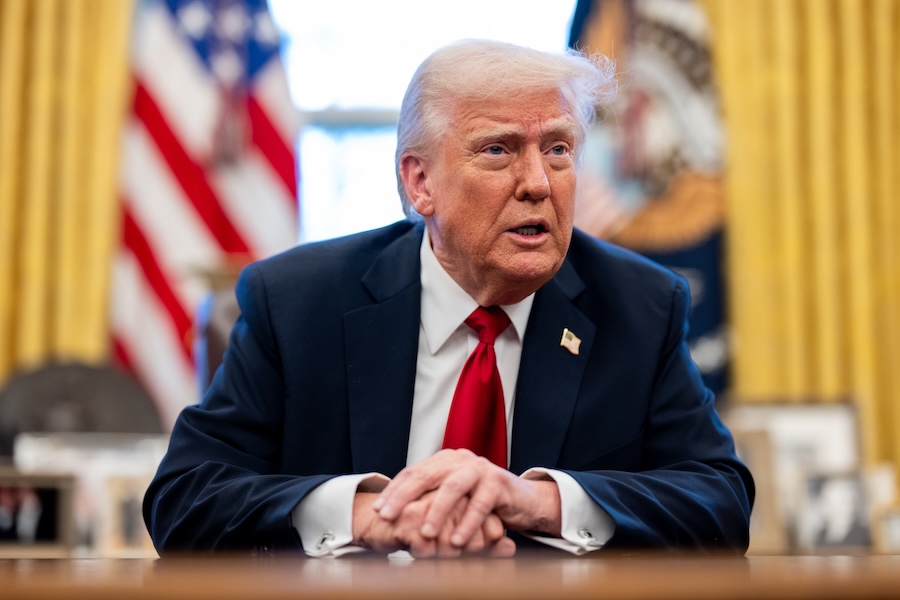
President Donald Trump is set to make an Oval Office announcement Monday afternoon, but the White House is keeping the subject under wraps.
According to the official daily guidance and press schedule released Sunday night, Trump will make the announcement at 2 p.m. Eastern Time on Monday, September 28.
The schedule provides just one tantalizing line: “THE PRESIDENT makes an Announcement.”
The event will take place in the Oval Office and will be open to the White House Press Pool. No additional details about what Trump plans to announce were provided.
Trump has a packed schedule leading up to the event.
His calendar includes executive time at 8 a.m., followed by policy meetings at 11 a.m., 12:30 p.m. and 1 p.m. The Oval Office announcement follows at 2 p.m., with a print interview scheduled for 3:30 p.m.
Trump spent Sunday at the President’s Cup in Medinah, Illinois, before returning to Washington.
After arriving, the president briefly spoke with reporters on the tarmac and revealed that his day still wasn’t over, noting that he had a 10 p.m. dinner meeting scheduled with Anthropic founder Dario Amodei.
🚨 BREAKING: President Trump hints that his big announcement tomorrow in the Oval Office is related to his meeting with ANTHROPIC
And his meeting is TONIGHT at 10pm
DESPITE the long day today in Chicago. REALLY incredible how he can do it. pic.twitter.com/snEZd99jCE
— Nick Sortor (@nicksortor) September 28, 2026
“So that’s a long day, right?! We leave early in the morning, and now I have a dinner with Anthropic,” the president said.
Trump also noted that he had held lengthy discussions with Chinese President Xi Jinping and several additional American technology leaders earlier in the week.
For now, exactly what Trump intends to reveal Monday remains unknown.
The White House had not released additional information about the announcement as of this report.
The 2 p.m. Oval Office time slot has previously been used by the administration for policy announcements, including healthcare-related events. In those instances, the White House similarly announced the time and location beforehand while withholding the substance of the announcement until the event.
Monday’s announcement will be available through official White House livestreams and available press pool coverage.
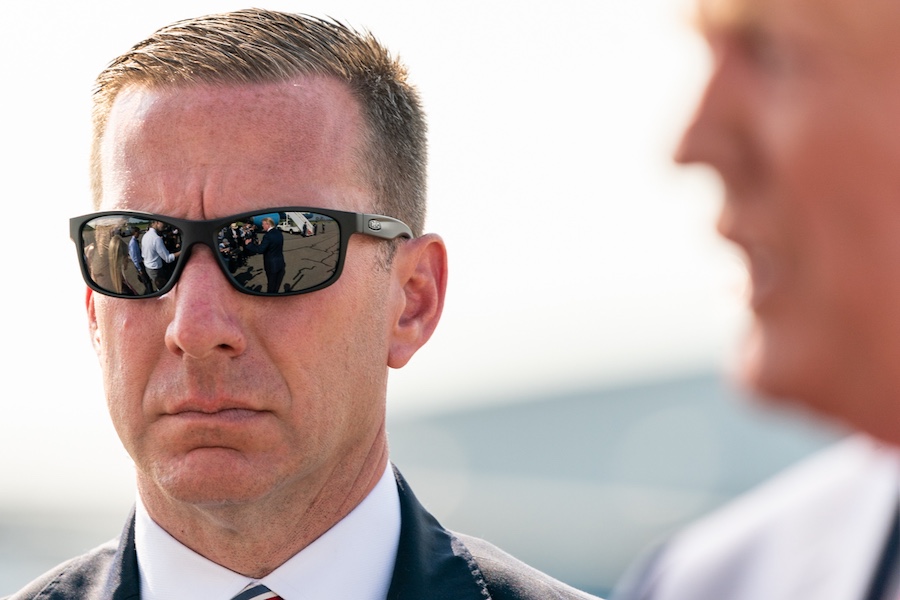
A U.S. tech CEO and a Russian national have been arrested in a federal case alleging they concealed Russian ownership and software development while securing U.S. government contracts — including work involving the Secret Service.
Federal prosecutors say Lee Reiber, 55, CEO of Virginia-based Oxygen Forensics Inc., and Oleg Sergeyevich Davydov, 52, of Moscow, hid the company’s Russian ties while selling digital forensics technology to federal agencies.
Reiber was arrested in Idaho on September 20 and later released on bond. Davydov was arrested the same day at London’s Heathrow Airport while preparing to board a flight to Istanbul. U.S. authorities intend to seek his extradition.
“The CEO of a Virginia-based software company and a Russian national have been arrested on a federal criminal complaint charging them with concealing from U.S. government agencies that their company was owned and controlled by Russian nationals and that its software was developed in Russia,” prosecutors said.
Authorities allege Reiber made representations to the federal government that directly contradicted the company’s actual ownership and development structure.
They further stated that “Reiber allegedly represented to the government that the company had no foreign ownership or control and that its software was developed in the United States, when in fact five Russian nationals, including Davydov, owned and controlled the company and its software was developed in Russia.”
Importantly, the criminal complaint does not allege that Oxygen Forensics’ software contained malicious code or that it was used to obtain unauthorized access to customers’ systems or data.
But the alleged concealment becomes particularly significant because of who was buying the company’s technology.
According to an affidavit supporting the complaint, beginning in March 2022, Reiber, Davydov and others allegedly conspired to obtain federal contracts through Oxygen Forensics.
The company’s software is designed to recover, preserve and analyze information extracted from digital devices.
Federal agencies identified in the affidavit include the Department of War as well as Department of Homeland Security components, including the Secret Service and its National Computer Forensics Institute (NCFI), Homeland Security Investigations and the DHS Office of Inspector General.
Prosecutors allege the company presented a dramatically different picture of itself to the U.S. government than what existed behind the scenes.
“According to the affidavit, Oxygen Forensics held itself out to the U.S. government as being an independent, U.S.-based company. In fact, Davydov and four other Russian nationals owned and controlled the company through a holding company based in Cyprus,” prosecutors said.
The Russian connections allegedly extended well beyond ownership.
According to the affidavit, the same five individuals owned a Russian company formerly known as Oxygen Software LLC and later renamed MKO Systems LLC. Davydov co-founded that company in 2000, and developers worked in Russia.
MKO reportedly sold similar software inside Russia to customers that included the FSB, the Russian Investigative Committee and the Russian Ministry of Internal Affairs.
Davydov served as the Russian company’s chief technology officer and helped establish the Virginia-based firm in 2013.
Then came Russia’s 2022 invasion of Ukraine and expanded U.S. sanctions.
According to federal investigators, that is when efforts to conceal the company’s Russian ownership and development structure intensified.
The affidavit alleges that the parties agreed to hide both Russian ownership and the role Russian developers played in producing the software.
Reiber was installed as Oxygen Forensics’ CEO, president and board chairman in March 2022.
Russian owners were removed from public corporate filings, according to the affidavit, but prosecutors allege their actual power over the company remained.
The Russian owners allegedly continued making significant corporate decisions, setting Reiber’s compensation, overruling him on payments and retaining signing authority over company bank accounts.
Federal investigators also pointed to certifications submitted directly to the government.
In December 2022 and again in October 2023, Reiber allegedly certified that Oxygen Forensics had no immediate or highest-level owner.
Then, in November 2023, a reporter began asking questions about the company’s ownership.
According to the affidavit, Reiber subsequently wrote to Davydov and two other owners that the resulting public reporting “could destroy this entire opportunity,” referring to a pending NCFI contract.
He also warned that the “current existence of this company hangs in the balance.”
The government’s allegations did not stop there.
In July 2024, prosecutors say that, at Reiber’s direction, the company certified to the Department of War that no foreign person controlled the appointment of directors or company decisions.
Then, in March 2026, Reiber allegedly told DHS personnel that no Russian was involved in software development and that nobody in Russia had access to the company’s build environment.
Federal investigators allege the reality was very different.
According to the affidavit, the software was written and managed by a Russian development team operating under Davydov in a cloud environment administered by one of the Russian owners.
The allegations now place the company’s federal contracting history — and its representations about who actually owned, controlled and developed its technology — at the center of a major federal criminal case.
Reiber and Davydov have been charged by criminal complaint with conspiracy to commit wire fraud. The allegations contained in the complaint remain accusations, and the defendants are presumed innocent unless and until proven guilty in court.
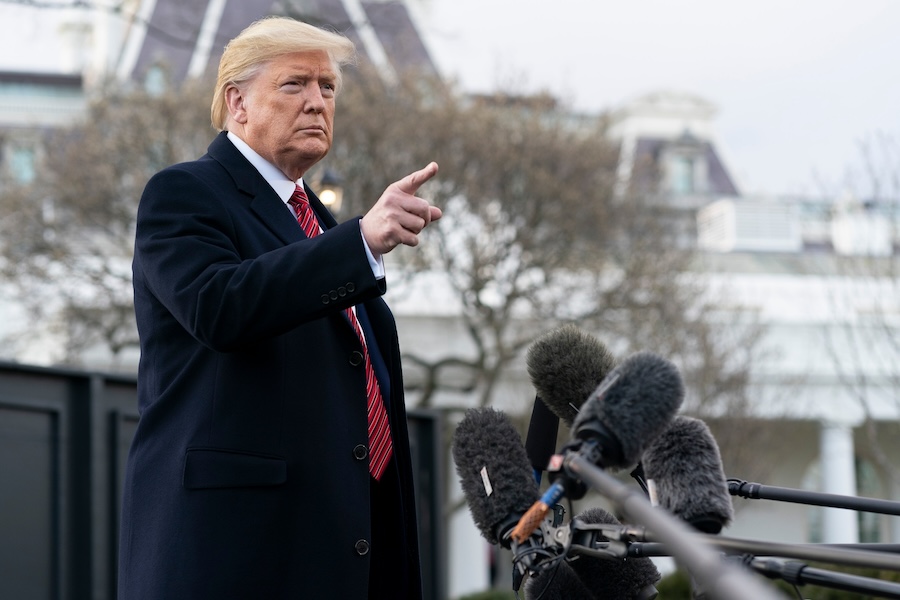
President Donald Trump unloaded on the U.S. Supreme Court on Sunday after the justices blocked Missouri from using its controversial 2025 congressional map in the upcoming midterm elections — a decision with potentially significant consequences for control of the U.S. House.
The map, which Missouri used during this year’s primary elections, was designed in a way that could have given Republicans an opportunity to pick up another congressional seat. But after months of legal battles and conflicting court rulings, the Supreme Court put an end to its use in the November 3 general election.
Trump wasted little time responding.
“The Supreme Court of the United States will just not let Missouri have an Election Victory. They continuously, three times now, overrule Judges who came to the correct decisions,” Trump wrote in a social media post.
The president then praised Missouri Governor Mike Kehoe and those who fought to keep the new congressional districts in place.
“Thank you to the Governor, and all of the Great People of Missouri, who are fighting so hard for Fairness and Election Security. Such tremendous Spirit and Love of our Country. I won Missouri BIG, all three times, and I couldn’t be more proud of doing so. A great place — I love you all,” the president continued.
The Supreme Court’s Friday order brought another dramatic turn in a redistricting fight that has bounced between state and federal courts.
The order, issued without noted dissents, halted a federal appeals court directive that would have required Missouri to use the 2025 congressional map.
Timing proved critical.
According to the Supreme Court, ballots based on Missouri’s 2022 congressional districts had already been printed and mailed, while absentee, military and overseas voting was already underway.
Changing maps at that point, the justices wrote, “would usher in electoral chaos.”
The court consequently directed lower courts not to prohibit Missouri from using the 2022 map or require the state to implement the 2025 map for the 2026 congressional election.
The dispute traces back to Missouri Republicans’ decision to enact a new congressional map, known as House Bill 1, during a special legislative session.
Governor Mike Kehoe signed the measure on September 28, 2025.
The map significantly reconfigured congressional districts, including the Kansas City-based 5th Congressional District represented by Democrat Emanuel Cleaver. The redraw was intended to create another Republican-leaning congressional district in a state where Republicans currently control six of eight U.S. House seats.
But opponents quickly launched an effort to stop it.
People Not Politicians gathered signatures seeking a statewide referendum on the new map, relying on a provision of the Missouri Constitution that allows voters to review certain acts passed by the legislature.
Missouri Secretary of State Denny Hoskins declined to certify the petition, and the state’s August 4 primary elections proceeded using the 2025 congressional boundaries.
Then came another major reversal.
On September 3, the Missouri Supreme Court unanimously ruled that the referendum petition was legal, sufficient and timely.
That decision meant House Bill 1 had never taken effect and would remain suspended unless Missouri voters ultimately approved it.
What followed was an extraordinary series of conflicting court decisions.
Justice Brett Kavanaugh initially denied an emergency request seeking to block the Missouri Supreme Court ruling.
Minutes later, however, a federal district judge issued an order requiring Missouri to use the 2025 congressional map.
The U.S. Supreme Court subsequently stayed that order.
A federal appeals court then entered the fight, concluding that conducting the primary and general elections under different congressional maps would violate the Constitution. The appeals court directed Missouri to return to the 2025 map.
Once again, the Supreme Court intervened and blocked the ruling.
The result is now clear for November.
Missouri will conduct its November 3 general election using the state’s 2022 congressional districts, despite having conducted its August primary under the newer boundaries.
At the same time, Missouri voters will decide the referendum determining whether the 2025 congressional map should be approved for future use.
Governor Kehoe has said Missouri will comply with the Supreme Court’s order, bringing the immediate legal fight over which map will govern the upcoming general election to a close.

ALERT: Trump Set To Make ‘Special Announcement’ From Oval Office

CEO Charged In Scheme To Infiltrate Secret Service

Trump Torches Supreme Court Over Controversial New Ruling

JUST IN: ‘Squad’ Congressional Candidate Arrested

Jeanine Pirro Makes Massive Announcement – WH In Total Shock

Senate Vote 50-49 On Save America Act — Dems Stunned!

‘The Five’ Gets Emotional As Greg Gutfeld Announces Tragic News

Removed From the Country — Ilhan Omar Hit With Horrid News

Joe Biden’s Daughter Just Dropped Massive Public Bombshell On Her Dad

Get Ready — Mike Pence Makes Stunning 2028 Announcement

Schumer Loses! Court Sides With Trump In Historic Move

‘EFFECTIVE IMMEDIATELY’ — Barack Obama Gets Devastating News
-
 Economy6 months ago
Vance Leaves Meeting, Looks Straight Into Camera, Announces Stunning Arrest
-
 Economy6 months ago
Adam Schiff Facing 30 Years In Prison After Bank Records Leak
-
 Economy6 months ago
Supreme Curt Sides With Trump — He Can Remove The All
-
 Culture3 months ago
Michelle Obama Drops Nasty Bomb About ‘Useless’ Daughter
-
 Economy6 months ago
All Hell Breaks Loose On Fox When Jesse Watters Asks Fetterman One Question
-

 Economy4 months ago
Prayers Pour In After Fox Host Dies: ‘Senseless Murder’
-

 Latest3 months ago
Fox News Stuns With Announcement About 5 Fired Hosts
-

 Border & Security2 months ago
Top Trump Admin And Wife Found Dead — Chilling Update Just Released