
Latest
TEVI TROY: Trump faces the burdens of a wartime presidency

America’s war with the mullahs of Tehran is into its second month and it has already changed Donald Trump’s presidency in important ways. As the president considers how to navigate these new dynamics, it’s worth considering the experience of some previous presidents who entered office not expecting to be wartime presidents.
Woodrow Wilson ended a four-cycle Republican winning streak by winning the three-way election of 1912. He did so because his two opponents, former president Teddy Roosevelt and incumbent president William Howard Taft, split the Republican vote. As president, Wilson embarked on an aggressive progressive domestic policy agenda. Things changed when World War One broke out in Europe midway through Wilson’s first term. Wilson then ran for reelection in 1916 promising to keep America out of the conflict, even using the slogan “He kept us out of war.” He did not keep that promise, though, as America entered the war in 1917, during the first year of his second term.
Franklin Roosevelt was elected in 1932 to rescue the economy from the Great Depression. In his third term, he gained a new mission: fighting the Axis Powers and presiding over the largest military mobilization in American history. Roosevelt addressed this shift at a 1943 press conference where he explained the transition from “Dr. New Deal” to “Dr. Win-the-War.” FDR’s quip highlighted the way his administration had to reorder itself to face the new challenge.
Lyndon Johnson came to office unexpectedly after the tragic assassination of John F. Kennedy. He took over in peacetime and began pursuing his dream of a Great Society — a sweeping domestic agenda to rival Roosevelt’s New Deal.
WHY TRUMP, IRAN SEEM LIGHT-YEARS APART ON ANY POSSIBLE DEAL TO END THE WAR
As he managed to pass his ambitious — and costly — domestic agenda, he soon found himself and his administration consumed by the conflict in Vietnam. The experience was so draining that by 1968, Johnson, who had spent his whole life pursuing the presidency, shocked the world by refusing to seek re-election.
In 2000, George W. Bush explicitly campaigned on pursuing a humble foreign policy, rejecting the nation-building missions of the Bill Clinton era. His ambition was to be the “Education President.” Then, 19 militant jihadis from Al Qaeda struck America on September 11. In response, Bush ordered the invasions of terror-supporting countries Afghanistan and then Iraq. As someone who served in that administration, the shift I saw was palpable. Bush had entered office with one kind of vision for his presidency, but history had a different idea entirely.
War reshapes more than just the man sitting behind the Resolute Desk. It changes the teams around the president. We saw this with the resignation of Trump’s counterterrorism director, Joe Kent. As the Kent episode showed, advisors who were in alignment before the shooting starts are not necessarily in alignment once fighting begins.
DESTROY THE REGIME’S POWER WITHOUT OCCUPYING IRAN: A SMARTER WAR PLAN
This sort of thing has also happened in previous presidencies. In the early years of Wilson’s administration, Wilson was reliant on the advice of Texan political operative Colonel Edward House, who was so close to the president that he even lived in the White House. Things changed during the war, however, as internal critics in the State Department and the White House pushed back against House’s broad mandate managing the war. Wilson and House also clashed over the Versailles Treaty, which led to a permanent end to their once close relationship.
As for Johnson, he was famously intolerant of internal dissent, and he drove away or silenced advisors who questioned his Vietnam strategy. Johnson pushed aside his defense secretary Robert McNamara — initially the face of the Vietnam War—after Johnson noticed and didn’t appreciate McNamara’s increasing skepticism of Johnson’s Vietnam policy. Johnson wanted — and got — an echo chamber, to his administration and to our nation’s detriment.
In the Bush administration, the Iraq war set off a bureaucratic civil war inside Bush’s national security team. This internal struggle led to the Valerie Plame affair, which brought about the indictment of Vice President Cheney’s top aide Scooter Libby after the exposure of the name of a covert CIA operative. Libby, however, had not leaked her name; his bureaucratic nemesis Dick Armitage was the leaker, and Armitage shamefully stayed silent about his role during the investigation. The episode showed the degree to which the higher stakes brought about by war can roil an administration, not to mention innocent lives.
WHY TRUMP FACES AN AGONIZING DECISION ON OBLITERATING IRAN’S OIL SUPPLY IF HE CAN’T GET A DEAL
War also takes a personal toll on presidents. Sometimes it leads to behavioral changes. In 2003, Bush gave up playing golf, one of his few outlets for escaping the pressures of the presidency. He said years later that he was unwilling to be seen on the links while American soldiers were dying in Iraq. As he explained in 2008, “I don’t want some mom whose son may have recently died to see the commander-in-chief playing golf.” It was a quietly devastating admission about the weight a wartime president carries every day.
In other cases, the toll of being president in wartime has been even heavier. Wilson suffered a stroke while in Europe and was incapacitated for much of the rest of the administration; his team kept the American people in the dark as his wife Edith secretly managed things in the White House. Roosevelt died during his fourth term at 63. Those who saw him in his final days found him to be pale and depleted beyond his years. A visibly thinned Johnson, who left office at 60, died less than four years after exiting the White House.
While these examples may seem harrowing, there is one also instructive counterexample.
George H.W. Bush entered the Gulf War with a limited objective, built a broad international coalition for expelling Saddam Hussein from Kuwait, achieved that objective, and got out. Bush’s national security team was extraordinarily disciplined and cohesive. The war did not appear to fundamentally damage Bush’s presidency or his person. Yet even Bush could not escape the political gravity of wartime leadership — he was perceived as so focused on foreign affairs that he lost touch with a domestic economy in recession, leading to what many believed was highly improbable when Bush had a 91% approval rating on the way: His defeat at the hands of Bill Clinton in 1992.
The lesson here is not that presidents should shrink from the use of force. President Trump has shown courage in taking on one of the most murderous and predatory regimes in the past half century. The decision to go to war is the most difficult decision a president must make. It costs lives and changes the world in unpredictable ways. And even before the end is reached, it changes the president, his staff, and his agenda, testing his character and taxing his body and soul in ways that cannot be fully anticipated.

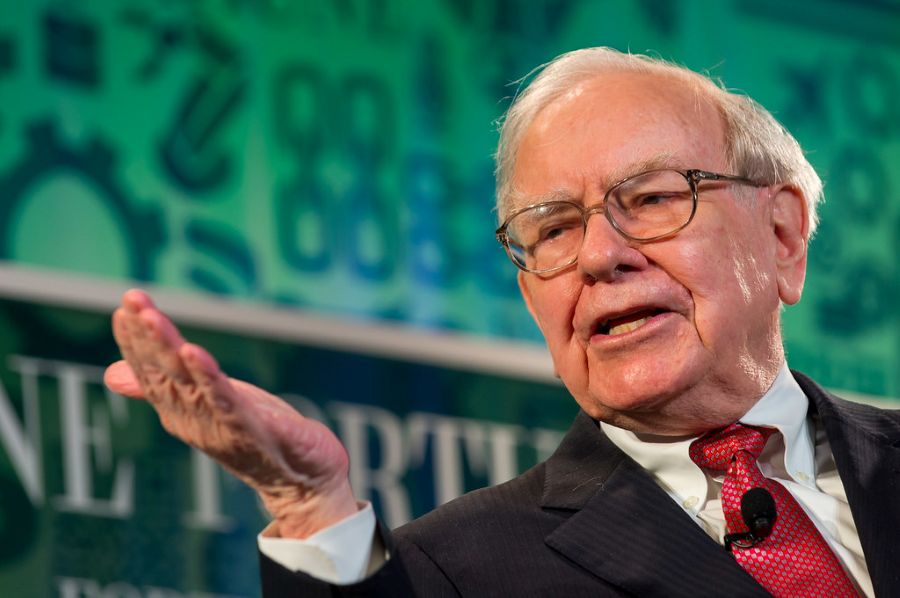
An extraordinary era in American business is coming to an end.
Warren Buffett is officially stepping away from the chairman’s seat at Berkshire Hathaway, closing another chapter in a remarkable run that stretched for more than half a century and turned the legendary investor into one of the most influential figures in modern business.
Berkshire announced Friday that Buffett, 96, will become chairman emeritus effective immediately. He isn’t cutting ties with the company entirely, however, and will remain on Berkshire’s board of directors.
Taking his place as chairman will be his son, Howard Buffett.
Howard has served as a Berkshire director since 1993 and has spent decades leading the Howard G. Buffett Foundation. His elevation to chairman represents another major piece of a succession plan Berkshire has been preparing for years.
For Warren Buffett, the announcement marks the latest — and one of the most significant — steps away from the company he spent decades building into a corporate powerhouse.
Buffett had served as Berkshire Hathaway’s chairman since 1970.
During that time, he oversaw an extraordinary transformation, taking what had once been a struggling textile business and building it into a massive conglomerate with operations spanning insurance, railroads, energy, manufacturing, retail and services.
His influence over the company’s day-to-day operations had already begun to diminish.
Buffett stepped down as Berkshire’s chief executive late last year, turning control of the company over to longtime lieutenant Greg Abel.
Now the chairman’s title is changing hands as well.
Friday’s announcement means Berkshire is entering a new era in which Abel runs the company’s operations while Howard Buffett oversees the board.
Warren Buffett, however, isn’t disappearing.
As chairman emeritus, he will remain a director and continue providing his judgment and perspective to the company’s leadership — preserving a connection between Berkshire’s future and the man who shaped its identity for generations.
Following the announcement, Abel paid tribute to the enormous impact Buffett has had on the company.
“Warren’s impact on Berkshire and its owners is without parallel in the history of American business,” Abel said in a statement. “The culture Warren built and the values he championed will remain at the heart of Berkshire, and Howard will be their guardian.”
That culture became almost as famous as Buffett himself.
Rather than chasing every new market trend, Buffett built his reputation around patience, long-term investing, disciplined acquisitions and a straightforward approach to evaluating businesses.
Under his leadership, Berkshire accumulated an enormous portfolio of operating companies while also becoming famous for taking major stock positions in some of America’s most recognizable corporations.
Along the way, Buffett became more than a corporate executive.
His annual shareholder letters, public appearances and Berkshire shareholder meetings turned the Omaha investor into one of the world’s most closely followed voices on investing, business and the American economy.
But the transition away from Buffett has been unfolding for some time.
Last year, Buffett announced that Abel would become Berkshire’s top executive. He later signaled that his own public presence would shrink, including fewer appearances at Berkshire’s annual meeting and an end to writing the company’s annual shareholder letter.
Howard Buffett’s move into the chairman’s position wasn’t unexpected either.
The younger Buffett had long been identified as an important part of Berkshire’s eventual succession structure, with his father previously describing the chairman’s role as a safeguard for the company’s distinctive culture and values once he was no longer overseeing daily operations.
That succession plan is now becoming reality.
Greg Abel is running Berkshire as CEO.
Howard Buffett is taking control of the board as chairman.
And Warren Buffett — after more than five decades at the center of one of the most remarkable corporate transformations in American history — is moving into an advisory role as chairman emeritus.
The legendary investor may still have a seat at the table.
But the company he built is officially moving into its post-Buffett leadership era.

Dolly Parton had one final message for the music world — and it was delivered after her death.
The country music legend appeared on screen Wednesday night during the 2026 Americana Honors & Awards, where she was posthumously honored with the Americana Lifetime Achievement Award.
Parton died Aug. 25 at the age of 80 following what was described as a “brief battle with cancer.”
But before her death, Parton had recorded a video accepting the prestigious honor. When it played before the audience Wednesday night, fans were given one more chance to hear from the woman whose unmistakable voice, personality and songwriting helped define generations of American music.
And in classic Dolly fashion, she opened simply.
“Well, hey, it’s Dolly. I’m honored to be receiving a Lifetime Achievement Award from the Americana Music Association.”
Parton then looked back at where it all began — in Tennessee’s Smoky Mountains, surrounded by the roots music that would eventually help propel her from humble beginnings to worldwide fame.
“I mean, roots music, or what is now called Americana music, is what I grew up playing back in the Smoky Mountains,” Parton continued. “It’s that same music that drew me back to East Tennessee in 1997 to write and record my album, Hungry Again. And that project really opened the door to a series of bluegrass and acoustic albums that changed the course of my career in so many ways.”
Those projects brought Parton back to the acoustic sounds of her childhood while introducing her music to another generation of listeners.
Looking back, Parton recognized just how important that chapter had become.
“Now, new fans discovered these albums, new Americana music communities embraced them, and now looking back at it all, I see this era of my career as a musical renaissance of sorts,” Parton said. “I want to thank everyone at the AMA for recognizing me with this award. It’s a great honor truly, and just know that I will always love you.”
Those final words carried unmistakable weight.
“I will always love you” wasn’t merely a farewell. It was also a poignant reference to one of the most famous songs Parton ever wrote — turning the closing moments of her prerecorded acceptance into an especially emotional goodbye.
The tribute didn’t end there.
Dolly Parton posthumously accepts award in pre-recorded Lifetime Achievement speech 🤍 pic.twitter.com/dRzCHuzc0Q
— TMZ (@TMZ) September 17, 2026
Longtime friend and fellow country music icon Emmylou Harris took the stage to remember Parton’s extraordinary journey from a young Tennessee singer with enormous ambitions to one of the most recognizable entertainers in the world.
Harris recalled the pivotal moment in 1967 when Parton joined Porter Wagoner’s television program, an opportunity that helped introduce her to a national audience.
But Harris made clear that Parton was never destined to remain in someone else’s shadow.
“In 1967, Dolly got a good start on her big dream when she landed a gig as the girl singer with Porter Wagoner. Their duets were a hit on the show and on the charts, but Dolly was nobody’s sidekick. She wanted more and she deserved more, and she set out to get it always, always on her own terms,” Harris, 79, said. “And we all know what happened when Dolly set her sights on something.”
What happened was a career that exploded far beyond the boundaries of country music.
Parton became a crossover pop success, a movie star and an internationally recognized entertainer while maintaining the East Tennessee identity that remained central to her public image and music.
Her songwriting alone established an enormous legacy. But Harris reminded the audience that Parton’s talents went far beyond the songs she wrote.
“She was one of our all-time greatest songwriters, but she shined just as brightly on stage,” Harris shared. “She lit up the TV screen and then she, she lit up the movie screen.”
Then there was the personality.
Parton’s ability to move an audience with a song and, moments later, make that same audience laugh became one of the trademarks of her decades in the spotlight.
“Her stunningly beautiful, pure mountain voice could make us cry and then crack us up with a well-aimed, sometimes body joke,” Harris said. “There was nothing Dolly couldn’t do, and so she did it.”
The evening’s tribute ultimately returned to the music.
Brandi Carlile and I’m with Her performed Parton’s “Coat of Many Colors,” one of the songs most closely associated with her upbringing and remarkable journey from the Smoky Mountains to international superstardom.
Parton was honored alongside other recipients at Wednesday’s ceremony, including Led Zeppelin frontman Robert Plant.
But it was Parton’s own prerecorded words that provided one of the night’s most poignant moments.
A final appearance. A final thank-you.
And an ending that could hardly have been more fitting:
“Just know that I will always love you.”
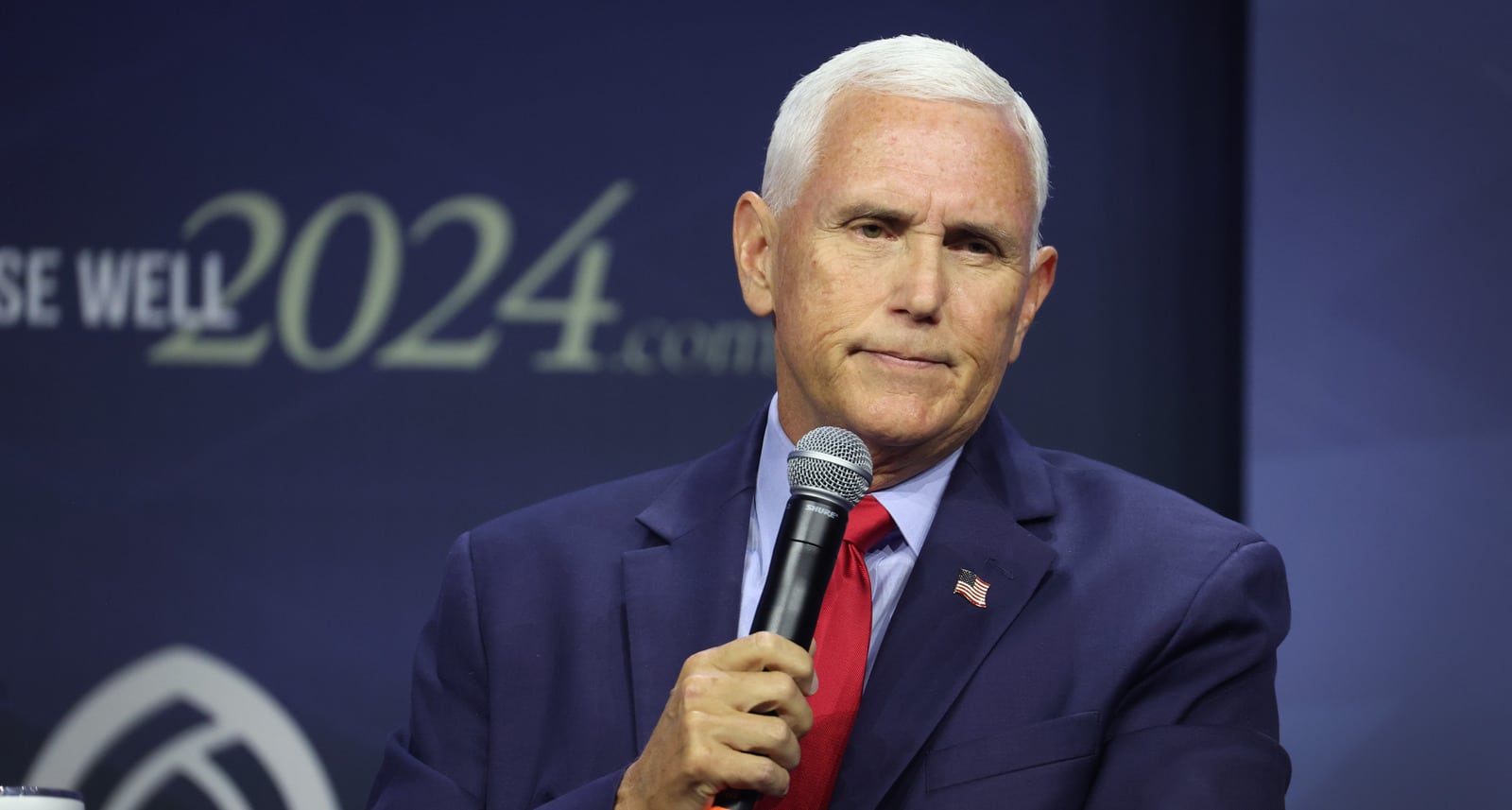
Former Vice President Mike Pence is making his plans for 2028 clear — and another run for the White House apparently isn’t part of them.
After years of political upheaval, a failed 2024 presidential campaign and a dramatic break with President Donald Trump, Pence said this week that he currently has no plans to seek the presidency — or any other elected office — in 2028.
The former vice president addressed his political future during an appearance at the Economic Club of Washington, D.C., where chairman David Rubenstein pressed him about whether voters could see his name on another presidential ballot.
“What I can tell you is that we have no plans,” Pence replied.
Rather than gearing up for another campaign, Pence said his attention is centered on his family and Advancing American Freedom, the conservative policy organization he founded after leaving the White House.
Pence said he intends to use his public platform to continue advocating for the conservative principles that have defined much of his career, including lower taxes, limited government, reduced regulation, traditional values and opposition to abortion.
“The calling of my life right now is to be a champion for these principles,” Pence said.
The comments put considerable distance between Pence and the emerging 2028 presidential contest, even as Republicans begin looking ahead to the next battle for the White House.
Pence has been down that road before.
In 2023, he launched a Republican presidential campaign that put him directly against Trump, his former running mate and the president he served alongside for four years. But Pence struggled to gain traction and suspended his campaign in October 2023, months before Republican voters began casting primary ballots.
He later declined to endorse Trump in the 2024 election.
Trump ultimately secured the Republican nomination and returned to the White House.
But the political split between the two men goes back much further.
Pence served as Trump’s vice president from 2017 until 2021 after previously serving as Indiana governor and a member of Congress. Their once-close political alliance fractured following the 2020 presidential election and the events surrounding Jan. 6, 2021.
Trump urged Pence, who was presiding over the congressional certification of the Electoral College vote, to reject or delay certification of Joe Biden’s victory.
Pence refused, concluding that the Constitution gave him no authority to do so.
Years later, he remains unapologetic about that decision.
“It was the easiest decision I’ve ever made,” Pence said. “By God’s grace I did my duty that day.”
Since leaving office, Pence has remained active in Republican politics, but increasingly as a voice arguing for a more traditional strain of conservatism as parts of the GOP have embraced populist policies.
Through Advancing American Freedom and his public appearances, Pence has continued promoting free markets, limited government, a strong American role overseas and socially conservative policies.
Earlier this year, he argued that Republicans should determine what principles they want their party to stand for before becoming consumed with the question of who should carry the GOP banner in 2028.
Now Pence appears to be taking himself out of that conversation — at least for the time being.
Notably, he stopped short of declaring that he would never seek public office again. His wording was narrower: He has “no plans” to run in 2028.
For the foreseeable future, however, Pence says his focus is on advancing his political philosophy rather than launching another campaign.
And his willingness to publicly challenge Trump hasn’t disappeared.
Earlier this year, Pence broke with the president over the possibility that people involved in the Jan. 6 Capitol riot could receive taxpayer-funded compensation.
Speaking with Axios while discussing his book *What Conservatives Believe*, Pence described Jan. 6 as a “tragic day” and drew a firm line when it came to people who committed violence against law enforcement.
“I didn’t agree with the President when he pardoned people who engaged in violence against law enforcement officials,” Pence said.
Then he went further.
“And it would be my hope that anyone who engaged in violence against law enforcement or at the Capitol building would never be rewarded with taxpayers’ money.”
The comments underscored a political divide that has persisted years after Pence left the vice presidency.
For now, Pence appears prepared to remain part of the conservative debate — just not as a candidate in 2028.

Warren Buffett Makes Shocking Announcement

Dolly Parton Delivers Stunning Video Message Weeks After Her Death

Get Ready — Mike Pence Makes Stunning 2028 Announcement

Trump Chief Of Staff Susie Wiles Shares Shocking Personal News

JD Vance Issues Stunning New Warning – Didn’t Expect This!

Removed From the Country — Ilhan Omar Hit With Horrid News

‘The Five’ Gets Emotional As Greg Gutfeld Announces Tragic News

‘EFFECTIVE IMMEDIATELY’ — Barack Obama Gets Devastating News

Everyday Americans Being Treated As Criminals — Including You, Right Now

Schumer Loses! Court Sides With Trump In Historic Move

HUGE: 9/11 Widow Goes Rogue, Makes Damning Call Out During Ground Zero Ceremony
Removed From the Country — Ilhan Omar Hit With Horrid News
-
 Economy5 months ago
Vance Leaves Meeting, Looks Straight Into Camera, Announces Stunning Arrest
-
 Economy5 months ago
Adam Schiff Facing 30 Years In Prison After Bank Records Leak
-
 Economy5 months ago
Supreme Curt Sides With Trump — He Can Remove The All
-
 Culture3 months ago
Michelle Obama Drops Nasty Bomb About ‘Useless’ Daughter
-
 Economy5 months ago
All Hell Breaks Loose On Fox When Jesse Watters Asks Fetterman One Question
-

 Economy3 months ago
Prayers Pour In After Fox Host Dies: ‘Senseless Murder’
-
 Latest3 months ago
Fox News Stuns With Announcement About 5 Fired Hosts
-
 Economy5 months ago
NBC Stops LIVE Broadcast — Breaks Big Trump News