
Politics
WATCH: Oklahoma trans attorney jailed for contempt after epic court meltdown

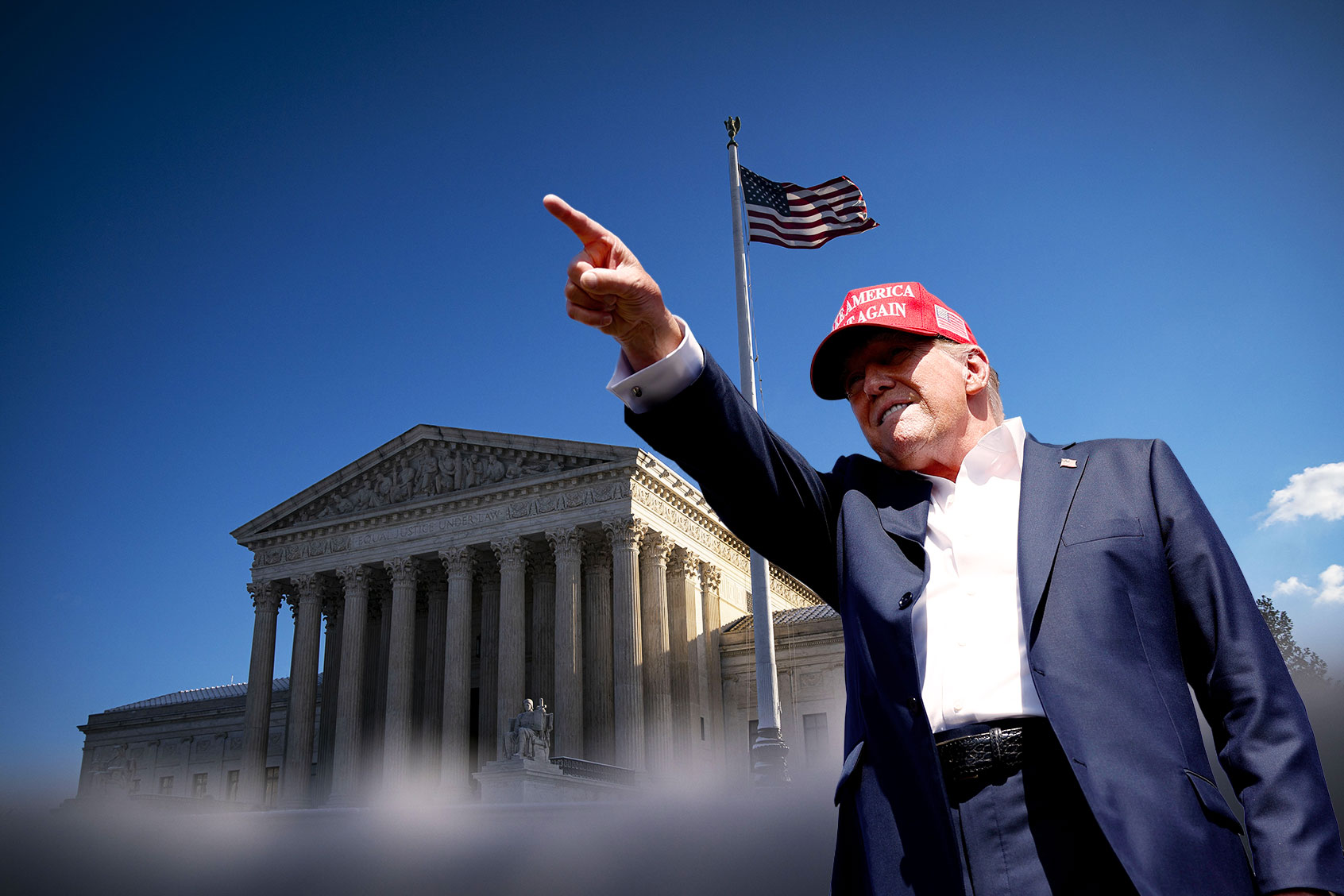
A majority of U.S. Supreme Court justices appeared skeptical of state laws that allow the counting of ballots days and weeks after Election Day, based on the questions they asked during oral arguments.
One comment by Justice Samuel Alito seemed to resonate with several justices when he said, “Independence DAY, birthDAY, and Election DAY. They are all particular DAYS. So if we start with that, if I have nothing more to look at than the phrase ‘Election Day,’ I think this is the DAY in which everything is going to take place.”
Justice Elena Kagan disagreed, stating that Alito’s logic could also render early voting illegal. The Republican National Committee countered that its lawsuit against Mississippi only targets the five-day post-election grace period for receiving ballots that were postmarked by Election Day.
Several conservative justices raised concerns about allowing ballots to arrive after Election Day, including whether voters could recall ballots once they’ve shipped them but before they arrive at election offices. Justice Brett Kavanaugh questioned whether late-arriving ballots risk undermining election confidence.
“The longer after Election Day any significant changes in vote totals take place, the greater the risk that the losing side will cry the election has been stolen,” Kavanaugh said, quoting from an analysis by a New York University law professor.
Fox News reported that 29 states have some form of a grace period to receive ballots after polls close on Election Day.
The case reaches the Supreme Court amid a broader national debate over mail-in voting. Last year, four Republican-led states eliminated ballot receipt grace periods, and lawmakers in Congress are considering proposals that would further restrict voting by mail.
The discussion comes as the Senate debates election legislation backed by Donald Trump that would impose new nationwide voting requirements. The measure, known as the SAVE Act, faces long odds in the Senate due to the filibuster.
Paul Clement, representing the Republican National Committee, argued that the possibility of election outcomes changing due to ballots received after Election Day would be unacceptable to losing candidates.
Following the 2020 election, Donald Trump called on election officials not to count ballots that arrived after Election Day, though several states continued processing such ballots in accordance with their laws.
“If you have an election and the election is going to turn on late-arriving ballots in a way that means what everybody kind of thought was the result on Election Day ends up being the opposite, a week later, 21 days later, the losers are not going to accept that result. Full stop,” Clement told the justices.
Mississippi Secretary of State Michael Watson, a Republican defending the state’s law, argues that federal statutes permit ballots cast by Election Day to be received and counted afterward. In court filings, attorneys for Watson contend that both legal and historical precedent support that interpretation, maintaining that states can determine ballots are finalized when submitted rather than when they are received.
During arguments, the justices appeared divided along ideological lines. Conservative members of the court expressed skepticism toward ballot receipt grace periods, while liberal justices were more receptive to the state’s position. Conservatives currently hold a 6–3 majority on the Supreme Court.
“It seems to me that we have a very long history of states having a variety of different ballot receipt deadlines, to include after Election Day,” said Justice Ketanji Brown Jackson.
Mississippi Solicitor General Scott Stewart informed the court that the dispute centers on whether a law enacted by Congress in 1845 prohibited states from counting ballots that were cast by Election Day but submitted afterward. “No one challenged it until now,” Stewart said.

Trump Vows To Find ‘Sick Person’ In Iran Rescue Leak, Warns Media Could Face Jail For Not Divulging
Woman Uses Soap To Write ‘Call 911’ On Hotel Room Window As Other Guests Hear Screams
7-Year-Old Boy Drowns Near Park Trying To Help Friend, Family Says

Pentagon targets Iran-linked militias in Iraq as Hegseth vows ‘we will finish this’ for fallen US troops

Inside Joe Kent’s abrupt fall as GOP backlash grows over antisemitism accusations, FBI probe

9 Celebrities who have spoken out about being photoshopped
-
 Politics3 weeks agoPentagon targets Iran-linked militias in Iraq as Hegseth vows ‘we will finish this’ for fallen US troops
 -
 News3 weeks ago
Inside Joe Kent’s abrupt fall as GOP backlash grows over antisemitism accusations, FBI probe
-
 Entertainment9 years ago
9 Celebrities who have spoken out about being photoshopped
-
 News2 weeks ago
Top Democrat Arrested By Capitol Police – Dragged Out In Handcuffs
-
 News2 weeks ago
ALERT: Entire Election Just FLIPPED!
-
Latest7 days ago
Bulls waive Jaden Ivey after he called NBA’s Pride Month celebration ‘unrighteousness’
-
 Latest3 weeks ago
House Democrats vote against deporting immigrants who harm police dogs, horses
-
Latest2 weeks ago
Chicago police detail how illegal immigrant accused of killing college student was caught: arrest report