
Politics
House lawmakers express disgust over Swalwell not being exposed sooner: ‘It’s shameful’


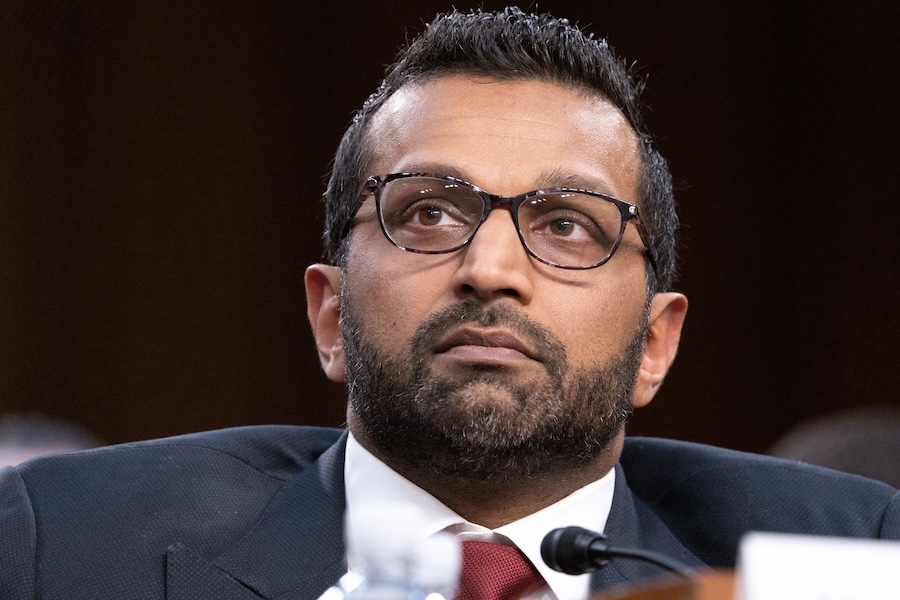
One of FBI Director Kash Patel’s top deputies is abruptly leaving the bureau, creating another opening at the highest levels of an agency already undergoing major organizational changes.
Andrew Bailey, the former Missouri attorney general who has served as one of the FBI’s co-deputy directors, announced Monday that he is stepping down after roughly a year at the bureau and returning home to his family in Missouri.
His final day will be Friday, Oct. 2.
“With great pride in what we have accomplished, I am announcing that I am stepping down to return to my family in Missouri,” Bailey said.
Bailey joined the FBI in 2025 after leaving the Missouri attorney general’s office and became part of an unusual leadership structure under Patel, serving alongside another co-deputy director.
His departure comes as Patel continues implementing major personnel and organizational changes at the FBI amid longstanding political disputes over the bureau and allegations of political bias in federal law enforcement.
Bailey, a Republican who previously served as Missouri’s top law enforcement official, has been a vocal supporter of Patel’s efforts to reshape the agency.
And despite his sudden departure, Bailey made clear that he continues to support Patel and the direction of the bureau.
“I am confident Director Patel will continue to reform the FBI, combat violent crime, defend the homeland, ensure strong organizational accountability, and restore public trust in this institution of excellence,” he added.
Bailey also thanked President Donald Trump, Attorney General Todd Blanche and Patel for giving him the opportunity to serve.
During his tenure, Bailey became a visible member of the FBI’s leadership team, appearing alongside federal and state officials during law enforcement operations and promoting the bureau’s emphasis on combating violent crime.
He also participated in major investigations and enforcement initiatives as Patel’s leadership team sought to redirect bureau resources and address concerns among conservatives who had become deeply skeptical of the FBI.
The bureau has undergone extensive personnel and organizational changes since Patel became director in February 2025.
Patel has argued that the FBI needs to move away from what he describes as politicized enforcement and refocus the bureau on traditional law enforcement priorities, including violent crime, counterterrorism and threats to national security.
Those efforts have made Patel’s tenure closely watched in Washington as the Trump administration pursues broader changes across the federal government.
Bailey’s resignation now creates another vacancy near the top of the FBI less than two years into Patel’s tenure.
But Bailey said his decision was personal.
According to his public announcement, he is leaving Washington to return to Missouri and spend more time with his family.
Nothing in Bailey’s announcement indicated that he had been forced from his position or that his departure resulted from a dispute with Patel.
Instead, Bailey used his exit announcement to praise the FBI’s work during his tenure and publicly reaffirm his confidence in Patel.
His departure nevertheless removes a prominent member of Patel’s leadership team at a consequential moment for the bureau.
With Bailey preparing to leave Washington on Friday, Patel will now move forward without one of the senior officials who helped carry out the FBI overhaul during its first year under his leadership.
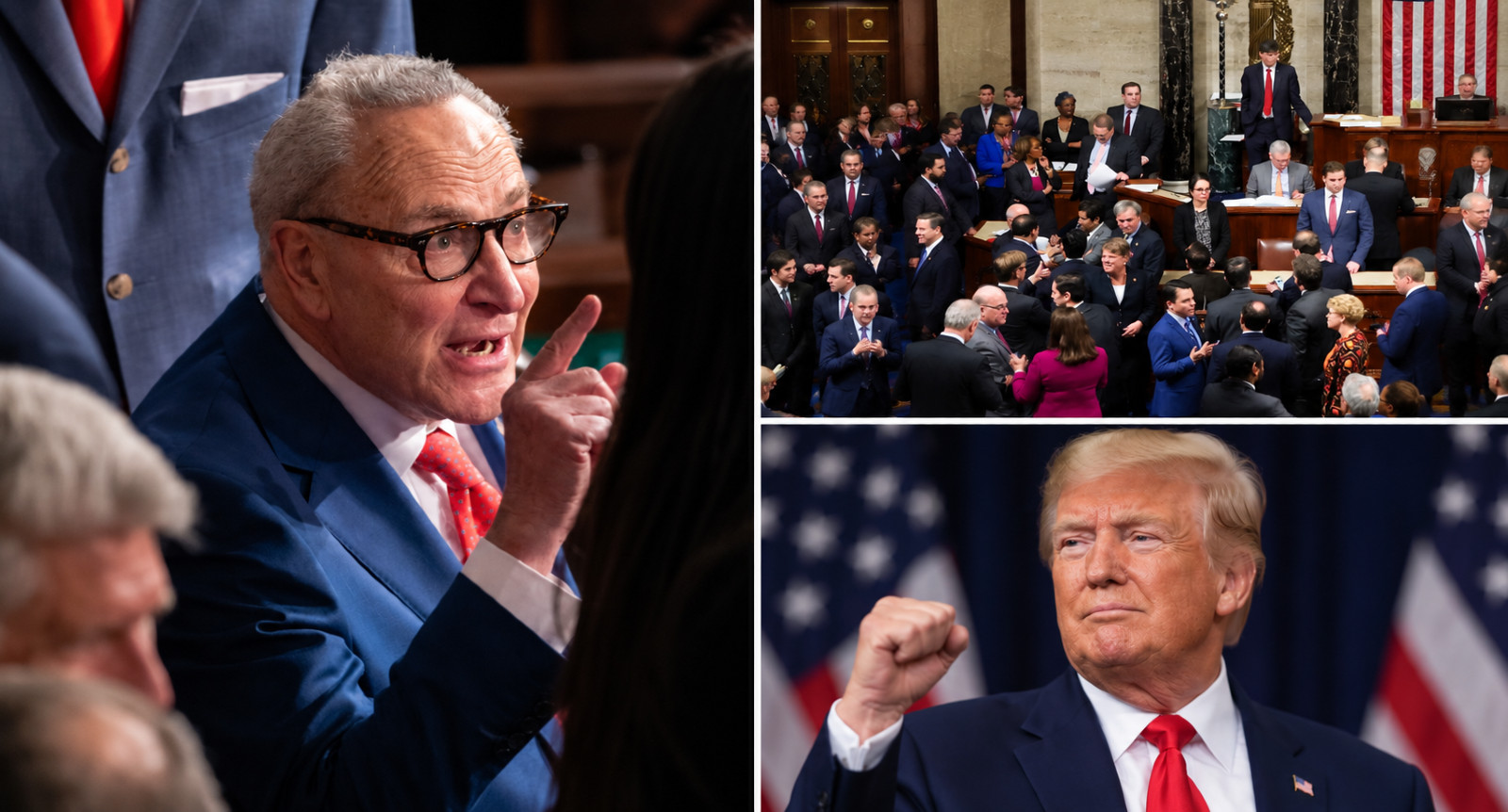
President Donald Trump added another lifetime appointment to the federal bench Monday as the Senate confirmed Ohio appeals court Judge Matthew R. Byrne to the U.S. District Court for the Southern District of Ohio.
Byrne cleared the Senate in a 52-45 vote, giving Trump another federal judge during his second term and continuing the administration’s effort to fill vacancies across the federal judiciary.
The confirmation came after the Senate narrowly advanced Byrne’s nomination the previous evening.
Trump nominated Byrne earlier this year to fill the vacancy created by the retirement of U.S. District Judge Michael H. Watson.
Byrne currently serves on Ohio’s Twelfth District Court of Appeals, where he has sat since winning election in 2020.
Before joining the bench, Byrne spent approximately a decade practicing employment law.
Sen. Jon Husted, R-Ohio, highlighted Byrne’s record before the Senate Judiciary Committee, noting that the Ohio judge had participated in more than 800 appeals and authored hundreds of majority, concurring and dissenting opinions.
Husted described Byrne as hardworking, thoughtful and fair while praising his commitment to the rule of law.
Byrne’s record also attracted attention over his previous involvement with organizations opposed to abortion.
He has been affiliated with Ohio Right to Life, Cincinnati Right to Life, Warren County Right to Life, the Center for Christian Virtue and the Federalist Society.
Byrne also previously served on the board of a pregnancy center opposed to abortion.
Those issues did not prevent his nomination from clearing the Senate.
The final tally stood at 52 votes in favor and 45 against.
The confirmation is particularly consequential because Byrne is not receiving a temporary appointment.
Article III judges receive lifetime tenure after Senate confirmation, allowing them to remain on the federal bench until they retire, resign, die or are removed through impeachment.
That means Monday’s vote gives Trump another potentially long-lasting appointment to the federal judiciary during his second term.
The confirmation came as Senate leaders kept lawmakers in Washington for a final legislative push before senators return home.
Senate Majority Leader John Thune filed a series of procedural motions Monday targeting utility costs, congressional stock trading, healthcare regulations and a Cabinet nomination.
The chamber also completed work on the bipartisan Protect College Sports Act, approving the legislation in a decisive 77-22 vote.
The legislation would establish national rules governing athlete compensation, transfers, scholarships, medical coverage and name-image-likeness agreements.
The measure now heads to the House, which must act before the current Congress ends if the legislation is to survive.
Thune’s next major target is H.R. 9340, the Ratepayer Protection Act, which has already sailed through the House with overwhelming bipartisan support.
The House approved the legislation 417-3 on September 16, with 210 Republicans and 206 Democrats voting in favor.
The bill takes aim at a rapidly emerging issue surrounding America’s electricity infrastructure: the enormous power demands created by massive data centers and other facilities consuming at least 100 megawatts.
Under the legislation, state regulators would be required to consider standards designed to make qualifying large-load customers cover incremental costs associated with generation, transmission and distribution upgrades.
Republicans have highlighted the measure while arguing that ordinary households should not be forced to subsidize electricity infrastructure constructed primarily to serve massive technology companies and other large-scale power consumers.
Sen. John Kennedy summed up that argument in blunt terms.
“you’ve got to pay your own electricity.”
Sen. Josh Hawley has also raised concerns about the impact of rapidly expanding data centers in Missouri, where residents fear the facilities could consume farmland while contributing to sharply higher household electricity costs.
The burst of Senate activity puts several major issues on the chamber’s agenda, but Monday also delivered another lasting result for Trump’s second-term judicial agenda.
With Byrne confirmed, another Trump nominee has secured a lifetime position on the federal bench — an appointment whose impact could extend years beyond the president’s current term.
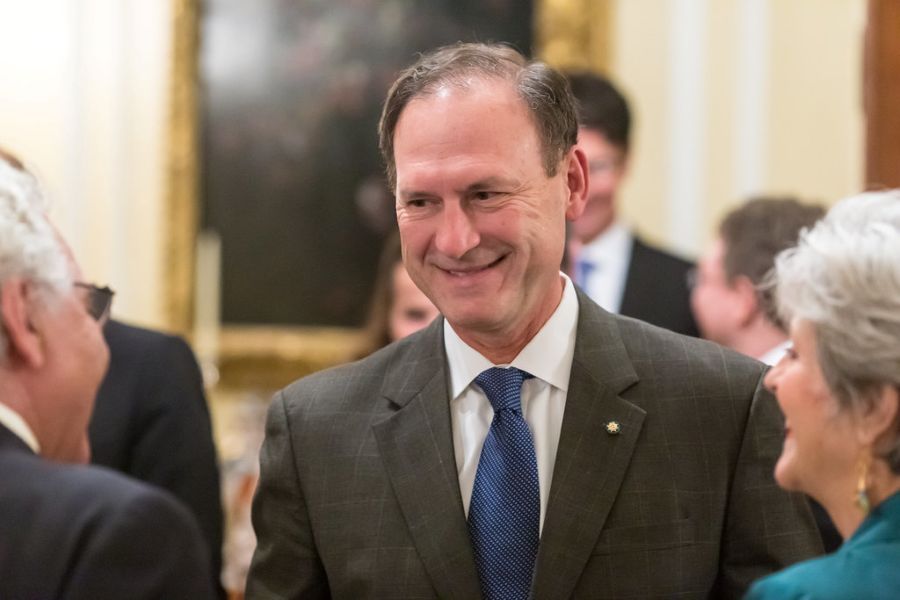
Supreme Court Justice Samuel Alito has abruptly withdrawn from one of the most consequential climate-related cases before the high court, leaving just eight justices to decide a dispute that could affect lawsuits seeking billions of dollars from fossil-fuel companies.
The court notified attorneys Monday that Alito “has determined that he will not continue to participate” in *Suncor Energy Inc. v. County Commissioners of Boulder County*.
No explanation was provided for his decision.
The last-minute development comes ahead of arguments in a closely watched Colorado case that could have implications for similar climate lawsuits brought by states and municipalities across the country.
The dispute dates back to 2018, when Boulder County and the City of Boulder sued Exxon Mobil and Suncor Energy in Colorado state court. San Miguel County later joined the litigation.
The municipalities allege the companies contributed to “climate-related harms” through decades of fossil-fuel production, refining and sales, along with what the plaintiffs describe as “concealment or misrepresentation” concerning the risks associated with their products.
They are seeking damages under Colorado state law for costs they attribute to climate change, including flooding, wildfire risks, drought and damage to public infrastructure.
The energy companies argue that the claims cannot proceed under state tort law because federal law governs interstate air pollution and because allowing individual states to regulate conduct tied to global emissions raises constitutional concerns.
After years of litigation over where and how the case could proceed, the Colorado Supreme Court allowed the lawsuit to move forward.
The U.S. Supreme Court subsequently agreed to hear the dispute.
The stakes extend far beyond Colorado.
Similar lawsuits have been filed against fossil-fuel producers by states and local governments seeking compensation for climate-related costs. The Supreme Court’s eventual decision could therefore shape how those cases proceed.
Alito’s withdrawal is particularly notable because he previously recused himself from an earlier petition arising from the same Colorado litigation in 2023.
He has also stepped aside from other energy-related cases.
When the Supreme Court agreed to hear the current Suncor appeal, however, a court spokesperson said in May that Alito “does not have a financial interest in any party” and that the court’s legal counsel had determined recusal was not required.
Alito does not own stock in Exxon Mobil or Suncor.
His most recent financial disclosure does list individual investments in other energy companies, including ConocoPhillips and Phillips 66, which are defendants in separate climate-related litigation.
Advocacy groups had argued that those investments, combined with the potential industry-wide implications of the Suncor case, raised questions under the Supreme Court’s Code of Conduct.
The code states that a justice should recuse when the justice’s impartiality might reasonably be questioned or when the justice has a financial interest in the subject matter in controversy.
But justices generally are not required to explain why they recuse themselves, and Alito has not publicly stated what prompted his decision in this case.
His absence could have a significant procedural consequence.
Only eight justices will now participate. If the court divides 4-4, the Colorado Supreme Court’s ruling would remain in place without establishing a nationwide Supreme Court precedent.
The remaining court includes five conservative justices and three liberal justices, although ideological alignment does not necessarily determine how individual justices will approach the federal-preemption questions presented in the case.
Alito had been viewed by some legal observers as potentially receptive to the companies’ argument that federal law prevents states from using their own tort laws to impose liability over emissions associated with global climate change.
His decision to step aside removes one vote from the case before arguments even begin.
What remains unexplained is why.
The court’s notification says only that Alito “has determined that he will not continue to participate,” leaving the reason for his withdrawal undisclosed as the justices prepare to hear a case with potential consequences for climate litigation nationwide.

Kristi Noem Shares Huge Relationship News After Months Of Speculation

BREAKING: FBI Rocked By Sudden Shocking Resignation

Fox News Under Fire After Hiring Notorious Democrat; Ex-Host Explodes

Fireworks Erupt On Capitol Hill After 52-45 Vote For Trump!

NEW: Justice Alito Abruptly Reverses Course In Key SCOTUS Case

National Emergency Declared — Trump Called In

‘The Five’ Gets Emotional As Greg Gutfeld Announces Tragic News

Joe Biden’s Daughter Just Dropped Massive Public Bombshell On Her Dad

Removed From the Country — Ilhan Omar Hit With Horrid News

Obama Calls It QUITS After Wild Video Goes Viral

Get Ready — Mike Pence Makes Stunning 2028 Announcement

Schumer Loses! Court Sides With Trump In Historic Move
-
 Economy6 months ago
Vance Leaves Meeting, Looks Straight Into Camera, Announces Stunning Arrest
-
 Economy6 months ago
Adam Schiff Facing 30 Years In Prison After Bank Records Leak
-
 Economy6 months ago
Supreme Curt Sides With Trump — He Can Remove The All
-
 Culture3 months ago
Michelle Obama Drops Nasty Bomb About ‘Useless’ Daughter
-
 Economy6 months ago
All Hell Breaks Loose On Fox When Jesse Watters Asks Fetterman One Question
-
 Economy4 months ago
Prayers Pour In After Fox Host Dies: ‘Senseless Murder’
-

 Latest3 months ago
Fox News Stuns With Announcement About 5 Fired Hosts
-

 Border & Security2 months ago
Top Trump Admin And Wife Found Dead — Chilling Update Just Released