
Latest
How scammers build a profile on you using data brokers

Go to any people-finder site right now and type in your name. What comes back might shock you: your age, home address, phone number, the names of your relatives, where you used to live and even what your property is worth.
You didn’t put that there, and you never consented to it. Still, it’s out there, and anyone with an internet connection can see it.
Scammers figured this out a long time ago. Since then, they’ve turned it into a system for targeting you, your parents and your kids.
So how does it actually work, and more importantly, what can you do to stop it?
Sign up for my FREE CyberGuy Report
HOW TO REMOVE YOUR PERSONAL INFO FROM PEOPLE-SEARCH SITES
Before a criminal sends a phishing email or makes a call, they do their homework. Importantly, they don’t need to hack anything. Instead, they use the same public websites that anyone can access.
In less than 10 minutes, a scammer can build a detailed profile on you using data broker sites like Spokeo, Whitepages, BeenVerified and Intelius. Here’s what that profile looks like and how they build it step by step.
It starts simply. A scammer types your name into a search site. Within seconds, they see results like:
John M. Patterson | Age: 61 | Cleveland, OH
That is the starting point. Many sites show partial data for free. That is often enough to confirm identity. Full reports cost only a few dollars, so access is easy. Scammers can repeat this process hundreds of times a day, building detailed profiles with very little effort.
Next, this is where things get personal. Data broker profiles show more than your name. They reveal your family network.
That often includes:
As a result, scammers can target more than one person. For example, they may learn that your elderly parent lives alone, or your child just moved. Because of that, scams like the grandparent scam feel real instead of random.
At this point, your address history becomes critical. It is not just about where you live. Instead, scammers use it to:
For example, referencing a past address makes a caller sound legitimate. That detail alone can lower suspicion.
More importantly, data brokers also reveal financial clues. These may include:
This information comes from public records, not hacking. Because of this, scammers tailor their approach. Higher-income targets may see investment scams. Others may get job or rental scams instead.
GOOGLE SEARCH LED TO A COSTLY SCAM CALL
Before launching a scam, criminals often double-check everything. They don’t rely on just one site. Instead, they compare multiple data broker profiles, social media accounts and public records to confirm details are accurate.
For example, they may:
Because of this, the profile becomes more reliable. That extra step is what turns a guess into something that feels real.
At that point, they have everything they need. They know your name, family, address and financial details. Now the scam becomes highly specific.
By the time you hear from them, they already know enough to sound like someone you trust.
As a result, the scam feels believable.
This has already landed in court. The U.S. Department of Justice has prosecuted companies like Epsilon, Macromark Inc. and KBM Group for selling data to scammers. Epsilon alone paid $150 million to victims.
At the same time, data tied to the FBI Internet Crime Complaint Center shows more than half of fraud cases involving older Americans were linked to exposed personal data. That shows how serious this problem has become.
You do not need to sign up for these sites. Instead, your data comes from many sources, including:
Because of this, your information spreads quickly.
Even after removal, your data often comes back. Data brokers constantly update their databases. They buy and resell fresh records. Because of that, one-time removal is not enough.
The goal isn’t to disappear completely. It’s to make the profile messy enough, incomplete enough, and hard enough to find that scammers move on to easier targets.
Here’s what you can do:
Check out my top picks for data removal services and get a free scan to find out if your personal information is already out on the web by visiting Cyberguy.com
Get a free scan to find out if your personal information is already out on the web: Cyberguy.com
This kind of scam works because it feels personal. When someone knows your name, your family and even where you used to live, your guard drops. That is exactly what criminals are counting on. The uncomfortable truth is that your information is already out there, often in more places than you realize. You do not need to panic, but you do need to be proactive. The more you limit what is easily accessible, the harder it becomes for someone to build a convincing story around you. Start with a simple search of your own name. That one step can completely change how you think about your digital footprint. From there, take action to remove what you can and protect what you cannot.
If a stranger can build a detailed profile on your family in minutes, what does that say about how much of your life is already exposed online? Let us know by writing to us at Cyberguy.com
Sign up for my FREE CyberGuy Report
Copyright 2026 CyberGuy.com. All rights reserved.

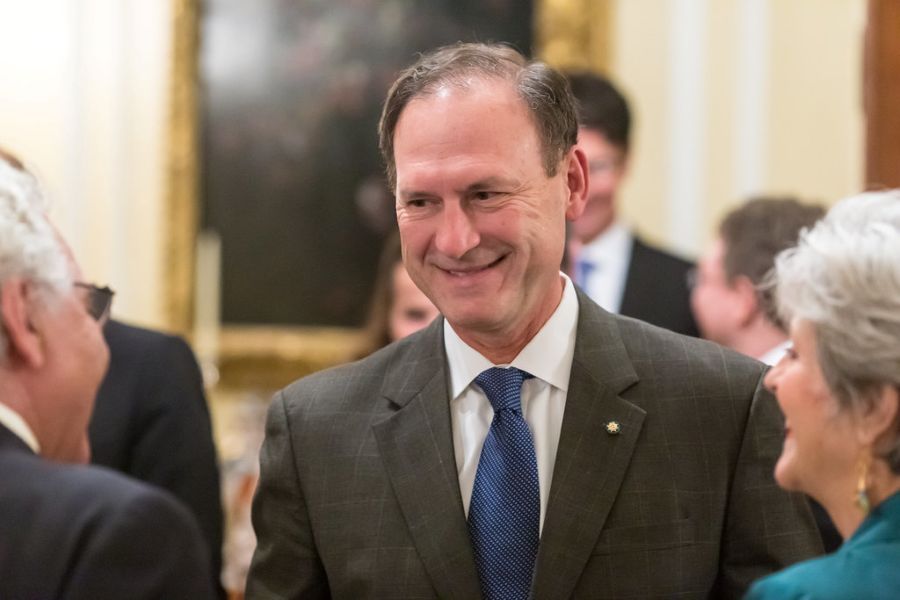
Supreme Court Justice Samuel Alito has abruptly withdrawn from one of the most consequential climate-related cases before the high court, leaving just eight justices to decide a dispute that could affect lawsuits seeking billions of dollars from fossil-fuel companies.
The court notified attorneys Monday that Alito “has determined that he will not continue to participate” in *Suncor Energy Inc. v. County Commissioners of Boulder County*.
No explanation was provided for his decision.
The last-minute development comes ahead of arguments in a closely watched Colorado case that could have implications for similar climate lawsuits brought by states and municipalities across the country.
The dispute dates back to 2018, when Boulder County and the City of Boulder sued Exxon Mobil and Suncor Energy in Colorado state court. San Miguel County later joined the litigation.
The municipalities allege the companies contributed to “climate-related harms” through decades of fossil-fuel production, refining and sales, along with what the plaintiffs describe as “concealment or misrepresentation” concerning the risks associated with their products.
They are seeking damages under Colorado state law for costs they attribute to climate change, including flooding, wildfire risks, drought and damage to public infrastructure.
The energy companies argue that the claims cannot proceed under state tort law because federal law governs interstate air pollution and because allowing individual states to regulate conduct tied to global emissions raises constitutional concerns.
After years of litigation over where and how the case could proceed, the Colorado Supreme Court allowed the lawsuit to move forward.
The U.S. Supreme Court subsequently agreed to hear the dispute.
The stakes extend far beyond Colorado.
Similar lawsuits have been filed against fossil-fuel producers by states and local governments seeking compensation for climate-related costs. The Supreme Court’s eventual decision could therefore shape how those cases proceed.
Alito’s withdrawal is particularly notable because he previously recused himself from an earlier petition arising from the same Colorado litigation in 2023.
He has also stepped aside from other energy-related cases.
When the Supreme Court agreed to hear the current Suncor appeal, however, a court spokesperson said in May that Alito “does not have a financial interest in any party” and that the court’s legal counsel had determined recusal was not required.
Alito does not own stock in Exxon Mobil or Suncor.
His most recent financial disclosure does list individual investments in other energy companies, including ConocoPhillips and Phillips 66, which are defendants in separate climate-related litigation.
Advocacy groups had argued that those investments, combined with the potential industry-wide implications of the Suncor case, raised questions under the Supreme Court’s Code of Conduct.
The code states that a justice should recuse when the justice’s impartiality might reasonably be questioned or when the justice has a financial interest in the subject matter in controversy.
But justices generally are not required to explain why they recuse themselves, and Alito has not publicly stated what prompted his decision in this case.
His absence could have a significant procedural consequence.
Only eight justices will now participate. If the court divides 4-4, the Colorado Supreme Court’s ruling would remain in place without establishing a nationwide Supreme Court precedent.
The remaining court includes five conservative justices and three liberal justices, although ideological alignment does not necessarily determine how individual justices will approach the federal-preemption questions presented in the case.
Alito had been viewed by some legal observers as potentially receptive to the companies’ argument that federal law prevents states from using their own tort laws to impose liability over emissions associated with global climate change.
His decision to step aside removes one vote from the case before arguments even begin.
What remains unexplained is why.
The court’s notification says only that Alito “has determined that he will not continue to participate,” leaving the reason for his withdrawal undisclosed as the justices prepare to hear a case with potential consequences for climate litigation nationwide.
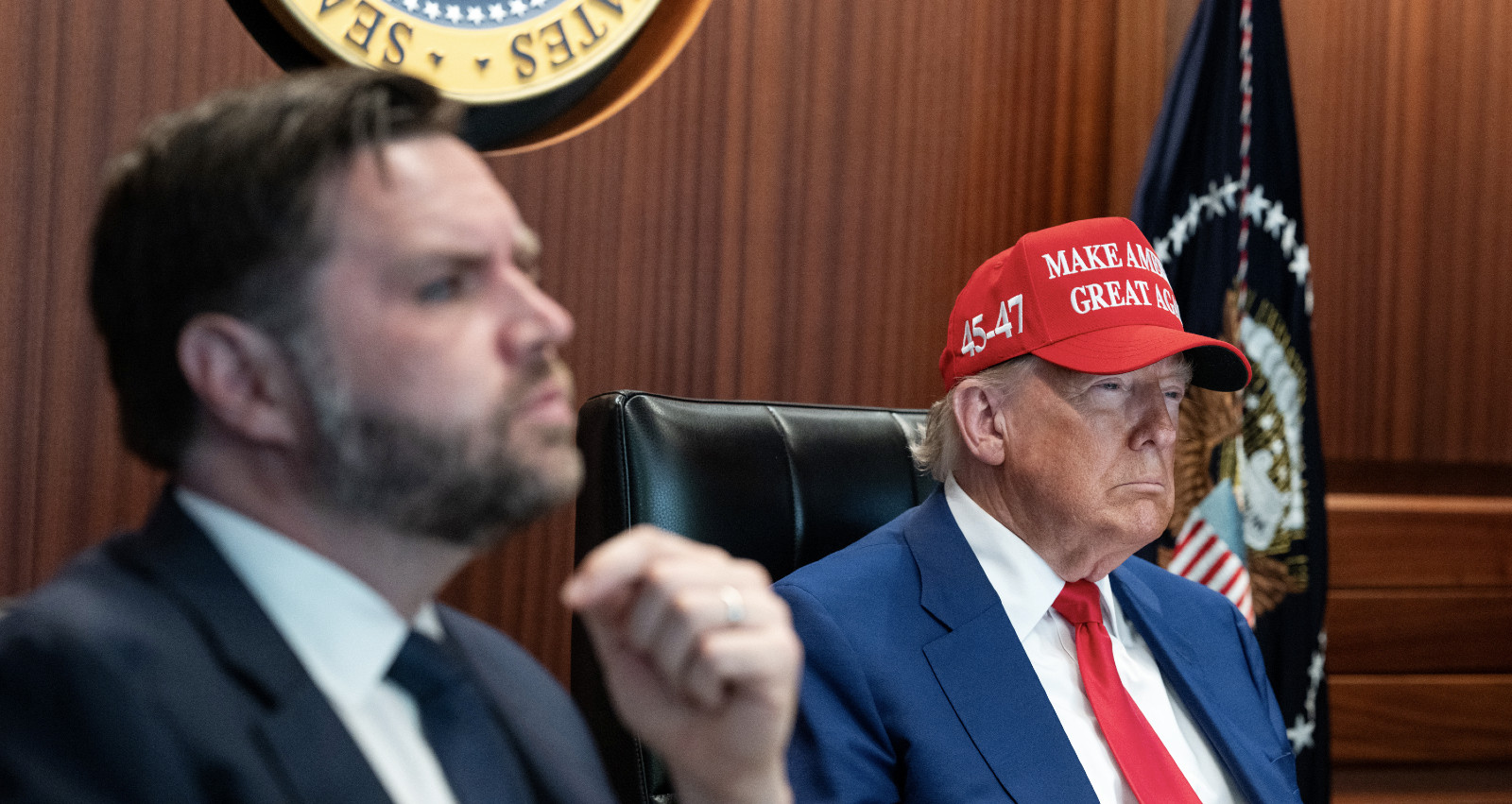
Five men have been arrested in a suspected terror plot near one of America’s most strategically important bomber hubs in Britain, triggering an intensive counterterrorism investigation and renewed security concerns surrounding U.S. military installations overseas.
British authorities launched the investigation after police received a report shortly before 1 a.m. Sunday about three suspicious vehicles apparently traveling toward RAF Fairford.
Armed officers descended on the nearby Whelford area and arrested five men initially on suspicion of explosives offenses. Authorities subsequently arrested the suspects on suspicion of preparing a terrorist act under Section 5 of Britain’s Terrorism Act.
All five are British nationals from London in their early twenties, police said Monday.
Investigators are now working to determine what the men allegedly intended to do, their motive and whether anyone else — including a foreign actor — played a role.
RAF Fairford is owned by Britain but serves as a strategically important operating location for the U.S. Air Force, including American long-range bombers.
The installation has taken on increased importance amid U.S. military operations involving Iran and the broader Middle East.
Former Defense Intelligence Agency official Andrew Badger said the circumstances surrounding the arrests immediately stood out.
Five suspects traveling in three separate vehicles, he argued, could indicate investigators are dealing with something more coordinated than an isolated individual.
“This isn’t just some type of amateur lone wolf operation,” Badger told Fox News Digital while discussing the investigation.
Badger also predicted the incident could lead to tougher security measures at American military facilities.
“We are going to see elevated security protocols,” he said.
The potential target is significant.
American B-1B Lancers and B-52 Stratofortresses have operated from RAF Fairford, providing the United States with a European location capable of supporting long-range strategic bomber missions.
Its reinforced runway stretches nearly two miles and is capable of handling some of America’s largest military aircraft.
President Donald Trump addressed the arrests Sunday and said American and British authorities had worked together in connection with the incident.
“They were looking to do big damage to our fort,” Trump told reporters.
Trump also praised cooperation between the United States and Britain following the arrests.
British authorities have been considerably more cautious about assigning a motive.
Investigators are still trying to establish what happened and why. Possible foreign involvement is reportedly among the avenues being examined, but authorities have not publicly concluded that Iran — or any other government — directed the alleged plot.
Iran’s embassy in London denied involvement Monday amid speculation surrounding the arrests.
Investigators are reportedly examining several possible motives, including potential Iranian links, Russian sabotage and Islamist extremism. None of those possibilities has been publicly established as the cause of the suspected plot.
The Iranian connection has drawn particular attention because of recent tensions surrounding military installations supporting operations against Tehran.
Iran’s Islamic Revolutionary Guard Corps warned in July that bases supporting attacks against Iranian territory could become military targets.
Britain had previously authorized American forces to use Fairford for certain operations against Iranian missile positions.
Security around the installation had reportedly already been increased.
Local councilor Tristan Wilkinson told Reuters that surveillance was stepped up following a specific Iranian threat roughly six weeks before Sunday’s arrests.
Authorities have not publicly established any connection between that earlier threat and the five suspects.
The response on the ground was substantial.
Approximately 85 households were evacuated while authorities established a roughly 400-meter security cordon as specialists examined vehicles connected with the investigation.
Reports indicated that a local farmer alerted authorities after spotting three large white vans and suspicious activity near the military installation. Hooded and masked individuals were reportedly seen running toward nearby fields.
Former Trump White House official Morgan Murphy said American agencies would likely be working closely with British investigators as authorities attempt to determine whether the alleged operation extended beyond the five suspects.
Murphy pointed to Air Force investigators, U.S. intelligence personnel and FBI officials stationed in London as among those who could become involved.
Investigators are likely to examine communications, financial transactions and other records for evidence of additional connections, he said.
The area contains another strategically important American military facility as well.
Nearby RAF Welford houses a major U.S. weapons and ammunition storage operation supporting American forces in Britain and across the European theater.
For now, the most important questions remain unanswered: what the five men allegedly planned, whether RAF Fairford was their intended target, and whether anyone else was behind them.
British counterterrorism authorities continue to investigate, and no foreign government or organization has been publicly identified by police as responsible for the suspected plot.

Republicans were dealt a surprise blow in one of Pennsylvania’s most reliably red state House districts after Democrat Brandon Dukes pulled off a razor-thin special-election upset in territory President Donald Trump carried by more than 18 points.
But the fight isn’t over.
Dukes defeated Republican Scott Timko by just 88 votes in Pennsylvania’s 12th House District in Butler County, flipping a seat Republicans had controlled for decades.
Now Republicans will get an immediate opportunity to take it back when Dukes and Timko face each other again in November.
The special-election result immediately drew attention because of just how Republican the district has historically been.
Trump carried the district by more than 18 percentage points in the 2024 presidential election, while former Republican state Rep. Stephenie Scialabba won the district by roughly 30 points that same year.
Scialabba’s resignation earlier this year created the vacancy and triggered the special election.
Dukes’ victory broke a Republican hold on the seat dating back decades and gave Democrats a significant pickup just months before the November midterms.
But Republicans are pointing to one major factor that could make the rematch very different: turnout.
Participation in the special election was unusually low, producing an electorate far smaller than the one expected to vote in November.
That leaves both parties preparing for a dramatically different contest when a much larger group of voters returns to the polls for the general election.
The Pennsylvania House Republican Campaign Committee made clear that it considers Tuesday’s result only the first round.
“The General Election starts today with Scott Timko reaching out to voters, building a winning coalition, and holding Brandon Dukes accountable for his extreme positions that he continues to hide from voters.”
The special-election reporting did not specify which positions Republicans were referring to.
Pennsylvania House Republican Leader Jesse Topper also sought to put the loss in perspective, describing the result as “disappointing but unsurprising” while pointing to changing demographics, the summertime election date and the unpredictable nature of special-election turnout.
“There is much more yet to unfold in the final months of the 2026 election cycle and we will continue carrying out vision for positive growth in Pennsylvania through November,” he said.
The district itself underscores why the result is attracting attention.
Pennsylvania’s 12th House District covers portions of Butler County north of Pittsburgh, including Cranberry, Adams and Jackson townships and several surrounding communities. Republicans also hold a substantial voter-registration advantage in the district.
Yet Dukes managed to overcome those structural advantages in the low-turnout special election and capture the seat by fewer than 100 votes.
The result gives Democrats control of a district that had long been considered safe Republican territory — at least for now.
Republicans will have their chance to reverse the upset on November 3, when Timko and Dukes meet again to determine who will represent the district for a full two-year term beginning in 2027.
With the special election decided by only 88 votes, the rematch is shaping up to be a closely watched Pennsylvania House contest heading into November.

NEW: Justice Alito Abruptly Reverses Course In Key SCOTUS Case

National Emergency Declared — Trump Called In

Seat Officially Flipped After HUGE Win and Election Upset

ALERT: Trump Set To Make ‘Special Announcement’ From Oval Office

CEO Charged In Scheme To Infiltrate Secret Service

Trump Torches Supreme Court Over Controversial New Ruling

‘The Five’ Gets Emotional As Greg Gutfeld Announces Tragic News

Joe Biden’s Daughter Just Dropped Massive Public Bombshell On Her Dad

Removed From the Country — Ilhan Omar Hit With Horrid News

Obama Calls It QUITS After Wild Video Goes Viral

Get Ready — Mike Pence Makes Stunning 2028 Announcement

Schumer Loses! Court Sides With Trump In Historic Move
-

 Economy6 months ago
Vance Leaves Meeting, Looks Straight Into Camera, Announces Stunning Arrest
-
 Economy6 months ago
Adam Schiff Facing 30 Years In Prison After Bank Records Leak
-
 Economy6 months ago
Supreme Curt Sides With Trump — He Can Remove The All
-

 Culture3 months ago
Michelle Obama Drops Nasty Bomb About ‘Useless’ Daughter
-
 Economy6 months ago
All Hell Breaks Loose On Fox When Jesse Watters Asks Fetterman One Question
-
 Economy4 months ago
Prayers Pour In After Fox Host Dies: ‘Senseless Murder’
-

 Latest3 months ago
Fox News Stuns With Announcement About 5 Fired Hosts
-

 Border & Security2 months ago
Top Trump Admin And Wife Found Dead — Chilling Update Just Released