
Latest
Dads aren’t optional — and America’s kids are paying the brutal price

There is a lie that has been spreading throughout this country for the last several decades like poison: “You don’t need a father.” This lie shows up in our music, our politics, our policies and sometimes even in our churches. The lie pretends to be compassionate, inclusive and modern by passing no judgment. But if you walk the streets that I walk, if you sit with the children that I sit with, you will see the wreckage that this lie leaves behind.
When we lose fathers, we lose the core family structure. When we lose fathers, we lose the protection that the family and the neighborhood need. When we lose fathers, we lose morals, direction and discipline. When we lose fathers, we leave gaping holes in children that they will struggle to fill. When we lose fathers, we lose a generation.
Most people think that when we talk about fatherlessness, we’re talking about Black America. Yes, our community carries a heavy burden here, and tragically so. In 2023, 49% of Black children lived with one parent and 47.5% lived without a father in the home. In the poorer demographics, the numbers are worse. But if we stop here, we ignore the bigger picture.
Today, nearly 1 in 4 children in this country lives without a father in the home. This figure astonishes me. How is this not a national crisis?
FATHERS PLAY CRUCIAL ROLE FOR DAUGHTERS’ MENTAL HEALTH, SONS’ SCHOOL BEHAVIOR, STUDY FINDS
Around 20% of White children live with one parent, and roughly a third of Hispanic children live in single-parent homes. The share of White youth in two-parent families has fallen from more than 82% in 1980 to about 76% today, and for Hispanic youth, from about 75% to 67%. The trend is going in the wrong direction for everybody.
The lie is undermining us all.
The impact of fatherlessness is real. The vast majority of the criminals in our prisons grew up without a father. Research using national surveys, such as analysis from the Institute for Family Studies, shows that kids in married two-parent homes are far less likely to be victims of violence or to witness violence in their neighborhoods. For every 1,000 children living with both married parents, about 36 encounter neighborhood violence; among children living with never-married mothers, that number jumps to 102. That’s almost three times the exposure to violence.
BLACK FATHERLESSNESS IS TURNING DC INTO A WAR ZONE
In cities and neighborhoods where single parenthood is the norm, crime does not just inch up. It explodes. One recent national analysis from the Institute for Family Studies found that cities with high levels of single parenthood have 48% higher total crime rates, 118% higher violent crime rates and 255% higher homicide rates than cities where two-parent families are the norm. In Chicago, census tracts with lots of single-parent households see 226% higher violent crime and more than 400% higher homicide than tracts where most families are two-parent households.
You cannot look at numbers like that and say fathers don’t matter. This lie has a price, and that price is often lives.
One cure to all of this that I have consistently advocated for is marriage. I want to officiate at more marriages than funerals. Marriage is the answer to fatherlessness, and this truth couldn’t be plainer.
FAMILY BREAKDOWN IN PENNSYLVANIA PROMPTS FAITH-BASED EFFORT TO BRING MARRIAGE BACK
Children born into married households are far less likely to be poor. In 2021, the federal government reported that 6.8% of children in married households lived in poverty. In female-headed households with no male spouse, that number was 37.1%.
Marriage still matters even when it comes to different levels of education. A single mother with a high school degree faces a poverty rate of nearly 39%, while a married couple with the same education level faces a poverty rate under 9%.
Perhaps the most damning statistic is that if we returned to 1980-level rates of married parenthood, child poverty would be about 17% lower and family median income about 10% higher. Stronger marriages don’t just help individuals; they lift entire communities.
HOW FEMINISM HIJACKED THE CONVERSATION ON MASCULINITY
Meanwhile, we’re running around like chickens with our heads cut off, screaming about how White supremacy is the biggest driver of inequities in our nation. Getting married and staying married would do far more than most, if not all, policies to lower disparities.
But here’s the key thing for me that I know from personal experience: Marriage stabilizes men. It gives them a higher value than self-worship or the glamor of gang life.
I’ve seen marriage move men away from crime. When a man stands at that altar before God and commits to a wife and children, he’s swearing to a higher way of life that’s greater than any miserable gang can provide.
CLICK HERE FOR MORE FOX NEWS OPINION
Despite all of these facts and plain common sense, there are professors, activists and pundits who insist on the lie that fathers don’t matter. They say “love is love” and that as long as someone cares, the structure of the family does not matter. They warn us about masculinity as if it were the devil that needs to be slayed.
I’ve even heard some of them say that advocating for fatherhood is blaming single mothers instead of recognizing their sacrifices. I cannot tell you how many single mothers I know who would gladly welcome a good man into their lives.
The lie that fathers do not matter has been one of the most destructive forces in our society, and we must push back on it.
Fathers matter. Fathers are not disposable.
To be a father is one of the highest callings a man can have on this earth. To be a father means you are responsible for the lives you bring into this world. You created life, and it is your duty to mold that life into a mind capable of character, courage and real freedom.
The shame is that we have allowed ideological forces to weaken this sacred bond and call it progress.
The first step back is simple: Tell the truth. Fathers matter, and our children cannot flourish without them.

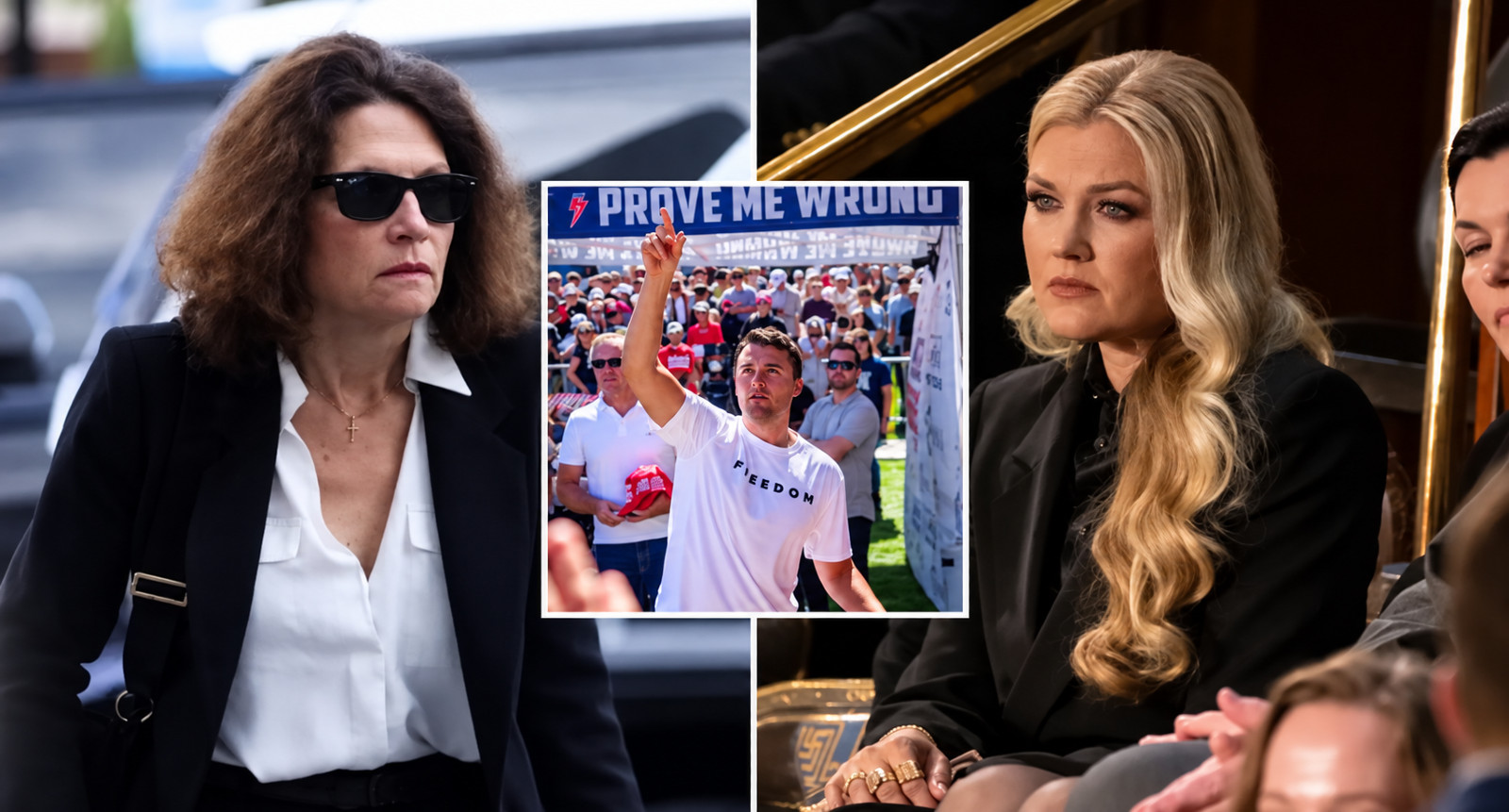
Charlie Kirk’s mother is breaking her silence—and directly confronting the rumors that have swirled around her family and daughter-in-law Erika Kirk in the year since her son was assassinated.
Kathryn Kirk, who has largely remained outside the public spotlight since Charlie’s September 2025 killing, spoke to Vanity Fair about the speculation surrounding the family, Erika’s takeover of Turning Point USA and claims of a bitter private feud.
Her message was unequivocal.
“Here’s the truth: We were 100% behind her,” Kathryn said of Erika’s selection to lead the organization Charlie founded.
Kathryn specifically rejected claims that Charlie’s parents blamed Erika for his death, were battling her over his estate or opposed her taking control of Turning Point USA.
Instead, she said the unimaginable loss they share has brought the two women closer.
“Erika and I have, through the trauma, grown closer,” Kathryn said.
“We knew Charlie in a way that no one else did,” she added, describing a bond forged through their shared grief.
Kathryn said the two can look into each other’s eyes and understand “the depth of our despair.”
Her comments represent a rare and direct response to months of speculation that has spread across social media following Charlie’s assassination.
Vanity Fair reported that Kathryn became emotional while discussing the relentless scrutiny and accusations directed at Erika.
Kathryn said Charlie would have been deeply upset by the treatment his wife has endured since his murder.
She also acknowledged that her own desire to remain a private citizen inadvertently created a vacuum in which speculation flourished.
Among the claims circulated online have been allegations involving Charlie’s will, his estate, Turning Point USA’s succession plan, tensions between Erika and Charlie’s parents and even suspicions surrounding Erika herself.
But prosecutors have presented no evidence implicating Erika in Charlie’s assassination.
Authorities have instead charged 23-year-old Tyler Robinson with Charlie’s killing. Robinson has pleaded not guilty and is awaiting trial.
A Utah judge recently ruled that prosecutors had presented sufficient evidence at the preliminary-hearing stage for Robinson to stand trial on the charges against him.
His next pretrial conference is scheduled for October 23.
The stakes in the case remain enormous, with prosecutors seeking the death penalty.
Charlie’s security in the period leading up to his assassination has also come under intense scrutiny.
He had been receiving threats before his appearance at Utah Valley University, and discussions were underway about additional protective measures.
According to the Vanity Fair account, Charlie discussed bulletproof shields and protective vests with Erika and their pastor the night before he was killed.
Kathryn said her son intentionally kept his parents out of many of those conversations because he knew the details would intensify their fears for his safety.
The possibility that something could happen to Charlie had also reportedly forced Turning Point officials to confront an uncomfortable question before his death: Who would lead the organization if Charlie no longer could?
According to board members and people close to the organization interviewed by Vanity Fair, Charlie had made his preference clear.
He wanted Erika.
Eight days after Charlie’s assassination, Turning Point USA’s board unanimously elected Erika CEO and chair.
The organization said at the time that Charlie had “expressed to multiple executives that this is what he wanted.”
That account undercuts one of the most persistent narratives surrounding Erika’s rapid elevation—that her takeover represented an unexpected power grab following her husband’s death.
Those close to the organization instead described succession discussions that had taken place before the assassination.
“She knew him more than anyone,” one former Turning Point employee said of Erika.
Vice President JD Vance also defended Erika’s ability to carry Charlie’s organization forward.
“We can never replace Charlie,” Vance said while discussing Erika and the future of Turning Point USA.
But Erika’s new position has placed her under a level of scrutiny few political widows ever face.
Questions about Turning Point’s future have become intertwined with speculation about Charlie’s assassination, his estate and the circumstances surrounding Erika’s rise to the top of the organization.
Vanity Fair identified former Charlie Kirk ally Candace Owens as one of the most prominent voices publicly questioning Erika and aspects of the official account surrounding the assassination.
Owens has argued that Erika should face questioning.
Prosecutors, however, have not accused Erika of participating in her husband’s killing.
The toll of the case was visible during Robinson’s preliminary hearing.
Erika described sitting alongside Kathryn as enhanced surveillance footage of Charlie’s shooting was shown in court.
As the footage depicted the alleged shooter moving into position, Erika said she grabbed Kathryn’s arm and cried.
Erika also recalled insisting on seeing her husband’s body after the shooting despite a doctor initially advising her against doing so.
Now, after largely staying silent as theories about her family spread online, Charlie Kirk’s mother has publicly entered the conversation herself.
And on one of the biggest questions fueling that speculation—whether Charlie’s parents privately blame Erika or oppose her leadership—Kathryn Kirk’s answer could hardly have been clearer.
“Here’s the truth: We were 100% behind her.”

Harrowing new details are emerging from the midair chaos aboard a Flydubai flight bound for Israel, where officials say one pilot stabbed the other and apparently attempted to bring down the passenger jet before travelers rushed the cockpit and helped stop him.
Flydubai Flight 1073 was traveling from Dubai to Tel Aviv on Wednesday when a violent struggle erupted inside the cockpit, sending the aircraft plunging thousands of feet and triggering emergency alerts before the crew diverted to Saudi Arabia.
Israeli Prime Minister Benjamin Netanyahu said one pilot stabbed the other and “apparently attempted to crash the plane with its passengers on board,” nearly all of whom were Israelis.
The aircraft abruptly reversed course near the Saudi-Jordanian border before making an emergency landing in Tabuk, Saudi Arabia, at approximately 9:45 a.m. local time.
Israeli officials said roughly 160 to 180 passengers were aboard.
But as the crisis unfolded behind the cockpit door, passengers reportedly realized something was seriously wrong—and some took action.
NEW: The pilot who was stabbed on the FlyDubai flight by his terrorist co-pilot was able to open the release on the cockpit door as he lay covered in blood on the floor.
The quick thinking allowed the Israeli passengers to storm the cockpit and subdue the terrorist, according… pic.twitter.com/DVhQg9xmWa
— Collin Rugg (@CollinRugg) September 30, 2026
NEW: Man tells Israel PM Benjamin Netanyahu how he put the terrorist pilot of the Flydubai flight in a chokehold before leveling out the plane.
Yaniv Hayun, whose shirt was stained with blood, recalled the moment he helped subdue the attacker.
"I grabbed the attacker, put him… pic.twitter.com/A0el1MVTc6
— Collin Rugg (@CollinRugg) September 30, 2026
Netanyahu said an Israeli passenger later described forcing his way into the cockpit with a crew member and helping overpower “the attacking pilot while he was attempting to sabotage the aircraft’s systems.”
“I salute these heroes, who demonstrated extraordinary resourcefulness and courage,” Netanyahu said. “They saved many lives and prevented a disaster.”
Passengers described a terrifying scene as people scrambled toward the front of the cabin while the aircraft remained in flight.
One passenger later said travelers had subdued the alleged attacker and were guarding the wounded captain as the jet approached Saudi Arabia.
Videos apparently recorded aboard the aircraft showed bloodied passengers and an injured man as travelers attempted to process the violent confrontation that had just unfolded.
The attacking pilot was taken into custody and was being questioned by Saudi authorities, according to Netanyahu.
Both pilots were hospitalized with injuries following the incident, according to officials at the Tabuk airport.
Despite the violence inside the cockpit and the aircraft’s dramatic descent, the jet landed safely.
A replacement aircraft later transported the stranded passengers from Saudi Arabia to Tel Aviv.
Israel’s Magen David Adom emergency service said none of the passengers required immediate medical treatment after arriving in Israel.
What prompted the terrifying episode remains under investigation.
Israeli authorities are reportedly examining several possibilities, including whether the incident was an attempted attack targeting Israelis or a suicide attempt.
Flydubai has confirmed that an altercation occurred but has released few details about what sparked the confrontation.
A company spokesperson said crew members on duty were able to secure the aircraft.
The incident initially raised fears of a possible hijacking.
Flight-tracking data showed the aircraft transmitting emergency code 7700, the general aviation emergency signal, before switching to 7500—the transponder code associated with hijacking or unlawful interference. The aircraft later returned to the general emergency code.
Israeli fighter jets were scrambled as security officials monitored the unfolding crisis.
Netanyahu and other senior Israeli officials also held emergency consultations as authorities raced to determine what was happening aboard the aircraft.
What began as a routine flight from Dubai to Tel Aviv had suddenly become a fight for control of a passenger jet thousands of feet above the ground.
And according to Israeli officials, the actions of passengers and crew members inside that cockpit may have prevented the flight from ending in catastrophe.
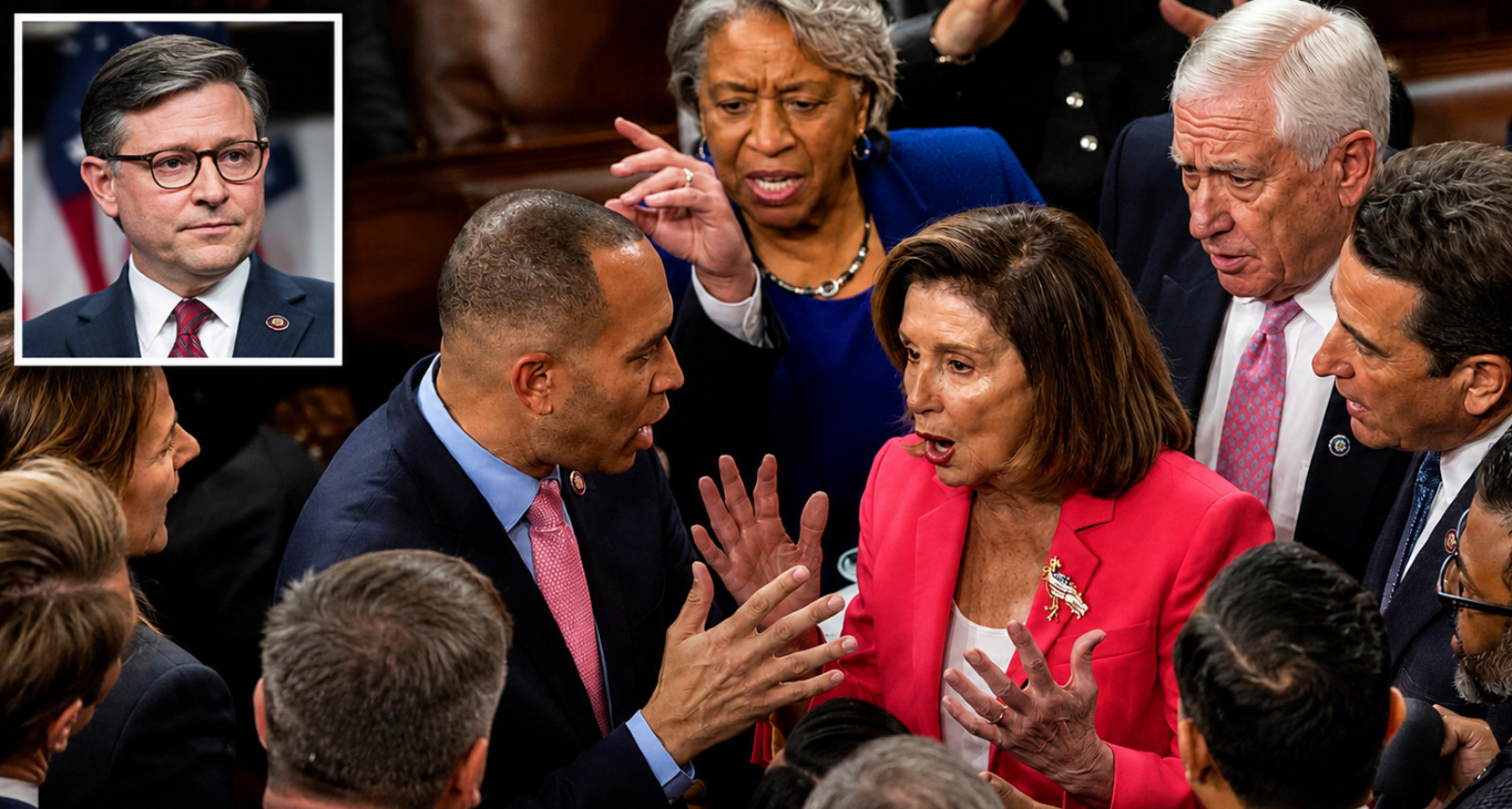
House Democrats fractured again Thursday as 33 members broke with their party and joined Republicans to approve legislation that could cut off federal funding to colleges participating in certain boycotts of Israel.
The House passed H.R. 4795, the Protect Economic and Academic Freedom Act of 2026, in a decisive 237-169 vote.
Thirty-three Democrats backed the measure, while 167 Democrats joined just two Republicans in voting against it.
House Minority Leader Hakeem Jeffries opposed the legislation, putting him on the other side of the vote from dozens of Democrats who supported new federal consequences for colleges participating in anti-Israel boycotts.
Former Speaker Nancy Pelosi and longtime Democratic Rep. James Clyburn also voted against the bill, exposing a significant divide among House Democrats over Israel, campus activism and the limits of politically motivated boycotts.
Republican Reps. Thomas Massie of Kentucky and Warren Davidson of Ohio were the only GOP lawmakers to oppose the measure.
North Carolina Republican Virginia Foxx sponsored the legislation, with New Jersey Democrat Josh Gottheimer serving as its Democratic co-sponsor.
At the heart of the bill is a potentially powerful financial penalty.
The legislation would amend federal higher-education law to make covered colleges participating in a “nonexpressive commercial boycott” of Israel ineligible for specified federal higher-education funding.
Federally supported institutions would also be required to certify that students are not “unreasonably obstructed” from participating in academic programs located in Israel.
Supporters argue the measure is aimed at institutional commercial discrimination—not at students protesting, speaking out against Israel or expressing political opinions.
Critics see something very different: a federal funding threat that could chill constitutionally protected political expression and interfere with the independence of American colleges and universities.
Foxx argued that university boycott policies have created hostile environments by “marginalizing Jewish students” and discriminating against people of Jewish faith.
Progressive Democrats fiercely opposed the legislation, arguing Congress is effectively turning political opposition to Israel into grounds for stripping educational institutions of federal support.
New York Democrat Jerry Nadler said he opposes the Boycott, Divestment and Sanctions movement but maintains that Americans who support it retain constitutional protections for political advocacy.
Michigan Democrat Rashida Tlaib went further, delivering a blistering denunciation of the legislation and accusing lawmakers of attempting to suppress pro-Palestinian activism.
“This is an attack on free speech and academic freedom,” Tlaib declared during debate before the final vote.
Tlaib also described Israel as a “genocidal apartheid state,” highlighting the intense rhetoric that has increasingly surrounded the Israel debate among progressive Democrats.
Supporters of the bill rejected that characterization of the legislation, maintaining that it targets institutional commercial conduct rather than individual political speech.
The contentious vote came as House Speaker Mike Johnson faced a separate round of criticism over his decision to send lawmakers home ahead of the November midterm elections.
Johnson canceled votes scheduled for Friday, effectively ending the House’s legislative work until after the election and sending members away from Washington for more than six weeks.
It follows Johnson’s decision to cancel votes during the final two weeks of September.
“The House has done its work,” Johnson, a Louisiana Republican, told reporters at the Capitol.
“It’s time for our members to go home to their districts and make their case to the American people,” Johnson added.
Not every Republican was willing to accept that explanation.
South Carolina Republican Rep. Ralph Norman blasted the decision as “unacceptable.”
“The House has now canceled at least 63 scheduled voting days this Congress, including nine days this month alone, and now we’re leaving Washington until after the election,” Norman wrote on X.
“The Founders did not envision taking this much time off and still getting paid. If Members of Congress want to go home and campaign instead of doing the job taxpayers sent us here to do, then their campaigns ought to be paying them, NOT the American taxpayer. We still have work to do,” Norman added.
Johnson also rejected Democratic demands to cancel the recess so lawmakers could address the rapidly accelerating development of artificial intelligence.
Following warnings from AI researchers and industry leaders about potentially catastrophic risks posed by increasingly capable systems, Democratic lawmakers urged Johnson to keep the House in Washington until Congress could act.
“Congress should not leave town until something is done decisively to protect the safety and the well-being of the American people, in the face of growing concerns being raised by experts within the artificial intelligence industry itself,” Jeffries said Monday.
“Republicans have completely abandoned their responsibility to legislate and engage in public policy efforts in a responsible fashion in the area of artificial intelligence,” Jeffries continued.
The result is a House leaving Washington amid fights on multiple fronts: a bipartisan split over federal funding and Israel boycotts, an escalating battle over free speech and campus policy, mounting criticism over Congress’ lengthy absence from Washington, and unresolved demands for federal action on artificial intelligence.
But Thursday’s 237-169 vote also revealed something increasingly difficult for Democratic leaders to ignore: when it came time to vote on Israel boycotts and federal education dollars, 33 members of their own caucus were willing to break ranks.

Charlie Kirk’s Mother Breaks Her Silence After Erika Kirk’s Public Statement

Jaw-Dropping Details Emerge From Hijacking Attempt On Israel-Bound Flight

House Passes It 237-169 –Dems FLIP And Humiliate Hakeem Jeffires

NEW: Trump Family Rocked After Sudden Hospitalization

Longtime Democrat Rep. Losing Grip On Key Seat

Commercial Flight Makes Emergency Landing After Co-Pilot Stabs Captain, Nose Dives Plane

‘The Five’ Gets Emotional As Greg Gutfeld Announces Tragic News

Joe Biden’s Daughter Just Dropped Massive Public Bombshell On Her Dad

Removed From the Country — Ilhan Omar Hit With Horrid News

Obama Calls It QUITS After Wild Video Goes Viral

Get Ready — Mike Pence Makes Stunning 2028 Announcement

Schumer Loses! Court Sides With Trump In Historic Move
-
 Economy6 months ago
Vance Leaves Meeting, Looks Straight Into Camera, Announces Stunning Arrest
-
 Economy6 months ago
Adam Schiff Facing 30 Years In Prison After Bank Records Leak
-
 Economy6 months ago
Supreme Curt Sides With Trump — He Can Remove The All
-
 Culture4 months ago
Michelle Obama Drops Nasty Bomb About ‘Useless’ Daughter
-
 Economy6 months ago
All Hell Breaks Loose On Fox When Jesse Watters Asks Fetterman One Question
-
 Economy4 months ago
Prayers Pour In After Fox Host Dies: ‘Senseless Murder’
-

 Latest4 months ago
Fox News Stuns With Announcement About 5 Fired Hosts
-

 Border & Security2 months ago
Top Trump Admin And Wife Found Dead — Chilling Update Just Released