
Border & Security
Woke Judge Who Hid Illegal From ICE Learns Her Fate — Courtroom Erupts!


A federal judge dealt another setback to former Wisconsin Judge Hannah Dugan on Tuesday, upholding her conviction for helping an illegal immigrant evade federal immigration authorities and rejecting her request for reconsideration.
The ruling marks the latest development in a case that has become a flashpoint in the national debate over immigration enforcement and whether public officials can interfere with federal efforts to apprehend individuals living in the country illegally.
U.S. District Judge Lynn Adelman declined to overturn Dugan’s conviction and also refused to establish a new sentencing date after previously postponing sentencing from June 3.
Dugan, a former Milwaukee County Circuit Court judge, was convicted in December on obstruction-related charges stemming from her actions involving Mexican national Eduardo Flores-Ruiz, an illegal immigrant whom federal authorities were attempting to arrest.
Her legal team argued that the conviction should be reconsidered based on a recent federal appeals court ruling in United States v. Hernandez. In that case, an immigrant detained by Immigration and Customs Enforcement escaped custody, was later recaptured, and convicted of obstructing a pending immigration proceeding. The conviction was ultimately overturned on appeal.
Dugan’s attorneys argued that Flores-Ruiz was not involved in a pending proceeding at the time of the incident but was instead the subject of an arrest warrant.
In a statement following Tuesday’s decision, Dugan’s lawyers called Adelman’s ruling “wrong.”
However, the federal judge rejected the argument and found that the circumstances of Dugan’s case were significantly different.
“At oral argument, defendant noted that ICE goes out every day to try to arrest people on the street,” Adelman wrote in his ruling.
He further summarized the defense’s position by writing, “Given the estimated 10 million undocumented persons in the United States, does that mean there are 10 million pending proceedings?”
Adelman noted that Dugan “insists that there needs to be some formality, i.e., a proceeding before an agency involving parties trying to come to a determination, an adjudication.”
“The problem for the defense is that this case did not involve some random encounter on the street,” he continued.
“It was a targeted operation, conducted pursuant to agency procedures, including the issuance of an arrest warrant for a specific person, Eduardo Flores-Ruiz.”
The case drew national attention earlier this year after federal authorities accused Dugan of actively helping Flores-Ruiz avoid apprehension by federal agents.
According to prosecutors, Immigration and Customs Enforcement officers, along with agents from the FBI, DEA, and Customs and Border Protection, arrived at the courthouse on April 18 intending to arrest Flores-Ruiz following a scheduled court appearance.
Flores-Ruiz was facing three misdemeanor battery charges and was accused of assaulting two individuals.
Federal authorities alleged that after learning agents were waiting to take Flores-Ruiz into custody, Dugan directed law enforcement personnel away from the area and then escorted Flores-Ruiz and his attorney through a restricted jury door, bypassing the public exit where federal agents were stationed.
Prosecutors argued that the actions were intended to help Flores-Ruiz avoid arrest.
The controversy quickly escalated, leading to Dugan’s arrest and subsequent removal from judicial duties.
In April, the Wisconsin Supreme Court issued an administrative order directing Dugan to be “temporarily relieved of her official duties” while the case proceeded.
The incident also drew sharp criticism from then-Attorney General Pam Bondi, who questioned how a sitting judge could allegedly interfere with a lawful federal arrest operation.
“We could not believe that a judge really did that,” Bondi said.
“You cannot obstruct a criminal case. And really, shame on her. It was a domestic violence case of all cases, and she’s protecting a criminal defendant over victims of crime,” Bondi added.
Bondi also highlighted the allegations against Flores-Ruiz, describing the violence that prosecutors say led to the criminal charges.
“[He] beat the guy, hit the guy 30 times, knocked him to the ground, choked him, beat up a woman so badly; they both had to go to the hospital,” she said.
With Adelman refusing to reconsider the conviction, Dugan now faces sentencing on the obstruction charge, which carries a maximum penalty of five years in prison. While first-time offenders rarely receive the maximum sentence, the case has become a prominent example of the Trump administration’s broader emphasis on enforcing immigration laws and holding public officials accountable when they interfere with federal law enforcement operations.
Supporters of stricter immigration enforcement argue that the ruling sends a clear message that no one—including judges—is above the law when it comes to obstructing federal authorities carrying out their duties. As sentencing approaches, the case is likely to remain at the center of the national debate over immigration, public accountability, and the rule of law.

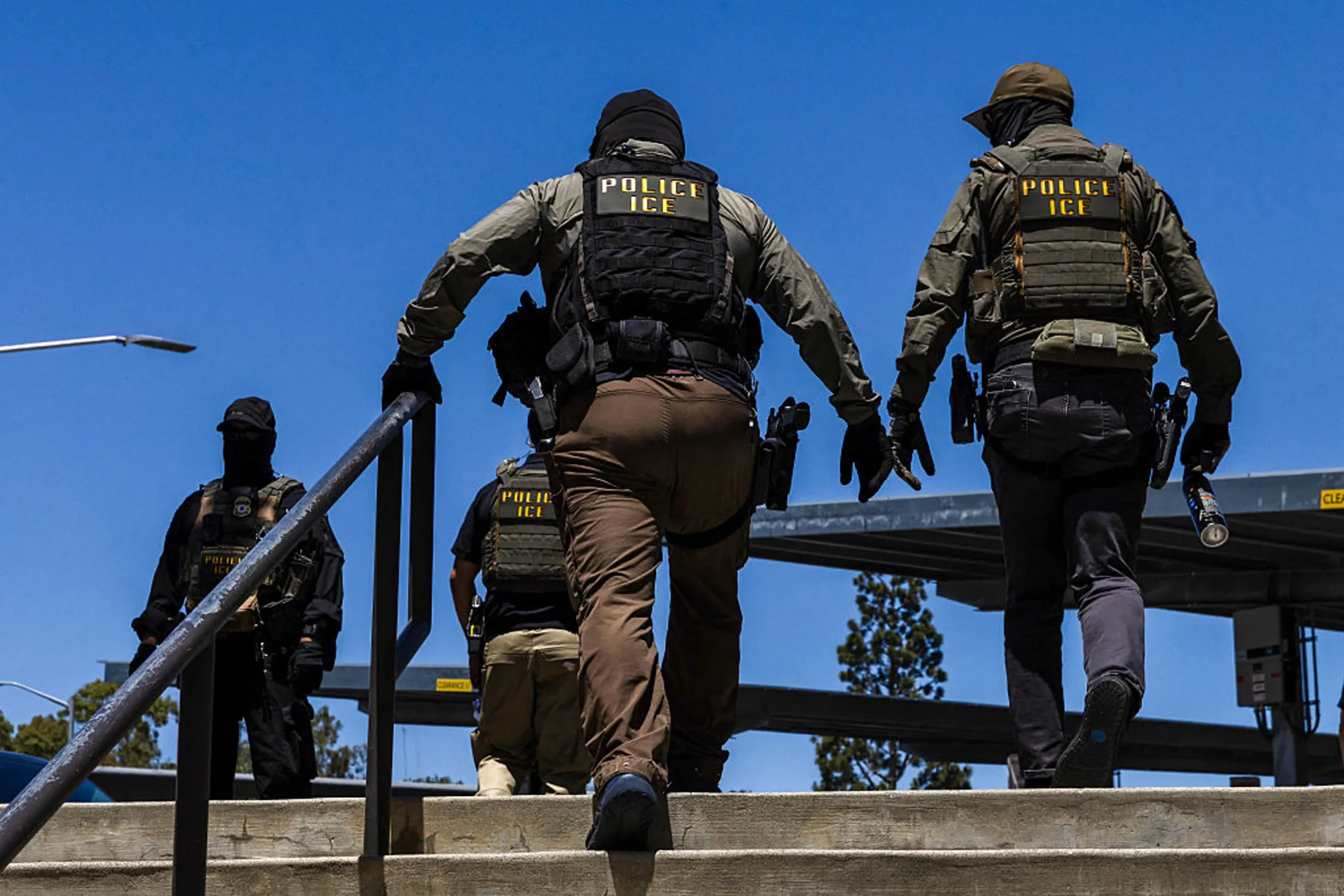
Federal immigration authorities arrested a staffer for a Democratic California lawmaker during a targeted enforcement operation at a Las Vegas airport, setting off a clash between the Department of Homeland Security and the state legislator who employs him.
Ho-Yin Mo, a field representative for Democratic California Assemblywoman Catherine Stefani, was taken into custody at Harry Reid International Airport on September 17.
Mo, a Hong Kong native and former television news anchor, is now facing removal proceedings while Stefani is publicly demanding his release.
According to the Department of Homeland Security, Mo originally entered the United States legally in 2020 but remained beyond the period he was authorized to stay.
“On January 13, 2020, Mo lawfully entered the U.S. on a temporary basis but illegally overstayed his welcome by failing to depart by May 15, 2020,” a DHS spokesperson said.
The department also directly addressed questions surrounding Mo’s ability to legally work in the United States.
“Work authorization or a pending application do NOT confer legal status in the United States.”
DHS said Mo’s arrest was part of a targeted immigration-enforcement operation at the Las Vegas airport.
The department tied the arrest to a broader Trump administration crackdown on domestic air travel by people it says lack lawful immigration status.
“DHS reversed the horrendous Biden-era policy that allowed aliens in our country illegally to jet around our country,” the department said.
“Under President Trump, DHS will no longer tolerate this. This administration is working diligently to ensure that aliens in our country illegally can no longer fly unless it is out of our country to self-deport.”
But Stefani is pushing back against the federal government’s characterization of her staffer’s situation.
“My message today is simple: I am respectfully calling for Ho Yin Mo’s release as soon as possible,” Stefani said following his detention.
“Ho Yin is a selfless public servant and a valued, legal employee of the California State Legislature serving our San Francisco and Bay Area communities.”
The competing statements highlight an important distinction in the case: Stefani says Mo is legally authorized to work for the California Legislature, while DHS says that employment authorization does not by itself establish lawful immigration status.
Mo’s detention has attracted additional attention because he isn’t an obscure political operative.
Before entering California politics, he was a familiar face to some Bay Area viewers as an anchor and reporter for KTSF Channel 26, a Chinese-language television station.
He later moved into Democratic political organizing.
In 2024, Mo worked as an outreach organizer focused on Asian American and Pacific Islander communities for then-San Francisco Mayor London Breed’s unsuccessful reelection campaign.
His profile apparently made him an attractive political hire.
“When we learned that Mo was available, we immediately saw an opportunity to bring him on board,” Breed spokesman Joe Arellano said at the time. “His visibility through KTSF connects with a broad audience, and his professional background and experience made him a strong fit.”
Mo joined Stefani’s staff in January 2025 as a field representative.
Stefani represents California’s 19th Assembly District, encompassing western San Francisco and northern San Mateo County. Before entering the state Assembly in December 2024, the Democrat served on the San Francisco Board of Supervisors.
Stefani has praised Mo’s work connecting her office with Chinese-American constituents and providing assistance with government services.
“And his work goes far beyond presence. Ho-Yin helps people access affordable healthcare coverage, childcare, and food support. Our whole community eagerly awaits Ho-Yin’s return to his home and his job, where he is loved and adored.”
Federal immigration authorities, however, have taken a different position on the underlying immigration question.
DHS says Mo’s authorized temporary stay expired in May 2020 and maintains that neither a work permit nor a pending immigration application independently gives someone lawful immigration status.
Mo was being held at an immigration detention facility in Nevada while facing removal proceedings that could ultimately result in his deportation to Hong Kong.
His detention also comes as the Trump administration expands immigration-enforcement operations at American airports.
The administration has increasingly targeted visa overstays and other people DHS considers unlawfully present, including some individuals who possess federal work authorization or have pending immigration cases.
That enforcement strategy has generated fierce opposition from immigration advocates and Democratic officials, who argue that people with active immigration cases and work permits should not be swept into detention while those proceedings remain unresolved.
The administration maintains that a pending application or authorization to work does not prevent immigration authorities from enforcing existing removal laws.
Mo’s case now puts that dispute directly inside a Democratic California lawmaker’s office.
A former television journalist who went on to work for two prominent San Francisco Democrats is sitting in federal immigration custody.
His boss says he is a valued employee who should be released.
DHS says he remained in the United States after his authorized stay expired.
And unless his immigration proceedings change that situation, Mo faces the possibility of being removed to Hong Kong.

A U.S. Customs and Border Protection supervisor is facing serious federal charges after investigators alleged he secretly stripped newer components from dozens of government computers, replaced them with inferior hardware and traded some of the original parts for personal credit.
Terry Liu, 39, a CBP supervisor assigned to the Calais Port of Entry in Maine, was arrested in September and charged in federal court in Bangor with theft of government property and destruction of government property.
Each charge carries a potential maximum sentence of 10 years in prison and a fine of up to $250,000.
The case centers on what investigators say happened to 46 government computers spread across three CBP locations.
According to an FBI probable cause affidavit, CBP information technology employees discovered on Dec. 19, 2025, that multiple agency computers had apparently been altered without authorization from management or IT personnel.
An inventory soon revealed the scale of the problem.
Investigators identified 38 affected computers at Calais, another six at Ferry Point and two at Milltown.
BREAKING: Terry Liu, the Chinese national arrested this week in Maine, has been charged with illegally modifying the hardware of Customs and Border Patrol computers at the Maine-Canada border.
Liu, who described himself as a native of Guangzhou, China, was caught on camera… pic.twitter.com/PC1hZJi987
— Steve Robinson (@SteveRob) September 11, 2026
Authorities allege that processors had been replaced in 39 computers, RAM had been changed in six and hard drives had been swapped in eight. Some computers allegedly had multiple components replaced.
And the hardware wasn’t simply being exchanged for equivalent parts.
According to investigators, some of the original computers contained newer 14th-generation Intel processors, including Core i7-14700 chips.
Those components were allegedly replaced with older 12th- and 13th-generation Intel Core processors or Intel Pentium chips that failed to meet CBP specifications.
Many of those altered machines were then reportedly reconnected to the government’s network.
As officials tried to determine what was happening, Liu received an explicit written instruction from Port Director Theodore Cummings on March 18, 2025:
“Please do not move any computers or computer parts.”
Investigators eventually turned to surveillance cameras.
According to the affidavit, cameras captured activity during Liu’s overnight shifts, when relatively few other officers were around.
Footage allegedly showed Liu removing computer side panels and working inside the machines. Investigators described him using a screwdriver in a manner consistent with scraping thermal paste from processors, exchanging components and testing the altered systems.
But the investigation didn’t stop with the surveillance footage.
Authorities say financial and email records provided another piece of the puzzle.
Investigators allege that original government computer components were submitted to Newegg’s trade-in program.
They identified 13 emails containing shipping labels and trade-in summaries involving processor models matching government equipment, with offers reportedly worth $200 or $210 apiece.
Newegg records allegedly revealed 16 transactions involving 14th-generation Intel Core i7 processors between May 2025 and July 2026.
Credit-card records showed at least $600 in related credits, while emails referenced trade-in offers totaling at least $2,660, according to the affidavit.
The alleged financial benefit was only part of the government’s concern.
CBP estimated that restoring the computers with their original components would cost more than $20,000.
Replacing all 46 machines altogether was estimated to cost more than $105,000.
Investigators interviewed Liu on Sept. 9.
According to the affidavit, Liu admitted replacing CBP computer components with older hardware and acknowledged using government equipment through Newegg’s trade-in program for credit.
He initially told investigators that his modifications were intended to improve the computers’ efficiency.
But authorities say that explanation changed under further questioning.
According to the affidavit, Liu acknowledged knowing that the modifications actually degraded the computers’ performance and said frustration over the amount of time required for CBP’s IT department to complete repairs contributed to his actions.
One important element is notably absent from the allegations.
The affidavit does not accuse Liu of installing malware on CBP computers or transmitting government information outside the agency.
CBP’s Office of Professional Standards had already opened an investigation in January concerning Liu’s conduct while working for the agency.
Federal prosecutors are now seeking to keep him detained as the criminal case proceeds.
Assistant U.S. Attorney Chris Ruge cited concerns about Liu’s “recent and frequent international travel” and his alleged “apparent foreign connections and substantial means with which to flee.”
The case remains pending, and the charges are allegations that prosecutors would have to prove in court.
What investigators have alleged, however, is an unusual breach from inside a federal law-enforcement agency: dozens of government computers altered without authorization, newer hardware allegedly removed and replaced with older components, and government property allegedly fed into a commercial trade-in program for credit.
Now a CBP supervisor entrusted with helping oversee operations at a U.S. port of entry is facing the possibility of years in federal prison if convicted.
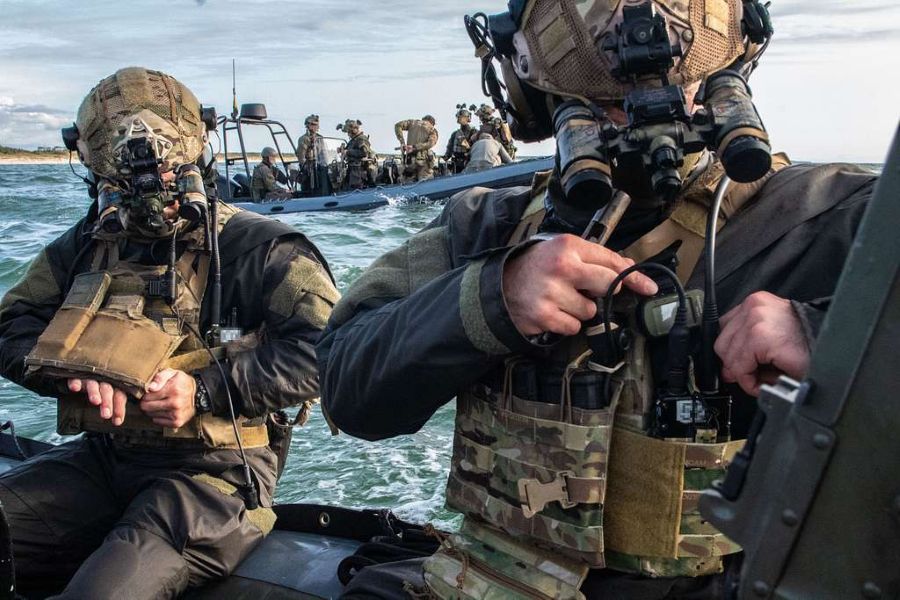
Under the cover of darkness, some of America’s most elite warriors spent four dangerous months hunting Iranian sea mines in one of the most strategically critical waterways on Earth.
The extraordinary operation in the Strait of Hormuz was far larger — and far more dangerous — than previously known.
U.S. forces reportedly deployed Navy SEAL divers, underwater drones, robotic vessels and sophisticated sonar systems in a painstaking effort to find and destroy mines allegedly planted by Iran and keep a critical artery of global commerce from being choked off.
For the Americans sent into the water, the stakes could hardly have been higher.
Once a mine was located, Navy divers could be forced to physically approach the explosive and attach a charge to destroy it.
“That is usually followed up by a navy diver who’s got to get in the water and approach the mine, and then put a charge on it and destroy it,” retired U.S. Navy Capt. Bill Hamblet told the Financial Times.
One mistake could have been catastrophic.
## A High-Stakes Mission Hidden Beneath the Surface
U.S. Central Command announced in April that American forces had begun setting the stage for mine-clearing operations in the Strait, including deploying underwater drones.
But what followed was an extensive months-long operation involving some of the U.S. military’s most advanced technology — and personnel willing to enter the water when machines alone couldn’t finish the job.
The Navy deployed the Common Uncrewed Surface Vessel, a robotic boat capable of towing sophisticated underwater equipment such as the MK 18 Mod 2 Kingfish.
The Kingfish uses sonar to scour the seafloor for potential explosives, giving American forces the ability to hunt for mines without immediately sending sailors into danger.
Once a threat was identified, unmanned systems could destroy some mines.
Others required the human element.
Despite the extraordinary risks involved, no U.S. casualties have been reported in connection with the operation.
## Roughly 80 Mines Threatened One of the World’s Most Important Waterways
The scale of the threat was enormous.
The International Maritime Organization estimated earlier this year that roughly **80 mines** had been deployed in and around the Strait of Hormuz.
That number matters because the Strait isn’t simply another shipping route.
It is one of the most important maritime chokepoints on the planet, carrying a substantial share of the world’s oil.
Disrupting it doesn’t just threaten ships.
It threatens energy markets and international commerce far beyond the Middle East.
President Donald Trump announced in August that mines had been removed from international shipping lanes through the Strait. U.S. Central Command later confirmed American forces had cleared the lanes and were protecting commercial vessels traveling through the region.
But clearing the mines did not necessarily end the threat.
## Iran Accused of Trying to Mine the Strait Again
Iran has continued claiming mines remain active in parts of the Strait, while the United States has accused Tehran of attempting to rebuild its ability to threaten shipping through the strategic waterway.
Commercial shipping operators remain wary, particularly outside areas near the Omani coast where American forces have been escorting vessels.
And one mine warfare expert issued an ominous warning about what could be happening now.
“It’s hard to know what to believe,” Ethan Connell, assistant director of Taiwan Security Monitor and an expert on mines, told the FT. “Iran is certainly trying to re-mine.”
If true, it means American forces could be facing a brutal cycle: find the mines, destroy them — then hunt for newly deployed explosives all over again.
The continuing danger posed by mines, missiles and drones has already taken a toll.
Visible commercial traffic through the region remains well below the levels recorded before the conflict intensified.
Some ships have reportedly resorted to moving through the Strait at night with their tracking equipment switched off while under U.S. military protection.
## The Battle to Keep the Strait Open Isn’t Over
The four-month operation reveals just how far the United States has been willing to go to prevent Iran from using mines to squeeze one of the world’s most vital shipping corridors.
Navy SEAL divers entered dangerous waters.
Robotic vessels hunted beneath the surface.
Underwater drones scanned the seafloor.
And American forces spent months methodically clearing explosives from international shipping lanes.
Yet perhaps the most troubling part of the operation is what comes next.
Sea mines can potentially be deployed far faster than they can safely be found and destroyed.
That means even after four months of dangerous clearance work, U.S. forces remain locked in an ongoing contest to prevent the Strait of Hormuz from once again becoming a minefield — and to keep one of the world’s most important economic lifelines open.

Trump Issues Chilling Ultimatum

Popular News Anchor Arrested By ICE

Obama Calls It QUITS After Wild Video Goes Viral

Ilhan Omar Removal Vote Is In — Decided By Razor Thin Margin

FINALLY! Americans Get Some MUCH Needed Good News

Trump Bans Lib Outlets – You Won’t Believe What Happened Right After!

‘The Five’ Gets Emotional As Greg Gutfeld Announces Tragic News

Removed From the Country — Ilhan Omar Hit With Horrid News

‘EFFECTIVE IMMEDIATELY’ — Barack Obama Gets Devastating News

Schumer Loses! Court Sides With Trump In Historic Move

Everyday Americans Being Treated As Criminals — Including You, Right Now

HUGE: 9/11 Widow Goes Rogue, Makes Damning Call Out During Ground Zero Ceremony
-
 Economy5 months ago
Vance Leaves Meeting, Looks Straight Into Camera, Announces Stunning Arrest
-
 Economy5 months ago
Adam Schiff Facing 30 Years In Prison After Bank Records Leak
-
 Economy5 months ago
Supreme Curt Sides With Trump — He Can Remove The All
-

 Culture3 months ago
Michelle Obama Drops Nasty Bomb About ‘Useless’ Daughter
-

 Economy6 months ago
All Hell Breaks Loose On Fox When Jesse Watters Asks Fetterman One Question
-
 Economy4 months ago
Prayers Pour In After Fox Host Dies: ‘Senseless Murder’
-

 Latest3 months ago
Fox News Stuns With Announcement About 5 Fired Hosts
-

 Border & Security2 months ago
Top Trump Admin And Wife Found Dead — Chilling Update Just Released