
Culture
Everyday Americans Being Treated As Criminals — Including You, Right Now


You’re driving to work. Picking up your kids. Going to the grocery store. Visiting a friend.
You haven’t committed a crime. You aren’t a suspect. You’re just going about your life.
But there may be a camera recording your vehicle — and creating a digital record of where you were, when you were there, and what your vehicle looked like.
And chances are, nobody asked for your permission.
Flock cameras are spreading across America. The debate isn’t simply about whether they can help catch criminals. The far more uncomfortable question is:
How much surveillance are Americans expected to accept before someone finally says enough?
You may have already driven past one without knowing it.
Small cameras mounted near neighborhood entrances, intersections, and major roads can look like ordinary security equipment. But automated license plate reader systems such as Flock Safety can capture passing vehicles, recording the license plate, vehicle characteristics, time, and location.
That means your movements can become part of a searchable database even if you have never committed a crime or been suspected of one.
And that should make every driver stop and think.
You Don’t Have to Be a Criminal
This is where the issue gets uncomfortable.
You don’t have to be under investigation.
You don’t have to be a suspect.
You don’t have to have done anything wrong.
You simply have to drive past a camera.
The system can capture your vehicle anyway.
According to unFlockIt, ALPR systems can create searchable records showing where vehicles have been seen and when. The organization argues that interconnected camera networks can allow information collected locally to become accessible beyond the community where it was originally captured. unFlockIt
Think about what that means.
A trip to the grocery store.
A visit to a doctor’s office.
A stop at a friend’s house.
A drive across town.
All of it could potentially leave another digital footprint.
And once that information exists, there is a question we should all be asking:
Who gets to look at it?
This Isn’t Just About Catching Criminals
To be fair, supporters of Flock cameras have a compelling argument.
Automated license plate readers can help police locate stolen vehicles, identify suspects, and respond to serious crimes.
Nobody wants criminals getting away with violent offenses or stolen vehicles disappearing without a trace.
But public safety and privacy don’t have to be mutually exclusive.
The real issue is what happens when a tool designed to help investigators identify suspects also captures information about everyone else.
That distinction matters.
Traditional police investigations generally begin with a reason to investigate someone.
Mass data collection works differently.
The database can exist first. The search can come later.
And that raises an uncomfortable question:
Should simply driving down a public road be enough to place your vehicle into a database that someone can potentially search later?
One Camera Is One Thing. A Network Is Something Else.
Maybe one camera doesn’t sound particularly alarming.
It sees your vehicle.
The moment passes.
You drive away.
But what happens when cameras aren’t operating independently?
What happens when they’re part of a much larger network?
unFlockIt describes a national network in which participating agencies can potentially share access to ALPR data beyond the community where it was originally collected. unFlockIt
Now the issue becomes much bigger than one camera at one intersection.
A single camera might capture one moment.
A connected network can potentially reveal patterns.
Where a vehicle has been seen.
When it was seen.
Which locations it passed.
And potentially how those sightings connect across different jurisdictions.
That is an extraordinary amount of information about ordinary Americans who may have done absolutely nothing wrong.
And once that infrastructure exists, who decides what it can eventually be used for?
What Happens When the Technology Gets Even Better?
Here’s another question worth asking.
Technology doesn’t usually get weaker.
It gets cheaper.
Faster.
More sophisticated.
More connected.
Today, we’re talking about license plates and vehicle characteristics.
But surveillance technology continues to evolve.
So the question isn’t just what these systems can do today.
It’s what they’ll be capable of doing five or ten years from now — and whether the rules protecting Americans will have kept up.
That is why waiting until the technology is everywhere could be a serious mistake.
The time to establish boundaries is before the infrastructure becomes impossible to roll back.
Communities Are Starting to Push Back
And this isn’t some fringe concern dreamed up by a handful of conspiracy theorists.
Communities are actually beginning to challenge these systems.
In August 2026, Kendall County, Texas commissioners unanimously voted not to renew a Flock Safety contract covering more than 50 cameras, following public concerns about privacy, transparency, and data protection. MySanAntonio reporting
And Kendall County isn’t alone.
Recent reporting has documented growing resistance to Flock cameras in places including Tampa Bay and Pittsburgh, where residents have questioned whether the public-safety benefits justify the potential privacy risks. Axios reporting
The debate is spreading because the technology is spreading.
So Who Made This Decision?
This may be the question that deserves the most attention.
Who authorized the cameras in your community?
Did residents vote on them?
Were people given meaningful notice?
Did most residents even know they were being installed?
And perhaps most importantly:
Do ordinary citizens have any meaningful say in what happens to the information being collected about them?
Those are not anti-police questions.
They’re not anti-technology questions.
They’re accountability questions.
Citizens should be asking:
- Who authorized these cameras?
- Were residents given meaningful notice?
- How long is the information retained?
- Who can search the database?
- Can outside agencies access local data?
- What safeguards prevent abuse?
- Are searches audited?
- What happens if the information is wrong?
- Can citizens see the policies governing the system?
- Can the community vote on whether these systems should remain?
If government is going to collect information about innocent people, the public deserves to know exactly what is being collected, who can access it, and what prevents that power from being abused.
Supporting Police Doesn’t Mean Supporting Unlimited Surveillance
There is an important distinction that often gets lost in this debate.
You can support police officers.
You can want dangerous criminals caught.
You can want stolen cars recovered.
And you can still believe government surveillance should have limits.
Those positions aren’t contradictory.
In fact, meaningful limits and transparency may be exactly what is needed to preserve public trust in the technology.
Because once people begin believing that they’re being watched everywhere they go, trust starts disappearing.
Don’t Wait Until It’s Everywhere
The worst time to start asking questions is after the cameras have become permanent fixtures throughout your community.
Whether you support Flock cameras or oppose them, you should know where they’re located and how the information they collect is being used.
That’s exactly why projects like unFlockIt are drawing attention to the issue. The organization has created a national map intended to help people identify ALPR cameras near them and is organizing support for its national petition. unFlockIt
✍️ Your Community. Your Data. Your Voice.
If you believe Americans deserve greater transparency and stronger limits on warrantless surveillance, sign the unFlockIt petition and make your voice heard.
SIGN THE UNFLOCKIT NATIONAL PETITION
You can also use unFlockIt’s map to see reported surveillance cameras in your area. View the unFlockIt map
Because ultimately, this isn’t about whether technology is good or bad.
It’s about power.
It’s about what happens when the ability to collect information about ordinary citizens becomes easier than ever.
And it’s about whether Americans get to establish the rules before that power becomes impossible to take back.
So ask yourself:
Should the government be able to record and search where ordinary Americans drive when those people have never been suspected of a crime?
Maybe your answer is yes.
Maybe it’s no.
But shouldn’t you have a say?
Because the cameras are already watching.
For generations of football fans, especially those in Chicago, he represented far more than wins, championships and Sundays at Soldier Field. He was part of the identity of a franchise—a larger-than-life personality whose toughness, passion and unmistakable presence helped define an era of American football.
That legend was Mike Ditka.
The Hall of Fame tight end and iconic former Chicago Bears head coach has died at 86, according to Jarrett Payton of 104.3 The Score.
For Bears fans, the loss closes a remarkable chapter in franchise history.
Ditka didn’t simply coach one of football’s most memorable teams. His connection to Chicago stretched across decades, first as a groundbreaking player and later as the fiery head coach who led the Bears to the pinnacle of the sport.
His crowning moment came with the unforgettable 1985 Bears.
Behind a punishing defense and an offense led by Hall of Fame running back Walter Payton, Chicago tore through its competition on the way to Super Bowl XX.
The Bears finished that extraordinary season by overwhelming the New England Patriots 46-10, delivering Chicago a championship and creating a team that would be remembered long after the final whistle.
For Ditka, that championship carried an even deeper meaning.
His return to Chicago was something he had personally pursued.
While working as an assistant under legendary Dallas Cowboys coach Tom Landry, Ditka wrote to Bears owner George Halas asking for an opportunity to come home and lead the franchise for which he had once played.
Halas gave him that opportunity in 1982.
What followed was an 11-season run as Bears head coach and a place in Chicago sports history that would never be forgotten.
Ditka was named NFL Coach of the Year in both 1985 and 1988. The Super Bowl XX victory also gave him his second championship as a coach after he had been part of the Dallas staff that won Super Bowl XII.
But before millions knew Ditka as the intense figure pacing the Chicago sideline, he had already changed the game on the field.
The Bears selected him fifth overall in the 1961 NFL Draft.
At a time when tight ends were still viewed largely as blockers, Ditka helped redefine what the position could become.
During six seasons and 84 games with Chicago, he caught 316 passes for 4,503 yards and 34 touchdowns, establishing himself as one of football’s most dangerous receiving threats at the position.
Chicago traded Ditka to the Philadelphia Eagles in 1967. He spent two seasons there before joining the Dallas Cowboys, where he played the final four seasons of his career from 1969 through 1972.
By the time his playing days were over, Ditka’s résumé included two NFL championships, five Pro Bowl selections, two first-team All-Pro honors and three second-team selections.
His impact endured long after he stopped playing.
Ditka was eventually named to both the NFL’s 75th and 100th Anniversary All-Time Teams—recognition reserved for players whose influence extended far beyond their own generation.
After retiring following the 1972 season, he spent nine seasons learning under Landry in Dallas before returning to the city with which his name would forever be linked.
Then came another historic honor.
In 1988, while still coaching the Bears, Ditka became the first tight end ever inducted into the Pro Football Hall of Fame.
By then, his legacy had already been secured twice over—as a player who helped transform his position and as the coach who brought Chicago one of the most celebrated championships in NFL history.
But statistics and trophies only tell part of the story.
For generations of Bears fans, Mike Ditka was simply “Da Coach”—a symbol of Chicago football whose personality seemed perfectly matched to the city and the teams he represented.
Players retire. Seasons end. Even championship celebrations eventually fade into history.
Some figures, however, become inseparable from the teams they helped build.
For Chicago, Mike Ditka was one of them.
He was 86.
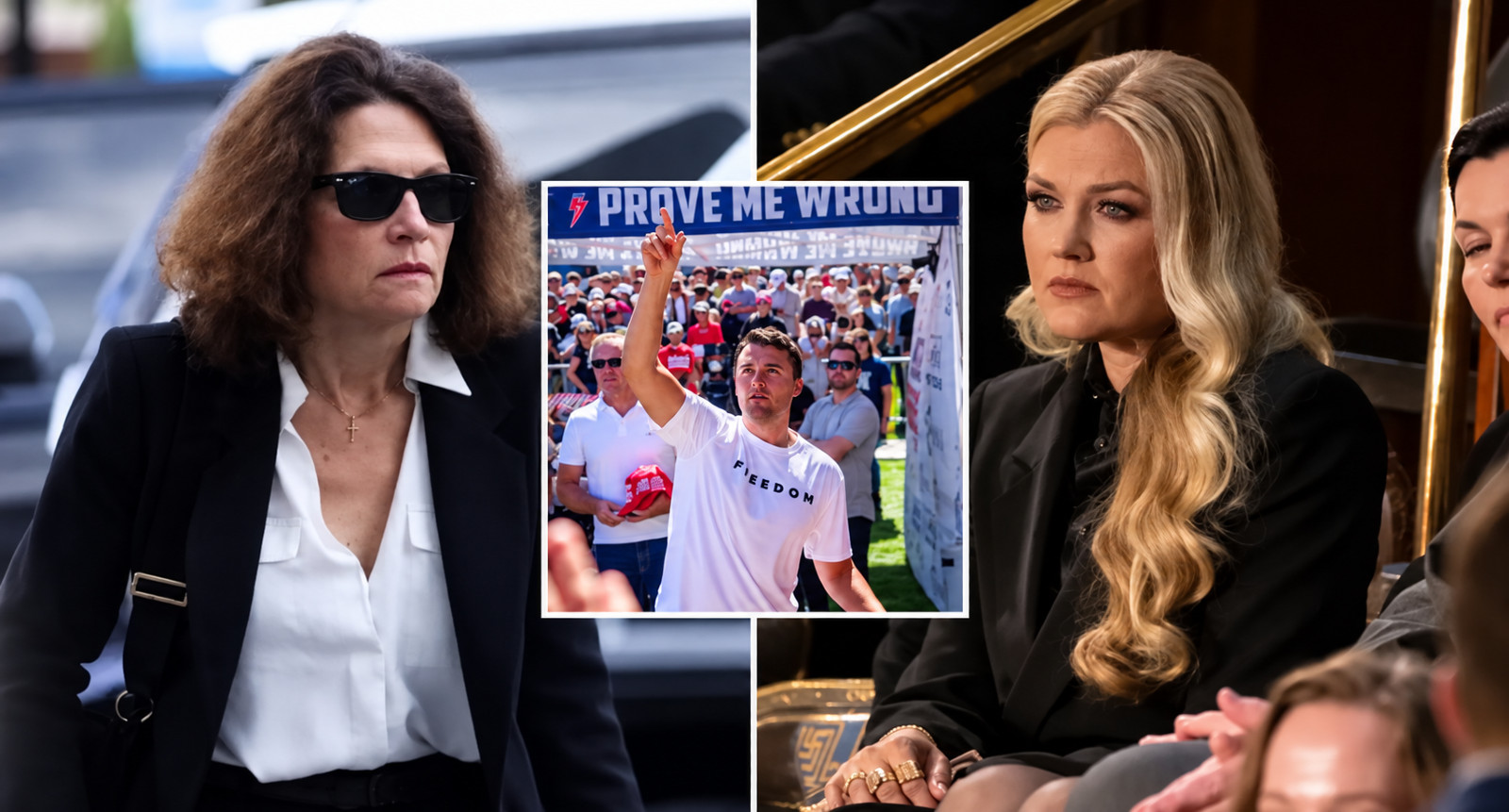
Charlie Kirk’s mother is breaking her silence—and directly confronting the rumors that have swirled around her family and daughter-in-law Erika Kirk in the year since her son was assassinated.
Kathryn Kirk, who has largely remained outside the public spotlight since Charlie’s September 2025 killing, spoke to Vanity Fair about the speculation surrounding the family, Erika’s takeover of Turning Point USA and claims of a bitter private feud.
Her message was unequivocal.
“Here’s the truth: We were 100% behind her,” Kathryn said of Erika’s selection to lead the organization Charlie founded.
Kathryn specifically rejected claims that Charlie’s parents blamed Erika for his death, were battling her over his estate or opposed her taking control of Turning Point USA.
Instead, she said the unimaginable loss they share has brought the two women closer.
“Erika and I have, through the trauma, grown closer,” Kathryn said.
“We knew Charlie in a way that no one else did,” she added, describing a bond forged through their shared grief.
Kathryn said the two can look into each other’s eyes and understand “the depth of our despair.”
Her comments represent a rare and direct response to months of speculation that has spread across social media following Charlie’s assassination.
Vanity Fair reported that Kathryn became emotional while discussing the relentless scrutiny and accusations directed at Erika.
Kathryn said Charlie would have been deeply upset by the treatment his wife has endured since his murder.
She also acknowledged that her own desire to remain a private citizen inadvertently created a vacuum in which speculation flourished.
Among the claims circulated online have been allegations involving Charlie’s will, his estate, Turning Point USA’s succession plan, tensions between Erika and Charlie’s parents and even suspicions surrounding Erika herself.
But prosecutors have presented no evidence implicating Erika in Charlie’s assassination.
Authorities have instead charged 23-year-old Tyler Robinson with Charlie’s killing. Robinson has pleaded not guilty and is awaiting trial.
A Utah judge recently ruled that prosecutors had presented sufficient evidence at the preliminary-hearing stage for Robinson to stand trial on the charges against him.
His next pretrial conference is scheduled for October 23.
The stakes in the case remain enormous, with prosecutors seeking the death penalty.
Charlie’s security in the period leading up to his assassination has also come under intense scrutiny.
He had been receiving threats before his appearance at Utah Valley University, and discussions were underway about additional protective measures.
According to the Vanity Fair account, Charlie discussed bulletproof shields and protective vests with Erika and their pastor the night before he was killed.
Kathryn said her son intentionally kept his parents out of many of those conversations because he knew the details would intensify their fears for his safety.
The possibility that something could happen to Charlie had also reportedly forced Turning Point officials to confront an uncomfortable question before his death: Who would lead the organization if Charlie no longer could?
According to board members and people close to the organization interviewed by Vanity Fair, Charlie had made his preference clear.
He wanted Erika.
Eight days after Charlie’s assassination, Turning Point USA’s board unanimously elected Erika CEO and chair.
The organization said at the time that Charlie had “expressed to multiple executives that this is what he wanted.”
That account undercuts one of the most persistent narratives surrounding Erika’s rapid elevation—that her takeover represented an unexpected power grab following her husband’s death.
Those close to the organization instead described succession discussions that had taken place before the assassination.
“She knew him more than anyone,” one former Turning Point employee said of Erika.
Vice President JD Vance also defended Erika’s ability to carry Charlie’s organization forward.
“We can never replace Charlie,” Vance said while discussing Erika and the future of Turning Point USA.
But Erika’s new position has placed her under a level of scrutiny few political widows ever face.
Questions about Turning Point’s future have become intertwined with speculation about Charlie’s assassination, his estate and the circumstances surrounding Erika’s rise to the top of the organization.
Vanity Fair identified former Charlie Kirk ally Candace Owens as one of the most prominent voices publicly questioning Erika and aspects of the official account surrounding the assassination.
Owens has argued that Erika should face questioning.
Prosecutors, however, have not accused Erika of participating in her husband’s killing.
The toll of the case was visible during Robinson’s preliminary hearing.
Erika described sitting alongside Kathryn as enhanced surveillance footage of Charlie’s shooting was shown in court.
As the footage depicted the alleged shooter moving into position, Erika said she grabbed Kathryn’s arm and cried.
Erika also recalled insisting on seeing her husband’s body after the shooting despite a doctor initially advising her against doing so.
Now, after largely staying silent as theories about her family spread online, Charlie Kirk’s mother has publicly entered the conversation herself.
And on one of the biggest questions fueling that speculation—whether Charlie’s parents privately blame Erika or oppose her leadership—Kathryn Kirk’s answer could hardly have been clearer.
“Here’s the truth: We were 100% behind her.”
Fox News is bringing one of former New York Gov. Andrew Cuomo’s most prominent former aides onto its platform — a move that immediately triggered a furious response from one of the network’s own former personalities.
Melissa DeRosa, Cuomo’s longtime top lieutenant and former secretary to the governor, has been hired as a Fox News contributor and will appear on the network’s new weekly podcast, “The Girls.”
DeRosa will make her debut when the program premieres Oct. 1, Fox News Media announced Monday.
But the announcement quickly reopened one of the most bitter controversies surrounding Cuomo’s administration: New York’s handling and reporting of nursing home deaths during the COVID-19 pandemic.
Former Fox News meteorologist Janice Dean blasted the decision.
Dean’s mother-in-law and father-in-law died of COVID-19 in 2020 after living in New York long-term care facilities. Their deaths turned Dean into an outspoken critic of Cuomo and his administration as she pushed for answers about the state’s nursing home policies.
Following news of DeRosa’s Fox role, Dean unloaded.
“Melissa DeRosa helped smear the women who came forward about Andrew Cuomo’s harassment, and played a hand in undercounting nursing home deaths during COVID. Also tried to silence my advocacy.”
DeRosa served as secretary to the New York governor, becoming the first woman to hold the powerful position.
She resigned in August 2021 as sexual harassment allegations engulfed Cuomo’s administration.
But DeRosa had already become a central figure in the controversy surrounding the Cuomo administration’s handling of nursing home death information.
Months before her resignation, DeRosa acknowledged during a private call with Democratic state lawmakers that the administration had withheld nursing home death data while facing concerns about a possible investigation by President Donald Trump’s Justice Department.
The February 2021 disclosure intensified scrutiny over New York’s accounting of COVID-19 deaths among nursing home residents.
At the time, the state’s nursing home tally did not include residents who died after being transferred from nursing homes to hospitals, leaving thousands of deaths outside that particular count.
DeRosa later maintained that the administration had placed state lawmakers’ request for the information on hold while it prioritized responding to the federal inquiry.
The controversy did not end there.
A New York State Assembly investigation released in November 2021 concluded that Cuomo had not been fully transparent about nursing home resident deaths.
The investigation also concluded that Cuomo sexually harassed women and used state resources in connection with the production and promotion of his pandemic memoir.
Now DeRosa is returning to the political-media spotlight through Fox News.
She will appear on “The Girls,” a new weekly podcast featuring a rotating group of female co-hosts discussing politics, careers, family life and pop culture.
The premiere will also feature Fox personalities Rachel Campos-Duffy, Harris Faulkner and Kat Timpf.
New episodes are scheduled to be released Thursdays on YouTube, Spotify and Apple Podcasts.
The launch will also bring former ESPN personality Sam Ponder back into the spotlight following her 2024 departure from the sports network.
Ponder, the former host of “Sunday NFL Countdown,” will join DeRosa and the Fox personalities for the premiere episode.
But it is DeRosa’s addition that has already generated controversy before the first episode even airs.
For Dean, the issue is deeply personal.
She spent years publicly challenging Cuomo’s administration over its handling of nursing homes after losing two family members during the pandemic.
Now the former governor’s onetime top aide is joining the same media organization where Dean became one of the most visible critics of that administration.
And Dean made clear exactly what she thinks of the decision.

Arrest Warrant Issued For POTUS Candidate — Horrifying Charges

Kamala Suffers Massive Public Meltdown On LIVE TV

Fox News Star’s Stunning Texts About Donald Trump Jr. Emerge

BREAKING: Major NFL Legend Dead

JUST IN: Democrat Arrested For Telling Woman To Change Vote

JUST IN: GOP Couple In Congress Calls It Quits

Obama Calls It QUITS After Wild Video Goes Viral

Joe Biden’s Daughter Just Dropped Massive Public Bombshell On Her Dad

‘The Five’ Gets Emotional As Greg Gutfeld Announces Tragic News

Removed From the Country — Ilhan Omar Hit With Horrid News

Get Ready — Mike Pence Makes Stunning 2028 Announcement

Jeanine Pirro Makes Massive Announcement – WH In Total Shock
-
 Economy6 months ago
Vance Leaves Meeting, Looks Straight Into Camera, Announces Stunning Arrest
-
 Economy6 months ago
Adam Schiff Facing 30 Years In Prison After Bank Records Leak
-
 Economy6 months ago
Supreme Curt Sides With Trump — He Can Remove The All
-
 Culture4 months ago
Michelle Obama Drops Nasty Bomb About ‘Useless’ Daughter
-
 Economy6 months ago
All Hell Breaks Loose On Fox When Jesse Watters Asks Fetterman One Question
-
 Economy4 months ago
Prayers Pour In After Fox Host Dies: ‘Senseless Murder’
-

 Latest4 months ago
Fox News Stuns With Announcement About 5 Fired Hosts
-
 Border & Security2 months ago
Top Trump Admin And Wife Found Dead — Chilling Update Just Released