
Culture
Beloved Fox News Star Reveals New Cancer Diagnosis


Nearly 25 years after the September 11 attacks, one veteran Fox News anchor is revealing the devastating health toll he says followed him home from Ground Zero.
Eric Shawn, 69, spent weeks reporting amid the smoke, dust and wreckage of the World Trade Center after the Twin Towers collapsed. Now, decades later, he says he is confronting cancer and other serious health problems linked to his exposure.
And hauntingly, Shawn says he worried something like this could happen even as he stood in the toxic haze.
On the morning of Sept. 11, 2001, Shawn was walking to work in Manhattan when American Airlines Flight 11 suddenly roared low above him, headed toward the North Tower.
“I thought it was gonna hit a skyscraper and my mind was playing tricks on me,” Shawn told PEOPLE. “You don’t think you really see what you’re seeing,”
Shawn raced to the Fox newsroom, warned colleagues about what he had witnessed and was quickly on the air.
Within hours, he was reporting from Ground Zero.
What followed was weeks of grueling 12-hour shifts inside a disaster zone unlike anything he had ever experienced.
“I was there reporting for at least a month, if not longer. We did 12-hour shifts. It was a shocking hellscape,” he recalls. “It was an overwhelming experience — seeing the photographs and seeing it on television from home certainly does not give justice to what I was confronted with and what we saw. It was just monstrous and momentous.”
Shawn had reported from war zones before. He says nothing compared to what he witnessed that night.
“I’ve covered war zones and this was by far the worst traumatic thing that a reporter can experience, just by seeing what I saw that first night,” he adds.
But for Shawn, the nightmare did not end when the cameras stopped rolling.
For weeks, he worked surrounded by what he described as a “thick haze of choking dust.” Reporters and first responders were given respiratory masks, but the contaminated air was seemingly impossible to escape.
Even then, Shawn remembers wondering what that exposure could mean decades later.
“I remember the first night thinking, ‘This is not healthy,’ just on the basis of dust. Not even knowing about carcinogens, not knowing about toxic chemicals,” he continues. “And I remember back then thinking, ‘I wonder what’s gonna happen in 20, 30 years from now.’ Well, we’re there now. This is the time period we were concerned about.”
It didn’t take decades for the first warning signs to appear.
Within roughly two months of the attacks, Shawn developed an “uncontrollable cough” that became serious enough for him to seek medical attention.
“I went to the doctor in November and he said, ‘Oh, you’ve got the World Trade Center cough.’ That’s what we called it at the time.” he recalls. “I thought, ‘I know — it’s a cough from all that dust and smoke. It’ll go away.’ No. The World Trade Center cough actually turned into acute chronic bronchitis…and I suffered from it for years.”
His respiratory problems eventually became severe.
During one particularly difficult year, Shawn needed two Prednisone shots within just 72 hours — despite his doctor telling him the standard was only two shots per year.
He was also diagnosed with gastroesophageal reflux disease, or GERD.
“It felt like I had a golf ball in my throat on and off for years,” he says.
Then came an even more frightening development.
Shawn was diagnosed with skin cancer, which he attributes to his exposure at Ground Zero to hundreds of chemical, physical and biological hazards.
And doctors discovered another alarming warning sign.
His prostate-specific antigen levels were rising rapidly. According to Shawn, physicians determined that he has “the highest level of probable” prostate cancer.
He is now undergoing testing every three months as doctors closely monitor his condition.
“So, I’m certified for cancer under the World Trade Center Health Program,” he says, referring to the federal program that provides medical monitoring and treatment to responders and survivors exposed to carcinogens including jet fuel, mercury and asbestos. “I’m just waiting and watching,” he says.
For years, Shawn largely kept what he was going through private — even from many of his colleagues at Fox News.
Now, with the 25th anniversary of 9/11 approaching, he is telling his story publicly.
His goal is to draw attention not only to his own ordeal, but to the thousands of first responders, survivors, journalists and others who continue living with illnesses associated with their exposure at Ground Zero.
Nearly a quarter-century ago, Shawn looked into the Manhattan sky and watched Flight 11 fly overhead toward the World Trade Center.
Today, the consequences of what happened in the hours and weeks that followed are still unfolding.

A dangerous flesh-eating parasite has been confirmed in Texas wildlife, prompting state and federal authorities to expand surveillance and issue a warning to hunters, ranchers and landowners as concerns grow over the pest’s potential impact on American livestock.
The Texas Parks and Wildlife Department announced October 21 that New World screwworm had been detected in a female elk harvested by a hunter in Pecos County.
Federal officials identified the discovery as the first confirmed case involving U.S. wildlife during the current outbreak, marking a significant development in efforts to prevent the parasite from spreading.
The infestation was confirmed after samples collected from the animal underwent laboratory testing in Kerrville, Texas.
The discovery comes after earlier infestations were detected in domestic animals, raising additional concerns about the parasite’s presence in wildlife populations.
The Texas Animal Health Commission is now modifying an existing infested zone in response to the finding, while federal agriculture officials and state wildlife personnel expand surveillance throughout the surrounding area.
Authorities are also urging hunters and property owners to watch for signs of infestation and report suspicious cases immediately.
Texas Parks and Wildlife Department Wildlife Division Director Alan Cain credited cooperation among hunters, landowners and wildlife biologists for helping authorities identify the infestation.
“We encourage all hunters and landowners to be vigilant,” Cain said.
The warning comes as hunting activity increases across Texas, potentially giving officials additional opportunities to detect infected animals before the parasite spreads further.
New World screwworm is not an ordinary worm. It is a parasitic fly whose larvae feed on the living flesh of warm-blooded animals.
Unlike many fly larvae that consume dead or decaying tissue, screwworm larvae burrow into wounds and feed on living tissue, causing extensive damage.
As the larvae continue feeding, wounds can become progressively larger and deeper, potentially resulting in severe infections, tissue destruction and death if the infestation is not treated.
The parasite can affect cattle, horses, sheep, wildlife and household pets. Human infestations are also possible, although federal health officials say they are rare.
According to the U.S. Department of Agriculture, adult New World screwworm flies are approximately the size of common houseflies, sometimes slightly larger.
They typically have orange eyes, metallic blue or green bodies and three dark stripes along their backs.
However, agriculture officials caution that identifying individual flies can be difficult because several species have similar appearances.
Some flies encountered outdoors may also be sterile insects intentionally released by authorities as part of efforts to control the outbreak.
Instead, officials are encouraging hunters and livestock owners to focus on identifying symptoms in animals.
Warning signs include visible maggots inside wounds, foul odors, unusual irritation, frequent head shaking and wounds that continue to drain or expand.
Infected animals may also lose their appetite, become unusually withdrawn or separate themselves from other animals.
Authorities are urging hunters to carefully inspect harvested animals before field dressing them or transporting carcasses.
The latest discovery follows an earlier confirmation involving livestock in Texas.
On June 3, federal officials confirmed a New World screwworm infestation in a calf in Zavala County, establishing that the parasite had already reached domestic animals during the current outbreak.
The subsequent discovery in a wild elk adds another challenge for authorities attempting to track and contain the pest.
The USDA considers New World screwworm a serious threat to livestock production, agricultural operations and the nation’s food supply.
Widespread infestations could result in significant animal losses and impose substantial costs on ranchers and other livestock producers.
Federal officials are responding through expanded surveillance, cooperation with state agencies and a long-established eradication technique involving the release of sterile male flies.
The method works by interrupting the parasite’s reproductive cycle.
Female New World screwworm flies typically mate only once. When they mate with sterile males released by authorities, their eggs do not hatch.
Over time, the resulting reduction in successful reproduction can dramatically decrease the parasite population.
The technique played a central role in eliminating New World screwworm from the United States in 1966.
It was also successfully deployed against an outbreak in the Florida Keys in 2017.
Agriculture officials continue adjusting surveillance operations and sterile-fly release patterns in response to new detections.
Despite the alarming nature of the parasite, federal health authorities emphasize that the risk to people in the United States remains very low.
The Centers for Disease Control and Prevention reports no locally acquired human infestations in the country during the current outbreak, according to the information provided in the original report.
Nevertheless, the agency advises prompt medical attention for anyone who suspects an infestation.
The latest Texas detection underscores why officials are treating the situation seriously even as the immediate public health risk remains limited.
New World screwworm can spread through animal populations, and infestations that go undetected may allow the parasite to establish itself in additional areas.
For that reason, state and federal authorities are relying heavily on cooperation from hunters, ranchers, veterinarians and landowners to identify potential cases.
The discovery in Pecos County now gives investigators another confirmed location to examine as they work to determine the parasite’s distribution and prevent additional infestations.
With a flesh-eating parasite now confirmed in Texas wildlife, officials are urging residents to remain alert, inspect animals for suspicious wounds and immediately report signs of infestation before the pest gains a stronger foothold.

Longtime Fox News personality Steve Doocy is putting retirement rumors to rest, revealing that he has no intention of walking away from television despite stepping back from his familiar seat on the “Fox & Friends” couch.
The veteran broadcaster, who turns 70 on October 19, says his career is entering an exciting new chapter rather than approaching its conclusion.
In a recent interview with TV Insider, Doocy discussed his future at Fox News, his unconventional new broadcasting arrangement and why he remains enthusiastic about his work after three decades with the network.
Doocy surprised longtime viewers in May 2025 when he announced he was leaving his regular studio role on “Fox & Friends,” the morning program he helped establish as one of cable news television’s most recognizable shows.
After nearly 30 years of early mornings and studio broadcasts, the announcement prompted speculation that the veteran host might be preparing to retire.
But Doocy had something entirely different in mind.
Rather than leave Fox News, he relocated to Florida and transitioned into a traveling correspondent role, visiting communities across the country and interviewing Americans outside the traditional studio setting.
Now, more than a year after making that change, Doocy says the arrangement has renewed his enthusiasm for broadcasting.
“My plan is just to keep going and do exactly what I’m doing,” Doocy told TV Insider.
“If it were boring, which has never been boring, I would think twice about it. But I’m having so much fun doing it, and we’re kind of inventing a new way to do this where we use the latest technology called LiveView Technologies (LVT). We can be anywhere, and we can walk anywhere.”
The new format allows Doocy to work approximately three or four days each week while traveling to different locations and speaking directly with people about their lives and experiences.
It also gives him an opportunity to conduct longer interviews than the traditional cable news format typically allows.
Some conversations now stretch eight to 10 minutes, providing more time to explore stories and personalities without the constant pressure of short television segments.
According to Doocy, viewers have responded positively, with audiences remaining engaged as the interviews unfold.
His travels have already taken him to a variety of locations, including the remote Michigan farm of rock musician and outspoken conservative Ted Nugent.
Broadcasting from Nugent’s property presented a technical challenge because of its isolated location.
The production team ultimately relied on Starlink satellite technology to establish a dependable connection, demonstrating how advances in broadcasting equipment have made Doocy’s mobile format possible.
For the longtime television host, the transition has also brought significant personal benefits.
After decades of early-morning schedules, Doocy now enjoys greater flexibility and more time with his wife of 40 years, Kathy, along with their children and grandchildren.
The change has allowed him to maintain his broadcasting career while spending more time with family.
That family includes his son, Peter Doocy, who has developed his own prominent career at Fox News.
Peter serves as the network’s senior White House correspondent and hosts “The Sunday Briefing,” regularly covering the Trump administration and questioning senior government officials.
The younger Doocy has become a familiar presence in White House press briefings, where his exchanges with administration spokespeople frequently attract national attention.
Steve Doocy acknowledged that watching his son’s career develop has been one of the most rewarding aspects of his life.
He also shared an amusing observation about how viewers sometimes compare the two journalists.
“I do believe Peter is doing a better job than you are doing,” Doocy recalled people telling him when they recognize him in public.
Rather than taking offense, the veteran broadcaster said he and his wife agree with the compliment.
The father-son connection represents a notable part of Fox News history, with both generations establishing recognizable roles at the network.
Steve Doocy’s career dates back to Fox News’ earliest days.
He joined the network in 1996, the year it launched, and became part of “Fox & Friends” in 1998.
Over the following decades, he helped turn the program into a fixture of morning cable television, interviewing political leaders, celebrities, authors and everyday Americans.
His tenure has spanned multiple presidential administrations, major national events and substantial changes in the television news industry.
As Fox News celebrates its 30th anniversary, Doocy remains one of the personalities most closely associated with the network’s growth.
His decision to leave the studio without leaving the network reflects a different approach to the later stages of a broadcasting career.
Instead of retiring from a profession he still enjoys, Doocy has adapted his role to accommodate new technology, more travel and a more flexible schedule.
The result is a format that allows him to remain connected to viewers while exploring stories beyond the usual political headlines.
And despite approaching his 70th birthday, Doocy says he has no plans to establish a retirement date.
“So as long as I am still upright and can still walk, I’m going to go for walks with people. I love it,” he said.
For viewers who wondered whether his departure from the “Fox & Friends” couch marked the end of an era, Doocy’s message is unmistakable.
After three decades at Fox News, he still enjoys telling stories, meeting people and connecting with audiences across the country.
He may have traded the familiar red couch for the open road, but Steve Doocy isn’t ready to sign off.
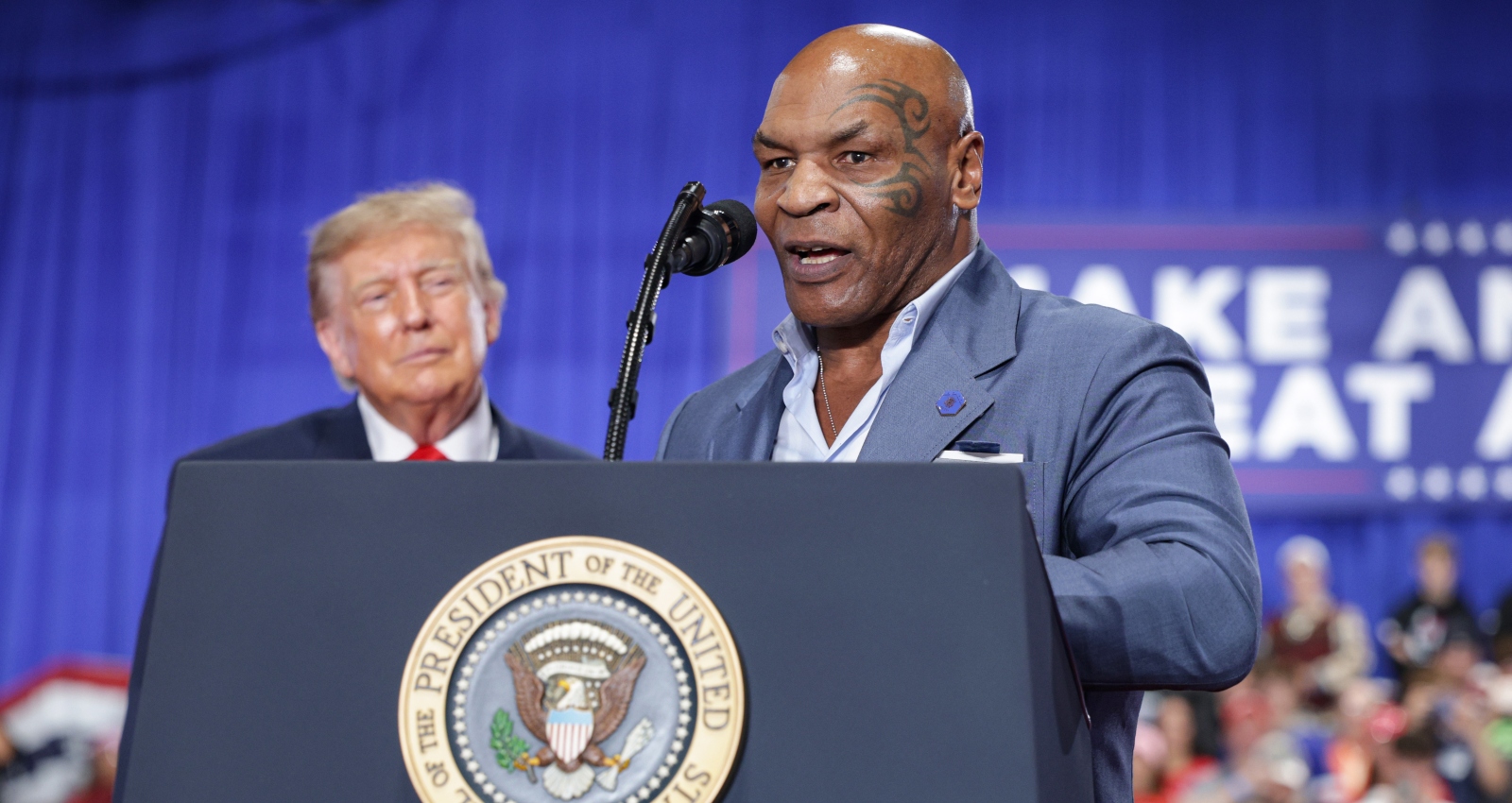
President Donald Trump brought an unexpected guest into the spotlight Friday night when legendary heavyweight boxing champion Mike Tyson joined him on stage during a packed campaign rally in Syracuse, New York, drawing an enthusiastic response from the crowd.
The surprise appearance reunited two longtime friends whose relationship dates back nearly four decades, to the days when Trump was a major figure in Atlantic City and Tyson was one of the most feared fighters in professional boxing.
Trump, who was campaigning in support of Republican gubernatorial candidate Bruce Blakeman, temporarily shifted his attention from politics to recognize the former heavyweight champion standing near the stage.
“I see somebody in the audience that I will never fight, I promise,” Trump joked, drawing laughter from supporters.
The president then recalled Tyson’s legendary dominance during the height of his boxing career.
“But I remember when Mike was in his prime, when he was the heavyweight champion of the world. He’d stand in the corner, and all of his people would be holding him back,” Trump said.
“He was a very dangerous person actually, and he was one of the greatest fighters in history.”
Trump also took the opportunity to joke about Blakeman, who was standing alongside the former champion.
“I see him standing right next to Bruce Blakeman. Bruce wants a little protection, he’s got the right guy,” Trump said. “Bruce knows who to stand near.”
The president then invited Tyson onto the stage, where the two exchanged a handshake before the boxing legend stepped forward to address the audience.
Tyson’s remarks were brief, but his admiration for Trump was unmistakable.
“Thank you very much. I’m just happy to be here with my president, President Trump,” Tyson told the crowd.
“And there’s no way in the world I would ever be here if it wasn’t for a president like Donald Trump.”
The crowd welcomed the unexpected appearance as Trump smiled and continued praising his longtime friend.
“I watched him get in the ring many times. He was a scary guy,” the president said.
Trump also joked that Tyson, now 60, appeared to be aging remarkably well.
“I think he looks better now than he did 30 years ago,” Trump told the audience.
The exchange offered a memorable break from the evening’s political speeches, which focused on New York’s gubernatorial contest, the upcoming midterm elections and the Trump administration’s economic agenda.
Tyson’s appearance was particularly notable because the former champion had spent much of Friday traveling alongside the president.
Earlier in the afternoon, Tyson made an unexpected visit to the White House briefing room, where reporters questioned him about his presence in Washington.
Asked whether Republicans would prevail in the upcoming midterm elections, Tyson delivered an unusual answer.
“I think Donald Trump will win,” the former champion responded.
Although Trump himself is not on the November ballot, the president has repeatedly encouraged supporters to view the congressional elections as an opportunity to demonstrate support for his administration and its policies.
Later Friday, Tyson joined Trump outside the White House as the president prepared to depart for New York.
Speaking with reporters before boarding Marine One, Trump again joked about the prospect of facing his longtime friend in the boxing ring.
“I won’t be fighting him today,” the president said.
The two traveled aboard Marine One to Joint Base Andrews before transferring to Air Force One for the flight to Syracuse.
New York Yankees President Randy Levine was also among those accompanying Trump, along with administration officials and Republican lawmakers.
The presidential aircraft arrived in Syracuse shortly before 7 p.m., ahead of the evening’s campaign event.
Trump’s friendship with Tyson stretches back to the late 1980s, when the future president was building his Atlantic City casino empire and Tyson was establishing himself as one of boxing’s biggest international stars.
During that period, Trump helped promote several major heavyweight fights, including Tyson’s historic June 1988 showdown with previously undefeated champion Michael Spinks.
The fight, held at Atlantic City’s Convention Hall, ended in spectacular fashion when Tyson knocked out Spinks in just 91 seconds.
The stunning victory became one of the defining moments of Tyson’s career and further cemented his reputation as one of the most devastating punchers in boxing history.
Trump’s involvement in promoting the event helped turn the matchup into a major sporting spectacle, attracting international attention and generating substantial revenue.
Tyson went on to compile a professional record of 50 victories, including 44 knockouts, and seven losses.
He had already made boxing history in November 1986 when he defeated Trevor Berbick at just 20 years old, becoming the youngest heavyweight champion the sport had ever seen.
Nearly four decades later, the relationship between Trump and Tyson remains a visible connection between two of America’s most recognizable public figures.
Friday’s appearance also came as Trump increased his involvement in New York’s gubernatorial race, where Blakeman is challenging Democratic Governor Kathy Hochul.
The president used the Syracuse rally to promote Blakeman’s candidacy and discuss the political stakes of November’s elections.
But for one moment, the campaign speeches gave way to a reunion between a sitting president and a boxing icon whose career Trump witnessed firsthand.
Tyson’s declaration of admiration for Trump provided the evening with one of its most memorable exchanges, highlighting a friendship that has endured through decades of public attention, controversy and changing careers.
What began as a political rally ultimately delivered an unexpected moment of sports history, presidential humor and a public tribute from one of boxing’s most legendary champions.
Tighten the article for faster pacingAdd a stronger news-style opening

NEW: Trump Vows To Prosecute His Own STAFF!

Trump Just Activated ‘Level 3’ — It’s Serious

Powerful Dem Senator Arrested 12 Days Before Midterms

Ilhan Omar Gives Jaw-Dropping Answer When Asked If She Married Her Brother

Man Arrested For ISIS-Linked Assassination Plot Targeting GOP Congressman

JUST IN: Sarah Palin Makes Heartbreaking Announcement

Charlie Kirk’s Mother Breaks Her Silence After Erika Kirk’s Public Statement

National Emergency Declared — Trump Called In

Michelle Obama Public Disaster — Photos Explode Across D.C.

Feds Raid Ilhan Omar’s Home — Make Horrifying Discovery

ALERT: Trump Set To Make ‘Special Announcement’ From Oval Office

Fireworks Erupt On Capitol Hill After 52-45 Vote For Trump!
-
 Economy6 months ago
Vance Leaves Meeting, Looks Straight Into Camera, Announces Stunning Arrest
-
 Economy6 months ago
Adam Schiff Facing 30 Years In Prison After Bank Records Leak
-

 Culture4 months ago
Michelle Obama Drops Nasty Bomb About ‘Useless’ Daughter
-
 Economy6 months ago
Supreme Curt Sides With Trump — He Can Remove The All
-
 Economy7 months ago
All Hell Breaks Loose On Fox When Jesse Watters Asks Fetterman One Question
-
 Economy5 months ago
Prayers Pour In After Fox Host Dies: ‘Senseless Murder’
-
 Border & Security3 months ago
Top Trump Admin And Wife Found Dead — Chilling Update Just Released
-

 Latest4 months ago
Fox News Stuns With Announcement About 5 Fired Hosts