
Latest
Nebraska ranchers struggle to recover from historic wildfires as drought worsens crisis

In the Sandhills of Nebraska, some grazing pastures look more like the Sahara Desert. The Morrill Fire — the largest wildfire in Nebraska history — scorched vast stretches of land in mid-March.
Farmers and ranchers across western Nebraska are now trying to recover, but severe drought conditions are making matters worse.
“The wind was screaming, maybe 70 mph. They said in 10 minutes it traveled 14 miles,” said Joe Van Newkirk, owner of Van Newkirk Herefords Ranch. “We heard that there was a fire in Angora, which is about 50 miles north-west of our headquarters, we just kind of looked at the map and there was just no way that this place was not going to get burned.”
The ranch, located in Oshkosh, Nebraska, has been in the Van Newkirk family for 140 years. The operation holds an annual bull sale, selling 250 to 300 bulls to ranches across the country.
Thankfully, the Van Newkirk home was spared. It sits miles away from grazing pastures that are now almost unrecognizable after the fire.
“We didn’t have any cattle on here, or any buildings to speak of. So we were very lucky in that respect,” said Van Newkirk. Around a third of his summer range burned in the fire.
There is still extensive cleanup work ahead. Livestock watering tanks are now completely filled with sand.
“We could probably come up here and shovel them out but who says it’s not going to blow right back in,” said Van Newkirk. “We’re gonna let this country heal, let the wind go down. Maybe next spring, winter, we’ll come up here and fix this stuff.”
While surveying the ranch, Van Newkirk said he recently noticed the first signs of improvement since the fires erupted in March.
“This fire was the 13th, 14th of March, and by the 1st of May, it didn’t look a whole lot different up here. The grass hadn’t started,” he said. “But just since then, four or five days, it’s made a difference. We haven’t received any moisture to speak of.”
The Morill fire burned 642,029 acres, according to NOAA. Severe drought conditions are compounding the damage. The latest U.S. Drought Monitor shows more than 90% of Nebraska is experiencing drought, with growing portions of the state classified under severe, extreme and exceptional drought conditions.
But the Morrill Fire was not the only wildfire burning in Nebraska at the time.
“It burned down the shop, and my corrals, and all the hay in my yard ended up going,” said Owen Johnson, Operator of Bearded Lady LLC.
The Cottonwood Fire also tore through Nebraska, scorching 129,253 acres. The blaze hit Bearded Lady Ranch in Brady, Nebraska, which raises registered quarter horses.
“I have a dozer at the house, and I tried to bulldoze a fire break on the north and west sides of the house,” Johnson said. “So that, essentially, once the fire hit that line, my hope was that it would save at least the house, the buildings around the house, the farmstead.”
“I actually dozed about 120 or 130 feet, but the wind was just too strong. It actually jumped that bare ground and burned up to the house,” he added.
THE SURPRISING REASON WHY AMERICANS COULD FACE HIGH BEEF PRICES FOR YEARS
Although his home survived, Johnson said the ranch still faces major challenges.
“I know I need to rebuild my shop, so that I have somewhere to put the stuff that I need to make it through the days. But we just haven’t got any rain,” Johnson said. “We don’t have any fences. All my horses are in dry lots, which is not typically how I do things.”
Johnson also said he has noticed behavioral and reproductive changes in his horses since the fires and drought.
“I don’t know if it’s from the drought or the stress, but usually after they foal, they have a pretty routine cycle for when they come back into heat,” Johnson said. “You can start breeding those mares back again, and my mares just aren’t coming into heat.”
“So now you’re sitting here going, man, when are we gonna get the fencing done, and when’s it gonna rain? And even if everything else happens, if we don’t get mares to where they’re going to have us foals for next year, how are we going to make it through the next year?” he added.
Despite the hardship, Johnson said volunteers and donations from across the country have helped keep the ranch operating.
“The outreach from people, it almost gives you a different view of society,” Johnson said. “There were people coming from all over the United States.”
“There was hay from Georgia and Wisconsin, and I don’t even know all the states, but there were literally people driving 12 or 13 hours to bring hay out — not just to us, but to other neighbors and other people that were affected by the fires,” he added.
THE SINGLE CRUSHING PROBLEM AMERICAN CATTLE RANCHERS WISH TRUMP WOULD FIX INSTEAD
Van Newkirk shared a similar sentiment about the support pouring into ranch country.
“You know, that’s where that really chokes me up, all the outpouring of people nationwide to help this cattle community. It’s a tight-knit community, our hometown,” said Van Newkirk. “The day of the fire, our fire department looked like a commissary. I mean there was just so much food, Gatorade, palettes of water. There was a bushel basket full of chapstick for these firemen.”
But both ranchers said recovery ultimately depends on rainfall.
“It’s just miles upon miles of drought and it’s affecting everybody. I would feel pretty confident to say there’s not very many farmers or ranchers right now that don’t have some sort of stress or concerns about the lack of precipe,” said Johnson.
“This country’s dry, and we could use all the prayers that you could have us,” said Van Newkirk.
Nebraska Governor Jim Pillen has requested that President Donald Trump issue a major disaster declaration related to the wildfires. The funding would assist with covering the cost of damage to public infrastructure.
Pillen said in a statement, “”As Nebraska faced historic wildfires, the people of our state came together to jumpstart the recovery process. I’m submitting my request for a disaster declaration to the White House and FEMA. We appreciate President Trump’s attention to this matter and his long-standing support of our state when we have requested disaster recovery funding.”
There are currently several relief funds and GoFundMe pages to help those impacted stay afloat.


Vice President JD Vance abruptly canceled a highly anticipated appearance in New York City on Wednesday, just minutes before he was scheduled to take the stage, after being called back to urgent meetings in Washington amid a series of major technology outages affecting critical systems across the United States.
The unexpected cancellation came as disruptions involving major financial institutions, airlines, Microsoft services and the National Security Agency’s classified communications network raised questions about the reliability and security of the nation’s technological infrastructure.
Vance had been scheduled to appear at The New York Times’ DealBook Summit in Manhattan when host Andrew Ross Sorkin informed attendees that the vice president would no longer be participating.
‘We were going to be joined by the vice president, but I am sad to report that we got a call literally probably now 20 or 30 minutes ago that he is not going to be able to join us today,’ Sorkin told the audience.
The announcement came despite extensive preparations by the Secret Service, which had reportedly spent the previous night coordinating security arrangements for Vance’s arrival.
Sorkin explained that the vice president had been instructed to remain in Washington as federal officials dealt with several developing situations.
‘He was called to stay back in Washington. He was supposed to be wheels up this morning. As you know, Secret Service, because you lived through the lines, has been here all night, readying for his entrance here at DealBook.
‘All of this comes, of course, amid a series of outages from Microsoft, the NSA, the airline ground stop, JPMorgan, and Zelle, and I am told that he is needed in Washington to deal with a series of meetings that are taking place as we speak.’
Vance’s office subsequently confirmed that the vice president remained in the nation’s capital for meetings but did not identify the participants or provide details about which technological disruptions were being addressed.
The sudden change in plans coincided with President Donald Trump’s arrival in China for a major diplomatic summit involving Chinese President Xi Jinping and Russian President Vladimir Putin.
With Trump overseas, Vance remained in Washington as administration officials worked to investigate and resolve the widespread technical failures.
Among the most significant incidents was Tuesday’s outage involving NSANet, the National Security Agency’s classified internal communications system.
The disruption reportedly forced the intelligence agency to restrict access to its campus, limiting entry to essential personnel while technical teams worked to restore normal operations.
A senior administration official acknowledged Wednesday that recovery efforts were progressing ‘slower than expected,’ although investigators had not identified evidence indicating that the disruption resulted from a cyberattack or coordinated interference.
Director of National Intelligence Jay Clayton attributed the NSA network failure to a software patch intended to address security vulnerabilities discovered the previous month.
Secretary of State Marco Rubio also addressed growing concerns about the possibility of a coordinated attack, offering a direct reassurance Tuesday.
‘We are not under systemic attack.’
The incidents followed several days of technological disruptions affecting both government operations and major private-sector services.
The problems began Thursday when Microsoft experienced a significant outage that disrupted Outlook services for more than 30 hours.
Microsoft attributed the interruption to a network upgrade, rather than malicious activity.
The following day, the Federal Aviation Administration ordered a nationwide ground stop lasting more than four hours after communications equipment malfunctioned.
The disruption temporarily halted flight departures across the country and prompted officials to suspend additional router installations while investigators examined the cause of the equipment failure.
By Monday, problems had emerged in the banking and airline industries.
JPMorgan Chase reported transaction delays affecting customers, while United Airlines experienced a separate technology outage lasting approximately 90 minutes.
The financial disruptions also raised concerns among customers who rely on electronic banking and payment services for everyday transactions.
Apple reported additional service interruptions Tuesday, attributing its problems to an internal update.
Although the failures occurred across multiple industries within a relatively short period, federal officials have repeatedly emphasized that investigators have not uncovered evidence establishing a connection between the incidents.
Administration officials have also maintained that there is no confirmed indication of a coordinated cyberattack targeting the nation’s infrastructure.
Nevertheless, the succession of disruptions has intensified scrutiny of the systems supporting financial transactions, commercial aviation, government communications and national security operations.
On Wednesday, Homeland Security Secretary Markwayne Mullin appeared before the House Homeland Security Committee alongside Clayton and FBI Deputy Director Christopher Raia to address concerns about the nation’s security and preparedness.
The hearing came as federal agencies continued examining the outages and their potential implications for critical infrastructure.
Vance had already addressed the growing public unease during an appearance on Fox News on Monday.
The vice president revealed that friends had contacted him with concerns about whether Americans should begin preparing for a prolonged national emergency.
While acknowledging the importance of preparedness, Vance sought to reassure viewers that the administration was not anticipating an imminent nationwide crisis.
‘We do not see some crisis coming down. But you have to be prepared for everything,’ he said.
The vice president’s last-minute cancellation added another unexpected development to a week marked by technological failures and heightened attention to national security.
Although federal officials have attributed several of the outages to equipment failures, software updates and network changes, the incidents have renewed questions about the resilience of systems that Americans depend on every day.
For now, investigators have reported no evidence of a coordinated attack, and the administration has not disclosed additional details about the Washington meetings that prompted Vance to cancel his New York appearance.
The episode underscores the growing importance of protecting critical infrastructure as federal officials continue working to determine the causes of the disruptions and prevent similar failures in the future.
Texas Democratic Governor-elect Gina Hinojosa has announced plans to reverse Republican Governor Greg Abbott’s designation of the Council on American-Islamic Relations (CAIR) as a terrorist organization, signaling a significant change in the state’s approach to organizations accused of extremist connections.
During an interview with The Washington Post, Hinojosa indicated that she intends to rescind the designation imposed by Abbott in November 2025, when the Republican governor cited national security concerns and evidence from previous federal terrorism investigations.
Abbott’s November 18 proclamation designated both CAIR and the Muslim Brotherhood as foreign terrorist organizations under Texas criminal law. The governor also classified the organizations as transnational criminal organizations under state property laws, imposing restrictions on certain real estate acquisitions.
The designations formed part of Abbott’s broader effort to strengthen state security measures and restrict the activities of organizations his administration identified as potential threats.
Hinojosa’s proposed reversal would represent a departure from those policies, although the incoming governor would face legal limitations on how extensively she could undo the existing framework.
Rescinding Abbott’s executive designation would not automatically repeal the state statutes governing terrorism, transnational criminal organizations or restricted property acquisitions.
Hinojosa has also not publicly clarified whether she intends to reverse the separate designation of the Muslim Brotherhood.
Abbott cited the federal Holy Land Foundation terrorism financing case as a central justification for his original proclamation.
Federal authorities designated the Richardson, Texas-based Holy Land Foundation as a terrorist organization in December 2001 and subsequently froze its assets.
In November 2008, a federal jury convicted the foundation and five of its leaders of providing material support to Hamas, a federally designated terrorist organization.
According to Justice Department records, the defendants provided approximately $12.4 million in financial assistance to Hamas.
Among those convicted was Ghassan Elashi, whom Abbott identified in his proclamation as a founding board member of CAIR’s Texas branch.
In May 2009, U.S. District Judge Jorge Solis sentenced Elashi to 65 years in federal prison.
During the Holy Land Foundation proceedings, federal prosecutors also identified CAIR as an unindicted co-conspirator in 2007.
A subsequent judicial order concluded that there was “ample evidence” connecting CAIR historically to several organizations examined during the federal prosecution.
However, CAIR was never criminally charged in the Holy Land Foundation case and has consistently denied allegations that it supports terrorism.
Following Abbott’s proclamation, CAIR challenged the designation in federal court, arguing that the governor’s actions violated constitutional protections and Texas law.
The legal dispute expanded in February 2026 when Republican Attorney General Ken Paxton filed a separate lawsuit targeting CAIR, its Texas chapters and the Muslim Brotherhood.
Paxton sought to prohibit the organizations from operating within Texas, citing state laws addressing terrorism, transnational criminal organizations, property ownership and public nuisances.
Those statutes would remain in effect regardless of whether Hinojosa rescinds Abbott’s executive proclamation, unless the Texas Legislature repeals them or courts determine that they cannot legally be enforced.
As a result, the incoming governor’s proposed action would not necessarily end Paxton’s litigation or invalidate findings previously entered in federal court.
Texas law also establishes procedural requirements for removing organizations from certain classifications restricting property acquisitions.
Before removing applicable designations, the governor must consult with the director of the Texas Department of Public Safety and the state Homeland Security Council.
Changes to those restrictions would generally govern future property transactions rather than automatically resolve disputes involving earlier acquisitions.
Hinojosa has presented her approach as one focused on ensuring that public safety authorities are used for their intended purposes.
“We have to use public safety measures for public safety,” Hinojosa told The Washington Post.
Her position contrasts with Abbott’s approach, which emphasized the use of state authority to restrict organizations his administration associated with potential national security threats.
The disagreement is likely to continue through the courts and Texas Legislature, where Republican officials retain avenues to defend the existing statutory framework and challenge changes made by the incoming administration.
Federal terrorism designations also remain outside the unilateral authority of any Texas governor.
Earlier in 2026, President Donald Trump’s administration designated several international branches of the Muslim Brotherhood under federal terrorism authorities.
Those federal actions did not include CAIR, and Hinojosa would have no authority to reverse separate designations imposed by the federal government.
Consequently, even if Hinojosa follows through on her pledge, the legal consequences would depend on the scope of her executive actions, existing Texas statutes and the outcome of pending litigation.
The proposed reversal sets up a dispute over the limits of executive authority, the enforcement of state security laws and the treatment of organizations that have faced allegations of extremist associations but have not themselves been convicted of terrorism-related offenses.
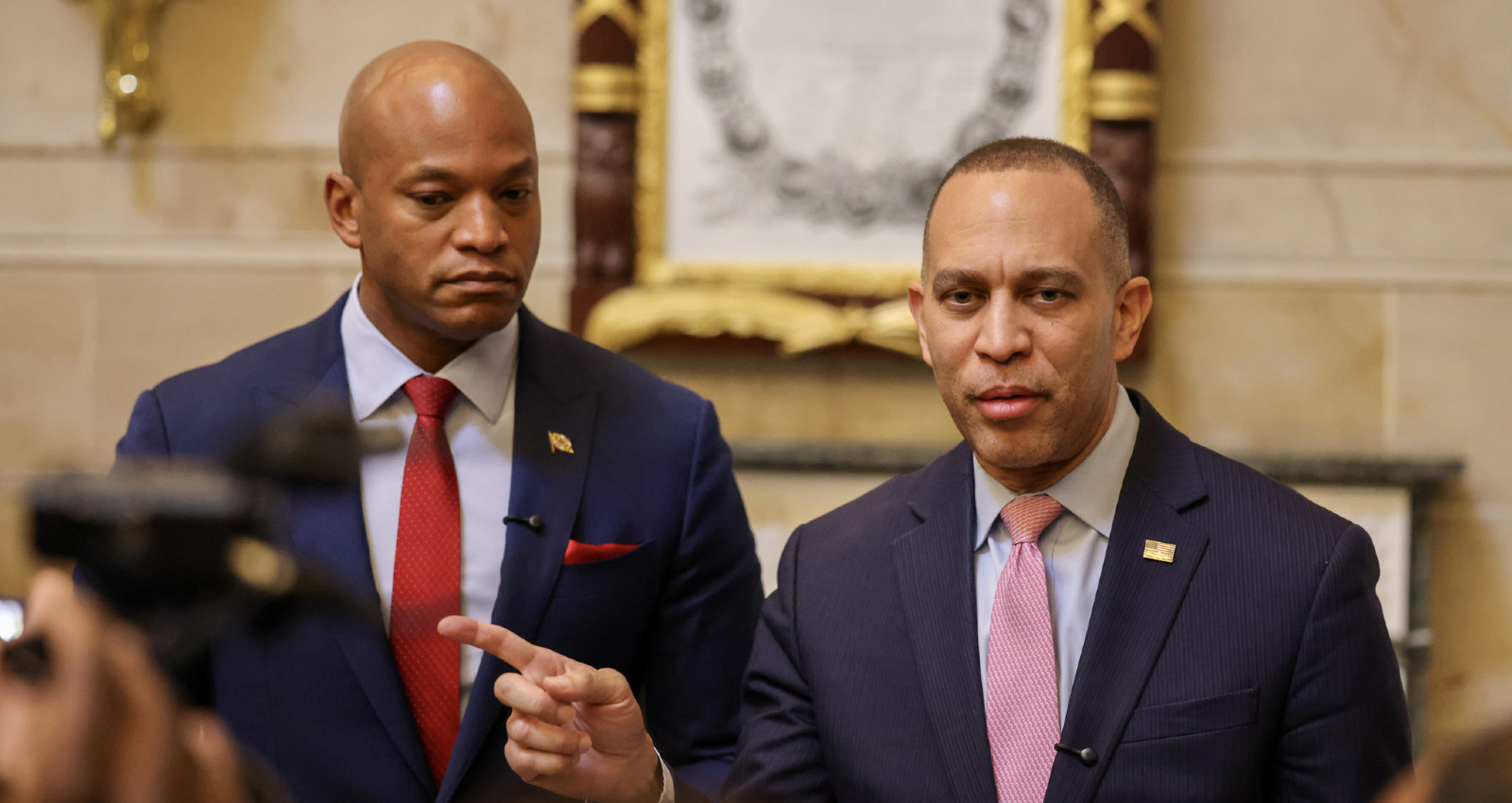
Montgomery County, Maryland, has approved two new measures expanding protections for undocumented immigrants, including legislation allowing certain tenants detained or deported by federal immigration authorities to terminate their leases early.
The Democratic-led County Council approved the measures as local officials continue to challenge aspects of President Donald Trump’s expanded immigration enforcement policies.
One of the newly approved measures amends county housing laws to prohibit landlords, property sellers and lenders from considering an individual’s immigration status when making housing-related decisions.
The legislation also establishes additional protections for tenants affected by federal immigration enforcement.
Under the new rules, residential tenants who are deported, detained or held in federal immigration custody for more than 30 days may terminate their rental agreements before the scheduled expiration date.
Tenants generally must provide landlords with 30 days’ notice before ending their leases.
“This has been an issue for quite a while,” Councilmember Kristin Mink said. “This is not a new issue. I think it’s important for folks to know that we are cleaning up something that has impacted folks for a while.”
Supporters argue that tenants and their families should not remain financially responsible for lengthy rental agreements when federal immigration enforcement prevents them from occupying their homes.
The legislation expands Montgomery County’s existing housing discrimination protections, which already prohibit discrimination based on characteristics such as race, religion and national origin.
By adding immigration status as a protected category, the county is extending those restrictions to additional aspects of private housing transactions.
The council also approved separate legislation limiting cooperation between county government agencies and federal immigration authorities.
That measure restricts when county employees may disclose certain personal information to federal immigration officials and establishes additional requirements governing access to county-operated facilities.
Supporters maintain that the restrictions are necessary to preserve trust between immigrant communities and local government institutions.
Montgomery County, one of Maryland’s most populous jurisdictions, has a substantial foreign-born population and has maintained policies limiting certain forms of cooperation with federal immigration enforcement for years.
The latest legislation comes amid an ongoing national dispute over the responsibilities of local governments when federal authorities seek to identify, detain and deport individuals who are unlawfully present in the United States.
Since returning to the White House, Trump has prioritized expanded deportations and increased enforcement operations by Immigration and Customs Enforcement and other federal agencies.
His administration has also challenged policies adopted by jurisdictions commonly described as sanctuary cities or counties, particularly those restricting cooperation between local authorities and ICE.
Federal officials and supporters of expanded immigration enforcement argue that cooperation from local governments is essential, especially when immigration authorities seek custody of individuals accused or convicted of criminal offenses.
Montgomery County officials have taken a different position, arguing that extensive cooperation with federal immigration enforcement can discourage immigrants from reporting crimes, accessing government services or communicating with local police.
The newly approved measures do not prevent federal immigration officers from independently enforcing federal law within Montgomery County.
Immigration enforcement remains primarily a federal responsibility, and county legislation cannot prohibit ICE agents from conducting arrests or other lawful federal operations.
Instead, the measures regulate how county agencies and private entities operating under local housing laws interact with immigrants and federal immigration authorities.
The housing legislation could have particularly significant implications for property owners and landlords.
Under the approved provisions, qualifying tenants who are deported or held in federal immigration detention for more than 30 days may terminate their leases without remaining responsible for the entire original rental term.
For landlords, the change creates an additional circumstance under which a tenant may legally end a rental agreement before its expiration.
The legislation also prohibits immigration status from being used as a basis for certain housing decisions, extending county-level legal protections to individuals regardless of their immigration classification.
The measures arrive as Maryland officials and the Trump administration continue to disagree over immigration enforcement responsibilities and the extent to which local governments should assist federal agencies.
Federal authorities have maintained that restrictions on cooperation can complicate efforts to locate and remove individuals subject to deportation, including those with criminal records.
Immigrant-rights advocates counter that local police departments and government agencies should not be required to serve as extensions of federal immigration enforcement.
Montgomery County has long pursued policies intended to separate many local government functions from federal immigration operations.
The newly approved legislation further establishes that approach by placing additional restrictions on county cooperation while expanding legal protections in the private housing market.
With both measures approved, Montgomery County is reinforcing its existing immigration policies at a time when the Trump administration is pursuing broader federal enforcement efforts.
The changes also establish new obligations for landlords and county agencies, ensuring that the effects of the legislation will extend beyond immigration enforcement itself and into local housing practices and government operations.

JD Vance Urgently Pulled From Conference Minutes Before Speech

Texas’ New Dem Governor Makes Horrifying Muslim Announcement

BANNED! Democrats’ First Act Should Terrify Every American

Game-Changing New Detail Emerges From Ilhan Omar Investigation

Massive Migrant Caravan Converges On U.S. For Democrat Midterm Victory

JUST IN: Pair Of Senior FBI Officials Arrested — It’s Damning
Massive Migrant Caravan Converges On U.S. For Democrat Midterm Victory

Ilhan Omar’s Husband Goes Public With Announcement — She’s Devastated

Ilhan Omar FOUND — Shocked Where Caught After Sudden Disappearance
JUST IN: Pair Of Senior FBI Officials Arrested — It’s Damning

Powerful Dem Senator Arrested 12 Days Before Midterms

Ilhan Omar Gives Jaw-Dropping Answer When Asked If She Married Her Brother
-
 Economy7 months ago
Vance Leaves Meeting, Looks Straight Into Camera, Announces Stunning Arrest
-
 Economy7 months ago
Adam Schiff Facing 30 Years In Prison After Bank Records Leak
-

 Culture5 months ago
Michelle Obama Drops Nasty Bomb About ‘Useless’ Daughter
-
 Economy7 months ago
Supreme Curt Sides With Trump — He Can Remove The All
-
 Economy7 months ago
All Hell Breaks Loose On Fox When Jesse Watters Asks Fetterman One Question
-
 Economy5 months ago
Prayers Pour In After Fox Host Dies: ‘Senseless Murder’
-
 Economy5 months ago
Pete Hegseth Just Confirmed Devastating Rumors
-

 Border & Security4 months ago
Top Trump Admin And Wife Found Dead — Chilling Update Just Released