
Latest
Travel experts warn against one tipping habit while visiting popular vacation spots

For American travelers, tipping may feel second nature — but in Europe, that instinct can backfire.
While navigating new currencies and customs, small gestures like leaving loose change on the table may not translate well, travel expert Rick Steves warns.
“You’re just raising the bar and messing up the local balance,” Steves wrote in a blog post. “And it’s bad style.”
And in busy settings, “the wrong party might pocket the change,” Steves warned.
BARTENDERS SAY ONE COMMON REQUEST COSTS THEM TIPS — AND SOME CUSTOMERS HAVE NO IDEA
In countries like Germany, Austria, Belgium and Luxembourg, plus parts of Switzerland and Liechtenstein, tipping with coins can even be perceived as rude, according to Mashed.
The expectation differs from the U.S., where servers often rely on tips to supplement low base wages — a dynamic that, along with constant digital tipping prompts, has fueled growing frustration. Nearly nine in 10 Americans say tipping culture is “out of control,” Fox News Digital recently reported.
But in Europe, where servers are paid a living wage, tipping is not a necessity and handing over a handful of small coins may come across as dismissive.
RESTAURANTS WARN TIPPED WAGE CHANGES COULD RAISE PRICES, CUT JOBS, RESHAPE DINING EXPERIENCE
“It is not always the amount alone that shapes the impression,” said LaDell Carter, founding partner of Royal Expression Travels in Maryland. “It is the presentation and the intention behind it,” she told Fox News Digital.
Carter added that in more refined settings, particularly, scattered coins can feel like an afterthought.
That doesn’t mean travelers should abandon tipping altogether.
CLICK HERE TO SIGN UP FOR OUR LIFESTYLE NEWSLETTER
Steves advises a simple, face-to-face approach that is especially appropriate in Germanic countries, where leaving coins behind is frowned upon. When settling a 10-euro bill with a 20-euro note, say “Eleven, please,” signaling the server to keep 1 euro as a tip and return the rest in change.
When percentages are used, they’re modest by American standards. Around 5% is considered adequate, while 10% is generous, according to Steves. In fact, tipping 15% to 20% can be seen as excessive. “Resist the urge to tip American-style,” he advises.
CLICK HERE FOR MORE LIFESTYLE STORIES
Payment method also matters. While card payments are widely accepted, tips are often best given in cash to ensure they go directly to the server, as some businesses may not pass along card-based gratuities in full.
Steves also recommends skipping tips at casual counter-service spots, rounding up taxi fares and giving small tips to guides and hotel staff.
It’s important to keep in mind that a one-size-fits-all approach won’t work in Europe, said Steve Schwab, Arizona-based CEO of Casago, a vacation rental and property management company.
“It can vary from one country to the next, so we can’t exactly generalize it as ‘European tipping culture,'” Schwab told Fox News Digital.
“In general, the Nordic countries are the ones where tipping is least expected, largely because they are known for paying high wages and/or including service charges in their bills already,” he added.
TEST YOURSELF WITH OUR LATEST LIFESTYLE QUIZ
Experts also recommend reviewing the bill carefully, checking for built-in service charges and observing local customs before deciding what to leave. When it doubt, don’t be afraid to ask the locals for country-specific norms.

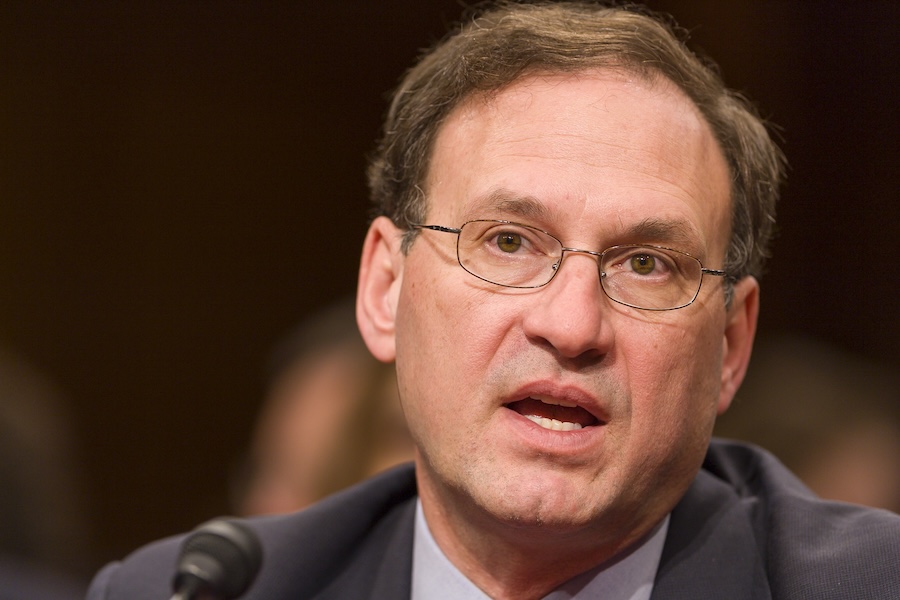
Supreme Court Justice Samuel Alito has issued a stark warning about the future of America’s highest court, cautioning that political efforts to intimidate justices and reshape the judiciary could permanently undermine one of the nation’s most important institutions.
The longtime conservative justice delivered his warning during a speech at the American Enterprise Institute’s annual dinner at the National Building Museum in Washington, D.C., where he accepted the organization’s prestigious Irving Kristol Award.
Alito’s remarks come amid renewed debate over Democratic proposals to expand the Supreme Court beyond its current nine members, an effort supporters describe as necessary judicial reform and opponents condemn as an attempt to change the Court’s ideological balance.
With the 2028 presidential election approaching, the possibility of expanding the Court could once again become a major political flashpoint.
Alito made clear that he believes the stakes extend far beyond individual judicial decisions or disagreements over constitutional interpretation.
“But it now appears that the Court may soon face a structural question of far greater magnitude: whether it will be allowed to continue as an independent tribunal that decides cases based on its understanding of the law, not political pressure,” the longtime conservative justice stated.
His warning went further, suggesting that the Supreme Court faces a sustained campaign designed to influence its decisions through intimidation, public pressure, and ultimately changes to its membership.
“I do not think it is necessary to go lay out the details, but what we have seen in recent years is a mounting campaign to change the direction of the Court’s decisions by intimidating justices or, if that fails, by seriously damaging the Court’s standing in the eyes of the public and then altering the Court’s composition. If that campaign succeeds, the Supreme Court as an institution will be fundamentally changed for many years—and perhaps permanently,” Alito continued.
The remarks represent a forceful warning from a sitting Supreme Court justice about the potential consequences of political efforts to reshape the federal judiciary.
Alito’s concerns center on a fundamental question: whether the Supreme Court can continue operating independently if political leaders threaten to alter its structure whenever they disagree with its rulings.
Although Congress has the constitutional authority to determine the number of Supreme Court justices, critics of expansion argue that adding seats for the purpose of securing favorable decisions could establish a dangerous precedent.
Under that scenario, future congressional majorities might feel justified in repeatedly expanding the Court to secure their preferred ideological outcomes.
The result, opponents warn, could be an escalating political struggle in which the size and composition of the nation’s highest court become increasingly dependent on which party controls Washington.
Alito also emphasized the judiciary’s unusual position within the American constitutional system.
Unlike the executive branch, the courts do not command law enforcement agencies or the military. Unlike Congress, they do not independently control federal spending.
Instead, the judiciary depends heavily on the willingness of the other branches of government and the American public to respect its authority.
Alito described the judiciary as lacking both “the sword” of enforcement power and “the purse” of independent funding.
“And because presidents and members of Congress are elected, what may matter most in the end is popular support for an independent judiciary.”
Video excerpts of Alito’s speech have circulated on C-SPAN and social media, drawing renewed attention to the increasingly contentious debate over the Supreme Court’s future.
The warning comes as Democrats prepare to assume congressional majorities in January, potentially giving lawmakers who favor structural changes to the judiciary a stronger platform to advance their proposals.
Among the most outspoken advocates of Supreme Court expansion is Democratic Senator Ed Markey of Massachusetts, who has sponsored legislation known as the Judiciary Act.
The proposal would increase the number of Supreme Court justices from nine to 13, creating four additional seats.
Markey and other supporters have argued that expansion is justified by the circumstances surrounding recent Supreme Court appointments, including Republican decisions that shaped the Court’s current conservative majority.
Markey has characterized the proposal as a way to restore seats that were “stolen” from Democrats.
That argument has been fiercely contested by opponents, who maintain that Supreme Court seats do not belong to either political party and that expanding the Court to reverse its ideological balance would further politicize the institution.
Democratic Senator Sheldon Whitehouse of Rhode Island has also been a prominent advocate for changes involving the Supreme Court.
In a 2019 amicus brief joined by several Senate Democrats, Whitehouse and his colleagues argued that the Court “is not well” and raised the possibility that public dissatisfaction could lead to demands that it be “restructured in order to reduce the influence of politics.”
Whitehouse has additionally supported proposals involving judicial ethics requirements, term limits, and increased oversight.
Supporters of such measures argue that reforms could improve transparency, accountability, and public confidence in the judiciary.
But critics warn that proposals to expand the Court’s membership carry especially serious consequences when they are tied to dissatisfaction with judicial outcomes.
The concern is not simply whether Congress possesses the legal authority to add justices. It does.
The larger question is what happens to judicial independence when changing the Court’s composition becomes an accepted response to politically unpopular rulings.
The Supreme Court has consisted of nine justices since 1869, although Congress changed its size several times during the nation’s first century.
That longstanding arrangement has provided institutional continuity through major political conflicts, constitutional disputes, and changes in presidential administrations.
Expanding the Court would therefore represent a significant departure from more than 150 years of established practice.
Alito’s remarks suggest that he views the current debate as part of a broader struggle over whether the judiciary can remain insulated from direct political retaliation.
His warning also arrives at a time when public confidence in the Supreme Court has become a contentious issue, with disagreements over judicial ethics, major rulings, and the appointment process fueling calls for reform.
While advocates of expansion insist that their proposals are intended to restore balance and legitimacy, opponents see the possibility of a political arms race that could weaken the Court’s independence.
For Alito, the potential consequences appear unmistakable.
His warning was not limited to the next election, the next presidential administration, or even the next generation of Supreme Court decisions.
He cautioned that the institution itself could be fundamentally altered for years, perhaps permanently.
And as Democratic lawmakers continue debating proposals to increase the number of justices, Alito’s message underscores the central issue facing Washington: whether efforts to change the Supreme Court’s ideological direction could ultimately damage the independence that allows it to function as a separate branch of government.

A longtime Democratic Party insider who spent decades helping shape American politics, serving in public office, and holding a position on the Democratic National Committee has left the United States after discovering that he was never legally an American citizen.
Ian Murray, a 75-year-old former defense attorney and prominent Democratic political figure from Erie, Pennsylvania, voluntarily departed the United States for Canada on November 12, 2026, after federal immigration authorities determined that he had never obtained U.S. citizenship.
The revelation came after Murray applied for his first U.S. passport, setting off a review of citizenship records dating back more than seven decades.
What followed was an extraordinary turn of events for a man who had spent much of his adult life deeply involved in the American political system.
Murray wasn’t simply a casual political supporter. He served as chairman of the Erie County Democratic Party for 12 years, held a position on the Democratic National Committee for nearly four decades, and served on Erie City Council.
Yet despite his extensive political résumé, federal authorities determined that Murray had never acquired the citizenship he apparently believed he possessed.
Born in Canada in 1951, Murray moved to Erie with his family in 1956 when he was just five years old. His parents were Canadian-born, although his mother, Dorothea Murray, held dual American and Canadian citizenship.
Dorothea had relocated to Erie in 1939, years before Ian was born, and the family eventually established permanent roots in Pennsylvania.
Murray grew up in Erie, attended school, built a legal career, and became a familiar presence in local Democratic politics.
His political involvement stretched back to the early 1970s, when he worked on George McGovern’s 1972 presidential campaign in Erie County.
He later supported Bill Clinton’s political efforts in the area and steadily climbed the Democratic Party’s organizational ranks.
From 1986 until 1998, Murray chaired the Erie County Democratic Party, helping oversee local party operations and political activities.
He also served on the Democratic National Committee from 1982 until 2020, an astonishing 38-year tenure within the national party organization.
In the early 2000s, Murray held elected office as a member of Erie City Council.
For decades, he participated in the political life of a country that federal authorities would eventually determine he had never legally become a citizen of.
The discovery raises questions about how someone could spend so many years in prominent political positions without the citizenship issue being identified.
It also highlights an important distinction between participating in political organizations and meeting the legal citizenship requirements for certain government offices. Membership in a political party organization does not necessarily establish citizenship, and the available account does not indicate that Murray knowingly misrepresented his status.
The legal problem originated with the Nationality Act of 1940, which governed whether children born outside the United States could automatically acquire citizenship through an American parent.
Under the law applicable when Murray was born, his mother generally needed to have resided in the United States for at least ten years before his birth to transmit citizenship to him.
Federal officials determined that Dorothea Murray had not met that requirement.
Although she had spent years living in the United States, approximately four years of study at the University of Toronto did not count toward the required period of residence.
Even after accounting for summers and other time spent in America, her qualifying residence totaled approximately eight and a half to nine years.
That left her short of the statutory requirement.
The difference was relatively small, but under the law, it was decisive.
As a result, authorities concluded that Murray had not automatically acquired American citizenship when he was born in Canada.
For decades, however, he lived much like any other American.
He had a Social Security number, government-issued identification, and eventually a Maine REAL ID.
He practiced law, participated in political campaigns, held public office, and served in Democratic Party leadership.
After retiring around 2022, Murray and his wife relocated to Maine.
The citizenship problem might have remained undiscovered had he not decided to apply for a passport approximately a year and a half ago.
He wanted to travel to Scotland and Ireland.
Instead, the application prompted a Department of Homeland Security review that would ultimately force him to confront his immigration status.
On July 10, 2026, DHS issued a Notice to Appear, formally initiating immigration proceedings against Murray.
The government charged that he was “an alien present in the United States who has not been admitted or paroled,” identifying him as a Canadian citizen and “not a citizen or national of the United States.”
The language was unmistakable.
After roughly 70 years of living in America, Murray was being treated under federal immigration law as a foreign national without lawful admission or parole.
His decades of residence, extensive political connections, and years of Democratic Party service did not establish citizenship.
Murray subsequently appeared before an immigration judge in the Boston area.
On September 1, the judge granted his request for voluntary departure, allowing him to leave the country without a formal removal order, provided he departed by December 30.
Murray chose to leave earlier.
On November 12, he departed the United States for Nova Scotia, Canada, bringing an abrupt end to the American life he had built over seven decades.
“I can’t believe this is happening,” Murray told local outlet GoErie. “It’s almost like I am being erased.”
Speaking from Nova Scotia, he described beginning “another life together” with his wife.
The case presents an unusual collision between decades of political involvement and the technical requirements of federal immigration law.
Murray spent nearly 40 years on the Democratic National Committee, an organization closely involved in presidential politics and national party operations.
He helped advance Democratic political campaigns, chaired a county party organization, and served in local government.
Yet the citizenship issue apparently went undetected until he sought a passport late in life.
The circumstances also raise questions about what documentation was reviewed during his years in public office and whether his status affected any citizenship requirements associated with positions he held.
Those questions cannot be resolved simply from the fact that he lacked citizenship. His eligibility for particular positions would depend on the laws and rules applicable at the time, and the reported facts do not establish that he intentionally violated them.
Nevertheless, the contrast is striking.
A man who devoted decades to American Democratic politics ultimately found himself subject to the same federal immigration statutes that apply to other foreign nationals.
His political résumé could not override the legal requirements for citizenship.
Nor could his Social Security number, state identification, or decades of residence substitute for proof that he had legally acquired citizenship.
For Murray, the outcome was personally devastating.
For the broader public, the case illustrates how a citizenship question can remain unresolved for decades, even for someone with a substantial professional and political history.
It also demonstrates that a person’s longstanding belief that they are an American citizen does not necessarily satisfy the requirements established by federal law.
Murray’s departure was voluntary under an immigration judge’s order, rather than a physical deportation carried out by federal agents. But the consequences were nonetheless profound: at 75 years old, he left the country where he had lived since childhood.
After decades of Democratic Party leadership, service on the Democratic National Committee, and involvement in American elections, Murray’s political connections could not change the citizenship determination.
And in one of the more unusual immigration cases involving a longtime political figure, a man who spent nearly his entire life participating in American politics has now returned to the country of his birth because, according to federal authorities, he was never legally an American citizen.

Fox News liberal commentator Jessica Tarlov has admitted she criticized President Donald Trump over his Charlottesville remarks without bothering to listen to the actual recording — a stunning confession that raises serious questions about how political commentators push damaging narratives without first checking the facts.
After years of Democrats and their media allies using Trump’s 2017 Charlottesville comments to portray him as sympathetic to white supremacists, Tarlov is now acknowledging a critical detail that was publicly available from the very beginning: Trump explicitly excluded neo-Nazis and white nationalists when discussing the people he described as “very fine people.”
The admission came during a recent appearance on *The Bulwark* podcast, where the co-host of Fox News’ *The Five* conceded that she had formed and publicly expressed an opinion about Trump’s remarks without listening to what he actually said.
For a political commentator whose job revolves around analyzing public statements and informing viewers, the revelation is particularly embarrassing.
And perhaps even more troubling is the fact that the evidence Tarlov apparently failed to examine wasn’t hidden, classified, or difficult to obtain.
It was right there in the original recording, available to anyone willing to listen.
During the podcast appearance, Tarlov acknowledged that she had accepted a version of Trump’s Charlottesville comments without independently examining the full context.
“And that was a little embarrassing for me that I actually hadn’t listened to the audio of what Trump had said after the Unite the Right rally in Charlottesville,” she started.
But her admission didn’t stop there.
After finally listening to the recording, Tarlov conceded that Trump’s reference to “very fine people” wasn’t directed at neo-Nazis, as the controversy had so often been characterized.
“And he has a very meandering, crazy way of talking anyway. But when you sit there, and you listen to it, you hear that very fine people wasn’t the very fine Nazis, right? It was about the debate over pulling the statues down, whether you should keep what we would see as traitors embossed in public places like a Robert E. Lee. And that was illuminating for me. I think Jussie Smollett and what happened there was a big kick in the a**, of people who just adhere to a narrative that fits their political leanings, and folks didn’t necessarily mea culpa that much about it, but this rush to defend something that fits your narrative.”
In other words, Tarlov now recognizes that a major part of the narrative she previously criticized Trump over did not accurately reflect what he explicitly said.
Yet the most revealing part of her confession may be how easily the mistake could have been avoided.
All she had to do was listen.
The controversy dates back to August 2017, following the deadly Unite the Right rally in Charlottesville, Virginia.
During a news conference addressing the violence, Trump discussed the competing demonstrations surrounding the proposed removal of a statue of Confederate Gen. Robert E. Lee.
His remarks quickly became one of the most frequently cited controversies of his presidency.
Democrats and critics repeatedly pointed to Trump’s description of certain demonstrators as “very fine people,” arguing that his response minimized the role of white supremacists.
But the full transcript reveals an important distinction.
“But you also had people that were very fine people, on both sides,” Trump said during the exchange.
Trump then explicitly clarified whom he was not defending.
“I’m not talking about the neo-Nazis and the white nationalists, because they should be condemned totally. But you had many people in that group other than neo-Nazis and white nationalists, okay?”
Those words directly contradict the claim that Trump explicitly described neo-Nazis and white nationalists themselves as “very fine people.”
That doesn’t mean every criticism of Trump’s handling of Charlottesville was invalid. Critics have argued that his broader response was inadequate, particularly his assignment of blame to multiple sides following a rally organized by white nationalists.
But criticizing Trump’s overall response is one thing.
Suggesting that he specifically praised neo-Nazis as fine people, while leaving out his explicit condemnation of those groups, is another.
And Tarlov’s admission demonstrates why that distinction matters.
What makes the Fox News commentator’s confession especially damaging is that she wasn’t merely repeating something she heard in passing.
She had publicly weighed in on the controversy herself.
In August 2017, Tarlov recorded commentary for *InStyle* criticizing Trump for what she argued was his failure to adequately distinguish white supremacists from other demonstrators.
Her criticism centered on the president’s use of the phrase “very fine people.”
Now, years later, she admits she hadn’t actually listened to the recording that would have provided the context necessary to evaluate those remarks.
That’s a serious credibility problem for someone paid to offer political analysis to the American public.
Tarlov was hardly alone in criticizing Trump’s Charlottesville response, and the controversy involved legitimate disagreements about his leadership and rhetoric.
But her own account raises an uncomfortable question: How many commentators confidently delivered judgments about Trump’s exact words without examining the primary evidence?
For years, the Charlottesville controversy became a political weapon wielded against Trump.
Former President Joe Biden repeatedly invoked the events in explaining his decision to challenge Trump in the 2020 presidential election.
The issue remained a recurring theme in Democratic attacks on Trump’s character and leadership.
Meanwhile, Trump and his defenders continued pointing to the full transcript, insisting that his explicit condemnation of neo-Nazis and white nationalists was being ignored.
Tarlov’s latest comments lend support to their argument that an important part of the president’s remarks was lost in the political narrative.
Tarlov also connected her change in perspective to the Jussie Smollett case, another politically charged controversy in which an initially prominent narrative unraveled under scrutiny.
Smollett’s allegations of a racist and homophobic attack attracted widespread attention before investigators challenged his account.
By invoking that case, Tarlov appeared to acknowledge a broader problem in political commentary: the temptation to embrace allegations that reinforce existing political beliefs before thoroughly examining the evidence.
It’s a remarkable observation coming from someone who admits she fell into that very trap.
The problem isn’t simply that a commentator reached a conclusion later reconsidered.
People can evaluate evidence differently, and responsible journalists and commentators should be willing to correct themselves.
The problem is that Tarlov publicly criticized a president over specific remarks without first listening to those remarks in full.
That is not a complicated investigative failure. It is a basic failure to verify the material being criticized.
And when the subject is a sitting president accused of sympathizing with some of the most reviled extremist groups in American politics, that responsibility becomes even more important.
Tarlov deserves acknowledgment for publicly admitting that her earlier understanding was incomplete.
But an admission years after the controversy erupted doesn’t erase the original failure.
The full recording was available in August 2017.
Trump’s explicit condemnation of neo-Nazis and white nationalists appeared in the same news conference as the disputed “very fine people” remarks.
There was no need for an insider source, a secret document, or a lengthy investigation to discover what he said.
The evidence was available from the beginning.
And yet Tarlov acknowledges that she criticized Trump without listening to it.
For conservatives who have spent years arguing that Trump’s Charlottesville remarks were selectively presented, her confession is likely to be viewed as vindication on that specific point.
It also exposes a larger problem with political commentary: When a damaging narrative fits someone’s political preferences, the incentive to repeat it can become stronger than the obligation to verify it.
Tarlov’s admission doesn’t settle every debate about Charlottesville or Trump’s response to the violence that killed counterprotester Heather Heyer.
But it does establish something important about her own participation in that debate.
She offered criticism without first examining the complete recording.
And after years of controversy, the question is no longer just what Trump said in Charlottesville. It’s why a prominent political commentator felt comfortable condemning him over those words without bothering to listen to them first.

SCOTUS Justice Issues Chilling Warning

Democrate Leader Just Self-Deported After Sudden Discovery

Primetime Fox News Host Makes Shocking Admission On LIVE TV

WH Swiftly Seizes Phones On Air Force One Amidst Sudden Secret Move

Democrat Politician Indicted By Federal Grand Jury

JUST IN: Mamdani Rushed To The Hospital — Had It Coming!

Massive Migrant Caravan Converges On U.S. For Democrat Midterm Victory

JUST IN: Pair Of Senior FBI Officials Arrested — It’s Damning

Pentagon Rolls Controversial Out Doomsday Strategy
Texas’ New Dem Governor Makes Horrifying Muslim Announcement

Game-Changing New Detail Emerges From Ilhan Omar Investigation

BANNED! Democrats’ First Act Should Terrify Every American
-
 Economy7 months ago
Vance Leaves Meeting, Looks Straight Into Camera, Announces Stunning Arrest
-
 Economy7 months ago
Adam Schiff Facing 30 Years In Prison After Bank Records Leak
-
 Culture5 months ago
Michelle Obama Drops Nasty Bomb About ‘Useless’ Daughter
-
 Economy7 months ago
Supreme Curt Sides With Trump — He Can Remove The All
-
 Economy8 months ago
All Hell Breaks Loose On Fox When Jesse Watters Asks Fetterman One Question
-
 Economy6 months ago
Prayers Pour In After Fox Host Dies: ‘Senseless Murder’
-

 Economy5 months ago
Pete Hegseth Just Confirmed Devastating Rumors
-

 Border & Security4 months ago
Top Trump Admin And Wife Found Dead — Chilling Update Just Released