
Latest
Horrific ‘Mass Casualty Event’ Confirmed

A devastating explosion and rapidly spreading fire at a major Canadian military installation in Alberta has left multiple people dead and others injured, prompting a large-scale emergency response and an investigation into what caused the disaster.
Canadian officials described Saturday’s incident at Canadian Forces Base Wainwright as a “mass casualty event,” with emergency crews responding to an explosion and a fire that spread beyond the military training grounds.
The installation, located southeast of Edmonton, is one of Canada’s largest and busiest military training facilities.
It houses the Canadian Manoeuvre Training Centre and the 3rd Canadian Division Training Centre, supporting military exercises and operational training for Canadian Army personnel.
Approximately 1,310 soldiers were stationed at the base according to 2021 census figures.
The incident reportedly began inside a designated training area before flames spread rapidly across the surrounding landscape.
Powerful winds complicated firefighting efforts, with gusts in the region reaching approximately 100 kilometers per hour, or 62 miles per hour.
The Canadian Armed Forces said the fire moved beyond the training area’s boundaries as emergency personnel worked to contain the flames.
Officials from the Municipal District of Wainwright reported that the blaze crossed the base perimeter fence and spread into an area south of the town of Wainwright.
Despite concerns about the fire’s movement, local authorities did not issue an evacuation order for nearby residents.
Firefighters from multiple jurisdictions responded to protect surrounding communities, infrastructure and property.
By late Saturday night, municipal officials reported that the fire was under control.
However, the human toll of the incident remained a central concern.
Canadian Defense Minister David McGuinty confirmed that the explosion and fire had resulted in fatalities and injuries.
“I’m saddened to share that there have been both fatalities and injuries as a result of an incident on the base,” McGuinty said in a statement.
He described the developing situation as “very, very active and delicate,” underscoring the challenges facing military officials and emergency responders.
“I cannot recall an incident like this in recent memory,” the defense minister added.
The Canadian Armed Forces said its immediate priorities included assisting injured personnel, supporting affected families and notifying the relatives of those killed.
Military officials indicated that they would not release an official casualty count until the next-of-kin notification process was complete.
Global News, citing unnamed Canadian Armed Forces sources, reported that at least seven people had died and dozens more were injured.
Those figures were preliminary and had not been publicly confirmed by the military in the supplied reporting.
The number of casualties, the severity of injuries and the identities of those affected remained subject to official confirmation.
The incident also placed significant pressure on regional emergency medical services.
Dr. Warren Thirsk, an emergency physician at Edmonton’s Royal Alexandra Hospital, told Global News that the volume of patients associated with such an incident could overwhelm local medical facilities.
He characterized the situation as an unusually large-scale disaster requiring a substantial emergency response.
The reported scale of the injuries raised concerns about the resources needed to treat victims, transport patients and coordinate care across the region.
Meanwhile, preliminary reports pointed to a possible explanation for the explosion.
According to the initial accounts, a live-fire training round may have struck a natural gas line or well located within the military installation.
The suspected impact reportedly triggered an explosion and ignited the subsequent fire.
CFB Wainwright contains numerous buried natural gas wells, making the presence of underground energy infrastructure a potentially significant factor in the investigation.
However, the precise cause of the explosion had not been officially established in the supplied reporting.
Investigators would need to determine whether military training activity damaged a gas installation, whether another ignition source was involved and what circumstances allowed the fire to spread so rapidly.
The possible involvement of live ammunition and underground gas infrastructure raises important questions about training-area safety and the management of hazardous facilities located on military property.
Those questions cannot be resolved until investigators examine the physical evidence and establish a verified sequence of events.
Canadian Prime Minister Mark Carney acknowledged the disaster in a public statement and expressed support for the military personnel and families affected.
“A serious incident creating a major fire has occurred at CFB Wainwright, in Alberta,” Carney wrote.
“Our thoughts are with all the brave women and men affected.”
The prime minister said his government was coordinating closely with Alberta Premier Danielle Smith and local authorities as emergency operations continued.
The involvement of federal, provincial and municipal officials reflected the scale of the response and the potential consequences for both military personnel and nearby communities.
CFB Wainwright plays a significant role in preparing Canadian Army units for operational deployments.
Its extensive training grounds accommodate large military exercises, including maneuvers involving vehicles, weapons and live-fire activities.
Such training requires careful coordination and safety procedures because of the risks associated with explosives, ammunition, equipment and environmental conditions.
The reported combination of an explosion, high winds and rapidly spreading fire made Saturday’s emergency particularly challenging.
While officials reported that the flames had been brought under control, the investigation into the incident and the process of supporting victims and their families were expected to continue.
Authorities had not announced a final casualty count or publicly confirmed the preliminary explanation involving a natural gas installation.
For the Canadian Armed Forces, the immediate focus remained on those killed or injured and the personnel involved in responding to the disaster.
The incident has also brought renewed attention to the safety challenges associated with large military training facilities, particularly those containing underground industrial infrastructure.
As investigators work to determine what happened, officials face the task of establishing the cause of the explosion, accounting for everyone affected and identifying any measures needed to prevent a similar disaster.
For now, the reported fatalities and injuries mark a serious tragedy at one of Canada’s major military installations, with families awaiting further information and authorities continuing to assess the full consequences of the explosion and fire.

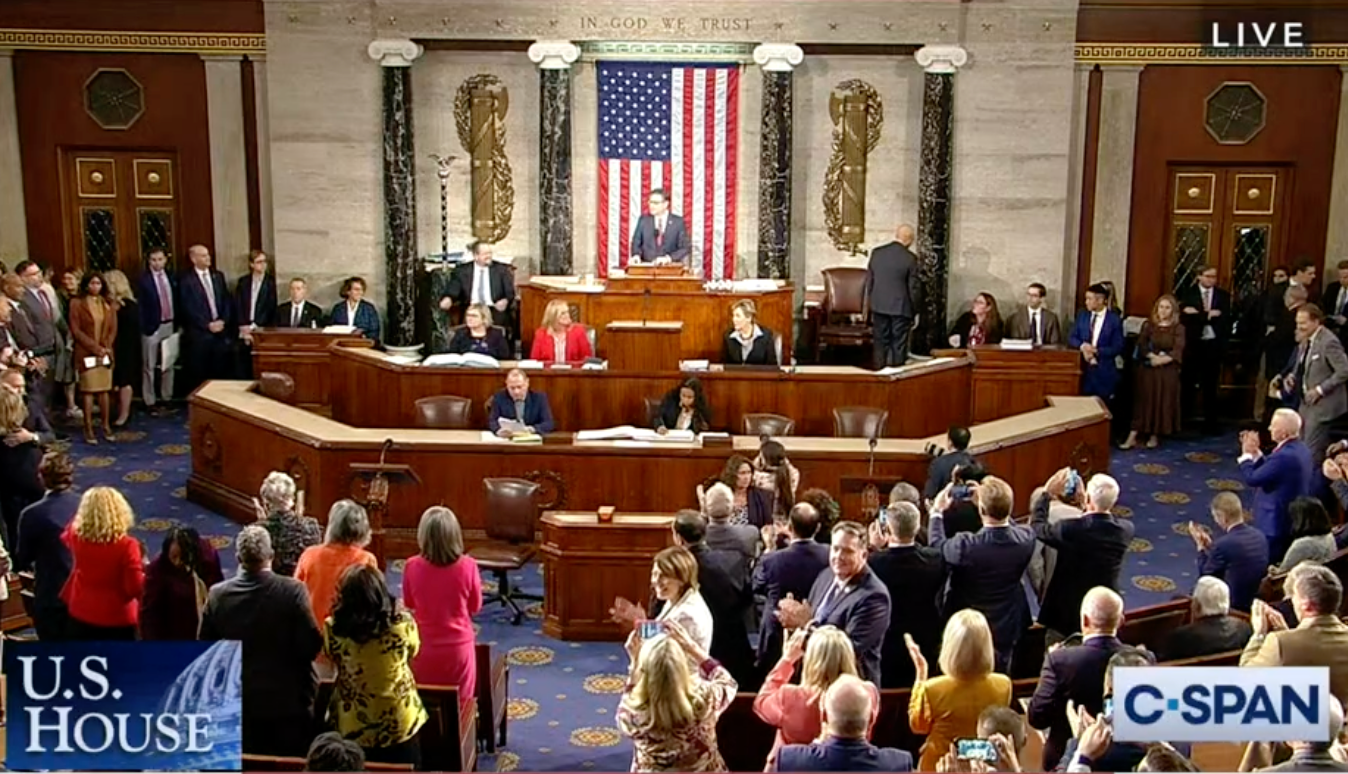
Former Democratic Sen. Joe Manchin is crossing party lines once again, throwing his support behind Republican Sen. Susan Collins as she campaigns for another term representing Maine in the U.S. Senate.
Manchin, who represented West Virginia for more than a decade before leaving the Democratic Party and registering as an independent in 2024, announced his support for Collins during an appearance on CNBC’s *Squawk Box*.
The former senator praised Collins for her willingness to work across party lines and argued that Congress needs lawmakers who prioritize cooperation over partisan loyalty.
“You lose the Susan Collinses of the Senate, you’re losing the soul of the Senate,” Manchin declared.
He also pledged to take an active role in supporting her campaign, including traveling to Maine to help the Republican incumbent.
“I’m gonna do everything I can to help,” Manchin said.
The endorsement brings renewed attention to a political friendship that developed over years of bipartisan negotiations in Washington.
Collins, one of the Senate’s longest-serving Republicans, is seeking a sixth term in a contest that has attracted national attention as both parties compete for control of the chamber.
Manchin’s decision to publicly support her underscores their longstanding working relationship and their shared preference for negotiating legislation across party lines.
During their overlapping years in Congress, the two senators participated in several major bipartisan legislative efforts.
Both were members of the group that negotiated the 2021 infrastructure legislation, which became the Infrastructure Investment and Jobs Act.
The package directed federal funding toward transportation infrastructure, broadband expansion, bridges, roads and other public works projects.
Manchin and Collins also supported the 2022 Bipartisan Safer Communities Act, which introduced changes to federal gun laws while providing additional resources for mental health services and school security.
The two lawmakers participated in bipartisan efforts surrounding the Electoral Count Reform Act, legislation intended to clarify procedures for certifying presidential election results.
That measure reaffirmed the vice president’s limited role in counting electoral votes and increased the number of lawmakers required to initiate objections to a state’s electoral votes.
Their collaboration extended beyond individual legislative proposals.
Both senators developed reputations for occasionally opposing their own parties’ positions, particularly when they believed compromise was necessary to advance legislation.
Manchin frequently clashed with Democratic leaders over spending, energy policy and major elements of President Joe Biden’s legislative agenda.
Collins has similarly broken with Republican leadership on selected issues while supporting other significant Republican priorities.
Their political relationship has also translated into campaign support.
Manchin previously endorsed Collins during her 2020 reelection campaign against Democratic nominee Sara Gideon.
Despite a closely watched race and polling that suggested a competitive contest, Collins ultimately won by nearly nine percentage points.
Manchin’s latest endorsement follows that earlier decision to support a Republican colleague over his former party’s nominee.
This time, Collins faces former Maine Senate President Troy Jackson, who secured the Democratic nomination and is seeking to unseat the longtime incumbent.
Jackson has focused his campaign on economic affordability, health care, workers’ rights and concerns about income inequality.
He has argued that Maine needs a senator who will more consistently challenge Republican policies in Washington.
Jackson has also criticized Collins over abortion policy and her relationship with President Donald Trump, contending that her occasional disagreements with the administration do not outweigh her support for other Republican priorities.
Collins has defended her record by emphasizing her independence, seniority and willingness to evaluate legislation and presidential proposals individually.
During an October debate, she pointed to disagreements with Trump over tariffs, immigration enforcement and military policy.
She argued that her approach reflects a commitment to representing Maine rather than automatically supporting every position taken by her party.
Collins was also among seven Republican senators who voted to convict Trump during his second impeachment trial following the January 6, 2021, Capitol riot.
The Senate ultimately fell short of the two-thirds majority required for conviction.
That vote remains one of the most prominent examples of Collins taking a position opposed by much of the Republican Party.
Manchin’s endorsement gives Collins another example of support from outside Republican ranks as she emphasizes her bipartisan credentials.
The former West Virginia senator spent much of his career occupying a politically independent position within the Democratic caucus.
Although elected as a Democrat, he frequently resisted proposals supported by party leadership and demanded changes to major legislation before agreeing to provide his vote.
His opposition to certain Democratic spending and energy proposals made him a central figure in negotiations during Biden’s presidency.
Manchin announced in 2023 that he would not seek another Senate term.
In 2024, he formally left the Democratic Party and registered as an independent, although he continued caucusing with Senate Democrats for the remainder of his tenure.
His support for Collins is therefore consistent with his longstanding willingness to back candidates from either party based on personal relationships and legislative priorities.
The Maine contest also illustrates competing views of bipartisanship and political accountability.
Collins points to her willingness to negotiate with Democrats and occasionally oppose Republican leadership as evidence of her independence.
Jackson argues that voters should evaluate her broader voting record and the practical consequences of Republican policies she has supported.
Manchin, meanwhile, has made clear that he considers Collins’ approach to legislating particularly valuable.
His comments suggest that he views the loss of lawmakers willing to negotiate across party lines as a concern for the Senate as an institution.
The endorsement comes as national Republican leaders continue emphasizing ideological differences with Democrats during the midterm campaign.
Manchin’s intervention presents a different political message, focused less on party affiliation than on his assessment of Collins’ legislative record.
Whether his endorsement affects voters in Maine remains to be seen.
For now, Collins has secured public support from a former Democratic senator who previously campaigned for her and worked alongside her on major legislation.
And Manchin has made his intentions unmistakable: despite his long history with the Democratic Party, he plans to help a Republican former colleague win another term in the United States Senate.
A major leadership change is coming to the U.S. Secret Service after Deputy Director Matthew C. Quinn announced Friday that he will step down November 7, ending an 18-month tenure focused on strengthening the agency’s operations, leadership and staffing.
Quinn, the agency’s 24th deputy director, confirmed his departure in a public statement on X and an internal letter to Secret Service personnel, explaining that the decision followed months of transition planning with Director Sean Curran.
“Today I informed the men and women of the [Secret Service] that I will be transitioning out of my role as Deputy Director,” Quinn wrote.
“Director Curran and I have been working on a thoughtful transition plan for months now. Proud of the men & women of the USSS and all your accomplishments!”
The announcement comes as the agency continues addressing significant security challenges, including emerging drone threats, staffing demands and the protection of senior government officials.
Despite the timing, Quinn emphasized that his departure was planned and that he believes the Secret Service is positioned for continued progress.
In an internal letter obtained by NewsNation, Quinn explained that he had discussed his eventual departure with Curran well before Friday’s announcement.
He said he had approached his return to federal service with a specific objective: helping the agency implement reforms before transitioning leadership responsibilities to the next generation.
Quinn wrote that he told Curran the previous year that “one of my goals was to work myself out of this job as quickly as possible. No timeline, just the right time, and I believe that time is now.”
He acknowledged that personal considerations played a role in his decision but emphasized his confidence in the agency’s current direction.
“Part of that calculus is for personal reasons, but most of all it is knowing that the Secret Service is well-positioned for the future,” Quinn explained.
He described his time as deputy director as “the most rewarding of my career” and acknowledged that leaving the position was “not an easy decision.”
Quinn’s departure marks the conclusion of his second period of service with the agency.
He originally retired from the Secret Service in 2021 after more than two decades, having held several senior operational positions.
Those assignments included deputy assistant director for the Office of Protective Operations and special agent in charge of the Special Operations Division.
His background gave him extensive experience overseeing protective operations and specialized security responsibilities.
Following his retirement, Quinn entered the private sector, serving as senior vice president at Fortem Technologies, a company specializing in counter-drone technology.
The company’s systems include DroneHunter, an unmanned aircraft designed to intercept unauthorized drones.
Quinn returned to the Secret Service in May 2025 at Curran’s personal request.
His decision to rejoin the agency came during a period of heightened attention to its protective capabilities, organizational structure and operational readiness.
In his farewell letter, Quinn made clear that he never intended his return to become a permanent second career.
“I initially retired from the Secret Service in 2021 as a Deputy Assistant Director in OPO. For me, returning to the Service was never intended to be a long-term second career, rather an opportunity to support Director Curran and the agency to make rapid, effective change across the organization.”
Quinn also emphasized the importance of developing leadership talent within the Secret Service.
He argued that promoting experienced personnel from within the organization is one of the agency’s strengths and expressed confidence that its leadership pipeline has improved.
According to his letter, Quinn believes the agency is now positioned to fill future deputy director vacancies internally rather than seeking outside candidates.
His comments suggest that leadership development and organizational stability were among the priorities he sought to advance during his tenure.
Quinn also pointed to improvements in recruitment and staffing.
According to figures cited during his tenure, the Secret Service recorded a net gain of 929 law enforcement personnel during the current fiscal year, compared with a net gain of just 87 the previous year.
The increase represents a substantial improvement in reported staffing growth.
Personnel levels are particularly important for an agency responsible for protecting the president, vice president, visiting foreign dignitaries and other designated individuals while also securing major national events.
Protective assignments require extensive coordination, specialized training and personnel capable of responding to a wide range of threats.
Quinn’s announcement also followed a nationally televised interview in which he and Curran discussed some of the security challenges confronting the Secret Service.
During an October 11 segment on CBS’s *60 Minutes*, Quinn addressed the growing threat posed by unmanned aircraft systems, particularly coordinated groups of drones operating together.
“Swarms are a huge problem and a big threat,” Quinn said.
“I’d love to tell you the swarm problem is solved. It’s not.”
His comments highlighted an increasingly complex security concern for federal protective agencies.
Small unmanned aircraft can present challenges because of their mobility, relatively low cost and ability to approach sensitive locations from multiple directions.
Coordinated drone activity creates additional difficulties for detection and interception systems.
Quinn’s experience in the counter-drone technology industry gave him a professional background directly relevant to those emerging threats.
Despite acknowledging that the broader drone swarm problem remains unresolved, Quinn expressed confidence in the protective measures surrounding the White House.
“I will tell you that at the White House, White House is the safest place on Earth,” he said during the interview.
The remarks reflected his assessment of the security measures protecting one of the country’s most sensitive government facilities.
His departure comes at a time when federal protective agencies are continuing to evaluate how evolving technologies could affect security planning.
In his internal message, Quinn emphasized that the Secret Service must remain focused on adapting to those challenges.
He warned that “the stakes have never been higher” and encouraged personnel to maintain the standards required of the agency.
Quinn urged employees to “stay safe, look out for each other, and continue pushing the limits of what is possible.”
He also indicated that he intends to remain available to support the organization after leaving his leadership position.
The announcement did not identify who will replace Quinn as deputy director.
His departure will leave Director Curran responsible for overseeing the next leadership transition while maintaining the agency’s operational responsibilities.
Quinn’s public explanation indicates that the transition was developed over several months rather than being an abrupt personnel decision.
He has not publicly linked his departure to a specific controversy, disagreement or failure within the agency.
Instead, his statements emphasize the completion of the objectives that brought him back to the Secret Service in 2025.
With his November 7 departure approaching, Quinn is preparing to conclude a career chapter that began with his return from retirement and included efforts to strengthen the agency’s staffing, leadership structure and operational capabilities.
His final message to personnel underscored both the demands of their work and his confidence in their ability to meet future challenges.
For the Secret Service, the next step will be selecting a successor and continuing the organizational changes Quinn and Curran have pursued.
For Quinn, the departure represents a second exit from an agency where he spent more than two decades serving in protective and leadership roles.
And according to his own explanation, he is leaving because he believes the organization is ready for what comes next.
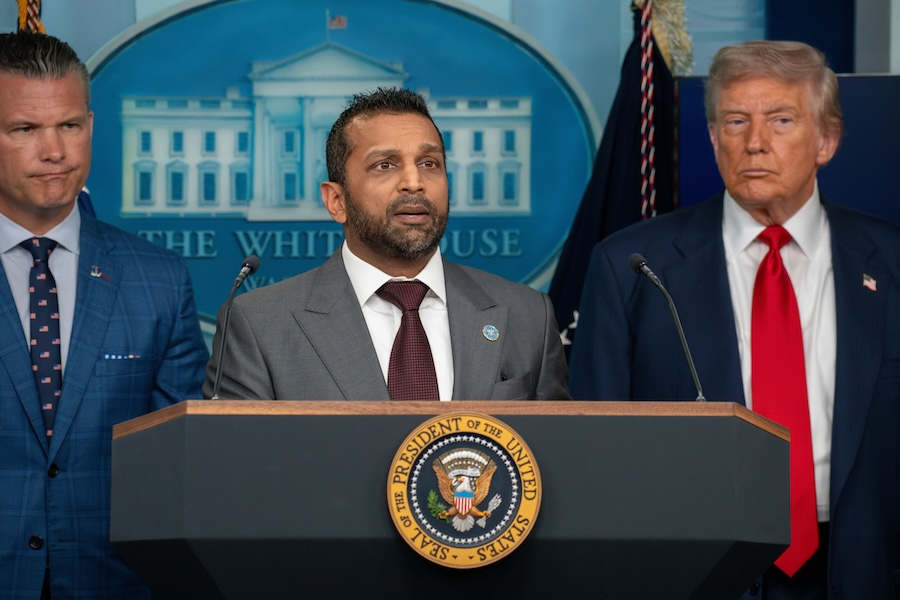
Federal authorities are investigating a series of suspicious letters sent to government offices across the United States, including congressional offices on Capitol Hill and election administration facilities in multiple states, raising security concerns less than three weeks before the November 3 midterm elections.
The FBI confirmed that it is working alongside the U.S. Postal Inspection Service and other law enforcement agencies to identify those responsible for the mailings, some of which reportedly contained unidentified substances.
Fox News correspondent Bill Melugin shared a statement from the bureau Thursday confirming the investigation and outlining the federal response.
“The FBI and U.S. Postal Inspection Service are investigating a series of suspicious mailings sent to various addresses nationwide, including Secretary of State offices and their related election offices,” an FBI spokesperson said.
“Some of the letters contained an unknown substance and we are working closely with our law enforcement partners to respond to each incident. We are also working with our partners to identify the individual or individuals responsible for the letters.”
The statement concluded with the FBI emphasizing its responsibility to protect the public and safeguard the election process.
The investigation has expanded beyond state election offices to include congressional facilities in Washington, D.C.
According to Bloomberg Government, U.S. Capitol Police joined federal investigators after suspicious letters were reportedly sent to multiple congressional offices.
A Thursday security alert distributed to congressional staff instructed employees to remain vigilant, report suspicious activity immediately and follow established procedures for handling potentially dangerous mail.
Authorities were also reportedly working to identify and intercept additional letters before they reached their intended destinations.
The warning came amid growing concerns that the mailings could disrupt government operations or create fear among public employees responsible for administering elections.
One detail in the Capitol Hill alert has attracted particular attention.
According to the New York Post, a security warning included a photograph of an envelope bearing the initials “DSA” and a return address associated with a Manhattan building previously listed on Democratic Socialists of America membership materials.
The markings and return address have not been established as authentic indicators of who mailed the envelope.
Investigators have not publicly identified the sender, and the address does not establish that Democratic Socialists of America or anyone affiliated with the organization participated in the incidents.
Return addresses and other markings on suspicious mail can be falsified, making forensic examination and corroborating evidence necessary before responsibility can be determined.
The broader investigation follows reports of suspicious letters reaching or being intercepted near election offices in several states.
In Ohio, Secretary of State Frank LaRose disclosed Wednesday that postal investigators had intercepted an envelope containing a white powdery substance before it reached his office.
LaRose said the FBI was investigating the incident and that county election boards had been notified to remain alert for similar mailings.
His office emphasized that election security measures and contingency procedures were already in place.
Ohio officials also reassured voters that the state’s election operations remained secure despite the incident.
Similar scares were reported in Louisiana and Oklahoma.
According to CNN, election officials in those states received suspicious letters Tuesday, prompting authorities to evacuate affected offices while emergency personnel assessed the potential danger.
No injuries were reported in the Louisiana, Oklahoma or Ohio incidents described in the initial coverage.
Officials have not publicly identified the substances found in the mailings or confirmed that they were hazardous.
That distinction is significant because the presence of an unidentified powder does not necessarily mean a letter contains a toxic, biological or otherwise dangerous material.
Law enforcement agencies generally treat suspicious substances as potentially hazardous until testing determines their composition.
The nationwide investigation also raises questions about whether the incidents were coordinated.
The FBI has confirmed that investigators are examining a series of mailings sent to government offices, but the bureau has not publicly established that all the letters originated from the same individual or group.
Nor has it announced a suspected motive.
The timing is particularly sensitive because election officials across the country are preparing for the November 3 midterms.
Secretary of State offices and local election boards play important roles in administering elections, maintaining voter records, coordinating ballot procedures and communicating with local election authorities.
Disruptions to those offices during the final weeks before Election Day can create operational challenges even when a suspicious mailing ultimately proves harmless.
The reported incidents have therefore prompted a coordinated response involving federal, state and congressional security officials.
The U.S. Postal Inspection Service is responsible for investigating crimes involving the mail, including threatening correspondence and potentially hazardous materials sent through the postal system.
The FBI may become involved when suspicious mailings raise concerns about federal criminal offenses, threats against government officials or interference with election-related operations.
Capitol Police, meanwhile, are responsible for protecting Congress and its facilities, making the agency a central participant when suspicious packages or letters are directed toward congressional offices.
The involvement of multiple agencies reflects the geographic scope of the reported incidents and the need to examine possible connections among the mailings.
Investigators may review physical evidence, postal processing information, surveillance footage and other records to determine where the letters originated and whether they were sent by a common source.
However, officials have not publicly disclosed specific forensic findings or identified any suspects.
The FBI first acknowledged the nationwide investigation Wednesday night, according to the supplied reporting, before its statement was shared publicly by Melugin on Thursday.
The bureau has not announced arrests, criminal charges or confirmed links to any political organization.
It also has not established that the incidents were intended to influence the upcoming election.
For now, the known developments include suspicious mailings to government offices, reports of unidentified substances, security alerts issued to congressional personnel and an active multiagency investigation.
The discovery of the letters has prompted heightened precautions, but the available reporting does not establish that election systems have been compromised or that voting operations have been materially affected.
Authorities continue to urge government employees to follow security protocols and report potentially threatening correspondence rather than opening or handling suspicious materials.
As the midterm elections approach, investigators face the task of identifying whoever sent the letters, determining whether the substances pose an actual danger and establishing whether the incidents are connected.
Until those questions are answered, the investigation remains active, with federal authorities working to protect public employees and maintain the security of government and election offices nationwide.

Horrific ‘Mass Casualty Event’ Confirmed

Top Democrat Switches Sides RIGHT Before Critical Midterms

Top Trump Official Announces He Is Stepping Down

HAPPENING NOW: Active Terror Threat Underway At Congressional Offices

HUGE Update On Trump’s New Press Sec On 2nd Day On The Job

‘I Will Go!’ — Ilhan Omar Drops Shock Announcement

Obama Calls It QUITS After Wild Video Goes Viral

Joe Biden’s Daughter Just Dropped Massive Public Bombshell On Her Dad

Get Ready — Mike Pence Makes Stunning 2028 Announcement

Jeanine Pirro Makes Massive Announcement – WH In Total Shock

JUST IN: ‘Squad’ Congressional Candidate Arrested

He’s ALL In — Barack Obama Stuns Nation With Sudden Announcement
-
 Economy6 months ago
Vance Leaves Meeting, Looks Straight Into Camera, Announces Stunning Arrest
-
 Economy6 months ago
Adam Schiff Facing 30 Years In Prison After Bank Records Leak
-
 Economy6 months ago
Supreme Curt Sides With Trump — He Can Remove The All
-

 Culture4 months ago
Michelle Obama Drops Nasty Bomb About ‘Useless’ Daughter
-
 Economy6 months ago
All Hell Breaks Loose On Fox When Jesse Watters Asks Fetterman One Question
-
 Economy4 months ago
Prayers Pour In After Fox Host Dies: ‘Senseless Murder’
-

 Latest4 months ago
Fox News Stuns With Announcement About 5 Fired Hosts
-

 Border & Security3 months ago
Top Trump Admin And Wife Found Dead — Chilling Update Just Released