
Latest
Android flaw lets hackers unlock phones in under a minute

Your phone lock screen is supposed to be your last line of defense. If your device gets lost or stolen, that PIN or passcode should keep strangers out of your photos, messages and financial apps. But researchers have found a serious flaw that can break through those protections on certain Android phones in less than a minute.
Once exploited, attackers can recover your phone’s PIN, unlock encrypted storage and even extract sensitive data such as cryptocurrency wallet seed phrases. Security researchers estimate that roughly one in four Android phones could be affected, particularly budget phones.
Sign up for my FREE CyberGuy Report Get my best tech tips, urgent security alerts, and exclusive deals delivered straight to your inbox. For simple, real-world ways to spot scams early and stay protected, visit CyberGuy.com – trusted by millions who watch CyberGuy on TV daily. Plus, you’ll get instant access to my Ultimate Scam Survival Guide free when you join.
ANDROID FIXES 129 SECURITY FLAWS IN MAJOR PHONE UPDATE
A newly disclosed vulnerability, tracked as CVE-2026-20435 in the National Vulnerability Database, affects some Android phones powered by MediaTek, a major smartphone chip maker based in Taiwan that competes with companies like Qualcomm. These phones use a security component called Trustonic’s Trusted Execution Environment (TEE), which is designed to keep sensitive data, such as encryption keys, protected from the rest of the system.
It stores cryptographic keys that help keep your device encrypted and secure, even if someone tries to tamper with it. However, security analyses of the vulnerability indicate that these protections may be bypassed on affected devices.
By connecting a phone to a computer using a USB cable, an attacker with physical access may be able to exploit the flaw during the early boot process, potentially exposing sensitive data before full security protections are enforced. Think of it like accessing the master key before the safe door even closes. Once attackers gain access to these low-level components, they may be able to access encrypted storage without needing your PIN.
In a worst-case scenario, this type of access could allow attackers to extract highly sensitive information, including personal photos, stored passwords, private messages, financial data, and crypto wallet credentials. If seed phrases for crypto wallets are exposed, attackers could drain funds permanently.
There’s limited action manufacturers can take on their own since the issue originates at the processor level, which is manufactured by MediaTek. The company says it has released a firmware patch addressing the vulnerability. However, the update must still be distributed by individual phone manufacturers through security updates. Depending on the device and whether it is still supported, that update could arrive quickly or not at all.
The good thing is that this attack requires physical access to the phone and a USB connection to a computer. That means it cannot be done remotely over the internet. However, if your phone is stolen, briefly confiscated, or even taken during a repair, the attacker could potentially extract sensitive information.
If you’re not sure whether this vulnerability affects your mobile device, you can look up your phone on a platform like GSMArena or your vendor’s website to see which SoC it uses, then cross-check it with MediaTek’s March security bulletin under CVE-2026-20435. You can log onto corp.mediatek.com/product-security-bulletin/March-2026 to review the list of affected chipsets and confirm whether your device may be at risk.
CyberGuy reached out to MediaTek for comment, but did not hear back before our deadline.
NEW ANDROID ATTACK TRICKS YOU INTO GIVING DANGEROUS PERMISSIONS
So how do you know if your phone is actually at risk? Not every Android phone is vulnerable. The issue primarily affects devices that use certain MediaTek processors. Here’s how to check your phone:
Go to Settings > About phone and look for your exact model name.
Search your phone model on a site like GSMArena or your manufacturer’s website to find the processor (also called the SoC).
If your phone uses a MediaTek chip, it may be affected. Devices with Qualcomm Snapdragon or Google Tensor chips are not part of this specific issue.
Check your phone’s system update settings and install any available updates from your manufacturer. Go to Settings > Software update and install any available updates. MediaTek has already released a fix, but phone makers must distribute it. Installing updates quickly ensures you receive the firmware patch if your device manufacturer has released it.
If your phone uses one of the affected chips, a few simple precautions can help reduce the chances of someone accessing your data if the device ever falls into the wrong hands.
A security app cannot fix this processor-level flaw. However, it can still help protect your phone from other threats that often follow stolen or compromised devices. It will not stop this specific exploit, but it can detect malicious apps, spyware, and suspicious activity that attackers may install after gaining access. That extra layer of monitoring can help stop additional data theft if your device ever falls into the wrong hands. Get my picks for the best 2026 antivirus protection winners for your Windows, Mac, Android & iOS devices at Cyberguy.com
If you store things like cryptocurrency wallet seed phrases, recovery codes, or sensitive documents in notes apps or screenshots, consider moving them to a secure offline location. If someone extracts your phone’s data through this vulnerability, that information could be exposed.
This exploit requires someone to physically connect your phone to a computer. Do not leave your device unattended in public places, and be cautious when handing it to repair shops or unknown technicians. Physical access dramatically increases the risk.
While the vulnerability bypasses encryption on affected devices, strong lock settings still protect against many other threats. Use a longer PIN or passcode instead of simple patterns, and enable automatic locking after short periods of inactivity.
Even if attackers gain access to data on your phone, two-factor authentication (2FA) can stop them from logging into your online accounts. Enable it for email, banking apps, cloud storage, and social media wherever possible.
A password manager stores your login credentials in a secure, encrypted vault instead of leaving them scattered across apps and notes. If someone compromises your device, the password manager still protects your accounts with strong encryption, forcing attackers to break through another security layer before they can access your logins. Check out the best expert-reviewed password managers of 2026 at Cyberguy.com
Some Android devices limit USB data access when locked. Turning on this setting can reduce the risk of unauthorized data extraction through a wired connection, especially in situations where someone briefly gains physical access to your phone. On Samsung phones running the latest software:
Settings may vary slightly depending on your Samsung model and software version.
Go to Settings
Tap Lock screen
Then, tap Secure lock settings
Enter your current PIN, then tap Continue
Enable “Lock network and security” (or a similarly named option) to help block USB data access while your device is locked.
This vulnerability exposes a deeper issue with the Android ecosystem. Even when chipmakers release a fix, millions of phones depend on manufacturers to deliver updates that may never arrive, especially for cheaper devices that lose support quickly. We often assume our lock screen and encryption will protect our data if a phone is lost or stolen. However, incidents like this show that protection is only as strong as the update policies behind it. When devices stop receiving security patches, those protections quietly weaken over time.
Should phone manufacturers be required to guarantee security updates for several years if their devices contain critical encryption vulnerabilities? Let us know by writing to us at Cyberguy.com
Sign up for my FREE CyberGuy Report Get my best tech tips, urgent security alerts, and exclusive deals delivered straight to your inbox. For simple, real-world ways to spot scams early and stay protected, visit CyberGuy.com – trusted by millions who watch CyberGuy on TV daily. Plus, you’ll get instant access to my Ultimate Scam Survival Guide free when you join.
Copyright 2026 CyberGuy.com. All rights reserved.

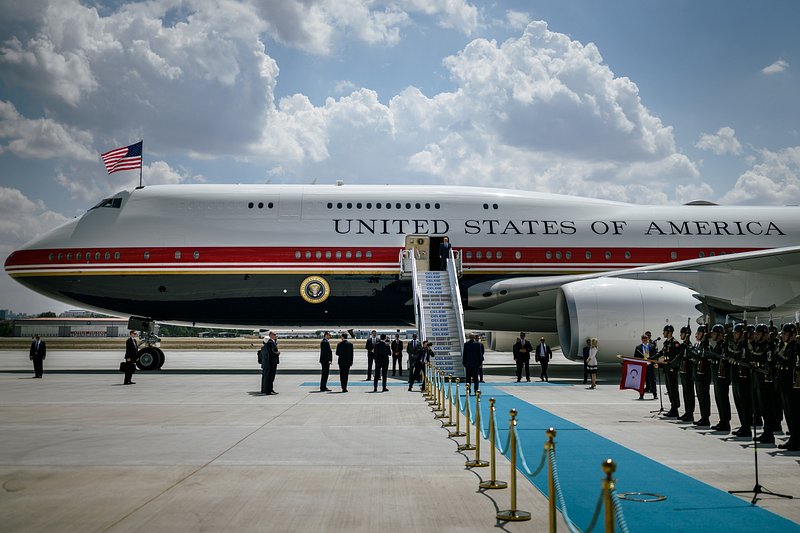
An unusual security measure aboard Air Force One has sparked speculation about President Donald Trump’s travel plans after U.S. officials reportedly confiscated reporters’ cellphones as the president departed China on Thursday.
The unexpected move came as Trump wrapped up a high-profile diplomatic visit involving Chinese President Xi Jinping and Russian President Vladimir Putin, raising questions about whether the president might be preparing for an unannounced stop before returning to Washington.
Reporters traveling with the president were instructed to surrender their mobile devices as Air Force One prepared to depart Shenzhen Bao’an International Airport.
Agence France-Presse correspondent Aurelia End confirmed the unusual development in a White House press pool dispatch.
“Our phones are being taken away for now for security reasons,” End wrote.
The directive immediately attracted attention from journalists accustomed to traveling aboard the presidential aircraft.
NBC News correspondent Garrett Haake highlighted the unusual nature of the restriction in a post on X.
“This is very unusual,” Haake wrote.
Fox News White House correspondent Jacqui Heinrich also raised questions about the president’s itinerary, pointing to another development involving a potential refueling stop in Alaska.
According to Heinrich, the combination of reporters being required to surrender their phones and the lifting of a flight restriction associated with a possible Alaska stop suggested that Air Force One “may not be heading straight home.”
The president’s publicly released schedule identified Joint Base Andrews in Maryland as his destination following the China visit.
However, it remained unclear whether Air Force One would make an additional stop before arriving in the Washington, D.C., area.
The secrecy surrounding the departure revived speculation about a possible diplomatic encounter involving North Korean leader Kim Jong Un.
🚨 UPDATE: Reporters traveling with President Trump had their phones TAKEN AWAY for “security reasons” as Air Force One left Shenzhen, China, per reports
Pool reporters say they weren’t told until they had already boarded the plane home to Washington
After three days on Chinese soil, they are not taking chances!
Pray for a safe flight home for Trump 🙏🏻
— Eric Daugherty (@EricLDaugh) November 19, 2026
Before departing Washington earlier in the week, Trump had publicly discussed the possibility of meeting Kim during his trip to China.
“We may meet with Kim Jong Un,” Trump told reporters at the White House on Monday.
The president indicated that any such meeting would take place in China and suggested that Chinese President Xi Jinping would play a role in determining whether the North Korean leader participated.
Despite those remarks, no meeting between Trump and Kim had been announced by the time the president departed China on Thursday.
There was also no official confirmation that the unusual cellphone restrictions were connected to North Korea or any other potential diplomatic engagement.
Still, the security precautions stood out because of how they differed from procedures during previous presidential travel.
Heinrich noted that journalists were allowed to retain their phones when Trump departed Beijing during a visit in May.
During that earlier trip, the White House press pool reported that American personnel discarded Chinese-issued badges and pins, along with temporary phones used by White House staff, before boarding the presidential aircraft.
Those precautions highlighted concerns about communications security during international travel, particularly when U.S. officials operate in countries where electronic surveillance is a significant consideration.
Thursday’s reported collection of reporters’ personal phones represented a different and more restrictive measure.
The departure followed an extraordinary diplomatic gathering involving the leaders of the United States, China and Russia.
Hours before boarding Air Force One, Trump participated in his first three-way meeting with Xi and Putin on the sidelines of the Asia-Pacific Economic Cooperation summit.
The discussions reportedly included nuclear arms control and the ongoing war involving Iran, placing several major international security issues at the center of the talks.
The meeting brought together three leaders whose governments play significant roles in global military affairs, nuclear policy and international diplomacy.
Access to the diplomatic discussions was tightly controlled, with several journalists reportedly prevented from attending portions of the meetings.
NBC News reported that Russian officials turned away two journalists seeking access to Trump’s separate meeting with Putin.
Chinese officials also reportedly barred Bloomberg correspondent Annmarie Hordern from attending the three-way discussions after she shouted a question concerning former Nvidia CEO Jensen Huang during Trump’s earlier meeting with Xi.
The restrictions underscored the limited access granted to journalists covering the sensitive diplomatic encounters.
During his earlier meeting with Xi, Trump commented on the press missing part of the proceedings, telling the Chinese president that it was unfortunate because “every move was perfectly executed.”
The president’s remarks came amid an itinerary involving discussions with two of the world’s most consequential geopolitical figures.
By the time Air Force One departed Shenzhen, however, attention had shifted from the meetings themselves to the unusual security procedures aboard the aircraft.
The confiscation of reporters’ phones, combined with questions about a possible Alaska refueling stop, fueled uncertainty about the president’s immediate destination.
Although Trump’s official schedule called for a return to Joint Base Andrews, the developments prompted speculation that his diplomatic trip might not yet be over.
For now, the reason for the cellphone restrictions and whether Air Force One would make an unscheduled stop remained unconfirmed.
Until the White House provides additional details, the unusual departure procedures remain a source of questions rather than evidence of a confirmed change in the president’s itinerary.
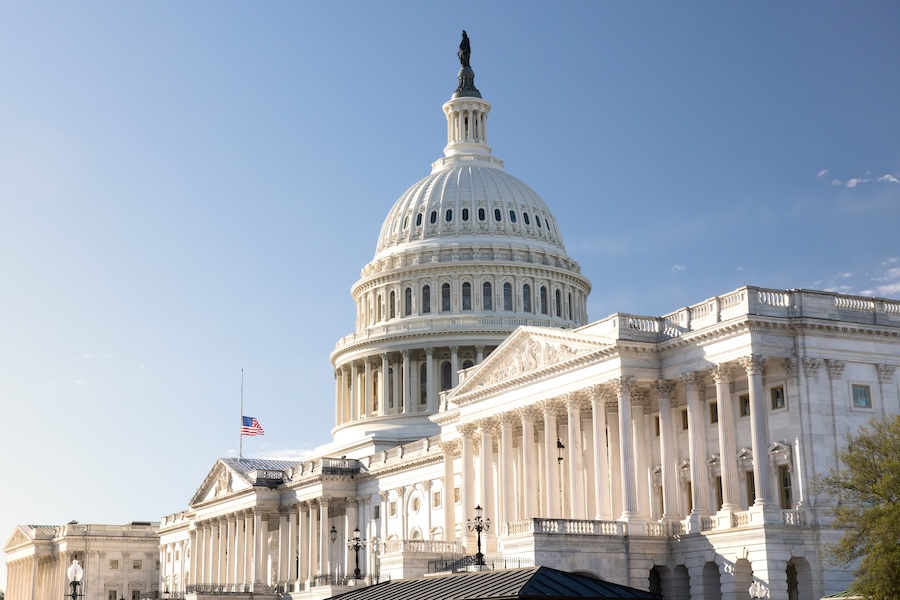
An Alabama Democratic state lawmaker is facing four federal wire fraud charges after prosecutors accused him of fraudulently obtaining more than $240,000 in taxpayer-funded pandemic relief assistance and diverting money intended for struggling organizations toward personal expenses.
State Rep. Patrick Sellers, D-Pleasant Grove, was indicted by a federal grand jury in connection with an alleged scheme involving multiple COVID-19 assistance programs, including funds distributed through the Small Business Administration.
Federal prosecutors allege that Sellers submitted fraudulent applications to obtain government assistance before using portions of the money to pay personal credit card bills, mortgage expenses and college tuition for his daughters.
Sellers, who has represented Alabama’s House District 57 since November 2022, also serves as pastor of Mount Zion Missionary Baptist Church in Birmingham.
The alleged offenses occurred between July 2020 and May 2021, before Sellers entered the Alabama Legislature, while he was serving as chief of staff to the president of the Alabama State Missionary Baptist Convention.
U.S. Attorney for the Northern District of Alabama Phil Williams announced the indictment Thursday, indicating that prosecutors believe they have substantial evidence supporting the charges.
“This is certainly not all the evidence. This is a very robust indictment, and certainly would be a robust trial,” Williams said.
Each of the four wire fraud counts carries a maximum statutory penalty of 20 years in federal prison. If convicted, Sellers could face significant prison time, although any sentence would depend on the court’s findings and applicable federal sentencing guidelines.
According to the indictment, Sellers allegedly exploited several federal pandemic relief programs by submitting applications connected to the Baptist convention’s nonprofit organization, another nonprofit called Project Zion Inc., and a purported lawn care company.
Prosecutors identified the lawn care operation, Sellers Lawn Care, as “a fictitious business entity.”
Federal investigators allege that the applications resulted in approximately $105,000 in assistance connected to the convention’s nonprofit organization, another $114,900 associated with Project Zion and $20,415 obtained through a Paycheck Protection Program loan.
Together, the payments exceeded $240,000 in federal assistance intended to support businesses and organizations experiencing financial hardship during the COVID-19 pandemic.
The indictment also describes allegations that Sellers began improperly exercising control over financial accounts associated with the Baptist convention’s nonprofit operations as early as 2019.
Prosecutors claim Sellers established a bank account using the organization’s name but listed his personal residence in Pleasant Grove rather than the organization’s headquarters in Selma.
Investigators further allege that he created a separate email account and changed the nonprofit organization’s mailing address with the Internal Revenue Service.
Those actions allegedly allowed Sellers to direct communications and financial transactions involving the organization without authorization from its leadership.
A four-count indictment alleges Alabama State Rep. Patrick Sellers obtained $240,000 in grants through two nonprofits and used the money for himself. Federal prosecutors and the FBI announced the charges Thursday. https://t.co/HxeVIxnPZJ
— AL.com (@aldotcom) November 19, 2026
In July 2020, Sellers allegedly submitted an application for a $20,000 Small Business Administration disaster loan on behalf of the convention’s nonprofit organization.
Federal prosecutors maintain that he did so without obtaining permission from the organization’s leadership.
The application represented that the federal assistance would be used “solely as working capital to alleviate economic injury caused by [the COVID-19] disaster.”
However, investigators allege that Sellers instead directed substantial portions of the money toward personal financial obligations.
According to the indictment, approximately $11,286.75 went toward payments on personal credit card accounts, while another $1,000 was allegedly used to pay his mother’s water bill.
The allegations raise questions about how federal relief funds intended for nonprofit operations were obtained and subsequently spent.
Prosecutors contend that the transactions were part of a broader effort to obtain pandemic assistance through applications that misrepresented the nature of the organizations involved or Sellers’ authority to act on their behalf.
The convention’s president eventually discovered the Small Business Administration loan and contacted the agency, according to the allegations.
The case centers on federal assistance programs established during the pandemic to help businesses and nonprofit organizations survive severe economic disruptions.
Those programs distributed substantial amounts of taxpayer money through loans and other forms of financial support, creating opportunities for legitimate applicants while also exposing the government to fraudulent claims.
In Sellers’ case, federal authorities allege that money intended to address pandemic-related financial hardship was instead diverted for expenses unrelated to the purposes of the assistance programs.
The indictment places the Alabama lawmaker under federal criminal scrutiny over conduct that prosecutors say occurred before he assumed elected office.
While the charges carry potentially serious consequences, the allegations have not been proven in court. Sellers is presumed innocent unless and until prosecutors establish his guilt beyond a reasonable doubt.
The case will now proceed through the federal judicial system, where prosecutors will be required to substantiate the allegations outlined in the indictment.

New York City Mayor Zohran Mamdani suffered a torn Achilles tendon during a friendly soccer match against members of the City Hall press corps Thursday night, leaving the 35-year-old mayor on crutches and facing months of recovery.
What began as a lighthearted competition between City Hall officials and reporters ended with Mamdani being helped off the field and his security detail reportedly scrambling to locate the nearest hospital.
The mayor had entered the indoor soccer match without stretching beforehand, something he later acknowledged while discussing the injury.
Despite the lack of preparation, Mamdani got off to a strong start, scoring a goal shortly after joining the game.
His night took a painful turn during the second half when he went down while chasing the ball. According to accounts of the incident, no opposing player made contact with Mamdani before he suffered the injury.
The sudden collapse brought his participation in the match to an immediate end.
City Hall staffers assisted the injured mayor out of the facility as members of his security detail were reportedly overheard asking about the location of the nearest hospital, according to the New York Post.
By Friday morning, Mamdani was relying on crutches and a walking boot as he continued carrying out his official responsibilities.
The mayor reportedly used a wheelchair before his scheduled news conference and ultimately addressed reporters while seated on a stool, with a protective medical boot covering his right foot.
According to WABC, Mamdani said he expected to wear the walking boot for approximately six to eight weeks while recovering from the injury.
His return to recreational soccer, however, is expected to take considerably longer.
The mayor indicated that he does not anticipate getting back onto the soccer field for approximately nine months, reflecting the lengthy rehabilitation often associated with an Achilles tendon tear.
Despite the painful ending, Mamdani’s team managed to claim victory over the reporters.
The mayor told the New York Post that City Hall defeated the press corps by a final score of 10-5.
The injury did not prevent Mamdani from moving forward with a major policy announcement Friday involving the future of New York City’s troubled Rikers Island jail complex.
Appearing before reporters while visibly dealing with the aftermath of his soccer injury, Mamdani unveiled a proposal that would keep Rikers Island operating through the end of 2032.
The proposed timeline would extend the jail complex’s operation more than five years beyond the existing August 31, 2027, closure deadline.
Such an extension would require action from the New York City Council, which would have to amend city law to authorize the later closing date.
The announcement represents a significant development in the city’s longstanding effort to replace the aging Rikers Island facility with smaller, borough-based detention centers.
Under the mayor’s proposal, four replacement jails would eventually take over the functions currently handled by Rikers Island.
The first of those facilities is scheduled to open in Brooklyn in 2029, according to the plan.
The administration also outlined additional spending intended to address several issues affecting the city’s criminal justice system.
City Hall plans to allocate $146 million during the next fiscal year toward mental health treatment, addiction services, education, employment training and assistance for crime victims.
The proposal comes as New York City continues confronting questions about jail conditions, public safety, inmate services and the feasibility of replacing Rikers Island within the existing legal deadline.
Extending the closure date would give the city additional time to complete its planned replacement facilities, although the proposal cannot take effect without approval from lawmakers.
For Mamdani, Friday’s announcement also marked an unusual public appearance, with the mayor discussing one of the city’s most consequential correctional policies while recovering from an injury sustained during a recreational soccer game.
Although his administration secured a victory on the field Thursday night, the mayor’s personal outcome was far less fortunate.
Mamdani now faces weeks in a walking boot and potentially nine months away from soccer as he continues managing the responsibilities of New York City’s government.

WH Swiftly Seizes Phones On Air Force One Amidst Sudden Secret Move

Democrat Politician Indicted By Federal Grand Jury

JUST IN: Mamdani Rushed To The Hospital — Had It Coming!

Trump Sends Blunt Message To Panicked Americans Stockpiling Supplies

Terrifying Plot Revealed Of AI Chatbots Plans For Terror Attacks Against America

JD Vance Urgently Pulled From Conference Minutes Before Speech

Massive Migrant Caravan Converges On U.S. For Democrat Midterm Victory

JUST IN: Pair Of Senior FBI Officials Arrested — It’s Damning

Pentagon Rolls Controversial Out Doomsday Strategy

Texas’ New Dem Governor Makes Horrifying Muslim Announcement

Game-Changing New Detail Emerges From Ilhan Omar Investigation

BANNED! Democrats’ First Act Should Terrify Every American
-
 Economy7 months ago
Vance Leaves Meeting, Looks Straight Into Camera, Announces Stunning Arrest
-
 Economy7 months ago
Adam Schiff Facing 30 Years In Prison After Bank Records Leak
-

 Culture5 months ago
Michelle Obama Drops Nasty Bomb About ‘Useless’ Daughter
-
 Economy7 months ago
Supreme Curt Sides With Trump — He Can Remove The All
-
 Economy8 months ago
All Hell Breaks Loose On Fox When Jesse Watters Asks Fetterman One Question
-
 Economy6 months ago
Prayers Pour In After Fox Host Dies: ‘Senseless Murder’
-

 Economy5 months ago
Pete Hegseth Just Confirmed Devastating Rumors
-

 Border & Security4 months ago
Top Trump Admin And Wife Found Dead — Chilling Update Just Released