
Opinion
‘CODE RED’ Author on ‘War Room’: Fear of AI Job Losses Being Used to Push Wealth Redistribution

Wynton Hall, Breitbart News social media director and author of Code Red: The Left, the Right, China, and the Race to Control AI, explained on Steve Bannon’s War Room show how “well funded” powers are using the fear of AI-induced job losses to push for universal basic income and wealth redistribution.
The post ‘CODE RED’ Author on ‘War Room’: Fear of AI Job Losses Being Used to Push Wealth Redistribution appeared first on Breitbart.


You’re driving to work. Picking up your kids. Going to the grocery store. Visiting a friend.
You haven’t committed a crime. You aren’t a suspect. You’re just going about your life.
But there may be a camera recording your vehicle — and creating a digital record of where you were, when you were there, and what your vehicle looked like.
And chances are, nobody asked for your permission.
Flock cameras are spreading across America. The debate isn’t simply about whether they can help catch criminals. The far more uncomfortable question is:
How much surveillance are Americans expected to accept before someone finally says enough?
You may have already driven past one without knowing it.
Small cameras mounted near neighborhood entrances, intersections, and major roads can look like ordinary security equipment. But automated license plate reader systems such as Flock Safety can capture passing vehicles, recording the license plate, vehicle characteristics, time, and location.
That means your movements can become part of a searchable database even if you have never committed a crime or been suspected of one.
And that should make every driver stop and think.
You Don’t Have to Be a Criminal
This is where the issue gets uncomfortable.
You don’t have to be under investigation.
You don’t have to be a suspect.
You don’t have to have done anything wrong.
You simply have to drive past a camera.
The system can capture your vehicle anyway.
According to unFlockIt, ALPR systems can create searchable records showing where vehicles have been seen and when. The organization argues that interconnected camera networks can allow information collected locally to become accessible beyond the community where it was originally captured. unFlockIt
Think about what that means.
A trip to the grocery store.
A visit to a doctor’s office.
A stop at a friend’s house.
A drive across town.
All of it could potentially leave another digital footprint.
And once that information exists, there is a question we should all be asking:
Who gets to look at it?
This Isn’t Just About Catching Criminals
To be fair, supporters of Flock cameras have a compelling argument.
Automated license plate readers can help police locate stolen vehicles, identify suspects, and respond to serious crimes.
Nobody wants criminals getting away with violent offenses or stolen vehicles disappearing without a trace.
But public safety and privacy don’t have to be mutually exclusive.
The real issue is what happens when a tool designed to help investigators identify suspects also captures information about everyone else.
That distinction matters.
Traditional police investigations generally begin with a reason to investigate someone.
Mass data collection works differently.
The database can exist first. The search can come later.
And that raises an uncomfortable question:
Should simply driving down a public road be enough to place your vehicle into a database that someone can potentially search later?
One Camera Is One Thing. A Network Is Something Else.
Maybe one camera doesn’t sound particularly alarming.
It sees your vehicle.
The moment passes.
You drive away.
But what happens when cameras aren’t operating independently?
What happens when they’re part of a much larger network?
unFlockIt describes a national network in which participating agencies can potentially share access to ALPR data beyond the community where it was originally collected. unFlockIt
Now the issue becomes much bigger than one camera at one intersection.
A single camera might capture one moment.
A connected network can potentially reveal patterns.
Where a vehicle has been seen.
When it was seen.
Which locations it passed.
And potentially how those sightings connect across different jurisdictions.
That is an extraordinary amount of information about ordinary Americans who may have done absolutely nothing wrong.
And once that infrastructure exists, who decides what it can eventually be used for?
What Happens When the Technology Gets Even Better?
Here’s another question worth asking.
Technology doesn’t usually get weaker.
It gets cheaper.
Faster.
More sophisticated.
More connected.
Today, we’re talking about license plates and vehicle characteristics.
But surveillance technology continues to evolve.
So the question isn’t just what these systems can do today.
It’s what they’ll be capable of doing five or ten years from now — and whether the rules protecting Americans will have kept up.
That is why waiting until the technology is everywhere could be a serious mistake.
The time to establish boundaries is before the infrastructure becomes impossible to roll back.
Communities Are Starting to Push Back
And this isn’t some fringe concern dreamed up by a handful of conspiracy theorists.
Communities are actually beginning to challenge these systems.
In August 2026, Kendall County, Texas commissioners unanimously voted not to renew a Flock Safety contract covering more than 50 cameras, following public concerns about privacy, transparency, and data protection. MySanAntonio reporting
And Kendall County isn’t alone.
Recent reporting has documented growing resistance to Flock cameras in places including Tampa Bay and Pittsburgh, where residents have questioned whether the public-safety benefits justify the potential privacy risks. Axios reporting
The debate is spreading because the technology is spreading.
So Who Made This Decision?
This may be the question that deserves the most attention.
Who authorized the cameras in your community?
Did residents vote on them?
Were people given meaningful notice?
Did most residents even know they were being installed?
And perhaps most importantly:
Do ordinary citizens have any meaningful say in what happens to the information being collected about them?
Those are not anti-police questions.
They’re not anti-technology questions.
They’re accountability questions.
Citizens should be asking:
- Who authorized these cameras?
- Were residents given meaningful notice?
- How long is the information retained?
- Who can search the database?
- Can outside agencies access local data?
- What safeguards prevent abuse?
- Are searches audited?
- What happens if the information is wrong?
- Can citizens see the policies governing the system?
- Can the community vote on whether these systems should remain?
If government is going to collect information about innocent people, the public deserves to know exactly what is being collected, who can access it, and what prevents that power from being abused.
Supporting Police Doesn’t Mean Supporting Unlimited Surveillance
There is an important distinction that often gets lost in this debate.
You can support police officers.
You can want dangerous criminals caught.
You can want stolen cars recovered.
And you can still believe government surveillance should have limits.
Those positions aren’t contradictory.
In fact, meaningful limits and transparency may be exactly what is needed to preserve public trust in the technology.
Because once people begin believing that they’re being watched everywhere they go, trust starts disappearing.
Don’t Wait Until It’s Everywhere
The worst time to start asking questions is after the cameras have become permanent fixtures throughout your community.
Whether you support Flock cameras or oppose them, you should know where they’re located and how the information they collect is being used.
That’s exactly why projects like unFlockIt are drawing attention to the issue. The organization has created a national map intended to help people identify ALPR cameras near them and is organizing support for its national petition. unFlockIt
✍️ Your Community. Your Data. Your Voice.
If you believe Americans deserve greater transparency and stronger limits on warrantless surveillance, sign the unFlockIt petition and make your voice heard.
SIGN THE UNFLOCKIT NATIONAL PETITION
You can also use unFlockIt’s map to see reported surveillance cameras in your area. View the unFlockIt map
Because ultimately, this isn’t about whether technology is good or bad.
It’s about power.
It’s about what happens when the ability to collect information about ordinary citizens becomes easier than ever.
And it’s about whether Americans get to establish the rules before that power becomes impossible to take back.
So ask yourself:
Should the government be able to record and search where ordinary Americans drive when those people have never been suspected of a crime?
Maybe your answer is yes.
Maybe it’s no.
But shouldn’t you have a say?
Because the cameras are already watching.
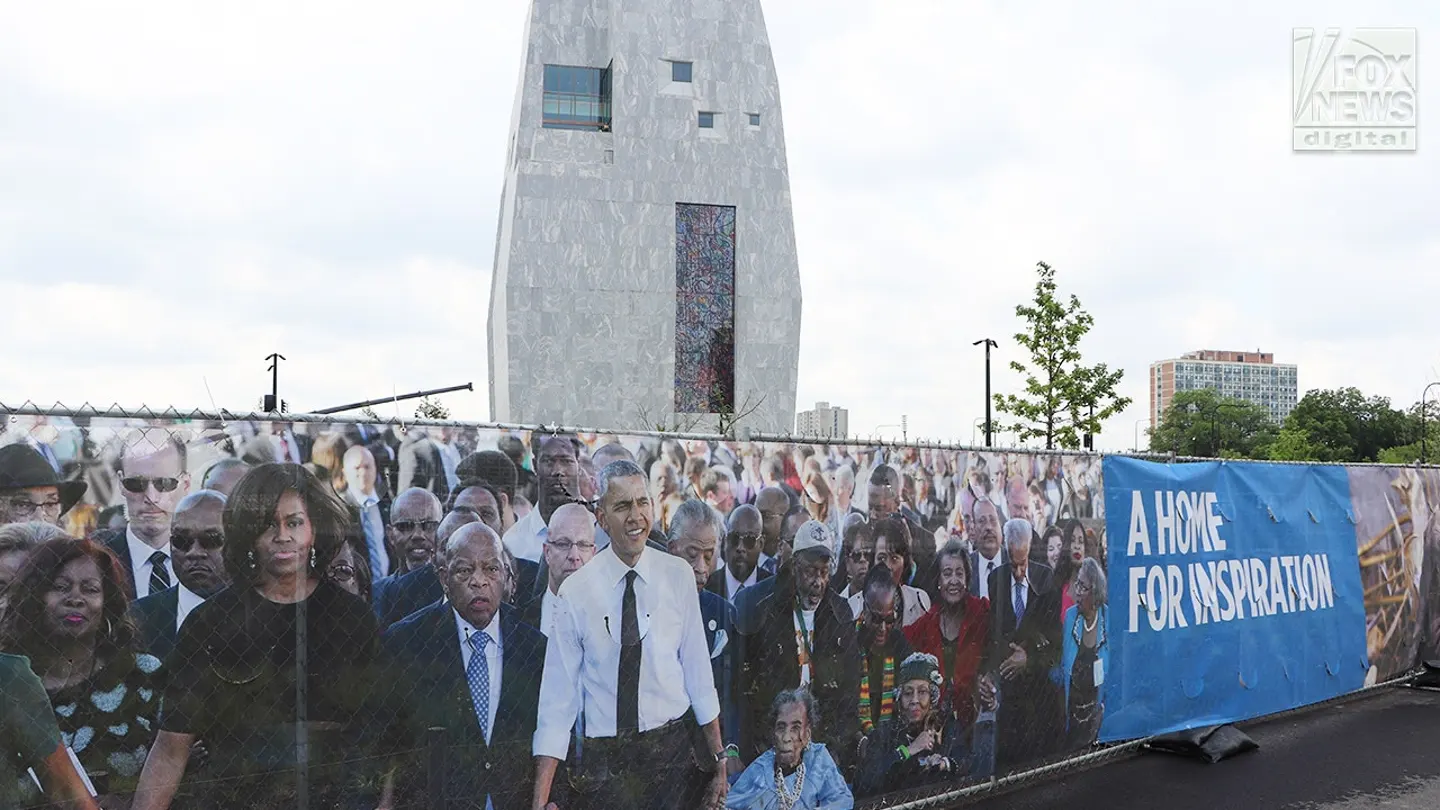
The grand opening of the Obama Presidential Center in Chicago was supposed to be a celebration of Barack Obama’s legacy. Instead, it has reignited a growing debate over what critics say is a billion-dollar political operation masquerading as a traditional presidential library.
The sprawling complex officially opened last week on Chicago’s South Side after years of construction, fundraising, and controversy. But as visitors began touring the facility, critics quickly pointed out a striking reality: unlike every other modern presidential library, the Obama Presidential Center does not actually house President Obama’s official presidential records.
Instead, Obama’s presidential papers are being stored elsewhere, while the center itself functions primarily as a museum dedicated to his presidency and as the headquarters of the Obama Foundation, the former president’s private nonprofit organization.
For many critics, that distinction is significant.

The 19-acre campus features conference facilities, foundation offices, leadership programs, a “Democracy in Action Lab,” community spaces, and a major athletic complex. Throughout the property, visitors are greeted by slogans such as “Bring Change Home” and “A Home For Action”—language that critics argue sounds more like a political movement than a presidential archive.
The Obama Foundation itself has repeatedly described the project as a “living institution” designed to inspire future leaders.
“We are building more than a campus. We are creating a living institution that will inspire, empower, and connect the next generation of leaders,” the foundation’s 2024 annual report states.
Presidential historian and former George W. Bush administration official Tevi Troy said the center represents a dramatic departure from the traditional presidential library model.

“Usually, these libraries are a monument to a presidency and the presidency is in the past, it’s in the rear-view mirror,” Troy said. “It looks like Obama wants to use it as some kind of activism center, something that continues to promote his ideas and his political views.”
Troy added that the direction does not surprise him.
“Obama was a community organizer. He’s an activist. That’s how he came up, and it doesn’t surprise me that he wants to go in this direction,” Troy said.
Obama himself appeared to reinforce that vision during the opening ceremony.
“We designed the center not to be some lifeless mausoleum,” Obama said while highlighting activists and foundation leaders from around the world.
Later in the ceremony, he made clear that the center intends to advocate for specific values and causes.
“While we are non-partisan, we are not value-neutral. We have a point of view,” he said.
Those comments only intensified criticism from opponents who argue the facility is designed not merely to preserve history, but to advance Obama’s political and ideological legacy for decades to come.
The controversy extends beyond the center’s mission.
The project sits on roughly 19 acres of Chicago’s historic Jackson Park under a controversial 99-year agreement approved by city officials for a reported one-time payment of just $10. Critics have long argued that transferring valuable public parkland to a private foundation violated the public trust and deprived residents of public space.
Richard Epstein, a prominent New York University law professor who represented opponents of the project, remains deeply critical of the arrangement.
“The public trust doctrine is meant to be a restraint on the legislature,” Epstein said. “This has been an epic frustration.”

Questions have also been raised about the financial structure surrounding the project. Critics point to reports that hundreds of millions of taxpayer dollars were spent on roads, utilities, transportation improvements, and surrounding infrastructure connected to the center. Others have highlighted disputes involving subcontractors who claim they are still owed millions of dollars for work performed during construction.
Perhaps the most pointed criticism came from Illinois Republican Party Chairman Bob Grogan, who argued that Chicago residents were initially sold one vision of the project and ultimately received something very different.
“This isn’t a presidential library. It’s a Democratic headquarters on the South Side,” Grogan said.
“They go and sell it with the most palatable thing,” Grogan said. “Then they just incrementally, drip by drip, make it worse until they get back to the reality.”
“It’s not just a museum. It’s the home base for the foundation and everything it does,” he added. “They’re not going to go and pay rent someplace else when they’re going to have this big mausoleum here to go and hold their meetings and plot their plans.”
The National Archives has confirmed that the Obama Presidential Center operates outside the federal presidential library system and is run entirely by the Obama Foundation. That means the foundation—not the federal government—controls exhibits, programming, messaging, and how Obama’s presidency is presented to future generations.
For supporters, the center is a modern reimagining of what a presidential institution can be. For critics, it represents something entirely different: a taxpayer-assisted political and activist hub built on public land while carrying the branding of a presidential library.
As the center begins welcoming visitors, the debate surrounding its true purpose appears far from over.
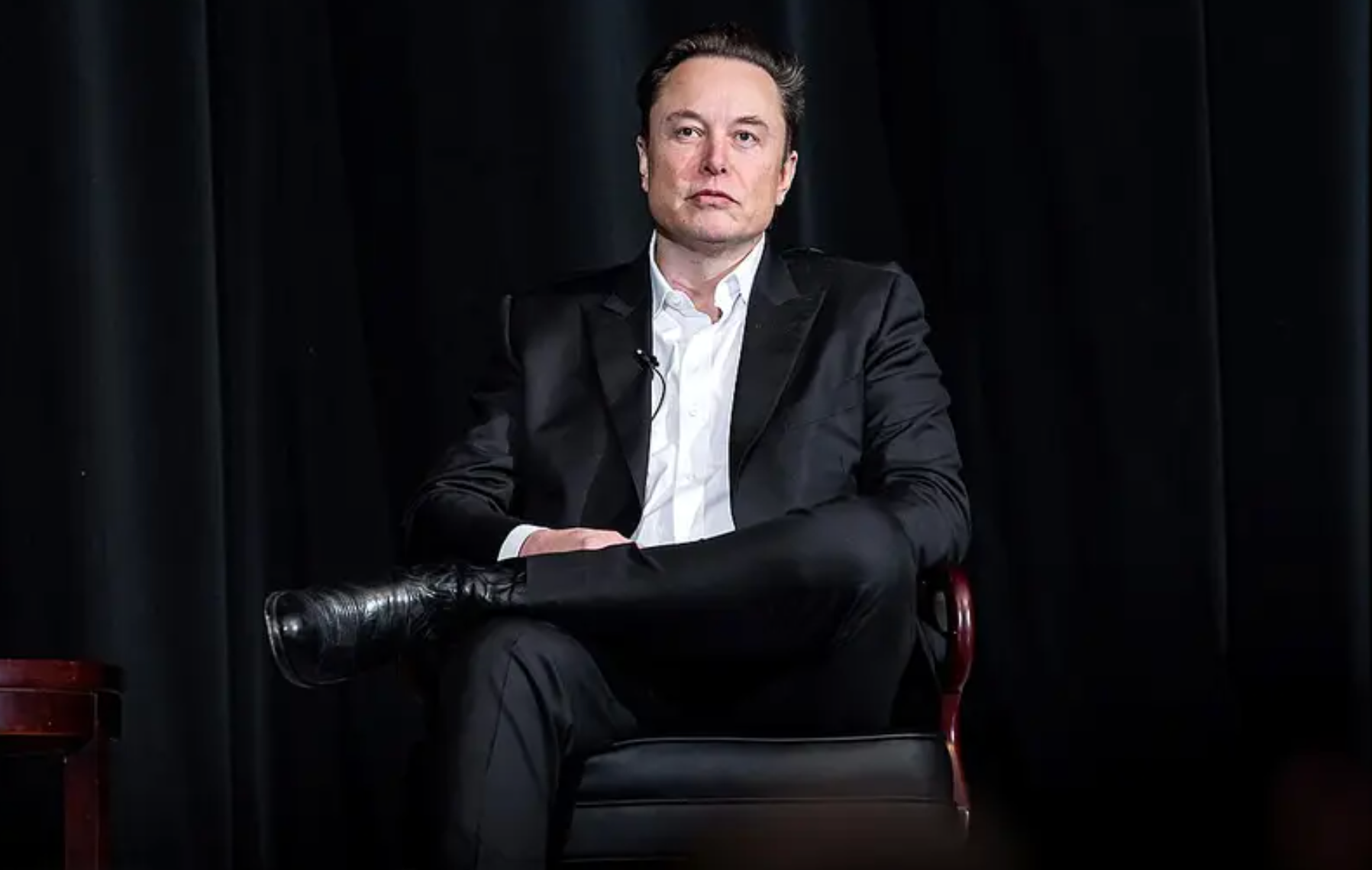
Elon Musk is warning that the future of artificial intelligence may not be on Earth at all.
During a recent podcast appearance, the billionaire entrepreneur and founder of SpaceX argued that the biggest obstacle facing the next generation of AI isn’t software, computing power, or engineering talent. Instead, Musk believes the limiting factor will be something far more basic: electricity.
As artificial intelligence systems become increasingly sophisticated, they require enormous amounts of energy to train and operate. Data centers powering advanced AI models already consume vast quantities of electricity, and demand continues to surge as companies race to develop more powerful systems.
According to Musk, that growth trajectory is rapidly approaching a point where existing power infrastructure simply won’t be able to keep pace.
Rather than viewing AI development as primarily a software challenge, Musk sees energy production as the critical bottleneck that could determine how far and how fast the technology advances in the coming years.
He pointed to America’s current power consumption as an example of the challenge ahead. The United States consumes roughly half a terawatt of electricity on average, and significantly increasing that capacity would require a massive expansion of power generation infrastructure.
Building enough new power plants to meet future AI demand would be expensive, time-consuming, and politically challenging. Environmental regulations, permitting requirements, and local opposition often slow major energy projects, creating additional hurdles for rapid expansion.
Musk believes these constraints will force technology companies to begin looking beyond Earth much sooner than many experts currently anticipate.
In fact, he predicts that within the next two to three years, it could become economically advantageous to operate large-scale AI systems in space rather than on the ground.
While the idea may sound like science fiction, Musk argues that the economics increasingly favor orbital computing facilities.
One of the biggest advantages is access to uninterrupted solar energy.
Solar panels on Earth lose efficiency due to weather, cloud cover, nighttime conditions, and atmospheric interference. Space-based solar arrays, by contrast, can receive nearly continuous sunlight while avoiding many of the energy losses associated with terrestrial systems.
As a result, orbital solar systems can generate substantially more power than comparable installations on the ground.
The implications for AI are enormous.
Modern AI systems require not only tremendous computing resources but also vast amounts of electricity to keep servers running around the clock. Data centers must also devote substantial energy to cooling systems that prevent processors from overheating.
Musk noted that one of the major benefits of operating in space is the ability to eliminate many of the energy storage challenges that exist on Earth.
When continuous solar power is available, the need for large battery systems is dramatically reduced. Eliminating battery infrastructure lowers costs, improves efficiency, and simplifies operations.
The comments come as AI companies continue investing billions of dollars into new data centers and computing infrastructure. Industry leaders have increasingly acknowledged that energy availability is becoming one of the most important factors influencing future AI development.
Major technology firms are already exploring partnerships with utilities, investing in nuclear energy projects, and securing long-term power agreements to meet anticipated demand.
Musk believes those efforts may ultimately prove insufficient if AI capabilities continue advancing at their current pace.
His prediction also aligns with SpaceX’s broader vision of expanding humanity’s presence beyond Earth. While discussions about colonizing Mars often capture headlines, Musk’s latest comments suggest that space-based computing and energy production could become a practical commercial reality much sooner.
If his forecast proves accurate, the next major leap in artificial intelligence may not come from a breakthrough algorithm or a new software model. Instead, it could come from moving the world’s most powerful computers beyond Earth’s atmosphere and into orbit, where virtually unlimited solar energy could fuel the next generation of technological innovation.
For Musk, the race to build smarter AI may ultimately become a race to find enough power to sustain it—and that race could soon lead straight into space.

Massive Migrant Caravan Converges On U.S. For Democrat Midterm Victory

JUST IN: Pair Of Senior FBI Officials Arrested — It’s Damning

Pentagon Rolls Controversial Out Doomsday Strategy

NEW: Trump Vows To Prosecute His Own STAFF!

Trump Just Activated ‘Level 3’ — It’s Serious

Powerful Dem Senator Arrested 12 Days Before Midterms

Charlie Kirk’s Mother Breaks Her Silence After Erika Kirk’s Public Statement

National Emergency Declared — Trump Called In

Michelle Obama Public Disaster — Photos Explode Across D.C.

Feds Raid Ilhan Omar’s Home — Make Horrifying Discovery

ALERT: Trump Set To Make ‘Special Announcement’ From Oval Office

Fireworks Erupt On Capitol Hill After 52-45 Vote For Trump!
-

 Economy7 months ago
Vance Leaves Meeting, Looks Straight Into Camera, Announces Stunning Arrest
-
 Economy6 months ago
Adam Schiff Facing 30 Years In Prison After Bank Records Leak
-

 Culture4 months ago
Michelle Obama Drops Nasty Bomb About ‘Useless’ Daughter
-

 Economy7 months ago
Supreme Curt Sides With Trump — He Can Remove The All
-

 Economy7 months ago
All Hell Breaks Loose On Fox When Jesse Watters Asks Fetterman One Question
-

 Economy5 months ago
Prayers Pour In After Fox Host Dies: ‘Senseless Murder’
-

 Border & Security3 months ago
Top Trump Admin And Wife Found Dead — Chilling Update Just Released
-

 Latest4 months ago
Fox News Stuns With Announcement About 5 Fired Hosts