Politics
Iowa, Florida Coaches Nearly Get Into ‘WWE Raw Is War’ Fight During Heated March Madness Upset

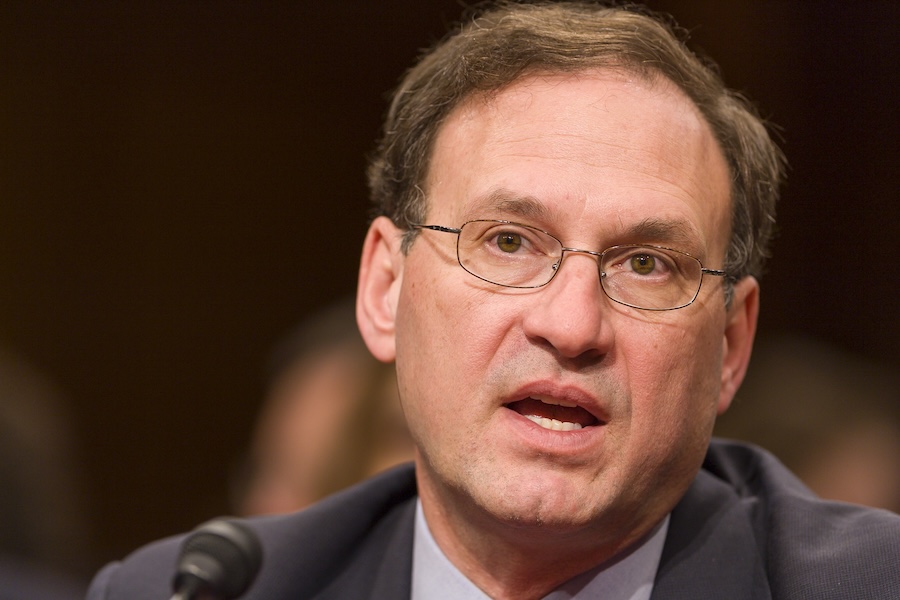
Supreme Court Justice Samuel Alito has issued a stark warning about the future of America’s highest court, cautioning that political efforts to intimidate justices and reshape the judiciary could permanently undermine one of the nation’s most important institutions.
The longtime conservative justice delivered his warning during a speech at the American Enterprise Institute’s annual dinner at the National Building Museum in Washington, D.C., where he accepted the organization’s prestigious Irving Kristol Award.
Alito’s remarks come amid renewed debate over Democratic proposals to expand the Supreme Court beyond its current nine members, an effort supporters describe as necessary judicial reform and opponents condemn as an attempt to change the Court’s ideological balance.
With the 2028 presidential election approaching, the possibility of expanding the Court could once again become a major political flashpoint.
Alito made clear that he believes the stakes extend far beyond individual judicial decisions or disagreements over constitutional interpretation.
“But it now appears that the Court may soon face a structural question of far greater magnitude: whether it will be allowed to continue as an independent tribunal that decides cases based on its understanding of the law, not political pressure,” the longtime conservative justice stated.
His warning went further, suggesting that the Supreme Court faces a sustained campaign designed to influence its decisions through intimidation, public pressure, and ultimately changes to its membership.
“I do not think it is necessary to go lay out the details, but what we have seen in recent years is a mounting campaign to change the direction of the Court’s decisions by intimidating justices or, if that fails, by seriously damaging the Court’s standing in the eyes of the public and then altering the Court’s composition. If that campaign succeeds, the Supreme Court as an institution will be fundamentally changed for many years—and perhaps permanently,” Alito continued.
The remarks represent a forceful warning from a sitting Supreme Court justice about the potential consequences of political efforts to reshape the federal judiciary.
Alito’s concerns center on a fundamental question: whether the Supreme Court can continue operating independently if political leaders threaten to alter its structure whenever they disagree with its rulings.
Although Congress has the constitutional authority to determine the number of Supreme Court justices, critics of expansion argue that adding seats for the purpose of securing favorable decisions could establish a dangerous precedent.
Under that scenario, future congressional majorities might feel justified in repeatedly expanding the Court to secure their preferred ideological outcomes.
The result, opponents warn, could be an escalating political struggle in which the size and composition of the nation’s highest court become increasingly dependent on which party controls Washington.
Alito also emphasized the judiciary’s unusual position within the American constitutional system.
Unlike the executive branch, the courts do not command law enforcement agencies or the military. Unlike Congress, they do not independently control federal spending.
Instead, the judiciary depends heavily on the willingness of the other branches of government and the American public to respect its authority.
Alito described the judiciary as lacking both “the sword” of enforcement power and “the purse” of independent funding.
“And because presidents and members of Congress are elected, what may matter most in the end is popular support for an independent judiciary.”
Video excerpts of Alito’s speech have circulated on C-SPAN and social media, drawing renewed attention to the increasingly contentious debate over the Supreme Court’s future.
The warning comes as Democrats prepare to assume congressional majorities in January, potentially giving lawmakers who favor structural changes to the judiciary a stronger platform to advance their proposals.
Among the most outspoken advocates of Supreme Court expansion is Democratic Senator Ed Markey of Massachusetts, who has sponsored legislation known as the Judiciary Act.
The proposal would increase the number of Supreme Court justices from nine to 13, creating four additional seats.
Markey and other supporters have argued that expansion is justified by the circumstances surrounding recent Supreme Court appointments, including Republican decisions that shaped the Court’s current conservative majority.
Markey has characterized the proposal as a way to restore seats that were “stolen” from Democrats.
That argument has been fiercely contested by opponents, who maintain that Supreme Court seats do not belong to either political party and that expanding the Court to reverse its ideological balance would further politicize the institution.
Democratic Senator Sheldon Whitehouse of Rhode Island has also been a prominent advocate for changes involving the Supreme Court.
In a 2019 amicus brief joined by several Senate Democrats, Whitehouse and his colleagues argued that the Court “is not well” and raised the possibility that public dissatisfaction could lead to demands that it be “restructured in order to reduce the influence of politics.”
Whitehouse has additionally supported proposals involving judicial ethics requirements, term limits, and increased oversight.
Supporters of such measures argue that reforms could improve transparency, accountability, and public confidence in the judiciary.
But critics warn that proposals to expand the Court’s membership carry especially serious consequences when they are tied to dissatisfaction with judicial outcomes.
The concern is not simply whether Congress possesses the legal authority to add justices. It does.
The larger question is what happens to judicial independence when changing the Court’s composition becomes an accepted response to politically unpopular rulings.
The Supreme Court has consisted of nine justices since 1869, although Congress changed its size several times during the nation’s first century.
That longstanding arrangement has provided institutional continuity through major political conflicts, constitutional disputes, and changes in presidential administrations.
Expanding the Court would therefore represent a significant departure from more than 150 years of established practice.
Alito’s remarks suggest that he views the current debate as part of a broader struggle over whether the judiciary can remain insulated from direct political retaliation.
His warning also arrives at a time when public confidence in the Supreme Court has become a contentious issue, with disagreements over judicial ethics, major rulings, and the appointment process fueling calls for reform.
While advocates of expansion insist that their proposals are intended to restore balance and legitimacy, opponents see the possibility of a political arms race that could weaken the Court’s independence.
For Alito, the potential consequences appear unmistakable.
His warning was not limited to the next election, the next presidential administration, or even the next generation of Supreme Court decisions.
He cautioned that the institution itself could be fundamentally altered for years, perhaps permanently.
And as Democratic lawmakers continue debating proposals to increase the number of justices, Alito’s message underscores the central issue facing Washington: whether efforts to change the Supreme Court’s ideological direction could ultimately damage the independence that allows it to function as a separate branch of government.
An Alabama Democratic state lawmaker is facing four federal wire fraud charges after prosecutors accused him of fraudulently obtaining more than $240,000 in taxpayer-funded pandemic relief assistance and diverting money intended for struggling organizations toward personal expenses.
State Rep. Patrick Sellers, D-Pleasant Grove, was indicted by a federal grand jury in connection with an alleged scheme involving multiple COVID-19 assistance programs, including funds distributed through the Small Business Administration.
Federal prosecutors allege that Sellers submitted fraudulent applications to obtain government assistance before using portions of the money to pay personal credit card bills, mortgage expenses and college tuition for his daughters.
Sellers, who has represented Alabama’s House District 57 since November 2022, also serves as pastor of Mount Zion Missionary Baptist Church in Birmingham.
The alleged offenses occurred between July 2020 and May 2021, before Sellers entered the Alabama Legislature, while he was serving as chief of staff to the president of the Alabama State Missionary Baptist Convention.
U.S. Attorney for the Northern District of Alabama Phil Williams announced the indictment Thursday, indicating that prosecutors believe they have substantial evidence supporting the charges.
“This is certainly not all the evidence. This is a very robust indictment, and certainly would be a robust trial,” Williams said.
Each of the four wire fraud counts carries a maximum statutory penalty of 20 years in federal prison. If convicted, Sellers could face significant prison time, although any sentence would depend on the court’s findings and applicable federal sentencing guidelines.
According to the indictment, Sellers allegedly exploited several federal pandemic relief programs by submitting applications connected to the Baptist convention’s nonprofit organization, another nonprofit called Project Zion Inc., and a purported lawn care company.
Prosecutors identified the lawn care operation, Sellers Lawn Care, as “a fictitious business entity.”
Federal investigators allege that the applications resulted in approximately $105,000 in assistance connected to the convention’s nonprofit organization, another $114,900 associated with Project Zion and $20,415 obtained through a Paycheck Protection Program loan.
Together, the payments exceeded $240,000 in federal assistance intended to support businesses and organizations experiencing financial hardship during the COVID-19 pandemic.
The indictment also describes allegations that Sellers began improperly exercising control over financial accounts associated with the Baptist convention’s nonprofit operations as early as 2019.
Prosecutors claim Sellers established a bank account using the organization’s name but listed his personal residence in Pleasant Grove rather than the organization’s headquarters in Selma.
Investigators further allege that he created a separate email account and changed the nonprofit organization’s mailing address with the Internal Revenue Service.
Those actions allegedly allowed Sellers to direct communications and financial transactions involving the organization without authorization from its leadership.
A four-count indictment alleges Alabama State Rep. Patrick Sellers obtained $240,000 in grants through two nonprofits and used the money for himself. Federal prosecutors and the FBI announced the charges Thursday. https://t.co/HxeVIxnPZJ
— AL.com (@aldotcom) November 19, 2026
In July 2020, Sellers allegedly submitted an application for a $20,000 Small Business Administration disaster loan on behalf of the convention’s nonprofit organization.
Federal prosecutors maintain that he did so without obtaining permission from the organization’s leadership.
The application represented that the federal assistance would be used “solely as working capital to alleviate economic injury caused by [the COVID-19] disaster.”
However, investigators allege that Sellers instead directed substantial portions of the money toward personal financial obligations.
According to the indictment, approximately $11,286.75 went toward payments on personal credit card accounts, while another $1,000 was allegedly used to pay his mother’s water bill.
The allegations raise questions about how federal relief funds intended for nonprofit operations were obtained and subsequently spent.
Prosecutors contend that the transactions were part of a broader effort to obtain pandemic assistance through applications that misrepresented the nature of the organizations involved or Sellers’ authority to act on their behalf.
The convention’s president eventually discovered the Small Business Administration loan and contacted the agency, according to the allegations.
The case centers on federal assistance programs established during the pandemic to help businesses and nonprofit organizations survive severe economic disruptions.
Those programs distributed substantial amounts of taxpayer money through loans and other forms of financial support, creating opportunities for legitimate applicants while also exposing the government to fraudulent claims.
In Sellers’ case, federal authorities allege that money intended to address pandemic-related financial hardship was instead diverted for expenses unrelated to the purposes of the assistance programs.
The indictment places the Alabama lawmaker under federal criminal scrutiny over conduct that prosecutors say occurred before he assumed elected office.
While the charges carry potentially serious consequences, the allegations have not been proven in court. Sellers is presumed innocent unless and until prosecutors establish his guilt beyond a reasonable doubt.
The case will now proceed through the federal judicial system, where prosecutors will be required to substantiate the allegations outlined in the indictment.
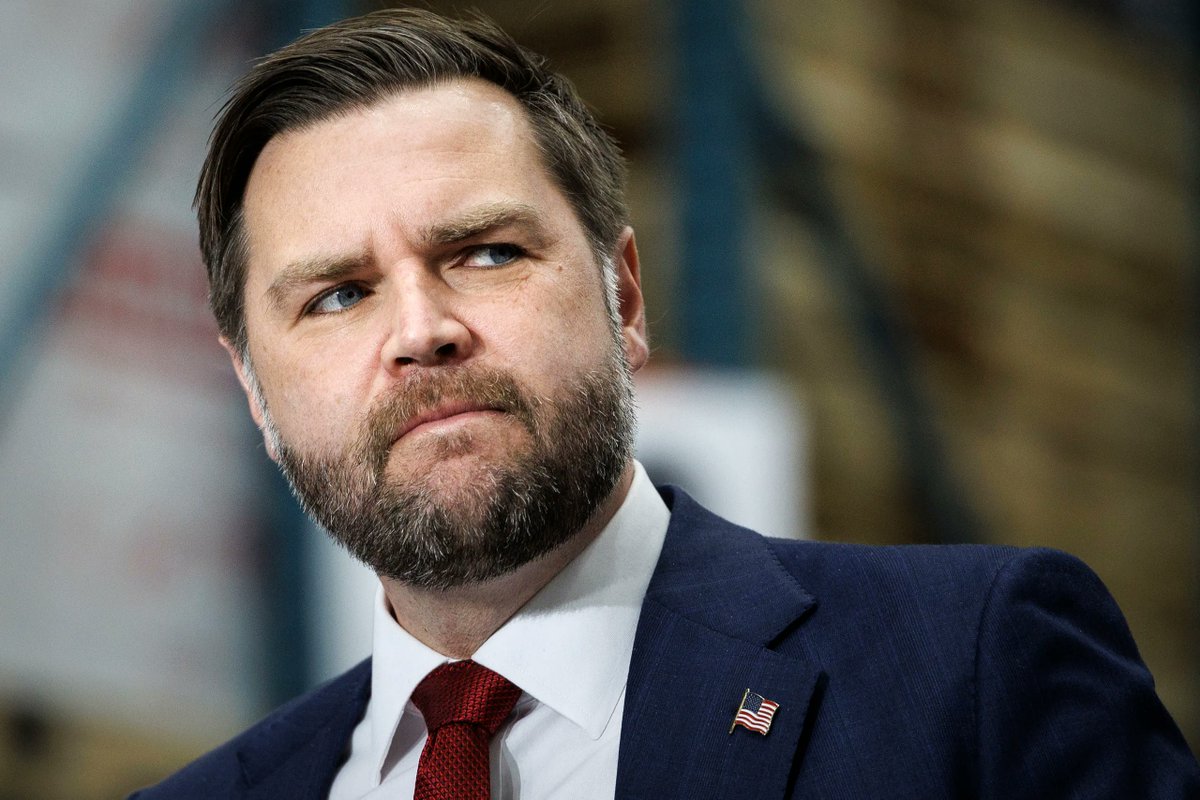
Vice President JD Vance abruptly canceled a highly anticipated appearance in New York City on Wednesday, just minutes before he was scheduled to take the stage, after being called back to urgent meetings in Washington amid a series of major technology outages affecting critical systems across the United States.
The unexpected cancellation came as disruptions involving major financial institutions, airlines, Microsoft services and the National Security Agency’s classified communications network raised questions about the reliability and security of the nation’s technological infrastructure.
Vance had been scheduled to appear at The New York Times’ DealBook Summit in Manhattan when host Andrew Ross Sorkin informed attendees that the vice president would no longer be participating.
‘We were going to be joined by the vice president, but I am sad to report that we got a call literally probably now 20 or 30 minutes ago that he is not going to be able to join us today,’ Sorkin told the audience.
The announcement came despite extensive preparations by the Secret Service, which had reportedly spent the previous night coordinating security arrangements for Vance’s arrival.
Sorkin explained that the vice president had been instructed to remain in Washington as federal officials dealt with several developing situations.
‘He was called to stay back in Washington. He was supposed to be wheels up this morning. As you know, Secret Service, because you lived through the lines, has been here all night, readying for his entrance here at DealBook.
‘All of this comes, of course, amid a series of outages from Microsoft, the NSA, the airline ground stop, JPMorgan, and Zelle, and I am told that he is needed in Washington to deal with a series of meetings that are taking place as we speak.’
Vance’s office subsequently confirmed that the vice president remained in the nation’s capital for meetings but did not identify the participants or provide details about which technological disruptions were being addressed.
The sudden change in plans coincided with President Donald Trump’s arrival in China for a major diplomatic summit involving Chinese President Xi Jinping and Russian President Vladimir Putin.
With Trump overseas, Vance remained in Washington as administration officials worked to investigate and resolve the widespread technical failures.
Among the most significant incidents was Tuesday’s outage involving NSANet, the National Security Agency’s classified internal communications system.
The disruption reportedly forced the intelligence agency to restrict access to its campus, limiting entry to essential personnel while technical teams worked to restore normal operations.
A senior administration official acknowledged Wednesday that recovery efforts were progressing ‘slower than expected,’ although investigators had not identified evidence indicating that the disruption resulted from a cyberattack or coordinated interference.
Director of National Intelligence Jay Clayton attributed the NSA network failure to a software patch intended to address security vulnerabilities discovered the previous month.
Secretary of State Marco Rubio also addressed growing concerns about the possibility of a coordinated attack, offering a direct reassurance Tuesday.
‘We are not under systemic attack.’
The incidents followed several days of technological disruptions affecting both government operations and major private-sector services.
The problems began Thursday when Microsoft experienced a significant outage that disrupted Outlook services for more than 30 hours.
Microsoft attributed the interruption to a network upgrade, rather than malicious activity.
The following day, the Federal Aviation Administration ordered a nationwide ground stop lasting more than four hours after communications equipment malfunctioned.
The disruption temporarily halted flight departures across the country and prompted officials to suspend additional router installations while investigators examined the cause of the equipment failure.
By Monday, problems had emerged in the banking and airline industries.
JPMorgan Chase reported transaction delays affecting customers, while United Airlines experienced a separate technology outage lasting approximately 90 minutes.
The financial disruptions also raised concerns among customers who rely on electronic banking and payment services for everyday transactions.
Apple reported additional service interruptions Tuesday, attributing its problems to an internal update.
Although the failures occurred across multiple industries within a relatively short period, federal officials have repeatedly emphasized that investigators have not uncovered evidence establishing a connection between the incidents.
Administration officials have also maintained that there is no confirmed indication of a coordinated cyberattack targeting the nation’s infrastructure.
Nevertheless, the succession of disruptions has intensified scrutiny of the systems supporting financial transactions, commercial aviation, government communications and national security operations.
On Wednesday, Homeland Security Secretary Markwayne Mullin appeared before the House Homeland Security Committee alongside Clayton and FBI Deputy Director Christopher Raia to address concerns about the nation’s security and preparedness.
The hearing came as federal agencies continued examining the outages and their potential implications for critical infrastructure.
Vance had already addressed the growing public unease during an appearance on Fox News on Monday.
The vice president revealed that friends had contacted him with concerns about whether Americans should begin preparing for a prolonged national emergency.
While acknowledging the importance of preparedness, Vance sought to reassure viewers that the administration was not anticipating an imminent nationwide crisis.
‘We do not see some crisis coming down. But you have to be prepared for everything,’ he said.
The vice president’s last-minute cancellation added another unexpected development to a week marked by technological failures and heightened attention to national security.
Although federal officials have attributed several of the outages to equipment failures, software updates and network changes, the incidents have renewed questions about the resilience of systems that Americans depend on every day.
For now, investigators have reported no evidence of a coordinated attack, and the administration has not disclosed additional details about the Washington meetings that prompted Vance to cancel his New York appearance.
The episode underscores the growing importance of protecting critical infrastructure as federal officials continue working to determine the causes of the disruptions and prevent similar failures in the future.

SCOTUS Justice Issues Chilling Warning

Democrate Leader Just Self-Deported After Sudden Discovery

Primetime Fox News Host Makes Shocking Admission On LIVE TV

WH Swiftly Seizes Phones On Air Force One Amidst Sudden Secret Move

Democrat Politician Indicted By Federal Grand Jury

JUST IN: Mamdani Rushed To The Hospital — Had It Coming!

Massive Migrant Caravan Converges On U.S. For Democrat Midterm Victory

JUST IN: Pair Of Senior FBI Officials Arrested — It’s Damning

Pentagon Rolls Controversial Out Doomsday Strategy
Texas’ New Dem Governor Makes Horrifying Muslim Announcement

Game-Changing New Detail Emerges From Ilhan Omar Investigation

BANNED! Democrats’ First Act Should Terrify Every American
-
 Economy7 months ago
Vance Leaves Meeting, Looks Straight Into Camera, Announces Stunning Arrest
-
 Economy7 months ago
Adam Schiff Facing 30 Years In Prison After Bank Records Leak
-
 Culture5 months ago
Michelle Obama Drops Nasty Bomb About ‘Useless’ Daughter
-
 Economy7 months ago
Supreme Curt Sides With Trump — He Can Remove The All
-
 Economy8 months ago
All Hell Breaks Loose On Fox When Jesse Watters Asks Fetterman One Question
-
 Economy6 months ago
Prayers Pour In After Fox Host Dies: ‘Senseless Murder’
-
 Economy5 months ago
Pete Hegseth Just Confirmed Devastating Rumors
-
 Border & Security4 months ago
Top Trump Admin And Wife Found Dead — Chilling Update Just Released