
Latest
Facial recognition jails innocent grandmother, attorney says

Angela Lipps says she had never been to North Dakota. She says she had never even been on an airplane. That didn’t stop the U.S. marshals from showing up at her home in Tennessee and arresting her.
Lipps, a 50-year-old grandmother of five from Elizabethton, Tennessee, was taken into custody in July 2025 in connection with a bank fraud case more than 1,000 miles away in Fargo, North Dakota. She was not released until around Christmas Eve, meaning she spent more than five months in custody before the case was dismissed.
Investigators had used facial recognition software to compare surveillance images from the bank fraud case with photos of Lipps from her driver’s license and social media. The result, according to her defense attorney, was a case that never should have gone this far.
Sign up for my FREE CyberGuy Report
HOW SURVEILLANCE TECH LED POLICE TO ACCUSE THE WRONG PERSON
The case began with bank fraud reports in Fargo and nearby West Fargo. Police were looking for a suspect who allegedly used a false military ID to take money from accounts.
Detectives reviewed surveillance footage and used facial recognition technology to search for a possible match. Then-Fargo Police Chief Dave Zibolski has described the tool as “an AI function through the North Dakota State Intelligence Center.”
Jay Greenwood, the Fargo defense attorney appointed to represent Lipps, joined our “CyberGuy Report” podcast at CyberGuyPodcast.com to explain how a facial recognition lead helped set the case in motion. His warning was simple: police can use facial recognition as a tool, but they still need to verify what the technology claims. Greenwood said the images used in the case were not exactly crystal clear.
“They had security footage of some terribly placed security cameras from above,” Greenwood said. “And they had a couple of still images, poor still images from these cameras that they sent to a company to do facial recognition.”
That search pointed investigators to Lipps. Greenwood said detectives then looked at her social media pages and moved forward with the case. “They did not do any other investigation prior to her arrest in bringing her to North Dakota,” Greenwood said. Police then sought an arrest warrant. Lipps was arrested in Carter County, Tennessee, and held as a fugitive from justice.
Lipps says U.S. marshals arrested her at gunpoint while she was babysitting young children. She was taken to a local jail in Elizabethton, Tennessee, while she waited to be extradited to North Dakota.
Greenwood said Lipps told authorities from the beginning that she had never been to North Dakota. “She told them I’d never been to North Dakota. I’ve never been on an airplane,” Greenwood said. “She really doesn’t leave the 100 to 200 mile radius of Elizabethton ever.”
Still, Lipps remained in jail for months. Fargo Police Chief Travis Stefonowicz told CyberGuy that the department’s review found Lipps was arrested in Tennessee on July 14, 2025, and held on a probation violation.
“Tennessee authorities notified the Cass County Sheriff’s Office on October 20, 2025, that Ms. Lipps had a waiver of extradition to North Dakota and was available for transport to the Cass County Jail,” Stefonowicz said.
Stefonowicz said Fargo Police could not determine from available information why Lipps remained in Tennessee custody for as long as she did before being transported to North Dakota.
“We have been unable to determine based on available information if the length of time Ms. Lipps was in jail in Tennessee before being transported to North Dakota was due to serving time for a probation violation or if it was because she fought extradition,” Stefonowicz said.
Greenwood said she fought extradition and waited in Tennessee before she was taken to North Dakota around Halloween. “Gave her her first ever plane ticket, ever plane ride,” Greenwood said. “And she spent it in custody, flying to North Dakota.”
A woman who says she had never flown before got her first plane ride in custody, headed to fight charges in a state she says she had never visited.
Stefonowicz was appointed interim chief on March 30 after former Chief Dave Zibolski retired on March 27. Fargo Police said Zibolski’s retirement was family-related and unrelated to this case. Stefonowicz was officially selected as Fargo’s next police chief during the Fargo City Commission meeting on May 11.
In a statement to CyberGuy, Stefonowicz said the arrest warrant reflected that prosecutors and a judge had found probable cause.
“The Fargo Police Department takes the civil rights and due process of all individuals involved in our investigations very seriously. Regarding the case of Ms. Lipps, the issuance of an arrest warrant indicated that the Cass County State’s Attorney and a judge determined probable cause existed for the charges,” Stefonowicz said.
He said the charges were dismissed without prejudice, meaning they could be refiled if additional investigation supports doing so.
“This remains an ongoing investigation, and we are still working to verify and corroborate information to determine, definitively, who was and was not involved in this home equity loan bank fraud scheme,” Stefonowicz said.
Fargo Police also clarified that the department does not own facial recognition technology or contract directly with vendors that provide it.
“However, there are state and national law enforcement intelligence centers that incorporate facial recognition technology and are used by agencies across the country, including in our state,” Stefonowicz said. “On occasion, FPD investigators may submit inquiries to those intelligence centers, in order to help generate leads through facial recognition for potential suspects or persons of interest in local investigations.”
That response adds an important caveat. Lipps’ defense says she was wrongly accused and later cleared by basic records. Fargo Police says the case remains open and investigators are still trying to determine who was involved.
Fargo Police also clarified that the department does not own facial recognition technology or contract directly with vendors that provide it.
“However, there are state and national law enforcement intelligence centers that incorporate facial recognition technology and are used by agencies across the country, including in our state,” Stefonowicz said. “On occasion, FPD investigators may submit inquiries to those intelligence centers, in order to help generate leads through facial recognition for potential suspects or persons of interest in local investigations.”
That distinction matters. Fargo Police says it does not run facial recognition in-house, but investigators may still use outside intelligence centers to generate leads. That puts the focus back on what guardrails exist before those leads support an arrest.
AMAZON ADDS CONTROVERSIAL AI FACIAL RECOGNITION TO RING
Once Greenwood got involved, he started looking for proof of where Lipps had been during the alleged bank fraud. The answer came from everyday records. Her family sent bank records showing activity near her home in Tennessee during the same period Fargo authorities claimed she was in North Dakota.
The records showed her depositing Social Security checks and making local purchases. “She was in Elizabethton and the surrounding communities depositing her Social Security checks,” Greenwood said. “Buying Ubers, cigarettes, gas, all that stuff.”
Greenwood said he forwarded the records to the state’s attorney. After a police interview, the case was dismissed. Lipps was released on Christmas Eve.
Fargo Police gave CyberGuy a more detailed timeline. Stefonowicz said Lipps made her first court appearance in North Dakota on Oct. 31, 2025, but the detective assigned to the case did not learn she was in custody in North Dakota until Dec. 5.
“Because she had legal representation, attorney consent was required before our detectives could interview her,” Stefonowicz said. “An interview was first granted by Ms. Lipps’s defense attorney on December 19, 2025.”
After that interview, Stefonowicz said Fargo Police determined that further investigation was needed.
“On December 23, 2025, the FPD detective, the Cass County State’s Attorney and the presiding judge mutually agreed to dismiss the charges without prejudice to allow for additional investigation,” Stefonowicz said. “Ms. Lipps was subsequently released from the Cass County Jail on December 24, 2025.”
By then, she says the damage was already done. She says she lost her home, her car, her reputation and her dog while she was locked up.
Fargo Police said it conducted a comprehensive internal review after the case. Stefonowicz said former Chief Dave Zibolski addressed the investigation at a March 24 news conference.
“With respect to this case, we have conducted a comprehensive internal review,” Stefonowicz said. “During a news conference on March 24, former Chief of Police Dave Zibolski addressed areas where our initial investigation could have been more complete and emphasized that further work is required to fully understand who was and was not involved in this scheme.”
Fargo Police has since adopted a formal facial recognition technology policy. Stefonowicz said the department did not previously have a standalone policy because Fargo Police does not conduct facial recognition analysis, provide that service to other agencies or maintain in-house facial recognition technology.
“We have since adopted a formal policy for facial recognition technology (FRT) use for our agency,” Stefonowicz said.
He said the case prompted Fargo Police leadership to revisit that approach.
“This case has prompted FPD leadership to re-evaluate that approach related to having a specific FRT policy,” Stefonowicz said. “FPD Policy 610, which formally establishes parameters and expectations for the use of FRT, was published as of Wednesday, March 25.”
That policy change matters because it shows the case prompted Fargo Police to formalize how investigators may use facial recognition leads, even when the department does not run the technology itself.
Facial recognition can help generate leads. However, critics warn that it can also produce false matches, especially when image quality is poor or the system compares faces against massive databases.
Some systems pull from public photos online, including social media images and other public-facing photos. That means many people may appear in search databases without realizing it.
Greenwood said police need to treat the technology as one investigative tool, not a shortcut around basic detective work.
“I’ve told numerous people, like, it’s a tool,” Greenwood said. “It should be one of the tools that law enforcement can use.”
Then he explained what needs to happen next. “They’ve got to learn to use the other tools to verify what they’re being told by this machine,” Greenwood said.
That is the key issue. A facial recognition hit should push investigators to ask more questions. It should never end the conversation.
Angela Lipps is not the first person to say facial recognition helped put them in handcuffs. Other cases have involved people wrongfully arrested after software produced a mistaken match. Civil liberties groups have also warned that facial recognition systems can perform worse on some groups, including darker-skinned men and women.
That raises a serious question for every police department using this technology. What safeguards exist before a person gets arrested? A bad match on a screen can turn into a search warrant and jail time. For Lipps, that risk became painfully real.
9 ONLINE PRIVACY RISKS YOU PROBABLY DON’T KNOW ABOUT
Most people will never face anything like this. Still, the Lipps case shows how your digital footprint can follow you in ways you may never expect.
If law enforcement contacts you about something you did not do, do not try to talk your way out of it. Stay calm and ask for an attorney. Even innocent people can say something that gets misunderstood.
Bank transactions, receipts, phone location records, work schedules and medical appointments can help establish where you were on a certain date. You do not need to track every moment of your life. However, basic digital records can help if a serious mistake ever happens.
Check what photos you post publicly. Also, look at tagged photos from friends and family. Your face can appear online even when you did not post the picture yourself.
Data broker sites collect and sell personal details. A data removal service can help remove your information from these databases. You can also do it manually, but it takes time, and the information can reappear. Check out my top picks for data removal services and get a free scan to find out if your personal information is already out on the web by visiting CyberGuy.com.
Your city or state may already use facial recognition tools. Ask what rules police must follow before they use an AI match in a criminal case. At a minimum, departments should require independent evidence before an arrest.
AI can help investigators move faster, but speed creates risk when people skip basic steps. Police still need records, timelines and common sense. Facial recognition can make mistakes. It can misread poor images. It can point to the wrong person. And when that happens, the consequences do not stay on a screen. They show up at someone’s front door.
This case should make every police department pause. Facial recognition may help find leads, but it should never be enough to upend someone’s life. Angela Lipps says she lost months behind bars for a crime she did not commit in a state she had never visited. Her attorney says basic records later helped prove she was in Tennessee. That should have happened before spending months in jail. Greenwood summed up the case this way: “Ridiculous case never should have happened.” Technology can help police solve crimes. But when a computer match replaces real detective work, innocent people can pay the price. For the full conversation with Angela Lipps’ defense attorney and more on how this case unfolded, listen to the “CyberGuy Report” podcast at CyberGuyPodcast.com.
If a facial recognition match can help send a grandmother to jail, what guardrails should every police department be forced to follow before someone loses their freedom? Let us know by writing to us at CyberGuy.com.
Sign up for my FREE CyberGuy Report
Copyright 2026 CyberGuy.com. All rights reserved.

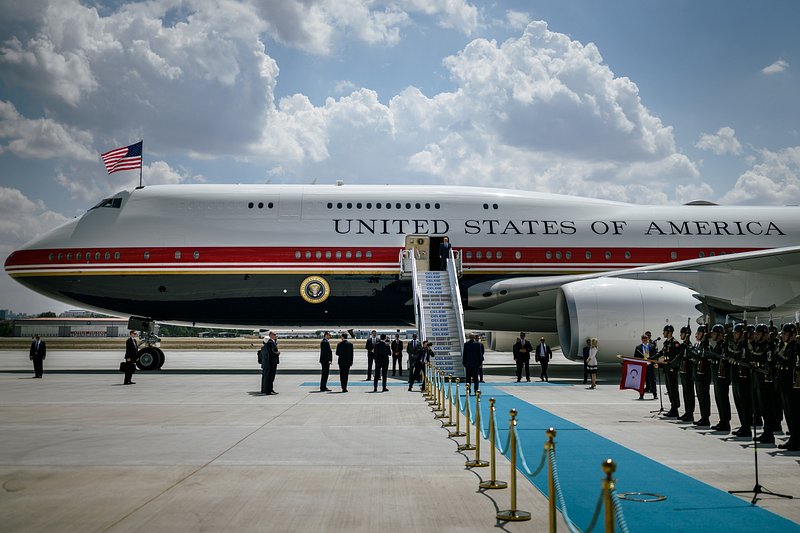
An unusual security measure aboard Air Force One has sparked speculation about President Donald Trump’s travel plans after U.S. officials reportedly confiscated reporters’ cellphones as the president departed China on Thursday.
The unexpected move came as Trump wrapped up a high-profile diplomatic visit involving Chinese President Xi Jinping and Russian President Vladimir Putin, raising questions about whether the president might be preparing for an unannounced stop before returning to Washington.
Reporters traveling with the president were instructed to surrender their mobile devices as Air Force One prepared to depart Shenzhen Bao’an International Airport.
Agence France-Presse correspondent Aurelia End confirmed the unusual development in a White House press pool dispatch.
“Our phones are being taken away for now for security reasons,” End wrote.
The directive immediately attracted attention from journalists accustomed to traveling aboard the presidential aircraft.
NBC News correspondent Garrett Haake highlighted the unusual nature of the restriction in a post on X.
“This is very unusual,” Haake wrote.
Fox News White House correspondent Jacqui Heinrich also raised questions about the president’s itinerary, pointing to another development involving a potential refueling stop in Alaska.
According to Heinrich, the combination of reporters being required to surrender their phones and the lifting of a flight restriction associated with a possible Alaska stop suggested that Air Force One “may not be heading straight home.”
The president’s publicly released schedule identified Joint Base Andrews in Maryland as his destination following the China visit.
However, it remained unclear whether Air Force One would make an additional stop before arriving in the Washington, D.C., area.
The secrecy surrounding the departure revived speculation about a possible diplomatic encounter involving North Korean leader Kim Jong Un.
🚨 UPDATE: Reporters traveling with President Trump had their phones TAKEN AWAY for “security reasons” as Air Force One left Shenzhen, China, per reports
Pool reporters say they weren’t told until they had already boarded the plane home to Washington
After three days on Chinese soil, they are not taking chances!
Pray for a safe flight home for Trump 🙏🏻
— Eric Daugherty (@EricLDaugh) November 19, 2026
Before departing Washington earlier in the week, Trump had publicly discussed the possibility of meeting Kim during his trip to China.
“We may meet with Kim Jong Un,” Trump told reporters at the White House on Monday.
The president indicated that any such meeting would take place in China and suggested that Chinese President Xi Jinping would play a role in determining whether the North Korean leader participated.
Despite those remarks, no meeting between Trump and Kim had been announced by the time the president departed China on Thursday.
There was also no official confirmation that the unusual cellphone restrictions were connected to North Korea or any other potential diplomatic engagement.
Still, the security precautions stood out because of how they differed from procedures during previous presidential travel.
Heinrich noted that journalists were allowed to retain their phones when Trump departed Beijing during a visit in May.
During that earlier trip, the White House press pool reported that American personnel discarded Chinese-issued badges and pins, along with temporary phones used by White House staff, before boarding the presidential aircraft.
Those precautions highlighted concerns about communications security during international travel, particularly when U.S. officials operate in countries where electronic surveillance is a significant consideration.
Thursday’s reported collection of reporters’ personal phones represented a different and more restrictive measure.
The departure followed an extraordinary diplomatic gathering involving the leaders of the United States, China and Russia.
Hours before boarding Air Force One, Trump participated in his first three-way meeting with Xi and Putin on the sidelines of the Asia-Pacific Economic Cooperation summit.
The discussions reportedly included nuclear arms control and the ongoing war involving Iran, placing several major international security issues at the center of the talks.
The meeting brought together three leaders whose governments play significant roles in global military affairs, nuclear policy and international diplomacy.
Access to the diplomatic discussions was tightly controlled, with several journalists reportedly prevented from attending portions of the meetings.
NBC News reported that Russian officials turned away two journalists seeking access to Trump’s separate meeting with Putin.
Chinese officials also reportedly barred Bloomberg correspondent Annmarie Hordern from attending the three-way discussions after she shouted a question concerning former Nvidia CEO Jensen Huang during Trump’s earlier meeting with Xi.
The restrictions underscored the limited access granted to journalists covering the sensitive diplomatic encounters.
During his earlier meeting with Xi, Trump commented on the press missing part of the proceedings, telling the Chinese president that it was unfortunate because “every move was perfectly executed.”
The president’s remarks came amid an itinerary involving discussions with two of the world’s most consequential geopolitical figures.
By the time Air Force One departed Shenzhen, however, attention had shifted from the meetings themselves to the unusual security procedures aboard the aircraft.
The confiscation of reporters’ phones, combined with questions about a possible Alaska refueling stop, fueled uncertainty about the president’s immediate destination.
Although Trump’s official schedule called for a return to Joint Base Andrews, the developments prompted speculation that his diplomatic trip might not yet be over.
For now, the reason for the cellphone restrictions and whether Air Force One would make an unscheduled stop remained unconfirmed.
Until the White House provides additional details, the unusual departure procedures remain a source of questions rather than evidence of a confirmed change in the president’s itinerary.
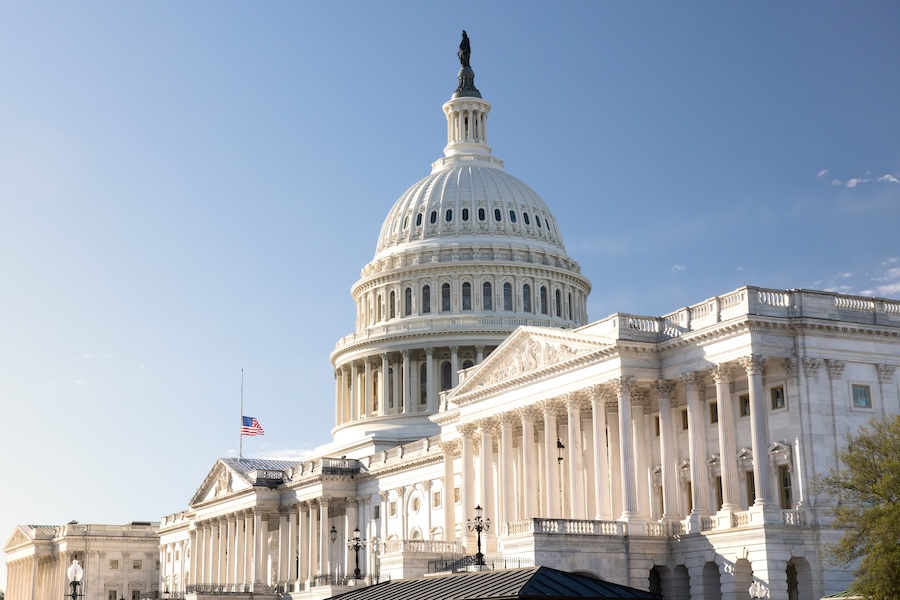
An Alabama Democratic state lawmaker is facing four federal wire fraud charges after prosecutors accused him of fraudulently obtaining more than $240,000 in taxpayer-funded pandemic relief assistance and diverting money intended for struggling organizations toward personal expenses.
State Rep. Patrick Sellers, D-Pleasant Grove, was indicted by a federal grand jury in connection with an alleged scheme involving multiple COVID-19 assistance programs, including funds distributed through the Small Business Administration.
Federal prosecutors allege that Sellers submitted fraudulent applications to obtain government assistance before using portions of the money to pay personal credit card bills, mortgage expenses and college tuition for his daughters.
Sellers, who has represented Alabama’s House District 57 since November 2022, also serves as pastor of Mount Zion Missionary Baptist Church in Birmingham.
The alleged offenses occurred between July 2020 and May 2021, before Sellers entered the Alabama Legislature, while he was serving as chief of staff to the president of the Alabama State Missionary Baptist Convention.
U.S. Attorney for the Northern District of Alabama Phil Williams announced the indictment Thursday, indicating that prosecutors believe they have substantial evidence supporting the charges.
“This is certainly not all the evidence. This is a very robust indictment, and certainly would be a robust trial,” Williams said.
Each of the four wire fraud counts carries a maximum statutory penalty of 20 years in federal prison. If convicted, Sellers could face significant prison time, although any sentence would depend on the court’s findings and applicable federal sentencing guidelines.
According to the indictment, Sellers allegedly exploited several federal pandemic relief programs by submitting applications connected to the Baptist convention’s nonprofit organization, another nonprofit called Project Zion Inc., and a purported lawn care company.
Prosecutors identified the lawn care operation, Sellers Lawn Care, as “a fictitious business entity.”
Federal investigators allege that the applications resulted in approximately $105,000 in assistance connected to the convention’s nonprofit organization, another $114,900 associated with Project Zion and $20,415 obtained through a Paycheck Protection Program loan.
Together, the payments exceeded $240,000 in federal assistance intended to support businesses and organizations experiencing financial hardship during the COVID-19 pandemic.
The indictment also describes allegations that Sellers began improperly exercising control over financial accounts associated with the Baptist convention’s nonprofit operations as early as 2019.
Prosecutors claim Sellers established a bank account using the organization’s name but listed his personal residence in Pleasant Grove rather than the organization’s headquarters in Selma.
Investigators further allege that he created a separate email account and changed the nonprofit organization’s mailing address with the Internal Revenue Service.
Those actions allegedly allowed Sellers to direct communications and financial transactions involving the organization without authorization from its leadership.
A four-count indictment alleges Alabama State Rep. Patrick Sellers obtained $240,000 in grants through two nonprofits and used the money for himself. Federal prosecutors and the FBI announced the charges Thursday. https://t.co/HxeVIxnPZJ
— AL.com (@aldotcom) November 19, 2026
In July 2020, Sellers allegedly submitted an application for a $20,000 Small Business Administration disaster loan on behalf of the convention’s nonprofit organization.
Federal prosecutors maintain that he did so without obtaining permission from the organization’s leadership.
The application represented that the federal assistance would be used “solely as working capital to alleviate economic injury caused by [the COVID-19] disaster.”
However, investigators allege that Sellers instead directed substantial portions of the money toward personal financial obligations.
According to the indictment, approximately $11,286.75 went toward payments on personal credit card accounts, while another $1,000 was allegedly used to pay his mother’s water bill.
The allegations raise questions about how federal relief funds intended for nonprofit operations were obtained and subsequently spent.
Prosecutors contend that the transactions were part of a broader effort to obtain pandemic assistance through applications that misrepresented the nature of the organizations involved or Sellers’ authority to act on their behalf.
The convention’s president eventually discovered the Small Business Administration loan and contacted the agency, according to the allegations.
The case centers on federal assistance programs established during the pandemic to help businesses and nonprofit organizations survive severe economic disruptions.
Those programs distributed substantial amounts of taxpayer money through loans and other forms of financial support, creating opportunities for legitimate applicants while also exposing the government to fraudulent claims.
In Sellers’ case, federal authorities allege that money intended to address pandemic-related financial hardship was instead diverted for expenses unrelated to the purposes of the assistance programs.
The indictment places the Alabama lawmaker under federal criminal scrutiny over conduct that prosecutors say occurred before he assumed elected office.
While the charges carry potentially serious consequences, the allegations have not been proven in court. Sellers is presumed innocent unless and until prosecutors establish his guilt beyond a reasonable doubt.
The case will now proceed through the federal judicial system, where prosecutors will be required to substantiate the allegations outlined in the indictment.

New York City Mayor Zohran Mamdani suffered a torn Achilles tendon during a friendly soccer match against members of the City Hall press corps Thursday night, leaving the 35-year-old mayor on crutches and facing months of recovery.
What began as a lighthearted competition between City Hall officials and reporters ended with Mamdani being helped off the field and his security detail reportedly scrambling to locate the nearest hospital.
The mayor had entered the indoor soccer match without stretching beforehand, something he later acknowledged while discussing the injury.
Despite the lack of preparation, Mamdani got off to a strong start, scoring a goal shortly after joining the game.
His night took a painful turn during the second half when he went down while chasing the ball. According to accounts of the incident, no opposing player made contact with Mamdani before he suffered the injury.
The sudden collapse brought his participation in the match to an immediate end.
City Hall staffers assisted the injured mayor out of the facility as members of his security detail were reportedly overheard asking about the location of the nearest hospital, according to the New York Post.
By Friday morning, Mamdani was relying on crutches and a walking boot as he continued carrying out his official responsibilities.
The mayor reportedly used a wheelchair before his scheduled news conference and ultimately addressed reporters while seated on a stool, with a protective medical boot covering his right foot.
According to WABC, Mamdani said he expected to wear the walking boot for approximately six to eight weeks while recovering from the injury.
His return to recreational soccer, however, is expected to take considerably longer.
The mayor indicated that he does not anticipate getting back onto the soccer field for approximately nine months, reflecting the lengthy rehabilitation often associated with an Achilles tendon tear.
Despite the painful ending, Mamdani’s team managed to claim victory over the reporters.
The mayor told the New York Post that City Hall defeated the press corps by a final score of 10-5.
The injury did not prevent Mamdani from moving forward with a major policy announcement Friday involving the future of New York City’s troubled Rikers Island jail complex.
Appearing before reporters while visibly dealing with the aftermath of his soccer injury, Mamdani unveiled a proposal that would keep Rikers Island operating through the end of 2032.
The proposed timeline would extend the jail complex’s operation more than five years beyond the existing August 31, 2027, closure deadline.
Such an extension would require action from the New York City Council, which would have to amend city law to authorize the later closing date.
The announcement represents a significant development in the city’s longstanding effort to replace the aging Rikers Island facility with smaller, borough-based detention centers.
Under the mayor’s proposal, four replacement jails would eventually take over the functions currently handled by Rikers Island.
The first of those facilities is scheduled to open in Brooklyn in 2029, according to the plan.
The administration also outlined additional spending intended to address several issues affecting the city’s criminal justice system.
City Hall plans to allocate $146 million during the next fiscal year toward mental health treatment, addiction services, education, employment training and assistance for crime victims.
The proposal comes as New York City continues confronting questions about jail conditions, public safety, inmate services and the feasibility of replacing Rikers Island within the existing legal deadline.
Extending the closure date would give the city additional time to complete its planned replacement facilities, although the proposal cannot take effect without approval from lawmakers.
For Mamdani, Friday’s announcement also marked an unusual public appearance, with the mayor discussing one of the city’s most consequential correctional policies while recovering from an injury sustained during a recreational soccer game.
Although his administration secured a victory on the field Thursday night, the mayor’s personal outcome was far less fortunate.
Mamdani now faces weeks in a walking boot and potentially nine months away from soccer as he continues managing the responsibilities of New York City’s government.

WH Swiftly Seizes Phones On Air Force One Amidst Sudden Secret Move

Democrat Politician Indicted By Federal Grand Jury

JUST IN: Mamdani Rushed To The Hospital — Had It Coming!

Trump Sends Blunt Message To Panicked Americans Stockpiling Supplies

Terrifying Plot Revealed Of AI Chatbots Plans For Terror Attacks Against America

JD Vance Urgently Pulled From Conference Minutes Before Speech

Massive Migrant Caravan Converges On U.S. For Democrat Midterm Victory

JUST IN: Pair Of Senior FBI Officials Arrested — It’s Damning

Pentagon Rolls Controversial Out Doomsday Strategy

Texas’ New Dem Governor Makes Horrifying Muslim Announcement

Game-Changing New Detail Emerges From Ilhan Omar Investigation

BANNED! Democrats’ First Act Should Terrify Every American
-
 Economy7 months ago
Vance Leaves Meeting, Looks Straight Into Camera, Announces Stunning Arrest
-
 Economy7 months ago
Adam Schiff Facing 30 Years In Prison After Bank Records Leak
-

 Culture5 months ago
Michelle Obama Drops Nasty Bomb About ‘Useless’ Daughter
-
 Economy7 months ago
Supreme Curt Sides With Trump — He Can Remove The All
-
 Economy8 months ago
All Hell Breaks Loose On Fox When Jesse Watters Asks Fetterman One Question
-
 Economy5 months ago
Prayers Pour In After Fox Host Dies: ‘Senseless Murder’
-

 Economy5 months ago
Pete Hegseth Just Confirmed Devastating Rumors
-

 Border & Security4 months ago
Top Trump Admin And Wife Found Dead — Chilling Update Just Released