
Latest
Ted Cruz, Maria Cantwell unveil bipartisan college athletics bill amid NIL chaos, lawsuits, ‘Lane Kiffin Rule’

MIRAMAR BEACH, Florida — Following years of trying to push the SCORE Act to the House floor to no avail, a new bipartisan bill called the ‘Protect College Sports’ Act has been agreed to in hopes of saving college athletics.
Since first getting involved last summer, President Donald Trump has signed two executive orders in an attempt to find some sort of unified solution that could help curtail the ongoing issues in college athletics pertaining to the transfer portal, NIL payments, eligibility rules and other problems that have led to a plethora of lawsuits filed against the NCAA.
The problem is that with Congress having a hard time agreeing to just about anything related to issues regarding the country, putting some type of legislation together that would appease both sides of the aisle has been an uphill battle, with the SCORE Act being the latest victim.
SEC SPRING MEETINGS TURN INTO BLUNT REALITY CHECK FOR BROKEN COLLEGE ATHLETICS
After last week’s debacle, with the National Black Caucus and NAACP coming out against the SCORE Act, that saw congressional leaders push back on any type of legislation that would involve states within the SEC footprint, hope was essentially lost on the Republican-pushed bill.
So, Sens. Ted Cruz (R-Texas) and Maria Cantwell (D-Washington) ramped up their work on putting together a bipartisan bill that could be seen as a win-win for both sides of the aisle.
The bill, which was finally agreed to by both sides, will not be introduced until next week, when the Senate is back in session.
“College sports are at a breaking point,” Cruz said. “Fans can see their favorite teams being hollowed out by transfer chaos, fake NIL bidding wars, eligibility lawsuits, and a system that allows the richest programs to keep pulling away. The Protect College Sports Act is a bipartisan plan to restore order. Student athletes can profit from their name, image, and likeness, but college sports still needs real rules, competitive balance, rivalries, and a true connection to education. This bill protects athletes and fans and keeps college sports from becoming a two-conference minor league.”
Taking a few elements of the SCORE Act, while adding certain ideas from the Presidential Committee on college sports that was initiated by Donald Trump, there was hope that some sort of resolution could be agreed upon.
In a letter signed last week by members of the committee, chaired by New York Yankees President Randy Levine and Florida Gov. Ron DeSantis, the panel had urged members of Congress to agree on this latest effort.
The problem for the Big Ten and SEC was that they claimed at the time that the reason for not signing the letter was based on the conferences not having seen any type of legislation.
While this was true, commissioners from both leagues were also hoping that the SCORE Act would make it to the House floor, which obviously isn’t the case now. On Tuesday, Greg Sankey hinted that while he knows certain elements of the new legislation, he had still not seen the actual bill.
Now, as SEC presidents and chancellors gather inside the Hilton SanDestin Resort here in Florida, the timing of this legislation being introduced will certainly make for an interesting end to spring meetings.
One of the biggest issues facing any type of bill that is introduced is the likelihood that it’s challenged through the court system.
The bill looks to protect the NCAA from antitrust litigation, while also codifying rules around the transfer portal, NIL payments through third parties and also an option for all conferences to pool their media rights.
“We’re seeing thousands of men’s and women’s athletic roster slots and a hundred athletic programs being cut,” Cantwell said. “Collegiate athletics is a hallmark for human development. Let’s not ruin it with out-of-control chaos. This bill puts new tools and new rules on the table to rein in runaway costs while still preserving NIL, revenue sharing, and women and Olympic sports.”
FEDERAL JUDGE APPROVES $2.8B SETTLEMENT ALLOWING SCHOOLS TO DIRECTLY PAY COLLEGE ATHLETES
YOU CAN READ THE FULL ‘PROTECT COLLEGE SPORTS ACT’ HERE
Obviously, conferences like the Big Ten and SEC have no reason to join others in pooling together their media rights, given the amount of money each makes off their deals with FOX and ESPN. But for others, like the Mountain West or Conference USA for example, this could make financial sense once their current deals are complete.
The current spending problem in college football is a perfect example, with the price of putting together rosters exceeding $40 million this season, which is obviously above the $20.5 million ‘cap’ that is supposed to be abided by.
“If we don’t find a way to create some level of regulation in the market, a lot of people are going to go bankrupt pretty quick,” Texas A&M head coach Mike Elko said Tuesday. “We’re two and a half years away from having an NIL budget that’s greater than the TV revenue for our entire university.”
Now, with this bill mentioning that the House settlement ‘cap’ will be enforced at the federal level, I’m curious to see the pushback.
I can promise you, lawyers across the country who have been involved in recent litigation are licking their chops, as billable hours have been the true winners over the past few years.
An important discussion point for those representing the actual athletes has centered around them having protections, with medical care afforded to them for a certain time period once their time in college is complete being a focal point of these talks.
In addition, college athletes having representation (agents) that are certified and part of a registry system has been something of note. In the bill,
Where this goes from here will literally be up for debate. From here, there will be arguments made, hearings held and amendments introduced.
This is only the start, and will be worth watching from a conference standpoint, where those within influential leagues like the Big Ten and SEC will take a very hard look to decide whether they will put their support behind this legislation.
Right now, conversations are being had inside both conferences on how to implement and enforce their own rules pertaining to compensation, eligibility and enforcement.
As we’ve seen, relying on a federal bill to solve problems has led to college athletics running amok, with coaches openly admitting that there are zero guardrails to curtail them working outside the perceived lines.
Buckle up, folks. This is going to be an entertaining summer, with a lot on the line.
FOLLOW TREY WALLACE ON X AND ALL SOCIAL PLATFORMS: @TREYWALLACE
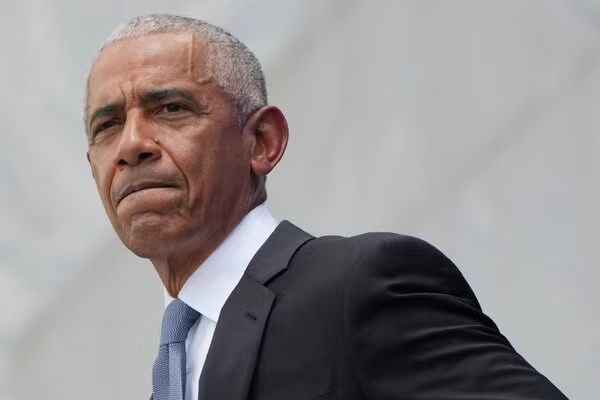
Former President Barack Obama is facing renewed criticism after delivering remarks to newly elected House Democrats in which he contrasted the Republican Party with a country club while suggesting that Democrats more accurately reflect the American population.
Obama made the comments Wednesday at Washington’s Folger Shakespeare Library, where incoming Democratic lawmakers gathered following their party’s midterm election victories.
During his address, the former president reflected on his eight State of the Union speeches and the differences he observed between Republican and Democratic lawmakers seated on opposite sides of the House chamber.
His description of Republicans focused on their perceived lack of demographic diversity, while he portrayed the Democratic caucus as a reflection of the nation’s broader population.
“You know, one of the things that always struck me each time I did it — and I did eight of them, you go into the House chamber for the State of the Union, and on one side, just, like, everybody looked the same,” Obama said.
He followed that observation with a comparison that drew criticism from conservatives who viewed the remarks as dismissive of Republican lawmakers and the Americans they represent.
“You know? It’s like a golf country club on one side, and then you’ve got on the Democratic side, you just had America,” he continued. “You had everybody — and that is a power.”
The comments immediately raised questions about the former president’s characterization of political representation, particularly his suggestion that one party’s lawmakers embodied America more fully than the other.
Although the Democratic caucus has historically included greater racial and ethnic diversity than its Republican counterpart, Republican lawmakers also represent millions of Americans from different racial, religious, geographic, and economic backgrounds.
Critics argue that Obama’s country club comparison risks reducing elected representatives to their appearances rather than recognizing the diversity of the constituents they serve.
The former president continued by emphasizing what he described as the strength of the Democratic Party’s broad coalition.
“The diversity of this class is its power. And I don’t just mean ethnic diversity or racial diversity or religious diversity. It’s also regional diversity and ideological diversity,” he said.
Obama then urged incoming Democratic lawmakers to work together despite disagreements within their own party.
“And the key, though, is to recognize that in that diversity, if you listen and you are extending grace to those inside your caucus that you don’t agree with 100% of the time, you’re going to agree on core values and you’re going to agree on a basic direction,” Obama added.
His broader message emphasized cooperation among Democrats, but the contrast he drew between the two parties became a focal point of criticism.
Conservative critics contend that describing Democrats as representative of America while comparing Republicans to an exclusive country club reinforces the very political divisions national leaders frequently call on Americans to overcome.
Supporters of Obama’s remarks, meanwhile, could point to the demographic differences between the parties’ congressional delegations as the context for his comments.
The controversy centers on whether highlighting those differences is a legitimate observation about political representation or an unnecessarily dismissive characterization of lawmakers from the opposing party.
The remarks come as Democrats prepare to return to Washington with new congressional majorities and face the challenge of managing ideological differences within their own ranks.
Obama’s appearance was intended to encourage the incoming lawmakers to recognize their shared priorities despite disagreements on individual policies.
However, his comments also renewed attention to the rhetoric used by prominent political figures when describing Americans who support the opposing party.
The former president was not the only member of the Obama family drawing attention to the White House following the midterm elections.
Former First Lady Michelle Obama also entered a separate debate over the historic executive mansion, publishing an essay that some observers interpreted as an indirect criticism of President Donald Trump’s White House renovation projects.
The essay, published October 8 as part of the “In Pursuit” project commemorating America’s 250th anniversary, focused primarily on former First Lady Jacqueline Kennedy and her efforts to restore the White House during the early 1960s.
Michelle Obama did not mention Trump or first lady Melania Trump by name.
Nevertheless, her discussion of how presidential families should approach changes to the historic residence was widely interpreted as a possible contrast with renovations undertaken during Trump’s second term.
“Regardless of party, our families understood that winning an election didn’t grant us the deed to a few acres of prime real estate to remake in our own image,” Obama wrote.
“We recognized that we were just temporary stewards of a home that belonged to the nation, even as we also recognized that like any 200-year-old house, updates were often sorely needed — especially considering the demands of a modern presidency.”
Her essay praised Jacqueline Kennedy’s approach to preserving the historic character of the White House after John F. Kennedy became president in 1961.
Rather than simply redecorating the building according to her personal preferences, Kennedy pursued historically significant furniture, artwork, and other objects associated with previous administrations.
The restoration helped establish a preservation-minded approach to maintaining the executive mansion for future generations.
Michelle Obama’s comments emphasized the responsibility of presidential families to care for a building that belongs to the American public rather than any individual administration.
While some observers interpreted the essay as criticism of Trump’s renovation decisions, the former first lady did not explicitly identify his administration as its target.
Together, the two appearances have placed Barack and Michelle Obama back in the political conversation as Democrats prepare for a new congressional session.
For Barack Obama, the latest controversy centers on his description of the Republican Party and his suggestion that Democratic lawmakers more closely resemble the country as a whole.
His supporters may view the remarks as a celebration of demographic and ideological diversity, while critics see a broader problem with portraying one political coalition as more authentically American than another.
The distinction matters because members of both parties are elected to represent American citizens, regardless of the demographic composition of their congressional delegations.
As the incoming Congress prepares to take office, Obama’s remarks have once again brought attention to the question of how political leaders discuss diversity, representation, and national unity.
And while the former president intended to celebrate the Democratic Party’s coalition, his country club comparison has given critics another opportunity to challenge the language prominent political figures use when describing their opponents.
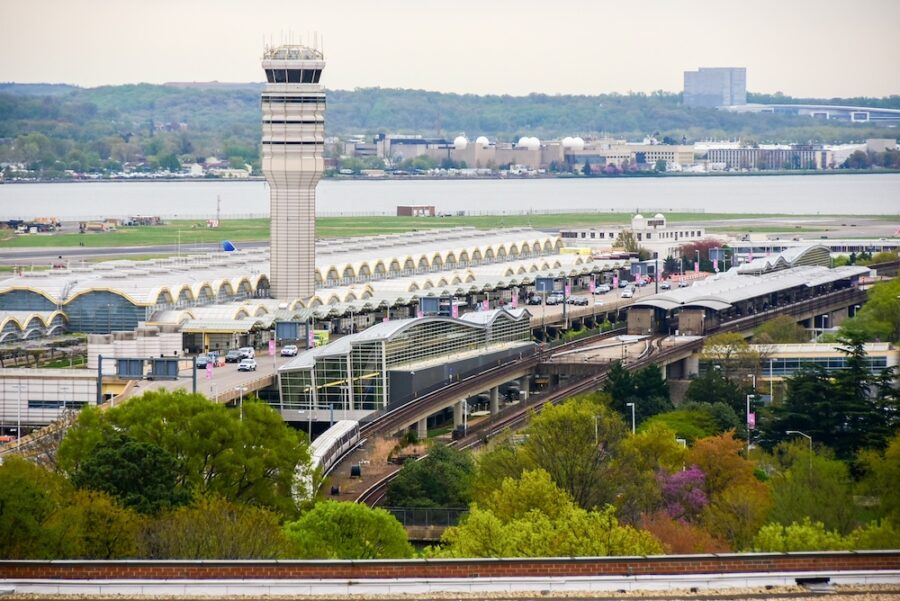
Millions of Americans preparing to travel for Thanksgiving could be facing a holiday travel nightmare as the Federal Aviation Administration warns that dangerous weather, overwhelming passenger traffic, and potential ground stops could bring major airports across the country to a standstill.
With more than 52,000 flights scheduled nationwide Tuesday, November 24, the FAA is warning that several of America’s busiest airports could experience significant disruptions just as families scramble to reach their holiday destinations.
The trouble spots include major transportation hubs in New York and California, where powerful winds, heavy rainfall, low clouds, and poor visibility threaten to create widespread delays.
And with hundreds of thousands of flights expected throughout the Thanksgiving travel period, even temporary disruptions could trigger a domino effect across the nation’s already strained aviation system.
FAA Administrator Bryan Bedford warned that the country is preparing for the ‘busiest Thanksgiving travel week in 16 years’ as airlines anticipate more than 417,000 flights between Monday and December 1.
The staggering number of scheduled flights comes as forecasters track potentially dangerous weather systems threatening large portions of the United States.
Among the first airports facing possible disruptions is New York’s LaGuardia Airport, one of the busiest transportation hubs serving the nation’s largest metropolitan area.
Federal aviation officials have identified strong winds as a potential threat to operations beginning after 10 a.m. Eastern time Tuesday.
Dangerous wind conditions could force air traffic controllers to reduce runway capacity, limit incoming flights, and temporarily halt arrivals.
Such restrictions could quickly affect flights far beyond New York, as airlines struggle to reposition aircraft and crews across the country.
On the opposite coast, California airports are also bracing for possible trouble.
San Diego International Airport could face ground stops beginning around noon Eastern time as heavy holiday passenger traffic puts additional pressure on airport operations.
The airport was already experiencing departure delays of approximately 15 minutes Tuesday morning, even before the most concerning weather conditions were expected to develop.
Farther north, San Francisco International Airport and Oakland International Airport have been identified as additional trouble spots, with potential ground stops beginning around 1 p.m. Eastern time.
Forecasters warn that low clouds, dense fog, heavy rainfall, and potentially strong winds could make landing conditions increasingly difficult.
Poor visibility can force airports to increase the spacing between arriving aircraft, reducing the number of flights that can safely land and creating backups that may last for hours.
While the FAA has identified these airports as potential trouble spots, officials stressed that the warnings do not mean ground stops have already been implemented or that every airport will suspend operations.
The restrictions remain possible traffic-management measures dependent on developing conditions.
Nevertheless, the combination of record-breaking travel demand and deteriorating weather has raised serious concerns about widespread delays.
And the problems may extend well beyond Tuesday.
Meteorologists are monitoring a developing nor’easter that could bring significant travel disruptions to the eastern United States between Tuesday and Thursday.
The storm system is expected to begin affecting the Southeast Tuesday night before pushing northward toward the mid-Atlantic and Northeast ahead of Thanksgiving.
AccuWeather Vice President of Forecast Operations Dan DePodwin warned that the situation could become considerably worse as the holiday approaches.
‘A significant deterioration in the weather is expected starting Tuesday night across the Southeast and then spreading northward along and east of the Appalachians Wednesday through Friday.’
The forecast raises concerns for travelers attempting to reach destinations along the East Coast, where heavy precipitation, gusty winds, and reduced visibility could interfere with airport operations during the busiest days of the holiday rush.
According to the FAA, thunderstorms could also disrupt flights across Florida and the Gulf Coast on Tuesday and Wednesday.
Additional rainfall is expected to threaten operations around Atlanta and the mid-Atlantic Wednesday night, while low cloud ceilings could create further complications along the West Coast.
Hartsfield-Jackson Atlanta International Airport, one of the world’s busiest aviation hubs, is preparing for an enormous influx of holiday travelers.
More than 4 million passengers are projected to pass through the airport during the broader Thanksgiving travel period.
That massive volume of passengers leaves little room for unexpected disruptions, particularly when severe weather threatens multiple regions simultaneously.
Even a relatively brief ground stop at a major airport can create consequences lasting far longer than the original interruption.
When aircraft are prevented from departing or arriving on schedule, subsequent flights can be delayed as planes and crews fall out of position.
For passengers making connections, the consequences can be especially severe.
A short delay at one airport can result in missed connections, canceled itineraries, and hours of additional waiting as airlines attempt to accommodate stranded travelers.
The FAA’s warning also comes after a series of technology-related aviation disruptions in recent weeks, adding to concerns about the industry’s ability to handle unexpected interruptions during periods of extreme demand.
With Thanksgiving falling Thursday, November 26, travelers have limited time to reach their destinations before holiday gatherings begin.
Passengers are being urged to closely monitor airline notifications, check flight statuses before leaving for the airport, and prepare for potential changes to their travel schedules.
Travelers connecting through major hubs may face particular uncertainty as weather-related delays spread through the airline network.
The FAA’s projections suggest that Tuesday could be the busiest day of the Thanksgiving travel week, but deteriorating weather conditions could create additional problems Wednesday and into the holiday itself.
For millions of Americans hoping to spend Thanksgiving with family and friends, the coming days could bring frustrating delays, missed connections, and unexpected travel complications.
And with more than 417,000 flights expected during the holiday travel period, the nation’s aviation system faces a major test as dangerous weather threatens some of its most important transportation hubs.
The FAA has not declared a nationwide ground stop, and the identified airport disruptions remain potential rather than confirmed shutdowns.
But the warning is unmistakable: one of the busiest Thanksgiving travel periods in years is colliding with a potentially disruptive weather pattern, leaving millions of holiday travelers facing an uncertain journey home.
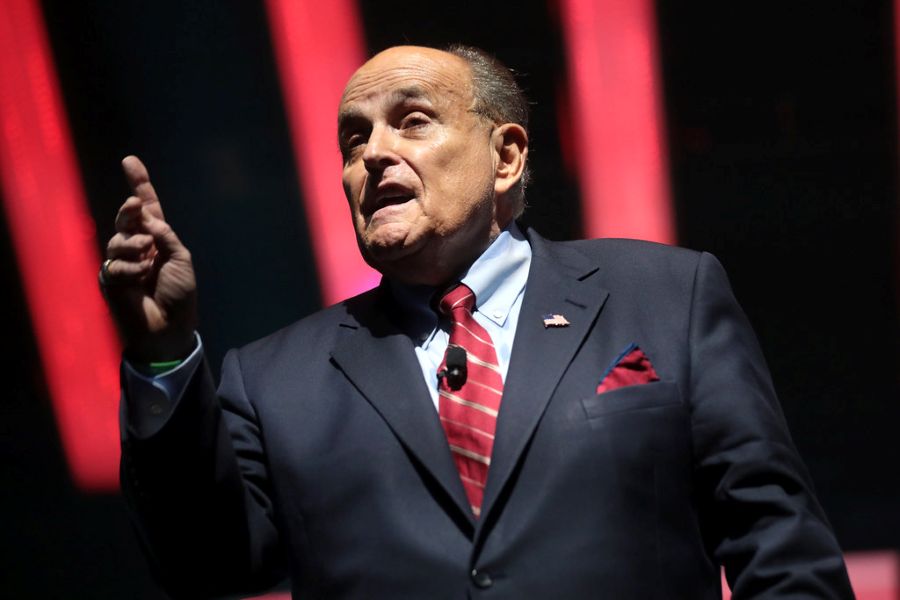
President Donald Trump is preparing to honor one of his most loyal allies with the nation’s highest civilian award, recognizing former New York City Mayor Rudy Giuliani for his decades of public service, his aggressive crackdown on organized crime, and his leadership during the devastating September 11 terrorist attacks.
Giuliani, 82, will receive the Presidential Medal of Freedom during an Oval Office ceremony Tuesday, marking a significant moment for the former federal prosecutor and Republican mayor whose career has spanned some of the most consequential events in modern American history.
The ceremony is scheduled to take place shortly before Trump and first lady Melania Trump depart Washington for Florida, where they will spend Thanksgiving at Mar-a-Lago.
For Giuliani, the recognition represents a major honor following years of legal battles, political controversy, and unwavering loyalty to the president.
“I am honored and humbled to receive the Presidential Medal of Freedom from my nation and from our Commander-in-Chief, President Donald J. Trump,” Giuliani told Fox News.
The award also fulfills a promise Trump made more than a year ago, following a serious automobile accident that left the former mayor injured.
In August 2025, Giuliani was traveling through New Hampshire with spokesman Ted Goodman when the two reportedly stopped to assist a woman seeking help following a domestic violence incident.
Giuliani was subsequently injured in a vehicle collision, prompting widespread concern among his supporters.
Trump responded by publicly announcing his intention to award Giuliani the Presidential Medal of Freedom.
“Details as to time and place to follow,” Trump wrote on Truth Social, describing his longtime friend as “the greatest Mayor in the history of New York City, and an equally great American Patriot.”
Nearly 15 months later, the president is following through on that commitment.
The White House has emphasized Giuliani’s lengthy record in public service, particularly his work fighting organized crime and his leadership during one of America’s darkest moments.
White House assistant press secretary Olivia Wales highlighted Giuliani’s tenure as the top federal prosecutor in Manhattan, where he built a national reputation for aggressively pursuing powerful criminal organizations.
Wales credited Giuliani with having “took down mob bosses and led a relentless war on crime” before becoming mayor of New York City.
As U.S. attorney for the Southern District of New York, Giuliani became known for his aggressive prosecution of organized crime figures, corrupt officials, and major financial crimes.
His efforts against New York’s powerful Mafia families helped establish his reputation as a relentless law enforcement figure willing to confront some of the country’s most notorious criminal organizations.
That reputation followed him into City Hall, where he served two terms as New York City’s mayor from 1994 until 2001.
During his administration, New York experienced a dramatic reduction in violent crime, helping transform the city’s national reputation after years of concerns about public safety.
Although criminologists continue to debate the relative impact of Giuliani’s policing policies and broader national crime trends, the city’s declining crime rate became one of the defining accomplishments associated with his mayoralty.
But it was Giuliani’s leadership following the September 11, 2001, terrorist attacks that elevated him from a prominent local politician into an internationally recognized figure.
When terrorists hijacked commercial aircraft and struck the World Trade Center, killing nearly 3,000 people, Giuliani became one of the most visible public officials responding to the unfolding catastrophe.
As Lower Manhattan descended into chaos, Giuliani appeared repeatedly before cameras, providing updates, coordinating with emergency officials, and attempting to reassure a frightened city.
His presence during the crisis earned him widespread recognition and the nickname “America’s Mayor.”
For millions of Americans, Giuliani became one of the defining public faces of the nation’s response to the deadliest terrorist attack on American soil.
His leadership during that period remains a central part of his public legacy, even as his later political activities have generated intense controversy.
In the years following his mayoralty, Giuliani became a close political ally and personal attorney to Donald Trump.
He played a prominent role in Trump’s efforts to challenge the results of the 2020 presidential election, a decision that ultimately brought significant legal and financial consequences.
In July 2024, Giuliani was disbarred in New York over false statements concerning the election. Washington, D.C., followed with a separate disbarment decision that September.
His legal troubles also included a high-profile defamation case brought by Georgia election workers Ruby Freeman and Shaye Moss.
In 2023, a federal jury ordered Giuliani to pay $148 million after finding him liable for defamation involving accusations he made against the two women.
Following bankruptcy proceedings, Giuliani reached a settlement with Freeman and Moss in January 2025.
Despite the enormous financial and professional consequences, Giuliani remained publicly aligned with Trump.
His legal circumstances subsequently changed as several election-related cases took new turns.
In November 2025, Trump issued pardons to Giuliani and 76 other individuals connected to efforts to challenge the 2020 presidential election results.
Those pardons applied to potential federal offenses and did not eliminate state-level allegations or civil judgments.
Weeks later, a Georgia judge dismissed the state’s election-related racketeering prosecution against Trump, Giuliani, and several other defendants after prosecutors declined to continue the case.
Giuliani has also remained connected to legal proceedings in Arizona, where Attorney General Kris Mayes indicated that prosecutors could pursue a new indictment following the dismissal of an earlier case.
Throughout the controversies, Trump has continued defending his former attorney and publicly recognizing his accomplishments.
The upcoming Medal of Freedom ceremony underscores that longstanding relationship while placing renewed attention on Giuliani’s earlier career in law enforcement and public leadership.
The Presidential Medal of Freedom is the highest civilian decoration awarded by the United States government.
Presidents have traditionally used the honor to recognize individuals who have made exceptional contributions to American society, national security, public service, culture, and other areas of national importance.
For Giuliani, the award represents recognition of a public career that began long before his association with Trump and included major roles in federal law enforcement, municipal government, and the national response to terrorism.
It also arrives at a striking moment in his personal and political life.
After years of courtroom battles, disbarment proceedings, financial difficulties, and intense public scrutiny, Giuliani is preparing to enter the Oval Office to receive one of the country’s most prestigious honors.
His critics continue to point to his conduct following the 2020 election, while supporters emphasize his record as a prosecutor, his administration’s public safety achievements, and his leadership after September 11.
Trump’s decision to award Giuliani the Presidential Medal of Freedom makes clear which aspects of that complicated legacy the president intends to recognize.
More than two decades after Giuliani stood before a devastated New York City in the aftermath of the September 11 attacks, the former mayor will be honored at the White House for his service to the country.
And for a political figure who has remained one of Trump’s most steadfast allies through years of controversy, Tuesday’s ceremony will mark a significant public recognition from the president himself.

Video Of Barack Obama Goes Viral — The Rumors Were True!

Ominous Warning Issued To Millions Of Thanksgiving Travelers

Trump Makes Major Announcement About Rudy Giuliani

SCOTUS Justice Issues Chilling Warning

Democrate Leader Just Self-Deported After Sudden Discovery

Primetime Fox News Host Makes Shocking Admission On LIVE TV
Texas’ New Dem Governor Makes Horrifying Muslim Announcement

Game-Changing New Detail Emerges From Ilhan Omar Investigation

BANNED! Democrats’ First Act Should Terrify Every American

Trump Sends Blunt Message To Panicked Americans Stockpiling Supplies

WH Swiftly Seizes Phones On Air Force One Amidst Sudden Secret Move

JD Vance Urgently Pulled From Conference Minutes Before Speech
-
 Economy7 months ago
Vance Leaves Meeting, Looks Straight Into Camera, Announces Stunning Arrest
-
 Economy7 months ago
Adam Schiff Facing 30 Years In Prison After Bank Records Leak
-
 Culture5 months ago
Michelle Obama Drops Nasty Bomb About ‘Useless’ Daughter
-
 Economy7 months ago
Supreme Curt Sides With Trump — He Can Remove The All
-
 Economy8 months ago
All Hell Breaks Loose On Fox When Jesse Watters Asks Fetterman One Question
-
 Economy5 months ago
Pete Hegseth Just Confirmed Devastating Rumors
-
 Economy6 months ago
Prayers Pour In After Fox Host Dies: ‘Senseless Murder’
-
 Border & Security4 months ago
Top Trump Admin And Wife Found Dead — Chilling Update Just Released