
Latest
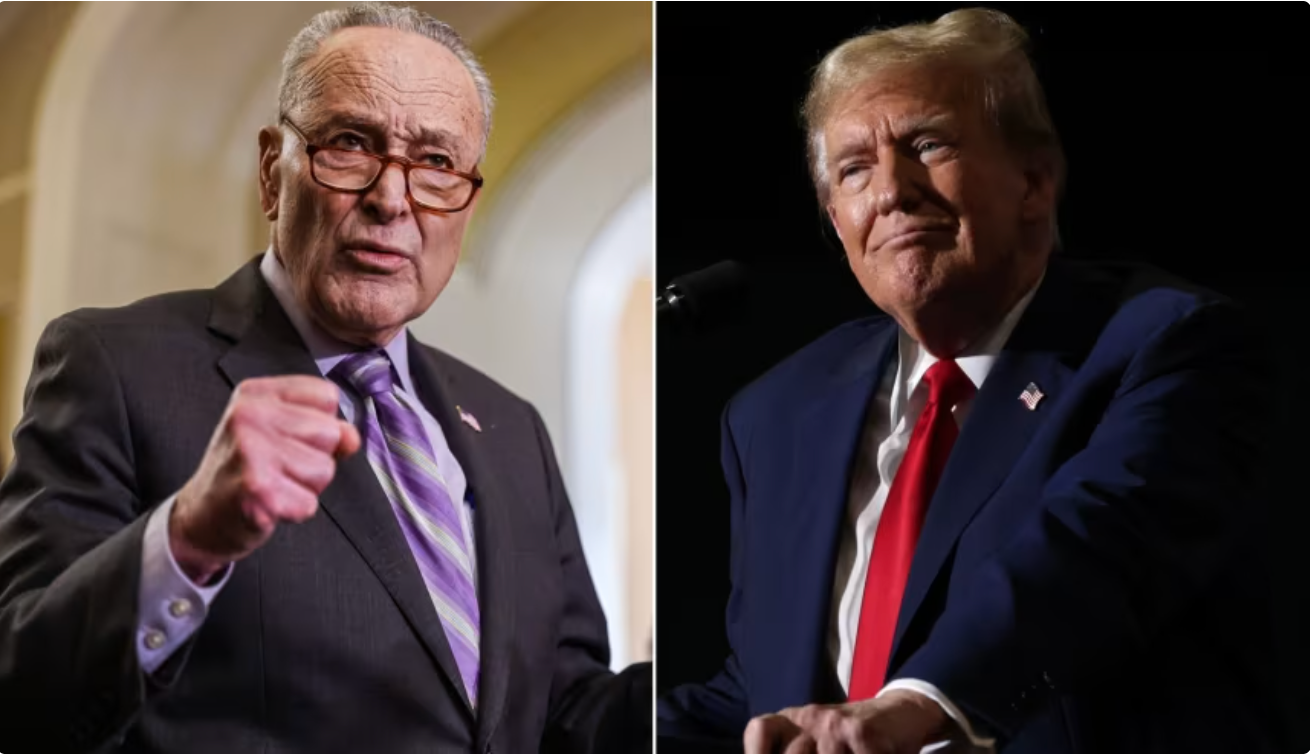
Schumer Loses! Court Sides With Trump In Historic Move

The Justice Department has taken an unprecedented step in a terrorism-related immigration case, using a federal court that sat virtually untouched for three decades to remove an Afghan woman accused of supporting her family’s plans for an ISIS-inspired mass shooting around Election Day 2024.
Nazira Haji Zada, 47, a lawful permanent resident who had been living in Fort Worth, Texas, has been removed to Afghanistan after proceedings before the Alien Terrorist Removal Court, according to the Justice Department.
It marks the first case ever brought before the specialized court since Congress created it in 1996.
Zada was not criminally charged in connection with the alleged Election Day attack.
Instead, federal authorities pursued her removal through the rarely used national-security court, alleging that she supported family members who were preparing to carry out an ISIS-inspired mass shooting in the United States.
The Justice Department filed its application for her removal on July 15. Zada was subsequently taken into custody and appeared before Alien Terrorist Removal Court Chief Judge Joan N. Ericksen in Washington, D.C.
The case ultimately ended without a prolonged court battle.
With the assistance of her attorneys, Zada conceded for purposes of the removal proceeding that she qualified as an “alien terrorist” and waived her right to appeal. The court issued its removal order on Aug. 20, and the order was unsealed after she was returned to Afghanistan.
The extraordinary proceeding brought a court created during the terrorism debates of the 1990s into action for the first time.
Congress established the Alien Terrorist Removal Court in 1996 to handle removal proceedings involving noncitizens accused of terrorism when national-security concerns may prevent the government from publicly revealing classified intelligence.
The tribunal is staffed by federal district judges appointed to it by the chief justice of the United States. Under the governing statute, the government may present classified information using special procedures designed to prevent sensitive intelligence from being publicly disclosed.
That unusual process has also generated a major legal dispute over due process.
Zada’s attorneys challenged the constitutionality and fairness of the system, arguing that restrictions surrounding classified evidence could prevent a person facing removal from fully confronting the government’s case.
Although Zada ultimately agreed to removal, her attorneys maintained their objections to the process.
The allegations against Zada were tied to a far more serious criminal case involving her own family.
Her son, Abdullah Haji Zada, and son-in-law, Nasir Ahmad Tawhedi, were arrested on Oct. 7, 2024, after obtaining firearms and ammunition from an undercover FBI employee as part of what federal authorities said was preparation for an Election Day terrorist attack.
Authorities alleged that the men intended to stage a mass-casualty shooting on or around Nov. 5, 2024.
The attack never happened.
Instead, federal agents moved in before the alleged plan could be carried out.
Tawhedi later pleaded guilty to terrorism-related offenses involving conspiring and attempting to provide material support and resources to ISIS, as well as firearms offenses connected to a federal crime of terrorism.
Abdullah was just 17 when he was arrested, but he entered his guilty plea as an adult.
He was ultimately sentenced to 15 years in federal prison and agreed that he would be removed to Afghanistan after completing his sentence. He also waived most avenues for challenging that eventual removal.
Federal authorities alleged that Zada played a supporting role as her family prepared for what prosecutors characterized as the planned attack.
According to the government’s case, members of the family sold possessions in 2024 as the alleged plot developed. Authorities also pointed to preparations for family members to leave the United States before Election Day.
Prosecutors interpreted those actions, along with classified and other evidence presented in the removal proceeding, as evidence that Zada knew about and supported the planned attack.
Her defense attorneys disputed the government’s characterization of her conduct.
That distinction is significant: Zada was never convicted—or even criminally charged—for participating in the alleged terrorist conspiracy.
The government instead pursued an immigration removal proceeding, where the evidentiary standard and procedures differ substantially from those in a criminal prosecution. The Justice Department says the ATRC can order removal when the government establishes the statutory requirements by a preponderance of the evidence.
Ultimately, there would be no full trial testing the government’s allegations.
Zada agreed to removal, conceded her status as an “alien terrorist” for purposes of the proceeding and waived further appeal. She has now been returned to Afghanistan and, according to the Justice Department, is permanently inadmissible to the United States.
Justice Department officials immediately portrayed the outcome as a significant development in the government’s counterterrorism arsenal.
Attorney General Todd Blanche called it a “landmark case” and “a win for national security and the rule of law.”
The larger significance may extend beyond Zada herself.
For 30 years, the Alien Terrorist Removal Court existed largely on paper.
Now it has been used.
And with the Justice Department publicly signaling that it views the court as another available tool in terrorism-related immigration cases, Zada’s removal could become the first test of a legal mechanism that had never before been put into practice.


After years of fiery clashes, viral arguments and regularly finding herself outnumbered at the table on “The Five,” the liberal Fox News personality has secured a new three-year contract with the network.
The deal keeps one of the show’s most recognizable political counterweights in place even as “The Five” moves forward with a revamped lineup.
For Tarlov, the new agreement sends a clear message about how the network views her role.
“It’s always a great affirmation of your seat at the table,” Tarlov said of the new deal. “No matter how contentious it looks or difficult or terrible to some people, that you’re a valued element in this discourse.”
Tarlov occupies the rotating liberal seat on a program otherwise anchored by conservative personalities Jesse Watters, Greg Gutfeld and newly installed permanent co-host Emily Compagno, along with Dana Perino.
That frequently puts Tarlov in the middle of some of the show’s most contentious exchanges.
And she knows she doesn’t have much time to make her case.
Tarlov said she generally gets about 90 seconds to deliver her argument, forcing her to make every second count.
“If I’m going to get 90 seconds, I want to make the most of it,” she stated.
One strategy is to disarm the rest of the table before jumping into the disagreement.
Tarlov said she’ll sometimes open with humor or a backhanded compliment—something she describes as her “olive branch”—before making her argument.
But viewers watching the heated exchanges on television might be surprised by what happens after the cameras turn off.
According to Tarlov, her personal relationships with some of her biggest ideological opponents on the program are far warmer than their television battles suggest.
“Jesse Watters and Greg Gutfeld actually care about me as a person,” she revealed. “And that doesn’t make them soften their political opinions, even though I think that they should in some cases, especially when they’re enormously wrong.”
Those relationships aren’t limited to polite conversations in the hallway.
Tarlov said she and Gutfeld regularly exchange text messages during the week. She has visited his apartment and attended his daughter’s first birthday party.
She also communicates with Watters’ wife, Emma DiGiovine, and has socialized away from the Fox studios with Perino and Compagno.
For Tarlov, maintaining those relationships comes down to drawing a line between political disagreements and personal relationships.
“‘[It’s about] fundamentally understanding them as people and how they think about politics,” as opposed to seeing them as “a set of political opinions.”
That distinction has become an important part of Tarlov’s role on a program built around political disagreement.
The on-air battles can be intense, but Tarlov said she has learned that politics doesn’t necessarily consume the personal lives of the colleagues she debates every day.
Her time on “The Five” has also included moments far more personal than political.
Tarlov’s father died from cancer linked to 9/11 while she was pregnant with her first daughter, Cleo.
She has spoken emotionally about that loss on the air and recalled one occasion when her grief became impossible to keep contained.
“There was great relief and also discomfort,” she said, “because I had gotten to the point where it had to be addressed almost, when you’re walking around with something that’s so bottled up. …No one wants anyone to be looking at them while they’re crying. I’m also a very ugly crier, so I didn’t want that to be going on for too long.”
Tarlov said her colleagues backed off during that deeply personal moment.
Now, Fox is making clear that the political sparring will continue.
The network recently made Emily Compagno a permanent co-host of “The Five,” joining Gutfeld, Watters and Perino, while Tarlov and Harold Ford Jr. continue rotating through the show’s liberal seat.
The arrangement means Tarlov will continue walking into a television environment where she is frequently outnumbered politically.
But that is also precisely what has made her role distinctive.
The arguments, interruptions and ideological clashes aren’t pushing her out the door.
Instead, Fox has handed Tarlov another three years to keep making her case from across the table.
A U.S. Customs and Border Protection supervisor is facing serious federal charges after investigators alleged he secretly stripped newer components from dozens of government computers, replaced them with inferior hardware and traded some of the original parts for personal credit.
Terry Liu, 39, a CBP supervisor assigned to the Calais Port of Entry in Maine, was arrested in September and charged in federal court in Bangor with theft of government property and destruction of government property.
Each charge carries a potential maximum sentence of 10 years in prison and a fine of up to $250,000.
The case centers on what investigators say happened to 46 government computers spread across three CBP locations.
According to an FBI probable cause affidavit, CBP information technology employees discovered on Dec. 19, 2025, that multiple agency computers had apparently been altered without authorization from management or IT personnel.
An inventory soon revealed the scale of the problem.
Investigators identified 38 affected computers at Calais, another six at Ferry Point and two at Milltown.
BREAKING: Terry Liu, the Chinese national arrested this week in Maine, has been charged with illegally modifying the hardware of Customs and Border Patrol computers at the Maine-Canada border.
Liu, who described himself as a native of Guangzhou, China, was caught on camera… pic.twitter.com/PC1hZJi987
— Steve Robinson (@SteveRob) September 11, 2026
Authorities allege that processors had been replaced in 39 computers, RAM had been changed in six and hard drives had been swapped in eight. Some computers allegedly had multiple components replaced.
And the hardware wasn’t simply being exchanged for equivalent parts.
According to investigators, some of the original computers contained newer 14th-generation Intel processors, including Core i7-14700 chips.
Those components were allegedly replaced with older 12th- and 13th-generation Intel Core processors or Intel Pentium chips that failed to meet CBP specifications.
Many of those altered machines were then reportedly reconnected to the government’s network.
As officials tried to determine what was happening, Liu received an explicit written instruction from Port Director Theodore Cummings on March 18, 2025:
“Please do not move any computers or computer parts.”
Investigators eventually turned to surveillance cameras.
According to the affidavit, cameras captured activity during Liu’s overnight shifts, when relatively few other officers were around.
Footage allegedly showed Liu removing computer side panels and working inside the machines. Investigators described him using a screwdriver in a manner consistent with scraping thermal paste from processors, exchanging components and testing the altered systems.
But the investigation didn’t stop with the surveillance footage.
Authorities say financial and email records provided another piece of the puzzle.
Investigators allege that original government computer components were submitted to Newegg’s trade-in program.
They identified 13 emails containing shipping labels and trade-in summaries involving processor models matching government equipment, with offers reportedly worth $200 or $210 apiece.
Newegg records allegedly revealed 16 transactions involving 14th-generation Intel Core i7 processors between May 2025 and July 2026.
Credit-card records showed at least $600 in related credits, while emails referenced trade-in offers totaling at least $2,660, according to the affidavit.
The alleged financial benefit was only part of the government’s concern.
CBP estimated that restoring the computers with their original components would cost more than $20,000.
Replacing all 46 machines altogether was estimated to cost more than $105,000.
Investigators interviewed Liu on Sept. 9.
According to the affidavit, Liu admitted replacing CBP computer components with older hardware and acknowledged using government equipment through Newegg’s trade-in program for credit.
He initially told investigators that his modifications were intended to improve the computers’ efficiency.
But authorities say that explanation changed under further questioning.
According to the affidavit, Liu acknowledged knowing that the modifications actually degraded the computers’ performance and said frustration over the amount of time required for CBP’s IT department to complete repairs contributed to his actions.
One important element is notably absent from the allegations.
The affidavit does not accuse Liu of installing malware on CBP computers or transmitting government information outside the agency.
CBP’s Office of Professional Standards had already opened an investigation in January concerning Liu’s conduct while working for the agency.
Federal prosecutors are now seeking to keep him detained as the criminal case proceeds.
Assistant U.S. Attorney Chris Ruge cited concerns about Liu’s “recent and frequent international travel” and his alleged “apparent foreign connections and substantial means with which to flee.”
The case remains pending, and the charges are allegations that prosecutors would have to prove in court.
What investigators have alleged, however, is an unusual breach from inside a federal law-enforcement agency: dozens of government computers altered without authorization, newer hardware allegedly removed and replaced with older components, and government property allegedly fed into a commercial trade-in program for credit.
Now a CBP supervisor entrusted with helping oversee operations at a U.S. port of entry is facing the possibility of years in federal prison if convicted.
A massive new release of once-classified intelligence is reopening one of the most consequential questions surrounding September 11: How much did the U.S. government know about Osama bin Laden’s plans to strike America before the attacks occurred?
The CIA has released 71 President’s Daily Brief products from the years surrounding 9/11, exposing a trail of warnings delivered during the administrations of both President Bill Clinton and President George W. Bush.
The documents don’t show that either president was handed the blueprint for what ultimately happened on Sept. 11, 2001.
But they do reveal something striking: Years before hijacked passenger jets slammed into the World Trade Center and Pentagon, intelligence officials were already warning about bin Laden, attacks inside the United States, aircraft hijackings and Al Qaeda operatives potentially operating on American soil.
And some of those warnings were remarkably specific.
One of the most alarming came on Dec. 4, 1998.
The briefing prepared for Clinton carried the title:
“Bin Ladin [sic] Preparing To Hijack US Aircraft.”
The intelligence assessment warned:
“Some members of the Bin Ladin network have received hijack training, according to various sources. Bin Ladin could be weighing other types of operations against US aircraft.”
That wasn’t all.
The same document raised the possibility that an operation could be approaching quickly, stating:
“Bin Ladin might implement plans to hijack a US aircraft before the beginning of Ramadan on 20 December and that two members of the operational team had evaded security checks during a recent trial run at an unidentified New York airport.”
The significance of those words is difficult to miss with the benefit of hindsight.
But another warning had reached the Clinton administration months earlier.
A Sept. 10, 1998, briefing described intelligence indicating bin Laden wanted to bring the fight directly onto American soil.
“Bin Ladin late last month said his preferred option is to strike the US on its own soil in Washington … the same group responsible for the US Embassy bombings in Africa Kenya and Tanzania may fly an explosive-packed airplane into a US city.”
The intelligence picture wasn’t uniformly definitive.
Some reports were explicitly regarded as questionable by the CIA.
One July briefing acknowledged that uncertainty directly:
“we have received four reports from highly questionable sources suggesting Usama [sic] Bin Ladin is making plans to conduct an attack in the United States.”
That distinction matters. Intelligence agencies routinely receive fragmentary, contradictory or unreliable information, and the newly released records do not amount to evidence that officials possessed advance knowledge of the specific 9/11 operation.
But the warnings continued.
By February 2000, intelligence reporting was identifying possible symbolic targets inside the United States, including the Statue of Liberty.
Then the presidency changed hands.
The warnings did not disappear.
After George W. Bush took office, intelligence officials continued tracking the threat from bin Laden and Al Qaeda.
Among the documents is perhaps the most famous pre-9/11 presidential intelligence briefing of them all:
“Bin Laden Determined to Strike in US.”
That August 2001 briefing would become a central focus of investigations after the attacks.
It warned that Al Qaeda had an existing presence inside the country:
“Al-Qa’ida [sic] members-including some who are US citizens—have resided in or traveled to the US for years, and the group apparently maintains a support structure that could aid attacks.”
The briefing also described troubling activity occurring inside the United States.
“After US missile strikes on his base in Afghanistan in 1998, Bin Ladin told followers he wanted to retaliate in Washington,” the document states, noting the FBI found “patterns of suspicious activity in this country consistent with preparations for hijackings or other types of attacks, including recent surveillance of federal buildings in New York.”
Again, none of that amounted to the operational blueprint for what would happen on Sept. 11.
The intelligence did not identify the World Trade Center and Pentagon as the eventual targets, nor did it lay out the complete plan involving four hijacked passenger jets.
And the reliability of some individual reports remained in doubt.
A July 21, 1999, CIA memo, for example, reported a claim that bin Laden’s organization had “made a dry run of a bombing of the FBI headquarters” in Washington and suggested an attack could occur “soon.”
But CIA analysts simultaneously warned they had “reservations about the source.”
The threat picture extended far beyond airplanes.
Intelligence officials were also investigating whether bin Laden was pursuing chemical, biological, radiological or nuclear capabilities.
A February 1999 document delivered another chilling assessment:
“If Bin Ladin succeeded in buying a chemical or biological weapon, his past behavior and statements indicate he would have no reservations about using it and he would begin searching for a suitable target.”
Taken together, the newly public material provides a revealing look inside the stream of intelligence reaching America’s highest levels of government before 9/11.
CIA Director John Ratcliffe announced the release as the country marked 25 years since the attacks.
“Today I authorized the release of 71 Presidential Daily Briefs to honor the lives of those killed on 9/11,” Ratcliffe said in a statement.
The records span years and show analysts repeatedly trying to understand bin Laden’s intentions from intelligence that was often incomplete, uncertain and rapidly changing.
But they also put renewed attention on a painful historical reality: warning signs existed.
Possible attacks inside America.
Hijackings.
Operatives already in the United States.
Suspicious activity potentially connected to preparations for attacks.
And even intelligence contemplating aircraft being used in attacks against American cities.
Twenty-five years after 9/11, former Bush national security adviser Condoleezza Rice publicly addressed the failure to recognize the full magnitude of the threat before it was too late.
“Those of us in authority on that day did not see the nature of the danger in time to prevent the attack of 9/11,” Rice said.
She added:
“I will always carry deep personal remorse for the pain that you, the families of the fallen, still feel, and for the trauma that our country endured.”
The newly declassified material does not establish that Clinton, Bush or their administrations knew that terrorists would hijack four airplanes on Sept. 11, 2001, or knew the specific targets, timing and mechanics of the coming attack.
What the documents do establish is that the threat from bin Laden had been occupying the attention of American intelligence officials for years.
And scattered throughout that intelligence were warnings involving some of the very elements that would ultimately define the deadliest terrorist attack ever carried out on American soil.
Twenty-five years later, those warnings are now available for the public to examine.
And they provide a stark historical record of just how difficult—and ultimately consequential—it was for the government to turn a growing collection of warning signs into an understanding of the catastrophe that was approaching.

Fox News Makes Shock Decision On ‘The Five’ Host’s Future — Fans Outraged

Border Agent Charged With Illegally Modifying Critical Hardware

Several Ex-Presidents BUSTED After Trump FINALLY Declassifies Bombshell Doc

Schumer Loses! Court Sides With Trump In Historic Move

HUGE: 9/11 Widow Goes Rogue, Makes Damning Call Out During Ground Zero Ceremony

Supreme Court Rules on Recount in Critical Senate Race — NEW Winner Declared By 3 Votes

Everyday Americans Being Treated As Criminals — Including You, Right Now

‘EFFECTIVE IMMEDIATELY’ — Barack Obama Gets Devastating News

‘The Five’ Gets Emotional As Greg Gutfeld Announces Tragic News

Beloved Fox News Star Reveals New Cancer Diagnosis
Terrifying ‘Secret Weapon’ Built To Spy On Americans Spotted At Secret Location

JUST IN: SCOTUS Shocks GOP With Brutal Ruling
-
 Economy5 months ago
Vance Leaves Meeting, Looks Straight Into Camera, Announces Stunning Arrest
-
 Economy5 months ago
Adam Schiff Facing 30 Years In Prison After Bank Records Leak
-
 Economy5 months ago
Supreme Curt Sides With Trump — He Can Remove The All
-
 Culture3 months ago
Michelle Obama Drops Nasty Bomb About ‘Useless’ Daughter
-
 Economy5 months ago
All Hell Breaks Loose On Fox When Jesse Watters Asks Fetterman One Question
-
 Economy3 months ago
Prayers Pour In After Fox Host Dies: ‘Senseless Murder’
-
 Latest3 months ago
Fox News Stuns With Announcement About 5 Fired Hosts
-
 Economy5 months ago
NBC Stops LIVE Broadcast — Breaks Big Trump News