
Latest
Damon Wayans reveals the scary symptom that led to his type 2 diabetes diagnosis

Comedy icon Damon Wayans has gone from spreading laughter to spreading awareness about diabetes risk.
The actor, best known for his roles in “In Living Color,” “Major Payne” and “My Wife and Kids,” has lived several years with his own case of type 2 diabetes, which runs in his family.
In an exclusive interview with Fox News Digital, Wayans, 65, shared the moment he realized the condition should be taken seriously.
SIMPLE LIFESTYLE CHANGES COULD SLASH HEART ATTACK RISK FOR MILLIONS, SCIENTISTS REPORT
“It was like 2017 and I just remember going to the bathroom and peeing so much that I thought maybe my blood was draining out, too,” he described. “And it kept happening and I’m just like – I’m not even drinking that much water.”
This frequent urination was followed by pain in his feet, numbness in his toes, delirium and blurry vision.
“My sister Kim made me go to the doctor because I probably wouldn’t have gone,” Wayans said.
CARRIE ANN INABA SHARES HER STRUGGLE TO MANAGE HIDDEN, INVISIBLE ILLNESS: ‘IT’S REAL’
After the doctor revealed that Wayans’ blood sugar reading was at a critically high 535 mg/dL, he was “scared straight” into making some “serious” lifestyle changes.
“I used to drink wine, love wine. I don’t drink wine [anymore],” he said. “It’s a much healthier life I’m living, and I’m aware of all the joys that I have now that I just took for granted back when I wasn’t taking care of myself.”
Wayans said he stays “disciplined” with a healthy diet and works out every morning, involving a mix of weightlifting strength training using his own body weight, like burpees and yoga.
“I also wear a glucose monitor, so I know what exercise does to me [and] to my blood sugar,” he said. “I know if I lift weights, I feel better, and also I’m burning [calories] for the rest of the day.”
GRANDFATHER’S SIMPLE CHANGES REVERSED PRE-DIABETES DIAGNOSIS THAT LEFT HIM ‘PETRIFIED’
While Wayans feels he has his routine under control, the risk of long-term diabetes complications still looms.
The entertainer recently teamed up with biotech company Genentech’s “All Eye on DME” campaign, a movement to spread awareness of diabetes-related vision loss.
Diabetic macular edema (DME) is a complication of diabetes that can lead to vision loss, according to Genentech.
Although Wayans does not have DME himself, he continuously monitors his own symptoms, including depth perception issues, admitting he “needs to get [his] eyes checked.”
TEST YOURSELF WITH OUR LATEST LIFESTYLE QUIZ
“Sometimes God talks to you, and maybe this is something I needed to hear and be a part of in order to keep myself from going blind,” he added.
The condition occurs when fluid leaks from weakened or damaged blood vessels (called retinopathy), causing buildup in the macula, a small area in the middle of the retina that is responsible for clear vision.
If left untreated, the buildup can lead to partial or complete vision loss, according to Genentech.
DME, which can occur in both type 1 and type 2 diabetes patients, is the leading cause of vision loss in “working-age” diabetics.
The condition occurs in about 750,000 diabetics in the U.S., disproportionately affecting Black and Hispanic populations, research shows.
CLICK HERE FOR MORE HEALTH STORIES
Some symptoms of DME include blurry or doubled vision, floaters or dark spots, difficulty seeing colors or objects when there’s a glare, seeing straight lines as curved or bent, or seeing objects as a different size when one eye is closed.
The condition can be diagnosed by an eye doctor via a visual acuity test, eye exam or optical imaging.
Wayans’ biggest piece of advice for diabetes patients is “don’t be afraid to see a doctor.”
“You’d be surprised at how simple the treatments are, but you can’t treat it if you don’t know what it is [and] if you never get diagnosed,” he said.
CLICK HERE TO SIGN UP FOR OUR HEALTH NEWSLETTER
“It’s important that we let our guard down and let our egos down and go conquer the fear, because the fear is all in your head.”
Wayans – a member of the iconic Wayans comedy family, including brothers Keenen Ivory Wayans, Marlon Wayans and Shawn Wayans, along with son Damon Wayans Jr. – said he hopes that doing his part to spread awareness for DME will help his family talk more openly about health.
“If they see that I’m not afraid, then maybe they’ll be less afraid,” he said. “And if I can go home and actually talk in-depth about treatments … especially if I got it done myself, I think they’ll be more receptive to it.”
Wayans acknowledged how cost and access obstacles can hold people back from seeking medical help.
“Even if you have to spend a little money now to get it under control, it’s worth it,” he said. “Because there’s so much life to live, unless you do nothing.”


After months of public scrutiny, damaging revelations and signs of turmoil behind the scenes, a major change in former Homeland Security Secretary Kristi Noem’s personal life has now become official.
Noem has filed for divorce from her husband, Bryon Noem, bringing their marriage of more than three decades toward an end.
Court documents filed in South Dakota cite “irreconcilable differences” as the reason for the split. The filing was submitted April 6 but did not appear on Hamlin County’s online court system until Monday.
The couple married in 1992 and share three adult children.
The filing follows months of controversy surrounding Bryon’s reported private online activity, including allegations of explicit exchanges with adult models and participation in an online cross-dressing fetish community.
Photos published earlier this year reportedly showed Bryon wearing pink shorts, a crop top and exaggerated prosthetic breasts as part of what was described as a “bimbofication” fetish.
He was also reported to have sent at least $25,000 to online models through PayPal and Cash App while allegedly using the alias “Jason Jackson.”
One model said she discovered his identity after accidentally calling a number and hearing a voicemail greeting for Noem Insurance, the South Dakota insurance agency Bryon operates.
A spokesman for Kristi said at the time that she was “devastated” and that the family had been “blindsided” by the revelations.
Asked about the divorce proceedings by a South Dakota news outlet, Bryon offered little indication that he planned to discuss the matter publicly.
“I can’t comment right now.”
For members of Kristi’s family, however, the split apparently did not come as a surprise.
Kristi’s mother, Corinne Arnold, said in July that her daughter had already told relatives she intended to end the marriage and had hired an attorney in Sioux Falls.
“It has been difficult, but we knew this was coming, that they were going to get divorced,” Arnold told the Daily Mail.
“I feel bad, sick that they’re getting a divorce, but what else can you do?” she added.
By that point, Bryon had reportedly moved out of the couple’s Castlewood home and was living approximately 20 miles away.
The marriage had also faced years of public speculation surrounding Kristi’s relationship with longtime political adviser Corey Lewandowski.
Both Noem and Lewandowski have denied allegations that they had a romantic affair, and no independently verified evidence has publicly established that such a relationship occurred.
The two were photographed together in Minnesota in August, including at a lunch and while cycling near Lake Minnetonka.
Their professional relationship had previously attracted scrutiny during Noem’s tenure at the Department of Homeland Security, where Lewandowski served as an unpaid adviser.
During a congressional hearing in March, Noem was directly questioned about allegations involving Lewandowski and dismissed the questioning as tabloid material.
The turmoil surrounding her marriage intensified around the same period that she left the Department of Homeland Security and later assumed a State Department position as special envoy for the Shield of the Americas.
President Donald Trump also publicly reacted after reports concerning Bryon’s alleged online activity surfaced.
“Wow, well, I feel badly for the family if that’s the case, that’s too bad.”
Noem later returned to Pierre, South Dakota, for the unveiling of a life-sized bronze statue honoring her tenure as governor.
Her mother and grandchildren attended the ceremony.
Bryon did not.
After months of reported separation, family acknowledgment of the impending split and intense public attention surrounding the couple’s marriage, the matter has now moved into court.
More than three decades after Kristi and Bryon Noem married, their divorce filing makes the breakup official.
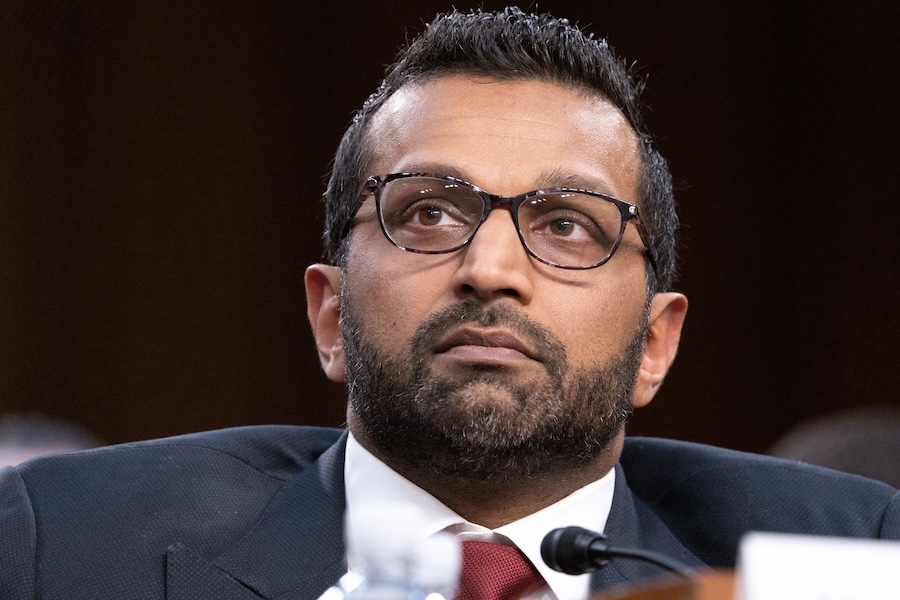
One of FBI Director Kash Patel’s top deputies is abruptly leaving the bureau, creating another opening at the highest levels of an agency already undergoing major organizational changes.
Andrew Bailey, the former Missouri attorney general who has served as one of the FBI’s co-deputy directors, announced Monday that he is stepping down after roughly a year at the bureau and returning home to his family in Missouri.
His final day will be Friday, Oct. 2.
“With great pride in what we have accomplished, I am announcing that I am stepping down to return to my family in Missouri,” Bailey said.
Bailey joined the FBI in 2025 after leaving the Missouri attorney general’s office and became part of an unusual leadership structure under Patel, serving alongside another co-deputy director.
His departure comes as Patel continues implementing major personnel and organizational changes at the FBI amid longstanding political disputes over the bureau and allegations of political bias in federal law enforcement.
Bailey, a Republican who previously served as Missouri’s top law enforcement official, has been a vocal supporter of Patel’s efforts to reshape the agency.
And despite his sudden departure, Bailey made clear that he continues to support Patel and the direction of the bureau.
“I am confident Director Patel will continue to reform the FBI, combat violent crime, defend the homeland, ensure strong organizational accountability, and restore public trust in this institution of excellence,” he added.
Bailey also thanked President Donald Trump, Attorney General Todd Blanche and Patel for giving him the opportunity to serve.
During his tenure, Bailey became a visible member of the FBI’s leadership team, appearing alongside federal and state officials during law enforcement operations and promoting the bureau’s emphasis on combating violent crime.
He also participated in major investigations and enforcement initiatives as Patel’s leadership team sought to redirect bureau resources and address concerns among conservatives who had become deeply skeptical of the FBI.
The bureau has undergone extensive personnel and organizational changes since Patel became director in February 2025.
Patel has argued that the FBI needs to move away from what he describes as politicized enforcement and refocus the bureau on traditional law enforcement priorities, including violent crime, counterterrorism and threats to national security.
Those efforts have made Patel’s tenure closely watched in Washington as the Trump administration pursues broader changes across the federal government.
Bailey’s resignation now creates another vacancy near the top of the FBI less than two years into Patel’s tenure.
But Bailey said his decision was personal.
According to his public announcement, he is leaving Washington to return to Missouri and spend more time with his family.
Nothing in Bailey’s announcement indicated that he had been forced from his position or that his departure resulted from a dispute with Patel.
Instead, Bailey used his exit announcement to praise the FBI’s work during his tenure and publicly reaffirm his confidence in Patel.
His departure nevertheless removes a prominent member of Patel’s leadership team at a consequential moment for the bureau.
With Bailey preparing to leave Washington on Friday, Patel will now move forward without one of the senior officials who helped carry out the FBI overhaul during its first year under his leadership.

Fox News is bringing one of former New York Gov. Andrew Cuomo’s most prominent former aides onto its platform — a move that immediately triggered a furious response from one of the network’s own former personalities.
Melissa DeRosa, Cuomo’s longtime top lieutenant and former secretary to the governor, has been hired as a Fox News contributor and will appear on the network’s new weekly podcast, “The Girls.”
DeRosa will make her debut when the program premieres Oct. 1, Fox News Media announced Monday.
But the announcement quickly reopened one of the most bitter controversies surrounding Cuomo’s administration: New York’s handling and reporting of nursing home deaths during the COVID-19 pandemic.
Former Fox News meteorologist Janice Dean blasted the decision.
Dean’s mother-in-law and father-in-law died of COVID-19 in 2020 after living in New York long-term care facilities. Their deaths turned Dean into an outspoken critic of Cuomo and his administration as she pushed for answers about the state’s nursing home policies.
Following news of DeRosa’s Fox role, Dean unloaded.
“Melissa DeRosa helped smear the women who came forward about Andrew Cuomo’s harassment, and played a hand in undercounting nursing home deaths during COVID. Also tried to silence my advocacy.”
DeRosa served as secretary to the New York governor, becoming the first woman to hold the powerful position.
She resigned in August 2021 as sexual harassment allegations engulfed Cuomo’s administration.
But DeRosa had already become a central figure in the controversy surrounding the Cuomo administration’s handling of nursing home death information.
Months before her resignation, DeRosa acknowledged during a private call with Democratic state lawmakers that the administration had withheld nursing home death data while facing concerns about a possible investigation by President Donald Trump’s Justice Department.
The February 2021 disclosure intensified scrutiny over New York’s accounting of COVID-19 deaths among nursing home residents.
At the time, the state’s nursing home tally did not include residents who died after being transferred from nursing homes to hospitals, leaving thousands of deaths outside that particular count.
DeRosa later maintained that the administration had placed state lawmakers’ request for the information on hold while it prioritized responding to the federal inquiry.
The controversy did not end there.
A New York State Assembly investigation released in November 2021 concluded that Cuomo had not been fully transparent about nursing home resident deaths.
The investigation also concluded that Cuomo sexually harassed women and used state resources in connection with the production and promotion of his pandemic memoir.
Now DeRosa is returning to the political-media spotlight through Fox News.
She will appear on “The Girls,” a new weekly podcast featuring a rotating group of female co-hosts discussing politics, careers, family life and pop culture.
The premiere will also feature Fox personalities Rachel Campos-Duffy, Harris Faulkner and Kat Timpf.
New episodes are scheduled to be released Thursdays on YouTube, Spotify and Apple Podcasts.
The launch will also bring former ESPN personality Sam Ponder back into the spotlight following her 2024 departure from the sports network.
Ponder, the former host of “Sunday NFL Countdown,” will join DeRosa and the Fox personalities for the premiere episode.
But it is DeRosa’s addition that has already generated controversy before the first episode even airs.
For Dean, the issue is deeply personal.
She spent years publicly challenging Cuomo’s administration over its handling of nursing homes after losing two family members during the pandemic.
Now the former governor’s onetime top aide is joining the same media organization where Dean became one of the most visible critics of that administration.
And Dean made clear exactly what she thinks of the decision.

Kristi Noem Shares Huge Relationship News After Months Of Speculation

BREAKING: FBI Rocked By Sudden Shocking Resignation

Fox News Under Fire After Hiring Notorious Democrat; Ex-Host Explodes

Fireworks Erupt On Capitol Hill After 52-45 Vote For Trump!

NEW: Justice Alito Abruptly Reverses Course In Key SCOTUS Case

National Emergency Declared — Trump Called In

‘The Five’ Gets Emotional As Greg Gutfeld Announces Tragic News

Joe Biden’s Daughter Just Dropped Massive Public Bombshell On Her Dad

Removed From the Country — Ilhan Omar Hit With Horrid News

Obama Calls It QUITS After Wild Video Goes Viral

Get Ready — Mike Pence Makes Stunning 2028 Announcement

Schumer Loses! Court Sides With Trump In Historic Move
-
 Economy6 months ago
Vance Leaves Meeting, Looks Straight Into Camera, Announces Stunning Arrest
-
 Economy6 months ago
Adam Schiff Facing 30 Years In Prison After Bank Records Leak
-

 Economy6 months ago
Supreme Curt Sides With Trump — He Can Remove The All
-
 Culture3 months ago
Michelle Obama Drops Nasty Bomb About ‘Useless’ Daughter
-
 Economy6 months ago
All Hell Breaks Loose On Fox When Jesse Watters Asks Fetterman One Question
-

 Economy4 months ago
Prayers Pour In After Fox Host Dies: ‘Senseless Murder’
-

 Latest3 months ago
Fox News Stuns With Announcement About 5 Fired Hosts
-

 Border & Security2 months ago
Top Trump Admin And Wife Found Dead — Chilling Update Just Released