
Culture
DOJ Drops Hammer On MLB — Pride Night Backfires BIG Time

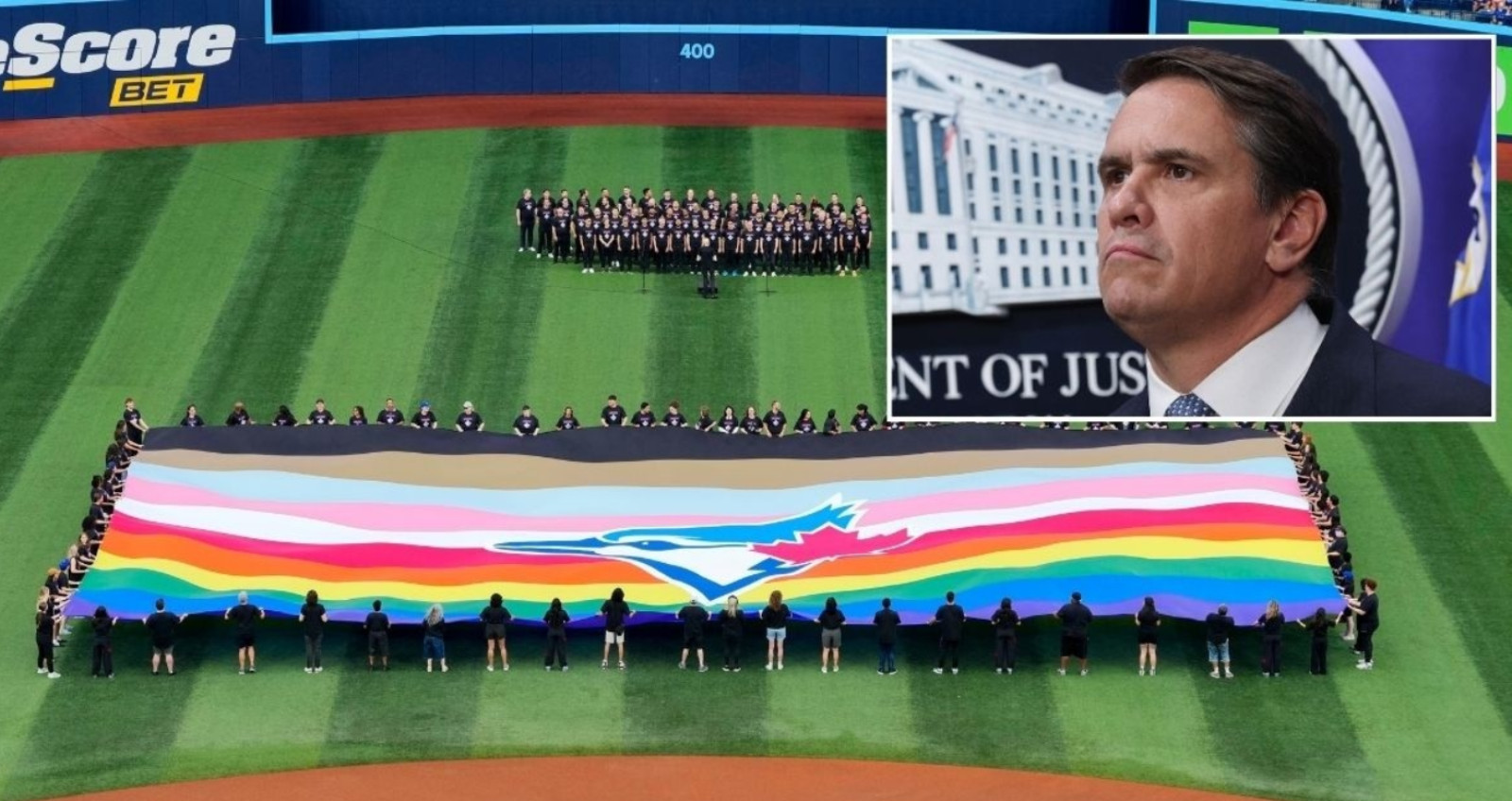
Florida Attorney General James Uthmeier has launched a formal investigation into Major League Baseball, escalating a growing controversy over whether the league selectively enforces its policies against Christian players while embracing other forms of social and political expression.
The investigation centers on three San Francisco Giants pitchers who were reportedly warned by Major League Baseball after displaying Bible verse references on their caps during the team’s annual Pride Night celebration earlier this month.

What began as a dispute over uniform policy has quickly evolved into a broader national debate about religious liberty, equal treatment, and whether Christian athletes are being held to a different standard than other players who use their platform to express personal beliefs.
On Friday, Uthmeier announced that his office had issued both a formal investigative letter and a subpoena to MLB Commissioner Rob Manfred.
The Florida attorney general said his office is examining whether the league engaged in unlawful religious discrimination by enforcing uniform policies differently depending on the viewpoint being expressed.
“Major League Baseball claims it does not tolerate discrimination based on religion, yet its actions tell a different story,” Uthmeier said in a statement.
“If MLB applauds ideological messages it prefers while reprimanding expressions of Christian faith, that is not neutral rule enforcement—it is religious discrimination that cannot stand in Florida,” he added.

The controversy began when Giants starting pitcher Landen Roupp displayed “Gen 9:12-16” on his cap during Pride Night. The passage refers to the biblical account of God’s covenant with humanity and the rainbow as a symbol of that promise.
Fellow Giants pitchers JT Brubaker and Ryan Walker also displayed Bible verse references during the event.
According to Uthmeier, MLB later warned the players that they had violated league policies governing alterations to official uniforms and equipment.
League officials have maintained that the warnings were unrelated to the religious nature of the messages and were simply routine enforcement of existing rules.
Critics, however, argue that the league’s history tells a different story.
In a letter sent to MLB, Uthmeier cited several instances in which players were permitted to display personal, political, or social messages without disciplinary action.
Among the examples highlighted was a Cincinnati Reds player who wrote a tribute to victims of a local mass shooting on his cap in 2019.
The attorney general also pointed to MLB’s decision during the 2020 season to allow players to wear Black Lives Matter patches and display social justice messages on uniforms and equipment. In some cases, political slogans were prominently featured on pitchers’ mounds and other locations throughout stadiums.
Players have also previously written messages on caps, cleats, wristbands, and bat knobs without apparent league intervention.
“MLB appears to applaud — even change its rules for — the ideological beliefs it prefers, but targets players who express religious views the League doesn’t like,” Uthmeier wrote.
MLB insists the enforcement action was content-neutral.
But Uthmeier remains unconvinced.
“Anyone who watches baseball knows these warnings are anything but routine,” he said.
The investigation is being conducted under both the Florida Civil Rights Act and the Florida Deceptive and Unfair Trade Practices Act.
As part of the subpoena, MLB has been ordered to provide extensive documentation by July 23. Requested records include uniform policy enforcement histories, internal communications regarding the June 2026 warnings, policies governing religious and political expression, and information related to Pride Night participation requirements.
The subpoena also seeks records regarding whether players have ever faced consequences for declining to participate in league-sponsored themed events.
The issue has now expanded beyond Florida.
Federal officials are also examining the controversy after the Department of Justice referred the matter to the Equal Employment Opportunity Commission for review.
Assistant Attorney General Harmeet Dhillon argued that federal civil rights laws protect religious expression in the workplace and require employers to reasonably accommodate employees’ sincerely held religious beliefs.
“The Civil Rights Act prohibits MLB and its franchises from unreasonably burdening the rights of players with religious objections to serving as the League’s vehicle for pro-Pride messages,” Dhillon wrote.
She further noted that the Trump administration remains committed to protecting Americans from religious discrimination and ensuring that constitutional freedoms are applied equally regardless of political or cultural viewpoints.
The controversy comes at a time when concerns about religious liberty have become increasingly prominent among conservatives. Many argue that corporations, sports leagues, universities, and other institutions readily celebrate some forms of expression while treating traditional religious viewpoints differently.
Supporters of the Giants pitchers maintain that the issue is not opposition to Pride events or LGBTQ individuals. Rather, they argue that if players are encouraged to express personal beliefs and identities, Christian players should enjoy the same freedom without fear of punishment.
As investigations continue at both the state and federal level, Major League Baseball now finds itself at the center of a debate that extends far beyond sports. What began as a few Bible verses written on baseball caps has evolved into a larger national conversation about religious freedom, equal treatment, and whether America’s institutions are applying their rules fairly to everyone.
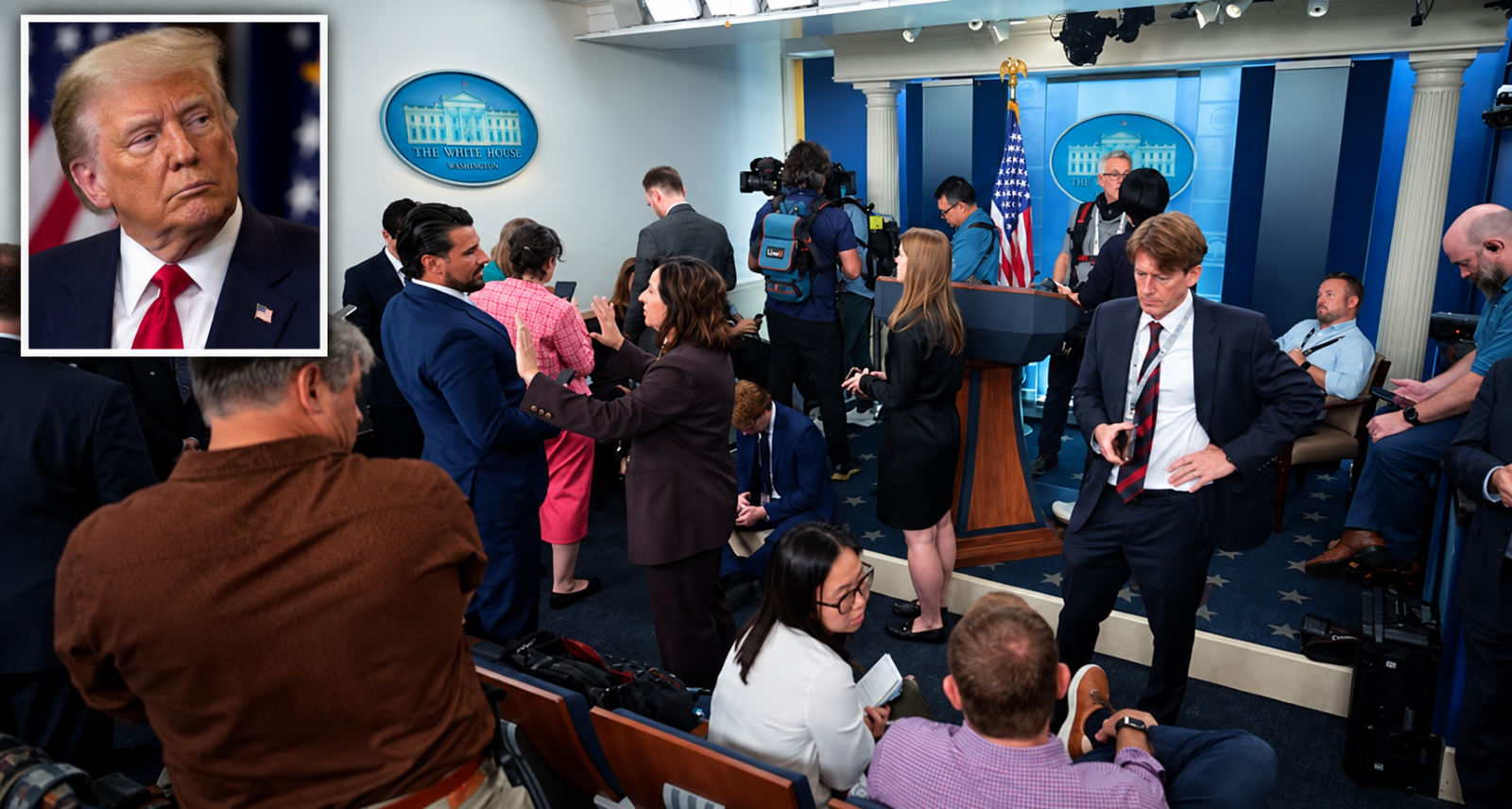
President Donald Trump’s escalating battle with the national media has exploded into a full-blown legal showdown after his administration barred CNN, MS NOW and Politico reporters from the White House — a move prominent Republicans are now publicly defending.
Trump announced Friday that the three organizations would no longer be permitted inside the White House, accusing them of repeatedly publishing what he described as “fake news” and unfair coverage of his administration.
By Saturday, the threat had become reality.
Reporters from all three organizations were denied entry to the White House, with some saying their credentials had been deactivated or confiscated.
Now Republicans are lining up behind the president, arguing that news organizations do not have an automatic right to coveted access inside the White House complex.
House Majority Leader Steve Scalise, R-La., defended Trump during an appearance Sunday on ABC’s “This Week.”
“There are literally thousands of media outlets in America,” Scalise said.
Scalise pointed to the obvious physical limitations of the White House press operation, arguing that only a fraction of America’s news organizations can operate from inside the complex and that the administration has authority over who receives that access.
Sen. Bernie Moreno, R-Ohio, also defended Trump’s decision, pointing to what he described as years of inaccurate and unfair coverage of the president.
Other Republicans have made a similar argument: barring reporters from physically entering the White House does not prevent CNN, MS NOW or Politico from continuing to report on the Trump administration.
And Trump has indicated the crackdown may not end with those three organizations.
“Other Fake News Media Outlets to follow,” Trump wrote.
Asked about other organizations that could potentially lose access, Trump criticized The New York Times and The Washington Post but stopped short of announcing additional bans.
The media organizations targeted by Trump aren’t backing down.
CNN, MS NOW and Politico filed a federal lawsuit Monday seeking restoration of their White House access, arguing that the administration retaliated against them because it objected to their journalism.
The organizations are seeking a temporary restraining order that could quickly force the constitutional fight before a federal judge.
“This morning, we notified the government that we are filing a lawsuit today to protect our First Amendment rights and defend the principle that the government does not decide what the press reports or publishes,” the organizations said in a joint statement.
The White House Correspondents’ Association has also pushed back.
WHCA President Jacqui Heinrich, a Fox News anchor, called on the administration to restore the organizations’ access, arguing that allowing the government to exclude journalists because officials object to their reporting could establish a precedent affecting other news organizations.
And the criticism isn’t coming exclusively from Trump’s political opponents.
Some prominent conservatives have openly broken with the president over the decision.
Former White House press secretary and Fox News contributor Ari Fleischer argued that conservatives should confront media organizations they believe are biased rather than remove their access.
“Argue and defeat them,” Fleischer said. “Don’t ban them. Or one day they’ll ban us.”
Fox News contributor and legal scholar Jonathan Turley similarly called excluding disfavored media organizations from the White House a “terrible precedent and practice.”
The showdown is the latest front in Trump’s continuing fight with the national press.
Early in Trump’s second term, the White House took control over decisions involving which journalists participate in the presidential press pool — a responsibility traditionally handled by the White House Correspondents’ Association.
The administration also previously restricted Associated Press access following a dispute over the organization’s decision to continue using the name Gulf of Mexico while acknowledging Trump’s executive order renaming it the Gulf of America.
That dispute also landed in federal court.
And there is significant history surrounding fights over White House press credentials.
During Trump’s first term in 2018, his administration revoked CNN correspondent Jim Acosta’s press pass following a contentious exchange with the president.
CNN sued.
A federal judge subsequently ordered the White House to temporarily restore Acosta’s credentials while citing due-process concerns.
An even older case could also loom large over the current fight.
In the 1977 case *Sherrill v. Knight*, a federal appeals court held that once the White House establishes press facilities, decisions involving credentials are subject to constitutional protections and cannot be made arbitrarily.
That precedent could become a major issue as CNN, MS NOW and Politico attempt to convince a federal court that Trump’s latest restrictions crossed a constitutional line.
For Trump and his Republican defenders, the argument centers on whether any particular media organization is entitled to special physical access to the White House.
For the three news organizations, the issue is fundamentally different: they contend the government cannot selectively revoke access in retaliation for reporting it dislikes.
Now that fight is moving from the White House briefing room to a federal courtroom — where a judge could determine just how far a president can go when deciding which journalists are allowed through the gates.
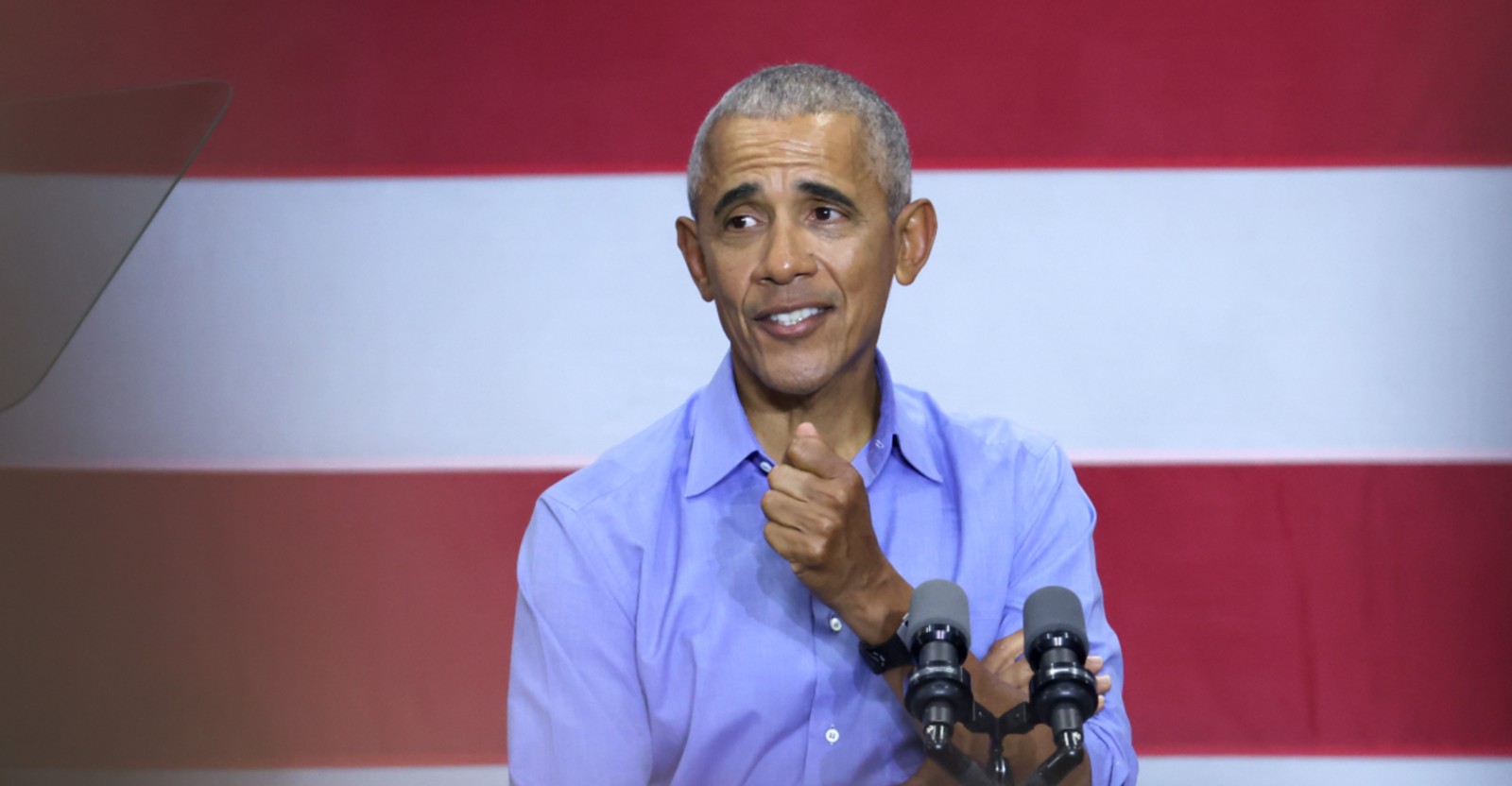
Former President Barack Obama is making another major move in the media world, returning to podcasting with a new series focused on literature as he and former First Lady Michelle Obama continue expanding the media operation they built after leaving the White House.
Obama announced Monday that he will host a six-episode podcast titled **“A Great Book With Barack Obama,”** with the series set to debut this month.
The podcast will explore six books that Obama says helped shape his views on politics, race, faith and American society, giving the former president another platform to discuss the ideas and cultural issues that have defined much of his public career.
“At a time when fewer people are able to sit down with a book, it’s important to remember the joy and power that can come from reading,” Obama wrote in a social media post announcing the project.
“And some books don’t just tell a story — they change the way we see the world,” he added.
Each episode will center on a different book, with Obama and his guests discussing why the works continue to resonate and what lessons they believe readers can draw from them today.
The six books selected for the series are James Baldwin’s **“The Fire Next Time,”** Toni Morrison’s **“Song of Solomon,”** Cormac McCarthy’s **“All the Pretty Horses,”** Marilynne Robinson’s **“Gilead,”** Robert Penn Warren’s **“All the King’s Men”** and John le Carré’s **“Tinker, Tailor, Soldier, Spy.”**
Obama said the series will also feature conversations with invited guests.
“I invited some friends to explore why these books resonate, how they can shape our understanding of ourselves and each other, and why literature matters now more than ever,” he said.
The subject matter is hardly disconnected from Obama’s years in politics.
Several of the authors on his list wrote extensively about race, political power, morality and American identity — subjects that have also occupied a central place in Obama’s speeches, books and political career.
Obama also had a personal connection with Toni Morrison.
As president, he awarded the Nobel Prize-winning author the Presidential Medal of Freedom in 2012. Following Morrison’s death in 2019, Obama described her as a close friend.
The new podcast will be distributed through Audible and produced in partnership with **Higher Ground**, the media company Barack and Michelle Obama launched in 2018.
It marks yet another expansion of the Obamas’ sizable post-White House media presence.
Higher Ground has already assembled a growing collection of films, documentaries and audio programs. Previous projects include Michelle Obama’s **“The Light Podcast,”** the documentary **“American Factory,”** the Netflix film **“Leave the World Behind”** and **“Rustin,”** the biographical drama centered on civil rights leader Bayard Rustin.
Barack Obama has also remained closely associated with books since leaving the White House in 2017, regularly publishing annual lists highlighting his favorite books, movies and music.
The new podcast takes that tradition significantly further.
Instead of simply publishing a reading list for his millions of followers, Obama will now have an entire episode to discuss each selected work, the ideas contained within it and why he believes those ideas remain relevant.
His selections stretch across decades and genres.
They range from Baldwin’s examination of race in America and Warren’s novel about political power to McCarthy’s Western fiction and le Carré’s Cold War espionage story.
But Obama’s return to the microphone also comes at a politically consequential moment.
The 2026 midterm elections are rapidly approaching, and an enormous financial battle is already underway over control of the United States Senate.
The Senate Leadership Fund, the powerful Republican super PAC aligned with Senate Majority Leader John Thune of South Dakota, says it and its affiliated organizations have raised more than **$500 million** ahead of the 2026 elections.
According to SLF, that represents more money than any previous Senate-focused political effort.
The organization alone has already committed more than **$350 million** to supporting Republican Senate candidates across the country.
Republican groups have spent months assembling a massive financial operation aimed at defending the GOP Senate majority while forcing Democrats to compete across an increasingly expensive electoral map.
SLF is targeting pivotal Senate contests in states including **Alaska, Iowa, Maine, Michigan and North Carolina**, while directing additional resources toward other competitive races.
Republicans are seeking not only to defend their existing majority but potentially add seats.
“Thanks to Leader John Thune and our generous investors, Senate Leadership Fund and its affiliated groups have raised more resources than any other Senate effort in history,” SLF Executive Director Alex Latcham said in a statement to Fox News Digital.
The original report also pointed to financial pressure facing Democrats, noting that the Democratic National Committee used its headquarters building as collateral for a $15 million loan over the summer.
For Republican groups, the fundraising numbers are being presented as evidence that there is no reason to ease up as Election Day approaches.
“However, we cannot slow down as Chuck Schumer and Radical Democrats seek to take our nation back to open borders, rampant crime and crushing inflation,” Latcham added.
Against that backdrop, Obama is once again expanding his public platform.
Nearly a decade after leaving the White House, the former president continues to maintain a prominent presence through books, speeches, political appearances and the growing entertainment operation he and Michelle Obama have built through Higher Ground.
Now, he is adding another microphone.
And with the battle for Congress intensifying ahead of the 2026 midterms, Obama’s latest media venture arrives at a moment when the political fight over the direction of the country is becoming increasingly difficult to ignore.
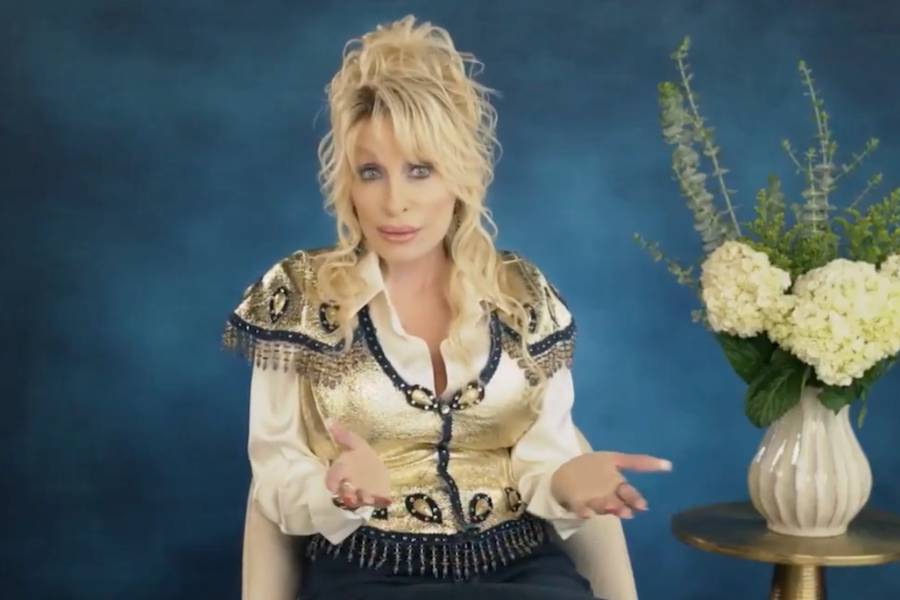
Dolly Parton had one final message for the music world — and it was delivered after her death.
The country music legend appeared on screen Wednesday night during the 2026 Americana Honors & Awards, where she was posthumously honored with the Americana Lifetime Achievement Award.
Parton died Aug. 25 at the age of 80 following what was described as a “brief battle with cancer.”
But before her death, Parton had recorded a video accepting the prestigious honor. When it played before the audience Wednesday night, fans were given one more chance to hear from the woman whose unmistakable voice, personality and songwriting helped define generations of American music.
And in classic Dolly fashion, she opened simply.
“Well, hey, it’s Dolly. I’m honored to be receiving a Lifetime Achievement Award from the Americana Music Association.”
Parton then looked back at where it all began — in Tennessee’s Smoky Mountains, surrounded by the roots music that would eventually help propel her from humble beginnings to worldwide fame.
“I mean, roots music, or what is now called Americana music, is what I grew up playing back in the Smoky Mountains,” Parton continued. “It’s that same music that drew me back to East Tennessee in 1997 to write and record my album, Hungry Again. And that project really opened the door to a series of bluegrass and acoustic albums that changed the course of my career in so many ways.”
Those projects brought Parton back to the acoustic sounds of her childhood while introducing her music to another generation of listeners.
Looking back, Parton recognized just how important that chapter had become.
“Now, new fans discovered these albums, new Americana music communities embraced them, and now looking back at it all, I see this era of my career as a musical renaissance of sorts,” Parton said. “I want to thank everyone at the AMA for recognizing me with this award. It’s a great honor truly, and just know that I will always love you.”
Those final words carried unmistakable weight.
“I will always love you” wasn’t merely a farewell. It was also a poignant reference to one of the most famous songs Parton ever wrote — turning the closing moments of her prerecorded acceptance into an especially emotional goodbye.
The tribute didn’t end there.
Dolly Parton posthumously accepts award in pre-recorded Lifetime Achievement speech 🤍 pic.twitter.com/dRzCHuzc0Q
— TMZ (@TMZ) September 17, 2026
Longtime friend and fellow country music icon Emmylou Harris took the stage to remember Parton’s extraordinary journey from a young Tennessee singer with enormous ambitions to one of the most recognizable entertainers in the world.
Harris recalled the pivotal moment in 1967 when Parton joined Porter Wagoner’s television program, an opportunity that helped introduce her to a national audience.
But Harris made clear that Parton was never destined to remain in someone else’s shadow.
“In 1967, Dolly got a good start on her big dream when she landed a gig as the girl singer with Porter Wagoner. Their duets were a hit on the show and on the charts, but Dolly was nobody’s sidekick. She wanted more and she deserved more, and she set out to get it always, always on her own terms,” Harris, 79, said. “And we all know what happened when Dolly set her sights on something.”
What happened was a career that exploded far beyond the boundaries of country music.
Parton became a crossover pop success, a movie star and an internationally recognized entertainer while maintaining the East Tennessee identity that remained central to her public image and music.
Her songwriting alone established an enormous legacy. But Harris reminded the audience that Parton’s talents went far beyond the songs she wrote.
“She was one of our all-time greatest songwriters, but she shined just as brightly on stage,” Harris shared. “She lit up the TV screen and then she, she lit up the movie screen.”
Then there was the personality.
Parton’s ability to move an audience with a song and, moments later, make that same audience laugh became one of the trademarks of her decades in the spotlight.
“Her stunningly beautiful, pure mountain voice could make us cry and then crack us up with a well-aimed, sometimes body joke,” Harris said. “There was nothing Dolly couldn’t do, and so she did it.”
The evening’s tribute ultimately returned to the music.
Brandi Carlile and I’m with Her performed Parton’s “Coat of Many Colors,” one of the songs most closely associated with her upbringing and remarkable journey from the Smoky Mountains to international superstardom.
Parton was honored alongside other recipients at Wednesday’s ceremony, including Led Zeppelin frontman Robert Plant.
But it was Parton’s own prerecorded words that provided one of the night’s most poignant moments.
A final appearance. A final thank-you.
And an ending that could hardly have been more fitting:
“Just know that I will always love you.”

FINALLY! Americans Get Some MUCH Needed Good News

Trump Bans Lib Outlets – You Won’t Believe What Happened Right After!

Joe Biden’s Daughter Just Dropped Massive Public Bombshell On Her Dad

Democrat Congressman Stuns Party, Endorses GOP Colleague

Trumps Drops Brilliant Midterm Plan That Dems Feared The Most

He’s ALL In — Barack Obama Stuns Nation With Sudden Announcement

‘The Five’ Gets Emotional As Greg Gutfeld Announces Tragic News

‘EFFECTIVE IMMEDIATELY’ — Barack Obama Gets Devastating News

Everyday Americans Being Treated As Criminals — Including You, Right Now

Schumer Loses! Court Sides With Trump In Historic Move

Removed From the Country — Ilhan Omar Hit With Horrid News

HUGE: 9/11 Widow Goes Rogue, Makes Damning Call Out During Ground Zero Ceremony
-
 Economy5 months ago
Vance Leaves Meeting, Looks Straight Into Camera, Announces Stunning Arrest
-
 Economy5 months ago
Adam Schiff Facing 30 Years In Prison After Bank Records Leak
-
 Economy5 months ago
Supreme Curt Sides With Trump — He Can Remove The All
-
 Culture3 months ago
Michelle Obama Drops Nasty Bomb About ‘Useless’ Daughter
-
 Economy5 months ago
All Hell Breaks Loose On Fox When Jesse Watters Asks Fetterman One Question
-
 Economy3 months ago
Prayers Pour In After Fox Host Dies: ‘Senseless Murder’
-
 Latest3 months ago
Fox News Stuns With Announcement About 5 Fired Hosts
-
 Border & Security2 months ago
Top Trump Admin And Wife Found Dead — Chilling Update Just Released