
Latest
No tips, worse service? Restaurant owners warn trend is ‘degrading’ dining experience

As more restaurants experiment with eliminating tips, the idea of a no-tip dining model is gaining traction — but not without resistance from some industry professionals who fear it could drag down service.
The shift is a response to growing frustration among diners. Hidden fees, service charges and inflated gratuities have left many customers feeling blindsided when the check arrives.
For some operators, a no-tip system offers a clearer alternative.
AMERICANS ARE FED UP WITH TIPPING CULTURE, YET MANY STILL SHELL OUT 20% AT RESTAURANTS
“There are two categories of reasons — one for the guest experience, one for the staff,” Joseph Magidow, chef and owner of La Cigale in San Francisco, told Fox News Digital.
His restaurant, which opened last year, has adopted a no-tip model.
“Diners have broadly lost patience with mandatory fees and surcharges being added to their bill at the end of the meal,” Magidow said.
Instead, Magidow said his restaurant builds labor costs directly into menu prices, creating what he describes as a more transparent experience.
AMERICA’S BIGGEST TIPPERS REVEALED: THE 5 MOST AND LEAST ‘GENEROUS’ STATES
“By offering a fully inclusive pricing model, our guests do not get an unpleasant surprise after their experience dining with us,” he said.
The model also aims to address income instability among workers.
“For staff, the tipped model creates a raft of unpredictability and perverse incentives,” Magidow said.
Now, “by paying them a flat hourly wage — the cost of which is baked into our prices — they are no longer showing up to work every day not knowing whether they will earn enough to make rent this month.”
But other restaurant owners say that vision clashes with economic reality.
Derek Simms, who operates multiple restaurants in Frisco, Texas, said he believes the traditional tipping system works — particularly for servers, who can average $40 to $60 per hour.
BARTENDERS SAY ONE COMMON REQUEST COSTS THEM TIPS — AND SOME CUSTOMERS HAVE NO IDEA
By contrast, kitchen staff typically earn far less, he added — complicating efforts to restructure pay across the board.
“The cooks don’t have access to the tips,” Simms said, adding that it’s a “misleading narrative” that servers are “getting paid less, because they’re not.”
Simms, who worked in California before moving to Texas, said eliminating tips would force restaurants to raise wages in a way that most business models can’t sustain.
“If you hire everybody at $15 or $20 an hour … the restaurant loses all their profit and will eventually close down,” Simms said.
FORMER NFL STAR SPARKS VIRAL DEBATE OVER TIPPING PRACTICES AT SELF-SERVICE RESTAURANTS
To stay afloat, restaurants would be forced to either cut staff or lower service standards, he said.
Simms said he expects “service levels to go way down” in California, where La Cigale and other restaurants are using a no-tip model.
Michelle Korsmo, president and CEO of the National Restaurant Association in Washington, D.C., said research shows that tipped servers earn a median of $27 per hour, “and that earning potential is a major reason people choose careers in restaurants.”
CLICK HERE TO SIGN UP FOR OUR LIFESTYLE NEWSLETTER
She previously told Fox News Digital that “for years, full-service restaurant operators and their employees have worked together to preserve tipping because it works for servers. It supports higher earnings for workers and helps ensure restaurants remain places where people can build careers that fit their lives and long-term goals.”
Beyond the financial concerns, some owners worry about what happens to the culture of hospitality itself.
CLICK HERE FOR MORE LIFESTYLE STORIES
“There’s no incentive for the servers to be attentive and give extra-good service,” Vicki Parmelee, owner of Jumby Bay Island Grill in Jupiter, Florida, told Fox News Digital.
“And I think they might lose a little bit of motivation there.”
Simms agreed with that.
“I like the tip system,” he said. “I think it rewards people. It keeps people hustling for you.”
Taking away the enticement of working for tips would lead to “degrading service levels,” Simms warned.
Parmelee, like Simms, is not convinced the trade-off is worth it.
TEST YOURSELF WITH OUR LATEST LIFESTYLE QUIZ
“I don’t particularly care for that — and I don’t think that the servers do either,” Parmelee said. “I don’t know. Some restaurants are trying that out. I’m not interested in doing that here.”

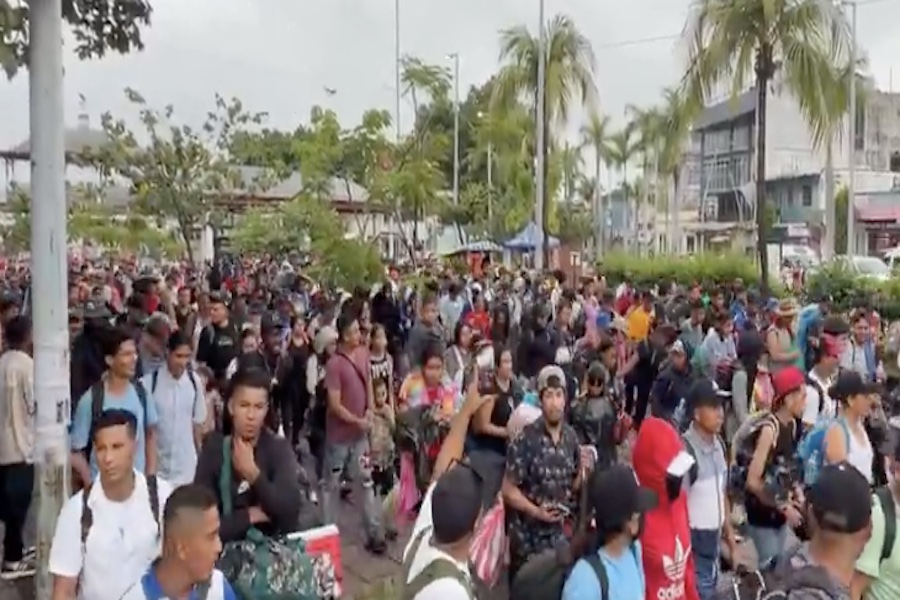
Hundreds of migrants have begun moving north through Mexico in a newly organized caravan, with some participants reportedly expressing hope that Democrats will win the upcoming U.S. midterm elections and eventually create a more favorable environment for entering the United States.
Veteran immigration reporter Julio Rosas documented the caravan’s departure from southern Mexico earlier this week, reporting that some migrants are closely watching American politics as they consider their prospects of reaching the U.S. border.
“Another large migrant caravan is leaving Mexico’s southern border right now in an attempt to reach the United States. Some members of the caravan, which is mostly comprised of Central Americans, told me they are hopeful Democrats win the midterms,” Rosas posted on X.
The group departed Tapachula, Chiapas, on October 20 after gathering for several days near the city’s Parque Bicentenario.
Mexican news outlets reported that approximately 400 to more than 600 migrants participated in the departure, with estimates varying among local reports.
The caravan consists primarily of migrants from Honduras, El Salvador and Guatemala, along with smaller numbers from other countries.
Participants began traveling north along Mexico’s coastal highway, continuing a journey that some hope will eventually take them to the United States.
The caravan has been associated with the name “Fe y Esperanza #2,” meaning Faith and Hope, and the slogan “Emigrar no es delito,” or Migrating is not a crime.
Many participants reportedly entered Mexico irregularly before assembling in Tapachula.
While some members have expressed intentions of eventually reaching the American border, others have indicated they may seek employment or opportunities in central or northern Mexico.
The distinction is significant because participation in the caravan does not necessarily mean every migrant intends to enter the United States.
Nevertheless, the political comments reported by Rosas have attracted attention as the November 3 midterm elections approach.
During an appearance on Fox News’ *Fox & Friends First*, Rosas discussed why some caravan participants appear to be following the American electoral landscape.
“I’m going to ask the most captain obvious question in the history of all questions: Why, Julio, why do they want the Democrats to win?” one of the hosts asked.
Rosas explained that some migrants believe a Democratic victory could eventually produce changes in U.S. immigration enforcement and border policies.
“Well, they’re seeing the promises that the Democrats are making, coming up for the midterms. They are saying what they want to do should they take control of the Congress. Also, you have to keep in mind that the migrants here as other migrant caravans within the past year, they are playing the long game because they know or they feel that if Democrats sweep the midterms, then that momentum could potentially continue to 2028, which would then make it easier for the border to be open, basically what we saw in 2021 when Joe Biden took over,” Rosas responded.
His comments suggest that some migrants are considering not only the immediate election results but also the possibility of future political changes in Washington.
However, those expectations reflect the views attributed to individual migrants and Rosas’ interpretation of their motivations, not any established guarantee that immigration policies would change following the elections.
Control of Congress alone would not automatically eliminate existing immigration laws or guarantee entry into the United States.
Rosas also emphasized that the latest caravan is not an isolated development.
Similar groups have formed throughout 2026, including caravans that departed southern Mexico earlier in the year but ultimately failed to reach the U.S. border.
“Yeah, absolutely. Again, this is not just because of the midterms. People see the momentum, in their eyes that is in favor for them and what they want. So, even though people are saying this is simply a midterm scare tactic, other caravans are being organized past the midterms,” Rosas added.
His remarks highlight the continuing efforts of migrant groups to travel north despite increased enforcement measures and the difficulties associated with crossing Mexico.
An earlier caravan that formed in September also used the “Fe y Esperanza” name.
That group was reportedly partially dispersed by Mexican immigration authorities near the border between Chiapas and Oaxaca.
Mexican news outlets have documented repeated interventions by immigration officials seeking to prevent large migrant groups from advancing beyond the country’s southern states.
Those enforcement efforts have complicated attempts by caravan organizers to maintain large groups throughout the lengthy journey north.
Migrants traveling from Tapachula face hundreds of miles of difficult terrain, transportation challenges and potential encounters with Mexican immigration authorities before approaching the U.S. border.
As a result, the formation of a caravan does not necessarily mean its members will successfully reach American territory.
The latest movement nevertheless comes amid continuing debate over U.S. immigration policy, border security and the political consequences of the upcoming midterm elections.
President Donald Trump’s administration has maintained a restrictive approach to unauthorized border crossings, emphasizing enforcement and deterrence.
The Department of Homeland Security previously issued a categorical warning in response to reports of migrant caravans attempting to reach the United States.
“There is absolutely ZERO chance this caravan will be allowed into the United States. We will protect our borders,” the agency said at the time.
The statement underscored the administration’s position that migrants traveling in organized caravans should not expect to gain entry simply by reaching the border.
Meanwhile, Rosas’ reporting suggests that at least some migrants are viewing the upcoming elections as a possible turning point in the longer-term immigration debate.
Whether those political expectations have any practical effect on the caravan’s journey remains uncertain.
Mexican authorities could intervene before the group approaches the United States, as they have with previous caravans.
Even if participants reach the border, they would still face applicable U.S. immigration laws and enforcement procedures.
For now, the caravan’s departure has brought renewed attention to the relationship between migration patterns, perceptions of American immigration policy and the approaching elections.
Hundreds of migrants are once again traveling north through Mexico, and according to Rosas, some are openly hoping that a change in the balance of political power in Washington could eventually improve their chances of entering the United States.
Whether the caravan reaches the American border — and whether the political developments its members are watching unfold as they anticipate — remains to be seen.
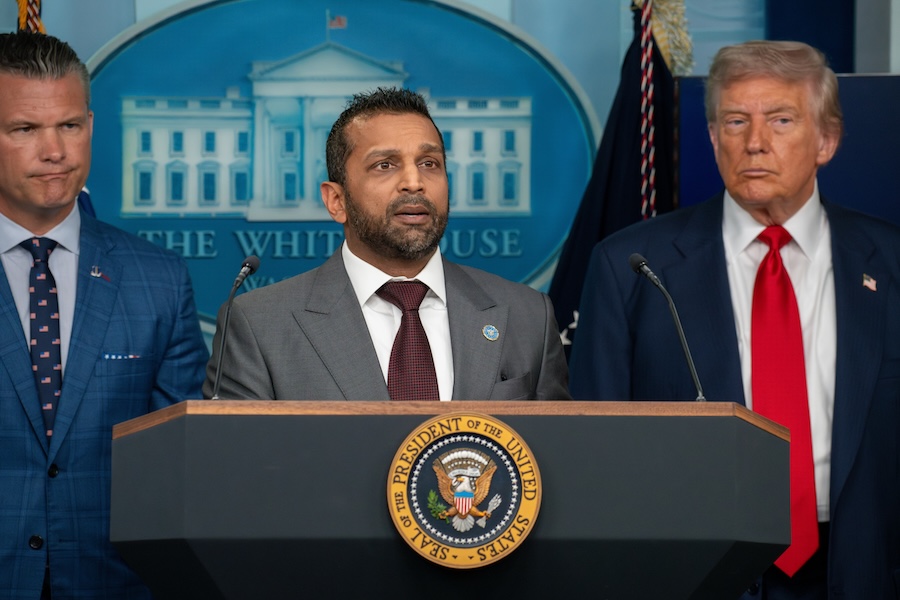
Two former senior FBI officials surrendered to federal authorities Friday after the Justice Department accused them of lying to Congress about their knowledge of investigations involving Hunter Biden and the controversy surrounding his laptop.
Nikki Cole Floris and Bradley Benavides, both former members of the FBI’s now-disbanded Foreign Influence Task Force, face criminal charges stemming from testimony they provided to congressional investigators in 2023.
Federal prosecutors allege that both officials made false statements about their knowledge of matters involving former President Joe Biden’s son, setting the stage for a high-profile legal battle over the FBI’s handling of politically sensitive investigations.
U.S. Attorney Jeanine Pirro announced the charges and delivered a forceful warning about the consequences of providing false testimony to Congress.
“Lying to Congress by anyone strikes at the heart of our democratic system, but when senior FBI agents lie to Congress believing they are above the law, it’s time to bring the hammer of justice down on them,” Pirro said.
“When senior officials entrusted with safeguarding our nation’s security choose deception over duty, they undermine the very institutions they swore to uphold. Today’s action makes clear that no one is above the law, and we will hold accountable all who obstruct the truth.”
The charges center on statements Floris and Benavides allegedly made while answering congressional questions about the FBI’s activities surrounding the 2020 presidential election.
According to the Justice Department, investigators obtained evidence that prosecutors believe contradicts testimony given by both former officials.
One of the allegations involves Benavides’ account of how he first became aware of the Hunter Biden laptop controversy.
Benavides reportedly told congressional investigators that he initially learned about the matter through Wikipedia.
Federal prosecutors now allege that evidence shows he had previously discussed the laptop story with other FBI personnel.
If established in court, those earlier discussions could become central to the government’s argument that Benavides knowingly provided false information to lawmakers.
Floris faces separate but related allegations concerning her interactions with members of the Foreign Influence Task Force.
According to prosecutors, Floris discussed Hunter Biden with task force personnel despite allegedly telling congressional investigators otherwise.
The government contends that the discrepancy between her testimony and the evidence obtained during the investigation supports the criminal charges.
The arrests have renewed attention on the Foreign Influence Task Force, an FBI unit that was involved in addressing foreign interference threats and other sensitive matters during the 2020 election cycle.
The bureau’s handling of information surrounding Hunter Biden’s laptop has remained a subject of political controversy, particularly concerning what federal officials knew and how they communicated with lawmakers and others.
FBI Director Kash Patel publicly confirmed the arrests Friday and identified both defendants as former members of the disbanded task force.
“This morning the FBI arrested two former FBI members of the now dissolved Foreign Influence Task Force, Nikki Floris and Bradley Benavides, both of whom allegedly lied to Congress in 2023 on matters regarding investigations related to the 2020 election,” Patel said.
Patel also raised another allegation concerning remarks reportedly made by one of the former officials during the 2020 election.
“One of these individuals is on record privately claiming to be ‘running a shadow government’ during the 2020 election. As we’ve said repeatedly: weaponization will never be tolerated at this FBI.”
The FBI director did not identify which defendant allegedly made the statement, and the circumstances surrounding the reported remark were not explained in the account.
No evidence presented in the supplied report establishes that either former official operated a shadow government or improperly influenced the election.
Nevertheless, Patel’s remarks signal the seriousness with which current FBI leadership is treating the allegations.
The case also arrives amid renewed scrutiny of the bureau’s conduct during politically sensitive investigations, including its handling of matters involving the Biden family.
For federal prosecutors, however, the immediate legal question is narrower: whether Floris and Benavides knowingly made materially false statements during congressional proceedings.
The government will have to establish those elements through admissible evidence in court.
Floris’ legal team responded sharply to the charges, rejecting the allegations and accusing the Justice Department of pursuing a politically motivated prosecution shortly before the midterm elections.
“Nikki Floris is a patriot. She served our nation as a dedicated FBI intelligence officer for nearly 20 years. Yet today, the DOJ has accused her falsely of a crime on the say-so of politicians, not on the facts. It’s no coincidence the government is filing these nonsense charges now, years later, on the eve of an election,” her attorneys said.
The defense’s statement sets up a direct confrontation with federal prosecutors over the evidence supporting the charges and the circumstances surrounding the investigation.
Floris’ attorneys maintain that she did not commit a crime and suggest that the timing of the prosecution raises questions about the government’s motives.
Prosecutors, meanwhile, allege that the case concerns false testimony given to Congress, regardless of the defendants’ former positions within the FBI.
The arrests do not establish that either official interfered with the 2020 presidential election, mishandled the Hunter Biden investigation or engaged in any misconduct beyond the specific allegations prosecutors intend to pursue.
Both defendants remain presumed innocent unless proven guilty.
The case is now expected to proceed through the federal court system, where prosecutors will be required to present evidence supporting their allegations and the defendants will have an opportunity to challenge the government’s claims.
For the Justice Department, the prosecution represents a significant test of its allegations that former federal law enforcement officials misled congressional investigators about politically sensitive matters.
For the defendants, it marks the beginning of a potentially consequential legal fight over testimony given years earlier.
At the center of the case is a fundamental question: Did two former FBI officials knowingly conceal what they understood about the Hunter Biden laptop controversy when Congress demanded answers?
Federal prosecutors say the evidence supports criminal charges. The defendants will now have the opportunity to contest those allegations in court.
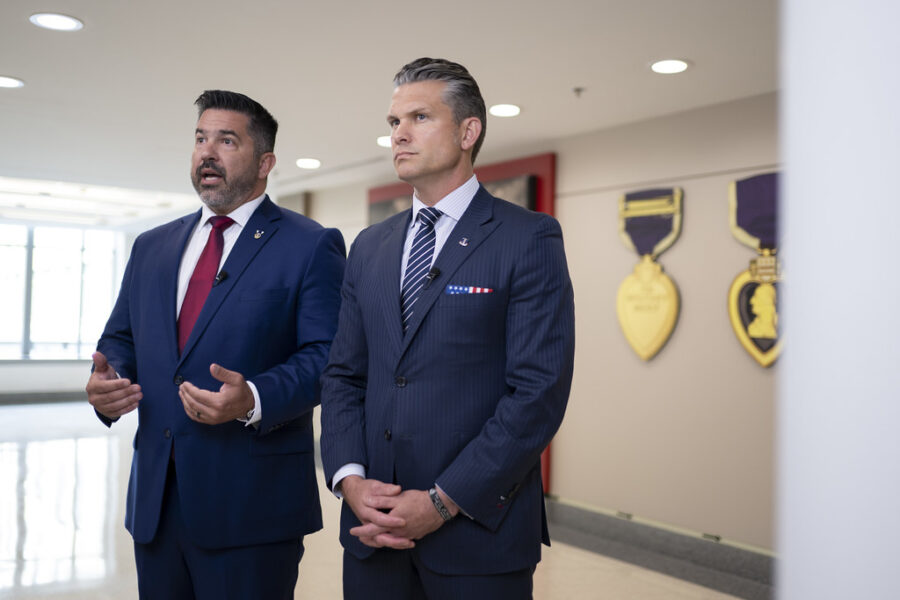
The Pentagon is moving forward with an ambitious new homeland defense initiative designed to keep major U.S. military installations operational for at least 90 days without outside assistance, even if the nation’s electrical grid, communications networks or critical supply chains are disrupted.
Known as FORTRESS America, the initiative would fundamentally change how military bases prepare for emergencies, requiring installations across the continental United States to maintain essential operations independently during a prolonged national crisis.
Defense Secretary Pete Hegseth first announced the initiative September 30, describing an effort to strengthen America’s military readiness against threats that could cripple infrastructure and interrupt the flow of essential supplies.
The program’s full name — Federal Operations for Resilience, Troop Resources, Energy, Supply, and Survivability — reflects its sweeping focus on military self-sufficiency.
At the center of the plan is a straightforward requirement: Major military installations must be capable of maintaining electricity, water, fuel, communications and other mission-critical functions for at least three months without relying on outside support.
The initiative is intended to address vulnerabilities created by decades of dependence on civilian utilities, overseas manufacturing and limited sources of critical military materials.
Pentagon officials have characterized the effort as a national insurance policy, designed to ensure that America’s armed forces can continue operating even if essential infrastructure suffers a catastrophic disruption.
One of the initiative’s most significant components involves making military bases less dependent on the civilian electrical grid.
Under the proposed framework, mission-critical power systems must be independent, hardened against attacks and supported by redundant sources of electricity.
Among the technologies being considered are portable nuclear reactors, large-scale battery storage systems and advanced microgrids capable of disconnecting military installations from surrounding civilian power networks.
Such systems could allow command centers, aircraft operations, communications facilities and logistics hubs to continue functioning during major power outages.
The Pentagon is particularly concerned about disruptions caused by cyberattacks, physical sabotage and other threats targeting the nation’s energy infrastructure.
The new initiative builds upon existing military energy programs, including the Army’s Janus program.
That effort has reportedly awarded contracts totaling up to $2.2 billion for the development and deployment of microreactors at several military installations, with initial deployments planned for the coming years.
But electricity is only one part of the Pentagon’s broader strategy.
FORTRESS America also calls for significantly strengthening military supply chains to ensure that installations have access to essential materials during prolonged emergencies.
Under the initiative, the military would establish strategic reserves of ammunition, fuel, critical minerals, electronics, replacement parts and medical supplies, including blood.
The amount of material stockpiled would be determined by projected wartime consumption rates and the time required to manufacture or replace critical items.
The objective is to prevent military operations from grinding to a halt because a single supplier, transportation route or overseas manufacturing facility becomes unavailable.
To address that vulnerability, the initiative calls for at least two qualified production or supply pathways for critical materials.
Pentagon officials also want to expand domestic manufacturing capabilities for strategically important products, including rare earth elements, specialty metals, semiconductors and military propellants.
These materials are essential to modern weapons systems, communications equipment, aircraft and other advanced defense technologies.
The initiative reflects growing concern that international supply chains could become unreliable during a major conflict, particularly if adversaries disrupt shipping routes or restrict access to critical resources.
Another major component involves preparing American commercial manufacturers to support military production during a national emergency.
The Pentagon plans to incorporate the Civil Reserve Manufacturing Network into its resilience strategy, identifying private factories capable of shifting from civilian production to defense manufacturing when necessary.
Participating facilities would prepare technical specifications, cybersecurity protections, contracting arrangements and production conversion procedures in advance.
The goal is to avoid losing valuable time establishing new manufacturing capabilities after a crisis has already begun.
Regular industrial stress tests and mobilization exercises would help determine whether participating manufacturers could meet military production demands under emergency conditions.
Beyond energy and manufacturing, FORTRESS America also addresses physical security, cybersecurity and the protection of military communications.
The initiative calls for additional safeguards to protect installations against sabotage, digital intrusions and disruptions affecting satellite-based systems.
Communications, navigation and other space-dependent capabilities would receive particular attention because of their importance to modern military operations.
Officials are also examining how to protect essential systems from electronic interference, including jamming and other forms of electromagnetic disruption.
These preparations reflect a changing national security environment in which potential adversaries may attempt to disrupt American military operations without directly attacking conventional military targets.
Pentagon spokesperson Sean Parnell has emphasized the dangers of relying on ordinary civilian infrastructure to sustain national defense operations.
According to the administration’s stated rationale, losing access to electricity or communications could affect everything from military command structures to weapons production, transportation and logistics.
Officials have also warned that America’s geographic separation from many potential adversaries no longer guarantees the same level of protection it once provided.
Cyberwarfare, long-range weapons and attacks against critical infrastructure have introduced vulnerabilities that traditional defense planning must now address.
FORTRESS America is intended to prepare military installations for precisely those scenarios.
Rather than assuming that civilian infrastructure will remain available during a crisis, the Pentagon wants major bases to possess the resources necessary to continue carrying out their missions independently.
The effort could eventually affect approximately 500 military installations across the continental United States.
However, the Pentagon has not finalized a comprehensive implementation schedule or disclosed the total projected cost of bringing all covered installations into compliance.
Officials are prioritizing energy resilience during the initiative’s early stages, with investments expected to unfold over multiple years rather than through a single large appropriation.
Additional requirements involving supply reserves, manufacturing capacity, cybersecurity and infrastructure protection are expected to develop as planning advances.
The scale of the proposed changes highlights the Pentagon’s concern that future conflicts could extend far beyond traditional battlefields.
Military planners are increasingly preparing for scenarios in which American installations face simultaneous threats to power supplies, communications systems and access to essential materials.
FORTRESS America’s central objective is to ensure that even if those systems fail, the U.S. military can continue operating.
For the Pentagon, the 90-day requirement represents a major shift toward preparing domestic military installations to withstand prolonged disruptions without depending on the civilian infrastructure surrounding them.
And as the initiative moves forward, the Defense Department is signaling that protecting America’s ability to fight and sustain military operations at home is becoming an increasingly important part of national defense planning.

Massive Migrant Caravan Converges On U.S. For Democrat Midterm Victory

JUST IN: Pair Of Senior FBI Officials Arrested — It’s Damning

Pentagon Rolls Controversial Out Doomsday Strategy

NEW: Trump Vows To Prosecute His Own STAFF!

Trump Just Activated ‘Level 3’ — It’s Serious

Powerful Dem Senator Arrested 12 Days Before Midterms

Charlie Kirk’s Mother Breaks Her Silence After Erika Kirk’s Public Statement

National Emergency Declared — Trump Called In

Michelle Obama Public Disaster — Photos Explode Across D.C.

Feds Raid Ilhan Omar’s Home — Make Horrifying Discovery

ALERT: Trump Set To Make ‘Special Announcement’ From Oval Office

Fireworks Erupt On Capitol Hill After 52-45 Vote For Trump!
-
 Economy7 months ago
Vance Leaves Meeting, Looks Straight Into Camera, Announces Stunning Arrest
-
 Economy6 months ago
Adam Schiff Facing 30 Years In Prison After Bank Records Leak
-

 Culture4 months ago
Michelle Obama Drops Nasty Bomb About ‘Useless’ Daughter
-
 Economy7 months ago
Supreme Curt Sides With Trump — He Can Remove The All
-
 Economy7 months ago
All Hell Breaks Loose On Fox When Jesse Watters Asks Fetterman One Question
-
 Economy5 months ago
Prayers Pour In After Fox Host Dies: ‘Senseless Murder’
-

 Border & Security3 months ago
Top Trump Admin And Wife Found Dead — Chilling Update Just Released
-

 Latest4 months ago
Fox News Stuns With Announcement About 5 Fired Hosts