
Latest
Obama In Full Panic — Issues Urgent Dire Warning

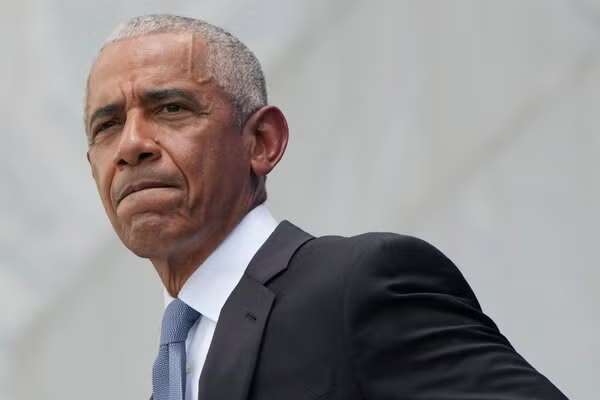
Former President Barack Obama delivered a sobering warning to Democratic donors this week, acknowledging that his party could suffer defeats in several closely contested Senate races despite polls currently showing Democratic candidates holding narrow advantages.
Speaking Wednesday at a private fundraiser for the Democratic Senatorial Campaign Committee in Northern Virginia, Obama cautioned that favorable polling numbers offer little guarantee of victory when voters head to the ballot box in November.
The event reportedly raised approximately $3.6 million for the committee, as Democrats work to strengthen their position in the battle for control of the U.S. Senate.
Obama acknowledged his surprise at polling suggesting Democrats are competitive in several states traditionally considered difficult territory for the party.
Among the races he highlighted was Texas, where Democrat James Talarico has reportedly polled ahead of Republican Ken Paxton.
The former president suggested he had not anticipated such a competitive contest in the Republican-leaning state.
Obama also pointed to Kansas, where Republican Senator Roger Marshall faces Democratic challenger Adam Hamilton, and Georgia, where incumbent Democratic Senator Jon Ossoff is running against Republican Mike Collins.
Despite the encouraging numbers for his party, Obama warned donors against assuming those apparent advantages would translate into Election Day victories.
“We could end up losing all of them by two points,” Obama said, referring to the closely contested races.
His remarks underscored the uncertainty surrounding the midterm elections and the limitations of polling in predicting final outcomes.
Even a candidate holding a two- or three-point advantage in a survey may be effectively tied with an opponent once margins of error, turnout differences and late shifts in voter preferences are considered.
For Democrats, Obama’s warning served as a reminder that an expanded Senate battleground does not necessarily mean the party will emerge with additional seats.
Republicans, meanwhile, remain competitive in several contests despite polling that has shown Democratic challengers performing better than some political observers initially expected.
Obama was joined at the fundraiser by Delaware Democratic Senator Lisa Blunt Rochester, with the discussion focusing heavily on the importance of Senate control and its implications for the remainder of President Donald Trump’s term.
The former president argued that the outcome of November’s elections could significantly affect Trump’s ability to secure additional federal judicial appointments.
Obama warned that another two years of Trump making judicial appointments could, in his view, threaten democratic institutions.
His comments reflected a familiar line of criticism directed at the Trump administration by Democratic leaders who have expressed concerns about the president’s influence over the federal judiciary.
Obama also suggested that the judicial system remains under significant strain, although he acknowledged that some courts continue to serve as checks on executive authority.
He was particularly critical of the Supreme Court, arguing that its decisions have not always imposed the limits on presidential power he believes are necessary.
The remarks highlighted the central role judicial appointments are expected to play in Democratic arguments for winning Senate seats.
Because the Senate holds constitutional authority to confirm federal judges, its composition can directly affect a president’s ability to fill vacancies throughout the federal judiciary.
Those appointments can shape legal decisions for decades, extending their impact far beyond the current administration.
Obama also addressed divisions within the Democratic Party, calling for greater unity between progressive activists and establishment figures as candidates prepare for November.
He emphasized the importance of maintaining dignity and respect despite internal disagreements over political strategy and policy priorities.
Those differences have become increasingly visible as Democrats attempt to appeal to voters across states with sharply different political environments.
Michigan is one example, where Democrat Abdul El-Sayed is competing against Republican Mike Rogers in a closely watched Senate contest.
Obama is scheduled to campaign alongside El-Sayed in Detroit later this month, demonstrating his continued involvement in Democratic efforts to influence the midterm elections.
The former president’s growing campaign presence comes as both parties compete for control of a Senate that will play a major role in determining how much of Trump’s agenda can advance through Congress.
For Democrats, winning additional seats could provide greater leverage over judicial confirmations, legislation and congressional oversight.
For Republicans, maintaining Senate control would preserve an important avenue for advancing the administration’s priorities and confirming presidential nominees.
Obama’s remarks also exposed a central challenge facing Democratic campaigns: translating favorable polling and substantial fundraising into actual votes.
While the $3.6 million raised at Wednesday’s event provides additional resources for Democratic Senate candidates, campaign spending alone cannot guarantee electoral success.
The former president’s acknowledgment that Democrats could lose multiple races by narrow margins reflects the unpredictable nature of closely divided electorates.
As Breitbart News reported, Obama’s warning came despite polling that has generated optimism among Democrats about expanding their Senate opportunities.
Ultimately, the contests will be decided not by donor enthusiasm or early surveys, but by voters weighing candidates’ positions on economic policy, public safety, government spending, immigration and accountability.
With Election Day approaching, Obama’s message to Democratic donors was clear: the party may be competitive in more states than expected, but even its most promising opportunities remain far from secure.
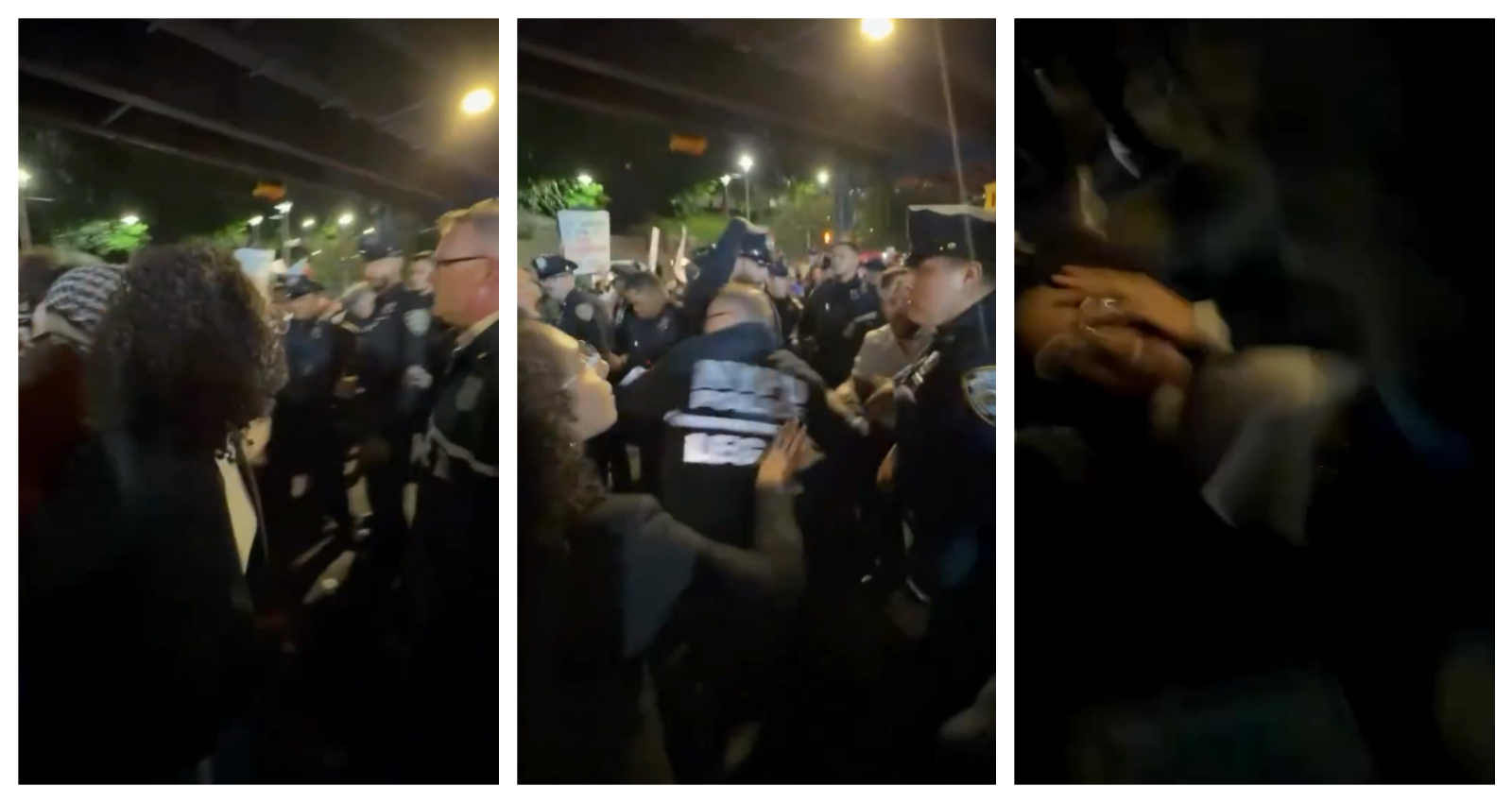
A heated confrontation between anti-ICE demonstrators and New York City police erupted into chaos Thursday evening, with Democratic Socialist congressional candidate Darializa Avila Chevalier falling to the ground during a tense clash outside a hospital.
The disorder followed a shooting involving federal immigration officers and Oscar Belgal, an undocumented immigrant with a reported criminal history, during an attempted arrest in the Marble Hill neighborhood earlier that afternoon.
Federal officials said Belgal attempted to evade arrest by driving toward officers, prompting them to open fire. Belgal suffered a gunshot wound to the neck while his five-year-old son was inside the vehicle.
The child was unharmed. Belgal was transported for medical treatment before being placed in federal custody.
Belgal’s attorneys have disputed the circumstances surrounding his detention and demanded an investigation into the shooting. Whether the officers’ use of deadly force was justified remains a central question.
But the incident quickly escalated beyond the federal operation, drawing anti-ICE activists into the streets and setting the stage for a confrontation with local police.
Among those protesting was Avila Chevalier, the Democratic nominee for New York’s 13th Congressional District and an outspoken advocate for abolishing Immigration and Customs Enforcement altogether.
Video circulating online captured a chaotic scene as demonstrators and police officers pressed against one another outside the hospital.
https://x.com/NathanielSami/status/2108393918870266264?ref_src=twsrc%5Etfw%7Ctwcamp%5Etweetembed%7Ctwterm%5E2108393918870266264%7Ctwgr%5E43f2c0009bec77ab3a059084a83b421c539c0b0a%7Ctwcon%5Es1_c10&ref_url=https%3A%2F%2Fconservativebrief.com%2Fdsa-down-104998%2F
During the confrontation, Avila Chevalier was pushed or knocked to the ground.
The candidate accused an NYPD officer of deliberately shoving her, claiming she had been attempting to de-escalate the situation when the encounter turned physical.
She also alleged that unmarked law enforcement vehicles struck protesters while officers attempted to clear a path through the crowd.
Those accusations have not been independently established by the available footage, which captures only a portion of the confrontation.
Nevertheless, Avila Chevalier quickly directed her anger toward the NYPD, accusing officers of escalating tensions rather than protecting demonstrators.
The confrontation is particularly notable because New York City police were not involved in the original immigration enforcement shooting.
Their presence outside the hospital was related to crowd control as demonstrators gathered in response to the federal operation.
Avila Chevalier also targeted NYPD Commissioner Jessica Tisch, criticizing her public discussion of Belgal’s criminal history.
The candidate accused Tisch of attempting to justify the shooting by highlighting Belgal’s previous encounters with law enforcement.
Although a suspect’s criminal record may explain why authorities sought an arrest, the legality of an officer’s decision to fire depends on the circumstances and perceived threat at the moment force was used.
Avila Chevalier went further, demanding Tisch’s resignation and calling for the NYPD’s Strategic Response Group to be disbanded.
She also argued that the department’s actions conflicted with New York City’s sanctuary policies, although the available reporting does not establish that officers violated those policies.
The episode has added another controversy to an already politically charged congressional campaign.
Avila Chevalier defeated longtime Democratic Representative Adriano Espaillat in the party’s primary and is now seeking to represent New York’s 13th District in Congress.
Her candidacy has received the endorsement of New York City Mayor Zohran Mamdani, another prominent figure associated with the city’s democratic socialist movement.
The hospital confrontation highlights the increasingly contentious relationship between immigration enforcement authorities, anti-ICE activists and political leaders who oppose federal deportation operations.
Avila Chevalier’s demand to abolish ICE extends well beyond calling for an investigation into a particular shooting. It represents a broader policy position that would fundamentally change how the federal government conducts immigration enforcement.
The candidate has also faced scrutiny over previous social media statements, according to Mediaite, including sharply critical remarks about former President Joe Biden and the United States.
Those comments have become part of the public debate surrounding her congressional campaign, although they do not establish what occurred during Thursday’s confrontation.
For federal authorities, the immediate question remains whether Belgal’s alleged actions during the attempted arrest justified the shooting, particularly given the presence of his young son in the vehicle.
For the NYPD, questions remain about how officers handled the crowd and whether the force used during the demonstration was appropriate.
And for Avila Chevalier, the confrontation has brought renewed attention to her opposition to immigration enforcement and her demands for sweeping changes to New York City’s police department.
What began as a federal immigration arrest has now developed into a broader political controversy involving a congressional candidate, New York City police leadership and the future of immigration enforcement.
The shooting remains disputed, the candidate’s allegations require further examination, and the video of the hospital confrontation has intensified scrutiny of everyone involved.
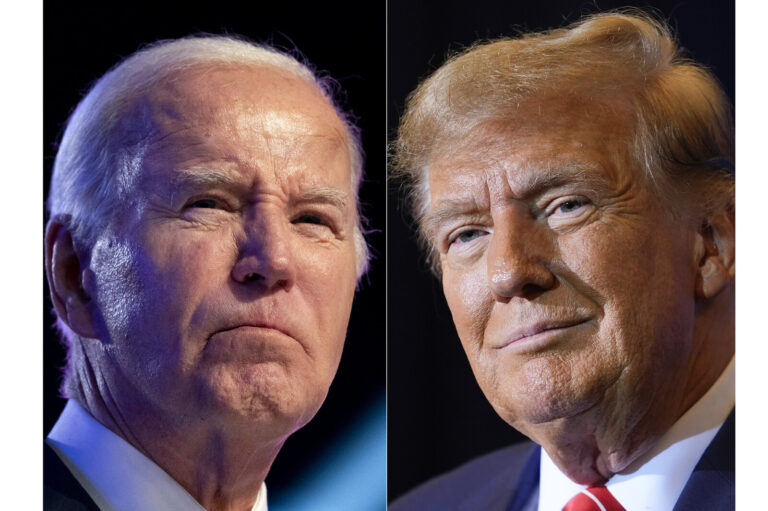
President Donald Trump is delivering another major blow to the movement to erase America’s history, declaring that Christopher Columbus has been restored to a place of honor in the nation’s heritage.
During a Columbus Day celebration Friday in the White House East Room, Trump announced plans to install another statue honoring the famed explorer on White House grounds, sending a pointed message to activists who have spent years demanding the removal of Columbus monuments and the abandonment of the federal holiday bearing his name.
“I resurrected Christopher Columbus,” Trump declared to applause.
“He’s been rehabbed 100 percent, and he’s been resurrected in the true sense,” the president continued. “He’s back to where he should be.”
The announcement marks another chapter in Trump’s campaign to defend American historical traditions against efforts to remove controversial figures from public spaces.
Trump wasted little time confronting the political movement that has targeted Columbus statues and celebrations across the country.
“As you know, the radical left communists hate Columbus, and they want to abolish Columbus Day,” the president told the audience.
For years, Columbus has been at the center of a fierce national debate over American history, with activists pointing to the devastating consequences of European colonization for Indigenous populations while opponents of monument removals argue that historical accomplishments should not simply be erased from public view.
Trump made clear which side of that debate his administration intends to defend.
His message was unmistakable: America should confront its complicated history without allowing political activists to dictate which historical figures deserve public recognition.
The controversy intensified during the Biden administration.
In 2021, former President Joe Biden became the first president to formally recognize Indigenous Peoples Day through a presidential proclamation, a move celebrated by progressive activists seeking greater recognition of Native American history.
Although Biden did not eliminate Columbus Day as a federal holiday, his administration recognized both observances.
Trump has taken a different approach, restoring the White House’s emphasis on Columbus Day while ending the previous administration’s practice of issuing a parallel Indigenous Peoples Day proclamation.
The president framed the decision as part of a larger effort to restore respect for the nation’s historical identity.
Trump announced that a new statue honoring Columbus would be installed in the White House Rose Garden, near the Oval Office.
The sculpture depicts Columbus surrounded by four female figures representing Europe, America, Asia and Africa.
The monument will join statues honoring Alexander Hamilton and Thomas Jefferson, expanding the collection of historical figures recognized on White House grounds.
Trump also highlighted the restoration of another Columbus monument, one with a particularly turbulent history.
Originally dedicated in Baltimore in 1984, the statue was toppled and thrown into the city’s harbor during the nationwide unrest of July 2020, amid protests following the death of George Floyd.
The destruction became one of the most visible examples of the campaign against monuments associated with America’s colonial past.
But the statue’s story did not end in Baltimore Harbor.
Italian American community members recovered fragments of the monument and worked to reconstruct it, refusing to let the destruction represent its final chapter.
The restored monument was subsequently installed outside the Eisenhower Executive Office Building on White House grounds.
For Trump, its return represents something larger than the restoration of a single statue: a rejection of the idea that destroying monuments is an acceptable substitute for debating history.
Trump’s remarks extended beyond Columbus.
The president defended the legacies of George Washington, Abraham Lincoln and Thomas Jefferson, arguing that the country’s founding and historical figures should be evaluated with an understanding of their contributions and the eras in which they lived.
The issue has become a flashpoint in the broader cultural debate over how America should commemorate its past.
Trump has repeatedly opposed the destruction and removal of historical monuments, portraying those efforts as attacks on the nation’s identity and traditions.
His administration has pledged to protect monuments from vandalism and destruction.
The president’s position draws a sharp distinction between acknowledging historical wrongdoing and removing public tributes to people who played consequential roles in shaping the country.
Friday’s ceremony also served as a tribute to Italian Americans and their influence on the United States.
“We love Italian Americans,” Trump told the crowd. “I love you. That’s why I’m here.”
The president praised generations of Italian immigrants and their descendants for helping build American communities, businesses and cultural institutions.
He also acknowledged the discrimination Italian Americans faced throughout American history, emphasizing the importance of recognizing their accomplishments.
The event brought together prominent Italian American figures, administration officials and community leaders.
Among those recognized were Supreme Court Justice Samuel Alito, opera singer Christopher Macchio and former New York City Mayor Rudy Giuliani.
Giuliani’s son, Andrew, attended the celebration, while Macchio delivered a musical performance.
Trump also praised New York City’s Italian American communities, highlighting their traditions and lasting contributions to American life.
The celebration underscored the administration’s effort to connect the defense of Columbus Day with recognition of Italian American heritage.
Trump also brought the controversy into the upcoming November midterm elections, singling out Michigan Democratic Senate candidate Abdul El-Sayed.
The president accused El-Sayed of wanting to abolish Columbus Day, using the dispute to draw another contrast between his administration and Democratic political opponents.
“He wants to abolish Columbus,” Trump said.
The remarks demonstrated how the battle over Columbus Day has moved far beyond a disagreement about one explorer.
For Trump, the controversy has become part of a larger political fight over patriotism, national identity and the role of America’s historical traditions.
His critics argue that celebrating Columbus overlooks the suffering associated with European colonization. Supporters counter that historical recognition does not require denying those consequences and that destroying monuments risks replacing historical understanding with political censorship.
With the restoration of the Baltimore monument, plans for another statue in the Rose Garden and a renewed presidential emphasis on Columbus Day, Trump is translating that argument into visible changes at the White House.
The message from the Trump administration is clear: Columbus is returning to prominence, and the president has no intention of allowing the campaign against America’s historical monuments to go unanswered.
A St. Louis judge issued an arrest warrant for three-time Green Party presidential nominee Jill Stein after she failed to appear for a scheduled court hearing involving allegations that she assaulted a police officer during a 2024 protest at Washington University.
The warrant was withdrawn later the same day after Stein’s attorney appeared in court, but the judge made clear that another missed appearance could have immediate consequences.
Stein, 76, faces one count of first-degree trespassing and one count of fourth-degree assault stemming from the April 27, 2024 demonstration.
The protest unfolded on Washington University’s Danforth Campus, where demonstrators protesting Israel’s actions in Gaza entered the campus, erected tents and locked arms while chanting “Hold the line” after police issued orders to disperse.
More than 100 people were arrested as officers moved to clear the encampment.
Stein was among them.
According to court documents and police accounts, Stein allegedly grabbed the bicycle of an approaching police officer, causing the bike to strike another officer—identified as Officer Moore—in the forearm.
Authorities further allege that while Moore held the bicycle up, Stein kicked him multiple times in the right leg near the groin.
The officer later sought medical treatment and was diagnosed with a strained left forearm and leg as well as testicular contusions, according to the account of the case.
Stein’s campaign manager and deputy were also arrested during the demonstration.
The case returned to the spotlight when St. Louis Associate Circuit Judge Karma Johnson issued a failure-to-appear warrant after neither Stein nor her attorney, Joseph Welch, appeared for a scheduled 9 a.m. hearing.
The court had ordered the parties and their attorneys to appear in person.
Prosecutors were present and reportedly told the court they were not requesting an arrest warrant.
Judge Johnson issued one anyway.
“There will be a failure to appear warrant for Ms. Stein,” the judge stated from the bench.
The order called for Stein to be arrested and held without bond.
Hours later, Welch appeared in court and asked the judge to quash the warrant.
Johnson granted the request, withdrawing the warrant and continuing Stein’s case to Sept. 14.
But the new court filing included an unmistakable warning:
“Warrant to issue if Defendant fails to appear.”
Stein has been ordered to appear in person at the next hearing.
St. Louis County Prosecuting Attorney Melissa Price Smith previously stressed that the criminal case concerns Stein’s alleged conduct during the demonstration—not her political views or right to protest.
“These misdemeanor criminal charges are not a statement about the freedoms of speech or assembly, which we honor and uphold as part of our Constitution,” Smith said when the charges were announced.
“They are not a statement about the subject of the protest… These charges merely reflect our professional judgment that we have the evidence to prove these particular criminal charges beyond a reasonable doubt,” she added.
Despite more than 100 arrests during the demonstration, Stein and one other individual ultimately faced formal criminal charges, according to the original account.
Stein has been one of the country’s most recognizable Green Party political figures for more than a decade.
She was the party’s presidential nominee in 2012, 2016 and again in 2024.
Her 2016 candidacy became particularly controversial after some Democrats argued that votes cast for Stein in closely contested states contributed to Hillary Clinton’s loss to Donald Trump.
During the 2024 election cycle, Stein made opposition to Israel’s military campaign in Gaza a prominent part of her candidacy and repeatedly described Israel’s actions as “genocide.”
The criminal case, however, is not about those political positions.
It centers on what prosecutors allege Stein personally did when police attempted to clear the Washington University encampment.
Stein has not been convicted of either charge, and the allegations against her remain to be adjudicated.
The brief arrest warrant added another complication to the case—but it ultimately lasted only hours.
What happens if Stein misses court again is considerably less ambiguous.
Her next hearing is scheduled for Sept. 14, and Judge Johnson’s order explicitly warns:
“Warrant to issue if Defendant fails to appear.”

Obama In Full Panic — Issues Urgent Dire Warning

Social ‘Squad’ Member Attacks Police, Immediately Regrets It – MUST SEE!

Trump Brings Back The ONE Item Biden Had Removed – Outrage Ensues

Arrest Warrant Issued For POTUS Candidate — Horrifying Charges

Kamala Suffers Massive Public Meltdown On LIVE TV

Fox News Star’s Stunning Texts About Donald Trump Jr. Emerge

Obama Calls It QUITS After Wild Video Goes Viral

Joe Biden’s Daughter Just Dropped Massive Public Bombshell On Her Dad

Removed From the Country — Ilhan Omar Hit With Horrid News

Get Ready — Mike Pence Makes Stunning 2028 Announcement

Jeanine Pirro Makes Massive Announcement – WH In Total Shock

JUST IN: ‘Squad’ Congressional Candidate Arrested
-
 Economy6 months ago
Vance Leaves Meeting, Looks Straight Into Camera, Announces Stunning Arrest
-
 Economy6 months ago
Adam Schiff Facing 30 Years In Prison After Bank Records Leak
-
 Economy6 months ago
Supreme Curt Sides With Trump — He Can Remove The All
-
 Culture4 months ago
Michelle Obama Drops Nasty Bomb About ‘Useless’ Daughter
-
 Economy6 months ago
All Hell Breaks Loose On Fox When Jesse Watters Asks Fetterman One Question
-
 Economy4 months ago
Prayers Pour In After Fox Host Dies: ‘Senseless Murder’
-

 Latest4 months ago
Fox News Stuns With Announcement About 5 Fired Hosts
-
 Border & Security2 months ago
Top Trump Admin And Wife Found Dead — Chilling Update Just Released