
Latest
Rising singer dismembered teen who threatened to expose him in kiddie pool with chainsaw: DA

A 14-year-old California girl was dismembered with a chainsaw in a backyard inflatable pool after threatening to expose her alleged child predator ex-boyfriend, according to Los Angeles prosecutors.
David Anthony Burke, a 21-year-old singer-songwriter known as “D4vd,” faces charges of murder, child sex abuse and the unlawful mutilation of human remains after prosecutors allege he sexually abused the teen for months before killing her, cutting up her remains and allowing them to decompose in the trunk of his Tesla.
He has pleaded not guilty and is being held without bail.
The victim, Celeste Rivas Hernandez, was last seen on April 23, 2025, when prosecutors allege Burke invited her over to his house in the Hollywood Hills after an argument in which she made the threats to expose their relationship, according to a court filing obtained by FOX 11 Los Angeles.
SINGER D4VD ARRESTED AND HELD WITHOUT BAIL IN CASE TIED TO TEEN FOUND DEAD IN TESLA
Police found her dismembered and decomposed remains in the trunk of an abandoned car on Sept. 8, 2025 — 400 feet from his house, according to a brief signed by Los Angeles District Attorney Nathan Hochman and Deputy DA Beth Silverman. It was registered to Burke, they wrote, and surveillance video allegedly shows he was the last person to drive it.
Burke is accused of setting up the inflatable pool in his garage to catch Celeste’s blood as he dismembered her with “a chainsaw and perhaps other tools.” In the process, he tore plastic fragments from the pool which authorities later found mixed with her remains.
He is also accused of removing two of her fingers because they showed his name. Those were never recovered.
However, he placed more of her dismembered remains in a cadaver bag and trash bags in the trunk of his Tesla, which prosecutors say he abandoned months later near the home before he left to go on tour.
Prosecutors said Burke first met Celeste when she was 11 and allegedly began molesting her in November 2023, when she was 13 and he was 18. The following February, her parents called police and took her phone away. Burke allegedly paid a high school student $1,000 to deliver her a new phone.
“Throughout 2024, the victim spent a significant amount of time with defendant, including summer weekends at his home in the Hollywood Hills and traveling with him to Las Vegas, London and Texas to meet his family,” prosecutors alleged in the filing.
CHILD PREDATOR CLEARED FOR PAROLE ARRESTED AFTER SURPRISE WARRANT DROPS HOURS BEFORE PRISON RELEASE
They “broke up” in November 2024 but kept in touch until Celeste’s phone activity came to an end on April 23, 2025, according to the prosecution timeline.
“[Text] messages reveal the victim’s jealousy over defendant’s relationships with other women, as defendant led her to believe they had a future together,” prosecutors wrote. “She became extremely upset and threatened to disclose damaging information about her relationship with defendant to end his career and destroy his life.”
FOLLOW THE FOX TRUE CRIME TEAM ON X
The argument was two days before his first studio album dropped.
With millions of dollars on the line, Burke allegedly ordered Celeste an Uber from her home in Lake Elsinore to his in Hollywood Hills. However, 20 minutes after the vehicle arrived, Burke allegedly sent her text messages asking where she was.
SIGN UP TO GET TRUE CRIME NEWSLETTER
Prosecutors allege these texts were part of a “premeditated plan to cover up the murder.” She was already dead by the time they were sent, according to the filing.
Prosecutors allege that Burke stabbed her to death almost immediately after she arrived. According to the Los Angeles medical examiner’s office, Celeste died in a homicide caused by multiple penetrating injuries.
The next morning, he sat for a radio interview about his forthcoming album, according to prosecutors. Then he allegedly had a shovel delivered from Home Depot via the courier app Postmates. On May 1, prosecutors allege he ordered two chainsaws from Amazon. On May 5, he ordered a body bag, laundry bags and the inflatable pool. On July 7, he allegedly bought a “burn cage.”
He allegedly made the purchase using a fake name, “Victoria Mendez.”
LISTEN TO THE NEW ‘CRIME & JUSTICE WITH DONNA ROTUNNO’ PODCAST
At a hearing Wednesday, prosecutors revealed gruesome allegations in connection with the crime that legal analyst Royal Oakes said strongly support the Los Angeles County District Attorney’s Office’s push for capital punishment.
Although California has a moratorium in place on executions, the death penalty is still on the books for prosecutors to pursue.
LIKE WHAT YOU’RE READING? FIND MORE ON THE TRUE CRIME HUB
“The gruesome new details about Burke’s actions, disclosed by the DA, are guaranteed to boost the chance, not only of a murder conviction, but the death penalty, if a jury eventually hears the allegations and concludes Burke is responsible,” he told Fox News Digital. “Buying and using a chainsaw, a portable incinerator and body bags, and dismembering the victim’s body, including by amputating fingers with tattoos linking her to Burke, are shocking allegations.”
In September 2025, the Los Angeles Police Department served a search warrant on Burke’s home. They recovered the damaged pool, blood evidence and other DNA samples linked to Celeste.
Compounding Burke’s legal troubles, prosecutors also recently alleged they found a huge amount of child sex abuse material on his devices, including nude pictures of the victim on his phone.
“[That] puts the burden squarely on the defense to fight back,” Oakes said.

Cracker Barrel built its reputation on comfort food, Southern tradition, and a menu customers could count on for decades.
That’s exactly why loyal diners are still fuming as the restaurant chain continues removing many of the classic dishes that helped make it a household name.
For years, customers have pleaded with the Tennessee-based chain to restore fan favorites that quietly disappeared from the menu, including black-eyed peas, fried haddock, red-eye gravy, fried chicken livers, and perhaps the most mourned item of all—the Sunrise Sampler.
For many longtime patrons, the Sunrise Sampler wasn’t just another breakfast. It was the breakfast.
The hearty platter came loaded with eggs, grits, fried apples, hash brown casserole, sausage, bacon, country ham, and biscuits with gravy—giving diners a taste of nearly everything Cracker Barrel had to offer without having to piece together a meal item by item.
“I noticed a while back that Cracker Barrel removed the GOAT of all breakfasts, the Sunrise Sampler, from the menu,” Josh Cooper, owner of Cooper’s Next Level BBQ in Tallahassee, Florida, told Fox News Digital. “You used to get a little bit of everything without breaking the bank.”
The meal hasn’t completely disappeared—but recreating it now comes with a catch.
Customers must order every component separately, turning what was once an affordable breakfast favorite into a considerably more expensive order.
“Now, in order to get that same teaser touch from the Sunrise Sampler, you have to order it all à la carte, which costs around $25 for the same great meal,” he said. “Blasphemy!”
Fox News Digital reached out to Cracker Barrel for comment.
The growing frustration over disappearing menu items comes after the company already faced a wave of backlash for attempting to modernize its image.
Last year, Cracker Barrel sparked outrage among longtime customers after unveiling a redesigned logo and updated restaurant interiors that many believed stripped away the rustic charm that had long defined the brand.
The changes were part of a sweeping $700 million overhaul across more than 660 locations, including menu revisions and a cleaner, less cluttered dining room design.
The company ultimately reversed course following widespread criticism, but many loyal customers say the damage had already been done.
The leadership shakeup continued last week when Cracker Barrel announced that CEO Julie Masino will step down on Aug. 10.
Former Bloomin’ Brands CEO David Deno is slated to take over.
For many customers, however, the issue extends far beyond a logo or a fresh coat of paint.
They believe corporate leadership has steadily chipped away at the very traditions that made Cracker Barrel stand apart from countless other restaurant chains.
Cooper said companies often underestimate the emotional attachment customers have to longtime menu favorites.
People are “asking for comfort and nostalgia.”
“The reality is that nostalgia matters. And when you remove popular items without controlling the narrative or managing customers’ expectations, you are bound to have upset patrons,” he said.
“Whether it’s due to rising food costs, kitchen timing or any other reason, it’s important to communicate with the people who put you on the map in the first place. Communication matters.”
Rachel Love, a self-described Cracker Barrel enthusiast from Tennessee, said one discontinued favorite remains at the top of her wish list.
“I absolutely loved the black-eyed peas, and I’m so glad they’re getting some attention,” Love told Fox News Digital. “They were one of my favorite sides and always felt like such a classic part of the Cracker Barrel experience.”
Love also hopes the restaurant revives its baked apple dumpling, describing it as “the perfect comfort dessert” for a brand built on old-fashioned hospitality.
To her, the debate is about much more than a handful of discontinued recipes.
“People aren’t just asking for old menu items — they’re asking for the comfort and nostalgia that came with them,” she said.
“Sometimes bringing back one classic dish means more to loyal customers than introducing several new ones.”
That may be the lesson Cracker Barrel continues to learn the hard way.
Customers aren’t asking the chain to reinvent itself.
They’re asking it to remember what made it successful.
They want the front porch.
They want the country store.
They want the breakfasts, the classic sides, and the timeless comfort food that turned Cracker Barrel into an American institution.
For many loyal diners, nostalgia isn’t a weakness.
It’s the brand.
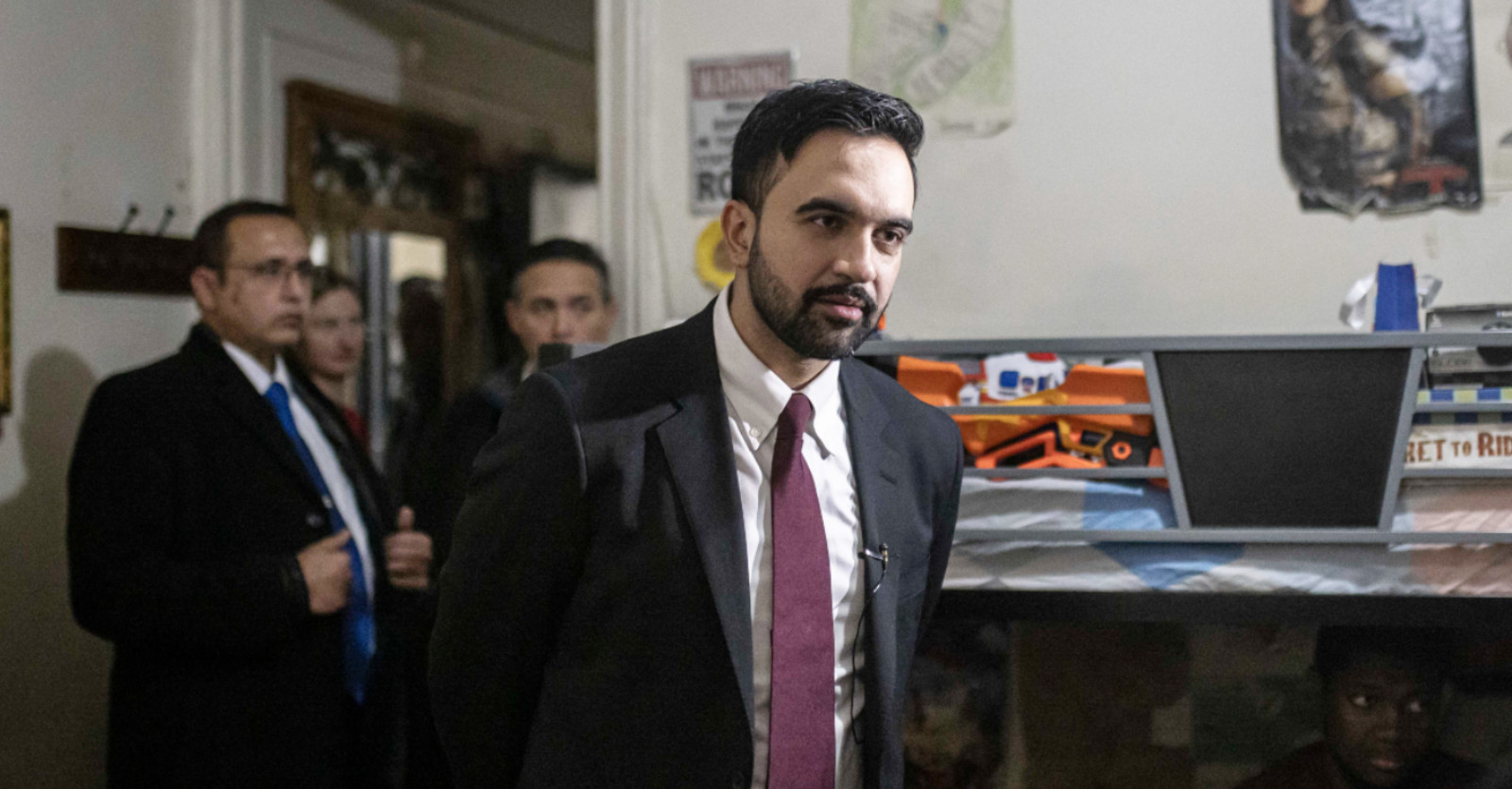
Backlash against New York City Mayor Zohran Mamdani continues to mount, with the Democratic Socialist facing another public rebuke after reportedly being denied the opportunity to speak at the funeral of a U.S. Army soldier killed during an Iranian missile attack.
According to multiple reports, Mamdani attended Friday’s funeral for Army Sgt. Angel Sarah Rampersad in Queens but remained silent throughout the service after the soldier’s family reportedly chose not to have him address mourners.
Rampersad was one of three American service members killed in Jordan during an Iranian attack on July 17.
The funeral was held at a church in Ozone Park, where elected officials, community leaders, family members and fellow mourners gathered to honor the 28-year-old soldier’s sacrifice.
According to the New York Post, Mamdani appeared to review prepared remarks on an iPad while other dignitaries spoke, but his name was never called.
A source familiar with the funeral told The Post the decision came directly from Rampersad’s family, which reportedly wanted to keep politics out of the ceremony.
The family chose not to have Mayor Zohran Mamdani speak in an effort to avoid what the source described as “political distractions.”
After the funeral concluded, the mayor’s office released the remarks Mamdani had planned to deliver.
“It is often said that our fallen ‘gave their tomorrows for our today,’” Mamdani planned to say.
“Sergeant Rampersad had tomorrows waiting for her: birthdays, ordinary mornings, evenings spent with her loved ones,” his remarks continued.
“But she gave every one of them up so that we could have ours — so that we could stand here today, safe and protected,” he was to say.
New York Gov. Kathy Hochul, however, did address those gathered and offered an emotional tribute to the fallen soldier.
“I feel after reading and admiring this woman from a distance, I feel like she could be one of my daughters,” Hochul said.
Other speakers included Ozone Park Residents Block Association President Sam Esposito, state Sen. Joseph Addabbo Jr., and Queens Borough President Donovan Richards.
According to the Department of War, Sgt. Angel Sarah Rampersad, 28, of Ozone Park, New York, was killed in action during an enemy attack at Muwaffaq Salti Air Base in Jordan.
U.S. Central Command said Rampersad and two fellow service members were killed while American and coalition forces defended against Iranian ballistic missile and drone attacks.
The other fallen Americans were identified as 1st Lt. Tyler James Feehan, 25, of Ewa Beach, Hawaii, and Pvt. Isabella Gonzales, 19, of Carrollton, Texas.
All three were deployed to Jordan in support of Operation Inherent Resolve, the international mission to combat ISIS in Iraq and Syria.
Rampersad served with the 1st Battalion, 57th Air Defense Artillery Regiment, 52d Air Defense Artillery Brigade, 10th Army Air and Missile Defense Command in Ansbach, Germany.
She worked as a 25U Signal Operations Support Specialist, according to the Department of War.
One person who attended the funeral told the newspaper the mayor appeared visibly upset after realizing he would not be invited to speak.
“He looked over at his staff, frustrated and seemed angry that he didn’t speak,” the source told the Post.
The attendee said Mamdani eventually understood that his name would not be called, glanced toward members of his staff, and put away the tablet that reportedly contained his prepared remarks.
Another source cited by the newspaper said the decision reflected the wishes of Rampersad’s family, describing them as politically conservative and supportive of President Donald Trump.
“The family is more conservative and wanted to limit any political distractions,” the source told the Post.
Neither Mamdani’s office nor members of the Rampersad family have publicly confirmed the account explaining why the mayor was not invited to speak.
Although he never addressed the congregation during the service, the mayor’s office later publicly released the remarks he had prepared, bringing attention to a moment that underscored the growing political controversy surrounding New York City’s new mayor.
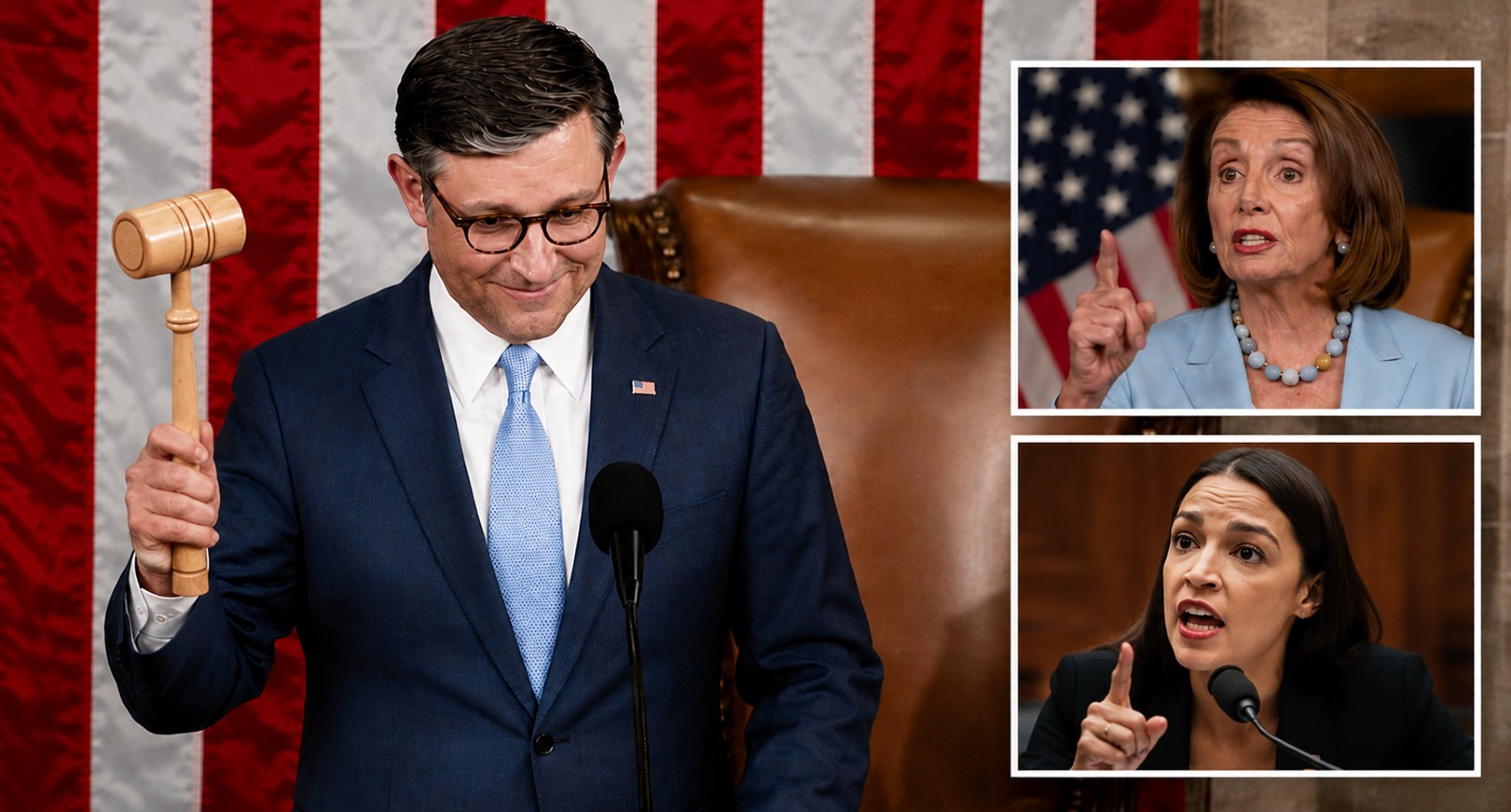
The House of Representatives delivered a major victory this week for Americans with disabilities who want the opportunity to work instead of being trapped by a broken federal bureaucracy.
In a bipartisan vote, lawmakers approved legislation aimed at dismantling long-standing barriers within the Social Security Disability Insurance program that critics say have discouraged work and punished self-sufficiency for decades.
H.R. 8884, the **Removing Barriers to Work for Disabled Americans Act**, sponsored by Rep. Austin Scott, R-Ga., passed the House by a vote of 232-188 and now heads to the Senate, where it has been referred to the Committee on Finance.
The legislation restores an important tool that the Social Security Administration lost when its demonstration authority expired in 2022.
Under the bill, the SSA would once again be authorized to test practical reforms under the Social Security Disability Insurance program through Dec. 31, 2030, with demonstration projects continuing through the end of 2031.
Rather than permanently rewriting federal law, the agency would be able to pilot innovative approaches designed to help beneficiaries who are able and willing return to the workforce.
The legislation includes significant safeguards. Participation would be entirely voluntary, and no participant could receive less total income as a result of joining one of the demonstration projects.
Supporters say those protections make the bill a common-sense effort to modernize a system that has too often discouraged Americans from pursuing employment.
House Ways and Means Committee Chairman Jason Smith, R-Mo., argued the current system is failing many of the very people it was designed to help.
“With over 60 percent of Social Security Disability Insurance recipients expressing an interest in returning to the workforce but less than one percent leaving the program because of a successful return to work each year, the Social Security Administration’s complex rules and regulations are clearly failing to deliver for too many Americans,” Smith said.
“Giving the SSA the authority to test innovative ways to better help disabled Americans pursue gainful employment is pure common sense, and this legislation goes a step further to ensure participation in any new system is both voluntary and will not reduce a beneficiary’s total income,” Smith added.
Smith pointed to what he described as a massive disconnect between Americans who want to work and those who are actually able to do so under the current system.
For years, disability recipients have warned that attempting to return to work can trigger a maze of complicated regulations, overpayment disputes, benefit cliffs, and uncertainty that ultimately makes taking a job financially risky.
Rather than encouraging independence, critics say the current structure often rewards staying on the sidelines.
Supporters argue H.R. 8884 takes a fundamentally different approach.
Instead of expanding government programs or imposing sweeping permanent reforms without evidence, the legislation gives the Social Security Administration the flexibility to test targeted solutions, evaluate the results, and determine what actually helps Americans reenter the workforce before making lasting policy changes.
Backers say the measure reflects a core conservative principle: government assistance should serve as a bridge to opportunity—not a permanent barrier to self-reliance.
The bill recognizes that having a disability does not automatically mean someone is unable to work and that federal policy should encourage those who are capable of seeking employment rather than penalizing them for trying.
The legislation also broadens the agency’s authority to include additional populations, including blind Americans, expanding the reach of future demonstration projects.
The proposal advanced through the House with bipartisan support after clearing the Ways and Means Committee, where lawmakers from both parties acknowledged that the current disability system leaves too many Americans behind.
Still, Republicans led the charge, arguing that practical reforms backed by measurable results are preferable to expanding entitlement programs or making permanent changes without first proving they work.
The bill now moves to the Senate, where lawmakers will decide whether to send it to President Donald Trump’s desk.
Supporters are urging swift action, arguing that restoring the SSA’s demonstration authority represents a fiscally responsible, low-cost reform that could help thousands of Americans regain the dignity, purpose, and financial independence that comes with meaningful work.
If enacted, the Social Security Administration would once again have the authority to launch carefully monitored pilot programs designed to improve employment outcomes, while reporting requirements would provide transparency and accountability as Congress evaluates which reforms deserve permanent consideration.

Cracker Barrel Fans Outraged Again After NEW Major Change

Mamdani Kicked Out — He’s Livid After Latest Announcement

GOP Just Passed It 232-288 — Pelosi And AOC Lose It On House Floor

All Hell Breaks Loose In Senate After Wild Vote — It’s Shut Down!

Top Trump Admin And Wife Found Dead — Chilling Update Just Released

Mayor Mandami Enraged — NYPD Defies Him Over Insane New Order
Top Trump Admin And Wife Found Dead — Chilling Update Just Released
Mayor Mandami Enraged — NYPD Defies Him Over Insane New Order
Cracker Barrel Fans Outraged Again After NEW Major Change
All Hell Breaks Loose In Senate After Wild Vote — It’s Shut Down!
GOP Just Passed It 232-288 — Pelosi And AOC Lose It On House Floor
Mamdani Kicked Out — He’s Livid After Latest Announcement
-
 Economy4 months ago
Vance Leaves Meeting, Looks Straight Into Camera, Announces Stunning Arrest
-
 Economy4 months ago
Adam Schiff Facing 30 Years In Prison After Bank Records Leak
-
 Economy4 months ago
Supreme Curt Sides With Trump — He Can Remove The All
-
 Economy4 months ago
All Hell Breaks Loose On Fox When Jesse Watters Asks Fetterman One Question
-
 Culture2 months ago
Michelle Obama Drops Nasty Bomb About ‘Useless’ Daughter
-

 Economy2 months ago
Prayers Pour In After Fox Host Dies: ‘Senseless Murder’
-

 Latest2 months ago
Fox News Stuns With Announcement About 5 Fired Hosts
-

 Economy4 months ago
NBC Stops LIVE Broadcast — Breaks Big Trump News