
Politics
Stormy Daniels’ disgraced ex-lawyer and anti-Trump superstar Michael Avenatti moved to halfway house


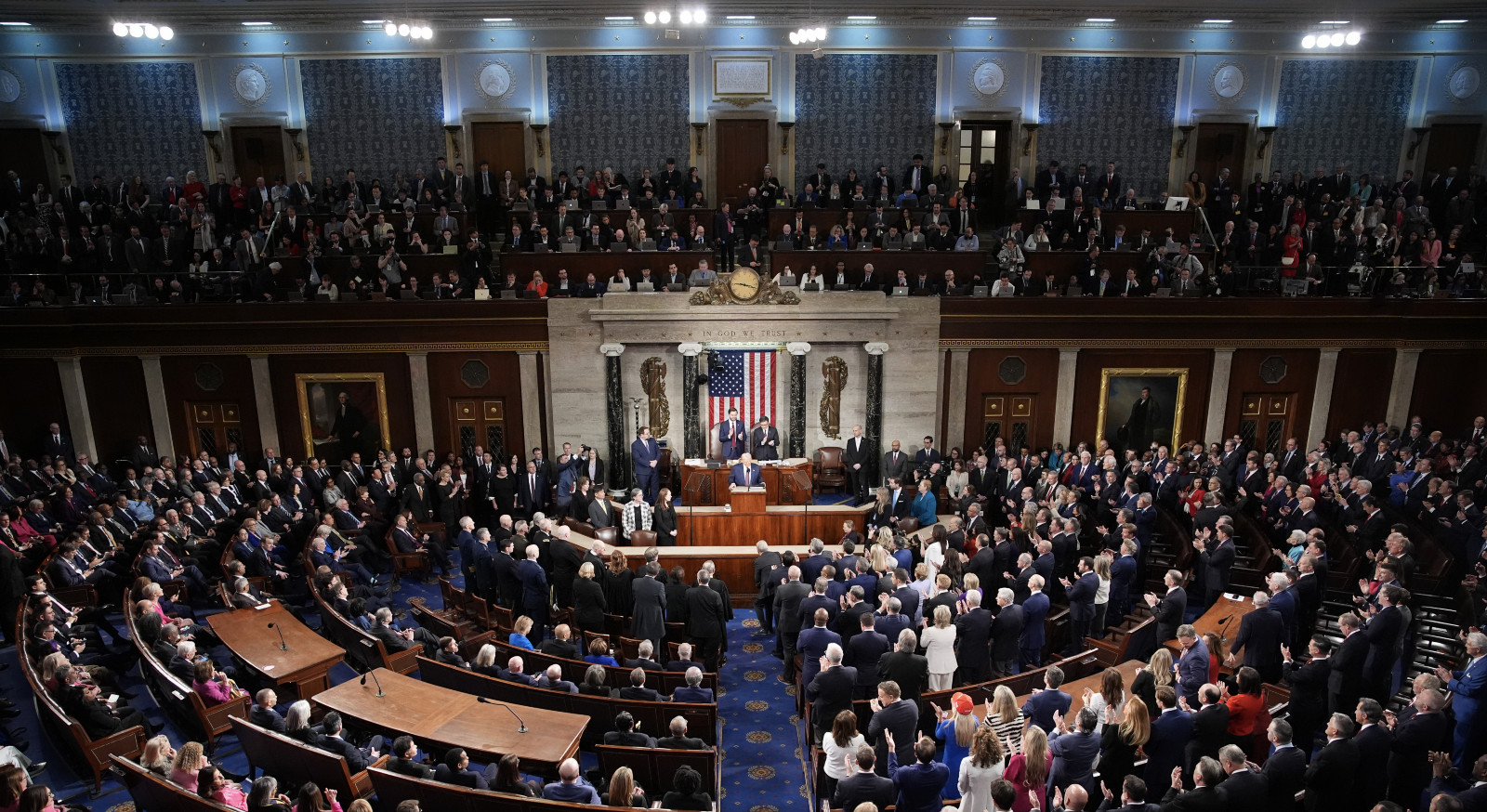
Retiring Democratic Rep. Jared Golden is breaking ranks with his own party again — this time by endorsing a Republican in one of the most closely watched House races of the 2026 midterms.
Golden, who represents Maine’s 2nd Congressional District, announced his support Monday for Republican Rep. Mike Lawler of New York, delivering a rare cross-party endorsement as Lawler fights to hold onto his Hudson Valley seat against Democratic challenger Cait Conley.
Golden made his case in an opinion piece published by The Journal News, arguing that his firsthand experience working alongside Lawler convinced him that the Republican deserves another term.
The endorsement is particularly notable because Democrats are actively trying to defeat Lawler and capture his seat as part of their broader effort to win control of the House.
Golden is going in the opposite direction.
Rather than automatically backing his party’s nominee, the retiring Democrat pointed to Lawler’s bipartisan record and their work together in Congress as the reasons he is supporting the Republican incumbent.
The endorsement is also the latest example of Golden separating himself from Democratic leadership.
Earlier this month, Golden crossed party lines on procedural votes connected to legislation affecting the lobster industry as well as a package of sanctions against Russia.
Now he is taking the considerably more unusual step of endorsing a Republican congressional candidate over a Democrat.
Golden specifically highlighted Lawler’s work on collective bargaining rights for federal employees and Affordable Care Act premium tax credits.
But one issue appears to have carried particular weight for the Maine Democrat: the lobster industry.
Golden and Lawler worked together on the Northeast Lobstermen Protection Act, legislation designed to extend the current regulatory framework governing the American lobster and Jonah crab fisheries through 2035.
The legislation centers on a long-running dispute involving federal protections for the endangered North Atlantic right whale and the regulations imposed on commercial fishing operations in response.
For Maine, where the lobster industry represents an important part of the state’s coastal economy and identity, the issue has carried enormous political significance.
For Lawler, whose district is in New York’s Hudson Valley, there was far less obvious political upside.
That was precisely Golden’s point.
Lawler joined Golden in championing the legislation despite representing a district without Maine’s direct economic dependence on lobster fishing.
The House ultimately approved the measure in a bipartisan 219-196 vote on September 1. The legislation was subsequently sent to the Senate Committee on Commerce, Science and Transportation.
Golden argued that Lawler’s involvement demonstrated the kind of cross-party cooperation he believes has become increasingly uncommon in Washington.
“He got no votes in this and no headlines back home,” Golden wrote. “He signed on because a historic American industry, thousands of fishing families, and the principle that federal rules should be built on facts were all on the line.”
The endorsement carries additional significance because Golden himself has developed a reputation for departing from his party on some high-profile votes and policy disputes.
He announced last year that he would not seek a fifth term in Congress, meaning he is making the endorsement during the final months of his House career.
Golden has said political hostility and dysfunction contributed to his decision to leave Congress, and his endorsement of Lawler centers heavily on his stated belief that lawmakers should be willing to work across party lines.
Lawler represents New York’s 17th Congressional District, a politically competitive Hudson Valley seat that both parties view as important in the fight for control of the House.
The district supported Kamala Harris in the 2024 presidential election even as voters returned Lawler to Congress, underscoring its competitive political makeup. Current race ratings have likewise treated the Lawler-Conley contest as highly competitive.
That makes Golden’s decision particularly consequential politically.
This isn’t an endorsement of a Republican running in a district Democrats have effectively conceded.
It’s an endorsement in a seat Democrats are actively trying to flip.
And it comes from a sitting Democratic member of Congress.
Golden’s decision therefore gives Lawler something relatively uncommon in today’s deeply divided political environment: a Democratic colleague publicly making the case for his reelection.
Golden’s reasoning ultimately comes down to what he says he personally witnessed while serving alongside Lawler.
The two lawmakers worked together on legislation that directly affected Golden’s constituents even though Lawler had relatively little immediate political incentive to become involved.
For Golden, that was enough to cross party lines once again.
This time, however, he isn’t simply joining Republicans on a congressional vote.
He’s asking voters in one of America’s competitive House districts to send one of them back to Washington.
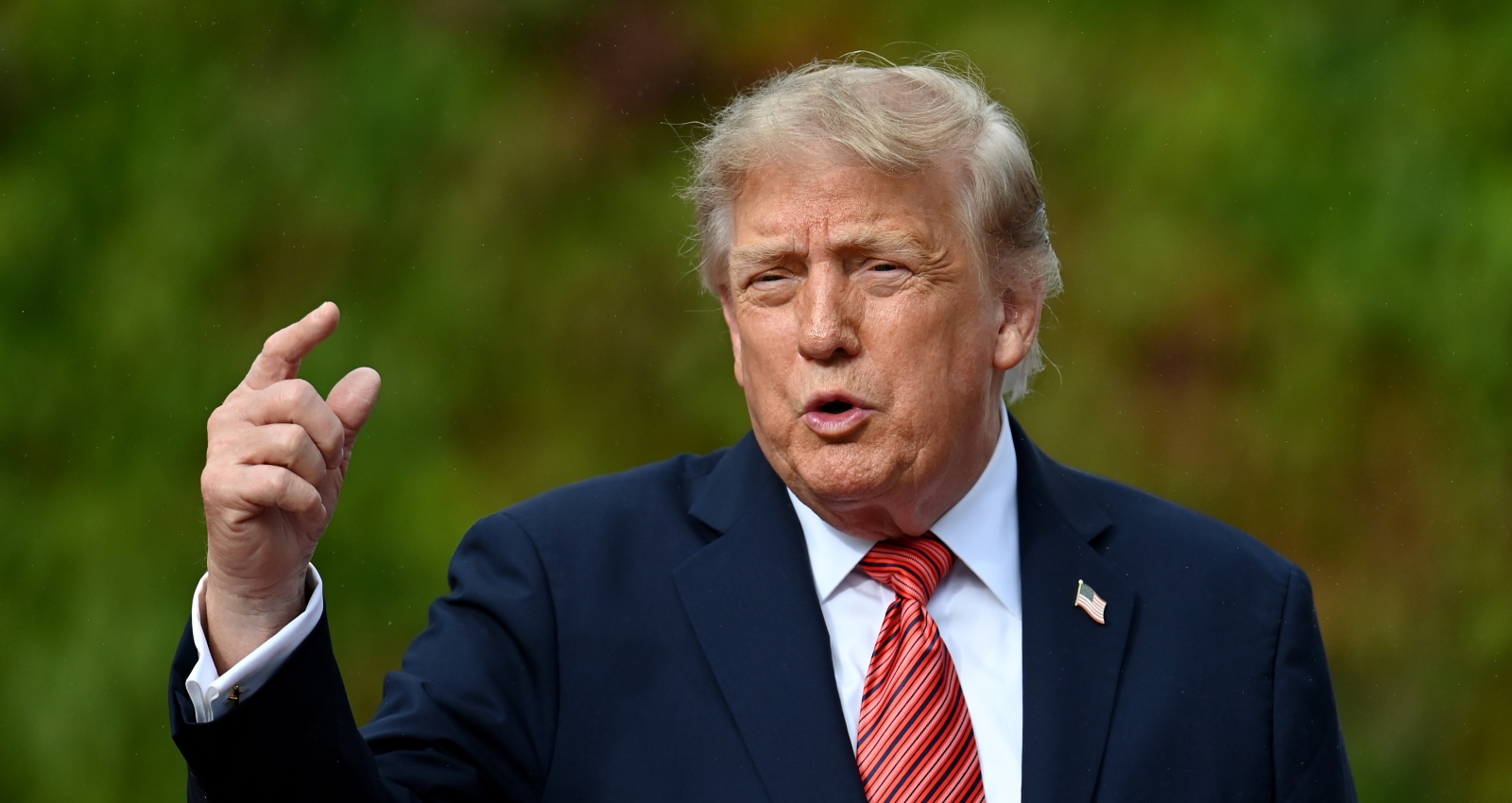
President Donald Trump is preparing to jump directly into the final six weeks of the 2026 midterm battle, as Republicans deploy a massive campaign war chest and an aggressive turnout operation in their fight to maintain control of Congress.
James Blair, Trump’s political director and one of the president’s top midterm strategists, laid out the Republican closing strategy during an interview with Breitbart News Saturday.
The plan combines a national political message, direct contrasts between candidates, a major push to reach less-frequent Republican voters and hundreds of millions of dollars potentially flowing into some of the country’s most consequential House and Senate contests.
Blair described the strategy as “twofold,” arguing that Republicans cannot treat congressional races as purely national elections or entirely local contests.
“Elections are not all national and they’re not all local,” Blair said. “It’s a little bit of both.”
Republicans plan to tie Democratic candidates to positions taken by the national Democratic Party while simultaneously forcing voters to compare the records and positions of the individual candidates running in their districts and states.
The strategy is designed in part to prevent Democrats competing in politically divided states and districts from distancing themselves from unpopular positions associated with their national party.
But perhaps the biggest weapon Republicans intend to deploy during the closing stretch is Trump himself.
Blair said the president will become “extremely active” during the final six weeks before Election Day, with Trump’s appearances and political activity increasingly coordinated with the beginning of early and mail voting across the country.
The GOP isn’t planning to wait until Election Day to mobilize its voters, either.
Republicans are encouraging supporters to cast ballots as soon as voting becomes available in their states, representing a continued shift from the party’s historical emphasis on Election Day voting.
“Vote now by mail if you want to. Vote in person early if that’s your preference. Don’t wait till Election Day,” Blair said.
A major target of that operation will be what Blair described as “low- and mid-propensity” Republican voters.
Those are voters who turned out for Trump during presidential elections but historically have been less reliable participants when his name isn’t directly on the ballot during midterm elections.
Trump’s political team believes the president has a unique ability to reach those voters, making his involvement a central piece of the Republican turnout operation.
The stakes could hardly be higher.
Republicans are fighting to maintain their congressional majorities in an intensely competitive political environment, particularly in the House.
The Cook Political Report’s September 11 ratings classified **21 House races as Toss Ups**, along with nine Lean Democratic and seven Lean Republican contests.
A Cook survey conducted September 8-11 among 1,052 likely voters across 37 competitive congressional districts found Democrats ahead 49% to 47% on the generic congressional ballot in those districts.
That makes the battle for turnout especially consequential.
But Republicans enter the closing stretch with another major advantage: money.
The National Republican Congressional Committee raised **$13.5 million in August** and finished the month with roughly a **$13 million cash advantage** over its Democratic counterpart.
Axios reported that it represented the largest cash advantage the NRCC has ever held at this stage of a midterm election cycle.
And considerably more money could soon enter the fight.
Earlier this month, Trump said his MAGA Inc. super PAC could direct between **$400 million and $500 million** toward helping Republican candidates during the midterms.
“I’m going to spend whatever amount o
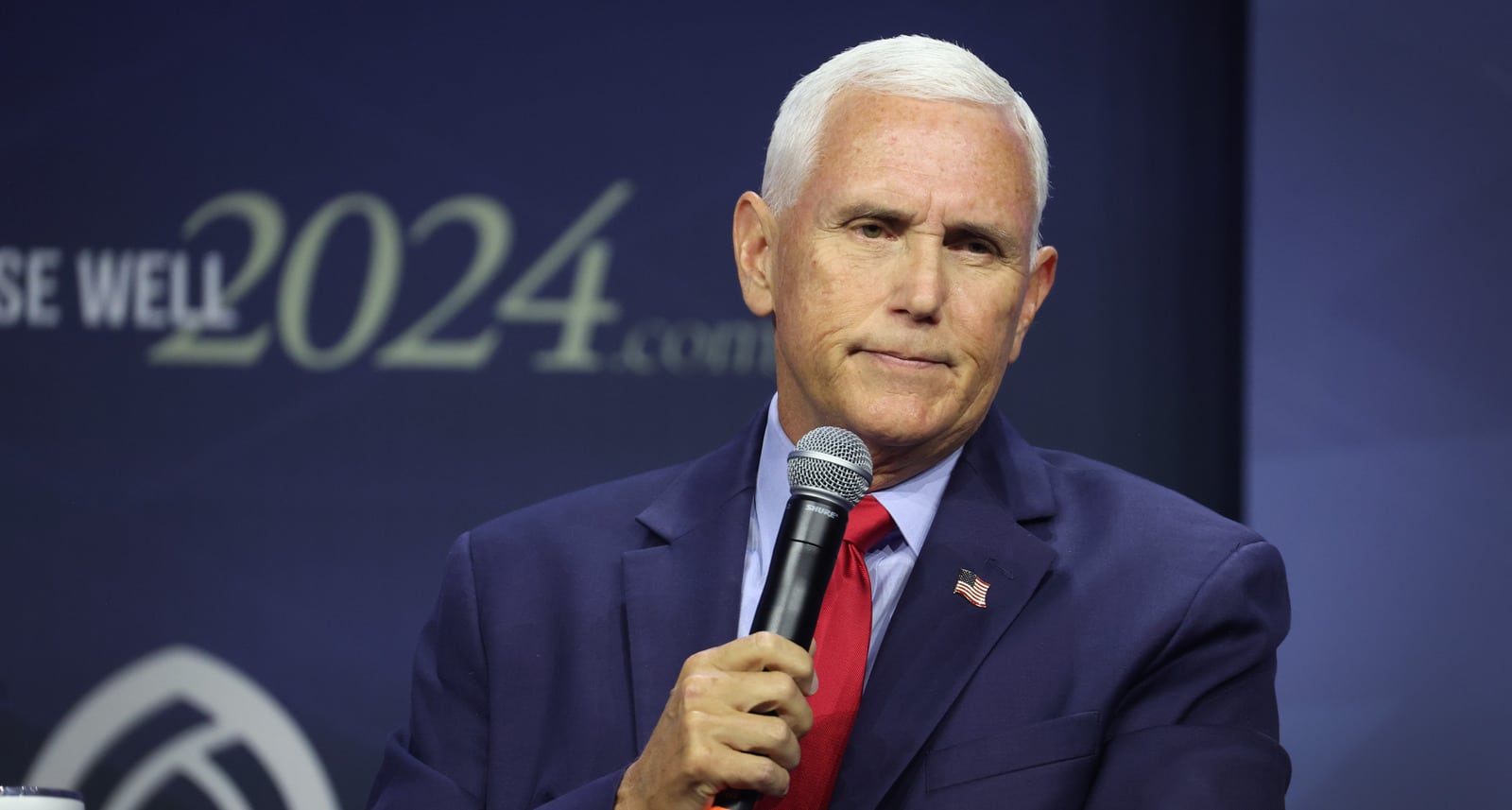
Former Vice President Mike Pence is making his plans for 2028 clear — and another run for the White House apparently isn’t part of them.
After years of political upheaval, a failed 2024 presidential campaign and a dramatic break with President Donald Trump, Pence said this week that he currently has no plans to seek the presidency — or any other elected office — in 2028.
The former vice president addressed his political future during an appearance at the Economic Club of Washington, D.C., where chairman David Rubenstein pressed him about whether voters could see his name on another presidential ballot.
“What I can tell you is that we have no plans,” Pence replied.
Rather than gearing up for another campaign, Pence said his attention is centered on his family and Advancing American Freedom, the conservative policy organization he founded after leaving the White House.
Pence said he intends to use his public platform to continue advocating for the conservative principles that have defined much of his career, including lower taxes, limited government, reduced regulation, traditional values and opposition to abortion.
“The calling of my life right now is to be a champion for these principles,” Pence said.
The comments put considerable distance between Pence and the emerging 2028 presidential contest, even as Republicans begin looking ahead to the next battle for the White House.
Pence has been down that road before.
In 2023, he launched a Republican presidential campaign that put him directly against Trump, his former running mate and the president he served alongside for four years. But Pence struggled to gain traction and suspended his campaign in October 2023, months before Republican voters began casting primary ballots.
He later declined to endorse Trump in the 2024 election.
Trump ultimately secured the Republican nomination and returned to the White House.
But the political split between the two men goes back much further.
Pence served as Trump’s vice president from 2017 until 2021 after previously serving as Indiana governor and a member of Congress. Their once-close political alliance fractured following the 2020 presidential election and the events surrounding Jan. 6, 2021.
Trump urged Pence, who was presiding over the congressional certification of the Electoral College vote, to reject or delay certification of Joe Biden’s victory.
Pence refused, concluding that the Constitution gave him no authority to do so.
Years later, he remains unapologetic about that decision.
“It was the easiest decision I’ve ever made,” Pence said. “By God’s grace I did my duty that day.”
Since leaving office, Pence has remained active in Republican politics, but increasingly as a voice arguing for a more traditional strain of conservatism as parts of the GOP have embraced populist policies.
Through Advancing American Freedom and his public appearances, Pence has continued promoting free markets, limited government, a strong American role overseas and socially conservative policies.
Earlier this year, he argued that Republicans should determine what principles they want their party to stand for before becoming consumed with the question of who should carry the GOP banner in 2028.
Now Pence appears to be taking himself out of that conversation — at least for the time being.
Notably, he stopped short of declaring that he would never seek public office again. His wording was narrower: He has “no plans” to run in 2028.
For the foreseeable future, however, Pence says his focus is on advancing his political philosophy rather than launching another campaign.
And his willingness to publicly challenge Trump hasn’t disappeared.
Earlier this year, Pence broke with the president over the possibility that people involved in the Jan. 6 Capitol riot could receive taxpayer-funded compensation.
Speaking with Axios while discussing his book *What Conservatives Believe*, Pence described Jan. 6 as a “tragic day” and drew a firm line when it came to people who committed violence against law enforcement.
“I didn’t agree with the President when he pardoned people who engaged in violence against law enforcement officials,” Pence said.
Then he went further.
“And it would be my hope that anyone who engaged in violence against law enforcement or at the Capitol building would never be rewarded with taxpayers’ money.”
The comments underscored a political divide that has persisted years after Pence left the vice presidency.
For now, Pence appears prepared to remain part of the conservative debate — just not as a candidate in 2028.

Democrat Congressman Stuns Party, Endorses GOP Colleague

Trumps Drops Brilliant Midterm Plan That Dems Feared The Most

He’s ALL In — Barack Obama Stuns Nation With Sudden Announcement

Warren Buffett Makes Shocking Announcement

Dolly Parton Delivers Stunning Video Message Weeks After Her Death

Get Ready — Mike Pence Makes Stunning 2028 Announcement

‘The Five’ Gets Emotional As Greg Gutfeld Announces Tragic News

‘EFFECTIVE IMMEDIATELY’ — Barack Obama Gets Devastating News

Everyday Americans Being Treated As Criminals — Including You, Right Now

Schumer Loses! Court Sides With Trump In Historic Move

HUGE: 9/11 Widow Goes Rogue, Makes Damning Call Out During Ground Zero Ceremony

Removed From the Country — Ilhan Omar Hit With Horrid News
-
 Economy5 months ago
Vance Leaves Meeting, Looks Straight Into Camera, Announces Stunning Arrest
-
 Economy5 months ago
Adam Schiff Facing 30 Years In Prison After Bank Records Leak
-
 Economy5 months ago
Supreme Curt Sides With Trump — He Can Remove The All
-
 Culture3 months ago
Michelle Obama Drops Nasty Bomb About ‘Useless’ Daughter
-
 Economy5 months ago
All Hell Breaks Loose On Fox When Jesse Watters Asks Fetterman One Question
-

 Economy3 months ago
Prayers Pour In After Fox Host Dies: ‘Senseless Murder’
-

 Latest3 months ago
Fox News Stuns With Announcement About 5 Fired Hosts
-
 Economy5 months ago
NBC Stops LIVE Broadcast — Breaks Big Trump News