
Politics
Democrats build midterm momentum, but Republicans still in driver’s seat in Senate majority battle



Backlash against New York City Mayor Zohran Mamdani continues to mount, with the Democratic Socialist facing another public rebuke after reportedly being denied the opportunity to speak at the funeral of a U.S. Army soldier killed during an Iranian missile attack.
According to multiple reports, Mamdani attended Friday’s funeral for Army Sgt. Angel Sarah Rampersad in Queens but remained silent throughout the service after the soldier’s family reportedly chose not to have him address mourners.
Rampersad was one of three American service members killed in Jordan during an Iranian attack on July 17.
The funeral was held at a church in Ozone Park, where elected officials, community leaders, family members and fellow mourners gathered to honor the 28-year-old soldier’s sacrifice.
According to the New York Post, Mamdani appeared to review prepared remarks on an iPad while other dignitaries spoke, but his name was never called.
A source familiar with the funeral told The Post the decision came directly from Rampersad’s family, which reportedly wanted to keep politics out of the ceremony.
The family chose not to have Mayor Zohran Mamdani speak in an effort to avoid what the source described as “political distractions.”
After the funeral concluded, the mayor’s office released the remarks Mamdani had planned to deliver.
“It is often said that our fallen ‘gave their tomorrows for our today,’” Mamdani planned to say.
“Sergeant Rampersad had tomorrows waiting for her: birthdays, ordinary mornings, evenings spent with her loved ones,” his remarks continued.
“But she gave every one of them up so that we could have ours — so that we could stand here today, safe and protected,” he was to say.
New York Gov. Kathy Hochul, however, did address those gathered and offered an emotional tribute to the fallen soldier.
“I feel after reading and admiring this woman from a distance, I feel like she could be one of my daughters,” Hochul said.
Other speakers included Ozone Park Residents Block Association President Sam Esposito, state Sen. Joseph Addabbo Jr., and Queens Borough President Donovan Richards.
According to the Department of War, Sgt. Angel Sarah Rampersad, 28, of Ozone Park, New York, was killed in action during an enemy attack at Muwaffaq Salti Air Base in Jordan.
U.S. Central Command said Rampersad and two fellow service members were killed while American and coalition forces defended against Iranian ballistic missile and drone attacks.
The other fallen Americans were identified as 1st Lt. Tyler James Feehan, 25, of Ewa Beach, Hawaii, and Pvt. Isabella Gonzales, 19, of Carrollton, Texas.
All three were deployed to Jordan in support of Operation Inherent Resolve, the international mission to combat ISIS in Iraq and Syria.
Rampersad served with the 1st Battalion, 57th Air Defense Artillery Regiment, 52d Air Defense Artillery Brigade, 10th Army Air and Missile Defense Command in Ansbach, Germany.
She worked as a 25U Signal Operations Support Specialist, according to the Department of War.
One person who attended the funeral told the newspaper the mayor appeared visibly upset after realizing he would not be invited to speak.
“He looked over at his staff, frustrated and seemed angry that he didn’t speak,” the source told the Post.
The attendee said Mamdani eventually understood that his name would not be called, glanced toward members of his staff, and put away the tablet that reportedly contained his prepared remarks.
Another source cited by the newspaper said the decision reflected the wishes of Rampersad’s family, describing them as politically conservative and supportive of President Donald Trump.
“The family is more conservative and wanted to limit any political distractions,” the source told the Post.
Neither Mamdani’s office nor members of the Rampersad family have publicly confirmed the account explaining why the mayor was not invited to speak.
Although he never addressed the congregation during the service, the mayor’s office later publicly released the remarks he had prepared, bringing attention to a moment that underscored the growing political controversy surrounding New York City’s new mayor.
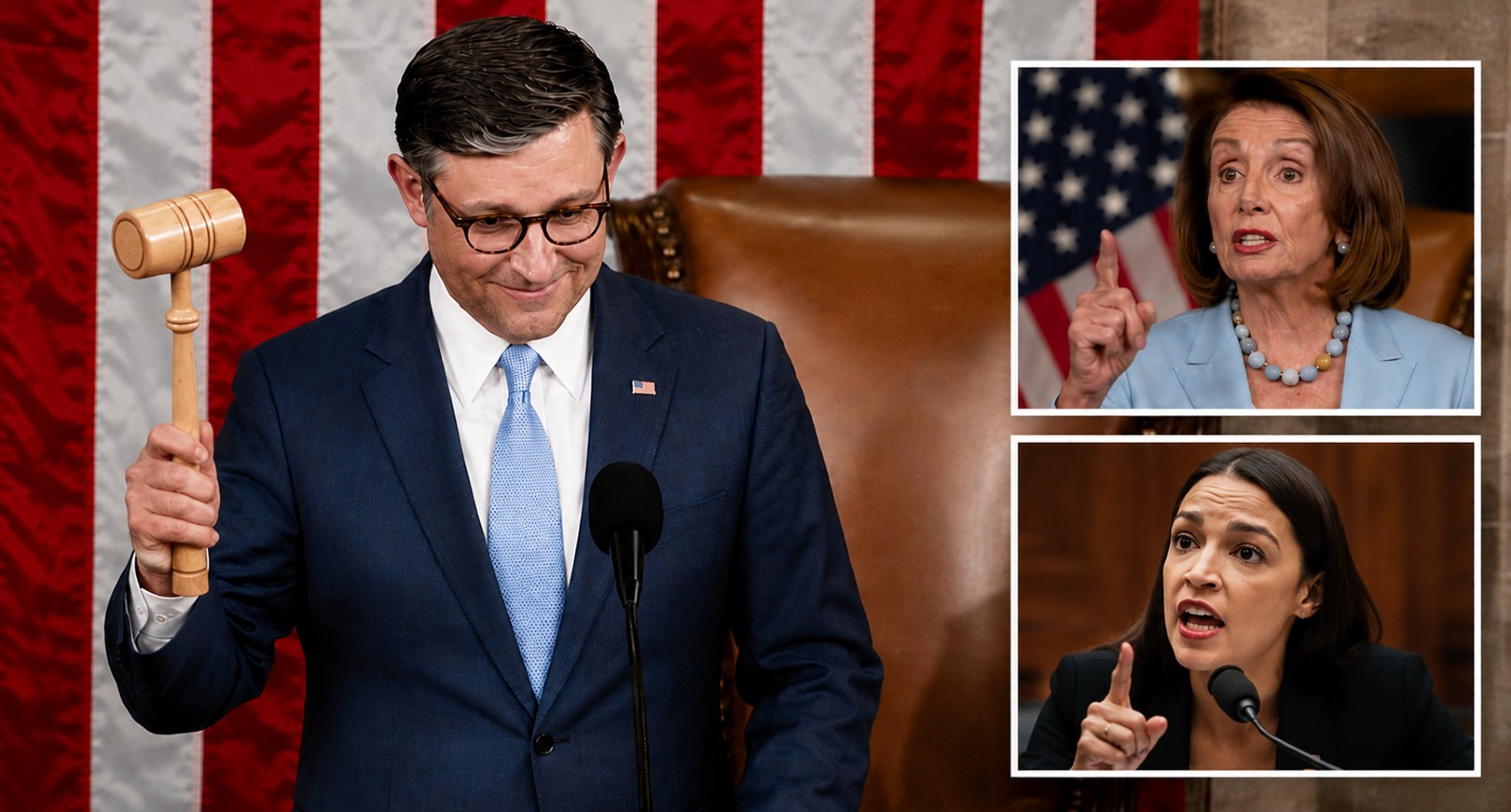
The House of Representatives delivered a major victory this week for Americans with disabilities who want the opportunity to work instead of being trapped by a broken federal bureaucracy.
In a bipartisan vote, lawmakers approved legislation aimed at dismantling long-standing barriers within the Social Security Disability Insurance program that critics say have discouraged work and punished self-sufficiency for decades.
H.R. 8884, the **Removing Barriers to Work for Disabled Americans Act**, sponsored by Rep. Austin Scott, R-Ga., passed the House by a vote of 232-188 and now heads to the Senate, where it has been referred to the Committee on Finance.
The legislation restores an important tool that the Social Security Administration lost when its demonstration authority expired in 2022.
Under the bill, the SSA would once again be authorized to test practical reforms under the Social Security Disability Insurance program through Dec. 31, 2030, with demonstration projects continuing through the end of 2031.
Rather than permanently rewriting federal law, the agency would be able to pilot innovative approaches designed to help beneficiaries who are able and willing return to the workforce.
The legislation includes significant safeguards. Participation would be entirely voluntary, and no participant could receive less total income as a result of joining one of the demonstration projects.
Supporters say those protections make the bill a common-sense effort to modernize a system that has too often discouraged Americans from pursuing employment.
House Ways and Means Committee Chairman Jason Smith, R-Mo., argued the current system is failing many of the very people it was designed to help.
“With over 60 percent of Social Security Disability Insurance recipients expressing an interest in returning to the workforce but less than one percent leaving the program because of a successful return to work each year, the Social Security Administration’s complex rules and regulations are clearly failing to deliver for too many Americans,” Smith said.
“Giving the SSA the authority to test innovative ways to better help disabled Americans pursue gainful employment is pure common sense, and this legislation goes a step further to ensure participation in any new system is both voluntary and will not reduce a beneficiary’s total income,” Smith added.
Smith pointed to what he described as a massive disconnect between Americans who want to work and those who are actually able to do so under the current system.
For years, disability recipients have warned that attempting to return to work can trigger a maze of complicated regulations, overpayment disputes, benefit cliffs, and uncertainty that ultimately makes taking a job financially risky.
Rather than encouraging independence, critics say the current structure often rewards staying on the sidelines.
Supporters argue H.R. 8884 takes a fundamentally different approach.
Instead of expanding government programs or imposing sweeping permanent reforms without evidence, the legislation gives the Social Security Administration the flexibility to test targeted solutions, evaluate the results, and determine what actually helps Americans reenter the workforce before making lasting policy changes.
Backers say the measure reflects a core conservative principle: government assistance should serve as a bridge to opportunity—not a permanent barrier to self-reliance.
The bill recognizes that having a disability does not automatically mean someone is unable to work and that federal policy should encourage those who are capable of seeking employment rather than penalizing them for trying.
The legislation also broadens the agency’s authority to include additional populations, including blind Americans, expanding the reach of future demonstration projects.
The proposal advanced through the House with bipartisan support after clearing the Ways and Means Committee, where lawmakers from both parties acknowledged that the current disability system leaves too many Americans behind.
Still, Republicans led the charge, arguing that practical reforms backed by measurable results are preferable to expanding entitlement programs or making permanent changes without first proving they work.
The bill now moves to the Senate, where lawmakers will decide whether to send it to President Donald Trump’s desk.
Supporters are urging swift action, arguing that restoring the SSA’s demonstration authority represents a fiscally responsible, low-cost reform that could help thousands of Americans regain the dignity, purpose, and financial independence that comes with meaningful work.
If enacted, the Social Security Administration would once again have the authority to launch carefully monitored pilot programs designed to improve employment outcomes, while reporting requirements would provide transparency and accountability as Congress evaluates which reforms deserve permanent consideration.
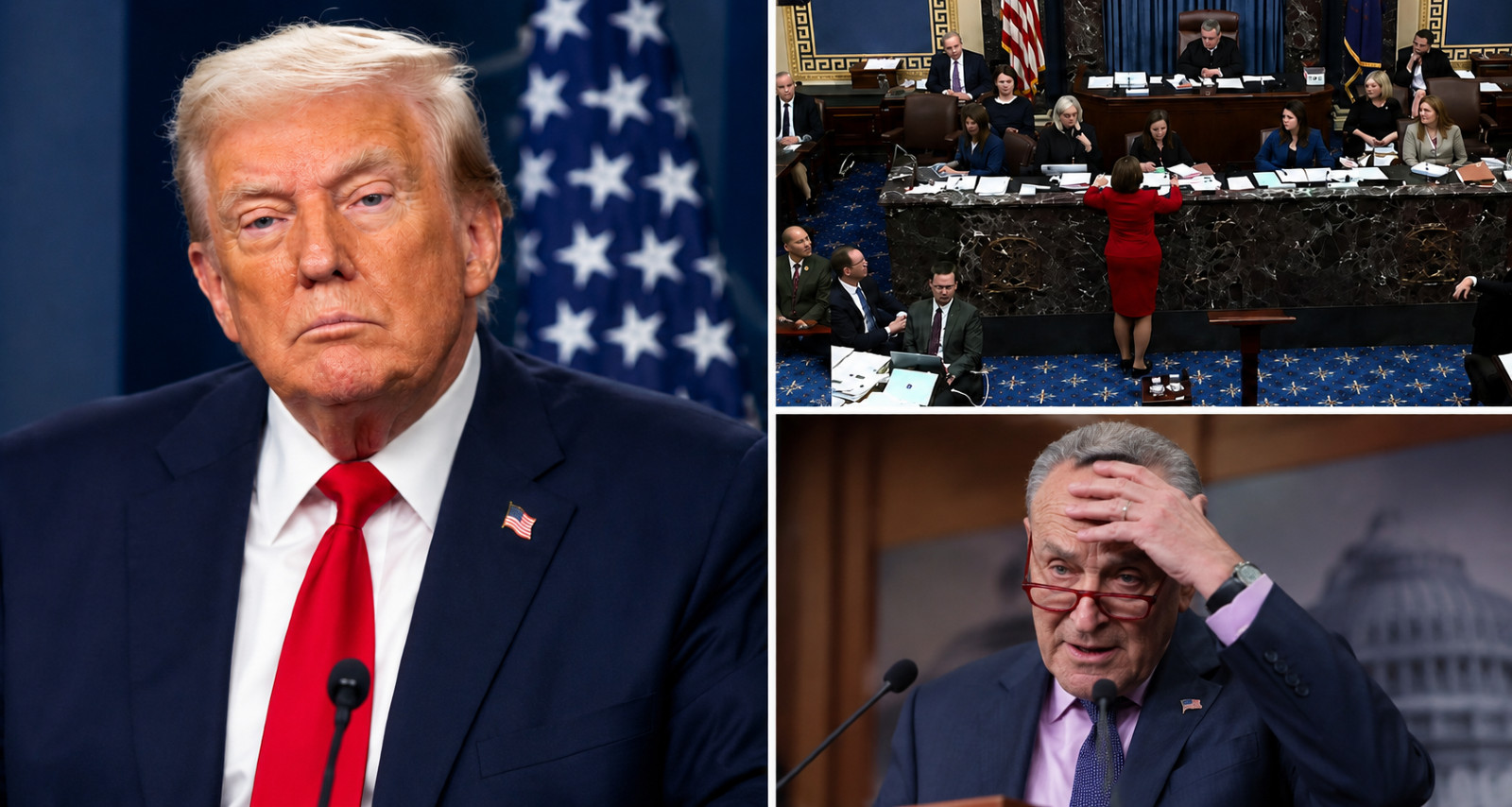
Senate Republicans narrowly defeated another Democratic attempt to limit President Donald Trump’s authority over ongoing U.S. military operations involving Iran, preserving the administration’s flexibility as fighting in the region continues to intensify.
In a razor-thin 50-49 procedural vote, Republicans blocked Democrats’ latest effort to force immediate congressional action on U.S. troop deployments. The measure sought to discharge a war powers resolution from the Senate Foreign Relations Committee and bring it directly to the Senate floor for a vote.
It marked the thirteenth time Democrats have attempted to curb the president’s military authority over Iran.
Three Republicans—Sens. Susan Collins of Maine, Lisa Murkowski of Alaska, and Rand Paul of Kentucky—joined most Democrats in supporting the effort.
But Sen. John Fetterman, D-Pa., once again broke with his party, becoming the lone Democrat to oppose the resolution and providing Republicans with the decisive vote needed to keep the measure from advancing.
The outcome marked the eleventh time Republicans have successfully blocked similar efforts, highlighting both Democrats’ determination to challenge the administration’s military strategy and the GOP’s ability to hold the line when its members are present.
The vote came against the backdrop of rapidly escalating events overseas.
Earlier that same morning, U.S. Central Command confirmed strikes against Iranian military command centers and missile sites, although officials did not disclose the exact locations or casualty figures.
At nearly the same time, drones believed to be launched by Iran struck vessels at an Egyptian port near the Suez Canal, setting two ships on fire and raising new concerns about Tehran’s ability to threaten one of the world’s busiest commercial shipping corridors.
Those developments dominated debate on the Senate floor, where Democratic Leader Chuck Schumer argued that Congress should intervene.
“This aimless war has been one of the biggest catastrophes in American history. Trump’s mess only gets worse with every passing hour. Trump said this war would last a week, but American service members are still getting killed five months later,” Schumer added.
Schumer also pointed to the reported attack in Egypt as evidence that the conflict is broadening.
“This war seems to be expanding with Iran’s latest attack in Egypt’s territory. Senate Republicans cannot sit on the sidelines as Trump’s war escalates out of control,” Schumer added.
Supporters of the administration counter that congressional intervention at this stage would undermine ongoing diplomatic efforts and weaken America’s negotiating position.
President Trump previously argued that a similar Senate vote in June “made his job more difficult” as his administration pursued negotiations aimed at de-escalating the conflict.
Republicans have maintained that ordering troop withdrawals while military operations and diplomatic talks remain active would reduce American leverage, embolden the Iranian regime, and place U.S. service members already deployed in the region at greater risk.
The June 23 vote remains the only instance in which Democrats successfully advanced a related nonbinding concurrent resolution.
That measure passed the Senate after Republican Sens. Dave McCormick of Pennsylvania and Mitch McConnell of Kentucky were absent.
Trump later dismissed the resolution as “poorly timed and meaningless,” noting that it carried no binding legal effect.
Tuesday’s vote reinforced Republican leaders’ argument that, with a full conference in attendance, they can continue protecting the commander-in-chief’s authority to direct military operations without additional congressional restrictions.
Fetterman’s willingness to repeatedly break with fellow Democrats on Iran-related votes has also become increasingly notable.
Without his vote, Democrats would have prevailed 50-49, allowing the resolution to move forward.
Instead, his decision once again provided the margin Republicans needed to preserve the administration’s operational flexibility.
The dispute reflects a broader constitutional debate over war powers that has existed for decades.
Democrats argue that Congress—not the executive branch—must reassert its Article I authority over military engagements they believe have not received sufficient congressional authorization.
Republicans, meanwhile, contend that imposing legislative constraints while military operations remain underway and diplomatic negotiations continue would project weakness to America’s adversaries and increase risks for U.S. forces already operating in the region.

Cracker Barrel Fans Outraged Again After NEW Major Change

Mamdani Kicked Out — He’s Livid After Latest Announcement

GOP Just Passed It 232-288 — Pelosi And AOC Lose It On House Floor

All Hell Breaks Loose In Senate After Wild Vote — It’s Shut Down!

Top Trump Admin And Wife Found Dead — Chilling Update Just Released

Mayor Mandami Enraged — NYPD Defies Him Over Insane New Order
Mayor Mandami Enraged — NYPD Defies Him Over Insane New Order
Top Trump Admin And Wife Found Dead — Chilling Update Just Released
All Hell Breaks Loose In Senate After Wild Vote — It’s Shut Down!
Cracker Barrel Fans Outraged Again After NEW Major Change
GOP Just Passed It 232-288 — Pelosi And AOC Lose It On House Floor
Mamdani Kicked Out — He’s Livid After Latest Announcement
-
 Economy4 months ago
Vance Leaves Meeting, Looks Straight Into Camera, Announces Stunning Arrest
-
 Economy4 months ago
Adam Schiff Facing 30 Years In Prison After Bank Records Leak
-
 Economy4 months ago
Supreme Curt Sides With Trump — He Can Remove The All
-
 Economy4 months ago
All Hell Breaks Loose On Fox When Jesse Watters Asks Fetterman One Question
-

 Economy2 months ago
Prayers Pour In After Fox Host Dies: ‘Senseless Murder’
-
 Economy4 months ago
NBC Stops LIVE Broadcast — Breaks Big Trump News
-

 Culture2 months ago
Michelle Obama Drops Nasty Bomb About ‘Useless’ Daughter
-
 Economy4 months ago
Trump Pulls Off Miracle Of A Lifetime — It’s Permanently Open