
Latest
How Florida retiree lost $200K in fake PayPal refund scam

Brian Oliver is retired, sharp and financially savvy enough to have a stock-and-bond portfolio worth hundreds of thousands of dollars. He is not the type of person you picture getting scammed. That is exactly why scammers picked him.
What happened to Oliver, 85, is the kind of story that makes your jaw drop, and your stomach turn at the same time. It started with a routine-looking email and ended with a box of gold coins rolling away in the back of a black Mustang. In between, Oliver lost $200,000 and nearly half of his retirement savings.
He told his story on my Beyond Connected podcast at getbeyondconnected.com, along with Detective Justin Torres of the Gainesville Police Department in Florida. What they shared together is equal parts chilling and clarifying.
Sign up for my FREE CyberGuy Report
BEWARE FAKE CREDIT CARD ACCOUNT RESTRICTION SCAMS
Brian got an email that said PayPal owed him money. It was not a wild claim. He had dealt with PayPal before and figured, “Maybe they found some money for me.” So he responded. The email included a phone number, and that number connected him to a man who called himself Andrew Johnson.
“Yeah, we have $450 for you. Type in the number 100 on your computer and we’ll get it started.”
Brian typed 100. Andrew immediately said he had made a mistake: “Oh no, you put in 10,000.”
Brian pushed back. He said he did not type 10,000. Andrew told him to check his Bank of America account. Brian opened it, and there it was: $10,000 sitting in his checking account.
Except it was not real. The scammers had somehow mirrored his bank’s website. What Brian saw looked exactly like his actual Bank of America page, complete with a new balance and a phone number embedded in the “Contact Us” section. That number was fake, too.
Brian called it. A man named Josh answered, identifying himself as a Bank of America representative. He told Brian that the only way to return the money without triggering a $3,500 tax penalty was to withdraw $10,000 in cash and feed it into a crypto ATM.
Oliver had never heard of a crypto ATM before that day. Josh helpfully told him exactly where to find one. It was in a sketchy part of town, and Oliver walked in carrying $10,000 in his pocket.
“I’m on my knees, on a cement floor, and I’m 85,” Oliver said.
He fed one hundred $100 bills into the machine, bill by bill, watching over his shoulder the entire time. Some bills got kicked back out. He fed them in again. When the machine finally accepted all of them, he photographed the receipt and sent it to Andrew Johnson, just as he had been instructed.
Then Oliver went home and told Andrew it was done. Andrew told him they still had to take care of his refund. He told Oliver to type in the number 200.
FAKE PAYPAL EMAIL LET HACKERS ACCESS COMPUTER AND BANK ACCOUNT
Oliver typed it. Andrew’s response came fast: “Oh my God, my boss is going to kill me. It’s $200,000 we’ve transferred to your account.”
This type of scam is becoming more common, and it often involves criminals impersonating trusted platforms like PayPal.
“PayPal does not tolerate fraudulent activity, and we work hard to protect our customers from evolving phishing scams,” a spokesperson for PayPal told CyberGuy. “We always encourage consumers to learn how to spot the warning signs of common fraud, including our tips on the PayPal Newsroom for identifying phishing emails that attempt to impersonate trusted brands. We further recommend contacting Customer Support for assistance through official channels such as the PayPal app and our Contact Us webpage, and never responding to suspicious, unexpected emails.”
Oliver opened his bank account again. The fake mirrored site showed $200,000 sitting there. Josh Wilson was back on the phone with a new plan. This time, the crypto ATM would not work because the amount was too large. Oliver needed to liquidate $200,000 from his stock and bond portfolio, convert it to cash and use it to buy gold coins.
Oliver protested. He told them to just reverse the transfer. They said it was impossible.
“This is my retirement money. 50% of my retirement money,” he said.
The scammers told him not to breathe a word to anyone. Josh specifically warned him that telling his broker the truth could trigger tax problems. So Oliver called his broker and said he had his eye on a piece of real estate he wanted to flip. The broker processed the sale without question.
YOUTUBE JOB SCAM TEXT: HOW TO SPOT IT FAST
Oliver went to a gold coin store, wrote a check for $198,560 and waited two to three days for it to clear. Andrew Johnson stayed in regular contact the entire time.
When the gold was ready, Johnson gave Oliver one final instruction. A courier would come to his door to pick up the box. Before handing it over, Oliver should ask the courier for a password. The password was “blue.”
The courier arrived. He was driving a black Mustang. He said the word blue. Oliver handed over the box.
“He told me the password,” Oliver said. “I handed the box, and off went my $200,000.”
The day after the courier left, Andrew Johnson called back with urgency. He told Brian Oliver another $200,000 had landed in his account, and they needed to do the whole thing over again. That was the moment it broke.
“That’s when I came out from under the ether of this scam,” Oliver said. “And I said, this cannot be right.”
He immediately called the Gainesville Police Department.
Detective Justin Torres of the Gainesville Police Department took the call and started working the case immediately. The scammers had asked Oliver for photos of the gold and the purchase receipt, which gave law enforcement about a day and a half to set up an operation before the courier was scheduled to return.
Detective Torres pulled in four officers from the department’s Gun Violence Initiative unit, a team of intermediate detectives trained for exactly this kind of boots-on-ground work. They set up covert and marked vehicles around Oliver’s residence at a careful distance.
“It was pretty high intensity because I’m listening to Mr. Oliver’s conversation with Andrew,” Torres said. “And I’m also trying to be a good distance away to listen to my radio and be able to broadcast what I need to to the other officers on the outside.”
The scammers were suspicious. They kept pushing Oliver to be more compliant. Oliver pushed back. The goal was to keep them on the line long enough for the courier to show up. The courier, a man named Seth Wayne, drove in from Tampa. The officers waited. When he arrived, they arrested him. The case went to trial. Seth Wayne received an 18-year prison sentence.
A federal jury has since convicted a second courier in the same scheme. Atharva Shailesh Sathawane, 22, an undocumented immigrant from India, was found guilty of conspiracy to commit wire fraud and money laundering, with Brian Oliver among his victims.
Sathawane was arrested after the Gainesville Police Department set up a second sting operation at Brian’s home. Court documents showed Sathawane was involved in more than 30 transactions across multiple states, contributing to nearly $8 million stolen from elderly victims. He faces up to 20 years on each count, with sentencing scheduled for Dec. 16 in Gainesville, though he is appealing his conviction.
Ten other victims testified at Seth Wayne’s trial. They had come from all over the state of Florida, and their stories made Oliver furious.
Some had received fake arrest warrants, official-looking documents claiming their identities had been tied to gun running. They were told the only way to clear their names was to pull their savings and buy gold, which would be placed in a special locker in Washington, D.C., until their names were cleared.
One victim lost $1.8 million. Another lost $4.9 million. A third woman lost over $1 million across two separate pickups by the same courier. Her husband was in hospice care in Florida while all of this was happening. She drained her entire life savings, sold her condo and had to move in with her daughter and son-in-law in Alabama, leaving her dying husband behind.
Once the gold or cash leaves a victim’s hands, recovery is nearly impossible. Most of Seth Wayne’s deliveries went to parking lots at McDonald’s or shopping centers, where he handed the money directly to a controller. One pickup went to a jewelry store, where an employee came outside to collect it. That connection is still under active investigation by the IRS and FBI.
The call centers running these operations are overseas. Higher-level couriers in the United States are still being investigated. The full network is, as Detective Torres put it, “very intricate” and “very complicated.”
Seth Wayne himself was a mid-to-upper-level courier. He was also paying other couriers and compensating his handler. When investigators downloaded his cell phone after a judge-approved search warrant, they found evidence that he had researched exactly what he was doing before deciding the money was worth the risk.
SCAMS THAT AREN’T ILLEGAL (BUT SHOULD BE)
The defense of “willful blindness,” the idea that a courier can claim ignorance and escape responsibility, no longer holds up in Florida courts. Seth Wayne found that out the hard way.
For a deeper look at what Oliver went through, you can hear the full story on my Beyond Connected podcast at getbeyondconeccted.com.
Detective Torres laid out the most important red flags clearly, and Oliver added a few from painful personal experience. Here is what both of them want you to know.
Scammers manufacture pressure because it works. If someone on the phone is telling you that you must act right now, that is not a real emergency. That is a tactic. Torres put it directly: “They want to make you believe that you have to do all this right now.”
If someone calls claiming to be from PayPal, your bank or a law enforcement agency, hang up and find the real number yourself. The number embedded in Oliver’s fake bank website looked completely legitimate. It was not.
Literally ten seconds. Detective Torres confirmed what many security experts say: “If you pause these scams for just 10 seconds, many of them will just fall apart.” A scammer who is pushed back even slightly will often overreact, and that reaction will feel wrong.
The moment someone on the phone tells you not to tell a family member, friend or neighbor what is happening, stop. That instruction exists for one reason: to prevent you from getting help before they get your money. “Once you start hearing that isolation conversation, that is the biggest red flag,” Torres said. “You need to hang up the phone.”
Oliver made this one simple: “If you’re told to go buy gold, the only reason they tell you to buy gold is because it can never be traced. It’s a scam.” No legitimate company, government agency or financial institution will ever ask you to buy gold coins and hand them to a stranger.
If you have already bought gold and someone is coming to your home to pick it up in a box, Oliver’s advice is direct: “Stop right there. It’s a scam.”
If someone claims they accidentally sent you money and asks you to return it, stop right there. Real companies fix errors on their own systems. They will not ask you to withdraw cash, buy crypto or purchase gold to correct a transaction.
If you need to check your bank account, use your official banking app or type the website yourself. Do not trust links, screens or phone numbers provided during a call. In many cases, scammers create fake sites that look identical to the real thing.
Scammers often stay on the phone and guide you through every move. That level of control should raise concern. Legitimate companies do not walk you through withdrawing cash, using crypto ATMs or buying gold to solve a problem.
Before moving a large amount of money, pause and call someone you trust. A quick conversation with a family member or friend can shift your perspective. In many cases, that outside voice is enough to stop a scam in progress.
Scammers build convincing stories using real details they find online. This can include your phone number, home address or financial history. To reduce that risk, consider removing your information from data broker and people-search sites. While you can do this manually, it often takes time, which is why some people use a data removal service such as Incogni to help automate the process and keep their information from resurfacing.
Check out my top picks for data removal services and get a free scan to find out if your personal information is already out on the web by visiting Cyberguy.com.
Get a free scan to find out if your personal information is already out on the web: Cyberguy.com.
Brian Oliver lost $200,000, leaving him with only half of his retirement savings. Today, he says he is slowly sinking toward bankruptcy, and the odds of getting that money back are slim. Even so, he chose to go public so others could hear his story before it happens to them. What makes this case different is that it led to real consequences. Detective Torres and his team moved quickly and set up a sting operation. As a result, they arrested a courier who later received an 18-year prison sentence. Meanwhile, the IRS and FBI are still investigating the larger network. However, this kind of outcome is rare. In most cases, victims lose everything and never see justice. These scams are complex, often run from overseas, and are designed to move money fast. Because of that, law enforcement usually focuses on the people closest to the victim and works backward. In the end, Oliver’s turning point came during a second demand for money. At that moment, something felt off, so he paused. Then he said, “This cannot be right.” That instinct matters. In many cases, that brief pause is enough to break the scam.
If you were in Oliver’s position, at what exact moment do you think you would have stopped, and what would it have taken for you to make that call? Let us know by writing to us at Cyberguy.com.
Sign up for my FREE CyberGuy Report
Copyright 2026 CyberGuy.com. All rights reserved.
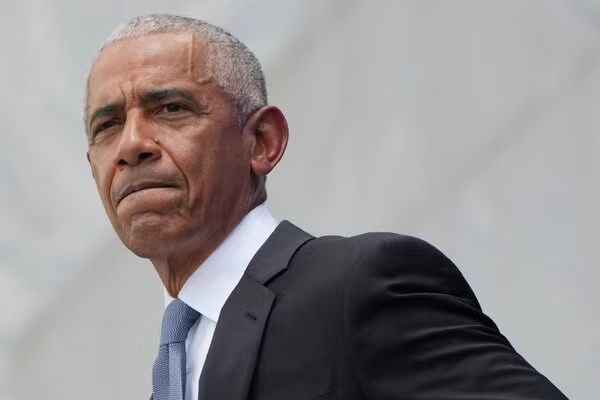
Former President Barack Obama is facing renewed criticism after delivering remarks to newly elected House Democrats in which he contrasted the Republican Party with a country club while suggesting that Democrats more accurately reflect the American population.
Obama made the comments Wednesday at Washington’s Folger Shakespeare Library, where incoming Democratic lawmakers gathered following their party’s midterm election victories.
During his address, the former president reflected on his eight State of the Union speeches and the differences he observed between Republican and Democratic lawmakers seated on opposite sides of the House chamber.
His description of Republicans focused on their perceived lack of demographic diversity, while he portrayed the Democratic caucus as a reflection of the nation’s broader population.
“You know, one of the things that always struck me each time I did it — and I did eight of them, you go into the House chamber for the State of the Union, and on one side, just, like, everybody looked the same,” Obama said.
He followed that observation with a comparison that drew criticism from conservatives who viewed the remarks as dismissive of Republican lawmakers and the Americans they represent.
“You know? It’s like a golf country club on one side, and then you’ve got on the Democratic side, you just had America,” he continued. “You had everybody — and that is a power.”
The comments immediately raised questions about the former president’s characterization of political representation, particularly his suggestion that one party’s lawmakers embodied America more fully than the other.
Although the Democratic caucus has historically included greater racial and ethnic diversity than its Republican counterpart, Republican lawmakers also represent millions of Americans from different racial, religious, geographic, and economic backgrounds.
Critics argue that Obama’s country club comparison risks reducing elected representatives to their appearances rather than recognizing the diversity of the constituents they serve.
The former president continued by emphasizing what he described as the strength of the Democratic Party’s broad coalition.
“The diversity of this class is its power. And I don’t just mean ethnic diversity or racial diversity or religious diversity. It’s also regional diversity and ideological diversity,” he said.
Obama then urged incoming Democratic lawmakers to work together despite disagreements within their own party.
“And the key, though, is to recognize that in that diversity, if you listen and you are extending grace to those inside your caucus that you don’t agree with 100% of the time, you’re going to agree on core values and you’re going to agree on a basic direction,” Obama added.
His broader message emphasized cooperation among Democrats, but the contrast he drew between the two parties became a focal point of criticism.
Conservative critics contend that describing Democrats as representative of America while comparing Republicans to an exclusive country club reinforces the very political divisions national leaders frequently call on Americans to overcome.
Supporters of Obama’s remarks, meanwhile, could point to the demographic differences between the parties’ congressional delegations as the context for his comments.
The controversy centers on whether highlighting those differences is a legitimate observation about political representation or an unnecessarily dismissive characterization of lawmakers from the opposing party.
The remarks come as Democrats prepare to return to Washington with new congressional majorities and face the challenge of managing ideological differences within their own ranks.
Obama’s appearance was intended to encourage the incoming lawmakers to recognize their shared priorities despite disagreements on individual policies.
However, his comments also renewed attention to the rhetoric used by prominent political figures when describing Americans who support the opposing party.
The former president was not the only member of the Obama family drawing attention to the White House following the midterm elections.
Former First Lady Michelle Obama also entered a separate debate over the historic executive mansion, publishing an essay that some observers interpreted as an indirect criticism of President Donald Trump’s White House renovation projects.
The essay, published October 8 as part of the “In Pursuit” project commemorating America’s 250th anniversary, focused primarily on former First Lady Jacqueline Kennedy and her efforts to restore the White House during the early 1960s.
Michelle Obama did not mention Trump or first lady Melania Trump by name.
Nevertheless, her discussion of how presidential families should approach changes to the historic residence was widely interpreted as a possible contrast with renovations undertaken during Trump’s second term.
“Regardless of party, our families understood that winning an election didn’t grant us the deed to a few acres of prime real estate to remake in our own image,” Obama wrote.
“We recognized that we were just temporary stewards of a home that belonged to the nation, even as we also recognized that like any 200-year-old house, updates were often sorely needed — especially considering the demands of a modern presidency.”
Her essay praised Jacqueline Kennedy’s approach to preserving the historic character of the White House after John F. Kennedy became president in 1961.
Rather than simply redecorating the building according to her personal preferences, Kennedy pursued historically significant furniture, artwork, and other objects associated with previous administrations.
The restoration helped establish a preservation-minded approach to maintaining the executive mansion for future generations.
Michelle Obama’s comments emphasized the responsibility of presidential families to care for a building that belongs to the American public rather than any individual administration.
While some observers interpreted the essay as criticism of Trump’s renovation decisions, the former first lady did not explicitly identify his administration as its target.
Together, the two appearances have placed Barack and Michelle Obama back in the political conversation as Democrats prepare for a new congressional session.
For Barack Obama, the latest controversy centers on his description of the Republican Party and his suggestion that Democratic lawmakers more closely resemble the country as a whole.
His supporters may view the remarks as a celebration of demographic and ideological diversity, while critics see a broader problem with portraying one political coalition as more authentically American than another.
The distinction matters because members of both parties are elected to represent American citizens, regardless of the demographic composition of their congressional delegations.
As the incoming Congress prepares to take office, Obama’s remarks have once again brought attention to the question of how political leaders discuss diversity, representation, and national unity.
And while the former president intended to celebrate the Democratic Party’s coalition, his country club comparison has given critics another opportunity to challenge the language prominent political figures use when describing their opponents.
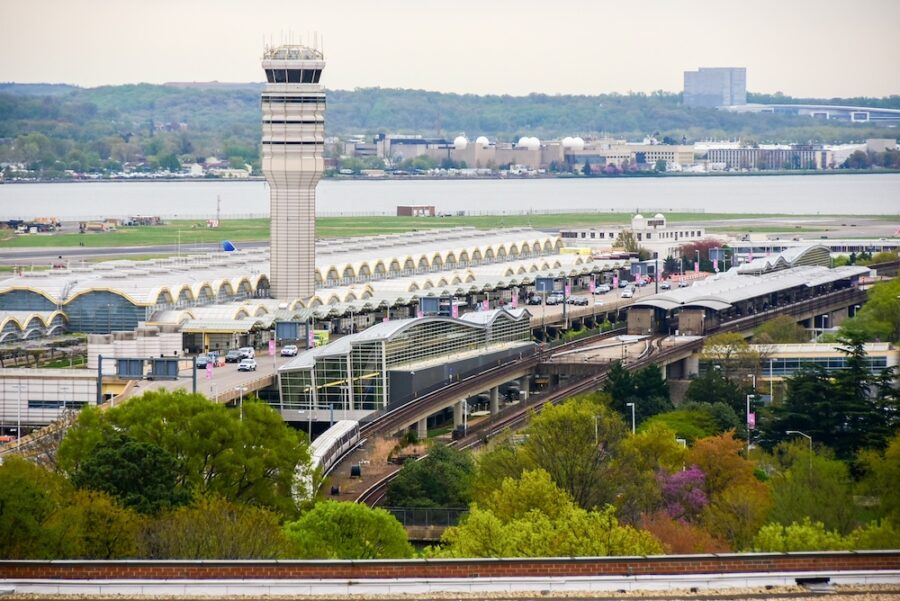
Millions of Americans preparing to travel for Thanksgiving could be facing a holiday travel nightmare as the Federal Aviation Administration warns that dangerous weather, overwhelming passenger traffic, and potential ground stops could bring major airports across the country to a standstill.
With more than 52,000 flights scheduled nationwide Tuesday, November 24, the FAA is warning that several of America’s busiest airports could experience significant disruptions just as families scramble to reach their holiday destinations.
The trouble spots include major transportation hubs in New York and California, where powerful winds, heavy rainfall, low clouds, and poor visibility threaten to create widespread delays.
And with hundreds of thousands of flights expected throughout the Thanksgiving travel period, even temporary disruptions could trigger a domino effect across the nation’s already strained aviation system.
FAA Administrator Bryan Bedford warned that the country is preparing for the ‘busiest Thanksgiving travel week in 16 years’ as airlines anticipate more than 417,000 flights between Monday and December 1.
The staggering number of scheduled flights comes as forecasters track potentially dangerous weather systems threatening large portions of the United States.
Among the first airports facing possible disruptions is New York’s LaGuardia Airport, one of the busiest transportation hubs serving the nation’s largest metropolitan area.
Federal aviation officials have identified strong winds as a potential threat to operations beginning after 10 a.m. Eastern time Tuesday.
Dangerous wind conditions could force air traffic controllers to reduce runway capacity, limit incoming flights, and temporarily halt arrivals.
Such restrictions could quickly affect flights far beyond New York, as airlines struggle to reposition aircraft and crews across the country.
On the opposite coast, California airports are also bracing for possible trouble.
San Diego International Airport could face ground stops beginning around noon Eastern time as heavy holiday passenger traffic puts additional pressure on airport operations.
The airport was already experiencing departure delays of approximately 15 minutes Tuesday morning, even before the most concerning weather conditions were expected to develop.
Farther north, San Francisco International Airport and Oakland International Airport have been identified as additional trouble spots, with potential ground stops beginning around 1 p.m. Eastern time.
Forecasters warn that low clouds, dense fog, heavy rainfall, and potentially strong winds could make landing conditions increasingly difficult.
Poor visibility can force airports to increase the spacing between arriving aircraft, reducing the number of flights that can safely land and creating backups that may last for hours.
While the FAA has identified these airports as potential trouble spots, officials stressed that the warnings do not mean ground stops have already been implemented or that every airport will suspend operations.
The restrictions remain possible traffic-management measures dependent on developing conditions.
Nevertheless, the combination of record-breaking travel demand and deteriorating weather has raised serious concerns about widespread delays.
And the problems may extend well beyond Tuesday.
Meteorologists are monitoring a developing nor’easter that could bring significant travel disruptions to the eastern United States between Tuesday and Thursday.
The storm system is expected to begin affecting the Southeast Tuesday night before pushing northward toward the mid-Atlantic and Northeast ahead of Thanksgiving.
AccuWeather Vice President of Forecast Operations Dan DePodwin warned that the situation could become considerably worse as the holiday approaches.
‘A significant deterioration in the weather is expected starting Tuesday night across the Southeast and then spreading northward along and east of the Appalachians Wednesday through Friday.’
The forecast raises concerns for travelers attempting to reach destinations along the East Coast, where heavy precipitation, gusty winds, and reduced visibility could interfere with airport operations during the busiest days of the holiday rush.
According to the FAA, thunderstorms could also disrupt flights across Florida and the Gulf Coast on Tuesday and Wednesday.
Additional rainfall is expected to threaten operations around Atlanta and the mid-Atlantic Wednesday night, while low cloud ceilings could create further complications along the West Coast.
Hartsfield-Jackson Atlanta International Airport, one of the world’s busiest aviation hubs, is preparing for an enormous influx of holiday travelers.
More than 4 million passengers are projected to pass through the airport during the broader Thanksgiving travel period.
That massive volume of passengers leaves little room for unexpected disruptions, particularly when severe weather threatens multiple regions simultaneously.
Even a relatively brief ground stop at a major airport can create consequences lasting far longer than the original interruption.
When aircraft are prevented from departing or arriving on schedule, subsequent flights can be delayed as planes and crews fall out of position.
For passengers making connections, the consequences can be especially severe.
A short delay at one airport can result in missed connections, canceled itineraries, and hours of additional waiting as airlines attempt to accommodate stranded travelers.
The FAA’s warning also comes after a series of technology-related aviation disruptions in recent weeks, adding to concerns about the industry’s ability to handle unexpected interruptions during periods of extreme demand.
With Thanksgiving falling Thursday, November 26, travelers have limited time to reach their destinations before holiday gatherings begin.
Passengers are being urged to closely monitor airline notifications, check flight statuses before leaving for the airport, and prepare for potential changes to their travel schedules.
Travelers connecting through major hubs may face particular uncertainty as weather-related delays spread through the airline network.
The FAA’s projections suggest that Tuesday could be the busiest day of the Thanksgiving travel week, but deteriorating weather conditions could create additional problems Wednesday and into the holiday itself.
For millions of Americans hoping to spend Thanksgiving with family and friends, the coming days could bring frustrating delays, missed connections, and unexpected travel complications.
And with more than 417,000 flights expected during the holiday travel period, the nation’s aviation system faces a major test as dangerous weather threatens some of its most important transportation hubs.
The FAA has not declared a nationwide ground stop, and the identified airport disruptions remain potential rather than confirmed shutdowns.
But the warning is unmistakable: one of the busiest Thanksgiving travel periods in years is colliding with a potentially disruptive weather pattern, leaving millions of holiday travelers facing an uncertain journey home.
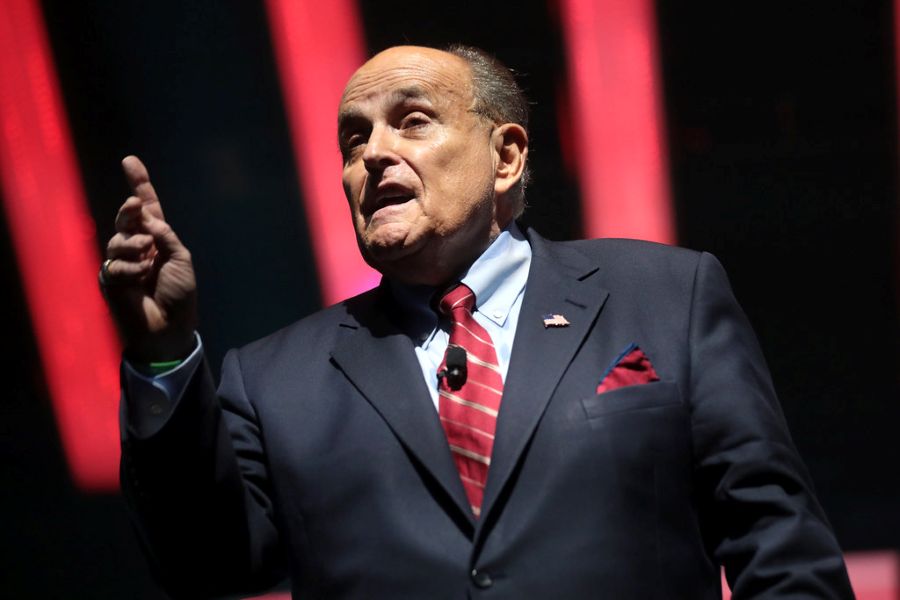
President Donald Trump is preparing to honor one of his most loyal allies with the nation’s highest civilian award, recognizing former New York City Mayor Rudy Giuliani for his decades of public service, his aggressive crackdown on organized crime, and his leadership during the devastating September 11 terrorist attacks.
Giuliani, 82, will receive the Presidential Medal of Freedom during an Oval Office ceremony Tuesday, marking a significant moment for the former federal prosecutor and Republican mayor whose career has spanned some of the most consequential events in modern American history.
The ceremony is scheduled to take place shortly before Trump and first lady Melania Trump depart Washington for Florida, where they will spend Thanksgiving at Mar-a-Lago.
For Giuliani, the recognition represents a major honor following years of legal battles, political controversy, and unwavering loyalty to the president.
“I am honored and humbled to receive the Presidential Medal of Freedom from my nation and from our Commander-in-Chief, President Donald J. Trump,” Giuliani told Fox News.
The award also fulfills a promise Trump made more than a year ago, following a serious automobile accident that left the former mayor injured.
In August 2025, Giuliani was traveling through New Hampshire with spokesman Ted Goodman when the two reportedly stopped to assist a woman seeking help following a domestic violence incident.
Giuliani was subsequently injured in a vehicle collision, prompting widespread concern among his supporters.
Trump responded by publicly announcing his intention to award Giuliani the Presidential Medal of Freedom.
“Details as to time and place to follow,” Trump wrote on Truth Social, describing his longtime friend as “the greatest Mayor in the history of New York City, and an equally great American Patriot.”
Nearly 15 months later, the president is following through on that commitment.
The White House has emphasized Giuliani’s lengthy record in public service, particularly his work fighting organized crime and his leadership during one of America’s darkest moments.
White House assistant press secretary Olivia Wales highlighted Giuliani’s tenure as the top federal prosecutor in Manhattan, where he built a national reputation for aggressively pursuing powerful criminal organizations.
Wales credited Giuliani with having “took down mob bosses and led a relentless war on crime” before becoming mayor of New York City.
As U.S. attorney for the Southern District of New York, Giuliani became known for his aggressive prosecution of organized crime figures, corrupt officials, and major financial crimes.
His efforts against New York’s powerful Mafia families helped establish his reputation as a relentless law enforcement figure willing to confront some of the country’s most notorious criminal organizations.
That reputation followed him into City Hall, where he served two terms as New York City’s mayor from 1994 until 2001.
During his administration, New York experienced a dramatic reduction in violent crime, helping transform the city’s national reputation after years of concerns about public safety.
Although criminologists continue to debate the relative impact of Giuliani’s policing policies and broader national crime trends, the city’s declining crime rate became one of the defining accomplishments associated with his mayoralty.
But it was Giuliani’s leadership following the September 11, 2001, terrorist attacks that elevated him from a prominent local politician into an internationally recognized figure.
When terrorists hijacked commercial aircraft and struck the World Trade Center, killing nearly 3,000 people, Giuliani became one of the most visible public officials responding to the unfolding catastrophe.
As Lower Manhattan descended into chaos, Giuliani appeared repeatedly before cameras, providing updates, coordinating with emergency officials, and attempting to reassure a frightened city.
His presence during the crisis earned him widespread recognition and the nickname “America’s Mayor.”
For millions of Americans, Giuliani became one of the defining public faces of the nation’s response to the deadliest terrorist attack on American soil.
His leadership during that period remains a central part of his public legacy, even as his later political activities have generated intense controversy.
In the years following his mayoralty, Giuliani became a close political ally and personal attorney to Donald Trump.
He played a prominent role in Trump’s efforts to challenge the results of the 2020 presidential election, a decision that ultimately brought significant legal and financial consequences.
In July 2024, Giuliani was disbarred in New York over false statements concerning the election. Washington, D.C., followed with a separate disbarment decision that September.
His legal troubles also included a high-profile defamation case brought by Georgia election workers Ruby Freeman and Shaye Moss.
In 2023, a federal jury ordered Giuliani to pay $148 million after finding him liable for defamation involving accusations he made against the two women.
Following bankruptcy proceedings, Giuliani reached a settlement with Freeman and Moss in January 2025.
Despite the enormous financial and professional consequences, Giuliani remained publicly aligned with Trump.
His legal circumstances subsequently changed as several election-related cases took new turns.
In November 2025, Trump issued pardons to Giuliani and 76 other individuals connected to efforts to challenge the 2020 presidential election results.
Those pardons applied to potential federal offenses and did not eliminate state-level allegations or civil judgments.
Weeks later, a Georgia judge dismissed the state’s election-related racketeering prosecution against Trump, Giuliani, and several other defendants after prosecutors declined to continue the case.
Giuliani has also remained connected to legal proceedings in Arizona, where Attorney General Kris Mayes indicated that prosecutors could pursue a new indictment following the dismissal of an earlier case.
Throughout the controversies, Trump has continued defending his former attorney and publicly recognizing his accomplishments.
The upcoming Medal of Freedom ceremony underscores that longstanding relationship while placing renewed attention on Giuliani’s earlier career in law enforcement and public leadership.
The Presidential Medal of Freedom is the highest civilian decoration awarded by the United States government.
Presidents have traditionally used the honor to recognize individuals who have made exceptional contributions to American society, national security, public service, culture, and other areas of national importance.
For Giuliani, the award represents recognition of a public career that began long before his association with Trump and included major roles in federal law enforcement, municipal government, and the national response to terrorism.
It also arrives at a striking moment in his personal and political life.
After years of courtroom battles, disbarment proceedings, financial difficulties, and intense public scrutiny, Giuliani is preparing to enter the Oval Office to receive one of the country’s most prestigious honors.
His critics continue to point to his conduct following the 2020 election, while supporters emphasize his record as a prosecutor, his administration’s public safety achievements, and his leadership after September 11.
Trump’s decision to award Giuliani the Presidential Medal of Freedom makes clear which aspects of that complicated legacy the president intends to recognize.
More than two decades after Giuliani stood before a devastated New York City in the aftermath of the September 11 attacks, the former mayor will be honored at the White House for his service to the country.
And for a political figure who has remained one of Trump’s most steadfast allies through years of controversy, Tuesday’s ceremony will mark a significant public recognition from the president himself.

Video Of Barack Obama Goes Viral — The Rumors Were True!

Ominous Warning Issued To Millions Of Thanksgiving Travelers

Trump Makes Major Announcement About Rudy Giuliani

SCOTUS Justice Issues Chilling Warning

Democrate Leader Just Self-Deported After Sudden Discovery

Primetime Fox News Host Makes Shocking Admission On LIVE TV

Massive Migrant Caravan Converges On U.S. For Democrat Midterm Victory

JUST IN: Pair Of Senior FBI Officials Arrested — It’s Damning

Pentagon Rolls Controversial Out Doomsday Strategy
Texas’ New Dem Governor Makes Horrifying Muslim Announcement

Game-Changing New Detail Emerges From Ilhan Omar Investigation

BANNED! Democrats’ First Act Should Terrify Every American
-
 Economy7 months ago
Vance Leaves Meeting, Looks Straight Into Camera, Announces Stunning Arrest
-
 Economy7 months ago
Adam Schiff Facing 30 Years In Prison After Bank Records Leak
-
 Culture5 months ago
Michelle Obama Drops Nasty Bomb About ‘Useless’ Daughter
-
 Economy7 months ago
Supreme Curt Sides With Trump — He Can Remove The All
-
 Economy8 months ago
All Hell Breaks Loose On Fox When Jesse Watters Asks Fetterman One Question
-
 Economy5 months ago
Pete Hegseth Just Confirmed Devastating Rumors
-
 Economy6 months ago
Prayers Pour In After Fox Host Dies: ‘Senseless Murder’
-
 Border & Security4 months ago
Top Trump Admin And Wife Found Dead — Chilling Update Just Released