
Latest
The CCP controls the most intimate elements of our life. Most Americans have no idea

Critical minerals quietly power every aspect of modern American life. As you pour your morning coffee, you are relying on copper wiring and silicon chips working behind the scenes inside your coffee maker. When you grab milk from the refrigerator, you are depending on metal components, copper wiring, and electronic controls to keep everything cold. Turn on the TV to another round of bickering politicians on cable news, and you are looking at a screen built with indium, lithium, and rare earth phosphors.
Flip off the lights, hop in your car, connect your phone to Bluetooth, and turn on your favorite podcast for the drive to work. That everyday routine depends on copper, lithium, and a whole host of other critical minerals that power batteries, speakers, navigation systems, electric motors, and modern communications technology.
These materials are so deeply embedded into our daily lives that most Americans would never think twice about them. But they should.
TRUMP ADMINISTRATION WORKS TO BREAK CHINA’S RARE EARTH MINERAL STRANGLEHOLD ON AFRICA
Beijing certainly has. The Chinese Communist Party has spent decades and hundreds of billions of dollars cornering the market on critical minerals, from mining to processing and refining. Today, China controls roughly 70 percent of global rare earth mining and nearly 90 percent of rare earth refining capacity, dominating the supply chains that underpin America’s economic and national security.
This is not just about what goes into your coffee maker or your iPhone. Critical minerals are essential to America’s military strength, powering everything from advanced fighter jets and missile systems to radar, satellites, and communications technology. China knows this and has demonstrated time and time again its willingness to weaponize global supply chains for geopolitical leverage.
Last year, Beijing imposed sweeping export controls on rare earth elements, disrupting global markets and sending shockwaves through defense and manufacturing supply chains. The consequences hit Americans directly. Supply disruptions drive up costs, slow manufacturing, threaten jobs, and make everything from cars to consumer electronics more expensive and harder to produce.
My home state of California’s aerospace industry offers a clear example of what is at stake. The sector supports more than 350,000 jobs and generates tens of billions of dollars in annual economic output. It is also central to America’s defense industrial base, producing advanced aircraft, satellites, and missile systems. Without reliable access to critical minerals, thousands of jobs and billions in economic activity are at risk.
President Trump and his administration understand the urgency of this challenge and are moving quickly to restore American energy and mineral dominance. Recent efforts to strengthen domestic mining and support companies like MP Materials and Lithium Americas are important steps in the right direction.
But America cannot solve this problem alone. Even with increased domestic production, global demand for critical minerals is projected to skyrocket in the coming decades. Some estimates show the world will consume as much copper over the next 25 years as humanity has in all of recorded history.
This is why we must work alongside our most trusted allies and friends to build strong, resilient supply chains away from China.
This week, my Developing Overseas Mineral Investments and New Allied Networks for Critical Energies (DOMINANCE) Act passed out of the House Foreign Affairs Committee. The DOMINANCE Act helps lock in President Trump’s critical minerals strategy and creates a coordinated approach to secure the supply chains that power our economy and national defense. This legislation strengthens America’s ability to work with allies, reduces dependence on China, and ensures the free world — not the Chinese Communist Party — controls the resources that will define the 21st century.
This is not just about energy or industrial policy. It’s not about military might or geopolitical competition, although that is certainly part of the calculus. At its core, this challenge is about protecting the American Dream, and our way of life.
The appliances in our homes, the cars we drive, the technology we rely on each day, and the military systems that defend our nation all depend on secure critical mineral supply chains. America can either meet this moment now, or risk regretting it for the next 100 years.
I am optimistic that, under this administration and alongside our allies, America can reclaim our critical minerals supply chains and take back our energy future.

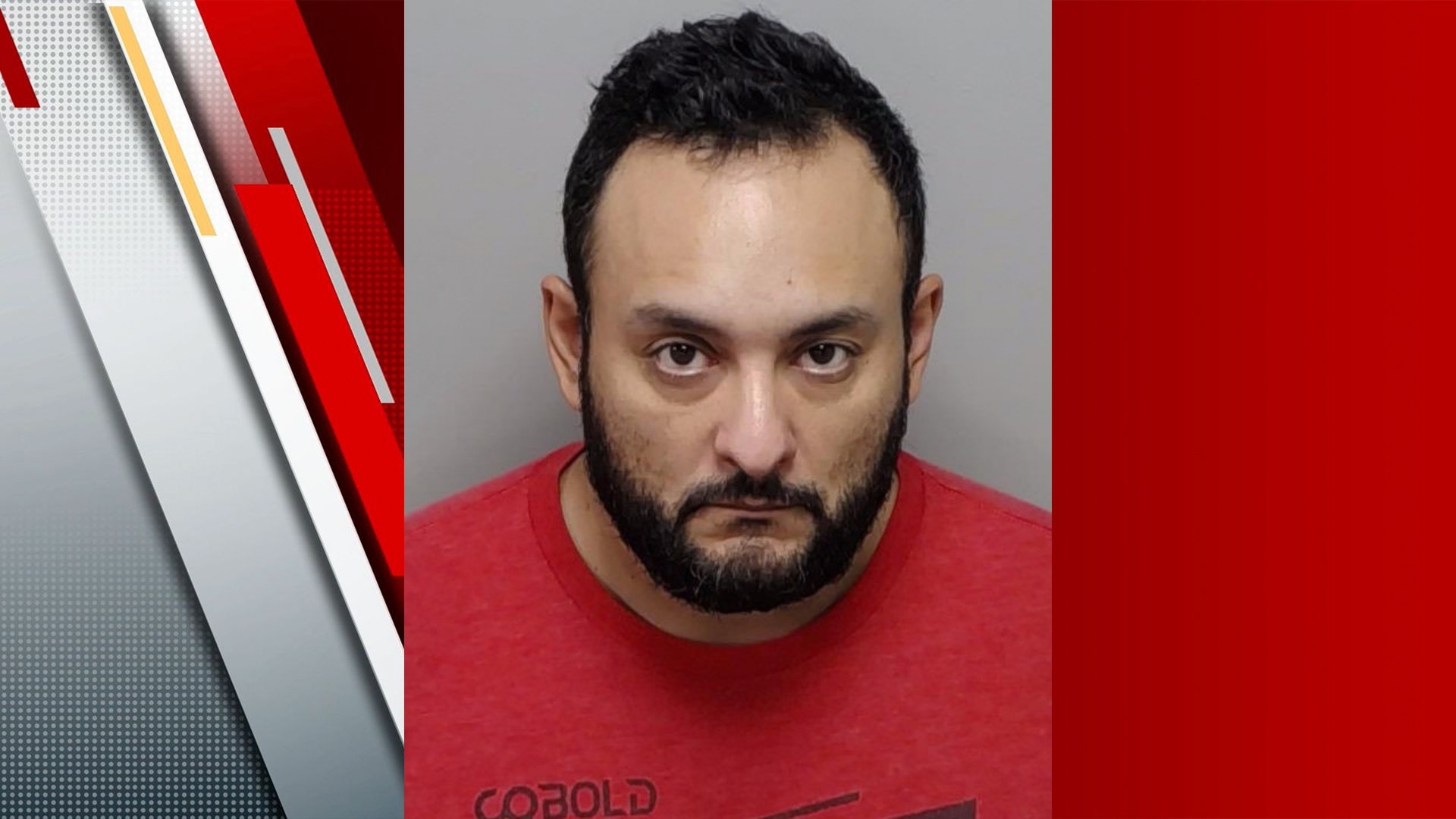
A Texas man is in federal custody after authorities say they disrupted an alleged plot to carry out a shooting at the Texas State Capitol—just one day before President Donald Trump was scheduled to visit the state.
Benny Caldera Jr., 40, of Converse, was initially arrested early Wednesday on a felony charge of making a terroristic threat against a public servant after investigators received what authorities described as “credible information about an individual planning a violent attack.”
According to an arrest affidavit cited by NBC 5, a friend told investigators that Caldera had threatened to shoot up the Texas Capitol and made alarming statements about people associated with the American Israel Public Affairs Committee, or AIPAC.
The friend reportedly told investigators that Caldera said people associated with the prominent pro-Israel organization needed to be exterminated.
Authorities say the alleged attack was planned for Thursday, Oct. 1—the same day Trump was scheduled to visit Texas.
The warning set off an overnight law-enforcement operation.
The Texas Department of Public Safety said it received information about the alleged plot Tuesday evening and immediately began working with the FBI and local authorities.
Investigators worked through the night.
By approximately 3 a.m. Wednesday, SWAT officers had moved in on Caldera’s Converse home and taken him into custody.
He was booked into the Bexar County Jail on the state terroristic-threat charge, with bond initially set at $75,000.
But Caldera wasn’t going home.
After reports circulated suggesting he had been released on bond, DPS publicly pushed back, saying he remained in custody.
The FBI then arrested Caldera at the jail Wednesday evening on additional federal charges connected to the alleged plot, according to DPS.
He was transferred into federal custody.
“The department said he is not out on bond,” according to the account of the case.
The specific federal charges against Caldera had not yet been publicly disclosed.
NBC 5 also reported that Bexar County court records show Caldera was previously charged with unlicensed carrying of a weapon in November 2023. The reported account did not provide the ultimate disposition of that case.
News of the alleged plot quickly reached state lawmakers.
Texas legislators were notified Wednesday about both the threat and Caldera’s arrest as authorities increased security around one of the state’s most prominent government buildings.
Despite the alleged threat, the Texas State Capitol remained open during its normal operating hours with heightened security measures in place.
Authorities stressed that they do not currently believe the public remains in danger.
DPS said there is no reason to believe an ongoing threat exists against the Capitol, lawmakers, employees or members of the public.
The investigation remains active.
The timeline, however, underscores how quickly authorities say the situation escalated: investigators received information about an alleged violent attack Tuesday evening, worked through the night and had a suspect in custody by approximately 3 a.m.
Hours later, the FBI stepped in and took Caldera into federal custody.
The alleged target was the Texas State Capitol.
And according to authorities, the planned date was Oct. 1—the same day a sitting president was scheduled to visit the state.
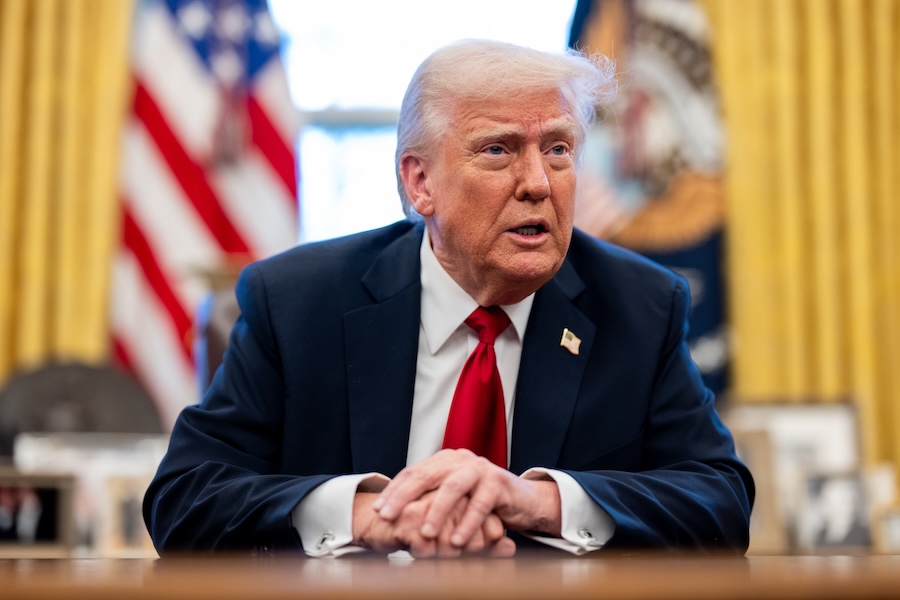
A Department of Energy electrical engineer has been arrested on a stunning federal terrorism charge after investigators accused him of attempting to help the Iran-backed Houthis with technical expertise, drone components and materials associated with the production of explosives.
Ashton Hamed Ellaboudy, 51, of Richland, Washington, was arrested Thursday and charged with attempting to provide material support or resources to a designated foreign terrorist organization.
Federal prosecutors allege Ellaboudy was employed by the Department of Energy while using his specialized electrical engineering knowledge in an effort to assist the Houthis.
The allegations immediately drew a blistering response from the Justice Department.
“As alleged, a U.S. government employee traveled overseas and used his specialized expertise in an attempt to aid the Houthis, a designated Foreign Terrorist Organization backed by Iran,” said Assistant Attorney General for National Security John A. Eisenberg. “Additionally, Ellaboudy acquired materials for the construction of explosive material and drones capable of delivering these explosives. These allegations are so deeply disturbing that they almost defy imagination.”
According to the criminal complaint, the FBI’s investigation began after authorities learned Ellaboudy had allegedly purchased precursor chemicals, components and other materials commonly associated with homemade explosive devices.
Investigators also discovered purchases of components used to build drones and remotely operated aerial systems, prosecutors said.
But the allegations extend far beyond purchases made inside the United States.
Federal authorities say Ellaboudy traveled from Washington state to Oman in September 2025 before crossing into Yemen using an official passport previously issued to him while he worked for the U.S. Army Corps of Engineers.
According to a release from the U.S. Department of Justice, a 51 year old former employee of the Department of Energy, Ashton Hamed Ellaboudy, was arrested and charged with attempting to provide material support to the Yemeni Houthis, who are a designated terrorist organization.… pic.twitter.com/lhySGgETbV
— OSINTdefender (@sentdefender) October 1, 2026
According to the FBI, Ellaboudy intended to reach Sanaa, Yemen’s Houthi-controlled capital.
He ultimately failed to make it there.
When Ellaboudy returned to the United States, prosecutors allege he told Customs and Border Protection officers that his overseas trip had been official government business.
Investigators say that story didn’t hold up.
Ellaboudy’s Department of Energy supervisor later told authorities that he had no authorized government travel to the region and had not been assigned to the missile inspection mission Ellaboudy allegedly described, according to court records.
Federal investigators further allege Ellaboudy admitted to FBI informants that he had been smuggled into and out of Yemen and hoped to establish high-level connections inside the country.
The investigation then took another turn.
Ellaboudy began communicating with an FBI confidential source who purported to be working for a Houthi “Colonel,” according to prosecutors.
Authorities allege Ellaboudy subsequently put his engineering expertise to work.
He allegedly helped test and modify solar power generators and communications equipment intended for a mobile communications center.
Prosecutors say he also supplied diagrams, technical guidance and research involving equipment that could potentially enhance Houthi communications capabilities.
Investigators have also scrutinized Ellaboudy’s previous acquisition and handling of chemicals.
The Justice Department said authorities learned that in 2024 Ellaboudy took sick leave from his government position after reporting exposure to highly concentrated nitric acid.
Nitric acid has legitimate industrial and scientific applications but can also be used in producing certain explosive materials.
Taken together, federal prosecutors allege the engineer’s activities amounted to an attempt to provide material support to the Houthis.
The Houthis, formally known as Ansar Allah, control significant portions of Yemen and have received support from Iran. The United States has designated the organization as a foreign terrorist organization.
Ellaboudy now faces up to 20 years in federal prison if convicted.
The case puts a particularly striking element at the center of the government’s allegations: prosecutors aren’t accusing an ordinary private citizen of simply attempting to make contact with a foreign terrorist organization.
They allege a U.S. government engineer attempted to use specialized technical expertise—and acquire materials involving drones and explosives—to help one.
Ellaboudy has been charged, not convicted, and is presumed innocent unless and until proven guilty in court.

Former Republican Congresswoman Patricia “Pat” Saiki, a trailblazing Hawaii lawmaker who made history as the first Republican elected to represent the state in the U.S. House following statehood, has died at 96.
Saiki died of natural causes at her Honolulu home on September 30, according to her son, Stuart Saiki.
Her death closes a remarkable chapter in Hawaii politics spanning decades and encompassing service in Congress, the state legislature and the administration of President George H.W. Bush.
Born Patricia Fukuda in Hilo on May 28, 1930, Saiki graduated from Hilo High School before earning her degree from the University of Hawaii in 1952.
Politics wasn’t initially her chosen career.
Saiki began as an educator, teaching at several schools before becoming involved in organizing Hawaii’s first teachers’ union.
Her move into elected office came in 1968, when she won a seat in the Hawaii House of Representatives.
She served there for six years before winning election to the state Senate in 1974, where she remained until 1982.
Following an unsuccessful campaign for lieutenant governor, Saiki took over as chairwoman of the Hawaii Republican Party and worked to expand the party’s membership in a state that was already becoming increasingly difficult terrain for Republicans.
Then came the breakthrough that would define her political legacy.
In 1986, Saiki won election to Congress, becoming the first Republican elected to the U.S. House from Hawaii since the islands became a state in 1959.
She was also only the second woman to represent Hawaii in Congress.
Her death prompted tributes from across Hawaii’s political establishment.
Gov. Josh Green ordered American and state flags lowered to half-staff beginning Friday, October 2, through sunrise Monday, October 5.
“Pat Saiki’s six decades of public service and her pioneering example for young women and Asian Americans in Hawaiʻi and across the U.S., combine to form both a lasting, inspiring legacy and a high bar for all of us who serve the public,” Green said in a statement.
Democratic Rep. Ed Case, who represents Hawaii’s 1st Congressional District, also paid tribute to Saiki, crediting her with breaking political barriers and establishing an example for future generations of public servants.
Saiki’s impact extended far beyond her historic election.
During her two terms in Washington, she helped secure Republican support for legislation authorizing an official apology and financial compensation for Japanese Americans incarcerated by the federal government during World War II.
She also became an advocate for environmental protections in Hawaii.
In 1990, Saiki successfully urged President George H.W. Bush to halt the U.S. Navy’s use of Kahoʻolawe as a military bombing range.
Her career in Washington took another turn that same year when she left the House to challenge Democrat Daniel Akaka for a U.S. Senate seat.
Saiki lost the race, but her federal service wasn’t finished.
Bush subsequently appointed her administrator of the Small Business Administration, where she served from 1991 until 1993.
She later taught at Harvard University’s Institute of Politics before returning to Hawaii politics for another statewide campaign.
In 1994, Saiki ran unsuccessfully for governor against Democrat Ben Cayetano.
Although a Republican, Saiki maintained moderate positions on several social issues, including abortion rights, and developed a reputation for working across party lines on legislation affecting Hawaii.
Behind the political milestones was also a mother raising five children.
Her son Stuart remembered Saiki as someone who refused to allow the demands of public office to completely overtake her responsibilities at home.
Even while serving in the legislature, he recalled, she continued helping her children with homework and handling the responsibilities of raising a family.
Saiki was preceded in death by her husband, Stanley, and their eldest son, Stanley Jr.
She is survived by four children—Stuart, Sandra, Margaret and Laurie—as well as her grandchildren.
Saiki’s career ultimately stretched from Hawaii classrooms to the state legislature, from Capitol Hill to a presidential administration.
But her place in Hawaii political history was secured in 1986.
Nearly three decades after Hawaii entered the Union, Patricia Saiki accomplished something no Republican before her had managed in the new state: win election to represent Hawaii in the United States House of Representatives.
She was 96.

JUST IN: Horrific Terror Plot Targeted At Trump THWARTED

Trump Admin Caught Colluding With Iran-Backed Terrorists

First Republican Congresswoman From Deep Blue State Dead

Dems Revolt Against Schumer And Side With Trump

Charlie Kirk’s Mother Breaks Her Silence After Erika Kirk’s Public Statement

Jaw-Dropping Details Emerge From Hijacking Attempt On Israel-Bound Flight

‘The Five’ Gets Emotional As Greg Gutfeld Announces Tragic News

Joe Biden’s Daughter Just Dropped Massive Public Bombshell On Her Dad

Obama Calls It QUITS After Wild Video Goes Viral

Removed From the Country — Ilhan Omar Hit With Horrid News

Get Ready — Mike Pence Makes Stunning 2028 Announcement

Schumer Loses! Court Sides With Trump In Historic Move
-
 Economy6 months ago
Vance Leaves Meeting, Looks Straight Into Camera, Announces Stunning Arrest
-
 Economy6 months ago
Adam Schiff Facing 30 Years In Prison After Bank Records Leak
-
 Economy6 months ago
Supreme Curt Sides With Trump — He Can Remove The All
-

 Culture4 months ago
Michelle Obama Drops Nasty Bomb About ‘Useless’ Daughter
-

 Economy6 months ago
All Hell Breaks Loose On Fox When Jesse Watters Asks Fetterman One Question
-

 Economy4 months ago
Prayers Pour In After Fox Host Dies: ‘Senseless Murder’
-

 Latest4 months ago
Fox News Stuns With Announcement About 5 Fired Hosts
-

 Border & Security2 months ago
Top Trump Admin And Wife Found Dead — Chilling Update Just Released