
Latest
Chill coming from Trump’s summit with Xi is proof of a new Cold War with China

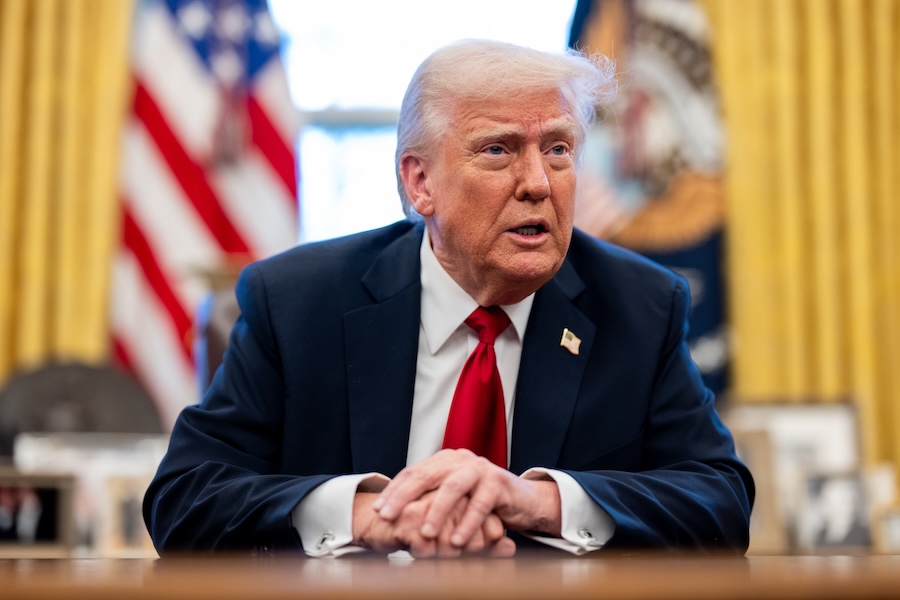
Before President Donald Trump departed for Beijing, I warned in these pages that his summit with Chinese leader Xi Jinping would not simply be another diplomatic meeting about tariffs and trade. I argued it would instead expose the deeper reality now reshaping global affairs: America and China are increasingly operating within conditions resembling a new Cold War — driven by military power, economic leverage, competing technological ambitions and irreconcilable visions for world order.
The summit confirmed that assessment in ways even I did not fully anticipate.
The headlines following the two-day meeting at Beijing’s Great Hall of the People focused on symbolism, modest trade discussions, and elaborate pageantry. Yet beneath the surface, three realities stood out. Taiwan overshadowed everything. Iran exposed the limits of Chinese cooperation. And Xi himself chose language drawn from ancient Greek warfare to remind Washington of what this rivalry ultimately means.
The summit managed tensions. It did not resolve them.
TRUMP-XI’S CHINA SUMMIT IS A DEFINING TEST FOR AMERICA IN THE NEW COLD WAR
The clearest signal came when Xi warned Trump directly that mishandling Taiwan could lead to “clashes and even conflicts” between the two nations. According to the Chinese foreign ministry readout, Xi declared Taiwan “the most important issue in China-U.S. relations,” adding that if it is “handled properly, the bilateral relationship will enjoy overall stability. Otherwise, the two countries will have clashes and even conflicts, putting the entire relationship in great jeopardy.”
That language was extraordinary — and deliberate.
Few Americans fully grasp what is actually at stake. Taiwan anchors the first island chain — the geographic barrier stretching from Japan through the Philippines that limits China’s naval reach into the broader Pacific. Taiwan’s manufacturers produce the vast majority of the world’s most advanced semiconductors, powering everything from smartphones to military systems. Under the Taiwan Relations Act, Washington is committed to providing Taiwan the means to defend itself. A Chinese seizure would shatter American credibility with every ally from Tokyo to Manila.
TAIWAN WATCHES TRUMP-XI MEETING FOR SIGNS CHINA WILL TEST US RESOLVE
Chinese officials choose their words with precision, especially during state summits. Xi’s warning was not diplomatic filler — it was a direct reminder that Beijing views Taiwan as the central test of Communist Party legitimacy. Notably, Trump did not respond to a reporter’s question about Taiwan while standing beside Xi, and the White House readout of the bilateral meeting never mentioned Taiwan at all.
Even more revealing was Xi’s invocation of the Thucydides Trap — the concept popularized by Harvard political scientist Graham Allison suggesting that war often erupts when a rising power threatens to displace an established one. Xi asked publicly whether the United States and China could “overcome the Thucydides Trap and establish a new paradigm for relations between great powers.”
Even as Trump emphasized friendship, trade and “fantastic deals” on the return flight to Washington, Xi was framing the relationship in terms of historic rivalry and potential conflict. That asymmetry is now one of the defining takeaways from Beijing.
FIVE WAYS AMERICA CAN STOP A NEW COLD WAR WITH CHINA FROM TURNING HOT
That contrast tells us much about how Beijing sees the future.
The summit also demonstrated that Washington and Beijing remain deeply divided over Iran, despite public statements suggesting alignment. Both sides announced that the Strait of Hormuz must remain open and that Iran cannot obtain a nuclear weapon. According to the White House readout, Xi also expressed interest in purchasing more American oil to reduce China’s dependence on that critical waterway.
The substance told a different story.
CHINA’S IRAN TIES COMPLICATE TRUMP-XI SUMMIT AS TENSIONS TEST US LEVERAGE
China depends on Gulf oil for the bulk of its energy imports, making regional stability a genuine interest for Beijing. Yet intelligence reporting has established that Chinese-linked entities provided Iran with dual-use technologies, missile component, and sodium perchlorate — a key solid-rocket fuel precursor — even as Washington objected.
Xi told Trump privately that China would not provide Iran military equipment and wanted the strait reopened, but offered no concrete plan and no public commitment. As Foreign Policy noted, the summit produced “few wins” on Iran.
Beijing may selectively cooperate where Chinese interests overlap with America’s — particularly on energy flows and regional stability. But Washington should not confuse tactical alignment with strategic partnership. Iran remains useful to Beijing precisely because it distracts Washington, strains American military resources and complicates our posture across the Indo-Pacific.
AI ARMS RACE: US AND CHINA WEAPONIZE DRONES, CODE AND BIOTECH FOR THE NEXT GREAT WAR
To his credit, Trump achieved one immediate objective: preventing the summit from deteriorating into open hostility. His personal diplomacy reduced short-term tensions and preserved direct communication between nuclear powers managing simultaneous crises over Iran, Taiwan and the global economy. Washington and Beijing are now practicing what might be called managed rivalry — competing intensely while working to prevent direct conflict.
The real struggle extends far beyond trade. It encompasses semiconductor dominance, rare earth minerals, cyber operations and control of the computing infrastructure that will define the next generation of military power. That is why Nvidia’s Jensen Huang joined the delegation as a last-minute addition.
According to CNN, his presence symbolized the contest for computing dominance. Both governments understand — as I detail in my new book, “The New AI Cold War” — that whoever leads in advanced machine-learning systems and computing infrastructure will hold military and geopolitical advantages for decades to come.
Xi understands that fully. China is rapidly integrating automated decision systems into military command networks, predictive surveillance platforms and cyber operations — not for economic competitiveness alone, but for strategic dominance that renders American power secondary before a shot is ever fired.
That is why Americans should resist interpreting the summit’s warm optics as evidence the rivalry is fading. The state banquets, the Temple of Heaven tour, Trump’s September White House invitation to Xi — these created an image of stability. The substance of what Xi said points elsewhere.
CLICK HERE FOR MORE FOX NEWS OPINION
Xi effectively told the United States: we prefer cooperation, but on Taiwan we will not bend. And the historical concept he chose to frame that message, the Thucydides Trap, is a pattern that ends in war 12 times out of 16. It was not accidental.
That leaves Washington with a strategy that is difficult but unavoidable. America must strengthen deterrence in the Indo-Pacific, accelerate semiconductor independence and maintain open communication channels between nuclear powers. Deterrence only works when an adversary believes America possesses both the capability and the will to act.
Proverbs warns that a prudent man sees danger and takes refuge, while the simple pass on and suffer for it. The Trump-Xi summit did not create the danger now approaching from Beijing. It simply made visible what serious analysts have understood for years — and what those who prefer comfortable illusions continue to refuse to see.
The new Cold War is already here. The summit proved it.

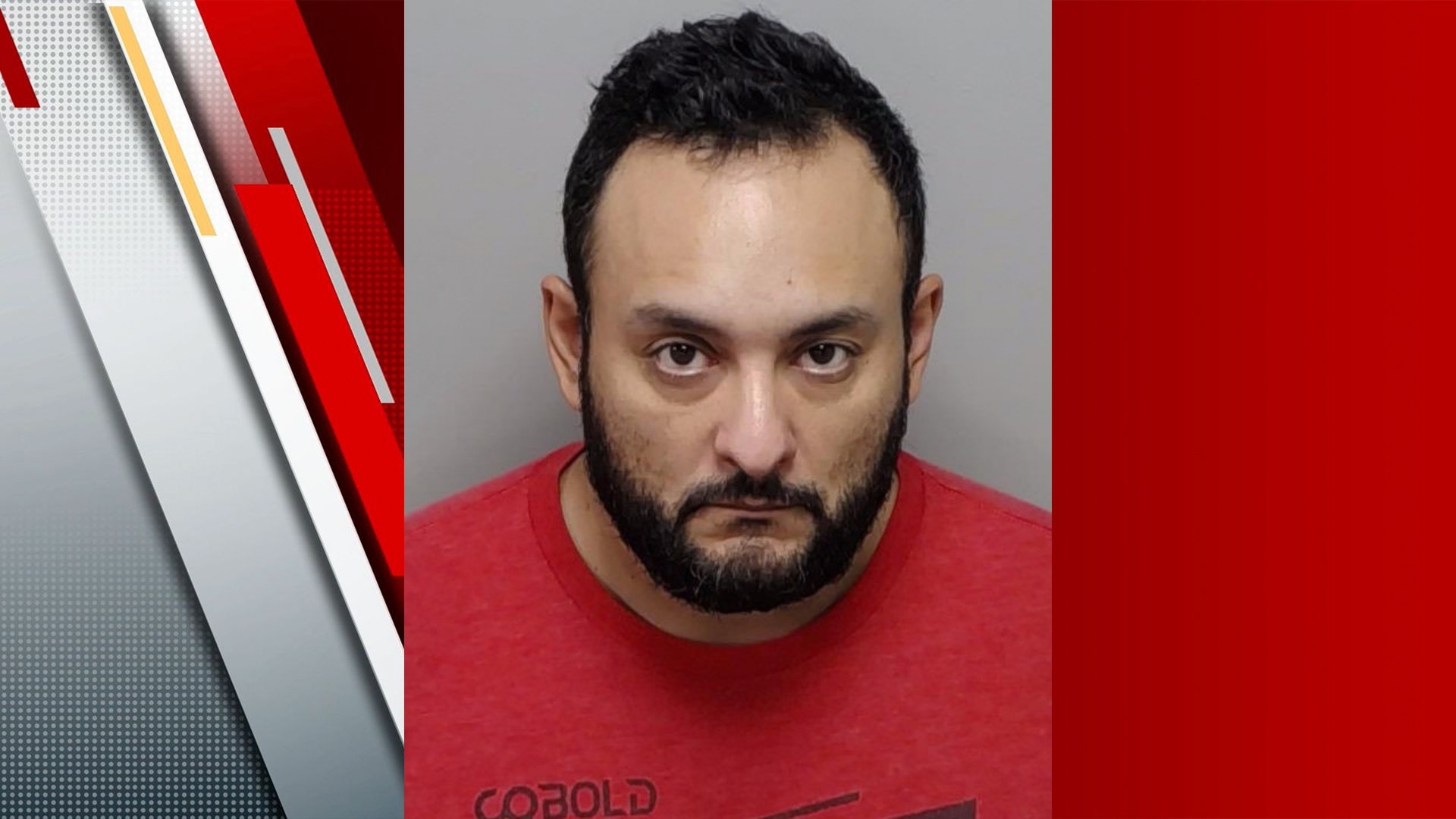
A Texas man is in federal custody after authorities say they disrupted an alleged plot to carry out a shooting at the Texas State Capitol—just one day before President Donald Trump was scheduled to visit the state.
Benny Caldera Jr., 40, of Converse, was initially arrested early Wednesday on a felony charge of making a terroristic threat against a public servant after investigators received what authorities described as “credible information about an individual planning a violent attack.”
According to an arrest affidavit cited by NBC 5, a friend told investigators that Caldera had threatened to shoot up the Texas Capitol and made alarming statements about people associated with the American Israel Public Affairs Committee, or AIPAC.
The friend reportedly told investigators that Caldera said people associated with the prominent pro-Israel organization needed to be exterminated.
Authorities say the alleged attack was planned for Thursday, Oct. 1—the same day Trump was scheduled to visit Texas.
The warning set off an overnight law-enforcement operation.
The Texas Department of Public Safety said it received information about the alleged plot Tuesday evening and immediately began working with the FBI and local authorities.
Investigators worked through the night.
By approximately 3 a.m. Wednesday, SWAT officers had moved in on Caldera’s Converse home and taken him into custody.
He was booked into the Bexar County Jail on the state terroristic-threat charge, with bond initially set at $75,000.
But Caldera wasn’t going home.
After reports circulated suggesting he had been released on bond, DPS publicly pushed back, saying he remained in custody.
The FBI then arrested Caldera at the jail Wednesday evening on additional federal charges connected to the alleged plot, according to DPS.
He was transferred into federal custody.
“The department said he is not out on bond,” according to the account of the case.
The specific federal charges against Caldera had not yet been publicly disclosed.
NBC 5 also reported that Bexar County court records show Caldera was previously charged with unlicensed carrying of a weapon in November 2023. The reported account did not provide the ultimate disposition of that case.
News of the alleged plot quickly reached state lawmakers.
Texas legislators were notified Wednesday about both the threat and Caldera’s arrest as authorities increased security around one of the state’s most prominent government buildings.
Despite the alleged threat, the Texas State Capitol remained open during its normal operating hours with heightened security measures in place.
Authorities stressed that they do not currently believe the public remains in danger.
DPS said there is no reason to believe an ongoing threat exists against the Capitol, lawmakers, employees or members of the public.
The investigation remains active.
The timeline, however, underscores how quickly authorities say the situation escalated: investigators received information about an alleged violent attack Tuesday evening, worked through the night and had a suspect in custody by approximately 3 a.m.
Hours later, the FBI stepped in and took Caldera into federal custody.
The alleged target was the Texas State Capitol.
And according to authorities, the planned date was Oct. 1—the same day a sitting president was scheduled to visit the state.
A Department of Energy electrical engineer has been arrested on a stunning federal terrorism charge after investigators accused him of attempting to help the Iran-backed Houthis with technical expertise, drone components and materials associated with the production of explosives.
Ashton Hamed Ellaboudy, 51, of Richland, Washington, was arrested Thursday and charged with attempting to provide material support or resources to a designated foreign terrorist organization.
Federal prosecutors allege Ellaboudy was employed by the Department of Energy while using his specialized electrical engineering knowledge in an effort to assist the Houthis.
The allegations immediately drew a blistering response from the Justice Department.
“As alleged, a U.S. government employee traveled overseas and used his specialized expertise in an attempt to aid the Houthis, a designated Foreign Terrorist Organization backed by Iran,” said Assistant Attorney General for National Security John A. Eisenberg. “Additionally, Ellaboudy acquired materials for the construction of explosive material and drones capable of delivering these explosives. These allegations are so deeply disturbing that they almost defy imagination.”
According to the criminal complaint, the FBI’s investigation began after authorities learned Ellaboudy had allegedly purchased precursor chemicals, components and other materials commonly associated with homemade explosive devices.
Investigators also discovered purchases of components used to build drones and remotely operated aerial systems, prosecutors said.
But the allegations extend far beyond purchases made inside the United States.
Federal authorities say Ellaboudy traveled from Washington state to Oman in September 2025 before crossing into Yemen using an official passport previously issued to him while he worked for the U.S. Army Corps of Engineers.
According to a release from the U.S. Department of Justice, a 51 year old former employee of the Department of Energy, Ashton Hamed Ellaboudy, was arrested and charged with attempting to provide material support to the Yemeni Houthis, who are a designated terrorist organization.… pic.twitter.com/lhySGgETbV
— OSINTdefender (@sentdefender) October 1, 2026
According to the FBI, Ellaboudy intended to reach Sanaa, Yemen’s Houthi-controlled capital.
He ultimately failed to make it there.
When Ellaboudy returned to the United States, prosecutors allege he told Customs and Border Protection officers that his overseas trip had been official government business.
Investigators say that story didn’t hold up.
Ellaboudy’s Department of Energy supervisor later told authorities that he had no authorized government travel to the region and had not been assigned to the missile inspection mission Ellaboudy allegedly described, according to court records.
Federal investigators further allege Ellaboudy admitted to FBI informants that he had been smuggled into and out of Yemen and hoped to establish high-level connections inside the country.
The investigation then took another turn.
Ellaboudy began communicating with an FBI confidential source who purported to be working for a Houthi “Colonel,” according to prosecutors.
Authorities allege Ellaboudy subsequently put his engineering expertise to work.
He allegedly helped test and modify solar power generators and communications equipment intended for a mobile communications center.
Prosecutors say he also supplied diagrams, technical guidance and research involving equipment that could potentially enhance Houthi communications capabilities.
Investigators have also scrutinized Ellaboudy’s previous acquisition and handling of chemicals.
The Justice Department said authorities learned that in 2024 Ellaboudy took sick leave from his government position after reporting exposure to highly concentrated nitric acid.
Nitric acid has legitimate industrial and scientific applications but can also be used in producing certain explosive materials.
Taken together, federal prosecutors allege the engineer’s activities amounted to an attempt to provide material support to the Houthis.
The Houthis, formally known as Ansar Allah, control significant portions of Yemen and have received support from Iran. The United States has designated the organization as a foreign terrorist organization.
Ellaboudy now faces up to 20 years in federal prison if convicted.
The case puts a particularly striking element at the center of the government’s allegations: prosecutors aren’t accusing an ordinary private citizen of simply attempting to make contact with a foreign terrorist organization.
They allege a U.S. government engineer attempted to use specialized technical expertise—and acquire materials involving drones and explosives—to help one.
Ellaboudy has been charged, not convicted, and is presumed innocent unless and until proven guilty in court.
Former Republican Congresswoman Patricia “Pat” Saiki, a trailblazing Hawaii lawmaker who made history as the first Republican elected to represent the state in the U.S. House following statehood, has died at 96.
Saiki died of natural causes at her Honolulu home on September 30, according to her son, Stuart Saiki.
Her death closes a remarkable chapter in Hawaii politics spanning decades and encompassing service in Congress, the state legislature and the administration of President George H.W. Bush.
Born Patricia Fukuda in Hilo on May 28, 1930, Saiki graduated from Hilo High School before earning her degree from the University of Hawaii in 1952.
Politics wasn’t initially her chosen career.
Saiki began as an educator, teaching at several schools before becoming involved in organizing Hawaii’s first teachers’ union.
Her move into elected office came in 1968, when she won a seat in the Hawaii House of Representatives.
She served there for six years before winning election to the state Senate in 1974, where she remained until 1982.
Following an unsuccessful campaign for lieutenant governor, Saiki took over as chairwoman of the Hawaii Republican Party and worked to expand the party’s membership in a state that was already becoming increasingly difficult terrain for Republicans.
Then came the breakthrough that would define her political legacy.
In 1986, Saiki won election to Congress, becoming the first Republican elected to the U.S. House from Hawaii since the islands became a state in 1959.
She was also only the second woman to represent Hawaii in Congress.
Her death prompted tributes from across Hawaii’s political establishment.
Gov. Josh Green ordered American and state flags lowered to half-staff beginning Friday, October 2, through sunrise Monday, October 5.
“Pat Saiki’s six decades of public service and her pioneering example for young women and Asian Americans in Hawaiʻi and across the U.S., combine to form both a lasting, inspiring legacy and a high bar for all of us who serve the public,” Green said in a statement.
Democratic Rep. Ed Case, who represents Hawaii’s 1st Congressional District, also paid tribute to Saiki, crediting her with breaking political barriers and establishing an example for future generations of public servants.
Saiki’s impact extended far beyond her historic election.
During her two terms in Washington, she helped secure Republican support for legislation authorizing an official apology and financial compensation for Japanese Americans incarcerated by the federal government during World War II.
She also became an advocate for environmental protections in Hawaii.
In 1990, Saiki successfully urged President George H.W. Bush to halt the U.S. Navy’s use of Kahoʻolawe as a military bombing range.
Her career in Washington took another turn that same year when she left the House to challenge Democrat Daniel Akaka for a U.S. Senate seat.
Saiki lost the race, but her federal service wasn’t finished.
Bush subsequently appointed her administrator of the Small Business Administration, where she served from 1991 until 1993.
She later taught at Harvard University’s Institute of Politics before returning to Hawaii politics for another statewide campaign.
In 1994, Saiki ran unsuccessfully for governor against Democrat Ben Cayetano.
Although a Republican, Saiki maintained moderate positions on several social issues, including abortion rights, and developed a reputation for working across party lines on legislation affecting Hawaii.
Behind the political milestones was also a mother raising five children.
Her son Stuart remembered Saiki as someone who refused to allow the demands of public office to completely overtake her responsibilities at home.
Even while serving in the legislature, he recalled, she continued helping her children with homework and handling the responsibilities of raising a family.
Saiki was preceded in death by her husband, Stanley, and their eldest son, Stanley Jr.
She is survived by four children—Stuart, Sandra, Margaret and Laurie—as well as her grandchildren.
Saiki’s career ultimately stretched from Hawaii classrooms to the state legislature, from Capitol Hill to a presidential administration.
But her place in Hawaii political history was secured in 1986.
Nearly three decades after Hawaii entered the Union, Patricia Saiki accomplished something no Republican before her had managed in the new state: win election to represent Hawaii in the United States House of Representatives.
She was 96.

JUST IN: Horrific Terror Plot Targeted At Trump THWARTED

Trump Admin Caught Colluding With Iran-Backed Terrorists

First Republican Congresswoman From Deep Blue State Dead

Dems Revolt Against Schumer And Side With Trump

Charlie Kirk’s Mother Breaks Her Silence After Erika Kirk’s Public Statement

Jaw-Dropping Details Emerge From Hijacking Attempt On Israel-Bound Flight

‘The Five’ Gets Emotional As Greg Gutfeld Announces Tragic News

Joe Biden’s Daughter Just Dropped Massive Public Bombshell On Her Dad

Obama Calls It QUITS After Wild Video Goes Viral

Removed From the Country — Ilhan Omar Hit With Horrid News

Get Ready — Mike Pence Makes Stunning 2028 Announcement

Schumer Loses! Court Sides With Trump In Historic Move
-
 Economy6 months ago
Vance Leaves Meeting, Looks Straight Into Camera, Announces Stunning Arrest
-
 Economy6 months ago
Adam Schiff Facing 30 Years In Prison After Bank Records Leak
-
 Economy6 months ago
Supreme Curt Sides With Trump — He Can Remove The All
-
 Culture4 months ago
Michelle Obama Drops Nasty Bomb About ‘Useless’ Daughter
-
 Economy6 months ago
All Hell Breaks Loose On Fox When Jesse Watters Asks Fetterman One Question
-

 Economy4 months ago
Prayers Pour In After Fox Host Dies: ‘Senseless Murder’
-

 Latest4 months ago
Fox News Stuns With Announcement About 5 Fired Hosts
-
 Border & Security2 months ago
Top Trump Admin And Wife Found Dead — Chilling Update Just Released