
Latest
Ilhan Omar’s Husband Goes Public With Announcement — She’s Devastated


Rep. Ilhan Omar has not been seen publicly since federal agents reportedly raided her Washington, D.C., residence Monday, fueling mounting questions about her whereabouts as investigators dig into allegations involving immigration fraud and the Minnesota Democrat’s financial disclosures.
While Omar remains out of the public spotlight, her husband, Democratic political consultant Tim Mynett, has been spotted repeatedly entering and leaving the couple’s rented Washington home.
On Wednesday, Mynett was seen walking the couple’s Labrador retriever, Teddy, taking out the trash and accompanying one of Omar’s congressional staffers outside the residence.
But when a reporter confronted him about growing rumors that Omar had left the United States following the reported federal raid, Mynett offered no direct answer.
“There are rumors that the congresswoman left the country, is that true?” the reporter asked.
Rather than address the question, Mynett lashed out at the reporters stationed outside the residence.
“You guys are annoying the hell out of all the neighbors around here, man,” Mynett responded, according to video published by Fox News.
The exchange has intensified public curiosity about Omar’s whereabouts amid reports of a federal criminal probe involving allegations tied to immigration and naturalization records.
Despite widespread online speculation, there is currently no credible evidence that Omar has fled the country, and federal authorities have made no announcement suggesting she has left the United States.
The controversy erupted Monday when Homeland Security Investigations agents reportedly executed a judicially authorized search warrant at Omar’s Washington residence as part of an ongoing federal criminal investigation.
According to the original report, the Justice Department confirmed that federal prosecutors obtained the warrant but released few details about what investigators were seeking.
Multiple news organizations, citing officials familiar with the investigation, reportedly said authorities were examining possible false statements and fraud involving immigration and naturalization documents connected to Omar and members of her family.
Reuters was cited as reporting Thursday that a sealed warrant identified conspiracy, immigration fraud and false statements among the potential offenses under investigation.
Federal officials were also reportedly examining whether any established immigration fraud could provide grounds for denaturalization proceedings.
The reported investigation has brought renewed scrutiny to longstanding allegations surrounding Omar’s family history and immigration records, allegations the congresswoman and her representatives have repeatedly denied.
Omar was born in Somalia, arrived in the United States as a refugee in 1995 and became a naturalized American citizen in 2000. She was first elected to Congress in 2018.
The Washington Post was cited as reporting Thursday that federal officials previously examined Omar’s immigration history during President Donald Trump’s first administration but found no evidence establishing citizenship fraud at that time.
No criminal charges have been filed against Omar.
As questions surrounding the reported immigration investigation intensify, Omar and her husband are also facing scrutiny over dramatic changes in the reported value of their business interests.
According to the original article, U.S. Attorney Jeanine Pirro announced Tuesday that her office was examining Omar’s congressional financial disclosures following reporting that raised questions about the valuation of businesses connected to Mynett.
Omar’s 2024 financial disclosure listed her husband’s ownership interests in a winery and a venture-capital advisory business at values potentially placing the couple’s assets in the millions of dollars.
But more recent filings reportedly valued those interests at zero.
The dramatic discrepancy has raised questions about how the businesses were valued and why the figures changed so substantially between disclosure periods.
Omar’s office has maintained that the earlier filing incorrectly reflected the businesses’ total equity rather than Mynett’s individual ownership stake and failed to properly account for liabilities.
Mynett previously worked as a Democratic political consultant and was affiliated with a firm that performed campaign work for Omar before the couple announced their marriage in March 2020.
The financial inquiry is reportedly separate from the immigration investigation described in the original article.
The controversy is unfolding less than three weeks before the November 3 midterm elections, when Omar is seeking another term representing Minnesota’s 5th Congressional District.
The timing has triggered criticism from prominent Democrats, including House Minority Leader Hakeem Jeffries and Rep. Alexandria Ocasio-Cortez, who have accused the Trump administration of improperly targeting a sitting member of Congress.
According to the original report, the Justice Department maintains that the search was judicially authorized.
That distinction is significant. Investigators must present evidence establishing probable cause to a federal judge before obtaining a search warrant.
Such authorization does not establish criminal wrongdoing, but it indicates that a judge determined the legal requirements for issuing the warrant had been met.
For now, the congresswoman’s reported absence from public view has become another focal point in an already explosive controversy.
Her husband continues to appear outside the Washington residence, but his refusal to directly address questions about her whereabouts has done little to quiet speculation.
Meanwhile, reports of federal scrutiny involving immigration records and financial disclosures have placed additional attention on the congresswoman and business interests connected to her husband.
Omar has repeatedly denied allegations of immigration wrongdoing, and no criminal charges have been announced against her. Neither a search warrant nor an ongoing investigation establishes guilt.
But with Election Day rapidly approaching, questions surrounding the reported investigations and the congresswoman’s whereabouts are likely to remain in the spotlight.

President Donald Trump announced Tuesday that he is committing more than $400 million to Republican election efforts, unveiling an enormous financial push as the GOP fights to maintain control of Congress with just two weeks remaining before the November 3 midterm elections.
The president revealed that more than $300 million has already been spent on Republican campaign operations, with additional spending planned before voters head to the polls.
Trump made the announcement on Truth Social, emphasizing his commitment to the Republican Party and pointing to unrest in Europe as part of his reasoning for the massive expenditure.
“Because of my belief in the Republican Party, and all of our Policies and Principles, and especially after witnessing what is taking place in France, and other locations throughout Europe, I am pleased to announce that, having to do with the Most Important Midterm Elections in our Country’s History, I have spent, or will be spending, over 400 Million Dollars by Election Day,” Trump wrote.
The announcement comes at a critical moment for Republicans, who are battling to protect their congressional majorities in an election that could dramatically alter the political landscape for the remaining two years of Trump’s presidency.
And according to the president, the overwhelming majority of the money has already been put to work.
More than $300 million has reportedly been directed toward advertising, voter outreach, campaign rallies and other election-related operations designed to support Republican candidates nationwide.
Trump outlined the extensive campaign activities receiving financial support in a second statement.
“More than 300 Million Dollars has already been spent on Advertising, Direct and Indirect Voter Contact, Rallies, Rally Arenas, Telerallies, Get Out the Vote Programs, Election Integrity, and more,” Trump added.
“It is my Great Honor to do so on behalf of the Republican Party, which has done so much to bring our Country back from the Edge of Oblivion.”
The extraordinary spending announcement underscores the financial stakes of an election that could determine whether Republicans retain the congressional power necessary to advance the administration’s legislative priorities.
Trump’s statement indicates that additional funds will be deployed before Election Day, although he did not disclose exactly how much remains unspent or identify the congressional races expected to benefit.
The president also did not provide a detailed accounting of the funding sources behind the $400 million commitment.
Republicans have reportedly maintained a fundraising and spending advantage during portions of the election cycle, although that financial edge has not consistently produced favorable polling results in competitive races.
The massive spending declaration comes as both parties pour resources into closely contested House districts and Senate races, where even narrow shifts in voter turnout could determine which party controls Congress.
Trump’s reference to France and other European countries added another dimension to his announcement.
Recent demonstrations in France over rising living costs and public services have reportedly escalated into violent confrontations, looting and attacks on government buildings.
The president specifically cited those developments while explaining his support for Republican policies and principles, though he did not elaborate on how the unrest directly influenced his spending decisions.
The midterm elections carry enormous consequences for the Trump administration.
If Republicans maintain control of the House and Senate, the party would retain its ability to pursue legislation in coordination with the White House.
Democratic gains, particularly a shift in control of either chamber, could create significant obstacles for the president’s legislative agenda and increase congressional scrutiny of his administration.
That makes the final stretch of campaigning especially consequential, with both parties concentrating their resources on voter turnout, advertising and competitive races across the country.
Trump’s announcement also illustrates the central role he continues to play in Republican election operations, using his political influence and financial resources to support the party’s efforts.
However, the president’s statement did not establish whether the entire $400 million represents his personal funds, affiliated political organizations or other Republican fundraising operations.
And despite the enormous sum involved, there is no guarantee that additional spending will translate into victories in closely contested races.
Polling in several competitive congressional contests has indicated narrow margins, leaving control of Congress uncertain as Election Day approaches.
Still, Trump’s announcement puts a staggering dollar figure on the Republican Party’s final election push.
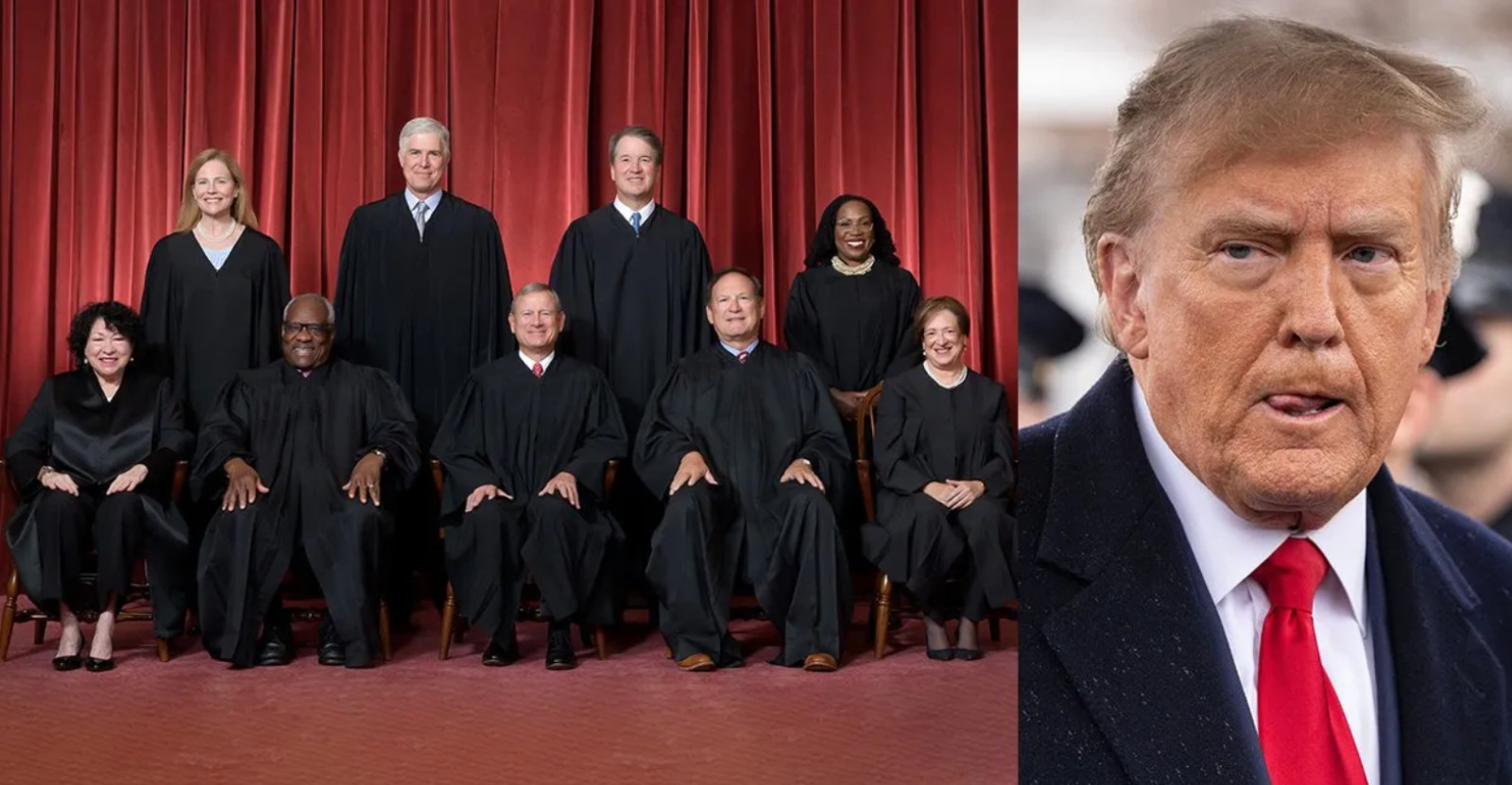
President Donald Trump secured another significant legal development this week after the U.S. Supreme Court declined to reconsider a lower court ruling upholding his dismissal of a Democratic appointee to a powerful federal labor agency.
The justices rejected an appeal from Gwynne Wilcox, a former member of the National Labor Relations Board (NLRB), leaving intact an appellate decision that supported Trump’s authority to remove her from office.
The decision marks another development in the escalating legal battle over presidential control of federal agencies and could have major implications for a separate fight involving two Democratic appointees removed from the National Credit Union Administration (NCUA).
Wilcox was appointed by former President Joe Biden in 2023 to serve a five-year term on the NLRB.
But shortly after returning to the White House in January 2025, Trump removed her from the position, setting off a legal confrontation over whether federal law could prevent the president from dismissing certain independent agency officials without cause.
Wilcox challenged her removal, arguing that statutory protections shielded labor board members from being fired at the president’s discretion.
A federal district judge initially sided with Wilcox, ruling that those protections remained enforceable.
That victory was short-lived.
A divided federal appeals court subsequently reversed the ruling, clearing the way for Trump’s dismissal to stand.
Wilcox appealed to the Supreme Court, but the justices declined to take up her case, leaving the appellate ruling undisturbed.
The Supreme Court offered no explanation for refusing to hear the appeal, and its decision not to intervene does not constitute a new ruling on the underlying constitutional questions.
Nevertheless, the outcome leaves the administration’s position intact in a dispute that has become central to Trump’s efforts to exercise greater control over the executive branch.
The development follows another major Supreme Court decision in June involving Trump’s removal of Federal Trade Commission member Rebecca Slaughter.
In that case, the Court upheld Trump’s removal authority and overturned the longstanding precedent established in the 1935 decision *Humphrey’s Executor*.
That precedent had permitted Congress to establish certain protections preventing presidents from removing independent regulatory officials without cause.
The newer ruling expanded presidential removal authority, with supporters arguing that an elected president must retain meaningful control over officials exercising executive power.
Critics, however, contend that weakening those protections threatens the independence of federal regulators and could expose agencies to greater political pressure.
Wilcox expressed disappointment after the Supreme Court rejected her appeal, arguing that the outcome would affect workers and employers who depend on impartial resolution of labor disputes.
The Justice Department declined to comment on Monday’s decision.
But the legal fight over Trump’s removal powers is far from finished.
Two former Democratic members of the NCUA’s governing board, Todd Harper and Tanya Otsuka, are pursuing their own lawsuit challenging Trump’s decision to remove them in April 2025.
Their case, *Harper v. Bessent*, remains pending before the U.S. Court of Appeals for the District of Columbia Circuit.
The NCUA oversees federally insured credit unions and administers the National Credit Union Share Insurance Fund, placing the agency at the center of financial supervision and the protection of credit union deposits.
Its responsibilities include examining financial institutions, enforcing regulations and overseeing the stability of the federally insured credit union system.
Harper and Otsuka argue that those financial responsibilities distinguish the NCUA from agencies involved in other presidential removal disputes.
They contend that the NCUA shares important characteristics with the Federal Reserve, whose distinctive institutional structure has received separate consideration from the Supreme Court.
The former board members maintain that those similarities should influence how courts evaluate their dismissals.
The Trump administration disputes that argument, maintaining that the Constitution permits the president to remove NCUA board members.
Federal law establishes a three-member NCUA board with staggered terms and restrictions on partisan representation.
However, unlike some other federal agency statutes, the NCUA’s governing law does not expressly provide the same protections against presidential removal.
That distinction has become a central issue in the ongoing legal battle.
A federal district judge previously ordered Harper and Otsuka reinstated, but an appellate court subsequently issued a stay that prevented the former officials from returning to the board while the case continued.
The dispute has also raised concerns within the credit union industry about the importance of maintaining a functioning bipartisan governing board.
Industry representatives have emphasized that consistent leadership and regulatory stability are important for institutions responsible for safeguarding member deposits.
Still, the central legal question remains whether Congress can restrict the president’s authority to remove officials exercising federal executive power.
The Supreme Court’s decision in Wilcox’s case did not directly resolve the legality of Trump’s NCUA dismissals, nor did it order Harper and Otsuka reinstated.
Instead, it left standing a separate appellate ruling while the NCUA litigation proceeds.
The controversy reflects a broader constitutional dispute over the balance of power between the White House and Congress.
While presidents appoint federal agency leaders, Congress has historically established removal restrictions for certain independent regulators to protect their decision-making from political interference.
Those protections have repeatedly come under scrutiny when incoming presidents seek to replace officials appointed by previous administrations.
Recent Supreme Court decisions have shifted the legal framework governing presidential removal authority, but significant questions remain about how those principles apply to agencies with specialized financial responsibilities.
For the nation’s federally insured credit unions, the outcome could have consequences extending beyond Washington’s political and legal battles.
Credit unions operate as member-owned financial cooperatives, making stable supervision and regulatory oversight important to millions of depositors nationwide.
Although routine supervisory operations can continue through agency personnel, prolonged uncertainty surrounding board leadership can complicate regulatory planning and institutional decision-making.
The D.C. Circuit must now evaluate the NCUA’s governing statute, relevant constitutional precedent and the agency’s distinctive financial responsibilities before determining whether Trump’s removal of Harper and Otsuka was lawful.
For now, the Supreme Court has left the ruling supporting Trump’s dismissal of Wilcox in place, while another consequential legal battle over presidential authority continues to unfold.
Democrats anticipating major gains in the November midterm elections may have reason to temper their expectations, according to CNN senior data reporter Harry Enten, who warned that even a modest polling error could dramatically change the outcome of closely contested congressional races.
During a Friday segment, Enten examined polling averages in several battleground states and explained why narrow Democratic leads should not be mistaken for guaranteed victories.
His central concern was the historical difference between final polling averages and actual election results, particularly in competitive Senate races.
With Republicans holding a 53-47 Senate majority, Democrats are attempting to capture enough seats to regain control of the chamber.
Current polling averages cited by Enten show Democratic candidates leading in several races that could prove important to that effort.
According to his analysis, Democrats held a four-point advantage in Ohio, three-point leads in Michigan and Texas, a two-point lead in Maine and a one-point edge in Iowa. Kansas was effectively tied.
If those polling averages translated directly into election results, the projected Democratic gains could be sufficient to change control of the Senate.
But Enten cautioned that history provides little justification for treating such narrow advantages as secure.
His analysis found that final polling averages in competitive Senate elections have differed from actual results by approximately 3.7 percentage points on average.
That figure is particularly significant because most of the Democratic leads in the races he examined fall within that historical range.
A relatively small shift between polling expectations and Election Day results could therefore change which party wins several pivotal contests.
Enten described the possibility as a “big siren warning sign for Democrats.”
The warning reflects a recurring challenge for political polling: Surveys provide estimates of voter preferences, but they cannot perfectly anticipate turnout, late shifts in opinion or differences between the people who respond to polls and those who ultimately cast ballots.
Even well-conducted surveys can produce results that differ from the final vote.
Enten illustrated the potential consequences by examining a hypothetical scenario in which Republican candidates outperform current polling averages by 3.75 percentage points.
Under that assumption, his analysis produced a 52-48 Republican Senate majority, with the GOP winning closely contested races in Maine, Michigan, Texas, Kansas, Iowa and Alaska.
The scenario was not a forecast that Republicans would necessarily achieve those results.
Instead, it demonstrated how a polling error comparable to historical averages could change the apparent balance of several races.
Enten also examined what a similar Republican overperformance could mean for the House of Representatives.
With control of the chamber closely divided, relatively small shifts in competitive districts could have substantial consequences.
The supplied analysis described Republicans as holding a 218-214 advantage, with two vacancies and one independent caucusing with the party.
Under Enten’s hypothetical Republican polling shift, the GOP would retain control of the House as well.
The exercise underscores how closely divided congressional majorities can make election outcomes sensitive to modest changes in voter support.
Enten has raised similar concerns in previous discussions of polling accuracy.
During a September analysis, he examined historical polling discrepancies in Iowa, Ohio and Michigan, states where Democratic candidates have recently registered encouraging survey numbers.
According to the figures cited in his analysis, Republicans outperformed September polling averages by approximately nine percentage points in Iowa, six points in Ohio and five points in Michigan during major 2024 contests.
Those discrepancies were substantial enough to change expectations about several races.
Enten also pointed to the 2018 midterm elections, when Republicans reportedly exceeded September polling averages by six points in Iowa and Ohio and eight points in Michigan.
The examples are noteworthy because they suggest that Republican polling overperformance in those states has not been limited to presidential elections featuring Donald Trump.
However, historical polling errors are not necessarily predictive of future results.
Polling organizations regularly adjust their methodologies, and differences in candidates, voter turnout, political conditions and survey participation can produce different outcomes from one election cycle to another.
A polling miss favoring Republicans in a previous election does not establish that a similar error will occur in November 2026.
Enten acknowledged that distinction, emphasizing that polling averages remain useful indicators even when they cannot guarantee a result.
A candidate leading in credible polling generally occupies a more favorable measured position than one trailing, but a narrow advantage still leaves meaningful uncertainty.
The distinction is especially important in Senate races where the reported margins are only one, two or three percentage points.
Those differences can be smaller than ordinary sampling uncertainty, and the historical polling errors Enten discussed reflect additional sources of uncertainty beyond the stated margin of error of an individual survey.
The House presents a somewhat different electoral picture.
Democrats have generally shown stronger numbers in national generic-ballot polling, which asks voters which party they would support for Congress rather than measuring individual candidates.
But national polling advantages do not translate directly into a specific number of House seats.
District boundaries, local candidates, incumbency and the geographic distribution of voter support all influence how national preferences translate into congressional representation.
Consequently, a relatively small shift in the national political environment could affect multiple competitive House districts without necessarily producing a uniform change across the country.
The uncertainty has contributed to intense campaign spending as both parties compete for control of Congress.
Reuters reported Monday that more than $3.8 billion in political advertising had already aired during the 2026 midterm election cycle.
Senate contests in Texas, Ohio and Michigan have attracted particular attention as campaigns and outside organizations invest heavily in advertising and voter outreach.
Those expenditures reflect the importance of closely contested races, although campaign spending alone does not establish which candidates will prevail.
With Election Day scheduled for November 3, both parties face the challenge of translating polling support into actual votes.
For Democrats, the question is whether their reported advantages in competitive races will hold as voters make their final decisions.
For Republicans, the question is whether they can improve upon current polling numbers sufficiently to defend their congressional majorities.
Enten’s analysis illustrates how either outcome could be affected by polling uncertainty rather than simply by the headline numbers appearing in individual surveys.
“The polling has been tight,” Enten said, emphasizing that Republicans remain “very much in the ball game.”
His assessment serves as a reminder that the final weeks of a closely contested election can leave considerable uncertainty about the eventual composition of Congress.
While current polling offers a snapshot of the political landscape, the historical record shows that small polling errors can have significant consequences when multiple races are decided by narrow margins.
For both parties, the results on November 3—not the polling averages leading up to Election Day—will determine who controls the House and Senate.

JUST IN: Trump Stuns Democrats With $400M October Surprise

SCOTUS Delivers MASSIVE Decision Just 19 Days Before Midterms

Ilhan Omar’s Husband Goes Public With Announcement — She’s Devastated

‘Never Seen Before’ — Republicans Just Got Fantastic News

NEW: Democrat Politician Arrested On Shocking Charges

Ilhan Omar’s Sister FLIPS — Blows Entire Case Wide Open!

Obama Calls It QUITS After Wild Video Goes Viral

Joe Biden’s Daughter Just Dropped Massive Public Bombshell On Her Dad

Jeanine Pirro Makes Massive Announcement – WH In Total Shock
JUST IN: ‘Squad’ Congressional Candidate Arrested

Ilhan Omar Removal Vote Is In — Decided By Razor Thin Margin

Charlie Kirk’s Mother Breaks Her Silence After Erika Kirk’s Public Statement
-
 Economy6 months ago
Vance Leaves Meeting, Looks Straight Into Camera, Announces Stunning Arrest
-
 Economy6 months ago
Adam Schiff Facing 30 Years In Prison After Bank Records Leak
-
 Culture4 months ago
Michelle Obama Drops Nasty Bomb About ‘Useless’ Daughter
-
 Economy6 months ago
Supreme Curt Sides With Trump — He Can Remove The All
-
 Economy6 months ago
All Hell Breaks Loose On Fox When Jesse Watters Asks Fetterman One Question
-
 Economy4 months ago
Prayers Pour In After Fox Host Dies: ‘Senseless Murder’
-

 Border & Security3 months ago
Top Trump Admin And Wife Found Dead — Chilling Update Just Released
-

 Latest4 months ago
Fox News Stuns With Announcement About 5 Fired Hosts