
Latest
After losing my daughter, I learned where the immigration crisis really begins

My youngest daughter Katie was killed when an intoxicated illegal immigrant slammed into the back of the vehicle she was riding in at nearly 80 miles an hour while it sat idle at a stoplight. Ever since, I have been trying to understand how reckless public policies allowed something so horrific, and so preventable, to happen.
Katie’s death forced me to look beyond slogans and political talking points and ask harder questions about what America’s immigration system has become, who benefits from it and who ultimately bears the costs when governments refuse to enforce meaningful standards.
The more I examined the data, the more I began to notice an aspect of the problem that often seemed ignored or dismissed in public debate. Perhaps because acknowledging it had become politically uncomfortable.
According to recent data from the Center for Immigration Studies, newly arrived immigrants now possess significantly lower levels of educational attainment than earlier waves of immigration.
OBAMA JUDGE USES ‘VINDICTIVE’ RULING TO RELEASE ALLEGED MS-13 HUMAN TRAFFICKER
During the border-surge years engineered under the Biden-Harris administration and overseen by Homeland Security Secretary Alejandro Mayorkas, the composition of migration shifted heavily toward poorer regions of Latin America, bringing larger numbers of individuals with limited formal education and fewer workforce skills needed in a modern, technology-driven economy.
That matters because advanced economies increasingly depend on productivity, skills and institutional capacity. Educational attainment strongly correlates with earnings, poverty rates, tax contribution and long-term dependence on public systems.
America in 2026 is not the industrial America of 1920. Low-skill labor no longer guarantees upward mobility, even for many native-born Americans struggling under rising housing costs, inflation, healthcare expenses and stagnant wages. Yet policymakers continue expanding migration flows while insisting there will be no meaningful fiscal or social consequences.
REFUGEE FLOOD ISN’T SMART POLICY, IT’S THE GIFT THAT KEEPS ON TAKING
But consequences exist whether political leaders acknowledge them or not.
Lower educational attainment is closely associated with lower earnings, higher poverty rates and greater demand on public systems. School districts shoulder the costs of language services and educational remediation, often straining already struggling districts. Hospitals provide emergency care that is frequently never fully reimbursed, with taxpayers ultimately covering much of the burden. Cities face mounting housing pressures, while welfare systems expand to accommodate growing needs.
My own family has lived both versions of America’s immigration story. Decades ago, my parents came to the United States legally for the opportunity this country offered and not for benefits or special privileges that increasingly incentivize lawlessness surrounding immigration today.
This is personal for me.
Katie’s killer, Julio Cucul-Bol, a Guatemalan national who used a Mexican alias while in Illinois, admitted through an interpreter in state court that he had no formal education and was unable to meaningfully communicate in either English or Spanish.
So, I have to ask the question Democrat Illinois Gov. JB Pritzker and many other politicians never will: What purpose did allowing Bol into this country actually serve? How did it strengthen America, improve our communities, or better the lives of American citizens?
DAD OF ILLEGAL IMMIGRANT DUI VICTIM ISSUES WARNING TO AMERICANS OVER LAX DRIVER’S LICENSE LAWS
My daughter is dead.
Reasonable people can debate immigration levels and legal pathways. But no serious nation can maintain public trust while weakening enforcement and insisting there are no downstream consequences for public institutions, fiscal stability, or social cohesion.
Many countries benefit enormously from large-scale emigration. Remittances from migrants working in the United States generate billions in foreign income while also relieving domestic political pressure.
NOT COMING TO AMERICA: THE 60-YEAR IMMIGRATION BUBBLE FINALLY BURSTS
In effect, the United States increasingly subsidizes the consequences of governmental failure abroad. Rather than fixing conditions for their own citizens, struggling governments can export portions of their poverty to the United States while importing remittance dollars back home.
That dynamic may benefit political elites on both sides of the border, but it does little to encourage long-term reform, self-sufficiency, or stable institutions. In many cases, mass unmanaged migration may actually delay the economic and civic improvements those societies ultimately need most.
A truly moral and compassionate approach should not simply encourage people to flee struggling nations indefinitely. It should encourage the development of lawful, stable and prosperous societies where citizens can build meaningful lives in their own countries with dignity and opportunity.
IRYNA ZARUTSKA FLED UKRAINE FOR SAFETY BUT DEMOCRATS’ SOFT-ON-CRIME POLICIES FAILED HER
The United States should be an example to be emulated; a nation built on lawful behavior, strong institutions, accountability and opportunity. Not one that increasingly allows itself to be taken advantage of by governments unwilling to fix conditions for their own people.
Migrants should be drawn to America because of the opportunities created by economic freedom and social stability, not enticed by self-serving politicians offering taxpayer-funded benefits while refusing to address the consequences of weak enforcement.
States like Illinois increasingly respond to the departure of productive citizens not by confronting the policies driving people away, but by attempting to replace those losses through mass migration encouraged by expansive benefits and weakened standards. Administrations like Biden-Harris accelerated that approach nationally during the border-surge years.
CLICK HERE FOR MORE FOX NEWS OPINION
That is not a serious long-term strategy for national prosperity or institutional stability.
Every public policy carries tradeoffs, and citizens should not become collateral damage to reckless immigration policies pursued for short-term political gain.
A serious immigration policy would begin with honesty: honesty that educational attainment matters in advanced economies; honesty that mass low-skill migration creates fiscal burdens; honesty that weak enforcement and sanctuary policies carry real-world consequences; and honesty that America cannot permanently function as the economic and social safety valve for the developing world without eventually weakening itself.
Compassion without limits is not governance. And no nation can indefinitely absorb the unresolved economic and institutional failures of other countries while expecting its own stability, cohesion and prosperity to remain strong forever.

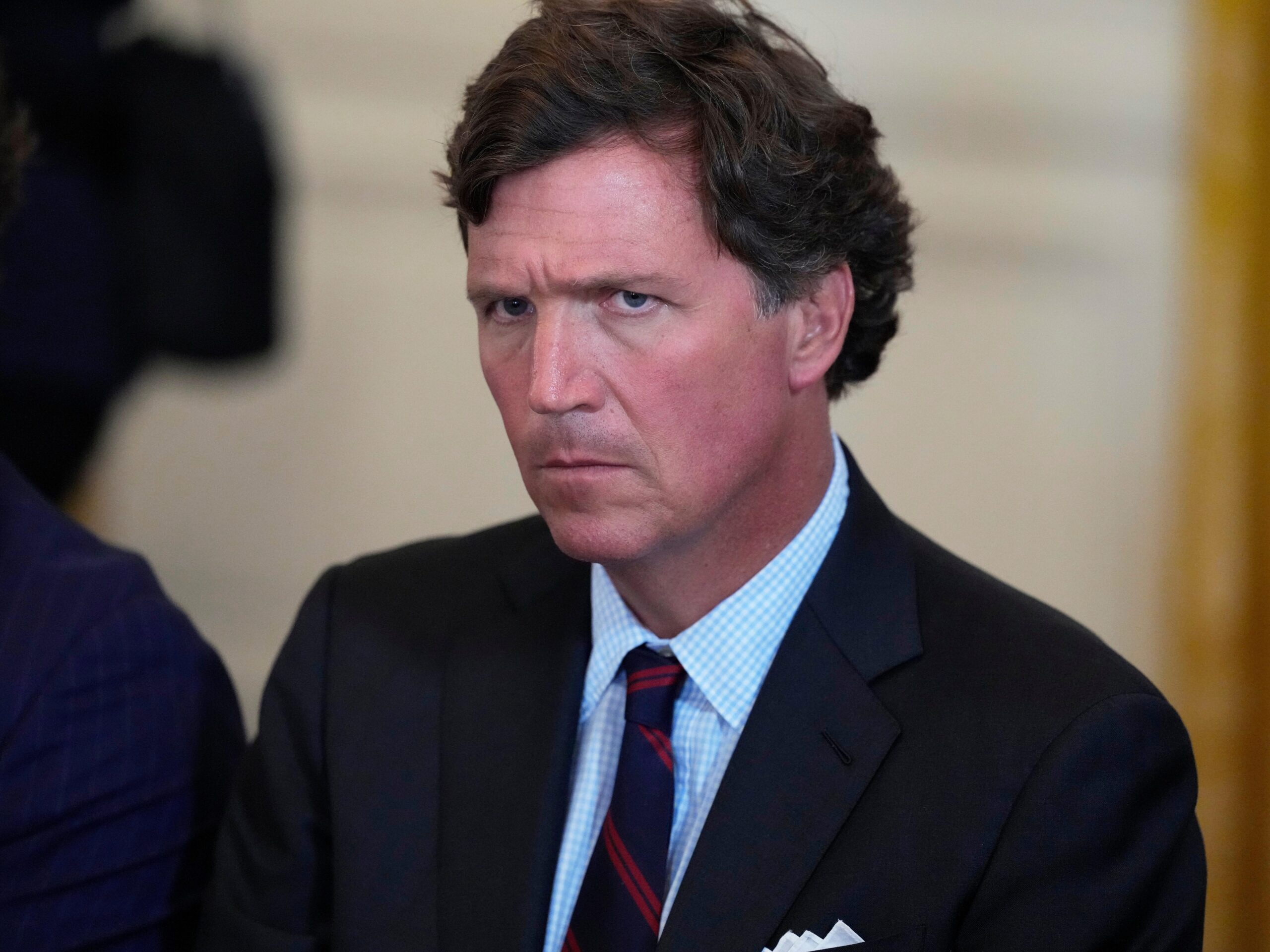
A growing divide within the conservative movement is becoming increasingly difficult to ignore, as longtime commentator Tucker Carlson declared that he no longer considers himself a Republican, citing frustration with what he sees as the party’s abandonment of its America First roots.
Carlson made the remarks during a podcast appearance with hosts Travis Dhanraj and Karman Wong, where the discussion turned to the political landscape ahead of the upcoming midterm elections and whether voters remain satisfied with the direction of the Republican Party.
While Carlson made clear that he remains aligned with many conservative principles, he argued that some Republican leaders have drifted away from the priorities that helped fuel President Donald Trump’s rise and transformed the GOP into the dominant force it is today.

“I’m out,” Carlson said during the interview.
“And if I’m out, then I think a lot of other people are out.”
Carlson’s comments came as he discussed polling data and voter sentiment ahead of the next election cycle.
“I would not support the Republican party. There’s no chance I would support the Republican party,” he said.
The former Fox News host argued that certain Republican lawmakers had betrayed their voters by supporting policies he believes put foreign interests ahead of American priorities.
“How could I or any American voter support a political party that’s not loyal to the United States? That puts the interests of a foreign country above those of its own citizens?
“It’s not possible to vote for people like that, and I’m not going to.”
Carlson’s remarks highlight a growing debate inside conservative circles over the future direction of the Republican Party.
At the center of the disagreement is not President Trump himself, but rather how some Republicans have approached foreign policy, military intervention, and America’s role overseas.
Trump built his political movement on the promise of putting American interests first, securing the border, rebuilding the economy, restoring energy independence, and avoiding the endless foreign conflicts that frustrated many voters for decades.
Many of Trump’s supporters continue to view the America First agenda as one of the defining achievements of his political movement.
Carlson suggested that some Republicans have lost sight of those principles.
“I think I’ve voted Republican my entire life,” Carlson said.
“I’ve been a consistent defender for 35 years, of the Republican party. I mean, a very consistent defender.”
“But there’s no defending this because it’s immoral and it’s exactly the opposite of what a political party in a democracy is charged with doing — which is representing its own voters, its own citizens, its own nation.”
“And they’re not doing that,” Carlson concluded.
The comments come amid an ongoing debate among conservatives regarding foreign policy, particularly following recent tensions involving Iran and the broader Middle East.
Carlson has been one of the most vocal advocates of a non-interventionist approach that emphasizes American interests above foreign entanglements. Other conservatives, including commentators and lawmakers aligned with a more traditional hawkish worldview, have argued that a strong American presence abroad remains necessary to protect national security.
The disagreement intensified after military operations involving Iran earlier this year, with Carlson and several other prominent voices warning against policies they believe could lead to deeper involvement in overseas conflicts.
Despite those disagreements, Carlson has generally continued to support many of Trump’s domestic policies, including border security, immigration enforcement, energy production, and efforts to prioritize American workers and taxpayers.
The broader divide illustrates the ongoing evolution of the Republican Party under Trump’s influence.
For decades, the GOP was largely defined by traditional establishment conservatives who favored aggressive foreign policy and intervention abroad. Trump’s rise fundamentally reshaped that coalition, bringing millions of working-class voters, independents, and populist conservatives into the party.
Today, debates like the one Carlson has raised reflect a larger question facing Republicans: how closely the party will adhere to the America First principles that helped fuel Trump’s political success.
Whether Carlson ultimately returns to the Republican fold remains to be seen. But his comments underscore a reality that many political observers have noted in recent years: the future of the conservative movement is increasingly being shaped by debates over foreign policy, national sovereignty, and what it truly means to put America first.
As those discussions continue, one thing remains clear: the America First movement that transformed Republican politics is still driving much of the conversation inside the conservative movement today.
A growing divide within the conservative movement spilled into public view this weekend as Fox News host Mark Levin launched a blistering attack on President Donald Trump’s Iran strategy, accusing the administration of pressuring Israel while pursuing a diplomatic agreement designed to permanently prevent Iran from obtaining a nuclear weapon.
The dispute comes as the Trump administration continues negotiations with Tehran following a series of devastating military strikes that crippled Iran’s nuclear infrastructure, eliminated key regime leaders, and left the Islamic Republic in one of the weakest positions it has faced in decades.

President Trump and Vice President JD Vance have argued that the administration is negotiating from a position of overwhelming strength after demonstrating a willingness to use military force when necessary. Their goal, they say, is simple: ensure Iran never obtains a nuclear weapon while avoiding another endless war in the Middle East.
Levin, however, remains deeply skeptical.
During a fiery monologue that lasted more than 17 minutes on Saturday, the longtime conservative commentator accused members of the administration of unfairly targeting Israel while becoming too optimistic about Iran’s intentions.

“I want to say to people in and out of the administration: stop trashing, smearing, bullying the little state of Israel. Stop cozying up to and telling us that the enemy regime in Iran is now more rational, more moderate, and a regime that we can deal with,” Levin demanded. “When just a few months ago they slaughtered 50,000 people, they’re still hanging young people today and, if they had a nuclear missile today, they’d fire it into our country as sure as I’m alive.”
Levin also rejected any suggestion that Israel should allow outside governments to dictate its security decisions.
“I don’t know what’s going on, but if people think they can bully a little country, Israel — a people that have existed 4,000 years through the Babylonians and the Persians, through the Romans and the Third Reich — into surrendering their defense and their decision on how to secure their country, they get another thing coming,” Levin continued. “I think it’s outrageous.”
The criticism did not stop there.
Levin also used social media to question several administration policies, including reports surrounding a Boeing 747 gifted by Qatar and modified for use supporting presidential airlift operations.
“If it’s legal and other countries do it so be it. Do you think wealthy countries should be able to lavish gifts on our government?” Levin wrote.
His sharpest criticism, however, focused on the administration’s efforts to secure a broader peace agreement with Iran and its proxies.
“Item #1 in the MOU provides there’s an immediate and permanent end to the war and that includes Hezbollah in Lebanon. Iran is Hezbollah,” Levin posted. “What’s the enforcement mechanism? Nothing. Israel defends itself after constant attacks from Hezbollah and is admonished for it. Its interests are not aligned with ours, we’re told. It’s endangering the peace deal. This is beyond nuts.”
In another post, Levin argued that current ceasefire efforts were coming at Israel’s expense.
“Apparently as long as Israeli soldiers are killed the ceasefire is holding,” Levin claimed.
The administration has strongly rejected suggestions that it is abandoning Israel or weakening its support for America’s closest ally in the Middle East.
President Trump responded directly Sunday with a warning aimed squarely at Iran and its regional proxies.
“Iran must immediately stop their highly paid PROXIES in Lebanon from causing trouble. If they don’t, we’ll hit Iran very hard again, just like we did last week, only harder!!!” Trump posted on Truth Social.
For supporters of the administration, that message demonstrates exactly why they remain confident in Trump’s approach. They argue that no modern president has shown a greater willingness to confront Iran militarily while simultaneously seeking a diplomatic resolution that serves American interests.
Vice President JD Vance and Secretary of State Marco Rubio have both emphasized that any final agreement would require Iran to permanently abandon its nuclear ambitions, submit to extensive inspections, and comply with strict verification requirements before receiving any economic benefits.
Administration officials also note that no sanctions have been lifted, no frozen assets have been released, and no direct payments have been authorized.
Instead, they argue that Trump has successfully put Iran in a position where the regime must choose between compliance and continued isolation.
The disagreement highlights a broader debate that has been developing inside the Republican Party for years.
Traditional foreign-policy hawks often favor maintaining maximum military pressure and remain deeply skeptical of negotiations with hostile regimes.
Trump’s America First coalition generally supports overwhelming military strength but prefers leveraging that strength into favorable deals that avoid long-term military entanglements.
Supporters of the president argue that Trump’s strategy reflects the same formula that has defined much of his foreign policy: peace through strength.
Strike hard when necessary. Demonstrate unquestionable resolve. Negotiate from a position of power. And avoid the costly nation-building efforts and endless conflicts that frustrated many Americans for decades.
As negotiations continue, the debate between Levin and the Trump administration reflects a larger question facing conservatives: how best to secure American interests abroad while staying true to the America First principles that have reshaped the Republican Party.
For now, President Trump appears committed to proving that military strength and diplomacy are not opposing strategies—but complementary tools for achieving lasting peace and protecting America’s national security.
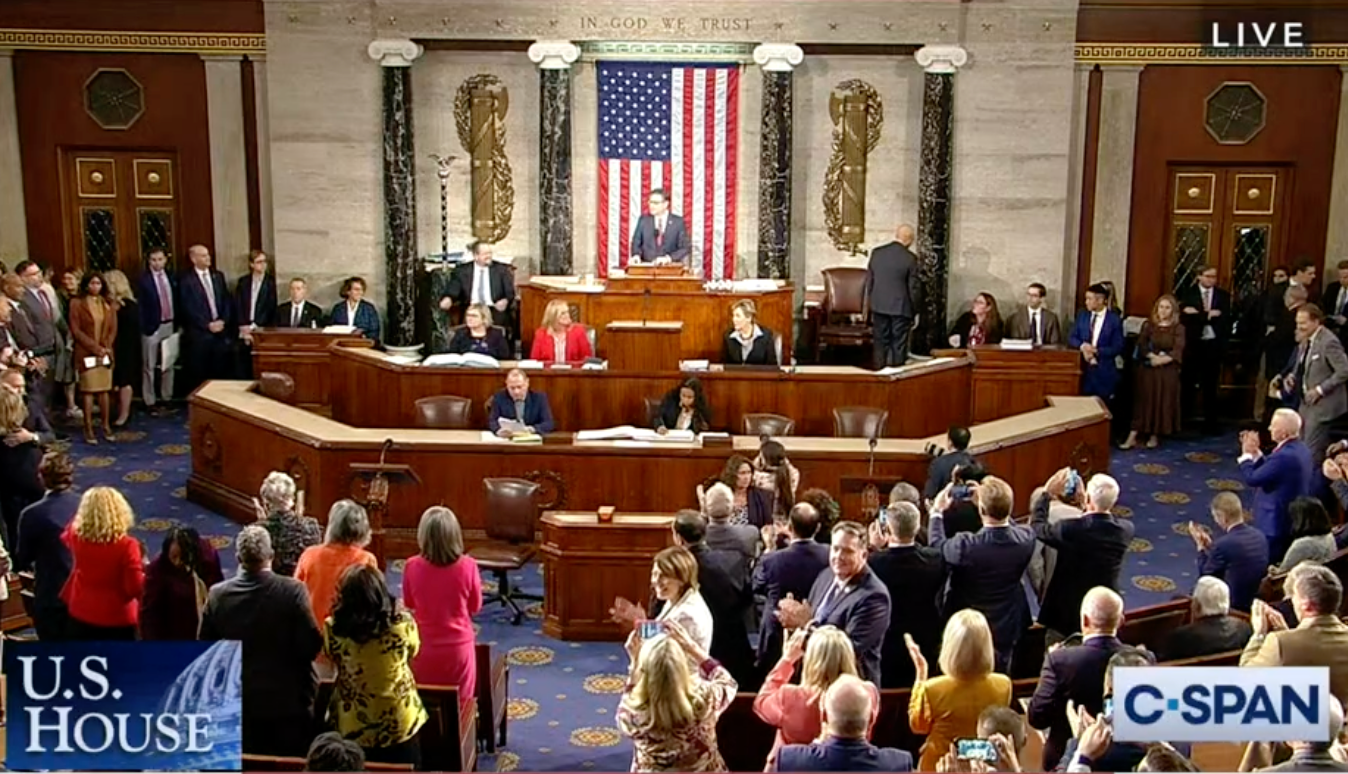
In a rare display of bipartisan cooperation, the U.S. House of Representatives overwhelmingly passed the amended 21st Century ROAD to Housing Act this week, advancing a package of reforms designed to tackle America’s housing affordability crisis while delivering on several key priorities championed by President Donald Trump.
The legislation passed by a decisive 396-13 vote, reflecting broad agreement that soaring housing costs, rising rents, and limited inventory have pushed homeownership out of reach for millions of Americans.
Supporters say the bill addresses one of the country’s most pressing economic challenges by cutting red tape, increasing housing supply, strengthening lending opportunities, and helping ensure that American families—not large corporations—have a fair shot at buying homes.
The legislation combines elements of previous House and Senate proposals and seeks to address housing shortages that have contributed to record-high home prices in many parts of the country.
House Financial Services Committee Chairman French Hill praised the measure as a practical, results-oriented solution focused on expanding opportunities for working Americans.
“This bill prioritizes American families by expanding homeownership, enhancing affordability, reducing burdensome regulations that drive up costs, and increasing housing supply nationwide,” Chairman Hill stated.
“Importantly, it delivers on President Trump’s call to limit institutional investors from competing with the American people as they seek to purchase a home,” Hill added.
The legislation includes a variety of reforms aimed at accelerating housing construction and reducing barriers that have slowed development for years.

Among its key provisions, the bill streamlines federal permitting requirements, reduces lengthy environmental review processes for certain redevelopment and infill housing projects, and encourages innovative housing solutions such as modular and manufactured homes.
The measure also provides grants to local governments willing to modernize zoning laws and remove restrictions that limit new construction.
Supporters argue that restrictive zoning policies, excessive permitting delays, and government bureaucracy have significantly contributed to America’s housing shortage.
Rather than relying on massive new federal spending programs, the legislation focuses on empowering local communities, encouraging private-sector investment, and removing obstacles that make housing more expensive.
The bill also raises loan limits for multifamily housing developments, creating incentives for apartment construction and expanding options for renters and first-time buyers alike.
Additional provisions strengthen rural housing initiatives, expand support for veterans seeking housing, modernize financing for smaller mortgage loans, and increase the role community banks can play in local lending markets.
Community banks have long argued that excessive regulations have made it more difficult for them to serve homebuyers and construction projects in their local communities.
Democratic Rep. Maxine Waters acknowledged the seriousness of the housing crisis despite broader political disagreements.
“America is in the middle of a full-blown affordable housing and homelessness crisis, and working families are burdened by skyrocketing rents and a housing market that is pushing homeownership further out of reach,” Waters said.
One of the most notable aspects of the legislation is its effort to curb the growing influence of large institutional investors in the housing market.
For years, investment firms and corporate landlords have purchased thousands of single-family homes, often outbidding families and first-time homebuyers. Critics argue that this trend has driven up prices while transforming communities into rental markets dominated by large corporations.
The legislation includes targeted restrictions designed to discourage large institutional investors from acquiring additional single-family homes.
That approach aligns closely with President Trump’s housing agenda.
Throughout his second administration, Trump has repeatedly argued that homeownership should remain a cornerstone of the American Dream and that government policies should prioritize families over Wall Street investors.
In his National Homeownership Month proclamation earlier this month, Trump emphasized the importance of restoring affordability and expanding opportunities for future homeowners.
“During National Homeownership Month, my Administration recommits to making housing more affordable so that young Americans and hardworking families can raise children, build memories, and create a future in a home of their own,” Trump said.
The president has frequently blamed the housing crisis on “reckless spending, burdensome regulations, and failed housing policies” implemented under previous administrations, as well as “mass illegal immigration and large institutional investors” that have increased pressure on housing supply.
Trump has also taken executive actions aimed at reducing institutional ownership of single-family homes, lowering mortgage costs, and strengthening federal housing programs.
“Under my leadership, America will be a Nation where homes belong to families — not corporations,” Trump said.
At the same time, Trump has emphasized the importance of protecting the value of homes already owned by millions of Americans.
“I don’t want to drive housing prices down. I want to drive housing prices up for people that own their homes. Existing housing, people who own their homes, we’re going to keep them wealthy. We’re going to keep those prices up. We’re not going to destroy the value of their homes so that somebody that didn’t work very hard can buy a home,” Trump said during a Cabinet meeting earlier this year.
He has also repeatedly summarized his housing philosophy with a simple message:
“Homes are built for people, not for corporations, and America will not become a nation of renters.”
With overwhelming bipartisan support in the House and growing concern over affordability nationwide, supporters hope the legislation will mark a significant step toward restoring homeownership opportunities and ensuring that the American Dream remains within reach for future generations.

Tucker Carlson Officially Makes Shock Announcement — He’s Out

Top Fox News Host Suffers Deranged Meltdown On LIVE TV — Doesn’t End Well…

It’s Over! The House Votes 396-13 — Trump Just Won!

Disturbing Discovery Obama Hid In New Presidential Library Just Found

DOJ Drops Hammer On MLB — Pride Night Backfires BIG Time

Biden Humiliates Himself On Stage — Video Captures Everything
-
 Economy4 months ago
Vance Leaves Meeting, Looks Straight Into Camera, Announces Stunning Arrest
-
 Economy4 months ago
Adam Schiff Facing 30 Years In Prison After Bank Records Leak
-
 Economy4 months ago
Supreme Curt Sides With Trump — He Can Remove The All
-
 Economy4 months ago
All Hell Breaks Loose On Fox When Jesse Watters Asks Fetterman One Question
-
 Economy2 months ago
Prayers Pour In After Fox Host Dies: ‘Senseless Murder’
-
 Economy4 months ago
NBC Stops LIVE Broadcast — Breaks Big Trump News
-
 Economy4 months ago
Trump Pulls Off Miracle Of A Lifetime — It’s Permanently Open
-

 Economy4 months ago
Swalwell Facing Jail Time After Sickening New Video Leaks