
Latest
Ilhan Omar PANICS As Feds Find The ONE Thing She Wanted Kept Hidden

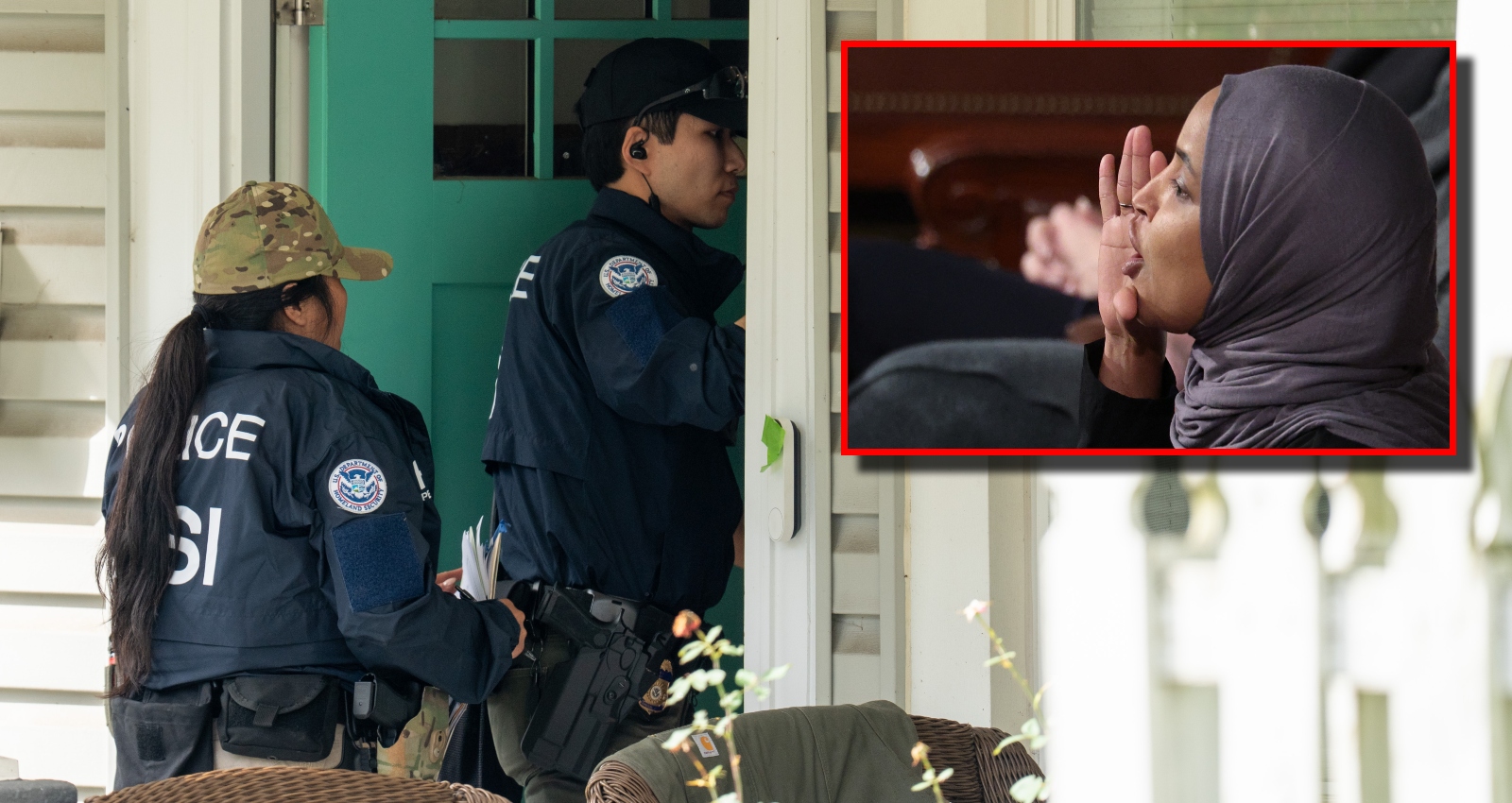
The federal investigation into Rep. Ilhan Omar’s immigration history has entered another contentious phase, with attorneys for the Minnesota Democrat demanding the immediate return of property seized during a search of her Washington, D.C., residence.
Omar’s legal team is accusing federal investigators of exceeding judicial restrictions and violating constitutional protections during the operation, allegations the Justice Department strongly denies.
The dispute follows a court-authorized search conducted Monday by Homeland Security Investigations agents as part of a criminal inquiry into possible immigration fraud involving Omar and members of her family.
According to the supplied reports, investigators seized several personal items, including Omar’s cellphone, passport, notebooks, computers and boxes of documents.
Now, her attorneys are challenging the government’s handling of that evidence and demanding answers about how the search was conducted.
Attorneys Amy Jeffress and Joshua Matz sent a letter to federal prosecutors Friday requesting the immediate return of the seized property.
They also demanded that investigators preserve any audio or video recordings created during the search, potentially setting the stage for further legal challenges.
“There is no legitimate basis for any suggestion that she has violated any law concerning her citizenship status,” the attorneys wrote.
They went further, accusing the Trump administration of pursuing a politically motivated investigation against one of the president’s most outspoken congressional opponents.
“This vindictive, retributive, and politically motivated criminal investigation into one of the President’s chief congressional critics violates Representative Omar’s constitutional rights and threatens the separation of powers,” the attorneys argued.
Those allegations represent the position of Omar’s legal team and have not been established by a court.
The Justice Department rejected the accusations.
DOJ spokesperson Emily Covington told ABC News that federal personnel followed the law and complied with judicial requirements.
“Our attorneys and law enforcement partners complied with all court orders and legal obligations, as they always do,” Covington said.
The department also characterized Omar’s attorneys’ letter as containing “false allegations and inaccuracies.”
At the center of the dispute are restrictions that Omar’s lawyers say were imposed by the federal magistrate judge who approved the search warrant.
According to the attorneys, investigators were required to provide legal counsel with a copy of the warrant and contact the House Office of General Counsel before executing the search.
Those requirements were reportedly intended to protect potentially sensitive congressional materials, including documents that might fall under the Constitution’s Speech or Debate Clause.
That constitutional provision protects lawmakers from certain forms of legal questioning and investigative intrusion involving legitimate legislative activities.
The protections are especially relevant when federal investigators seek records belonging to a sitting member of Congress.
Omar’s attorneys contend that agents failed to follow the required safeguards.
They also allege that the congresswoman repeatedly attempted to contact her legal representatives after agents arrived but was prevented from doing so for more than an hour.
Federal officials dispute that characterization and maintain that the search was conducted in accordance with applicable legal requirements.
The conflicting accounts raise questions that may ultimately require judicial review.
The underlying criminal investigation reportedly concerns immigration and naturalization records dating back decades.
According to Reuters, the search warrant identified potential offenses involving conspiracy, immigration fraud and false statements on immigration paperwork.
Investigators are reportedly examining whether Omar or members of her family provided inaccurate information when they entered the United States as refugees during the 1990s or during subsequent citizenship proceedings.
Omar was born in Somalia, came to the United States as a refugee and became a naturalized American citizen in 2000.
The precise evidence underlying the investigation remains largely unavailable to the public because the warrant materials have not been fully disclosed.
The Wall Street Journal reported that investigators are examining Omar’s naturalization history and that one potential objective could involve pursuing the revocation of her citizenship if legally sufficient evidence of fraud were uncovered.
Such an outcome would require separate legal proceedings and proof satisfying the applicable legal standards.
A criminal investigation alone cannot revoke citizenship, and the issuance of a search warrant does not establish that Omar committed an offense.
No criminal charges against the congresswoman have been announced in connection with the reported investigation.
Nevertheless, the inquiry appears to extend beyond the documents and electronic devices reportedly seized from her residence.
More than a dozen grand jury subpoenas have reportedly been issued, including subpoenas involving members of Omar’s family.
Those subpoenas suggest that investigators are seeking information from multiple sources as they examine the allegations.
A grand jury subpoena, however, is an investigative tool and does not establish that its recipient engaged in wrongdoing.
The controversy has also drawn attention to the involvement of U.S. Attorney Jeanine Pirro, whose Washington office is reportedly handling a separate aspect of the inquiry involving Omar’s financial affairs.
Pirro has defended the search by emphasizing that a federal judge authorized the warrant after determining that the legal requirements for probable cause had been satisfied.
That judicial authorization is an important distinction in the dispute.
A search warrant generally requires investigators to present evidence sufficient to establish probable cause that evidence connected to a crime will be found at the location to be searched.
It does not amount to a finding of guilt.
Nor does judicial authorization automatically resolve subsequent disputes about whether investigators complied with every restriction imposed during the search.
Omar’s attorneys are challenging the latter issue while also disputing the legitimacy of the investigation itself.
The timing of the operation has become another point of contention.
The search occurred just weeks before the November 3 midterm elections, when Omar is seeking a fifth term representing Minnesota’s Fifth Congressional District.
Her legal team argues that the investigation’s timing reinforces concerns about political retaliation.
The Justice Department has traditionally exercised caution when considering public investigative actions involving political candidates close to elections.
Those practices are intended to reduce the possibility that federal law enforcement activity could improperly influence electoral outcomes.
However, they do not categorically prohibit investigators from executing judicially authorized warrants during an election period.
Justice Department officials maintain that the search underwent the necessary internal review.
Another reported detail could become significant as the investigation continues.
According to The Washington Post, immigration officials examined some of the same allegations during Trump’s first administration in 2019.
The newspaper reported that officials concluded at the time that the available information was insufficient to justify a full investigation.
That earlier assessment does not necessarily prevent federal authorities from reopening an inquiry if new evidence emerges.
However, it raises questions about what information, if any, prompted investigators to revisit allegations that had previously been examined.
Federal officials have not publicly provided a detailed explanation of the evidence supporting the current investigation.
Omar, meanwhile, has repeatedly denied wrongdoing and accused the Trump administration of using federal law enforcement to target political opponents.
Her attorneys are now attempting to challenge both the government’s conduct during the search and its continued possession of the seized materials.
The Justice Department has responded by defending the legality of the operation and rejecting allegations that agents violated court-imposed restrictions.
The competing claims leave several important questions unresolved.
Among them are whether investigators followed the warrant’s specific conditions, whether any seized materials are protected by congressional privileges and whether the evidence collected supports further legal action.
The answers could determine how much of the seized material prosecutors are permitted to review or retain.
For now, the reported investigation remains active, and the congresswoman has not been charged with a crime.
The latest dispute moves the controversy beyond the initial search and into a potential legal battle over constitutional protections, investigative procedures and the government’s handling of evidence.
Whether Omar’s attorneys succeed in securing the return of the property will depend on the terms of the warrant, the applicable law and any subsequent court rulings.
Until those issues are resolved, the investigation remains a developing legal and political controversy involving a sitting member of Congress and the federal agencies examining allegations concerning her immigration history.

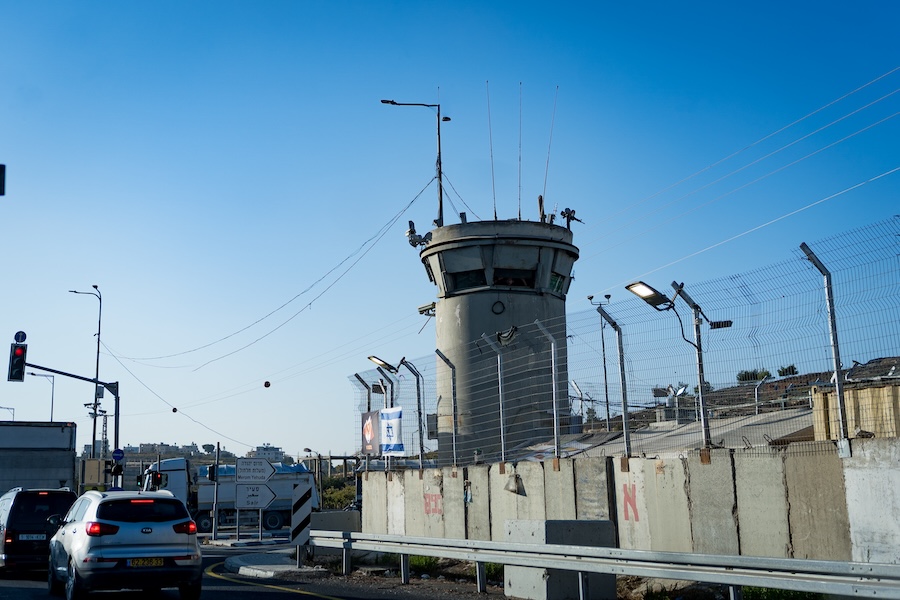
Democratic congressional candidate Brad Lander was detained by Israeli military forces Wednesday after joining dozens of activists and Palestinian farmers for an olive harvest in the West Bank, triggering a confrontation over Israeli security restrictions just weeks before the November 3 midterm elections.
Lander, the Democratic nominee for New York’s 10th Congressional District and former New York City comptroller, was among approximately 80 to 90 volunteers detained near the Palestinian village of Nahalin, outside Bethlehem.
The group included American and Israeli rabbis, human rights activists and international volunteers participating in an organized olive harvest.
According to reports, the volunteers had been working in the olive grove for approximately two hours when Israeli troops arrived and declared the location a closed military zone.
Military personnel subsequently detained participants and transported them for questioning, setting off a dispute over whether the group had violated Israeli security requirements.
Lander quickly publicized the incident on X, posting a photograph from a bus carrying other detained volunteers.
“I’ve been detained by the IDF, along with a group of rabbis & volunteers,” Lander wrote. “The occupation is a crime under international law. Harvesting olives isn’t a crime under any law I know.”
The Democratic candidate was released several hours later with a warning, although other volunteers reportedly remained in custody.
Following his release, Lander suggested that his political prominence may have influenced how Israeli authorities handled his detention.
“I’ve been released from IDF custody with a ‘warning,’ apparently because of my public profile (I told them I wasn’t even a congressmember yet, just a nominee),” he wrote.
Israeli military officials defended the operation, maintaining that the group had entered an area where agricultural activity required advance coordination with security authorities.
The Israel Defense Forces argued that harvesting olives near an Israeli community without proper authorization could create security risks.
Military officials also accused some participants of using the agricultural activity to provoke confrontations rather than simply assist Palestinian farmers.
That explanation, however, faced questions after The Times of Israel cited an official Israeli Civil Administration map indicating that the specific location where the volunteers were detained did not require advance authorization.
Despite that reported discrepancy, Israeli military authorities maintained that the landowner would need to coordinate future harvesting activities with security officials.
The competing accounts have intensified scrutiny of the operation and the restrictions governing Palestinian agricultural access in parts of the West Bank.
Rabbis for Human Rights, the organization involved in coordinating the harvest, said Palestinian farmers had been unable to access the affected olive groves for approximately three years.
The organization maintained that its volunteers were participating in peaceful agricultural work and had agreed to comply with military instructions.
Israeli police later reported that dozens of detainees had been released, although four foreign activists reportedly faced possible deportation proceedings following questioning about their political activities.
The incident comes at a politically sensitive moment for Lander, who is campaigning for Congress in a heavily Democratic New York district.
Lander has been an outspoken critic of Israeli government policy and has previously called for an end to U.S. military assistance to Israel.
His campaign has attracted support from prominent progressive Democrats, including New York City Mayor Zohran Mamdani and Rep. Alexandria Ocasio-Cortez.
The confrontation also places renewed attention on the political divide surrounding American support for Israel and the treatment of Palestinians in the West Bank.
Israeli authorities maintain that military restrictions in certain areas are necessary to protect security and prevent confrontations.
Palestinian advocacy organizations and human rights activists argue that such restrictions can prevent farmers from accessing agricultural land and carrying out essential economic activities.
Wednesday’s detention was not the first reported confrontation involving an American Democratic politician and Israeli forces in the West Bank.
In July, Democratic Rep. Ro Khanna of California was reportedly briefly detained by Israeli military personnel during a visit to the region.
Following his release, Lander condemned the detentions and demanded that Israeli authorities release the remaining volunteers.
The episode leaves unresolved questions about the legal basis for declaring the harvest location a closed military zone, the reported discrepancy involving the Israeli Civil Administration map and the circumstances surrounding the detention of dozens of participants.
For Lander, the confrontation has placed his criticism of Israeli policy at the center of another international controversy just days before voters decide whether to send him to Congress.

The Trump administration is considering a dramatic new approach to securing the southern border, with the Pentagon reportedly authorizing the Department of Homeland Security to test a powerful military-grade heat ray designed to force people to retreat without firing a single bullet.
The technology, known as the Active Denial System, uses an invisible beam of electromagnetic energy to create an intense burning sensation on exposed skin, compelling individuals to move away from the targeted area.
According to CNN, Defense Secretary Pete Hegseth approved the testing arrangement in a memorandum signed last month, allowing DHS to evaluate whether the controversial technology could be used in future operations along the U.S.-Mexico border.
The system reportedly has a range exceeding half a mile, potentially giving federal authorities a powerful long-distance tool for dispersing crowds and controlling access to restricted areas.
Military officials have compared the sensation produced by the device to opening an extremely hot oven, describing a “tingling effect” that can last between 10 and 15 minutes.
The technology reportedly creates “an instinctive and irresistible urge to run from the effect.”
Unlike traditional firearms, the Active Denial System is designed to repel individuals without using bullets, explosives or conventional projectiles.
But the prospect of deploying the technology against people attempting to cross the southern border has raised serious questions about safety, legal authority and the possibility of unintended injuries.
Under the reported agreement, DHS is authorized to temporarily borrow one Active Denial System for a seven-month testing period beginning in September.
The Pentagon will not operate the equipment during that period.
The memorandum specifically states that the system “shall not be operated by DoW (Department of War) personnel.”
Instead, DHS will assume responsibility for “system employment, use and development of tactics, techniques and procedures.”
The arrangement gives federal immigration authorities an opportunity to examine the technology’s capabilities and determine whether it could serve a practical role in border security operations.
If the testing produces favorable results, officials could potentially request additional equipment, although no broader deployment has been authorized.
Customs and Border Protection acknowledged its ongoing interest in evaluating new technology that could strengthen federal enforcement capabilities.
“CBP is continually evaluating new technologies, especially those that enhance operational effectiveness and strengthen mission capabilities,” an agency spokesperson told CNN.
The Pentagon referred questions about the arrangement to DHS.
Although the Active Denial System has existed for years, using it along the southern border would represent a significant departure from conventional immigration enforcement tactics.
The military previously transported the technology to Afghanistan but ultimately declined to use it during active combat operations.
Officials also explored potential applications at overseas detention facilities before abandoning those proposals.
Federal border authorities have considered similar uses for the system in the past, particularly in areas where large numbers of migrants were attempting unauthorized crossings.
One earlier evaluation involved the El Centro sector along the California-Mexico border, where officials examined whether the heat ray could discourage crossings near waterways.
Rodney Scott, who now serves as CBP commissioner, oversaw the sector during that previous review.
But the proposal encountered concerns about whether forcing migrants to retreat could create dangerous situations, particularly near rivers and other hazardous terrain.
“Even if they’re chasing people back to the river, you don’t want them to go in and drown,” a former CBP official told CNN.
“For the cost, for the training and for the policies you’re going to create, is the juice worth the squeeze?”
The technology also sparked debate during Trump’s first administration.
In 2018, federal officials reportedly considered deploying the system against groups of migrants approaching the border before then-Homeland Security Secretary Kirstjen Nielsen rejected the proposal.
“The issue was treating immigrants and citizens like enemy combatants,” a former DHS official told CNN.
“Thematically, inhumane treatments typically get rejected.”
Those earlier objections could resurface as the administration evaluates whether the system can be operated safely and legally in an immigration enforcement setting.
One potential complication involves the possibility of the beam reaching individuals standing on Mexican territory, which could trigger diplomatic disputes and questions about federal authority beyond the U.S. border.
Other concerns involve accidental exposure, the risk of injuries and whether the technology could cause people to flee into dangerous locations.
Some Border Patrol personnel have also questioned whether the system is necessary, particularly amid reports of declining illegal border crossings and increased federal staffing.
The financial costs of acquiring, maintaining and operating the equipment could become another factor in determining whether DHS ultimately pursues deployment.
Still, the Pentagon’s reported authorization represents a significant development in the administration’s examination of advanced border enforcement technology.
The Active Denial System would give authorities a fundamentally different crowd-control capability from traditional physical barriers, patrol vehicles and conventional enforcement equipment.
Whether that capability would be effective, proportionate or legally appropriate in civilian border operations remains unresolved.
For now, DHS has permission to test the system and develop potential operating procedures, but officials have not announced plans to deploy the heat ray against migrants at the southern border.
Any decision to move beyond testing would require further consideration of safety, operational effectiveness and legal restrictions governing the use of force.
The immediate development is significant: Federal immigration authorities have reportedly received Pentagon approval to evaluate a military-grade directed-energy weapon for possible border operations, even as major questions remain about how—and whether—it could be used.

Rep. Ilhan Omar has resurfaced following a reported federal raid on her Washington, D.C., residence, delivering a defiant fundraising appeal as she faces mounting scrutiny over an ongoing immigration fraud investigation.
The Minnesota Democrat appeared in a roughly one-minute video Tuesday night, asking supporters to send money to help finance what she described as an increasingly expensive battle against President Donald Trump and his administration.
According to the New York Post, Omar recorded the video from the back of a vehicle, marking a public reappearance following last week’s reported search of her home in connection with a years-long immigration fraud investigation.
Federal agents reportedly seized Omar’s phone, notebooks, computers and passport during the search, according to the newspaper.
Omar has repeatedly denied wrongdoing, and no criminal conviction or finding of immigration fraud has been established in the supplied reporting.
But rather than provide a detailed public explanation addressing the allegations, Omar used her latest appearance to solicit financial contributions and accuse the Trump administration of attempting to intimidate her.
“Thank you so much again, and please continue to support us,” Omar said.
The congresswoman warned supporters that the coming weeks could prove financially burdensome, describing the situation as “a very expensive and challenging time.”
She then encouraged contributions of $5, $10 or $20, presenting the fundraising effort as part of a broader political fight against the administration.
Omar claimed the donations would help “fight Trump and his administration for trying to intimidate me and so many other people.”
The appeal comes at a politically sensitive moment, with the November 3 midterm elections approaching and Democrats attempting to gain control of Congress.
Omar’s video offered no detailed accounting of how much money has already been raised or precisely how the requested contributions would be spent.
It also did not provide a substantive explanation of the reported immigration allegations or address the specific materials federal investigators allegedly seized.
Instead, the congresswoman focused heavily on portraying the investigation as an attempt to silence her political opposition to Trump.
“We know that they’re running scared,” Omar said, accusing her political opponents of acting out of fear.
“We’re not going to be intimidated,” she added during the message.
Omar also pledged to return to campaigning alongside supporters, tying her personal legal confrontation to Democrats’ efforts to capture the House and Senate.
She said the party would work to hold the Trump administration accountable if Democrats gained congressional power.
The message effectively transformed the reported federal investigation into a political fundraising appeal, with Omar asking supporters to help finance her continued resistance to the administration.
Meanwhile, the New York Post reported that federal officials are pursuing an investigation that could potentially raise questions about Omar’s citizenship status.
The newspaper described the possibility of denaturalization and eventual deportation to Somalia, Omar’s country of birth, as potential consequences if immigration fraud were established through the appropriate legal process.
However, those possibilities remain speculative. The supplied reporting does not establish that federal authorities have initiated successful denaturalization proceedings, obtained a conviction or secured any final ruling affecting Omar’s citizenship.
Omar, who came to the United States as a refugee and became a naturalized American citizen in 2000, has consistently rejected allegations involving her immigration history.
The investigation has nevertheless placed renewed attention on the congresswoman’s background and the allegations that have followed her throughout her political career.
For Omar, the stakes extend beyond the approaching election.
The reported seizure of personal devices, records and her passport suggests investigators were seeking materials potentially relevant to their inquiry, although the contents and evidentiary significance of those items have not been publicly established.
The congresswoman’s fundraising appeal also raises questions about whether contributions are intended for legal expenses, campaign operations or a combination of political activities.
Her video did not clarify those details.
At the same time, Omar has maintained that the administration’s actions will not prevent her from continuing her work in Congress or participating in the upcoming elections.
Her accusations of political intimidation remain contested, and the existence of a federal investigation does not by itself establish either misconduct by Omar or improper motives by investigators.
For now, Omar is back in public view and asking supporters to open their wallets. But the questions surrounding the reported federal search, the immigration allegations and the intended use of the money she is soliciting remain unanswered.

Leading Dem Just Detained By Israeli Military After Being Caught In the Act

DHS About To Test Unprecedented New Weapon At Border – Leftists Irate!

Ilhan Omar FOUND — Shocked Where Caught After Sudden Disappearance

JUST IN: Trump Stuns Democrats With $400M October Surprise

SCOTUS Delivers MASSIVE Decision Just 19 Days Before Midterms

Ilhan Omar’s Husband Goes Public With Announcement — She’s Devastated

Obama Calls It QUITS After Wild Video Goes Viral

Jeanine Pirro Makes Massive Announcement – WH In Total Shock

JUST IN: ‘Squad’ Congressional Candidate Arrested

Ilhan Omar Removal Vote Is In — Decided By Razor Thin Margin

Charlie Kirk’s Mother Breaks Her Silence After Erika Kirk’s Public Statement

BREAKING OVERNIGHT: Socialist Dem Suffers Humiliating Defeat
-
 Economy6 months ago
Vance Leaves Meeting, Looks Straight Into Camera, Announces Stunning Arrest
-
 Economy6 months ago
Adam Schiff Facing 30 Years In Prison After Bank Records Leak
-
 Culture4 months ago
Michelle Obama Drops Nasty Bomb About ‘Useless’ Daughter
-
 Economy6 months ago
Supreme Curt Sides With Trump — He Can Remove The All
-
 Economy6 months ago
All Hell Breaks Loose On Fox When Jesse Watters Asks Fetterman One Question
-
 Economy4 months ago
Prayers Pour In After Fox Host Dies: ‘Senseless Murder’
-
 Border & Security3 months ago
Top Trump Admin And Wife Found Dead — Chilling Update Just Released
-

 Latest4 months ago
Fox News Stuns With Announcement About 5 Fired Hosts