
Politics
Cops Arrest Two For Allegedly Ambushing US Park Police Officer In DC


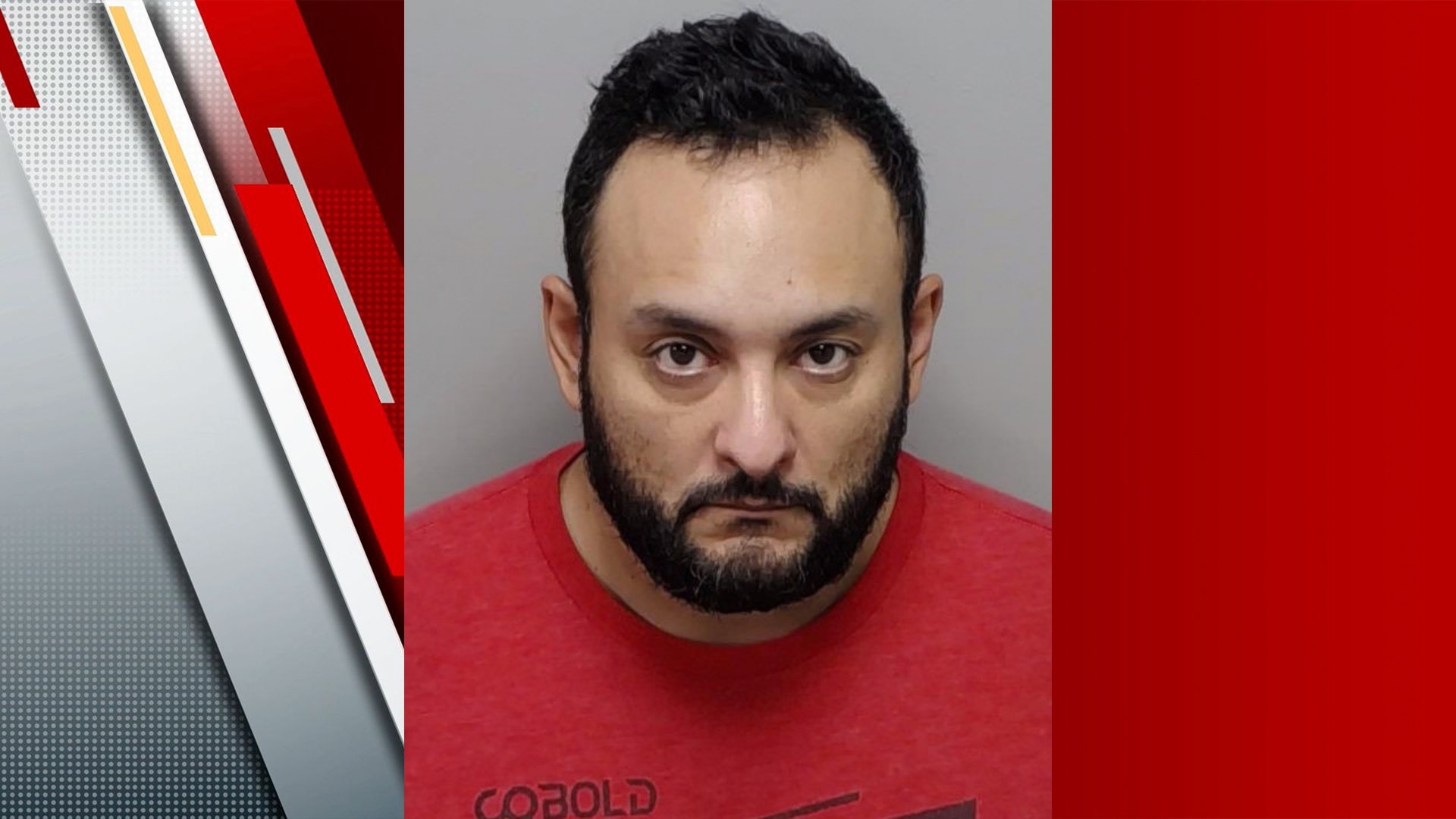
A Texas man is in federal custody after authorities say they disrupted an alleged plot to carry out a shooting at the Texas State Capitol—just one day before President Donald Trump was scheduled to visit the state.
Benny Caldera Jr., 40, of Converse, was initially arrested early Wednesday on a felony charge of making a terroristic threat against a public servant after investigators received what authorities described as “credible information about an individual planning a violent attack.”
According to an arrest affidavit cited by NBC 5, a friend told investigators that Caldera had threatened to shoot up the Texas Capitol and made alarming statements about people associated with the American Israel Public Affairs Committee, or AIPAC.
The friend reportedly told investigators that Caldera said people associated with the prominent pro-Israel organization needed to be exterminated.
Authorities say the alleged attack was planned for Thursday, Oct. 1—the same day Trump was scheduled to visit Texas.
The warning set off an overnight law-enforcement operation.
The Texas Department of Public Safety said it received information about the alleged plot Tuesday evening and immediately began working with the FBI and local authorities.
Investigators worked through the night.
By approximately 3 a.m. Wednesday, SWAT officers had moved in on Caldera’s Converse home and taken him into custody.
He was booked into the Bexar County Jail on the state terroristic-threat charge, with bond initially set at $75,000.
But Caldera wasn’t going home.
After reports circulated suggesting he had been released on bond, DPS publicly pushed back, saying he remained in custody.
The FBI then arrested Caldera at the jail Wednesday evening on additional federal charges connected to the alleged plot, according to DPS.
He was transferred into federal custody.
“The department said he is not out on bond,” according to the account of the case.
The specific federal charges against Caldera had not yet been publicly disclosed.
NBC 5 also reported that Bexar County court records show Caldera was previously charged with unlicensed carrying of a weapon in November 2023. The reported account did not provide the ultimate disposition of that case.
News of the alleged plot quickly reached state lawmakers.
Texas legislators were notified Wednesday about both the threat and Caldera’s arrest as authorities increased security around one of the state’s most prominent government buildings.
Despite the alleged threat, the Texas State Capitol remained open during its normal operating hours with heightened security measures in place.
Authorities stressed that they do not currently believe the public remains in danger.
DPS said there is no reason to believe an ongoing threat exists against the Capitol, lawmakers, employees or members of the public.
The investigation remains active.
The timeline, however, underscores how quickly authorities say the situation escalated: investigators received information about an alleged violent attack Tuesday evening, worked through the night and had a suspect in custody by approximately 3 a.m.
Hours later, the FBI stepped in and took Caldera into federal custody.
The alleged target was the Texas State Capitol.
And according to authorities, the planned date was Oct. 1—the same day a sitting president was scheduled to visit the state.
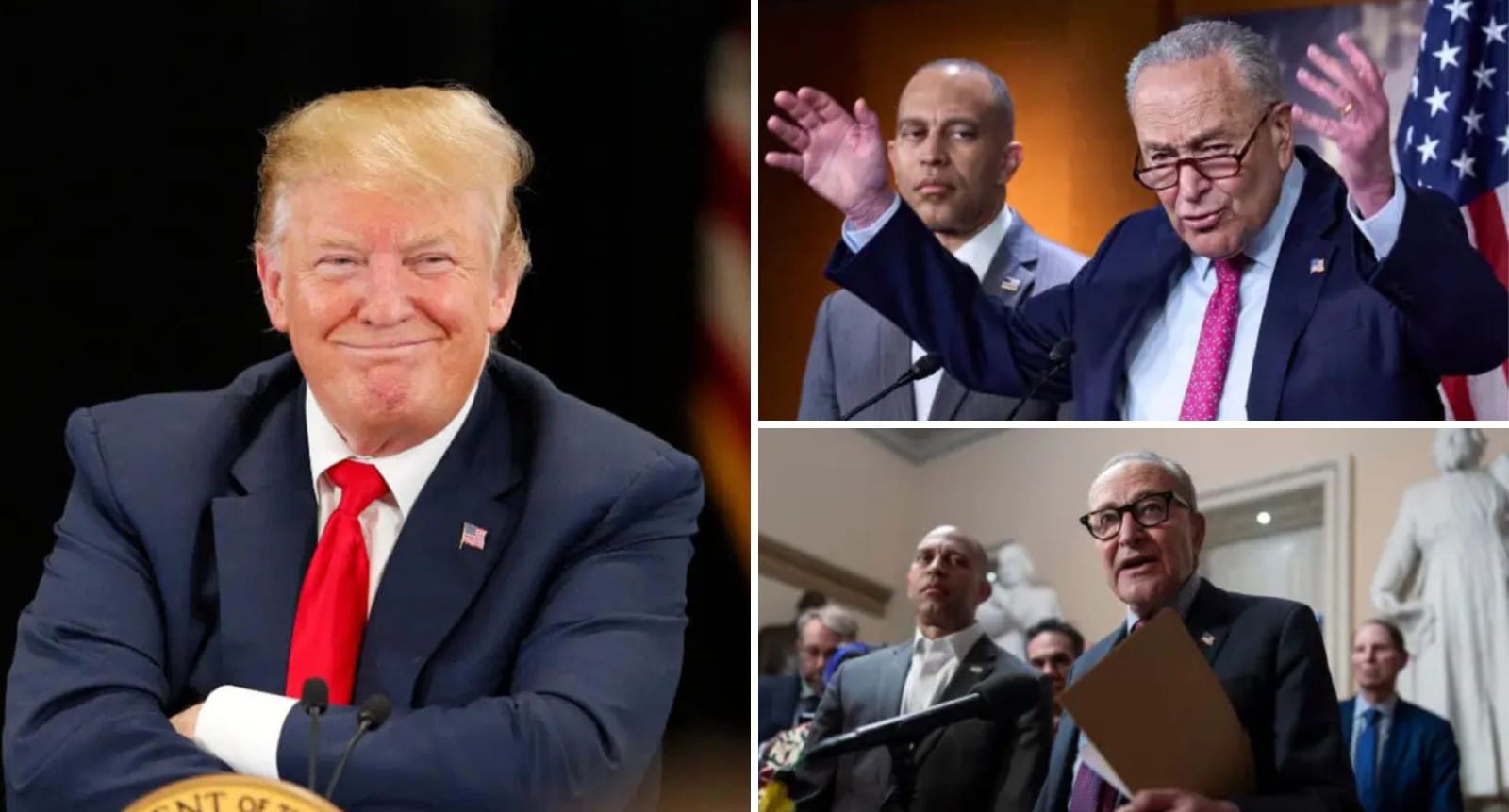
President Donald Trump secured another key Cabinet confirmation Wednesday night as the Senate approved Keith Sonderling to lead the Department of Labor, overcoming unified opposition from participating Democrats and independents.
Sonderling was confirmed in a 47–41 vote, formally putting him in charge of the powerful department after months of serving in an acting capacity following former Labor Secretary Lori Chavez-DeRemer’s departure from the administration.
The final vote came at 9:29 p.m., just before senators prepared to leave Washington ahead of November’s consequential midterm elections.
Twelve senators did not vote.
Hours earlier, Republicans pushed Sonderling’s nomination through a critical procedural hurdle, invoking cloture by a 53–47 vote and clearing the way for his final confirmation.
Every Republican supported advancing the nomination during the cloture vote, while Democrats and independents unanimously opposed moving forward.
But Sonderling was hardly a newcomer to the department he will now officially lead.
He had already been running the Labor Department since April, when Chavez-DeRemer left Trump’s Cabinet.
Trump designated Sonderling acting secretary on April 20 before formally nominating him for the permanent position on June 29.
His nomination then survived a razor-thin vote in the Senate Health, Education, Labor and Pensions Committee, which advanced him 12–11 on July 30.
Committee Chairman Bill Cassidy, R-La., strongly backed Sonderling and argued that his experience made him well suited to take permanent control of the department.
“It is clear Mr. Sonderling is qualified,” Cassidy said while supporting the nomination during committee consideration.
“As Secretary, I’m confident that he will protect workers, help businesses create more jobs,” Cassidy continued.
Cassidy also said Sonderling would “help workers navigate AI-driven changes in the workforce.”
Trump was equally enthusiastic when announcing Sonderling as his permanent choice over the summer.
“It is my Great Honor” to nominate Sonderling, Trump wrote while announcing his decision on Truth Social.
Trump called Sonderling the “outstanding Acting United States Secretary of Labor” and pointed to his extensive experience inside the federal government.
“Throughout his career, Keith has proven his dedication to delivering strong results for the Hardworking People of our Country,” Trump said.
“I know he will do an incredible job in his new role,” the president added.
Sonderling takes control of the Labor Department with years of experience spanning employment law, federal regulation and the inner workings of the department itself.
The Senate previously confirmed him as Trump’s deputy labor secretary in March 2025 by a 53–46 vote.
In that position, Sonderling oversaw major day-to-day department operations, including strategic planning, budgeting, technology, financial management and human resources.
His ties to the Labor Department stretch back even further.
During Trump’s first administration, Sonderling served in the department’s Wage and Hour Division. He was later confirmed by the Senate in 2020 as a Republican commissioner on the Equal Employment Opportunity Commission.
Before entering government, Sonderling practiced labor and employment law in Florida, representing employers in workplace disputes and regulatory matters.
More recently, he has helped carry out Trump administration priorities involving deregulation, apprenticeships, domestic manufacturing and workforce pathways outside traditional four-year college degrees.
The department has also pursued changes involving independent contractors—an issue with major implications for industries including trucking.
Business organizations quickly welcomed Sonderling’s confirmation.
The American Trucking Associations had strongly supported his nomination, pointing in particular to his approach toward independent-contractor regulations affecting hundreds of thousands of truckers.
The organization said American workers deserve “steady, thoughtful leadership” from the Labor Department as businesses and employees navigate a rapidly changing economy.
ATA official Henry Hanscom praised Sonderling’s “deep workforce expertise, strong policy judgment, and proven agency-management experience.”
“We congratulate him on this well-deserved promotion,” Hanscom said following Wednesday night’s Senate vote.
For Trump, the confirmation fills another Cabinet post with a Senate-approved official after Chavez-DeRemer’s departure left the department under acting leadership for months.
But unlike an outsider arriving to take control, Sonderling has already effectively been running the department for much of 2026.
His progression has been rapid: deputy labor secretary, acting secretary and now the Senate-confirmed head of the department.
Wednesday night’s confirmation also arrived during the Senate’s final burst of business before lawmakers headed home to campaign ahead of the midterm elections.
Republicans ultimately supplied the votes Trump needed despite opposition from every participating Democrat and independent.
Sonderling now assumes formal responsibility for overseeing federal labor policy through the remainder of Trump’s second term.
After spending roughly five months doing the job on an acting basis, Sonderling no longer has “acting” attached to his title.
The Senate vote made it official.
House Democrats fractured again Thursday as 33 members broke with their party and joined Republicans to approve legislation that could cut off federal funding to colleges participating in certain boycotts of Israel.
The House passed H.R. 4795, the Protect Economic and Academic Freedom Act of 2026, in a decisive 237-169 vote.
Thirty-three Democrats backed the measure, while 167 Democrats joined just two Republicans in voting against it.
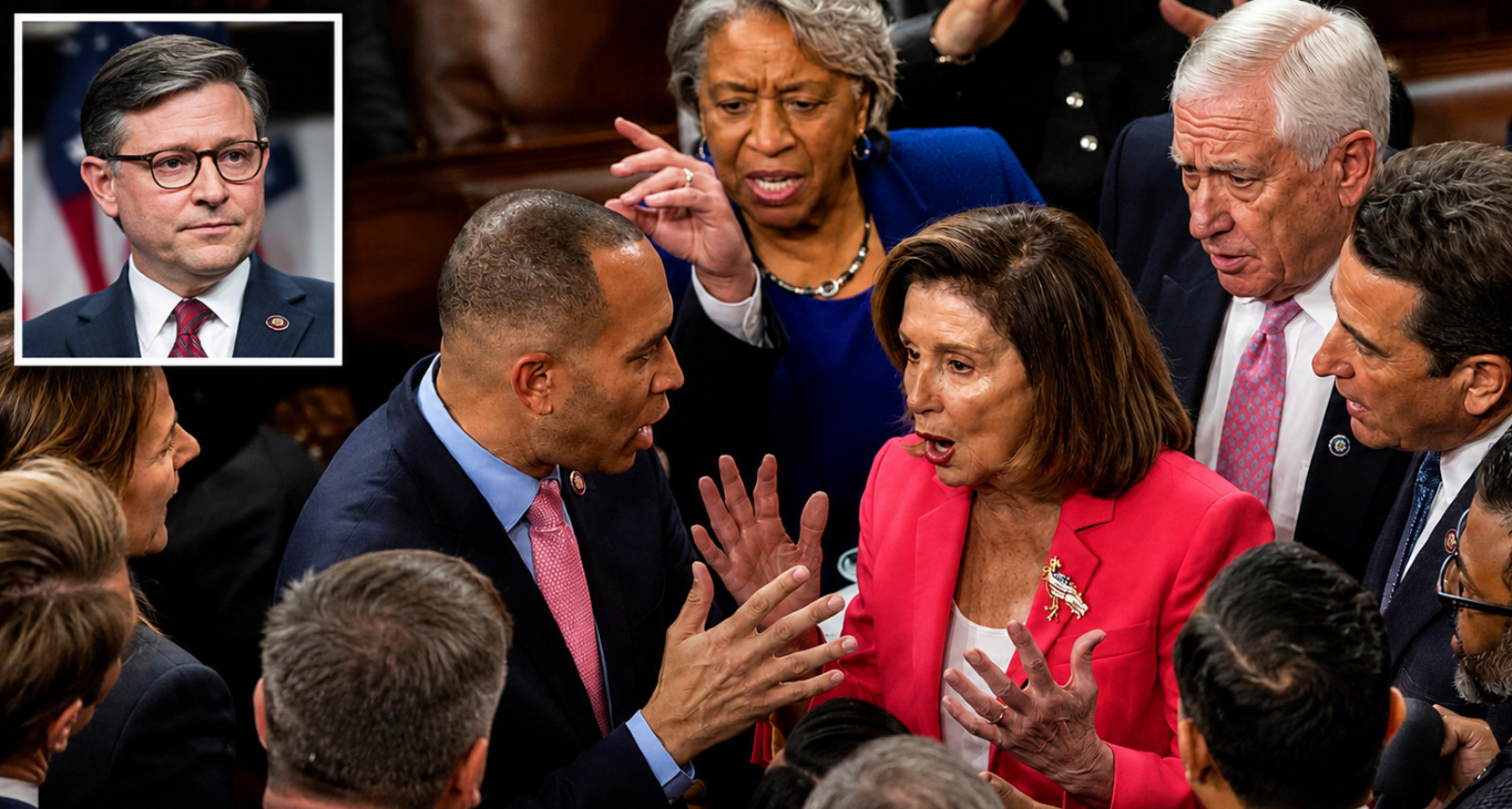
House Minority Leader Hakeem Jeffries opposed the legislation, putting him on the other side of the vote from dozens of Democrats who supported new federal consequences for colleges participating in anti-Israel boycotts.
Former Speaker Nancy Pelosi and longtime Democratic Rep. James Clyburn also voted against the bill, exposing a significant divide among House Democrats over Israel, campus activism and the limits of politically motivated boycotts.
Republican Reps. Thomas Massie of Kentucky and Warren Davidson of Ohio were the only GOP lawmakers to oppose the measure.
North Carolina Republican Virginia Foxx sponsored the legislation, with New Jersey Democrat Josh Gottheimer serving as its Democratic co-sponsor.
At the heart of the bill is a potentially powerful financial penalty.
The legislation would amend federal higher-education law to make covered colleges participating in a “nonexpressive commercial boycott” of Israel ineligible for specified federal higher-education funding.
Federally supported institutions would also be required to certify that students are not “unreasonably obstructed” from participating in academic programs located in Israel.
Supporters argue the measure is aimed at institutional commercial discrimination—not at students protesting, speaking out against Israel or expressing political opinions.
Critics see something very different: a federal funding threat that could chill constitutionally protected political expression and interfere with the independence of American colleges and universities.
Foxx argued that university boycott policies have created hostile environments by “marginalizing Jewish students” and discriminating against people of Jewish faith.
Progressive Democrats fiercely opposed the legislation, arguing Congress is effectively turning political opposition to Israel into grounds for stripping educational institutions of federal support.
New York Democrat Jerry Nadler said he opposes the Boycott, Divestment and Sanctions movement but maintains that Americans who support it retain constitutional protections for political advocacy.
Michigan Democrat Rashida Tlaib went further, delivering a blistering denunciation of the legislation and accusing lawmakers of attempting to suppress pro-Palestinian activism.
“This is an attack on free speech and academic freedom,” Tlaib declared during debate before the final vote.
Tlaib also described Israel as a “genocidal apartheid state,” highlighting the intense rhetoric that has increasingly surrounded the Israel debate among progressive Democrats.
Supporters of the bill rejected that characterization of the legislation, maintaining that it targets institutional commercial conduct rather than individual political speech.
The contentious vote came as House Speaker Mike Johnson faced a separate round of criticism over his decision to send lawmakers home ahead of the November midterm elections.
Johnson canceled votes scheduled for Friday, effectively ending the House’s legislative work until after the election and sending members away from Washington for more than six weeks.
It follows Johnson’s decision to cancel votes during the final two weeks of September.
“The House has done its work,” Johnson, a Louisiana Republican, told reporters at the Capitol.
“It’s time for our members to go home to their districts and make their case to the American people,” Johnson added.
Not every Republican was willing to accept that explanation.
South Carolina Republican Rep. Ralph Norman blasted the decision as “unacceptable.”
“The House has now canceled at least 63 scheduled voting days this Congress, including nine days this month alone, and now we’re leaving Washington until after the election,” Norman wrote on X.
“The Founders did not envision taking this much time off and still getting paid. If Members of Congress want to go home and campaign instead of doing the job taxpayers sent us here to do, then their campaigns ought to be paying them, NOT the American taxpayer. We still have work to do,” Norman added.
Johnson also rejected Democratic demands to cancel the recess so lawmakers could address the rapidly accelerating development of artificial intelligence.
Following warnings from AI researchers and industry leaders about potentially catastrophic risks posed by increasingly capable systems, Democratic lawmakers urged Johnson to keep the House in Washington until Congress could act.
“Congress should not leave town until something is done decisively to protect the safety and the well-being of the American people, in the face of growing concerns being raised by experts within the artificial intelligence industry itself,” Jeffries said Monday.
“Republicans have completely abandoned their responsibility to legislate and engage in public policy efforts in a responsible fashion in the area of artificial intelligence,” Jeffries continued.
The result is a House leaving Washington amid fights on multiple fronts: a bipartisan split over federal funding and Israel boycotts, an escalating battle over free speech and campus policy, mounting criticism over Congress’ lengthy absence from Washington, and unresolved demands for federal action on artificial intelligence.
But Thursday’s 237-169 vote also revealed something increasingly difficult for Democratic leaders to ignore: when it came time to vote on Israel boycotts and federal education dollars, 33 members of their own caucus were willing to break ranks.

JUST IN: Horrific Terror Plot Targeted At Trump THWARTED

Trump Admin Caught Colluding With Iran-Backed Terrorists

First Republican Congresswoman From Deep Blue State Dead

Dems Revolt Against Schumer And Side With Trump

Charlie Kirk’s Mother Breaks Her Silence After Erika Kirk’s Public Statement

Jaw-Dropping Details Emerge From Hijacking Attempt On Israel-Bound Flight

‘The Five’ Gets Emotional As Greg Gutfeld Announces Tragic News

Joe Biden’s Daughter Just Dropped Massive Public Bombshell On Her Dad

Obama Calls It QUITS After Wild Video Goes Viral

Removed From the Country — Ilhan Omar Hit With Horrid News

Get Ready — Mike Pence Makes Stunning 2028 Announcement

Schumer Loses! Court Sides With Trump In Historic Move
-
 Economy6 months ago
Vance Leaves Meeting, Looks Straight Into Camera, Announces Stunning Arrest
-
 Economy6 months ago
Adam Schiff Facing 30 Years In Prison After Bank Records Leak
-
 Economy6 months ago
Supreme Curt Sides With Trump — He Can Remove The All
-
 Culture4 months ago
Michelle Obama Drops Nasty Bomb About ‘Useless’ Daughter
-
 Economy6 months ago
All Hell Breaks Loose On Fox When Jesse Watters Asks Fetterman One Question
-

 Economy4 months ago
Prayers Pour In After Fox Host Dies: ‘Senseless Murder’
-

 Latest4 months ago
Fox News Stuns With Announcement About 5 Fired Hosts
-

 Border & Security2 months ago
Top Trump Admin And Wife Found Dead — Chilling Update Just Released