
Latest
FCC robocall crackdown could change phone privacy

Robocalls are the phone version of stepping on a Lego barefoot. You know the pain. Your phone buzzes during dinner, during a meeting or right when you finally sit down. Then a fake bank alert, Medicare scam or “urgent” car warranty pitch tries to hijack your day.
So when the Federal Communications Commission says it wants to crack down on illegal robocalls, most people will probably say, “Finally.”
FCC Chairman Brendan Carr said in a recent press release, “We must bring meaningful robocall relief to consumers.” A few days later, the FCC said stopping illegal calls remains its top consumer protection priority.
The agency has reason to be aggressive. Late last year, a report from the consumer advocacy group U.S. PIRG Education Fund found that Americans had received 2.14 billion robocalls per month in 2024. That works out to only a handful per person on average, but robocalls do not hit everyone evenly. Some Americans can get hit with dozens of spam calls in a single day.
Still, the FCC’s proposed fix raises a new question. Could the fight against robocalls also make it harder to get a phone without having to hand over more personal information?
Sign up for my FREE CyberGuy Report
FBI WARNS OF DANGEROUS NEW ‘SMISHING’ SCAM TARGETING YOUR PHONE
Last month, the FCC voted to seek public comment on stronger “Know Your Customer” rules for voice service providers. These rules are not final yet. The FCC is still gathering feedback, including privacy concerns. Under the proposal, phone providers may have to collect more information from new and renewing customers before giving them access to service. That could include a full legal name, physical address, government ID and an existing phone number.
For higher-volume customers, the FCC is also looking at additional checks. Providers may need to review how the customer plans to use the service and whether other details look suspicious. The goal is to stop bad actors before they can flood phone networks with illegal calls.
That sounds reasonable when you picture a scam call center blasting thousands of fake alerts. However, the privacy concern starts when you think about everyday people who rely on prepaid phones, temporary numbers or more private ways to communicate.
Burner phones have a shady reputation because TV shows love to put them in the hands of criminals. In real life, though, prepaid phones can serve people who need flexibility or safety. Someone leaving an abusive relationship may need a phone that isn’t connected to a shared family account. A person without stable housing may not have a traditional physical address. A journalist source, whistleblower or privacy-conscious consumer may also prefer a phone number that isn’t tied to every part of their identity.
Civil liberties advocates warn that the FCC proposal could create a broader identity-verification system around one of the last semi-anonymous communication tools available to ordinary Americans.
That does not mean the FCC is trying to ban burner phones outright. Still, if phone providers must collect more identity details before activating or renewing service, anonymous or semi-anonymous phone access could become much harder to get.
INSIDE A SCAMMER’S DAY AND HOW THEY TARGET YOU
The FCC proposal also discusses risk-based checks. That means certain customer details or behaviors could trigger a deeper review.
Possible red flags may reportedly include using a virtual office, using certain commercial addresses, operating a suspicious website or using an email address that raises concerns.
Other red flags could include not being traceable to the state listed in the customer’s address or paying for phone service with cryptocurrency.
That may help carriers spot scam operations. But it also raises a tricky question. What happens when a legitimate person gets flagged because their life does not fit neatly into a standard form?
A person using a shelter address, mail service or privacy-focused payment method could face more questions. The rules may be aimed at robocallers, yet the burden could land on people who already have a hard time proving who they are.
The proposed enforcement system could put serious pressure on telecom providers. The FCC proposal reportedly includes a possible $2,500 per-call base forfeiture for Know Your Customer violations.
That is a big incentive for providers to be careful. It may also make them overcorrect. If a provider thinks a customer looks risky, it may decide that denying service is safer than getting blamed later. For consumers, that could mean more ID checks, more account reviews and more hoops to jump through when signing up for phone service.
The FCC argues that, as the gateway to the phone network, carriers are in the best position to stop scammers before calls go out. The concern is whether that gate becomes too hard for ordinary people to pass through.
For now, nothing changes overnight. These rules are still proposed. The FCC is asking for public comment, and any final rules would come later.
Still, this proposal points to where phone service may be heading. Carriers may collect more identity information. Prepaid service may become less private. Some customers may face more questions when they open or renew an account.
That could bring fewer scam calls. It could also mean less anonymity for people who have legitimate reasons to keep a phone number separate from the rest of their life.
ANDROID SECURITY UPGRADES OUTSMART SCAMS AND PROTECT YOUR PRIVACY
You do not need to wait for regulators to act. You can lower your risk right now.
If you do not recognize the number, let it ring. Scammers often rely on panic. A real caller can leave a message.
On iPhone, go to Settings > Apps > Phone. Look for Screen Unknown Callers and choose Ask Reason for Calling. This screens calls from unsaved numbers before your phone rings, so you can decide whether to answer.
If spam calls are overwhelming, you can choose Silence instead. Just be aware that calls from people not in your contacts may go straight to voicemail. That could include a doctor’s office, school, delivery driver or other legitimate caller.
You can also check Call Filtering and turn on available carrier spam-filtering options. For example, AT&T may show a Spam toggle that says calls identified as spam or fraud will be silenced, sent to voicemail and moved to the spam list. Other carriers may use different wording or place this option in a carrier app.
On a Samsung phone, open the Phone app > tap the three dots in the upper-right corner > Settings > Caller ID and spam protection > turn on Caller ID and spam protection. Then tap Block spam and scam calls and choose the blocking level that works best for you, such as blocking all spam and scam calls or only high-risk scam calls. Menu wording may vary by carrier, region and whether your phone uses Samsung Phone or Phone by Google.
AT&T, Verizon, T-Mobile and other carriers offer spam call blocking features. Some are free, while others require a paid plan. Check your carrier app for call protection settings.
Scammers can pull your phone number, address and other personal details from data broker and people-search sites. That information can make robocalls sound more believable. A data removal service can help remove your personal information from many of these sites, and keep checking if it shows up again. Check out my top picks for data removal services and get a free scan at CyberGuy.com/FreeScan
A robocall may tell you to press a number to stop future calls. That can confirm your number is active. Hang up instead.
A scammer may pretend to be your bank, carrier or a government agency. Do not share one-time passcodes, Social Security numbers or payment details over an unexpected call.
Register your number for free with the National Do Not Call Registry at donotcall.gov. The registry will not stop criminals, but it can reduce legitimate telemarketing calls. That makes scam calls easier to spot.
You can report unwanted calls at donotcall.gov/report.html or file a complaint with the FCC at consumercomplaints.fcc.gov/hc/en-us. Reports help regulators track patterns and target bad actors.
Take my quiz: How safe is your online security?
Think your devices and data are truly protected? Take this quick quiz to see where your digital habits stand. From passwords to Wi-Fi settings, you’ll get a personalized breakdown of what you’re doing right and what needs improvement. Take my Quiz here: CyberGuy.com
Robocalls are more than annoying. They waste time, steal money and make people think twice before answering their own phones. So yes, stronger action is needed. But privacy has to be part of the conversation. The FCC’s proposal is aimed at scam call operations, but the final rules should not make it harder for everyday people to get a private or low-cost phone when they need one. That’s the balance regulators have to get right. They need to make life harder for robocallers without turning every phone customer into a suspect. Phone service connects people to jobs, doctors, family, schools and emergency help. Any crackdown should protect that access while still going after the bad actors abusing the system.
Would you be willing to show more ID to get phone service if it meant fewer robocalls, or does that feel like too much privacy to give up? Let us know by writing to us at CyberGuy.com
Sign up for my FREE CyberGuy Report
Copyright 2026 CyberGuy.com. All rights reserved.


A member of President Donald Trump’s family is undergoing an unconventional treatment after a painful setback threatened to derail a highly anticipated athletic debut — and initially raised fears that another surgery could be ahead.
The athlete is Trump’s 19-year-old granddaughter, Kai Trump, who reinjured her surgically repaired wrist while making her college golf debut for the University of Miami at South Carolina’s Golfweek Fall Challenge.
The frightening moment came when Kai struck the ground near a cart path and immediately felt a shock shoot through her arm.
“Let’s just say there must have been some cart path underneath that ground because it was very hard,” Kai explained.
She managed to keep playing, but several holes later, things took a more alarming turn.
“Then on the tenth hole, I hit my driver, and I felt like I tore it again,” she said.
That sensation was particularly concerning because Kai had already undergone surgery on the same wrist earlier this year.
The procedure addressed damage to her triangular fibrocartilage complex as well as stabilizing tissues surrounding the extensor carpi ulnaris tendon.
Kai had been working toward returning pain-free in time to begin her freshman season with the Miami Hurricanes.
Suddenly, during her college debut, she feared she had damaged the repaired area all over again.
Medical testing after the tournament, however, delivered some encouraging news.
Kai said she had not completely torn the repaired area.
Instead, she described the new damage as a “little sliver” involving cartilage and ligaments inside her wrist.
Most importantly, she said doctors determined that another surgical procedure was not necessary.
Kai instead turned to stem cell injections administered by pain-management specialist Dr. Jeffrey Weigers.
In a video documenting her recovery, Kai identified the treatment she received as Dezawa MuseCells as she works toward getting back onto the golf course.
The treatment comes during what has already been a challenging transition into collegiate competition.
Despite the wrist pain, Kai completed all three rounds of the Golfweek Fall Challenge at Caledonia Golf and Fish Club.
She finished tied for 102nd in the 120-player field.
But the final leaderboard did not reflect the physical setback she was dealing with after aggravating a wrist that had already required surgery.
Kai committed to the University of Miami in 2024 after establishing herself as a competitive junior golfer.
Miami coach Janice Olivencia previously described her as a developing player who would bring considerable energy and excitement to the Hurricanes program.
Her arrival at Miami generated substantial attention because of her family, large social-media following and aspirations in competitive golf.
Kai is the eldest child of Donald Trump Jr. and Vanessa Trump and President Trump’s eldest grandchild.
She stepped onto the national political stage during the 2024 Republican National Convention, where she delivered a speech about her grandfather.
But golf has increasingly become a major part of her public profile.
Kai won club championships at Trump International Palm Beach and developed a competitive handicap before beginning her college career.
She also made her LPGA Tour debut last November, becoming the youngest player in that tournament’s field.
Her move into college athletics has brought challenges away from the course as well.
Kai documented leaving her home in Jupiter, Florida, and acknowledged the emotional difficulty of saying goodbye to her family and friends as she began college.
“I’m not a very emotional person at all, so this is like really weird for me to cry,” she said.
Despite those emotions, Kai expressed excitement about beginning the next stage of her life as a student-athlete.
Now the wrist injury has added another obstacle just as that chapter begins.
Kai has publicly documented the setback, including both the frightening moment when she believed she had torn the wrist again and the subsequent medical findings indicating she could avoid another operation.
That could prove significant for her freshman season.
The Hurricanes are scheduled to compete in the Ruth’s Chris Tar Heel Invitational beginning Oct. 16 in North Carolina.
That gives Kai several weeks to undergo treatment, monitor the injury and determine whether her wrist can withstand a return to competitive golf.
Whether she can participate will ultimately depend on her recovery and whether she can swing without triggering additional pain.
For now, avoiding another surgery represents an encouraging development after a debut that suddenly threatened to turn into a much longer setback.
Kai’s famous last name ensures that her performances will receive more attention than those of most freshman golfers.
But after surgery, months of rehabilitation and now another painful injury to the same wrist, her immediate challenge is one familiar to athletes at every level: getting healthy enough to compete again.
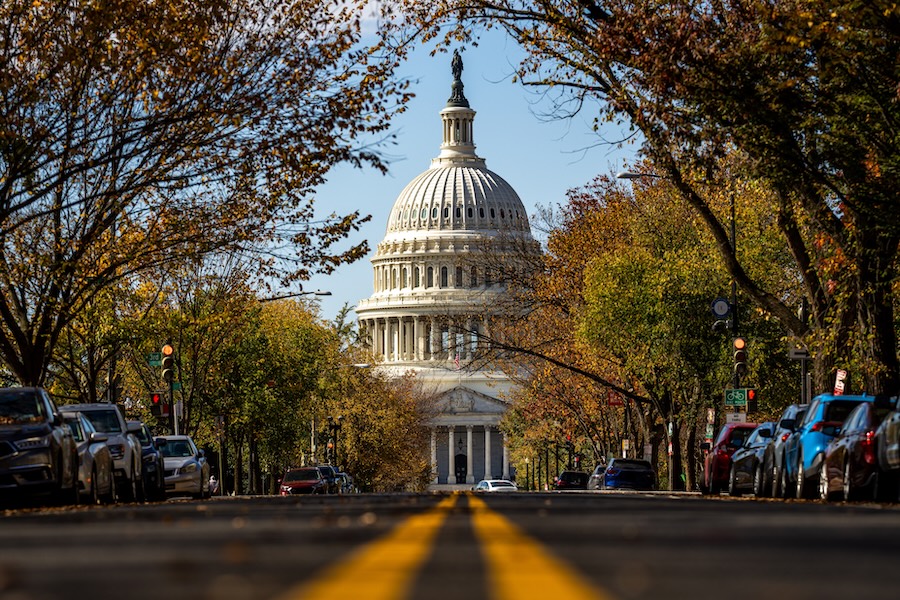
Democrats’ own internal polling has delivered a striking result in one of Ohio’s most closely watched congressional races, showing longtime Democratic Rep. Marcy Kaptur locked in a dead heat with Republican challenger Derek Merrin.
The Democratic Congressional Campaign Committee’s latest survey puts Kaptur and Merrin at exactly 48% each in Ohio’s 9th Congressional District.
Just 4% of likely voters remain undecided with the November election approaching.
The numbers underscore just how competitive the contest has become following Ohio’s mid-decade redistricting, which changed the political makeup of the district Kaptur is fighting to retain.
But another result buried inside the Democrats’ own polling makes the tie particularly notable.
President Donald Trump’s job approval stands at just 35% in the district, while 54% disapprove — a 19-point negative gap, according to the DCCC’s Sept. 29 memo.
Yet Republican Derek Merrin is still running even with the Democratic incumbent.
The DCCC says Trump carried the current district by 11 percentage points in the 2024 presidential election.
Despite Trump’s current approval numbers in the Democratic survey, Merrin still captures 48% against Kaptur.
The DCCC emphasized several numbers it views as encouraging for the incumbent.
According to the committee, Kaptur has consolidated 95% of Democratic voters and is leading among independents, although the memo did not disclose the precise breakdown of independent support.
The committee also said Kaptur is running ahead of both Democratic statewide candidates in the district.
It did not identify those candidates or provide their polling numbers in the memo.
Democrats portrayed the tied race as evidence that Kaptur continues to outperform the underlying political environment of her district, pointing to her record and campaign emphasis on lowering costs and representing Northwest Ohio.
The DCCC also sought to blame Republicans for rising household expenses, citing costs including groceries, gasoline, health care and utility bills.
Those arguments represent the Democratic committee’s characterization of the political environment rather than independent findings from the poll.
And despite the DCCC’s upbeat assessment of Kaptur’s position, its own headline number remains unmistakably close.
Kaptur: 48%.
Merrin: 48%.
Undecided: 4%.
Neither candidate has broken the 50% mark, and the difference between them is zero.
The survey was conducted by the DCCC Analytics Department from Sept. 22 through Sept. 23 among 481 likely general-election voters in Ohio’s 9th District.
Respondents were contacted through phone and text-to-web interviews.
The poll carries a margin of error of plus or minus 4.5 percentage points at the 95% confidence level.
That means the survey should be viewed as a snapshot rather than evidence that either candidate holds a measurable lead.
But with the Democratic Party’s own polling showing its incumbent tied with Merrin, Ohio’s 9th District remains a closely contested battleground heading into the final stretch before November.
Passengers aboard an Israel-bound jet were thrown into a terrifying midair emergency Wednesday after a violent incident inside the cockpit sent the aircraft plunging and triggered initial fears that the plane had been hijacked.
The Flydubai flight ultimately made an emergency landing in Saudi Arabia — but Israeli officials say the crisis began when the co-pilot allegedly stabbed the captain.
Flight FZ1073 had departed Dubai for Ben Gurion Airport near Tel Aviv when the confrontation erupted aboard the Boeing 737.
Two Israeli officials told Reuters that the co-pilot was believed to have stabbed the captain before cabin crew entered the cockpit and helped bring the situation under control.
Israeli authorities are now investigating whether the incident may have been an attempted “terror attack.”
For the passengers trapped aboard the aircraft, the moments that followed were terrifying.
One passenger described panic throughout the cabin as the aircraft suddenly began losing altitude.
“There are many different accounts, but apparently the co-pilot stabbed the captain and collapsed onto the controls, shutting down the entire instrument panel. We began plunging downward for several minutes. Everyone on the plane was screaming, the overhead compartments opened, and the power went out. We were sure we were going to die. It was very scary,” the passenger said.
Flydubai has confirmed that an incident occurred aboard the aircraft and that the plane landed safely in Tabuk, Saudi Arabia.
The airline has not publicly confirmed the reported stabbing or explained what caused the confrontation inside the cockpit.
Both pilots were hospitalized with injuries, according to Reuters.
Flight-tracking data showed just how severe the emergency became.
The aircraft reportedly dropped nearly 14,000 feet in less than 30 seconds before transmitting an emergency signal.
The jet initially squawked 7700 — the universal transponder code indicating a general emergency.
It then briefly switched to 7500.
That code signals possible unlawful interference with an aircraft and immediately intensified concerns that a hijacking or other security incident could be unfolding.
The aircraft later switched back to 7700 before safely landing in Tabuk.
Israeli authorities responded rapidly as the crisis developed.
With more than 100 Israeli passengers reportedly aboard, officials initially feared the aircraft could have been hijacked and scrambled fighter jets.
A regional official confirmed that an altercation apparently involving the pilots had occurred inside the cockpit, although investigators were still working to establish exactly what happened.
“The crew have been questioned as part of the investigation,” the regional official said, according to The Associated Press, without specifying whether anyone had been detained.
Passengers told Israeli media that shouting could be heard near the front of the aircraft shortly before the plane suddenly descended.
Capt. Meidan Barr, former chairman of the Israel Airline Pilot Association, said a rapid loss of altitude of that magnitude would ordinarily resemble an emergency maneuver used after a serious problem such as cabin depressurization.
“Losing like 15,000 feet in two or three minutes, that is something that you do in, like, an emergency descent when you lose pressure,” Barr said.
Barr noted that the aircraft’s successful landing was particularly important because investigators would now have access to the plane and its systems as they attempt to reconstruct exactly what occurred.
After touching down in Tabuk, passengers reportedly remained aboard while Saudi security forces surrounded the aircraft.
The incident also prompted an immediate response at the highest levels of the Israeli government.
Israeli Prime Minister Benjamin Netanyahu convened security consultations and cleared the remainder of his schedule while officials worked to determine whether the incident was connected to a broader security threat.
Israel’s airspace was temporarily closed before reopening after the Flydubai aircraft landed safely.
Flydubai subsequently acknowledged the diversion while stopping short of confirming the more serious allegations surrounding what happened inside the cockpit.
“Our teams are working closely with the relevant authorities,” the carrier said. “Further updates will be issued as additional confirmed details become available.”
The motive behind the reported cockpit attack remains under investigation.
Israeli officials are examining whether the episode could constitute a terror incident, while Flydubai has so far publicly confirmed only that an in-flight incident occurred, the aircraft diverted safely to Saudi Arabia and the passengers were safe.
Investigators must now determine what triggered the confrontation, exactly what happened between the two pilots and whether the incident was an isolated act or something more serious.

NEW: Trump Family Rocked After Sudden Hospitalization

Longtime Democrat Rep. Losing Grip On Key Seat

Commercial Flight Makes Emergency Landing After Co-Pilot Stabs Captain, Nose Dives Plane

Kristi Noem Shares Huge Relationship News After Months Of Speculation

BREAKING: FBI Rocked By Sudden Shocking Resignation

Fox News Under Fire After Hiring Notorious Democrat; Ex-Host Explodes

‘The Five’ Gets Emotional As Greg Gutfeld Announces Tragic News

Joe Biden’s Daughter Just Dropped Massive Public Bombshell On Her Dad

Removed From the Country — Ilhan Omar Hit With Horrid News

Obama Calls It QUITS After Wild Video Goes Viral

Get Ready — Mike Pence Makes Stunning 2028 Announcement

Schumer Loses! Court Sides With Trump In Historic Move
-

 Economy6 months ago
Vance Leaves Meeting, Looks Straight Into Camera, Announces Stunning Arrest
-
 Economy6 months ago
Adam Schiff Facing 30 Years In Prison After Bank Records Leak
-
 Economy6 months ago
Supreme Curt Sides With Trump — He Can Remove The All
-

 Culture3 months ago
Michelle Obama Drops Nasty Bomb About ‘Useless’ Daughter
-
 Economy6 months ago
All Hell Breaks Loose On Fox When Jesse Watters Asks Fetterman One Question
-
 Economy4 months ago
Prayers Pour In After Fox Host Dies: ‘Senseless Murder’
-

 Latest3 months ago
Fox News Stuns With Announcement About 5 Fired Hosts
-

 Border & Security2 months ago
Top Trump Admin And Wife Found Dead — Chilling Update Just Released