
Latest
How Florida retiree lost $200K in fake PayPal refund scam

Brian Oliver is retired, sharp and financially savvy enough to have a stock-and-bond portfolio worth hundreds of thousands of dollars. He is not the type of person you picture getting scammed. That is exactly why scammers picked him.
What happened to Oliver, 85, is the kind of story that makes your jaw drop, and your stomach turn at the same time. It started with a routine-looking email and ended with a box of gold coins rolling away in the back of a black Mustang. In between, Oliver lost $200,000 and nearly half of his retirement savings.
He told his story on my Beyond Connected podcast at getbeyondconnected.com, along with Detective Justin Torres of the Gainesville Police Department in Florida. What they shared together is equal parts chilling and clarifying.
Sign up for my FREE CyberGuy Report
BEWARE FAKE CREDIT CARD ACCOUNT RESTRICTION SCAMS
Brian got an email that said PayPal owed him money. It was not a wild claim. He had dealt with PayPal before and figured, “Maybe they found some money for me.” So he responded. The email included a phone number, and that number connected him to a man who called himself Andrew Johnson.
“Yeah, we have $450 for you. Type in the number 100 on your computer and we’ll get it started.”
Brian typed 100. Andrew immediately said he had made a mistake: “Oh no, you put in 10,000.”
Brian pushed back. He said he did not type 10,000. Andrew told him to check his Bank of America account. Brian opened it, and there it was: $10,000 sitting in his checking account.
Except it was not real. The scammers had somehow mirrored his bank’s website. What Brian saw looked exactly like his actual Bank of America page, complete with a new balance and a phone number embedded in the “Contact Us” section. That number was fake, too.
Brian called it. A man named Josh answered, identifying himself as a Bank of America representative. He told Brian that the only way to return the money without triggering a $3,500 tax penalty was to withdraw $10,000 in cash and feed it into a crypto ATM.
Oliver had never heard of a crypto ATM before that day. Josh helpfully told him exactly where to find one. It was in a sketchy part of town, and Oliver walked in carrying $10,000 in his pocket.
“I’m on my knees, on a cement floor, and I’m 85,” Oliver said.
He fed one hundred $100 bills into the machine, bill by bill, watching over his shoulder the entire time. Some bills got kicked back out. He fed them in again. When the machine finally accepted all of them, he photographed the receipt and sent it to Andrew Johnson, just as he had been instructed.
Then Oliver went home and told Andrew it was done. Andrew told him they still had to take care of his refund. He told Oliver to type in the number 200.
FAKE PAYPAL EMAIL LET HACKERS ACCESS COMPUTER AND BANK ACCOUNT
Oliver typed it. Andrew’s response came fast: “Oh my God, my boss is going to kill me. It’s $200,000 we’ve transferred to your account.”
This type of scam is becoming more common, and it often involves criminals impersonating trusted platforms like PayPal.
“PayPal does not tolerate fraudulent activity, and we work hard to protect our customers from evolving phishing scams,” a spokesperson for PayPal told CyberGuy. “We always encourage consumers to learn how to spot the warning signs of common fraud, including our tips on the PayPal Newsroom for identifying phishing emails that attempt to impersonate trusted brands. We further recommend contacting Customer Support for assistance through official channels such as the PayPal app and our Contact Us webpage, and never responding to suspicious, unexpected emails.”
Oliver opened his bank account again. The fake mirrored site showed $200,000 sitting there. Josh Wilson was back on the phone with a new plan. This time, the crypto ATM would not work because the amount was too large. Oliver needed to liquidate $200,000 from his stock and bond portfolio, convert it to cash and use it to buy gold coins.
Oliver protested. He told them to just reverse the transfer. They said it was impossible.
“This is my retirement money. 50% of my retirement money,” he said.
The scammers told him not to breathe a word to anyone. Josh specifically warned him that telling his broker the truth could trigger tax problems. So Oliver called his broker and said he had his eye on a piece of real estate he wanted to flip. The broker processed the sale without question.
YOUTUBE JOB SCAM TEXT: HOW TO SPOT IT FAST
Oliver went to a gold coin store, wrote a check for $198,560 and waited two to three days for it to clear. Andrew Johnson stayed in regular contact the entire time.
When the gold was ready, Johnson gave Oliver one final instruction. A courier would come to his door to pick up the box. Before handing it over, Oliver should ask the courier for a password. The password was “blue.”
The courier arrived. He was driving a black Mustang. He said the word blue. Oliver handed over the box.
“He told me the password,” Oliver said. “I handed the box, and off went my $200,000.”
The day after the courier left, Andrew Johnson called back with urgency. He told Brian Oliver another $200,000 had landed in his account, and they needed to do the whole thing over again. That was the moment it broke.
“That’s when I came out from under the ether of this scam,” Oliver said. “And I said, this cannot be right.”
He immediately called the Gainesville Police Department.
Detective Justin Torres of the Gainesville Police Department took the call and started working the case immediately. The scammers had asked Oliver for photos of the gold and the purchase receipt, which gave law enforcement about a day and a half to set up an operation before the courier was scheduled to return.
Detective Torres pulled in four officers from the department’s Gun Violence Initiative unit, a team of intermediate detectives trained for exactly this kind of boots-on-ground work. They set up covert and marked vehicles around Oliver’s residence at a careful distance.
“It was pretty high intensity because I’m listening to Mr. Oliver’s conversation with Andrew,” Torres said. “And I’m also trying to be a good distance away to listen to my radio and be able to broadcast what I need to to the other officers on the outside.”
The scammers were suspicious. They kept pushing Oliver to be more compliant. Oliver pushed back. The goal was to keep them on the line long enough for the courier to show up. The courier, a man named Seth Wayne, drove in from Tampa. The officers waited. When he arrived, they arrested him. The case went to trial. Seth Wayne received an 18-year prison sentence.
A federal jury has since convicted a second courier in the same scheme. Atharva Shailesh Sathawane, 22, an undocumented immigrant from India, was found guilty of conspiracy to commit wire fraud and money laundering, with Brian Oliver among his victims.
Sathawane was arrested after the Gainesville Police Department set up a second sting operation at Brian’s home. Court documents showed Sathawane was involved in more than 30 transactions across multiple states, contributing to nearly $8 million stolen from elderly victims. He faces up to 20 years on each count, with sentencing scheduled for Dec. 16 in Gainesville, though he is appealing his conviction.
Ten other victims testified at Seth Wayne’s trial. They had come from all over the state of Florida, and their stories made Oliver furious.
Some had received fake arrest warrants, official-looking documents claiming their identities had been tied to gun running. They were told the only way to clear their names was to pull their savings and buy gold, which would be placed in a special locker in Washington, D.C., until their names were cleared.
One victim lost $1.8 million. Another lost $4.9 million. A third woman lost over $1 million across two separate pickups by the same courier. Her husband was in hospice care in Florida while all of this was happening. She drained her entire life savings, sold her condo and had to move in with her daughter and son-in-law in Alabama, leaving her dying husband behind.
Once the gold or cash leaves a victim’s hands, recovery is nearly impossible. Most of Seth Wayne’s deliveries went to parking lots at McDonald’s or shopping centers, where he handed the money directly to a controller. One pickup went to a jewelry store, where an employee came outside to collect it. That connection is still under active investigation by the IRS and FBI.
The call centers running these operations are overseas. Higher-level couriers in the United States are still being investigated. The full network is, as Detective Torres put it, “very intricate” and “very complicated.”
Seth Wayne himself was a mid-to-upper-level courier. He was also paying other couriers and compensating his handler. When investigators downloaded his cell phone after a judge-approved search warrant, they found evidence that he had researched exactly what he was doing before deciding the money was worth the risk.
SCAMS THAT AREN’T ILLEGAL (BUT SHOULD BE)
The defense of “willful blindness,” the idea that a courier can claim ignorance and escape responsibility, no longer holds up in Florida courts. Seth Wayne found that out the hard way.
For a deeper look at what Oliver went through, you can hear the full story on my Beyond Connected podcast at getbeyondconeccted.com.
Detective Torres laid out the most important red flags clearly, and Oliver added a few from painful personal experience. Here is what both of them want you to know.
Scammers manufacture pressure because it works. If someone on the phone is telling you that you must act right now, that is not a real emergency. That is a tactic. Torres put it directly: “They want to make you believe that you have to do all this right now.”
If someone calls claiming to be from PayPal, your bank or a law enforcement agency, hang up and find the real number yourself. The number embedded in Oliver’s fake bank website looked completely legitimate. It was not.
Literally ten seconds. Detective Torres confirmed what many security experts say: “If you pause these scams for just 10 seconds, many of them will just fall apart.” A scammer who is pushed back even slightly will often overreact, and that reaction will feel wrong.
The moment someone on the phone tells you not to tell a family member, friend or neighbor what is happening, stop. That instruction exists for one reason: to prevent you from getting help before they get your money. “Once you start hearing that isolation conversation, that is the biggest red flag,” Torres said. “You need to hang up the phone.”
Oliver made this one simple: “If you’re told to go buy gold, the only reason they tell you to buy gold is because it can never be traced. It’s a scam.” No legitimate company, government agency or financial institution will ever ask you to buy gold coins and hand them to a stranger.
If you have already bought gold and someone is coming to your home to pick it up in a box, Oliver’s advice is direct: “Stop right there. It’s a scam.”
If someone claims they accidentally sent you money and asks you to return it, stop right there. Real companies fix errors on their own systems. They will not ask you to withdraw cash, buy crypto or purchase gold to correct a transaction.
If you need to check your bank account, use your official banking app or type the website yourself. Do not trust links, screens or phone numbers provided during a call. In many cases, scammers create fake sites that look identical to the real thing.
Scammers often stay on the phone and guide you through every move. That level of control should raise concern. Legitimate companies do not walk you through withdrawing cash, using crypto ATMs or buying gold to solve a problem.
Before moving a large amount of money, pause and call someone you trust. A quick conversation with a family member or friend can shift your perspective. In many cases, that outside voice is enough to stop a scam in progress.
Scammers build convincing stories using real details they find online. This can include your phone number, home address or financial history. To reduce that risk, consider removing your information from data broker and people-search sites. While you can do this manually, it often takes time, which is why some people use a data removal service such as Incogni to help automate the process and keep their information from resurfacing.
Check out my top picks for data removal services and get a free scan to find out if your personal information is already out on the web by visiting Cyberguy.com.
Get a free scan to find out if your personal information is already out on the web: Cyberguy.com.
Brian Oliver lost $200,000, leaving him with only half of his retirement savings. Today, he says he is slowly sinking toward bankruptcy, and the odds of getting that money back are slim. Even so, he chose to go public so others could hear his story before it happens to them. What makes this case different is that it led to real consequences. Detective Torres and his team moved quickly and set up a sting operation. As a result, they arrested a courier who later received an 18-year prison sentence. Meanwhile, the IRS and FBI are still investigating the larger network. However, this kind of outcome is rare. In most cases, victims lose everything and never see justice. These scams are complex, often run from overseas, and are designed to move money fast. Because of that, law enforcement usually focuses on the people closest to the victim and works backward. In the end, Oliver’s turning point came during a second demand for money. At that moment, something felt off, so he paused. Then he said, “This cannot be right.” That instinct matters. In many cases, that brief pause is enough to break the scam.
If you were in Oliver’s position, at what exact moment do you think you would have stopped, and what would it have taken for you to make that call? Let us know by writing to us at Cyberguy.com.
Sign up for my FREE CyberGuy Report
Copyright 2026 CyberGuy.com. All rights reserved.

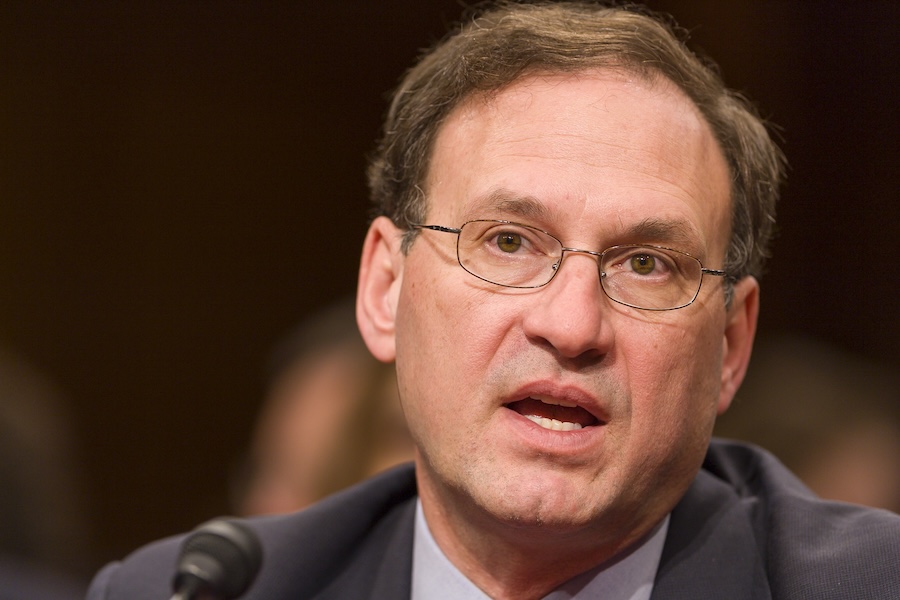
Supreme Court Justice Samuel Alito has issued a stark warning about the future of America’s highest court, cautioning that political efforts to intimidate justices and reshape the judiciary could permanently undermine one of the nation’s most important institutions.
The longtime conservative justice delivered his warning during a speech at the American Enterprise Institute’s annual dinner at the National Building Museum in Washington, D.C., where he accepted the organization’s prestigious Irving Kristol Award.
Alito’s remarks come amid renewed debate over Democratic proposals to expand the Supreme Court beyond its current nine members, an effort supporters describe as necessary judicial reform and opponents condemn as an attempt to change the Court’s ideological balance.
With the 2028 presidential election approaching, the possibility of expanding the Court could once again become a major political flashpoint.
Alito made clear that he believes the stakes extend far beyond individual judicial decisions or disagreements over constitutional interpretation.
“But it now appears that the Court may soon face a structural question of far greater magnitude: whether it will be allowed to continue as an independent tribunal that decides cases based on its understanding of the law, not political pressure,” the longtime conservative justice stated.
His warning went further, suggesting that the Supreme Court faces a sustained campaign designed to influence its decisions through intimidation, public pressure, and ultimately changes to its membership.
“I do not think it is necessary to go lay out the details, but what we have seen in recent years is a mounting campaign to change the direction of the Court’s decisions by intimidating justices or, if that fails, by seriously damaging the Court’s standing in the eyes of the public and then altering the Court’s composition. If that campaign succeeds, the Supreme Court as an institution will be fundamentally changed for many years—and perhaps permanently,” Alito continued.
The remarks represent a forceful warning from a sitting Supreme Court justice about the potential consequences of political efforts to reshape the federal judiciary.
Alito’s concerns center on a fundamental question: whether the Supreme Court can continue operating independently if political leaders threaten to alter its structure whenever they disagree with its rulings.
Although Congress has the constitutional authority to determine the number of Supreme Court justices, critics of expansion argue that adding seats for the purpose of securing favorable decisions could establish a dangerous precedent.
Under that scenario, future congressional majorities might feel justified in repeatedly expanding the Court to secure their preferred ideological outcomes.
The result, opponents warn, could be an escalating political struggle in which the size and composition of the nation’s highest court become increasingly dependent on which party controls Washington.
Alito also emphasized the judiciary’s unusual position within the American constitutional system.
Unlike the executive branch, the courts do not command law enforcement agencies or the military. Unlike Congress, they do not independently control federal spending.
Instead, the judiciary depends heavily on the willingness of the other branches of government and the American public to respect its authority.
Alito described the judiciary as lacking both “the sword” of enforcement power and “the purse” of independent funding.
“And because presidents and members of Congress are elected, what may matter most in the end is popular support for an independent judiciary.”
Video excerpts of Alito’s speech have circulated on C-SPAN and social media, drawing renewed attention to the increasingly contentious debate over the Supreme Court’s future.
The warning comes as Democrats prepare to assume congressional majorities in January, potentially giving lawmakers who favor structural changes to the judiciary a stronger platform to advance their proposals.
Among the most outspoken advocates of Supreme Court expansion is Democratic Senator Ed Markey of Massachusetts, who has sponsored legislation known as the Judiciary Act.
The proposal would increase the number of Supreme Court justices from nine to 13, creating four additional seats.
Markey and other supporters have argued that expansion is justified by the circumstances surrounding recent Supreme Court appointments, including Republican decisions that shaped the Court’s current conservative majority.
Markey has characterized the proposal as a way to restore seats that were “stolen” from Democrats.
That argument has been fiercely contested by opponents, who maintain that Supreme Court seats do not belong to either political party and that expanding the Court to reverse its ideological balance would further politicize the institution.
Democratic Senator Sheldon Whitehouse of Rhode Island has also been a prominent advocate for changes involving the Supreme Court.
In a 2019 amicus brief joined by several Senate Democrats, Whitehouse and his colleagues argued that the Court “is not well” and raised the possibility that public dissatisfaction could lead to demands that it be “restructured in order to reduce the influence of politics.”
Whitehouse has additionally supported proposals involving judicial ethics requirements, term limits, and increased oversight.
Supporters of such measures argue that reforms could improve transparency, accountability, and public confidence in the judiciary.
But critics warn that proposals to expand the Court’s membership carry especially serious consequences when they are tied to dissatisfaction with judicial outcomes.
The concern is not simply whether Congress possesses the legal authority to add justices. It does.
The larger question is what happens to judicial independence when changing the Court’s composition becomes an accepted response to politically unpopular rulings.
The Supreme Court has consisted of nine justices since 1869, although Congress changed its size several times during the nation’s first century.
That longstanding arrangement has provided institutional continuity through major political conflicts, constitutional disputes, and changes in presidential administrations.
Expanding the Court would therefore represent a significant departure from more than 150 years of established practice.
Alito’s remarks suggest that he views the current debate as part of a broader struggle over whether the judiciary can remain insulated from direct political retaliation.
His warning also arrives at a time when public confidence in the Supreme Court has become a contentious issue, with disagreements over judicial ethics, major rulings, and the appointment process fueling calls for reform.
While advocates of expansion insist that their proposals are intended to restore balance and legitimacy, opponents see the possibility of a political arms race that could weaken the Court’s independence.
For Alito, the potential consequences appear unmistakable.
His warning was not limited to the next election, the next presidential administration, or even the next generation of Supreme Court decisions.
He cautioned that the institution itself could be fundamentally altered for years, perhaps permanently.
And as Democratic lawmakers continue debating proposals to increase the number of justices, Alito’s message underscores the central issue facing Washington: whether efforts to change the Supreme Court’s ideological direction could ultimately damage the independence that allows it to function as a separate branch of government.

A longtime Democratic Party insider who spent decades helping shape American politics, serving in public office, and holding a position on the Democratic National Committee has left the United States after discovering that he was never legally an American citizen.
Ian Murray, a 75-year-old former defense attorney and prominent Democratic political figure from Erie, Pennsylvania, voluntarily departed the United States for Canada on November 12, 2026, after federal immigration authorities determined that he had never obtained U.S. citizenship.
The revelation came after Murray applied for his first U.S. passport, setting off a review of citizenship records dating back more than seven decades.
What followed was an extraordinary turn of events for a man who had spent much of his adult life deeply involved in the American political system.
Murray wasn’t simply a casual political supporter. He served as chairman of the Erie County Democratic Party for 12 years, held a position on the Democratic National Committee for nearly four decades, and served on Erie City Council.
Yet despite his extensive political résumé, federal authorities determined that Murray had never acquired the citizenship he apparently believed he possessed.
Born in Canada in 1951, Murray moved to Erie with his family in 1956 when he was just five years old. His parents were Canadian-born, although his mother, Dorothea Murray, held dual American and Canadian citizenship.
Dorothea had relocated to Erie in 1939, years before Ian was born, and the family eventually established permanent roots in Pennsylvania.
Murray grew up in Erie, attended school, built a legal career, and became a familiar presence in local Democratic politics.
His political involvement stretched back to the early 1970s, when he worked on George McGovern’s 1972 presidential campaign in Erie County.
He later supported Bill Clinton’s political efforts in the area and steadily climbed the Democratic Party’s organizational ranks.
From 1986 until 1998, Murray chaired the Erie County Democratic Party, helping oversee local party operations and political activities.
He also served on the Democratic National Committee from 1982 until 2020, an astonishing 38-year tenure within the national party organization.
In the early 2000s, Murray held elected office as a member of Erie City Council.
For decades, he participated in the political life of a country that federal authorities would eventually determine he had never legally become a citizen of.
The discovery raises questions about how someone could spend so many years in prominent political positions without the citizenship issue being identified.
It also highlights an important distinction between participating in political organizations and meeting the legal citizenship requirements for certain government offices. Membership in a political party organization does not necessarily establish citizenship, and the available account does not indicate that Murray knowingly misrepresented his status.
The legal problem originated with the Nationality Act of 1940, which governed whether children born outside the United States could automatically acquire citizenship through an American parent.
Under the law applicable when Murray was born, his mother generally needed to have resided in the United States for at least ten years before his birth to transmit citizenship to him.
Federal officials determined that Dorothea Murray had not met that requirement.
Although she had spent years living in the United States, approximately four years of study at the University of Toronto did not count toward the required period of residence.
Even after accounting for summers and other time spent in America, her qualifying residence totaled approximately eight and a half to nine years.
That left her short of the statutory requirement.
The difference was relatively small, but under the law, it was decisive.
As a result, authorities concluded that Murray had not automatically acquired American citizenship when he was born in Canada.
For decades, however, he lived much like any other American.
He had a Social Security number, government-issued identification, and eventually a Maine REAL ID.
He practiced law, participated in political campaigns, held public office, and served in Democratic Party leadership.
After retiring around 2022, Murray and his wife relocated to Maine.
The citizenship problem might have remained undiscovered had he not decided to apply for a passport approximately a year and a half ago.
He wanted to travel to Scotland and Ireland.
Instead, the application prompted a Department of Homeland Security review that would ultimately force him to confront his immigration status.
On July 10, 2026, DHS issued a Notice to Appear, formally initiating immigration proceedings against Murray.
The government charged that he was “an alien present in the United States who has not been admitted or paroled,” identifying him as a Canadian citizen and “not a citizen or national of the United States.”
The language was unmistakable.
After roughly 70 years of living in America, Murray was being treated under federal immigration law as a foreign national without lawful admission or parole.
His decades of residence, extensive political connections, and years of Democratic Party service did not establish citizenship.
Murray subsequently appeared before an immigration judge in the Boston area.
On September 1, the judge granted his request for voluntary departure, allowing him to leave the country without a formal removal order, provided he departed by December 30.
Murray chose to leave earlier.
On November 12, he departed the United States for Nova Scotia, Canada, bringing an abrupt end to the American life he had built over seven decades.
“I can’t believe this is happening,” Murray told local outlet GoErie. “It’s almost like I am being erased.”
Speaking from Nova Scotia, he described beginning “another life together” with his wife.
The case presents an unusual collision between decades of political involvement and the technical requirements of federal immigration law.
Murray spent nearly 40 years on the Democratic National Committee, an organization closely involved in presidential politics and national party operations.
He helped advance Democratic political campaigns, chaired a county party organization, and served in local government.
Yet the citizenship issue apparently went undetected until he sought a passport late in life.
The circumstances also raise questions about what documentation was reviewed during his years in public office and whether his status affected any citizenship requirements associated with positions he held.
Those questions cannot be resolved simply from the fact that he lacked citizenship. His eligibility for particular positions would depend on the laws and rules applicable at the time, and the reported facts do not establish that he intentionally violated them.
Nevertheless, the contrast is striking.
A man who devoted decades to American Democratic politics ultimately found himself subject to the same federal immigration statutes that apply to other foreign nationals.
His political résumé could not override the legal requirements for citizenship.
Nor could his Social Security number, state identification, or decades of residence substitute for proof that he had legally acquired citizenship.
For Murray, the outcome was personally devastating.
For the broader public, the case illustrates how a citizenship question can remain unresolved for decades, even for someone with a substantial professional and political history.
It also demonstrates that a person’s longstanding belief that they are an American citizen does not necessarily satisfy the requirements established by federal law.
Murray’s departure was voluntary under an immigration judge’s order, rather than a physical deportation carried out by federal agents. But the consequences were nonetheless profound: at 75 years old, he left the country where he had lived since childhood.
After decades of Democratic Party leadership, service on the Democratic National Committee, and involvement in American elections, Murray’s political connections could not change the citizenship determination.
And in one of the more unusual immigration cases involving a longtime political figure, a man who spent nearly his entire life participating in American politics has now returned to the country of his birth because, according to federal authorities, he was never legally an American citizen.

Fox News liberal commentator Jessica Tarlov has admitted she criticized President Donald Trump over his Charlottesville remarks without bothering to listen to the actual recording — a stunning confession that raises serious questions about how political commentators push damaging narratives without first checking the facts.
After years of Democrats and their media allies using Trump’s 2017 Charlottesville comments to portray him as sympathetic to white supremacists, Tarlov is now acknowledging a critical detail that was publicly available from the very beginning: Trump explicitly excluded neo-Nazis and white nationalists when discussing the people he described as “very fine people.”
The admission came during a recent appearance on *The Bulwark* podcast, where the co-host of Fox News’ *The Five* conceded that she had formed and publicly expressed an opinion about Trump’s remarks without listening to what he actually said.
For a political commentator whose job revolves around analyzing public statements and informing viewers, the revelation is particularly embarrassing.
And perhaps even more troubling is the fact that the evidence Tarlov apparently failed to examine wasn’t hidden, classified, or difficult to obtain.
It was right there in the original recording, available to anyone willing to listen.
During the podcast appearance, Tarlov acknowledged that she had accepted a version of Trump’s Charlottesville comments without independently examining the full context.
“And that was a little embarrassing for me that I actually hadn’t listened to the audio of what Trump had said after the Unite the Right rally in Charlottesville,” she started.
But her admission didn’t stop there.
After finally listening to the recording, Tarlov conceded that Trump’s reference to “very fine people” wasn’t directed at neo-Nazis, as the controversy had so often been characterized.
“And he has a very meandering, crazy way of talking anyway. But when you sit there, and you listen to it, you hear that very fine people wasn’t the very fine Nazis, right? It was about the debate over pulling the statues down, whether you should keep what we would see as traitors embossed in public places like a Robert E. Lee. And that was illuminating for me. I think Jussie Smollett and what happened there was a big kick in the a**, of people who just adhere to a narrative that fits their political leanings, and folks didn’t necessarily mea culpa that much about it, but this rush to defend something that fits your narrative.”
In other words, Tarlov now recognizes that a major part of the narrative she previously criticized Trump over did not accurately reflect what he explicitly said.
Yet the most revealing part of her confession may be how easily the mistake could have been avoided.
All she had to do was listen.
The controversy dates back to August 2017, following the deadly Unite the Right rally in Charlottesville, Virginia.
During a news conference addressing the violence, Trump discussed the competing demonstrations surrounding the proposed removal of a statue of Confederate Gen. Robert E. Lee.
His remarks quickly became one of the most frequently cited controversies of his presidency.
Democrats and critics repeatedly pointed to Trump’s description of certain demonstrators as “very fine people,” arguing that his response minimized the role of white supremacists.
But the full transcript reveals an important distinction.
“But you also had people that were very fine people, on both sides,” Trump said during the exchange.
Trump then explicitly clarified whom he was not defending.
“I’m not talking about the neo-Nazis and the white nationalists, because they should be condemned totally. But you had many people in that group other than neo-Nazis and white nationalists, okay?”
Those words directly contradict the claim that Trump explicitly described neo-Nazis and white nationalists themselves as “very fine people.”
That doesn’t mean every criticism of Trump’s handling of Charlottesville was invalid. Critics have argued that his broader response was inadequate, particularly his assignment of blame to multiple sides following a rally organized by white nationalists.
But criticizing Trump’s overall response is one thing.
Suggesting that he specifically praised neo-Nazis as fine people, while leaving out his explicit condemnation of those groups, is another.
And Tarlov’s admission demonstrates why that distinction matters.
What makes the Fox News commentator’s confession especially damaging is that she wasn’t merely repeating something she heard in passing.
She had publicly weighed in on the controversy herself.
In August 2017, Tarlov recorded commentary for *InStyle* criticizing Trump for what she argued was his failure to adequately distinguish white supremacists from other demonstrators.
Her criticism centered on the president’s use of the phrase “very fine people.”
Now, years later, she admits she hadn’t actually listened to the recording that would have provided the context necessary to evaluate those remarks.
That’s a serious credibility problem for someone paid to offer political analysis to the American public.
Tarlov was hardly alone in criticizing Trump’s Charlottesville response, and the controversy involved legitimate disagreements about his leadership and rhetoric.
But her own account raises an uncomfortable question: How many commentators confidently delivered judgments about Trump’s exact words without examining the primary evidence?
For years, the Charlottesville controversy became a political weapon wielded against Trump.
Former President Joe Biden repeatedly invoked the events in explaining his decision to challenge Trump in the 2020 presidential election.
The issue remained a recurring theme in Democratic attacks on Trump’s character and leadership.
Meanwhile, Trump and his defenders continued pointing to the full transcript, insisting that his explicit condemnation of neo-Nazis and white nationalists was being ignored.
Tarlov’s latest comments lend support to their argument that an important part of the president’s remarks was lost in the political narrative.
Tarlov also connected her change in perspective to the Jussie Smollett case, another politically charged controversy in which an initially prominent narrative unraveled under scrutiny.
Smollett’s allegations of a racist and homophobic attack attracted widespread attention before investigators challenged his account.
By invoking that case, Tarlov appeared to acknowledge a broader problem in political commentary: the temptation to embrace allegations that reinforce existing political beliefs before thoroughly examining the evidence.
It’s a remarkable observation coming from someone who admits she fell into that very trap.
The problem isn’t simply that a commentator reached a conclusion later reconsidered.
People can evaluate evidence differently, and responsible journalists and commentators should be willing to correct themselves.
The problem is that Tarlov publicly criticized a president over specific remarks without first listening to those remarks in full.
That is not a complicated investigative failure. It is a basic failure to verify the material being criticized.
And when the subject is a sitting president accused of sympathizing with some of the most reviled extremist groups in American politics, that responsibility becomes even more important.
Tarlov deserves acknowledgment for publicly admitting that her earlier understanding was incomplete.
But an admission years after the controversy erupted doesn’t erase the original failure.
The full recording was available in August 2017.
Trump’s explicit condemnation of neo-Nazis and white nationalists appeared in the same news conference as the disputed “very fine people” remarks.
There was no need for an insider source, a secret document, or a lengthy investigation to discover what he said.
The evidence was available from the beginning.
And yet Tarlov acknowledges that she criticized Trump without listening to it.
For conservatives who have spent years arguing that Trump’s Charlottesville remarks were selectively presented, her confession is likely to be viewed as vindication on that specific point.
It also exposes a larger problem with political commentary: When a damaging narrative fits someone’s political preferences, the incentive to repeat it can become stronger than the obligation to verify it.
Tarlov’s admission doesn’t settle every debate about Charlottesville or Trump’s response to the violence that killed counterprotester Heather Heyer.
But it does establish something important about her own participation in that debate.
She offered criticism without first examining the complete recording.
And after years of controversy, the question is no longer just what Trump said in Charlottesville. It’s why a prominent political commentator felt comfortable condemning him over those words without bothering to listen to them first.

SCOTUS Justice Issues Chilling Warning

Democrate Leader Just Self-Deported After Sudden Discovery

Primetime Fox News Host Makes Shocking Admission On LIVE TV

WH Swiftly Seizes Phones On Air Force One Amidst Sudden Secret Move

Democrat Politician Indicted By Federal Grand Jury

JUST IN: Mamdani Rushed To The Hospital — Had It Coming!

Massive Migrant Caravan Converges On U.S. For Democrat Midterm Victory

JUST IN: Pair Of Senior FBI Officials Arrested — It’s Damning

Pentagon Rolls Controversial Out Doomsday Strategy
Texas’ New Dem Governor Makes Horrifying Muslim Announcement

Game-Changing New Detail Emerges From Ilhan Omar Investigation

BANNED! Democrats’ First Act Should Terrify Every American
-

 Economy7 months ago
Vance Leaves Meeting, Looks Straight Into Camera, Announces Stunning Arrest
-
 Economy7 months ago
Adam Schiff Facing 30 Years In Prison After Bank Records Leak
-

 Culture5 months ago
Michelle Obama Drops Nasty Bomb About ‘Useless’ Daughter
-
 Economy7 months ago
Supreme Curt Sides With Trump — He Can Remove The All
-
 Economy8 months ago
All Hell Breaks Loose On Fox When Jesse Watters Asks Fetterman One Question
-
 Economy6 months ago
Prayers Pour In After Fox Host Dies: ‘Senseless Murder’
-
 Economy5 months ago
Pete Hegseth Just Confirmed Devastating Rumors
-

 Border & Security4 months ago
Top Trump Admin And Wife Found Dead — Chilling Update Just Released