
Latest
Jennie Garth admits ‘scary’ financial spiral after ‘90210’ fame

Jennie Garth recalled facing a “scary” financial transition after her “Beverly Hills, 90210” fame.
The 54-year-old actress starred as Kelly Taylor on the hit Fox drama for its entire run from 1990 to 2000. “Beverly Hills, 90210” became a cultural phenomenon and one of the defining teen shows of the decade, drawing millions of viewers at its peak.
By the later seasons, Garth was reportedly earning around $50,000 per episode. During a recent interview with Fox News Digital, Garth remembered how it was daunting to adjust from making a lucrative salary during her early 20s to a period without steady income after the show concluded.
“The security of being on a series is incredible, but inevitably, that series will come to an end,” she said during a recent interview with Fox News Digital. Garth, who recently released her new memoir “I Choose Me: Chasing Joy, Finding Purpose & Embracing Reinvention,” admitted that she had regrets over lacking financial knowledge during her youth.
Her book, which is a mix of a memoir and inspirational guide, was released on April 14.
“I luckily had great people helping me to plan and manage my money along the way,” Garth said. “I never knew much about it though. I sort of trusted them blindly, which I don’t recommend.”
“I wish I had gone to business school,” she added. “I wish had learned more.”
“There’s always time. Who knows?”
WATCH HERE: JENNIE GARTH ADMITS SHE ‘TRUSTED BLINDLY’ WITH MONEY AFTER ‘90210’ FAME
Garth said that her lack of financial confidence took on new urgency years later when she found herself fully responsible for her finances and future after her divorce from her ex-husband Peter Facinelli.
The “What I Like About You” alum and the “Twilight” actor wed in 2001 but finalized their divorce in 2013. The former couple share daughters Luca Bella, 28, Lola Ray, 23, and Fiona Eve, 19.
“I realized after my divorce — I think it was after my divorce from the girl’s father that I’m on my own, and it was this kind of really scary kind of concept at first,” she said. “But when you think about it, we’re born alone, really, we come into this world solo with the help of our parents, then we naturally leave our parents and go on about our lives, and then we die alone.”
“When you have sort of an awareness of that and an acceptance of that…it makes you trust yourself more,” Garth continued. “You know you can rely on yourself. You know that you’re all you’ve got, really, at the end of the day. So you really start to have this newfound sort of respect for yourself and that you can figure anything out.”
“And especially when you go through troubling times, or you suffer loss, or grief, or career upsets, loss of a job, like all of that, you realize, ‘Look what I survived,'” she added. “You can look back on those things now and think, I handled all that. I’m still here. My kids are still breathing. Like, I’m doing great. There’s nothing I can’t handle. So everything gets a little less scary.”
While Garth faced financial challenges tied to inexperience and life changes, other stars from the 1980s and 1990s experienced far more severe financial setbacks, including bankruptcy, tax debt and the loss of entire fortunes.
Danny Bonaduce rose to fame at the age of 11 when he played David Partridge in the hit sitcom “The Partridge Family” throughout its run from 1970 to 1974. However, Bonaduce previously revealed that he only made $400 an episode while starring on the show and faced difficulty finding work after it ended.
Bonaduce’s financial troubles were exacerbated by his struggles with drug and alcohol addiction. During a 2013 episode of Oprah Winfrey’s “Where Are They Now?,” Bonaduce recalled becoming homeless in his teenage years.
“I lived right behind this dumpster, but I lived in my car,” he said.
He explained that he would frequently sign autographs and pose with fans who were unaware that he was homeless at the time.
“When I was done, or I knew they wouldn’t see me, I would sneak back to my car,” he said. “It was totally embarrassing to be famous and homeless.”
Bonaduce also experienced a series of legal issues. In 1990, he was arrested for attempting to buy drugs while in Florida to speak at an anti-drug event. The next year, he was arrested again for robbing and assaulting a prostitute.
The actor began turning his life around in the late 1990s when he transitioned into radio hosting, which gave him steady work and structure after years of instability. By the early 2000s, he had stabilized both his career and personal life, leading to long-term financial and professional recovery.
In 2005, he starred in the reality show “Breaking Bonaduce” and in 2007, he was the host and judge of the VH1 series “I Know My Kid’s a Star.”
After decades in radio, he retired in December 2023 from his long-running morning show on Seattle’s KZOK-FM, which he had hosted since 2011.
Erin Moran was best known for playing Joanie Cunningham on the hit show “Happy Days” from 1974 to 194, starting when she was 13. Moran went on to star in the short-lived spinoff “Joanie Loves Chachi” from 1982 to 1983 before returning for the final season of “Happy Days.”
In a 1988 interview with the Toronto Star via The New York Times, Moran said that she left Los Angeles behind and moved to the California mountains after suffering from depression and struggling to find acting work following the end of “Happy Days.”
She lost her California home to foreclosure in 2010 and eventually moved with her husband Steve Fleischmann, a Walmart employee, to Indiana, where they lived in a trailer with his mother. In 2012, she joined her “Happy Days” co-stars in a lawsuit against CBS over unpaid merchandising revenue, but each actor only received about $65,000 each in the eventual settlement.
Moran reportedly spent the settlement money quickly and experienced severe financial hardship in the years leading up to her death in April 2017 at the age of 56 due to complications of stage 4 throat cancer.
During a 2017 interview with The Sun, Moran’s brother Tony Moran reflected on her struggles after “Happy Days”
“Erin was a tortured soul who never recovered after Happy Days. Hollywood chewed her up and spat her out.”
Gary Coleman became a household name at age 10 when he played Arnold Jackson on the NBC sitcom “Diff’rent Strokes,” which aired from 1978 to 1986. At the height of his success, he was reportedly one of the highest-paid child actors on television, earning tens of thousands of dollars per episode. However, Coleman later said much of his fortune was mismanaged by Edmonia Sue Coleman and Willie Coleman, along with his former business manager Anita DeThomas.
In 1989, he sued his parents and DeThomas for misappropriating his trust fund. He won a $1.28 million judgment in 1993, but much of the money was spent on legal fees and medical issues. Coleman suffered from congenital, progressive kidney disease throughout his life and underwent two failed transplants.
Coleman filed for bankruptcy in 1999, citing ongoing financial strain despite his earlier success. Reflecting on who was responsible for his financial struggles, he said, “I can spread that blame all the way around, from me to accountants, to my adoptive parents, to agents to lawyers and back to me again,” according to E! Online.
In the years that followed, Coleman took on a variety of jobs to support himself, including working as a security guard and appearing in small television roles and commercials.
Coleman attempted to resurrect his career, but legal disputes dogged him repeatedly. He moved to Utah in 2005.
In September 2008, a dust up with a fan at a Utah bowling alley led Coleman to plead no contest to disorderly conduct. The lawsuit was settled out of court.
In early 2010, officers were called to assist or intervene with Coleman more than 20 times. Some of the disputes involved his wife Shannon Price, whom he met on the set of the 2006 comedy “Church Ball” and married in 2007.
Coleman died at the age of 42 in May 2010 after suffering a head injury from a fall at his home in Utah.
Willie Aames is best known for playing Tommy Bradford in the hit TV series “Eight Is Enough” from 1977 to 1981 and Buddy Lembeck in the sitcom “Charles in Charge” from 1984 to 1990.
Aames’ financial struggles began in the 1990s as he struggled to find work as an actor and began struggling with substance abuse issues. The actor previously said that his financial situation had deteriorated significantly by the early 2000s due to poor financial decisions, lack of steady income and ongoing issues with addiction.
In 2008, he filed for bankruptcy and faced foreclosure on his home in Kansas, prompting him to sell personal possessions and memorabilia from his TV career. During an appearance on “Entertainment Tonight,” he revealed that he became “virtually homeless” in 2009.
“I stayed with friends when I could, slept in parking garages or slept in the park,” he said. “It was shameful. I remember laying underneath the bushes thinking, ‘Is this how it turns out? Is this how my life really turns out?'”
In 2010, Aames took on a job as a cruise director for Regent Seven Seas Cruises before later working for Oceania Cruises and Viking Cruises.
Aames returned to acting in small roles in 2016 and also became involved in counseling and motivational speaking, speaking publicly about his recovery and financial turnaround.
MC Hammer became one of the biggest names in hip-hop in 1990, following the release of his massively successful album “Please Hammer, Don’t Hurt ‘Em.” At the height of his career, he was earning tens of millions of dollars through music sales, touring and endorsements. However, Hammer also spent lavishly during this time. He employed a large entourage, maintained multiple properties and led an expansive lifestyle that required significant ongoing income.
Hammer’s finances began to collapse after his popularity declined in the mid-1990s. In 1996, he filed for bankruptcy with $13 million in debt. Hammer’s bankruptcy filing outlined substantial liabilities, including loans, back taxes and the costs associated with supporting a large staff.
In 2013, the IRS ordered Hammer to pay $800,000 in unpaid taxes for the years 1996 and 1997. Although the rapper tried to appeal the case, a federal judge ruled against Hammer in 2015.
Following his bankruptcy filing, Hammer worked to rebuild his financial footing by shifting into new areas, including technology, investing and consulting. He remained active in media and business circles, often speaking about entrepreneurship and financial discipline.
Nicolas Cage was one of Hollywood’s highest-paid actors in the late 1990s and early 2000s, earning tens of millions of dollars from major films and amassing a substantial fortune. At his peak, Cage’s fortune was estimated at $150 million.
However, his finances began to unravel in the late 2000s, largely due to heavy spending on real estate, rare collectibles and other high-cost purchases. The Academy Award winner famously bought castles in England and Germany, an island in the Bahamas and a mansion in New Orleans, Louisiana, that is said to be haunted.
Some of his more unique purchases included a 67-million-year-old dinosaur skull which he bought at a Beverly Hills auction after outbidding Leonardo DiCaprio and genuine shrunken pygmy heads. Cage also owned an exotic animal collection that included an octopus and a crocodile.
By 2009, Cage was facing serious financial strain, including a dispute with the IRS over $6 million in unpaid taxes. He filed a $20 million lawsuit against his former business manager, Samuel Levin, alleging negligence and mismanagement, while also acknowledging his own role in the situation. During a 2023 appearance on CBS’ “60 Minutes,” he emphasized that his past financial struggles were due in part to his investment strategy, explaining that he had concentrated too much of his wealth in property at the wrong time.
MICKEY ROURKE’S LATEST CRISIS LEADS TO CROWDFUNDING CAMPAIGN FOR ALLEGED UNPAID RENT MONEY
“I over-invested in real estate,” he said. “It wasn’t because I spent $80 on an octopus. The real estate market crashed, and I couldn’t get out in time.”
In the years that followed, Cage worked steadily to recover financially, taking on numerous film roles to repay his IRS debts.
“I paid them all back,” he said on “60 Minutes.” “It was about $6 million. I never filed for bankruptcy.”
Cage acknowledged that it was a “dark” period of time but staying busy with his acting career helped him.
“Work was always my guardian angel,” he said. “It may not have been blue chip, but it was still work.”
By the 2020s, Cage had largely stabilized his finances, continuing to act regularly while maintaining a more measured approach to spending.
Sinbad, the comedian and actor known for roles in films including “Houseguest” and the sitcom “The Sinbad Show,” enjoyed steady success in the 1990s but later faced significant financial problems tied largely to unpaid taxes.
According to court filings, he accumulated millions of dollars in tax debt to the IRS dating back to the 1990s and early 2000s. In 2009, Sinbad filed for Chapter 13 bankruptcy, reporting liabilities that included millions owed in back taxes. The case was dismissed after Sinbad failed to meet the court’s repayment plan requirements, allowing his tax debts to continue accumulating.
In 2013, he filed for bankruptcy again, listing $10.9 million in total debts of which approximately $8.3 million was owed to the IRS.
During a 2013 appearance on HuffPost Live, Sinbad said that he had expected he would be offered a role that would enable him to cover his spending.
“I spent money, and I kept thinking, ‘I get one more movie, and I’ll wipe these bills out,’ but that movie never came,” he said. “I said, ‘Man, I’m going to hang in there, I’m going to pay these bills.’ So you owe a million dollars. I can pay that. OK, fines, fees, now you owe two and a half million. ‘But I didn’t do nothin’!’ Now you owe four million.”
In the years that followed, Sinbad continued to work in entertainment, taking on stand-up performances and occasional acting roles. However, his financial recovery has been complicated by ongoing obligations and serious health issues after he suffered a stroke in 2020.
Burt Reynolds was one of Hollywood’s biggest stars in the 1970s and 1980s, earning millions from box office hits including “Smokey and the Bandits” and “Deliverance. Reynolds became one of the industry’s highest-paid actors and his net worth was estimated at over $60 million at the height of his career, according to People magazine.
However, Reynolds began experiencing financial struggles in the late 1980s and early 1990s due to a combination of high spending, costly real estate holdings and a series of unsuccessful business ventures including his Southern-style, casual restaurant chain Po’ Folks.
His financial troubles were exacerbated by his high-profile 1993 divorce from actress Loni Anderson, which involved a costly settlement, as well as declining acting opportunities compared to his peak years.
In 1996, Reynolds filed for Chapter 11 bankruptcy, citing debts of more than $10 million.
“I lost more money than is possible because I just haven’t watched it,” he admitted during an interview with Vanity Fair in 2015. “I’ve still done well in terms of owning property and things like that. But I haven’t been somebody who’s been smart about his money.”
However, Reynolds continued working steadily in film and television, including a critically acclaimed role in 1997’s “Boogie Nights,” which helped revive his career. While he was able to regain some financial stability through consistent work, he never returned to the level of wealth he had once enjoyed before his death from a heart attack at the age of 82 in 2018.
Janice Dickinson rose to prominence in the 1970s and 1980s as one of the most recognizable supermodels of her era. At the height of her career, she earned substantial income from modeling, endorsements and media appearances. However, she began to experience financial issues in the mid to late 2000s due in part to inconsistent income, high expenses and mounting tax debt.
By 2013, Dickinson’s financial problems had become severe, and she filed for Chapter 11 bankruptcy. Court filings showed she owed more than $1 million in back taxes, primarily to the IRS and the state of California, along with additional debts to other creditors.
“I had some trouble, so yes, it is true,” the former “America’s Next Top Model” judge told Radar Online at the time. “I am upset and taking every step to pay everyone back, and I feel terrible about it.”
CLICK HERE TO SIGN UP FOR THE ENTERTAINMENT NEWSLETTER
In 2014, a bankruptcy judge approved a repayment plan, which allowed her to pay back a reduced portion of the debt over time rather than the full amount.
Following the bankruptcy, Dickinson continued working in television and the media, including reality shows and public appearances.
LIKE WHAT YOU’RE READING? CLICK HERE FOR MORE ENTERTAINMENT NEWS
During a 2024 interview with the Telegraph, Dickinson reflected on her bankruptcy filing and past financial struggles.
“I lost track of what I was spending, and it started to add up,” she said. “I went overboard, and I couldn’t afford to cover my checks — my American Express bills, mostly.”
The supermodel also shut down rumors that medical bills for plastic surgery procedures contributed to her financial woes.
“I’ve never paid for any plastic surgery,” she said. “Doctors approach me to offer me surgery, for the privilege of working on me.”

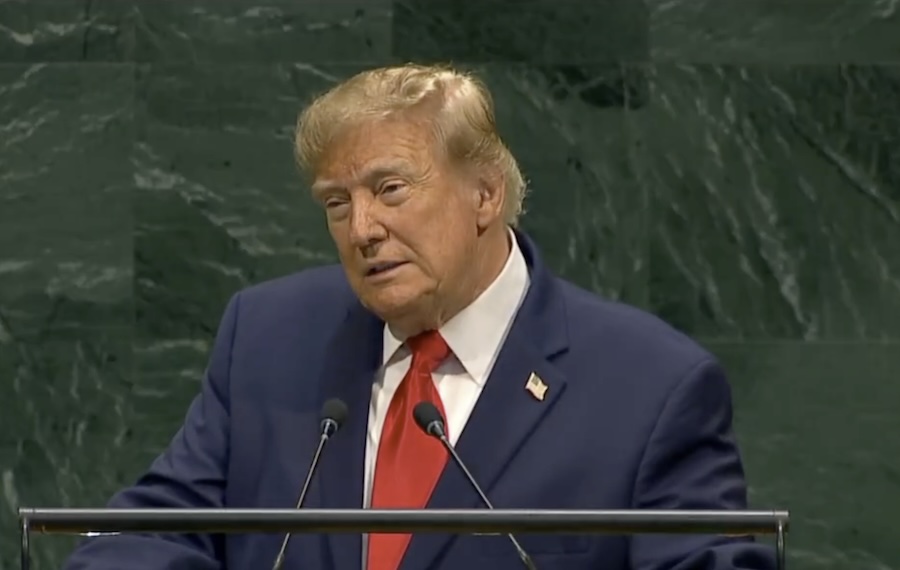
President Donald Trump put Iran on notice before the United Nations General Assembly Tuesday, presenting Tehran with two dramatically different paths: reach an agreement with the United States or risk another devastating round of American military action.
Speaking before world leaders in New York, Trump said he is approaching a consequential decision over the future of the conflict with Iran.
“I have a big decision to make,” Trump said. “Will a deal be made with Iran that lets them rebuild and create a far greater country?”
The alternative Trump raised was unmistakably severe.
The president said he could instead use American military power to “annihilate the Islamic Republic,” delivering one of his most direct warnings to Tehran since the United States began its military campaign earlier this year.
Trump’s message was not simply a threat of additional sanctions or diplomatic isolation. He made clear that renewed military action remains on the table if negotiations fail.
At the same time, Trump maintained that diplomacy could still produce an agreement.
He predicted that a deal with Iran could potentially emerge after the November 3 midterm elections, while insisting that domestic political considerations are not dictating his decisions.
The remarks came after months of direct military confrontation and escalating economic pressure against Tehran.
Trump has repeatedly maintained that Iran will never be permitted to obtain a nuclear weapon, a position he again emphasized before the United Nations.
The White House characterized Trump’s broader message as one of confronting threats before they are allowed to grow, with the president telling world leaders that the United States would use its power when necessary to defend its interests.
But Trump also made clear that military force is not the only pressure Washington intends to apply.
He called on governments around the world to further isolate Tehran economically in an effort to force Iranian leaders back to the negotiating table.
The Trump administration has already imposed sweeping sanctions intended to restrict Iran’s access to the international financial system and make it more difficult for Tehran to rebuild military capabilities damaged during the conflict.
Iran, meanwhile, has indicated that it remains open to negotiations while demanding that Washington ease its military and economic pressure.
That leaves enormous differences still separating the two governments.
Among the biggest points of contention are Iran’s nuclear program, its ballistic missile arsenal and control of shipping through the Strait of Hormuz.
Trump has repeatedly said Iran cannot be permitted to acquire a nuclear weapon.
His administration has also identified Tehran’s missile production, naval capabilities and support for armed groups throughout the Middle East as major security concerns.
The Strait of Hormuz remains another critical flashpoint.
The narrow waterway is one of the world’s most important energy corridors, connecting major Persian Gulf oil producers with global markets.
Disruptions there have pushed energy prices higher and intensified international concern that the conflict could spill further into the global economy.
Trump urged Iran to fully reopen the strait while pointing to American naval operations intended to protect commercial shipping.
He argued that a lasting agreement could ease pressure on oil markets while allowing Iran to begin rebuilding its battered economy.
Oil markets have remained volatile as traders attempt to determine whether diplomacy can prevent another escalation between Washington and Tehran.
But Trump’s address made one point particularly clear: he does not view the current situation as an indefinite stalemate.
The president said he is approaching a decision.
His comments also expanded on remarks made during a recent interview in which he said he would soon determine whether massive attacks against Iran should resume.
Trump has maintained that communication between Washington and Tehran continues and that Iranian officials remain interested in reaching an agreement.
He did not announce a deadline Tuesday for Tehran to accept a deal.
That leaves the timing uncertain — but not the stakes.
Iran can pursue negotiations with Washington and potentially gain an opportunity to rebuild its economy, or it can reject the terms the United States is demanding and risk another major military confrontation.
Trump’s message at the United Nations was built around that stark choice.
Diplomacy remains available.
So does American military power.
And Trump told world leaders that he is preparing to decide which path comes next.

Federal immigration authorities arrested a staffer for a Democratic California lawmaker during a targeted enforcement operation at a Las Vegas airport, setting off a clash between the Department of Homeland Security and the state legislator who employs him.
Ho-Yin Mo, a field representative for Democratic California Assemblywoman Catherine Stefani, was taken into custody at Harry Reid International Airport on September 17.
Mo, a Hong Kong native and former television news anchor, is now facing removal proceedings while Stefani is publicly demanding his release.
According to the Department of Homeland Security, Mo originally entered the United States legally in 2020 but remained beyond the period he was authorized to stay.
“On January 13, 2020, Mo lawfully entered the U.S. on a temporary basis but illegally overstayed his welcome by failing to depart by May 15, 2020,” a DHS spokesperson said.
The department also directly addressed questions surrounding Mo’s ability to legally work in the United States.
“Work authorization or a pending application do NOT confer legal status in the United States.”
DHS said Mo’s arrest was part of a targeted immigration-enforcement operation at the Las Vegas airport.
The department tied the arrest to a broader Trump administration crackdown on domestic air travel by people it says lack lawful immigration status.
“DHS reversed the horrendous Biden-era policy that allowed aliens in our country illegally to jet around our country,” the department said.
“Under President Trump, DHS will no longer tolerate this. This administration is working diligently to ensure that aliens in our country illegally can no longer fly unless it is out of our country to self-deport.”
But Stefani is pushing back against the federal government’s characterization of her staffer’s situation.
“My message today is simple: I am respectfully calling for Ho Yin Mo’s release as soon as possible,” Stefani said following his detention.
“Ho Yin is a selfless public servant and a valued, legal employee of the California State Legislature serving our San Francisco and Bay Area communities.”
The competing statements highlight an important distinction in the case: Stefani says Mo is legally authorized to work for the California Legislature, while DHS says that employment authorization does not by itself establish lawful immigration status.
Mo’s detention has attracted additional attention because he isn’t an obscure political operative.
Before entering California politics, he was a familiar face to some Bay Area viewers as an anchor and reporter for KTSF Channel 26, a Chinese-language television station.
He later moved into Democratic political organizing.
In 2024, Mo worked as an outreach organizer focused on Asian American and Pacific Islander communities for then-San Francisco Mayor London Breed’s unsuccessful reelection campaign.
His profile apparently made him an attractive political hire.
“When we learned that Mo was available, we immediately saw an opportunity to bring him on board,” Breed spokesman Joe Arellano said at the time. “His visibility through KTSF connects with a broad audience, and his professional background and experience made him a strong fit.”
Mo joined Stefani’s staff in January 2025 as a field representative.
Stefani represents California’s 19th Assembly District, encompassing western San Francisco and northern San Mateo County. Before entering the state Assembly in December 2024, the Democrat served on the San Francisco Board of Supervisors.
Stefani has praised Mo’s work connecting her office with Chinese-American constituents and providing assistance with government services.
“And his work goes far beyond presence. Ho-Yin helps people access affordable healthcare coverage, childcare, and food support. Our whole community eagerly awaits Ho-Yin’s return to his home and his job, where he is loved and adored.”
Federal immigration authorities, however, have taken a different position on the underlying immigration question.
DHS says Mo’s authorized temporary stay expired in May 2020 and maintains that neither a work permit nor a pending immigration application independently gives someone lawful immigration status.
Mo was being held at an immigration detention facility in Nevada while facing removal proceedings that could ultimately result in his deportation to Hong Kong.
His detention also comes as the Trump administration expands immigration-enforcement operations at American airports.
The administration has increasingly targeted visa overstays and other people DHS considers unlawfully present, including some individuals who possess federal work authorization or have pending immigration cases.
That enforcement strategy has generated fierce opposition from immigration advocates and Democratic officials, who argue that people with active immigration cases and work permits should not be swept into detention while those proceedings remain unresolved.
The administration maintains that a pending application or authorization to work does not prevent immigration authorities from enforcing existing removal laws.
Mo’s case now puts that dispute directly inside a Democratic California lawmaker’s office.
A former television journalist who went on to work for two prominent San Francisco Democrats is sitting in federal immigration custody.
His boss says he is a valued employee who should be released.
DHS says he remained in the United States after his authorized stay expired.
And unless his immigration proceedings change that situation, Mo faces the possibility of being removed to Hong Kong.
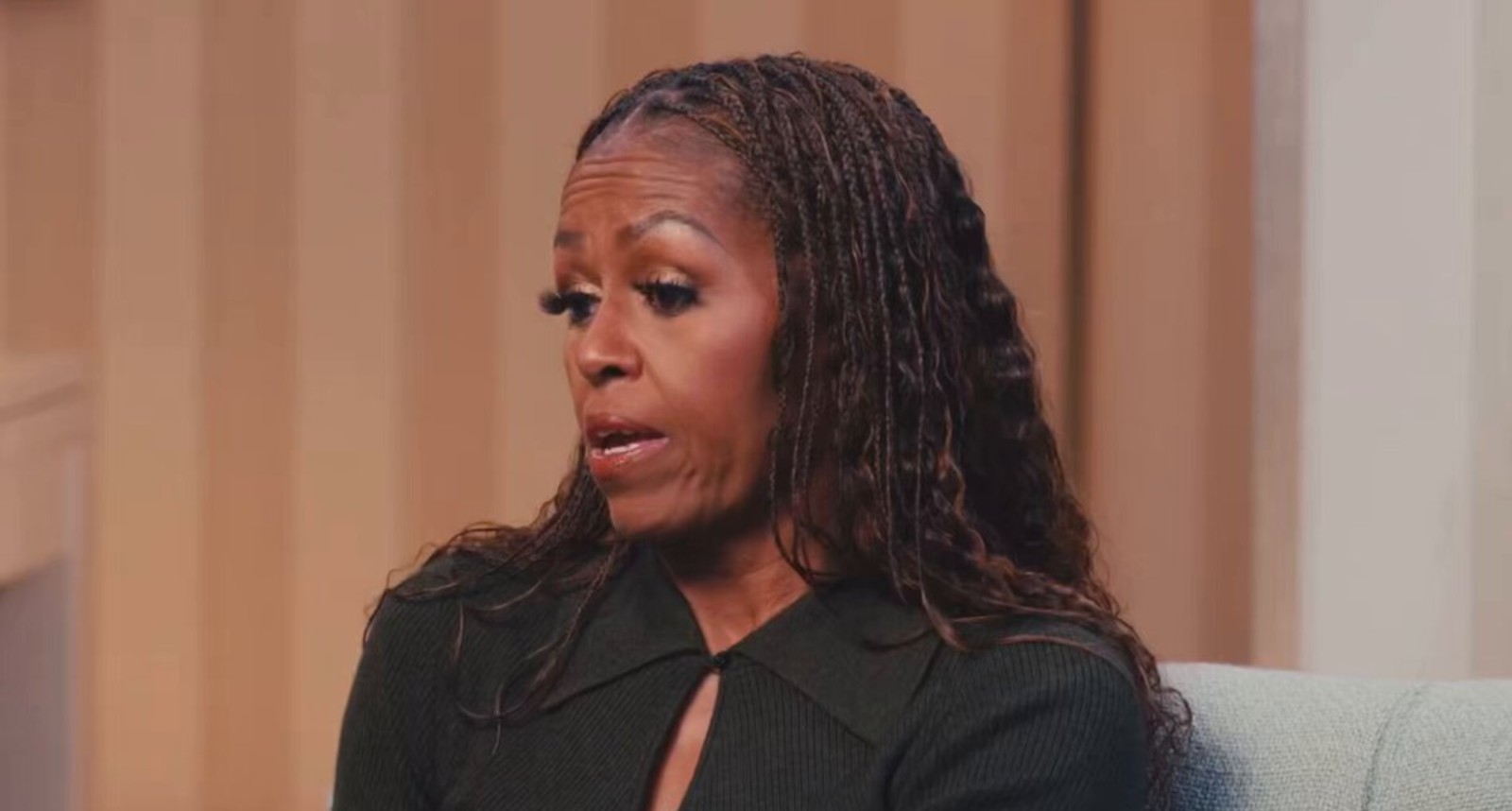
Michelle Obama’s voter organization is taking its 2026 midterm strategy straight into the social media feeds of millions of young Americans.
When We All Vote, the initiative founded by the former first lady, has launched a new “Voting Squad” made up of popular social media creators who will use their enormous online audiences to distribute voter-registration information, election deadlines and issue-focused content ahead of the midterms.
It represents a distinctly modern approach to voter outreach: instead of relying primarily on television commercials, political mailers or traditional campaign operations, election messaging will appear alongside the videos and posts millions of young Americans already consume every day.
When We All Vote describes the Voting Squad as a nonpartisan network, with participating creators using their own personalities, voices and established platforms to reach younger voters.
And its potential reach is enormous.
According to the organization, creators participating in the campaign collectively reach more than 20 million people across social media.
Among them is Brandon Edelman, better known online as Bran Flakezz, whose TikTok following exceeds 1.4 million.
The campaign also includes physician and “medical mythbuster” Joel Bervell, “plant enthusiast” Paige Tailyn and influencer Leon Ondieki, who has approximately 4.5 million TikTok followers.
Rather than asking young voters to seek out election information themselves, the strategy effectively brings that information directly into their existing social-media feeds.
Creators are expected to distribute state-specific election dates and deadlines, explain how issues important to younger voters appear on ballots and direct followers toward fact-checked voting resources.
When We All Vote argues that confusion and a lack of reliable election information remain major obstacles to Gen Z participation.
“At a time when lack of accurate information is one of the main barriers preventing Gen Z from voting, the Voting Squad will serve as trusted messengers to reach and resonate with young voters ahead of the 2026 midterm elections,” the organization said.
The initiative was announced in conjunction with National Voter Registration Day as the political battle for young voters intensifies ahead of November.
Kalisha Dessources Figures, a senior adviser for When We All Vote, made clear that the strategy is designed to insert election information directly into the online environments where younger Americans are already spending their time.
“Registering to vote takes less time than our daily doomscrolls,” Figures said in announcing the campaign.
She said the Voting Squad would bring “hope, community, and reminders of the power of our voices back into our timelines.”
The potential audience is substantial.
When We All Vote estimates that nearly 50 million members of Generation Z will be eligible to vote in the 2026 midterm elections.
That makes the battle for their attention — and ultimately their participation — potentially significant.
The strategy also reflects a major shift in how political and civic organizations attempt to reach younger Americans.
Social-media creators can develop intensely personal relationships with their audiences, often communicating in conversational formats that bear little resemblance to traditional political advertising.
That familiarity can give creators substantial influence with followers who may encounter their content every day.
It also raises the importance of transparency and accuracy when election-related information is mixed into feeds normally filled with entertainment, lifestyle advice and personal content.
When We All Vote identifies itself as a national, nonpartisan initiative focused on increasing voter participation, reducing voting gaps based on age and race, and changing the broader culture surrounding elections.
Obama founded the organization in 2018.
The Voting Squad campaign does not endorse a candidate or political party, according to When We All Vote, and its announced materials focus on voter registration, election deadlines and voting resources.
But the mechanics of the campaign are unmistakably ambitious: put election information in front of millions of young Americans without requiring them to leave the platforms and personalities they already follow.
The organization has been laying the groundwork for a broader Gen Z push throughout 2026.
Its “Pass the Mic to Gen Z” campaign has focused on identifying the issues younger Americans care about and connecting those concerns with civic participation. When We All Vote’s research found that social media plays a major role in Gen Z’s information habits, although traditional news websites and apps remain significant sources as well.
Now the organization is attempting to turn those media habits into real-world political participation.
The central question is whether millions of followers and social-media views will translate into actual registrations — and eventually ballots.
Creators may command enormous audiences, but online reach is not the same thing as voter turnout.
That is what makes the 2026 midterms an important test of the strategy.
Michelle Obama’s organization is betting that some of the most effective messengers for reaching the next generation of voters may not be politicians, campaign advertisements or traditional political organizations at all.
They may be the influencers already appearing on millions of phones every day.

Trump Issues Chilling Ultimatum

Popular News Anchor Arrested By ICE

Obama Calls It QUITS After Wild Video Goes Viral

Ilhan Omar Removal Vote Is In — Decided By Razor Thin Margin

FINALLY! Americans Get Some MUCH Needed Good News

Trump Bans Lib Outlets – You Won’t Believe What Happened Right After!

‘The Five’ Gets Emotional As Greg Gutfeld Announces Tragic News

Removed From the Country — Ilhan Omar Hit With Horrid News

‘EFFECTIVE IMMEDIATELY’ — Barack Obama Gets Devastating News

Schumer Loses! Court Sides With Trump In Historic Move

Everyday Americans Being Treated As Criminals — Including You, Right Now

HUGE: 9/11 Widow Goes Rogue, Makes Damning Call Out During Ground Zero Ceremony
-
 Economy5 months ago
Vance Leaves Meeting, Looks Straight Into Camera, Announces Stunning Arrest
-
 Economy5 months ago
Adam Schiff Facing 30 Years In Prison After Bank Records Leak
-

 Economy5 months ago
Supreme Curt Sides With Trump — He Can Remove The All
-
 Culture3 months ago
Michelle Obama Drops Nasty Bomb About ‘Useless’ Daughter
-
 Economy6 months ago
All Hell Breaks Loose On Fox When Jesse Watters Asks Fetterman One Question
-
 Economy4 months ago
Prayers Pour In After Fox Host Dies: ‘Senseless Murder’
-

 Latest3 months ago
Fox News Stuns With Announcement About 5 Fired Hosts
-

 Border & Security2 months ago
Top Trump Admin And Wife Found Dead — Chilling Update Just Released