
Latest
JONATHAN TURLEY: USC abandons governor debate after Dems whine about White candidates

The University of Southern California (USC) is under fire after canceling the California gubernatorial debate with less than 24 hours’ notice. The reason? None of the polling candidates are people of color. It was a crushingly revealing moment in a state where universities have long defied voters who demanded an end to affirmative action in admissions.
USC Dornsife Center for the Political Future and ABC/KABC Los Angeles were scheduled to co-host the debate at Bovard Auditorium on Tuesday evening. Then it was canceled on Monday.
Former Biden Health and Human Services Secretary and California Attorney General Xavier Becerra had sent a letter to President Beong-Soo Kim, alleging “election rigging” and objecting “you disqualified all of the candidates of color from participating.”
For many, USC succeeded in beclowning itself by first defending USC Professor Christian Grose’s “data-driven” selection process and then abruptly canceling the debate lineup selected through that process. If that seems incomprehensible, welcome to American higher education.
The cancellation is only the latest unexpected turn in the election, where the two top vote-getters will face each other in a runoff election.
California Democrats are in a panic as two Republicans currently top the polling: Riverside County Sheriff Chad Bianco and commentator Steve Hilton.
At the same time, the leading Democrats include controversial candidates such as former Rep. Katie Porter and Rep. Eric Swalwell. Porter is best known nationally for spewing profanity and abuse at staff members. Last year, Swalwell was outvoted by Rep. Raul Grijalva, who died in March 2025. However, they are still doing markedly better than Becerra with voters.
BIANCO SAYS ‘DEMOCRAT POLICY IS INDEFENSIBLE’ AS GOP CANDIDATES TOP CALIFORNIA GOVERNOR POLLING
USC insisted that it “vigorously defends the independence, objectivity, and integrity of USC Professor Christian Grose, whose data-driven candidate viability formula is based on extensive research and enjoys broad academic support.”
That “data-driven system” produced a lineup of Bianco and Hilton as well as Democrats billionaire Tom Steyer, San Jose Mayor Matt Mahan, Porter and Swalwell.
Advocates then went into full rage, calling the process racist and rigged. Becerra declared:
“USC goes to great lengths to justify its exclusionary candidate formula. But you can’t escape the detestable outcome: you disqualified all of the candidates of color from participating while you invited a white candidate who has NEVER polled higher than some of the candidates of color, including me.”
However, the methodology considered both polling percentage and fundraising with the polling given greater weight.
Becerra has been shown at 3%, notably within the statistical margin of error for most polls. In other words, he could be closer to zero. (He is shown as tied with Mahan, who Becerra appears to be referencing in his letter as lacking higher polling).
CALIFORNIA DEMS LASH OUT AT ICE DURING GUBERNATORIAL DEBATE
USC then yielded after trying to expand the number of participants to appease objectors. In a statement, USC stated:
“We recognize that concerns about the selection criteria for tomorrow’s gubernatorial debate have created a significant distraction from the issues that matter to voters. Unfortunately, USC and [debate co-sponsor] KABC have not been able to reach an agreement on expanding the number of candidates at tomorrow’s debate. As a result, USC has made the difficult decision to cancel tomorrow’s debate and will look for other opportunities to educate voters on the candidates and issues.”
Becerra took a victory lap: “We fought. We won! … Thank you to everyone who stood up, raised hell and demanded justice. Never give up when you’re fighting for fairness!”
NO CLEAR CHAMPION OF CASH PAYMENT REPARATIONS AMONG DEMOCRATS IN CALIFORNIA GUBERNATORIAL RACE
At least Becerra’s position is comprehensible. He has long defended affirmative action in California. Indeed, despite statewide votes against the practice, California universities continue to be accused of applying racial criteria in admissions. Becerra is effectively demanding such action for himself as a “candidate of color.”
USC was left stumbling in search of a place to hide. USC scholars defended the process that USC affectively scuttled:
“All of us expect and welcome critical engagement from inside and outside the academy. What Professor Grose has faced, however, is not substantive or methodological debate. Attacks and insinuations from members of the political classes include completely baseless allegations of election-rigging, inconsistency, bias and data manipulation. These are harmful character assassinations, not substantive debate. They are of a piece with other attempts to strong-arm or malign scholars that have become all too common in America.
Whatever their intent, the effect of these attacks is to diminish academic freedom and chill scholarly willingness to add their voices to the public square. It is imperative that universities defend their faculties’ integrity when it is unfairly attacked.”
That is a powerful statement if one does not then consider that the university caved, cancelled the debate, and meekly said that it will “look for other opportunities to educate voters on the candidates and issues.” The “strong-arming” succeeded.
What is particularly disappointing is that I just spoke at USC and was impressed with the members of the USC community seeking to restore a diversity of viewpoints. The event was sponsored by The Center for the Political Future, which was the sponsor of the debate. It was also organized by the USC Open Dialogue Project and the USC chapter of the Heterodox Academy. Both have written in defense of this process.
Professor Morris Levy with Heterodox wrote: “[USC’s] message is unmistakable: USC was allowing ‘concerns’ and a public ‘distraction’ to override its own institutional conviction that the selection formula was data-driven and backed by research.”
CLICK HERE FOR MORE FOX NEWS OPINION
So Heterodox, The Center for the Political Future, and ABC7 issued statements indicating that they were prepared to go forward and also defended the process of selection. That left only USC.
In this controversy, USC succeeded in finding the least defensible ground to make its stand. It denounced the cancel campaign but then effectively yielded to it.
The alternative is to stand by your race-blind, data-driven process and hold the debate for all invited candidates willing to attend.
Where USC was criticized recently for its fake punt in the game with Northwestern, it actually punted in this play and left the field.

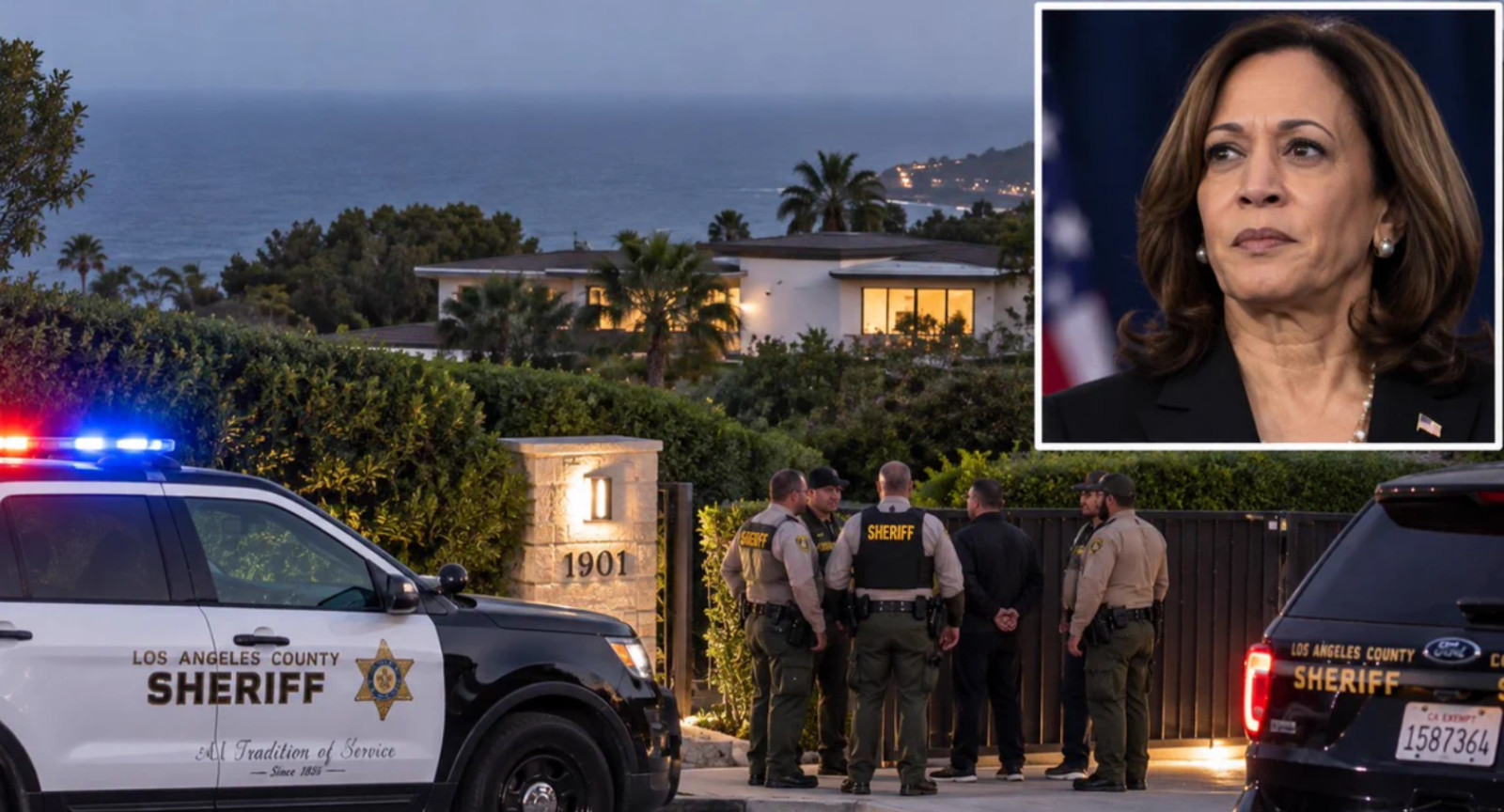
A late-night security scare unfolded at former Vice President Kamala Harris’ Malibu home after an unidentified woman entered the property, prompting private security to call Los Angeles County sheriff’s deputies.
Harris and her husband, Doug Emhoff, were not home when the incident occurred at their residence in Malibu’s Point Dume neighborhood.
Private security personnel spotted the woman after she entered the property but stopped her before she could reach the house.
Deputies from the Los Angeles County Sheriff’s Department’s Lost Hills station were dispatched at approximately 10:30 p.m. Friday after receiving a report of a suspicious person.
By the time deputies arrived, the woman was outside the property and officers made contact with Harris’ private security team.
Authorities warned the woman and instructed her to leave the area.
She complied and departed voluntarily without a confrontation or arrest.
But the encounter did not end there.
The Los Angeles County Sheriff’s Department took a trespassing report documenting the incident and planned to increase patrols around Harris’ property as a precaution.
Harris spokesperson Eduardo Negrón confirmed that private security stopped the woman before she was able to approach the residence.
“Vice-President Harris and Second Gentleman Emhoff were not present,” Negrón said while describing the circumstances surrounding the incident.
“They are grateful to the security and law enforcement personnel who responded swiftly,” Negrón added.
Authorities have not publicly identified the woman or explained why she entered Harris’ property.
According to Fox News, the woman had reportedly appeared at the property twice before deputies were called.
The report said she initially arrived by Uber, approached the security detail and was told she needed to leave.
She later returned, prompting Harris’ private security team to contact law enforcement.
Despite the unusual circumstances, officials have released no evidence that the woman was armed, made threats, damaged property or attempted to harm Harris or Emhoff.
No injuries were reported, and authorities have not announced criminal charges stemming from the incident.
The security scare comes as Harris adjusts to life outside the extensive federal protection that accompanied her four years as vice president.
Under federal law, former vice presidents generally receive Secret Service protection for six months after leaving office.
Harris left the vice presidency in January 2025.
The Friday-night incident therefore highlights the security arrangements surrounding a former national official after leaving office, with private personnel serving as the first line of defense before local law enforcement was summoned.
Harris and Emhoff reportedly own an approximately $8 million residence in Malibu’s Point Dume area.
The couple also owns a home in Los Angeles’ Brentwood neighborhood.
That property drew law-enforcement attention in January 2025 when two people were arrested nearby during restrictions connected to the Palisades Fire.
Authorities characterized those arrests as curfew violations and did not identify them as an attempt to target Harris.
The latest incident was different: an unidentified woman actually entered Harris’ Malibu property.
Private security detected her before she reached the residence and ultimately called sheriff’s deputies after she reportedly returned to the location.
Deputies then warned the woman to leave, documented the incident as a trespassing report and decided to increase patrols around the property.
For now, investigators have announced no motive and no additional enforcement action against the woman.
Harris and Emhoff never encountered her.
The woman left peacefully after deputies issued their warning.
And while the incident ended without injury or arrest, authorities are taking additional precautions around the former vice president’s Malibu home following the unauthorized entry.
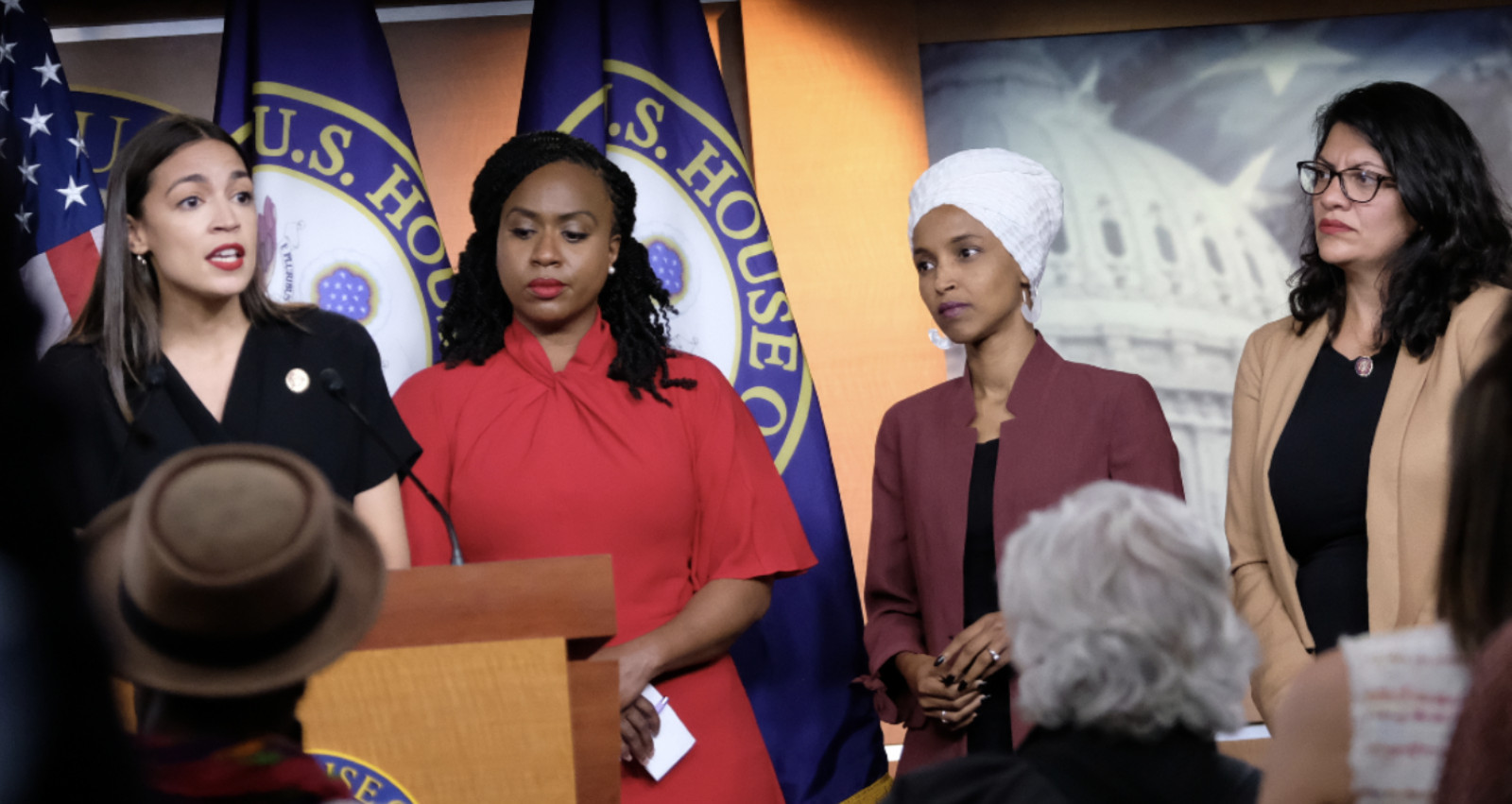
A closely watched Democratic primary battle in Arizona ended decisively, with incumbent Rep. Greg Stanton defeating progressive challenger Kai Newkirk and securing his party’s nomination for another term in Congress.
The race in Arizona’s 4th Congressional District attracted national attention because it highlighted a widening debate inside the Democratic Party over Israel, U.S. military assistance and the influence of pro-Israel political groups.
Newkirk, a progressive organizer and democratic socialist, made those issues a major part of his campaign against Stanton.
It wasn’t enough to unseat the incumbent.
Final results showed Stanton receiving 35,551 votes, or 62.3%, compared with Newkirk’s 21,544 votes, or 37.7%.
Stanton, a former Phoenix mayor who was first elected to Congress in 2018, emerged from the primary with the Democratic nomination and will face Republican Zuhdi Jasser in the November general election.
Following the primary, Stanton portrayed the result as a broader decision about the direction Democratic voters want their party to take.
“This campaign presented voters with a real choice about how Democrats should lead,” Stanton said in a statement posted to his campaign page.
“Tonight,” Stanton continued, voters “chose proven leadership that fights back, delivers real results, and brings our party together.”
The primary drew particular attention because of the stark disagreement between the candidates over Israel.
Newkirk campaigned on ending U.S. military assistance to Israel and imposing an arms embargo.
He has accused Israel of committing genocide in Gaza and argued that Democratic lawmakers should take a dramatically different approach to the U.S.-Israel relationship.
Stanton took a different position.
The incumbent has supported continued U.S. assistance to Israel and recently voted against an amendment offered by Republican Rep. Thomas Massie of Kentucky that would have cut military aid.
Newkirk seized on that vote during the campaign.
“Greg Stanton has taken over $300K from AIPAC,” Newkirk wrote.
Newkirk argued that Stanton’s support from the American Israel Public Affairs Committee raised questions about the influence of outside political spending on his positions.
Stanton rejected that framing and defended his record.
The contest unfolded against a larger national debate inside the Democratic Party, where attitudes toward Israel have become increasingly divided and several progressive congressional candidates have made opposition to Israeli military policy a central campaign issue.
Newkirk attempted to turn that shift into an electoral challenge against an established Democratic incumbent.
His campaign also received support from prominent figures on the party’s progressive flank.
Sen. Bernie Sanders endorsed Newkirk, saying the challenger represented the kind of candidate needed to confront corporate influence in Washington.
“We need strong progressive voices in Congress who are prepared to stand up to powerful corporate interests and fight for working people,” Sanders said in announcing his endorsement.
Newkirk also received support from progressive organizations and activists who viewed the Arizona contest as an opportunity to push the Democratic caucus further left on foreign policy and economic issues.
But Stanton entered the race with substantial advantages.
As an incumbent congressman and former mayor of Phoenix, he had significantly greater financial resources, an established political organization and years of name recognition in the district.
Federal campaign-finance filings showed Stanton had raised more than $2.1 million by early July, compared with roughly $151,000 raised by Newkirk.
The money gap underscored the challenge facing Newkirk as he attempted to defeat a four-term incumbent.
Still, the campaign became a visible test of whether progressive dissatisfaction over Israel could translate into enough Democratic primary votes to topple an established member of Congress.
In Arizona’s 4th District, it did not.
Stanton survived the challenge and advanced to the general election.
Newkirk’s campaign nevertheless demonstrated that Israel policy is likely to remain a source of significant disagreement inside the Democratic coalition.
The two candidates offered Democratic voters sharply different approaches.
Newkirk called for cutting military assistance to Israel and sought to challenge the influence of AIPAC and other established political organizations.
Stanton defended his record and argued for continuity in his approach to both domestic and foreign policy.
When the votes were counted, Stanton retained the nomination.
The primary may be over, but the argument that drove much of it — over Israel, U.S. military assistance and the ideological direction of the Democratic Party — remains unresolved nationally.
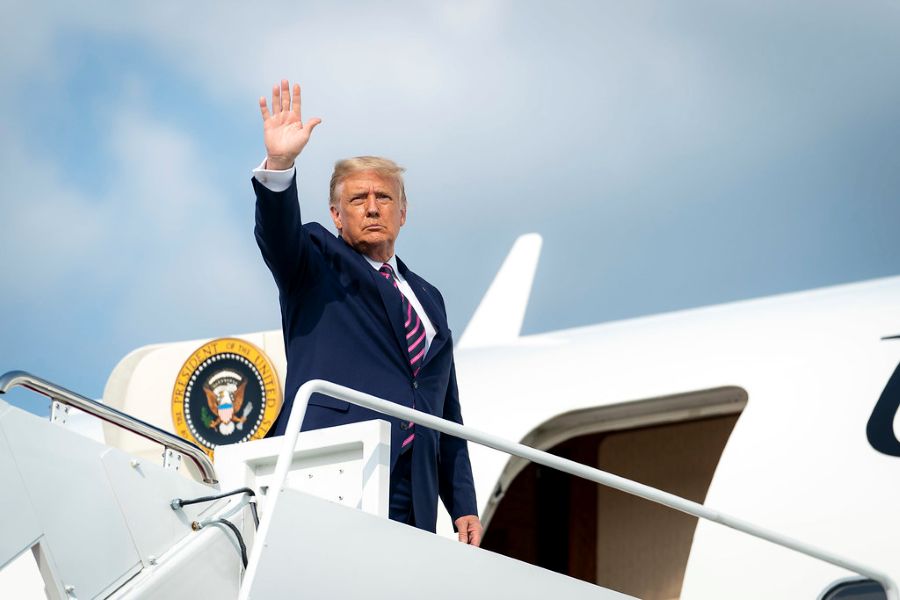
The White House found itself in an escalating legal confrontation Thursday after journalists from CNN, MS NOW and Politico said they were still being denied entry just hours after a federal judge ordered the administration to restore their press credentials.
U.S. District Judge Timothy Kelly issued a temporary restraining order directing White House officials to “immediately return, reinstate, and restore” the hard passes that had been revoked from journalists working for the three organizations.
The order is scheduled to remain in effect for 14 days while the larger constitutional battle over the administration’s decision moves forward.
But Thursday morning, the dispute took another dramatic turn.
Reporters from all three organizations said they were again prevented from entering the White House grounds despite Kelly’s order.
That prompted attorneys for CNN, MS NOW and Politico to return to court and request an emergency hearing, alleging that the administration had failed to comply with the judge’s directive.
The controversy began after President Donald Trump announced that CNN, MS NOW and Politico would be barred from the White House, accusing the organizations of spreading “fake news.”
The outlets responded by suing the administration.
Their lawsuit alleges that the White House retaliated against the organizations because of their reporting and revoked their access without constitutionally adequate due process.
The administration has defended its authority to control access to the White House and has argued that the outlets’ reporting raised national-security concerns.
Kelly, however, found that the news organizations had demonstrated a likelihood of succeeding on at least their Fifth Amendment due-process claim.
The judge also expressed skepticism about the government’s national-security justification, finding that the existing record did not adequately support the argument that restoring the journalists’ credentials would pose a security threat.
That made what happened Thursday morning particularly significant.
CNN reported that members of its staff attempted to enter the White House grounds around 6 a.m. and were denied access.
MS NOW White House correspondent Laura Barrón-López and a producer were also turned away and reportedly had their passes confiscated, although another producer for the network was permitted to enter.
A Politico reporter was similarly denied access and had his credential taken.
The inconsistent treatment left unanswered questions about whether the continued denials represented deliberate resistance to the court order or a delay in implementing it.
The outlets nevertheless moved quickly.
Their attorneys asked Kelly to intervene again, arguing that the administration was already violating the temporary restraining order.
Kelly then ordered the government to respond to the allegations.
The confrontation marks the latest chapter in a rapidly escalating battle between the Trump administration and several major news organizations.
Trump has repeatedly attacked media outlets he considers hostile or inaccurate, frequently describing their coverage as “fake news.”
But CNN, MS NOW and Politico argue that whatever objections the president has to their reporting, the government cannot retaliate against news organizations by selectively stripping them of access because officials dislike their coverage.
That argument is now being tested in federal court.
The White House maintains that access to the presidential complex is a privilege rather than an unrestricted constitutional right and has cited national-security concerns in defending its decision.
The outlets counter that once the government establishes a credentialing system for journalists, it cannot administer that system in a way that violates constitutional protections.
For now, Kelly’s ruling is temporary.
It does not represent a final judgment on every constitutional question raised by the lawsuit.
But it does require the administration to restore the affected credentials while the litigation continues.
The broader media industry has also entered the fight.
Fox News, ABC, CBS and NBC were among the television organizations that joined a protest over the restrictions, disrupting the traditional television pool system used to cover presidential events.
The White House Correspondents’ Association condemned the original decision as well.
“The president said it plainly in the Oval Office, describing his own planned action as a ‘ban on the free press,” Jacqui Heinrich, WHCA president, said in a statement.
She continued:
“The Constitution protects the freedom of the press from government interference. That protection does not depend on whether the president likes a news organization’s coverage, agrees with its reporting, or approves of the questions its journalists ask.”
Trump has maintained that the administration has the authority to determine who receives access to the White House and has continued criticizing the three organizations.
The courts are now being asked to determine where that authority ends and constitutional protections begin.
But the immediate dispute became much simpler Thursday morning.
A federal judge ordered the credentials restored.
Journalists from the affected outlets showed up at the White House.
Several said they were still turned away.
And their attorneys went straight back to court.
What began as a fight over three news organizations’ access to the White House has now become a separate question over compliance with a federal court order — with Judge Kelly demanding answers as the legal showdown intensifies.

Police Rush To Kamala Harris’ House On Urgent Call

BREAKING OVERNIGHT: Socialist Dem Suffers Humiliating Defeat

Trump Defies Federal Judge’s Order, Sparks New Showdown

Trump Issues Chilling Ultimatum

Popular News Anchor Arrested By ICE

Obama Calls It QUITS After Wild Video Goes Viral

‘The Five’ Gets Emotional As Greg Gutfeld Announces Tragic News

Removed From the Country — Ilhan Omar Hit With Horrid News

‘EFFECTIVE IMMEDIATELY’ — Barack Obama Gets Devastating News

Schumer Loses! Court Sides With Trump In Historic Move

Everyday Americans Being Treated As Criminals — Including You, Right Now

Get Ready — Mike Pence Makes Stunning 2028 Announcement
-
 Economy5 months ago
Vance Leaves Meeting, Looks Straight Into Camera, Announces Stunning Arrest
-
 Economy5 months ago
Adam Schiff Facing 30 Years In Prison After Bank Records Leak
-
 Economy5 months ago
Supreme Curt Sides With Trump — He Can Remove The All
-
 Culture3 months ago
Michelle Obama Drops Nasty Bomb About ‘Useless’ Daughter
-
 Economy6 months ago
All Hell Breaks Loose On Fox When Jesse Watters Asks Fetterman One Question
-

 Economy4 months ago
Prayers Pour In After Fox Host Dies: ‘Senseless Murder’
-
 Latest3 months ago
Fox News Stuns With Announcement About 5 Fired Hosts
-
 Border & Security2 months ago
Top Trump Admin And Wife Found Dead — Chilling Update Just Released