
Politics
Journalists Ask The Worst Questions: Are You A Criminal?


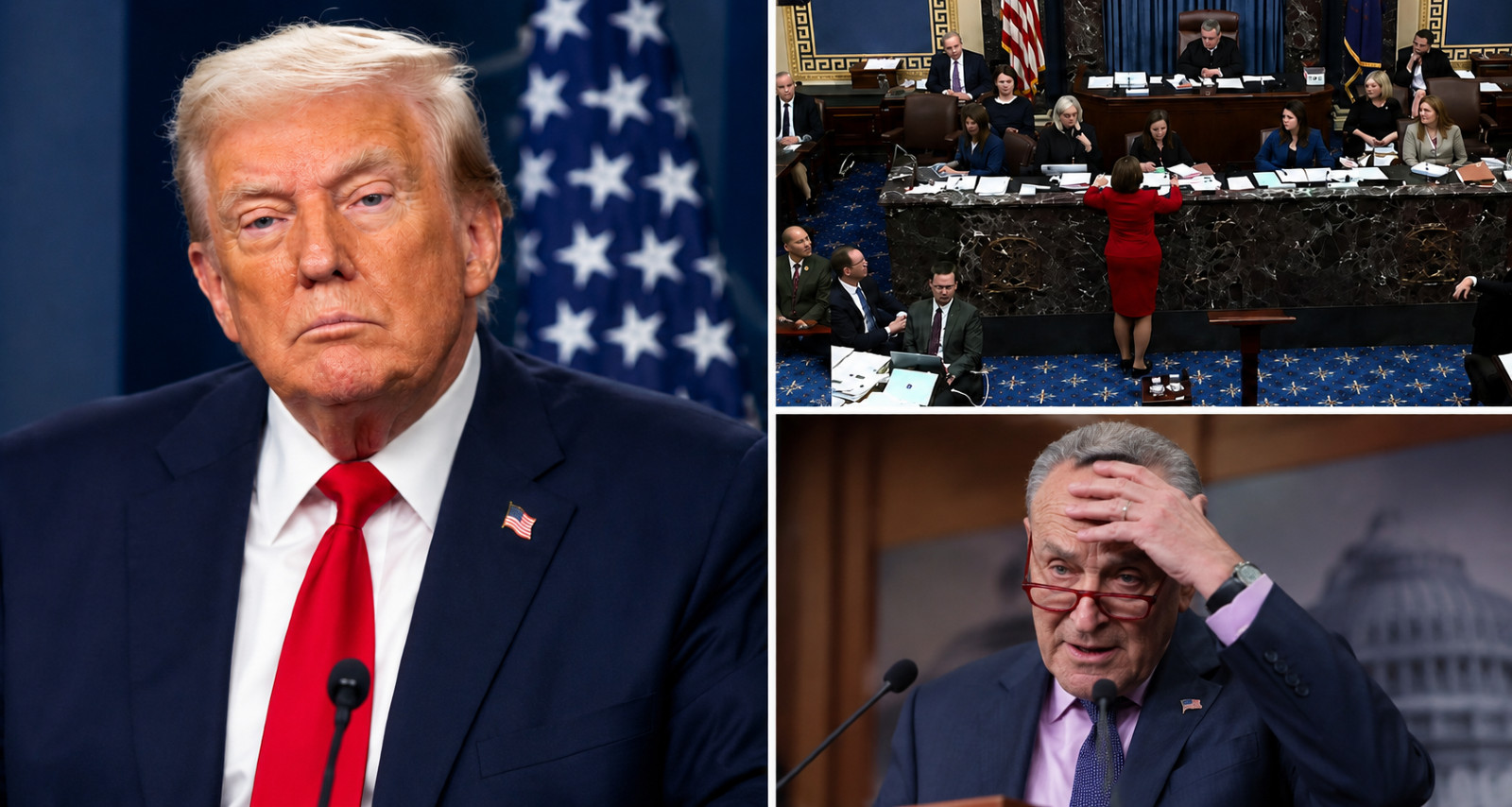
Senate Republicans narrowly defeated another Democratic attempt to limit President Donald Trump’s authority over ongoing U.S. military operations involving Iran, preserving the administration’s flexibility as fighting in the region continues to intensify.
In a razor-thin 50-49 procedural vote, Republicans blocked Democrats’ latest effort to force immediate congressional action on U.S. troop deployments. The measure sought to discharge a war powers resolution from the Senate Foreign Relations Committee and bring it directly to the Senate floor for a vote.
It marked the thirteenth time Democrats have attempted to curb the president’s military authority over Iran.
Three Republicans—Sens. Susan Collins of Maine, Lisa Murkowski of Alaska, and Rand Paul of Kentucky—joined most Democrats in supporting the effort.
But Sen. John Fetterman, D-Pa., once again broke with his party, becoming the lone Democrat to oppose the resolution and providing Republicans with the decisive vote needed to keep the measure from advancing.
The outcome marked the eleventh time Republicans have successfully blocked similar efforts, highlighting both Democrats’ determination to challenge the administration’s military strategy and the GOP’s ability to hold the line when its members are present.
The vote came against the backdrop of rapidly escalating events overseas.
Earlier that same morning, U.S. Central Command confirmed strikes against Iranian military command centers and missile sites, although officials did not disclose the exact locations or casualty figures.
At nearly the same time, drones believed to be launched by Iran struck vessels at an Egyptian port near the Suez Canal, setting two ships on fire and raising new concerns about Tehran’s ability to threaten one of the world’s busiest commercial shipping corridors.
Those developments dominated debate on the Senate floor, where Democratic Leader Chuck Schumer argued that Congress should intervene.
“This aimless war has been one of the biggest catastrophes in American history. Trump’s mess only gets worse with every passing hour. Trump said this war would last a week, but American service members are still getting killed five months later,” Schumer added.
Schumer also pointed to the reported attack in Egypt as evidence that the conflict is broadening.
“This war seems to be expanding with Iran’s latest attack in Egypt’s territory. Senate Republicans cannot sit on the sidelines as Trump’s war escalates out of control,” Schumer added.
Supporters of the administration counter that congressional intervention at this stage would undermine ongoing diplomatic efforts and weaken America’s negotiating position.
President Trump previously argued that a similar Senate vote in June “made his job more difficult” as his administration pursued negotiations aimed at de-escalating the conflict.
Republicans have maintained that ordering troop withdrawals while military operations and diplomatic talks remain active would reduce American leverage, embolden the Iranian regime, and place U.S. service members already deployed in the region at greater risk.
The June 23 vote remains the only instance in which Democrats successfully advanced a related nonbinding concurrent resolution.
That measure passed the Senate after Republican Sens. Dave McCormick of Pennsylvania and Mitch McConnell of Kentucky were absent.
Trump later dismissed the resolution as “poorly timed and meaningless,” noting that it carried no binding legal effect.
Tuesday’s vote reinforced Republican leaders’ argument that, with a full conference in attendance, they can continue protecting the commander-in-chief’s authority to direct military operations without additional congressional restrictions.
Fetterman’s willingness to repeatedly break with fellow Democrats on Iran-related votes has also become increasingly notable.
Without his vote, Democrats would have prevailed 50-49, allowing the resolution to move forward.
Instead, his decision once again provided the margin Republicans needed to preserve the administration’s operational flexibility.
The dispute reflects a broader constitutional debate over war powers that has existed for decades.
Democrats argue that Congress—not the executive branch—must reassert its Article I authority over military engagements they believe have not received sufficient congressional authorization.
Republicans, meanwhile, contend that imposing legislative constraints while military operations remain underway and diplomatic negotiations continue would project weakness to America’s adversaries and increase risks for U.S. forces already operating in the region.

New York City Mayor Zohran Mamdani is facing criticism after urging residents to protest Israeli Prime Minister Benjamin Netanyahu during his visit to the city, with police advocates warning that the move could create additional security challenges for an already stretched NYPD.
Critics argue that Mamdani is approaching the situation more like a political activist than the leader of the nation’s largest city, saying his public call for demonstrations could make an already demanding job even more difficult for law enforcement.
The mayor’s comments come after an especially busy stretch for the NYPD, which has spent weeks providing security for several major events, including the FIFA World Cup, Independence Day celebrations, and the America 250 festivities that brought millions of visitors into New York.
Police supporters say encouraging another large demonstration only adds pressure to officers who have already been working extended hours.
“The mayor’s activist posturing puts police officers on the street in a terrible position,” NYPD Police Benevolent Association President Patrick Hendry said, per the New York Post.
“Protests during the UN General Assembly are nothing new, but when the mayor of the city is actively calling for demonstrations, violent agitators will assume they have permission to cause as much havoc as possible,” he added.
“Those same agitators know that the NYPD’s protest response is already hamstrung by the dangerous lawsuit settlement the city signed over the PBA’s opposition,” said Hendry.
“The mayor’s heated rhetoric could be enough to push demonstrations over the edge into chaos.”
Mamdani has been an outspoken critic of Netanyahu since before launching his successful mayoral campaign. His criticism of Israel has drawn sharp backlash from opponents, some of whom have accused him of promoting anti-Israel rhetoric that crosses into anti-Semitism.
During the campaign, Mamdani pledged that he would seek to have Netanyahu arrested if the Israeli leader traveled to New York, referencing the International Criminal Court’s 2024 warrant alleging war crimes in Gaza.
This week, however, the mayor acknowledged that he does not possess the legal authority to carry out such an arrest.
Instead, Mamdani encouraged New Yorkers who oppose Netanyahu’s visit to exercise their First Amendment rights by demonstrating publicly, a decision critics say will require additional police resources for crowd control and security.
“This is a city where, if anyone feels a level of frustration or opposition, protest is something that we will always respect,” Mamdani told reporters at City Hall this week.
“That New Yorkers can express themselves, whether they are in support or in opposition, no matter on whatever topic,” he said.
“And I’ve always said that when we respect our Constitution, we also respect our First Amendment,” he claimed.
The mayor’s comments come just as the NYPD is recovering from one of its busiest summers in recent memory. Officers worked 12-hour shifts for weeks while policing massive crowds during international sporting events and national celebrations, completing those assignments without major incident.
Now, some officers fear another wave of demonstrations will place unnecessary strain on an already exhausted force.
“Was he serious?” one incredulous Manhattan cop asked The Post.
“Cops just came off a crazy six weeks between the Knicks and the World Cup working long hours every day, and now he’s going to subject them to unnecessary problems,” the officer added, per The Post.
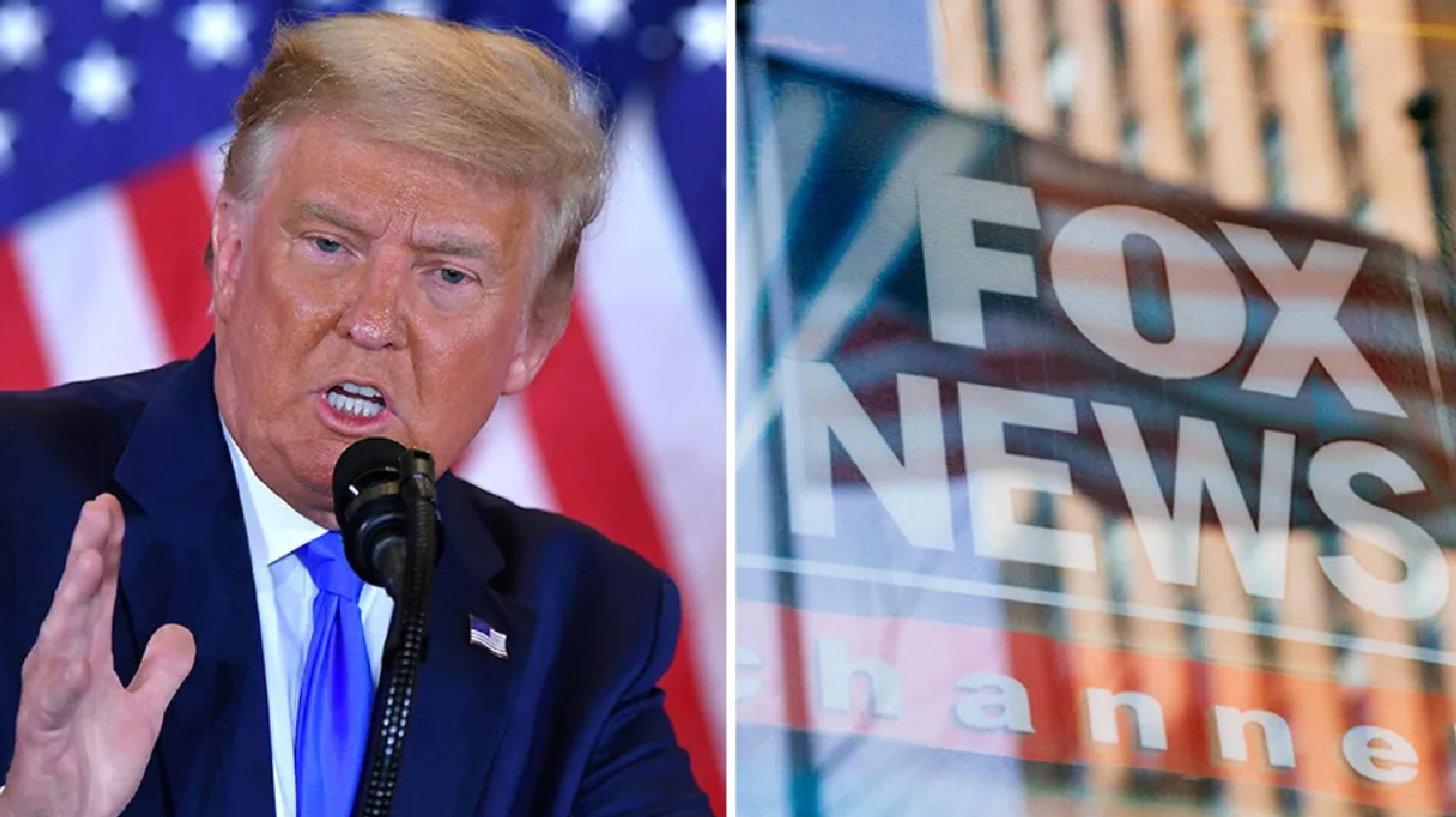
A growing divide within the conservative movement spilled into public view this weekend as Fox News host Mark Levin launched a blistering attack on President Donald Trump’s Iran strategy, accusing the administration of pressuring Israel while pursuing a diplomatic agreement designed to permanently prevent Iran from obtaining a nuclear weapon.
The dispute comes as the Trump administration continues negotiations with Tehran following a series of devastating military strikes that crippled Iran’s nuclear infrastructure, eliminated key regime leaders, and left the Islamic Republic in one of the weakest positions it has faced in decades.

President Trump and Vice President JD Vance have argued that the administration is negotiating from a position of overwhelming strength after demonstrating a willingness to use military force when necessary. Their goal, they say, is simple: ensure Iran never obtains a nuclear weapon while avoiding another endless war in the Middle East.
Levin, however, remains deeply skeptical.
During a fiery monologue that lasted more than 17 minutes on Saturday, the longtime conservative commentator accused members of the administration of unfairly targeting Israel while becoming too optimistic about Iran’s intentions.

“I want to say to people in and out of the administration: stop trashing, smearing, bullying the little state of Israel. Stop cozying up to and telling us that the enemy regime in Iran is now more rational, more moderate, and a regime that we can deal with,” Levin demanded. “When just a few months ago they slaughtered 50,000 people, they’re still hanging young people today and, if they had a nuclear missile today, they’d fire it into our country as sure as I’m alive.”
Levin also rejected any suggestion that Israel should allow outside governments to dictate its security decisions.
“I don’t know what’s going on, but if people think they can bully a little country, Israel — a people that have existed 4,000 years through the Babylonians and the Persians, through the Romans and the Third Reich — into surrendering their defense and their decision on how to secure their country, they get another thing coming,” Levin continued. “I think it’s outrageous.”
The criticism did not stop there.
Levin also used social media to question several administration policies, including reports surrounding a Boeing 747 gifted by Qatar and modified for use supporting presidential airlift operations.
“If it’s legal and other countries do it so be it. Do you think wealthy countries should be able to lavish gifts on our government?” Levin wrote.
His sharpest criticism, however, focused on the administration’s efforts to secure a broader peace agreement with Iran and its proxies.
“Item #1 in the MOU provides there’s an immediate and permanent end to the war and that includes Hezbollah in Lebanon. Iran is Hezbollah,” Levin posted. “What’s the enforcement mechanism? Nothing. Israel defends itself after constant attacks from Hezbollah and is admonished for it. Its interests are not aligned with ours, we’re told. It’s endangering the peace deal. This is beyond nuts.”
In another post, Levin argued that current ceasefire efforts were coming at Israel’s expense.
“Apparently as long as Israeli soldiers are killed the ceasefire is holding,” Levin claimed.
The administration has strongly rejected suggestions that it is abandoning Israel or weakening its support for America’s closest ally in the Middle East.
President Trump responded directly Sunday with a warning aimed squarely at Iran and its regional proxies.
“Iran must immediately stop their highly paid PROXIES in Lebanon from causing trouble. If they don’t, we’ll hit Iran very hard again, just like we did last week, only harder!!!” Trump posted on Truth Social.
For supporters of the administration, that message demonstrates exactly why they remain confident in Trump’s approach. They argue that no modern president has shown a greater willingness to confront Iran militarily while simultaneously seeking a diplomatic resolution that serves American interests.
Vice President JD Vance and Secretary of State Marco Rubio have both emphasized that any final agreement would require Iran to permanently abandon its nuclear ambitions, submit to extensive inspections, and comply with strict verification requirements before receiving any economic benefits.
Administration officials also note that no sanctions have been lifted, no frozen assets have been released, and no direct payments have been authorized.
Instead, they argue that Trump has successfully put Iran in a position where the regime must choose between compliance and continued isolation.
The disagreement highlights a broader debate that has been developing inside the Republican Party for years.
Traditional foreign-policy hawks often favor maintaining maximum military pressure and remain deeply skeptical of negotiations with hostile regimes.
Trump’s America First coalition generally supports overwhelming military strength but prefers leveraging that strength into favorable deals that avoid long-term military entanglements.
Supporters of the president argue that Trump’s strategy reflects the same formula that has defined much of his foreign policy: peace through strength.
Strike hard when necessary. Demonstrate unquestionable resolve. Negotiate from a position of power. And avoid the costly nation-building efforts and endless conflicts that frustrated many Americans for decades.
As negotiations continue, the debate between Levin and the Trump administration reflects a larger question facing conservatives: how best to secure American interests abroad while staying true to the America First principles that have reshaped the Republican Party.
For now, President Trump appears committed to proving that military strength and diplomacy are not opposing strategies—but complementary tools for achieving lasting peace and protecting America’s national security.

All Hell Breaks Loose In Senate After Wild Vote — It’s Shut Down!

Top Trump Admin And Wife Found Dead — Chilling Update Just Released

Mayor Mandami Enraged — NYPD Defies Him Over Insane New Order

Tucker Carlson Officially Makes Shock Announcement — He’s Out

Top Fox News Host Suffers Deranged Meltdown On LIVE TV — Doesn’t End Well…

It’s Over! The House Votes 396-13 — Trump Just Won!
Mayor Mandami Enraged — NYPD Defies Him Over Insane New Order
Top Trump Admin And Wife Found Dead — Chilling Update Just Released
All Hell Breaks Loose In Senate After Wild Vote — It’s Shut Down!
-
 Economy4 months ago
Vance Leaves Meeting, Looks Straight Into Camera, Announces Stunning Arrest
-
 Economy4 months ago
Adam Schiff Facing 30 Years In Prison After Bank Records Leak
-
 Economy4 months ago
Supreme Curt Sides With Trump — He Can Remove The All
-
 Economy4 months ago
All Hell Breaks Loose On Fox When Jesse Watters Asks Fetterman One Question
-

 Economy2 months ago
Prayers Pour In After Fox Host Dies: ‘Senseless Murder’
-
 Economy4 months ago
NBC Stops LIVE Broadcast — Breaks Big Trump News
-
 Economy4 months ago
Trump Pulls Off Miracle Of A Lifetime — It’s Permanently Open
-

 Culture2 months ago
Michelle Obama Drops Nasty Bomb About ‘Useless’ Daughter