
Politics
Leavitt calls on Congress to end Easter recess to work on DHS shutdown


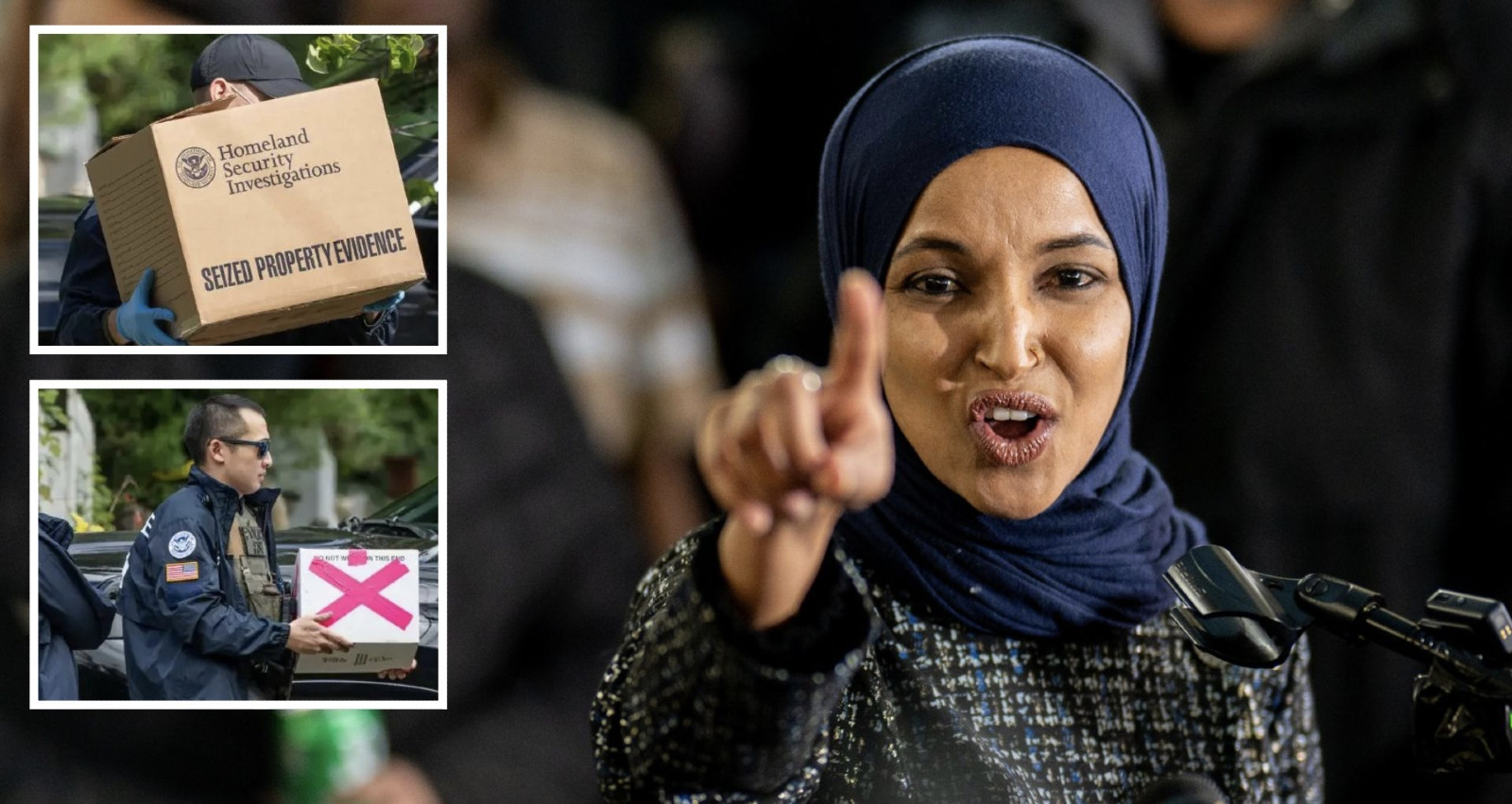
Rep. Ilhan Omar (D-Minn.) is pushing back against the Trump administration following reports that federal investigators searched her Washington-area residence Monday as part of a criminal inquiry involving her family’s immigration history.
The reported operation has intensified scrutiny of the Minnesota congresswoman and prompted allegations of political retaliation, with Omar accusing federal authorities of attempting to intimidate one of President Donald Trump’s most outspoken congressional critics.
“I will not be silenced,” Omar declared in a social media statement responding to the search.
“I’m ok,” she added before accusing the administration of using federal investigative powers against political opponents.
“Make no mistake: this is an attempt to target political enemies and weaponize federal law enforcement,” Omar wrote.
“For ten years, Trump has targeted me with baseless lies and smear campaigns,” she continued.
“This is just the latest escalation in his campaign of political intimidation.”
The accusations reflect Omar’s characterization of the investigation. They do not establish that Trump directed the search or that federal investigators acted for political reasons.
According to the supplied reporting, Homeland Security Investigations agents executed a judicially authorized search warrant at Omar’s Washington-area residence Monday morning.
Federal personnel were reportedly photographed outside the property carrying boxes identified as seized evidence.
The Justice Department reportedly confirmed that the search was connected to an ongoing federal criminal investigation, although officials did not publicly release the warrant affidavit or identify the documents agents were seeking.
No criminal charges against Omar were announced in connection with the reported search.
Fox News Digital reported that investigators were examining immigration documents associated with Omar’s late father, Nur Omar Mohamed, dating back to the congresswoman’s childhood.
CBS News separately reported that the inquiry involved possible false statements and immigration fraud concerning those records.
The allegations have not been proven, and the existence of a criminal investigation does not establish that Omar knowingly submitted false information or participated in any unlawful activity.
Omar was born in Somalia and entered the United States as a refugee before becoming an American citizen.
She was first elected to Congress in 2018 and represents Minnesota’s Fifth Congressional District, a heavily Democratic constituency that includes much of Minneapolis.
Throughout her congressional career, Omar has been a prominent progressive voice and frequent critic of Trump, particularly on immigration enforcement, foreign policy and national security.
Those longstanding political disagreements have added to the controversy surrounding the reported search.
Omar’s office issued a statement condemning the operation and rejecting suggestions that the congresswoman had engaged in wrongdoing.
“This raid by Trump’s DHS is an outrageous abuse of power and an unprecedented escalation,” her office declared.
Her representatives characterized the investigation as an attempt to punish political opposition, arguing that the administration was using federal law enforcement to target an elected member of Congress.
Trump, however, denied personally directing the search when questioned by reporters Monday.
“I think she’s a terrible person, but that’s really up to the DOJ,” the president said.
Trump also maintained that he had “nothing to do” with the operation.
The president’s denial leaves unresolved questions about the origins of the investigation, the evidence supporting the search warrant and the extent of any White House involvement.
Democratic congressional leaders criticized the operation, particularly its timing just weeks before the November elections.
House Minority Leader Hakeem Jeffries joined other Democrats in questioning the administration’s handling of an investigation involving a sitting member of Congress.
Their concerns focused partly on longstanding Justice Department practices intended to minimize the possibility that public investigative actions could improperly influence elections.
Federal prosecutors generally exercise heightened caution when considering overt investigative steps involving political candidates close to Election Day.
However, those practices do not categorically prohibit searches or other investigative activity during an election period.
A search warrant ordinarily requires a judge to determine that investigators have established probable cause to believe evidence of a crime will be found at the location identified.
That judicial authorization does not establish anyone’s guilt, but it represents a legal requirement investigators must satisfy before conducting the search.
Because the supporting affidavit has not been publicly disclosed in the supplied reporting, the specific evidence presented to the judge remains unknown.
Homeland Security Investigations, the investigative arm of U.S. Immigration and Customs Enforcement, handles a broad range of federal criminal matters, including immigration document fraud, identity-related offenses and financial crimes.
Its criminal investigative responsibilities are distinct from immigration enforcement activities primarily involving detention and removal.
The reported inquiry into Omar’s family history follows earlier public comments from senior administration figures.
White House border adviser Tom Homan had previously acknowledged that authorities were examining allegations involving Omar’s immigration records.
Homeland Security Secretary Markwayne Mullin also reportedly referred to an ongoing investigation before Monday’s operation.
Vice President JD Vance has publicly questioned aspects of Omar’s immigration history, although those questions do not establish criminal wrongdoing.
The involvement of multiple senior administration figures in publicly discussing the allegations has contributed to the political dispute surrounding the investigation.
For Omar and her supporters, the central concern is whether federal law enforcement is being used to pressure a political opponent.
For investigators, the relevant legal questions concern the accuracy of historical immigration records and whether any evidence supports a federal criminal offense.
Those issues must be evaluated separately.
The public statements of administration officials do not substitute for evidence of fraud, and Omar’s allegations of political retaliation do not independently establish investigative misconduct.
At present, the supplied reporting does not identify any criminal charges, disclose the search warrant affidavit or establish that Omar personally falsified immigration documents.
The search nevertheless represents a significant development in the reported investigation, bringing federal investigative activity directly to the residence of a sitting member of Congress.
Whether the inquiry results in charges, additional investigative steps or no prosecution will depend on evidence that has not yet been made public.
Omar, meanwhile, has made clear that she intends to challenge the allegations and continue speaking out against the administration.
Her declaration that she “will not be silenced” signals that the political dispute surrounding the investigation is unlikely to end with Monday’s reported search.
The next developments will be critical in determining whether the allegations lead to substantiated legal findings or remain unresolved claims at the center of a highly contentious political confrontation.
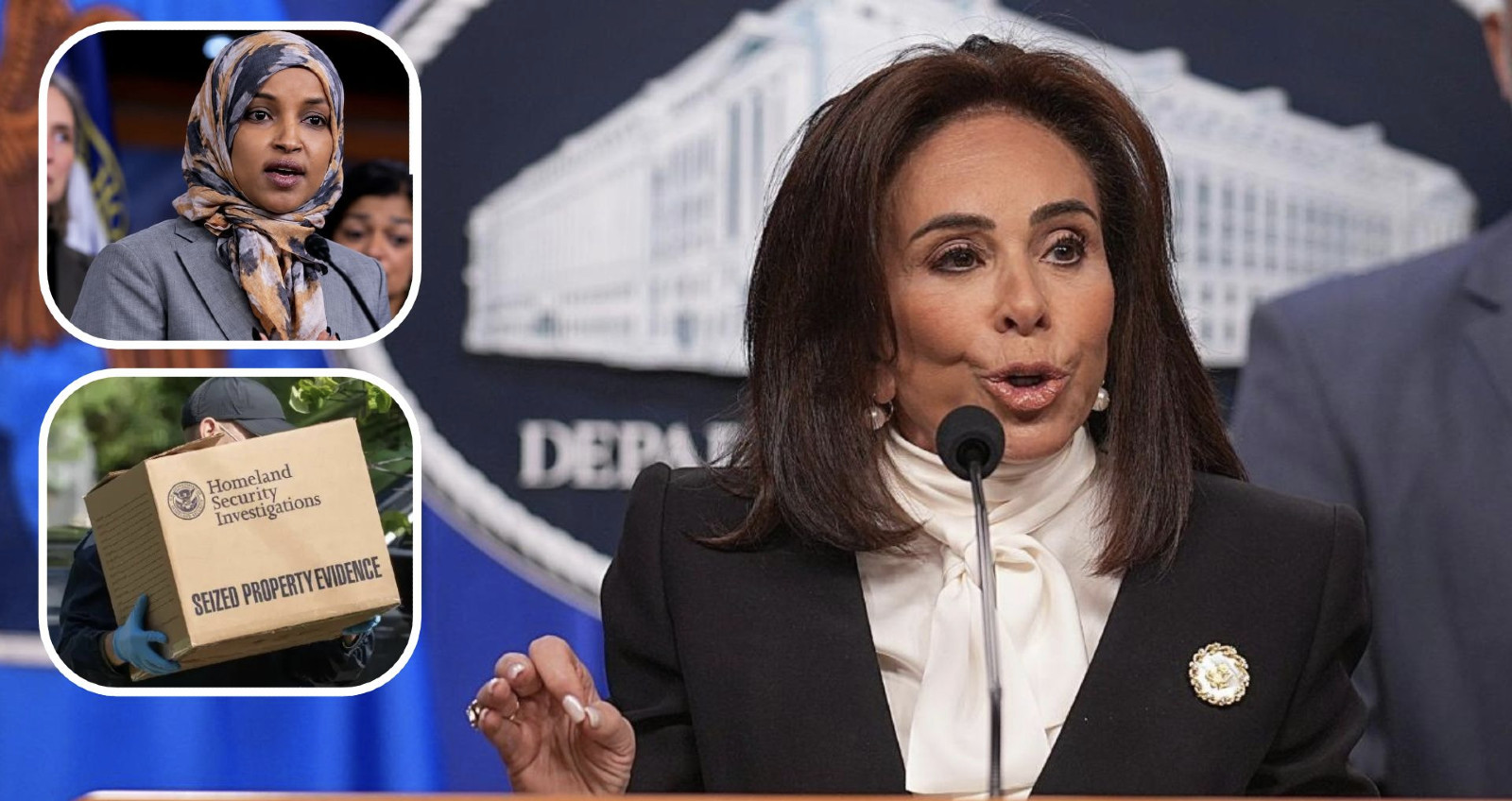
Rep. Ilhan Omar (D-Minn.) is facing additional federal scrutiny after U.S. Attorney Jeanine Pirro announced that her office is investigating the congresswoman’s financial disclosures, including questions surrounding millions of dollars in previously reported assets.
The announcement came Tuesday night during a Fox News appearance, one day after federal agents reportedly searched Omar’s Washington, D.C., residence as part of a separate investigation involving her family’s immigration history.
The two inquiries have drawn considerable attention, although authorities have not established that they are connected.
Pirro confirmed that federal prosecutors are examining Omar’s financial filings despite an earlier congressional watchdog recommendation to dismiss allegations concerning those disclosures.
“We’re looking at the facts,” Pirro said, adding that prosecutors would “follow them wherever they take us.”
The review centers on financial disclosures involving businesses connected to Omar’s husband, Tim Mynett.
According to the reporting, an earlier filing placed the couple’s reported assets within a range of approximately $6 million to $30 million.
Omar subsequently amended the disclosure to reflect substantially lower figures.
Her representatives attributed the discrepancy to accounting errors involving business liabilities that had not been properly reflected in the original paperwork.
The difference between the two sets of figures has prompted questions about how the disclosures were prepared and whether the initial valuations accurately represented the couple’s financial interests.
Congressional financial disclosure forms typically report assets within broad value ranges rather than providing precise valuations, making it difficult to determine an individual’s exact net worth from the filings alone.
The reported $6 million to $30 million range therefore should not be interpreted as a verified calculation of Omar’s personal wealth.
Nevertheless, the substantial difference between the original and amended disclosures is among the issues now reportedly receiving federal attention.
Pirro made clear that her office’s review is separate from the earlier congressional ethics process.
The Office of Congressional Conduct previously examined allegations involving Omar’s disclosures and recommended that the House Ethics Committee dismiss the matter after determining there were insufficient grounds to pursue it.
That recommendation represented a significant development in Omar’s favor.
However, as Pirro emphasized, a congressional watchdog’s recommendation does not prevent federal prosecutors from independently reviewing records to determine whether any federal laws were violated.
The standards, jurisdiction and procedures governing congressional ethics reviews differ from those applicable to criminal investigations.
At the same time, the existence of a federal review does not establish that Omar intentionally submitted inaccurate information or committed a criminal offense.
Pirro did not announce charges, identify a specific suspected crime or disclose evidence establishing that the congresswoman knowingly filed false financial information.
Omar’s office has maintained that the original discrepancies resulted from accounting mistakes involving the valuation of business interests and associated liabilities.
After Pirro’s remarks, Omar’s representatives directed Axios to reporting about the congressional watchdog’s recommendation, emphasizing that the earlier review had not supported pursuing the allegations.
The competing developments leave several questions unresolved.
Federal prosecutors may examine whether the original asset values were calculated correctly, whether liabilities were properly included and whether the amended filing adequately addressed any inaccuracies.
They may also review supporting business records and the circumstances under which the disclosures were prepared.
Whether that examination produces evidence of wrongdoing remains unknown.
The financial inquiry comes amid a separate controversy involving the reported search of Omar’s residence.
Federal agents reportedly executed a judicially authorized warrant at the property Monday morning as part of an investigation concerning immigration records connected to the congresswoman’s family.
That investigation has reportedly focused on historical immigration paperwork and possible false statements, although authorities have not publicly established criminal wrongdoing by Omar.
The financial disclosure review announced by Pirro concerns a different set of records and allegations.
Officials have not confirmed that the investigations are coordinated or that evidence from one prompted the other.
Omar has accused the Trump administration of using federal law enforcement to pursue political opponents.
Following the reported search, the Minnesota Democrat alleged that the administration was attempting to target its critics through federal investigative powers.
President Donald Trump, meanwhile, has repeatedly criticized Omar and publicly questioned her financial affairs.
Following Pirro’s television appearance, Trump suggested that Omar had benefited from fraud involving Minnesota, although the reported statements did not include evidence establishing that allegation.
The president’s accusations are not findings by federal investigators, just as Omar’s allegations of political targeting do not independently establish that the investigations are improper.
The timing has also attracted attention because the reported investigative activity is occurring just weeks before an election in which Omar is seeking another term in Congress.
Federal law enforcement agencies traditionally exercise particular caution when taking public investigative actions involving political candidates close to Election Day.
Such considerations do not prohibit legitimate investigations, but they place additional importance on ensuring that decisions are supported by evidence and applicable legal procedures rather than electoral considerations.
For prosecutors, the immediate issue is whether the financial records support Omar’s explanation for the amended disclosures or raise questions requiring further investigation.
For Omar, the earlier congressional watchdog recommendation provides a substantive response to allegations that her office says have already been examined.
For the public, the distinction between a review, an allegation and a proven violation remains essential.
Pirro has not provided a timetable for the investigation or identified the specific documents her office has obtained.
She also has not indicated whether prosecutors expect to bring charges.
The latest announcement therefore establishes that federal prosecutors are reviewing Omar’s financial disclosures, according to Pirro’s reported statements, but it does not establish the outcome of that review.
With questions continuing over the original multimillion-dollar asset figures, the subsequent amendments and the separate immigration-related inquiry, the Minnesota congresswoman remains at the center of several politically sensitive allegations.
The next significant development will depend on what the underlying financial records show and whether investigators identify evidence warranting additional legal action.
Until then, the discrepancy in the filings remains a subject of examination rather than proof of criminal misconduct.
After more than two centuries in American commerce, the penny is moving closer to becoming a thing of the past.
The U.S. House of Representatives has approved bipartisan legislation that would permanently end production of one-cent coins for everyday circulation and establish nationwide rules allowing businesses to round certain cash transactions to the nearest nickel.
The measure, known as the Common Cents Act, H.R. 10167, passed by voice vote under suspension of the rules, a procedure typically used for legislation with broad bipartisan support.
Because lawmakers did not conduct a recorded roll-call vote, individual representatives’ positions were not formally documented.
The legislation was introduced by House Republican Conference Chair Lisa McClain of Michigan and Democratic Rep. Robert Garcia of California.
If enacted, it would formally direct the Treasury Department to stop producing pennies for general circulation, while permitting the U.S. Mint to continue manufacturing limited quantities for collectors.
The legislation would codify a change that has already taken place.
On November 12, 2025, the U.S. Mint struck its final penny intended for general circulation, ending a 232-year production tradition dating back to the earliest years of the American republic.
The decision followed years of concerns about the rising expense of producing a coin worth only one cent.
According to the Mint, manufacturing and distributing each penny had reached approximately 3.69 cents, meaning the government was spending considerably more to produce the coin than its face value.
Ending circulating penny production was projected to save approximately $56 million annually.
“Today the Mint celebrates 232 years of penny manufacturing,” Acting Mint Director Kristie McNally said when production concluded.
“While general production concludes today, the penny’s legacy lives on. As its usage in commerce continues to evolve, its significance in America’s story will endure.”
Although production has ended, Americans will not be required to surrender the pennies already sitting in their wallets, jars or coin collections.
Under the proposed legislation, existing pennies would remain legal tender for debts, taxes and other payments.
The Mint estimates that approximately 300 billion pennies remain in circulation, meaning the familiar copper-colored coins could continue appearing in everyday transactions for years.
One of the most significant provisions of the Common Cents Act addresses how retailers would handle cash purchases as pennies become increasingly difficult to obtain.
The legislation would allow businesses to round the final cash transaction total to the nearest five cents when exact change cannot be provided.
Under the proposed system, amounts ending in 1, 2, 6 or 7 cents would be rounded down to the nearest nickel.
Totals ending in 3, 4, 8 or 9 cents would be rounded up.
Transactions already ending in zero or five cents would remain unchanged.
For example, a cash purchase totaling $10.42 could be rounded down to $10.40, while a purchase totaling $10.43 could be rounded up to $10.45.
The rounding would apply to the final transaction amount, not individually to every item purchased.
Importantly, the proposed rules would apply only to cash transactions.
Consumers paying with credit cards, debit cards, checks, electronic transfers, gift cards or similar methods would continue paying the exact amount owed, down to the cent.
Businesses would also retain the option of providing exact change when they have sufficient pennies available.
The legislation would not require every cash purchase to be rounded automatically.
Supporters view the measure as a practical response to the declining availability of pennies and the increasing cost of manufacturing them.
The proposal also includes provisions intended to reduce the expense of producing another familiar American coin: the nickel.
Currently, the five-cent coin consists of 75 percent copper and 25 percent nickel.
The bill would authorize the Treasury Department to explore an alternative composition using a zinc inner layer and nickel outer layer.
Any change would depend on whether the new design could reduce manufacturing costs without creating significant problems for vending machines, coin-counting equipment and other devices that process currency.
The legislation would also require the Federal Reserve to develop a strategy for managing the enormous existing supply of pennies.
Federal officials would be tasked with evaluating the potential consequences of rounding practices, particularly for lower-income Americans, older consumers and individuals who rely heavily on cash because they lack access to traditional banking services.
Those considerations could become increasingly important as businesses transition away from handling one-cent coins.
The legislation follows months of congressional activity aimed at formally addressing the penny’s future.
The House previously approved an earlier version of the Common Cents Act in July, while the Senate passed its own version, S. 1525, by unanimous consent on August 7.
The latest House action involved the newer H.R. 10167, meaning the measure has not yet completed the legislative process.
Both chambers must approve identical legislation before it can be presented to President Donald Trump for his signature.
Until that happens, the proposed nationwide rounding framework is not yet federal law.
Regardless of the remaining legislative steps, the practical end of new circulating penny production has already occurred.
The change marks the conclusion of a longstanding American manufacturing tradition and reflects the growing financial pressures associated with producing low-denomination coins.
For taxpayers, the government projects millions of dollars in annual savings.
For businesses, the transition could simplify cash handling while requiring adjustments to how certain purchases are totaled.
And for consumers, the most noticeable change may eventually be that cash purchases no longer require counting out individual pennies.
The coins themselves will remain valid, and collectors will still have opportunities to obtain specially produced examples.
But after 232 years, the penny’s role in everyday American commerce is entering a new era.
The House has now taken another step toward making that transition permanent, leaving the Senate and President Trump to determine whether the proposed rules become federal law.

HAPPENING NOW: Active Terror Threat Underway At Congressional Offices

HUGE Update On Trump’s New Press Sec On 2nd Day On The Job

‘I Will Go!’ — Ilhan Omar Drops Shock Announcement

Person In Trump’s Inner-Circle Stabs Him In Back – Busted With Family ‘Burn Book’

Judge Jeanine Found The Smoking Gun Ilhan Omar Brought In

Speaker Johnson Pulls It Off! This Changes Everything…

Obama Calls It QUITS After Wild Video Goes Viral

Joe Biden’s Daughter Just Dropped Massive Public Bombshell On Her Dad

Removed From the Country — Ilhan Omar Hit With Horrid News

Get Ready — Mike Pence Makes Stunning 2028 Announcement

Jeanine Pirro Makes Massive Announcement – WH In Total Shock

JUST IN: ‘Squad’ Congressional Candidate Arrested
-
 Economy6 months ago
Vance Leaves Meeting, Looks Straight Into Camera, Announces Stunning Arrest
-
 Economy6 months ago
Adam Schiff Facing 30 Years In Prison After Bank Records Leak
-
 Economy6 months ago
Supreme Curt Sides With Trump — He Can Remove The All
-
 Culture4 months ago
Michelle Obama Drops Nasty Bomb About ‘Useless’ Daughter
-
 Economy6 months ago
All Hell Breaks Loose On Fox When Jesse Watters Asks Fetterman One Question
-

 Economy4 months ago
Prayers Pour In After Fox Host Dies: ‘Senseless Murder’
-

 Latest4 months ago
Fox News Stuns With Announcement About 5 Fired Hosts
-

 Border & Security2 months ago
Top Trump Admin And Wife Found Dead — Chilling Update Just Released