
Border & Security
Navy SEALS’ Risky Covert Mission In Iran Revealed

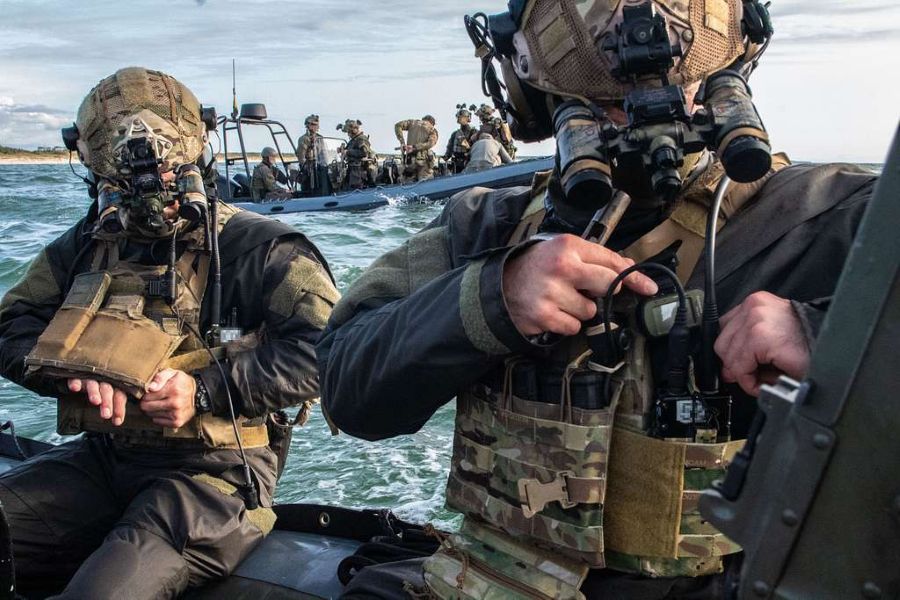
Under the cover of darkness, some of America’s most elite warriors spent four dangerous months hunting Iranian sea mines in one of the most strategically critical waterways on Earth.
The extraordinary operation in the Strait of Hormuz was far larger — and far more dangerous — than previously known.
U.S. forces reportedly deployed Navy SEAL divers, underwater drones, robotic vessels and sophisticated sonar systems in a painstaking effort to find and destroy mines allegedly planted by Iran and keep a critical artery of global commerce from being choked off.
For the Americans sent into the water, the stakes could hardly have been higher.
Once a mine was located, Navy divers could be forced to physically approach the explosive and attach a charge to destroy it.
“That is usually followed up by a navy diver who’s got to get in the water and approach the mine, and then put a charge on it and destroy it,” retired U.S. Navy Capt. Bill Hamblet told the Financial Times.
One mistake could have been catastrophic.
## A High-Stakes Mission Hidden Beneath the Surface
U.S. Central Command announced in April that American forces had begun setting the stage for mine-clearing operations in the Strait, including deploying underwater drones.
But what followed was an extensive months-long operation involving some of the U.S. military’s most advanced technology — and personnel willing to enter the water when machines alone couldn’t finish the job.
The Navy deployed the Common Uncrewed Surface Vessel, a robotic boat capable of towing sophisticated underwater equipment such as the MK 18 Mod 2 Kingfish.
The Kingfish uses sonar to scour the seafloor for potential explosives, giving American forces the ability to hunt for mines without immediately sending sailors into danger.
Once a threat was identified, unmanned systems could destroy some mines.
Others required the human element.
Despite the extraordinary risks involved, no U.S. casualties have been reported in connection with the operation.
## Roughly 80 Mines Threatened One of the World’s Most Important Waterways
The scale of the threat was enormous.
The International Maritime Organization estimated earlier this year that roughly **80 mines** had been deployed in and around the Strait of Hormuz.
That number matters because the Strait isn’t simply another shipping route.
It is one of the most important maritime chokepoints on the planet, carrying a substantial share of the world’s oil.
Disrupting it doesn’t just threaten ships.
It threatens energy markets and international commerce far beyond the Middle East.
President Donald Trump announced in August that mines had been removed from international shipping lanes through the Strait. U.S. Central Command later confirmed American forces had cleared the lanes and were protecting commercial vessels traveling through the region.
But clearing the mines did not necessarily end the threat.
## Iran Accused of Trying to Mine the Strait Again
Iran has continued claiming mines remain active in parts of the Strait, while the United States has accused Tehran of attempting to rebuild its ability to threaten shipping through the strategic waterway.
Commercial shipping operators remain wary, particularly outside areas near the Omani coast where American forces have been escorting vessels.
And one mine warfare expert issued an ominous warning about what could be happening now.
“It’s hard to know what to believe,” Ethan Connell, assistant director of Taiwan Security Monitor and an expert on mines, told the FT. “Iran is certainly trying to re-mine.”
If true, it means American forces could be facing a brutal cycle: find the mines, destroy them — then hunt for newly deployed explosives all over again.
The continuing danger posed by mines, missiles and drones has already taken a toll.
Visible commercial traffic through the region remains well below the levels recorded before the conflict intensified.
Some ships have reportedly resorted to moving through the Strait at night with their tracking equipment switched off while under U.S. military protection.
## The Battle to Keep the Strait Open Isn’t Over
The four-month operation reveals just how far the United States has been willing to go to prevent Iran from using mines to squeeze one of the world’s most vital shipping corridors.
Navy SEAL divers entered dangerous waters.
Robotic vessels hunted beneath the surface.
Underwater drones scanned the seafloor.
And American forces spent months methodically clearing explosives from international shipping lanes.
Yet perhaps the most troubling part of the operation is what comes next.
Sea mines can potentially be deployed far faster than they can safely be found and destroyed.
That means even after four months of dangerous clearance work, U.S. forces remain locked in an ongoing contest to prevent the Strait of Hormuz from once again becoming a minefield — and to keep one of the world’s most important economic lifelines open.


The Trump administration is considering a dramatic new approach to securing the southern border, with the Pentagon reportedly authorizing the Department of Homeland Security to test a powerful military-grade heat ray designed to force people to retreat without firing a single bullet.
The technology, known as the Active Denial System, uses an invisible beam of electromagnetic energy to create an intense burning sensation on exposed skin, compelling individuals to move away from the targeted area.
According to CNN, Defense Secretary Pete Hegseth approved the testing arrangement in a memorandum signed last month, allowing DHS to evaluate whether the controversial technology could be used in future operations along the U.S.-Mexico border.
The system reportedly has a range exceeding half a mile, potentially giving federal authorities a powerful long-distance tool for dispersing crowds and controlling access to restricted areas.
Military officials have compared the sensation produced by the device to opening an extremely hot oven, describing a “tingling effect” that can last between 10 and 15 minutes.
The technology reportedly creates “an instinctive and irresistible urge to run from the effect.”
Unlike traditional firearms, the Active Denial System is designed to repel individuals without using bullets, explosives or conventional projectiles.
But the prospect of deploying the technology against people attempting to cross the southern border has raised serious questions about safety, legal authority and the possibility of unintended injuries.
Under the reported agreement, DHS is authorized to temporarily borrow one Active Denial System for a seven-month testing period beginning in September.
The Pentagon will not operate the equipment during that period.
The memorandum specifically states that the system “shall not be operated by DoW (Department of War) personnel.”
Instead, DHS will assume responsibility for “system employment, use and development of tactics, techniques and procedures.”
The arrangement gives federal immigration authorities an opportunity to examine the technology’s capabilities and determine whether it could serve a practical role in border security operations.
If the testing produces favorable results, officials could potentially request additional equipment, although no broader deployment has been authorized.
Customs and Border Protection acknowledged its ongoing interest in evaluating new technology that could strengthen federal enforcement capabilities.
“CBP is continually evaluating new technologies, especially those that enhance operational effectiveness and strengthen mission capabilities,” an agency spokesperson told CNN.
The Pentagon referred questions about the arrangement to DHS.
Although the Active Denial System has existed for years, using it along the southern border would represent a significant departure from conventional immigration enforcement tactics.
The military previously transported the technology to Afghanistan but ultimately declined to use it during active combat operations.
Officials also explored potential applications at overseas detention facilities before abandoning those proposals.
Federal border authorities have considered similar uses for the system in the past, particularly in areas where large numbers of migrants were attempting unauthorized crossings.
One earlier evaluation involved the El Centro sector along the California-Mexico border, where officials examined whether the heat ray could discourage crossings near waterways.
Rodney Scott, who now serves as CBP commissioner, oversaw the sector during that previous review.
But the proposal encountered concerns about whether forcing migrants to retreat could create dangerous situations, particularly near rivers and other hazardous terrain.
“Even if they’re chasing people back to the river, you don’t want them to go in and drown,” a former CBP official told CNN.
“For the cost, for the training and for the policies you’re going to create, is the juice worth the squeeze?”
The technology also sparked debate during Trump’s first administration.
In 2018, federal officials reportedly considered deploying the system against groups of migrants approaching the border before then-Homeland Security Secretary Kirstjen Nielsen rejected the proposal.
“The issue was treating immigrants and citizens like enemy combatants,” a former DHS official told CNN.
“Thematically, inhumane treatments typically get rejected.”
Those earlier objections could resurface as the administration evaluates whether the system can be operated safely and legally in an immigration enforcement setting.
One potential complication involves the possibility of the beam reaching individuals standing on Mexican territory, which could trigger diplomatic disputes and questions about federal authority beyond the U.S. border.
Other concerns involve accidental exposure, the risk of injuries and whether the technology could cause people to flee into dangerous locations.
Some Border Patrol personnel have also questioned whether the system is necessary, particularly amid reports of declining illegal border crossings and increased federal staffing.
The financial costs of acquiring, maintaining and operating the equipment could become another factor in determining whether DHS ultimately pursues deployment.
Still, the Pentagon’s reported authorization represents a significant development in the administration’s examination of advanced border enforcement technology.
The Active Denial System would give authorities a fundamentally different crowd-control capability from traditional physical barriers, patrol vehicles and conventional enforcement equipment.
Whether that capability would be effective, proportionate or legally appropriate in civilian border operations remains unresolved.
For now, DHS has permission to test the system and develop potential operating procedures, but officials have not announced plans to deploy the heat ray against migrants at the southern border.
Any decision to move beyond testing would require further consideration of safety, operational effectiveness and legal restrictions governing the use of force.
The immediate development is significant: Federal immigration authorities have reportedly received Pentagon approval to evaluate a military-grade directed-energy weapon for possible border operations, even as major questions remain about how—and whether—it could be used.
A Department of Energy electrical engineer has been arrested on a stunning federal terrorism charge after investigators accused him of attempting to help the Iran-backed Houthis with technical expertise, drone components and materials associated with the production of explosives.
Ashton Hamed Ellaboudy, 51, of Richland, Washington, was arrested Thursday and charged with attempting to provide material support or resources to a designated foreign terrorist organization.
Federal prosecutors allege Ellaboudy was employed by the Department of Energy while using his specialized electrical engineering knowledge in an effort to assist the Houthis.
The allegations immediately drew a blistering response from the Justice Department.
“As alleged, a U.S. government employee traveled overseas and used his specialized expertise in an attempt to aid the Houthis, a designated Foreign Terrorist Organization backed by Iran,” said Assistant Attorney General for National Security John A. Eisenberg. “Additionally, Ellaboudy acquired materials for the construction of explosive material and drones capable of delivering these explosives. These allegations are so deeply disturbing that they almost defy imagination.”
According to the criminal complaint, the FBI’s investigation began after authorities learned Ellaboudy had allegedly purchased precursor chemicals, components and other materials commonly associated with homemade explosive devices.
Investigators also discovered purchases of components used to build drones and remotely operated aerial systems, prosecutors said.
But the allegations extend far beyond purchases made inside the United States.
Federal authorities say Ellaboudy traveled from Washington state to Oman in September 2025 before crossing into Yemen using an official passport previously issued to him while he worked for the U.S. Army Corps of Engineers.
According to a release from the U.S. Department of Justice, a 51 year old former employee of the Department of Energy, Ashton Hamed Ellaboudy, was arrested and charged with attempting to provide material support to the Yemeni Houthis, who are a designated terrorist organization.… pic.twitter.com/lhySGgETbV
— OSINTdefender (@sentdefender) October 1, 2026
According to the FBI, Ellaboudy intended to reach Sanaa, Yemen’s Houthi-controlled capital.
He ultimately failed to make it there.
When Ellaboudy returned to the United States, prosecutors allege he told Customs and Border Protection officers that his overseas trip had been official government business.
Investigators say that story didn’t hold up.
Ellaboudy’s Department of Energy supervisor later told authorities that he had no authorized government travel to the region and had not been assigned to the missile inspection mission Ellaboudy allegedly described, according to court records.
Federal investigators further allege Ellaboudy admitted to FBI informants that he had been smuggled into and out of Yemen and hoped to establish high-level connections inside the country.
The investigation then took another turn.
Ellaboudy began communicating with an FBI confidential source who purported to be working for a Houthi “Colonel,” according to prosecutors.
Authorities allege Ellaboudy subsequently put his engineering expertise to work.
He allegedly helped test and modify solar power generators and communications equipment intended for a mobile communications center.
Prosecutors say he also supplied diagrams, technical guidance and research involving equipment that could potentially enhance Houthi communications capabilities.
Investigators have also scrutinized Ellaboudy’s previous acquisition and handling of chemicals.
The Justice Department said authorities learned that in 2024 Ellaboudy took sick leave from his government position after reporting exposure to highly concentrated nitric acid.
Nitric acid has legitimate industrial and scientific applications but can also be used in producing certain explosive materials.
Taken together, federal prosecutors allege the engineer’s activities amounted to an attempt to provide material support to the Houthis.
The Houthis, formally known as Ansar Allah, control significant portions of Yemen and have received support from Iran. The United States has designated the organization as a foreign terrorist organization.
Ellaboudy now faces up to 20 years in federal prison if convicted.
The case puts a particularly striking element at the center of the government’s allegations: prosecutors aren’t accusing an ordinary private citizen of simply attempting to make contact with a foreign terrorist organization.
They allege a U.S. government engineer attempted to use specialized technical expertise—and acquire materials involving drones and explosives—to help one.
Ellaboudy has been charged, not convicted, and is presumed innocent unless and until proven guilty in court.
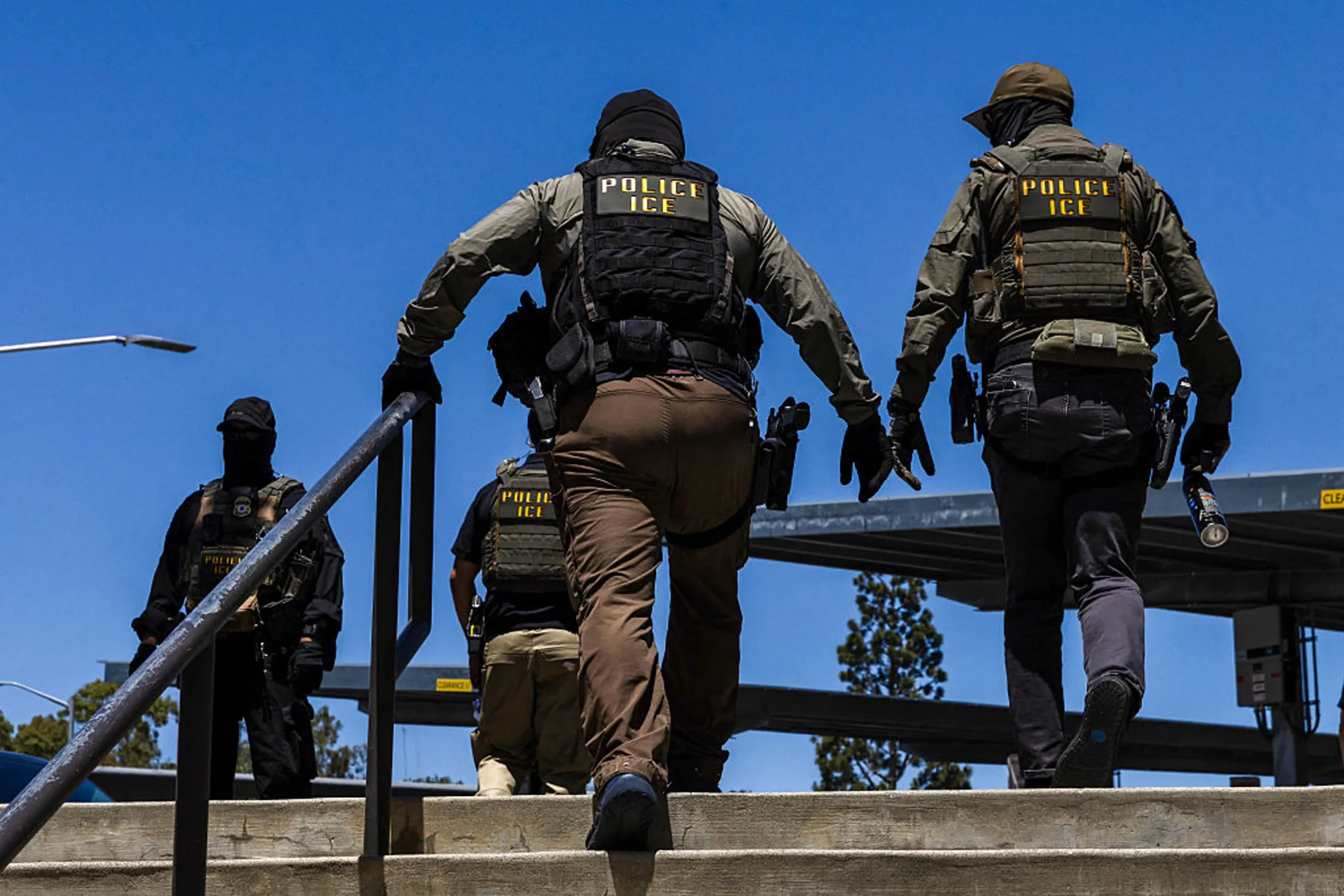
Federal immigration authorities arrested a staffer for a Democratic California lawmaker during a targeted enforcement operation at a Las Vegas airport, setting off a clash between the Department of Homeland Security and the state legislator who employs him.
Ho-Yin Mo, a field representative for Democratic California Assemblywoman Catherine Stefani, was taken into custody at Harry Reid International Airport on September 17.
Mo, a Hong Kong native and former television news anchor, is now facing removal proceedings while Stefani is publicly demanding his release.
According to the Department of Homeland Security, Mo originally entered the United States legally in 2020 but remained beyond the period he was authorized to stay.
“On January 13, 2020, Mo lawfully entered the U.S. on a temporary basis but illegally overstayed his welcome by failing to depart by May 15, 2020,” a DHS spokesperson said.
The department also directly addressed questions surrounding Mo’s ability to legally work in the United States.
“Work authorization or a pending application do NOT confer legal status in the United States.”
DHS said Mo’s arrest was part of a targeted immigration-enforcement operation at the Las Vegas airport.
The department tied the arrest to a broader Trump administration crackdown on domestic air travel by people it says lack lawful immigration status.
“DHS reversed the horrendous Biden-era policy that allowed aliens in our country illegally to jet around our country,” the department said.
“Under President Trump, DHS will no longer tolerate this. This administration is working diligently to ensure that aliens in our country illegally can no longer fly unless it is out of our country to self-deport.”
But Stefani is pushing back against the federal government’s characterization of her staffer’s situation.
“My message today is simple: I am respectfully calling for Ho Yin Mo’s release as soon as possible,” Stefani said following his detention.
“Ho Yin is a selfless public servant and a valued, legal employee of the California State Legislature serving our San Francisco and Bay Area communities.”
The competing statements highlight an important distinction in the case: Stefani says Mo is legally authorized to work for the California Legislature, while DHS says that employment authorization does not by itself establish lawful immigration status.
Mo’s detention has attracted additional attention because he isn’t an obscure political operative.
Before entering California politics, he was a familiar face to some Bay Area viewers as an anchor and reporter for KTSF Channel 26, a Chinese-language television station.
He later moved into Democratic political organizing.
In 2024, Mo worked as an outreach organizer focused on Asian American and Pacific Islander communities for then-San Francisco Mayor London Breed’s unsuccessful reelection campaign.
His profile apparently made him an attractive political hire.
“When we learned that Mo was available, we immediately saw an opportunity to bring him on board,” Breed spokesman Joe Arellano said at the time. “His visibility through KTSF connects with a broad audience, and his professional background and experience made him a strong fit.”
Mo joined Stefani’s staff in January 2025 as a field representative.
Stefani represents California’s 19th Assembly District, encompassing western San Francisco and northern San Mateo County. Before entering the state Assembly in December 2024, the Democrat served on the San Francisco Board of Supervisors.
Stefani has praised Mo’s work connecting her office with Chinese-American constituents and providing assistance with government services.
“And his work goes far beyond presence. Ho-Yin helps people access affordable healthcare coverage, childcare, and food support. Our whole community eagerly awaits Ho-Yin’s return to his home and his job, where he is loved and adored.”
Federal immigration authorities, however, have taken a different position on the underlying immigration question.
DHS says Mo’s authorized temporary stay expired in May 2020 and maintains that neither a work permit nor a pending immigration application independently gives someone lawful immigration status.
Mo was being held at an immigration detention facility in Nevada while facing removal proceedings that could ultimately result in his deportation to Hong Kong.
His detention also comes as the Trump administration expands immigration-enforcement operations at American airports.
The administration has increasingly targeted visa overstays and other people DHS considers unlawfully present, including some individuals who possess federal work authorization or have pending immigration cases.
That enforcement strategy has generated fierce opposition from immigration advocates and Democratic officials, who argue that people with active immigration cases and work permits should not be swept into detention while those proceedings remain unresolved.
The administration maintains that a pending application or authorization to work does not prevent immigration authorities from enforcing existing removal laws.
Mo’s case now puts that dispute directly inside a Democratic California lawmaker’s office.
A former television journalist who went on to work for two prominent San Francisco Democrats is sitting in federal immigration custody.
His boss says he is a valued employee who should be released.
DHS says he remained in the United States after his authorized stay expired.
And unless his immigration proceedings change that situation, Mo faces the possibility of being removed to Hong Kong.

NEW: Trump Vows To Prosecute His Own STAFF!

Trump Just Activated ‘Level 3’ — It’s Serious

Powerful Dem Senator Arrested 12 Days Before Midterms

Ilhan Omar Gives Jaw-Dropping Answer When Asked If She Married Her Brother

Man Arrested For ISIS-Linked Assassination Plot Targeting GOP Congressman

JUST IN: Sarah Palin Makes Heartbreaking Announcement

Charlie Kirk’s Mother Breaks Her Silence After Erika Kirk’s Public Statement

National Emergency Declared — Trump Called In

Michelle Obama Public Disaster — Photos Explode Across D.C.

Feds Raid Ilhan Omar’s Home — Make Horrifying Discovery

ALERT: Trump Set To Make ‘Special Announcement’ From Oval Office

Fireworks Erupt On Capitol Hill After 52-45 Vote For Trump!
-

 Economy6 months ago
Vance Leaves Meeting, Looks Straight Into Camera, Announces Stunning Arrest
-
 Economy6 months ago
Adam Schiff Facing 30 Years In Prison After Bank Records Leak
-

 Culture4 months ago
Michelle Obama Drops Nasty Bomb About ‘Useless’ Daughter
-
 Economy6 months ago
Supreme Curt Sides With Trump — He Can Remove The All
-

 Economy7 months ago
All Hell Breaks Loose On Fox When Jesse Watters Asks Fetterman One Question
-
 Economy5 months ago
Prayers Pour In After Fox Host Dies: ‘Senseless Murder’
-

 Border & Security3 months ago
Top Trump Admin And Wife Found Dead — Chilling Update Just Released
-

 Latest4 months ago
Fox News Stuns With Announcement About 5 Fired Hosts