
Latest
Newsom Reveals Possible 2028 VP And It’s Absolutely Terrifying


Hunter Biden has once again found himself in the political spotlight after suggesting he would be open to serving as vice president on a presidential ticket headed by California Gov. Gavin Newsom, adding an unexpected twist to growing speculation about the Democratic Party’s future after the Biden era.
According to remarks highlighted by WABC, Hunter Biden indicated that while he has no interest in leading a national ticket himself, he would be willing to join one as a running mate if Newsom were at the top of the ballot.
The comment immediately generated discussion across political circles, social media, and cable news, largely because Hunter Biden remains one of the most controversial and polarizing figures associated with Democratic politics.
At this point, there is no indication that Hunter Biden is organizing a political campaign or taking concrete steps toward seeking elected office. Most political observers view the statement as more provocative than practical, especially given the intense scrutiny that has followed him for years.
Nevertheless, the remark arrives at a time when Democrats continue debating who will emerge as the party’s standard-bearer heading into the 2028 presidential election.
Among the names most frequently mentioned is California Gov. Gavin Newsom, who has steadily built a national profile through appearances on cable news, public debates with Republican governors, and high-profile efforts to promote California’s policies on issues ranging from climate change to healthcare.
Despite his national visibility, Newsom’s path to a potential White House bid remains uncertain.
Recent polling suggests that while some Democratic voters are enthusiastic about the possibility of a Newsom presidential campaign, support is far from universal—even within his home state.
A statewide survey conducted last year found that a majority of California voters, 52 percent, did not want Newsom to seek the presidency. While his approval ratings as governor remain positive overall, many voters appear more comfortable with him continuing to lead California than launching a national campaign.
The results highlight one of the challenges Newsom could face if he ultimately decides to run: translating California success into nationwide appeal.
National elections require candidates to connect with voters across diverse regions, economic backgrounds, and political viewpoints. While Newsom remains popular among many Democrats, Republicans have frequently pointed to California’s struggles with housing affordability, homelessness, taxes, and cost-of-living concerns as potential vulnerabilities.
The same survey found that Californians overwhelmingly described the state’s cost of living as difficult or unmanageable. Concerns about housing costs, utility bills, taxes, and everyday expenses crossed party lines and income levels.
Even many higher-income residents reported feeling financial pressure amid rising living costs.
At the same time, voters generally viewed California favorably when it came to technology, innovation, and cultural influence. More than half also expressed confidence in the state’s environmental policies, illustrating the mixed picture facing any California politician seeking national office.
The survey also provided insight into the broader Democratic field.
Former Vice President Kamala Harris generated significantly less enthusiasm among California voters than Newsom. Fewer than one-third of voters statewide—and less than half of Democrats—said they would like to see Harris pursue another White House campaign.
Independent voters appeared skeptical of both potential candidates, though polling suggested they were somewhat more receptive to a Newsom candidacy than a Harris comeback.
Meanwhile, California’s political landscape continues to evolve ahead of the 2026 gubernatorial election. Voters are already beginning to evaluate potential successors to Newsom, though many remain unfamiliar with several candidates currently exploring runs.
Recent primary results saw Democrat Xavier Becerra and Republican Steve Hilton emerge as the top two candidates, setting up a closely watched general election contest later this year.
As for Hunter Biden, his comments are unlikely to reshape the 2028 race anytime soon. However, they have succeeded in drawing attention to the larger conversation already underway inside the Democratic Party: who will lead the party after President Joe Biden, what direction Democrats will take, and whether figures like Gavin Newsom can successfully transition from state leadership to the national stage.
With more than two years remaining before the first votes of the 2028 presidential cycle are cast, much can change. But Hunter Biden’s unexpected remarks have ensured that speculation about the Democratic Party’s future—and Gavin Newsom’s potential role in it—will continue generating headlines.
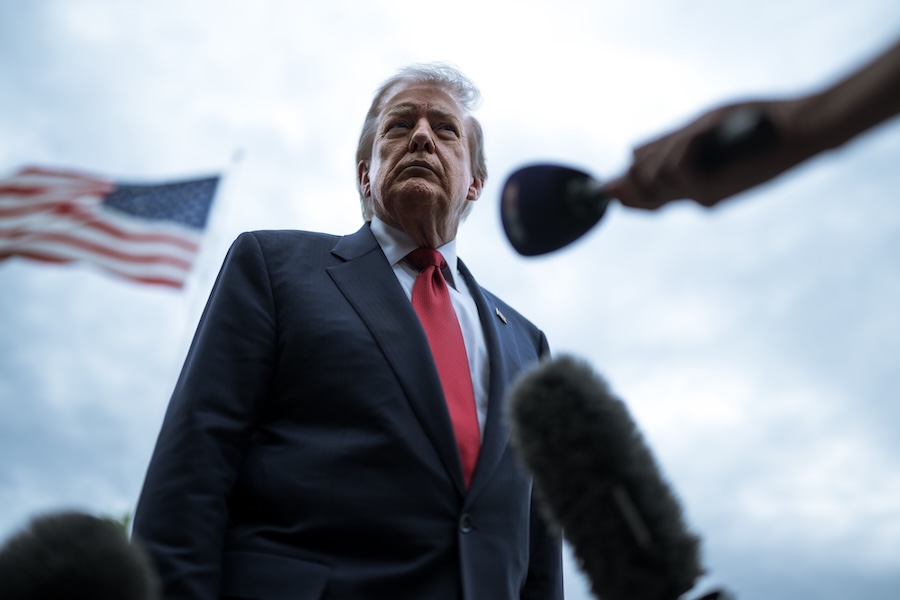
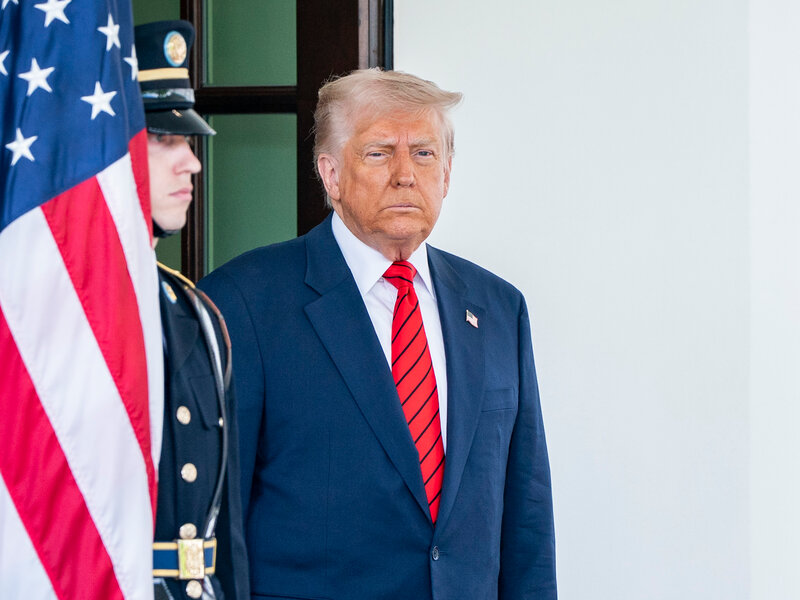
President Donald Trump delivered a pointed warning to members of his own administration Thursday, declaring that anyone caught engaging in dishonest or corrupt conduct should face prosecution — even if that person is a longtime political ally.
The president’s remarks came as questions intensified over a reported Justice Department investigation involving Corey Lewandowski, Trump’s former campaign manager and a longtime Republican political operative who previously held an influential advisory position at the Department of Homeland Security.
Speaking to reporters at the White House, Trump acknowledged hearing about the allegations surrounding Lewandowski but insisted he did not know the details.
What he made clear, however, was that personal loyalty would not shield administration officials from prosecution if wrongdoing were established.
“I heard something about it, but I don’t know exactly what it is. All I know is I want my people to be honest, and if they’re not going to be honest, they have to be prosecuted,” Trump said.
“I view it as if people are not honest, they’re stealing from me as president, they’re stealing from me. So I want my people to be honest, and if they’re not honest, I’ll have my DOJ go and do whatever they have to do.”
The remarks followed reports that federal prosecutors are reviewing allegations that Lewandowski may have improperly used his position at Homeland Security to pursue personal financial benefits.
According to The Wall Street Journal, the Justice Department received a criminal referral from the DHS inspector general following an examination of Lewandowski’s involvement in government contracting decisions.
Investigators are reportedly examining whether Lewandowski attempted to profit from his government connections, including through relationships with federal contractors and foreign officials.
The allegations have not resulted in publicly announced criminal charges, and Lewandowski has denied wrongdoing.
Nevertheless, the reported investigation has renewed scrutiny of the unusual influence Lewandowski exercised inside one of the federal government’s largest departments.
Lewandowski served as a special government employee under former Homeland Security Secretary Kristi Noem.
Although his advisory position was unpaid, he reportedly played a substantial role in departmental operations and decisions involving federal spending.
Questions about the extent of that authority became a source of controversy earlier this year.
In March, ProPublica reported that internal DHS records showed Lewandowski approving government contracts despite Noem previously telling lawmakers that he did not possess such authority.
Those revelations intensified congressional scrutiny of the department and raised questions about the relationship between Lewandowski’s advisory responsibilities and government contracting decisions.
The controversy unfolded alongside broader concerns surrounding Noem’s leadership, including scrutiny of a $220 million advertising campaign and other departmental expenditures.
Trump ultimately removed Noem from her position in March, and Lewandowski departed the department around the same time.
The reported criminal referral now places additional attention on Lewandowski’s activities during his tenure at DHS.
Federal investigators are reportedly examining whether his involvement in contracting decisions crossed legal boundaries or created opportunities for improper financial gain.
Lewandowski’s attorney, Adam Trigg, pushed back against the allegations Thursday.
Trigg said his client had not been contacted by Justice Department investigators and maintained that Lewandowski had served the country honorably in a voluntary government role.
No charges against Lewandowski had been announced as of Thursday’s reports, and the existence of a criminal referral does not establish that a crime occurred.
Trump, meanwhile, declined to speculate about whether his longtime associate had done anything improper.
“I have no idea what he did,” the president told reporters.
But Trump emphasized that he expects officials serving in his administration to be “100% honest.”
The president was also asked whether he would intervene to prevent a potential prosecution involving someone with longstanding ties to his political operation.
His response was unequivocal.
“If he’s honest, that’s good. If he’s not honest, you have to pay a price,” Trump said. “So I will never do anything to stop a prosecution if somebody is dishonest.”
The statement is particularly notable given Lewandowski’s long history with Trump.
Lewandowski served as Trump’s first campaign manager during the 2016 presidential race and has remained a familiar figure in the president’s political orbit.
His relationship with Trump made him one of the administration’s more recognizable political allies, even when he was serving outside a traditional Cabinet or Senate-confirmed position.
That history adds another dimension to the reported investigation, with prosecutors examining allegations involving an individual who has maintained access to some of the highest levels of Republican politics.
Trump’s public comments also establish a clear position on how he says the Justice Department should handle allegations involving administration insiders.
Rather than defending Lewandowski or dismissing the investigation, the president said prosecutors should be allowed to pursue wrongdoing if the evidence warrants it.
Whether federal investigators ultimately determine that Lewandowski violated the law remains unresolved.
The reported inquiry is still under examination, and Lewandowski has not been convicted of or publicly charged with any offense connected to the allegations.
For now, the investigation has placed a longtime Trump ally under renewed scrutiny while drawing an unusually direct statement from the president about accountability inside his own administration.
Trump’s message was unmistakable: Political connections and personal loyalty should offer no protection if an administration official is found to have acted dishonestly.
And when asked whether he would stand in the way of a prosecution involving one of his own allies, the president publicly declared that he would not.
A dangerous flesh-eating parasite has been confirmed in Texas wildlife, prompting state and federal authorities to expand surveillance and issue a warning to hunters, ranchers and landowners as concerns grow over the pest’s potential impact on American livestock.
The Texas Parks and Wildlife Department announced October 21 that New World screwworm had been detected in a female elk harvested by a hunter in Pecos County.
Federal officials identified the discovery as the first confirmed case involving U.S. wildlife during the current outbreak, marking a significant development in efforts to prevent the parasite from spreading.
The infestation was confirmed after samples collected from the animal underwent laboratory testing in Kerrville, Texas.
The discovery comes after earlier infestations were detected in domestic animals, raising additional concerns about the parasite’s presence in wildlife populations.
The Texas Animal Health Commission is now modifying an existing infested zone in response to the finding, while federal agriculture officials and state wildlife personnel expand surveillance throughout the surrounding area.
Authorities are also urging hunters and property owners to watch for signs of infestation and report suspicious cases immediately.
Texas Parks and Wildlife Department Wildlife Division Director Alan Cain credited cooperation among hunters, landowners and wildlife biologists for helping authorities identify the infestation.
“We encourage all hunters and landowners to be vigilant,” Cain said.
The warning comes as hunting activity increases across Texas, potentially giving officials additional opportunities to detect infected animals before the parasite spreads further.
New World screwworm is not an ordinary worm. It is a parasitic fly whose larvae feed on the living flesh of warm-blooded animals.
Unlike many fly larvae that consume dead or decaying tissue, screwworm larvae burrow into wounds and feed on living tissue, causing extensive damage.
As the larvae continue feeding, wounds can become progressively larger and deeper, potentially resulting in severe infections, tissue destruction and death if the infestation is not treated.
The parasite can affect cattle, horses, sheep, wildlife and household pets. Human infestations are also possible, although federal health officials say they are rare.
According to the U.S. Department of Agriculture, adult New World screwworm flies are approximately the size of common houseflies, sometimes slightly larger.
They typically have orange eyes, metallic blue or green bodies and three dark stripes along their backs.
However, agriculture officials caution that identifying individual flies can be difficult because several species have similar appearances.
Some flies encountered outdoors may also be sterile insects intentionally released by authorities as part of efforts to control the outbreak.
Instead, officials are encouraging hunters and livestock owners to focus on identifying symptoms in animals.
Warning signs include visible maggots inside wounds, foul odors, unusual irritation, frequent head shaking and wounds that continue to drain or expand.
Infected animals may also lose their appetite, become unusually withdrawn or separate themselves from other animals.
Authorities are urging hunters to carefully inspect harvested animals before field dressing them or transporting carcasses.
The latest discovery follows an earlier confirmation involving livestock in Texas.
On June 3, federal officials confirmed a New World screwworm infestation in a calf in Zavala County, establishing that the parasite had already reached domestic animals during the current outbreak.
The subsequent discovery in a wild elk adds another challenge for authorities attempting to track and contain the pest.
The USDA considers New World screwworm a serious threat to livestock production, agricultural operations and the nation’s food supply.
Widespread infestations could result in significant animal losses and impose substantial costs on ranchers and other livestock producers.
Federal officials are responding through expanded surveillance, cooperation with state agencies and a long-established eradication technique involving the release of sterile male flies.
The method works by interrupting the parasite’s reproductive cycle.
Female New World screwworm flies typically mate only once. When they mate with sterile males released by authorities, their eggs do not hatch.
Over time, the resulting reduction in successful reproduction can dramatically decrease the parasite population.
The technique played a central role in eliminating New World screwworm from the United States in 1966.
It was also successfully deployed against an outbreak in the Florida Keys in 2017.
Agriculture officials continue adjusting surveillance operations and sterile-fly release patterns in response to new detections.
Despite the alarming nature of the parasite, federal health authorities emphasize that the risk to people in the United States remains very low.
The Centers for Disease Control and Prevention reports no locally acquired human infestations in the country during the current outbreak, according to the information provided in the original report.
Nevertheless, the agency advises prompt medical attention for anyone who suspects an infestation.
The latest Texas detection underscores why officials are treating the situation seriously even as the immediate public health risk remains limited.
New World screwworm can spread through animal populations, and infestations that go undetected may allow the parasite to establish itself in additional areas.
For that reason, state and federal authorities are relying heavily on cooperation from hunters, ranchers, veterinarians and landowners to identify potential cases.
The discovery in Pecos County now gives investigators another confirmed location to examine as they work to determine the parasite’s distribution and prevent additional infestations.
With a flesh-eating parasite now confirmed in Texas wildlife, officials are urging residents to remain alert, inspect animals for suspicious wounds and immediately report signs of infestation before the pest gains a stronger foothold.
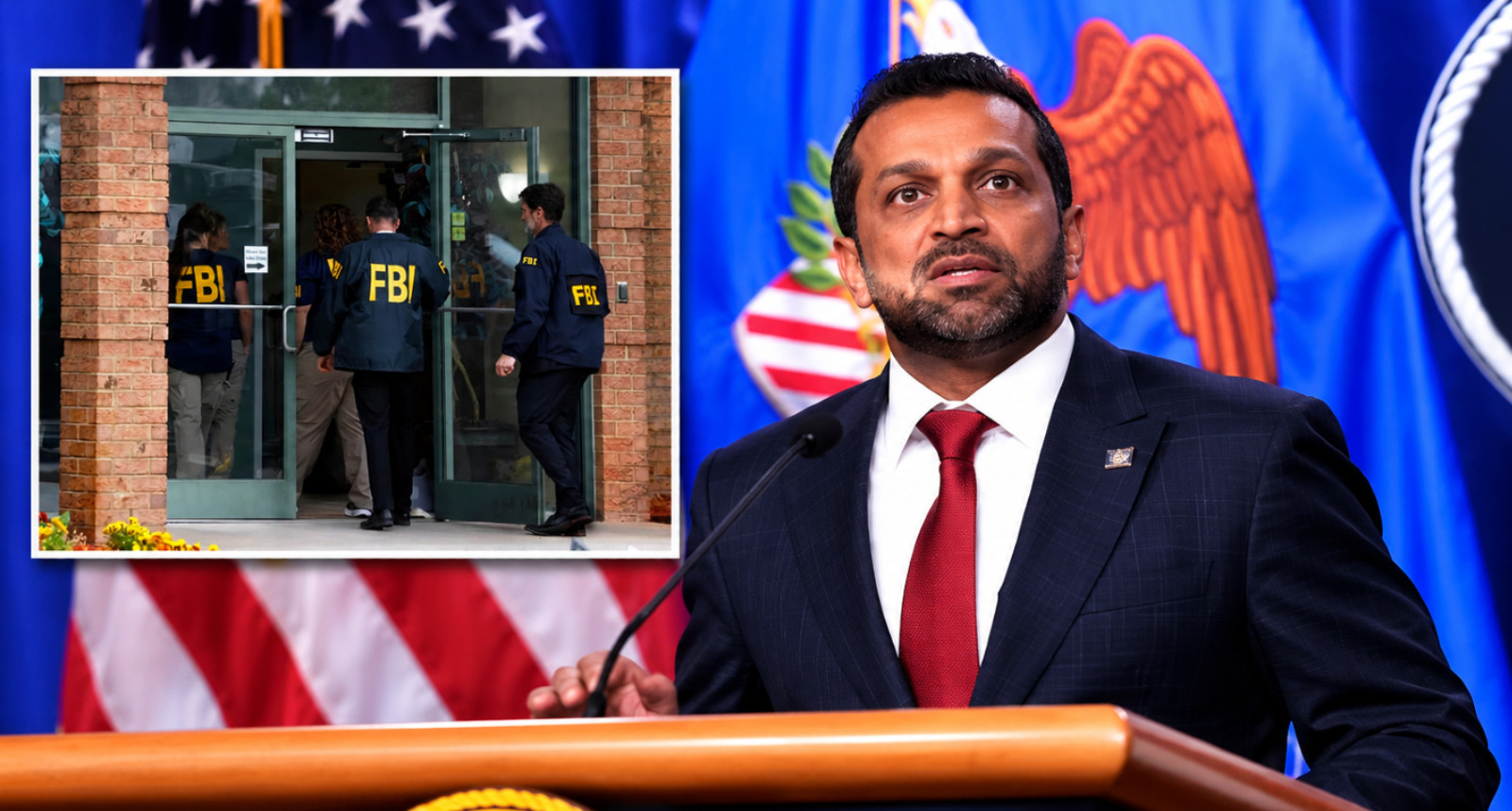
One of Virginia’s most powerful Democratic lawmakers surrendered to federal authorities Thursday after prosecutors unveiled a sweeping indictment accusing her of participating in a criminal marijuana operation, laundering money and exploiting her political influence for financial gain.
Virginia state Sen. Louise Lucas, 82, faces five federal charges stemming from an investigation into what prosecutors describe as a criminal organization involving members of her family and close associates.
The indictment, unsealed in the Eastern District of Virginia, names Lucas and six additional defendants in an alleged operation that federal investigators say stretched from approximately 2019 through 2026.
Attorney General Todd Blanche announced the charges alongside FBI Director Kash Patel and federal prosecutors in Norfolk, outlining allegations against a lawmaker who has spent more than three decades wielding considerable influence in Richmond.
Lucas, who serves as president pro tempore of the Virginia Senate and chairs the powerful Senate Finance and Appropriations Committee, is accused of using her positions to advance and protect the alleged operation.
The five charges against her include racketeering conspiracy, conspiracy to distribute and possess with intent to distribute marijuana, conspiracy to launder money, conspiracy to commit honest-services fraud through bribery, and maintaining a drug-involved premises.
Federal prosecutors allege the organization, identified in the indictment as the “Lucas Enterprise,” acquired and distributed more than 100 kilograms of marijuana while moving proceeds through financial transactions intended to conceal their origins.
Investigators further contend that Lucas used her political authority to shield the alleged enterprise from scrutiny and pursue legislative policies that could financially benefit herself and her associates.
The accusations place the longtime Democratic power broker at the center of a major federal corruption prosecution just days before the November 3 midterm elections.
Blanche accused Lucas of violating the public trust, arguing that the indictment describes a politician who allegedly placed her own financial interests ahead of her constituents.
At the center of the investigation is The Cannabis Outlet, a Portsmouth business in which Lucas has publicly acknowledged holding an ownership interest.
Prosecutors allege that the business played a role in the broader operation.
Virginia currently permits adults to possess marijuana, but the state has not established a functioning regulated recreational retail market. Certain hemp and cannabis-derived products can be sold legally under existing state law.
Lucas has been a prominent advocate for marijuana legalization, a position that has drawn additional attention following prosecutors’ allegations that she pursued policies potentially benefiting businesses connected to the alleged enterprise.
The investigation first became public in May when FBI agents executed court-authorized searches at Lucas’ Portsmouth office and The Cannabis Outlet.
The searches immediately sparked political controversy, with Lucas suggesting that federal authorities were targeting her because of her opposition to President Donald Trump.
However, multiple reports indicate that the investigation began during former President Joe Biden’s administration, before Trump returned to the White House.
Federal investigators also reportedly obtained court authorization to conduct wiretaps as part of the investigation.
Court records indicate that journalists, politicians and other individuals subsequently received notifications that their communications involving Lucas had been intercepted.
The federal indictment names six additional defendants: Lisa Lucas Burke, Prince Albert William Hudson III, Ryan Eichelberger, Theresa Lucas-Lamb, Carlton Upton Jr. and Tameka Johnson.
The broader eight-count indictment includes allegations involving marijuana distribution, money laundering, honest-services fraud, firearms and wire fraud.
The specific charges differ among the defendants, and the allegations have not been proven in court.
For Lucas, the indictment represents a major legal challenge after more than three decades as a fixture in Virginia Democratic politics.
First elected to the state Senate in 1992, Lucas rose through the Democratic ranks to become one of the Commonwealth’s most influential legislators.
As president pro tempore and chairwoman of the Senate Finance and Appropriations Committee, she holds significant authority over legislative proceedings and state spending priorities.
Lucas also played a prominent role in Virginia Democrats’ unsuccessful attempt to redraw congressional districts ahead of the midterm elections.
That effort was ultimately blocked by the Virginia Supreme Court.
The timing of the federal indictment has become another point of contention, with Lucas and her allies questioning whether political considerations influenced the prosecution.
Following the FBI searches in May, Lucas repeatedly characterized the investigation as politically motivated and accused the Trump administration of attempting to intimidate a political opponent.
Her legal team continued challenging the prosecution Thursday.
Attorney Brian Woolfolk dismissed the proceedings as “the circus we always expected it to be” and indicated that the defense would await additional information before issuing a more detailed response.
Blanche rejected suggestions that the indictment’s timing was improper because of the approaching November 3 elections.
He pointed out that Lucas herself is not on the ballot and maintained there was “nothing improper” about bringing the charges at this time.
The prosecution now sets up a high-profile legal battle involving allegations of organized drug distribution, financial crimes and the misuse of public office.
Federal authorities will have to prove that Lucas knowingly participated in the alleged criminal conduct and that the evidence supports each charge brought against her.
Lucas and her co-defendants are presumed innocent unless proven guilty.
For a lawmaker who has spent more than 30 years at the center of Virginia politics, the stakes are substantial: Federal prosecutors are accusing one of the state’s most influential Democrats of helping operate a criminal enterprise while using the powers of her public office to advance its interests.
The case now moves into federal court, where the government’s allegations will face scrutiny and Lucas will have an opportunity to contest the charges.

NEW: Trump Vows To Prosecute His Own STAFF!

Trump Just Activated ‘Level 3’ — It’s Serious

Powerful Dem Senator Arrested 12 Days Before Midterms

Ilhan Omar Gives Jaw-Dropping Answer When Asked If She Married Her Brother

Man Arrested For ISIS-Linked Assassination Plot Targeting GOP Congressman

JUST IN: Sarah Palin Makes Heartbreaking Announcement

Jeanine Pirro Makes Massive Announcement – WH In Total Shock

JUST IN: ‘Squad’ Congressional Candidate Arrested

Charlie Kirk’s Mother Breaks Her Silence After Erika Kirk’s Public Statement

BREAKING OVERNIGHT: Socialist Dem Suffers Humiliating Defeat

National Emergency Declared — Trump Called In

Senate Vote 50-49 On Save America Act — Dems Stunned!
-
 Economy6 months ago
Vance Leaves Meeting, Looks Straight Into Camera, Announces Stunning Arrest
-
 Economy6 months ago
Adam Schiff Facing 30 Years In Prison After Bank Records Leak
-
 Culture4 months ago
Michelle Obama Drops Nasty Bomb About ‘Useless’ Daughter
-
 Economy6 months ago
Supreme Curt Sides With Trump — He Can Remove The All
-
 Economy7 months ago
All Hell Breaks Loose On Fox When Jesse Watters Asks Fetterman One Question
-
 Economy5 months ago
Prayers Pour In After Fox Host Dies: ‘Senseless Murder’
-
 Border & Security3 months ago
Top Trump Admin And Wife Found Dead — Chilling Update Just Released
-

 Latest4 months ago
Fox News Stuns With Announcement About 5 Fired Hosts