
Politics
NYT Platforms Far-Left Youth Leader To Promote Stealing


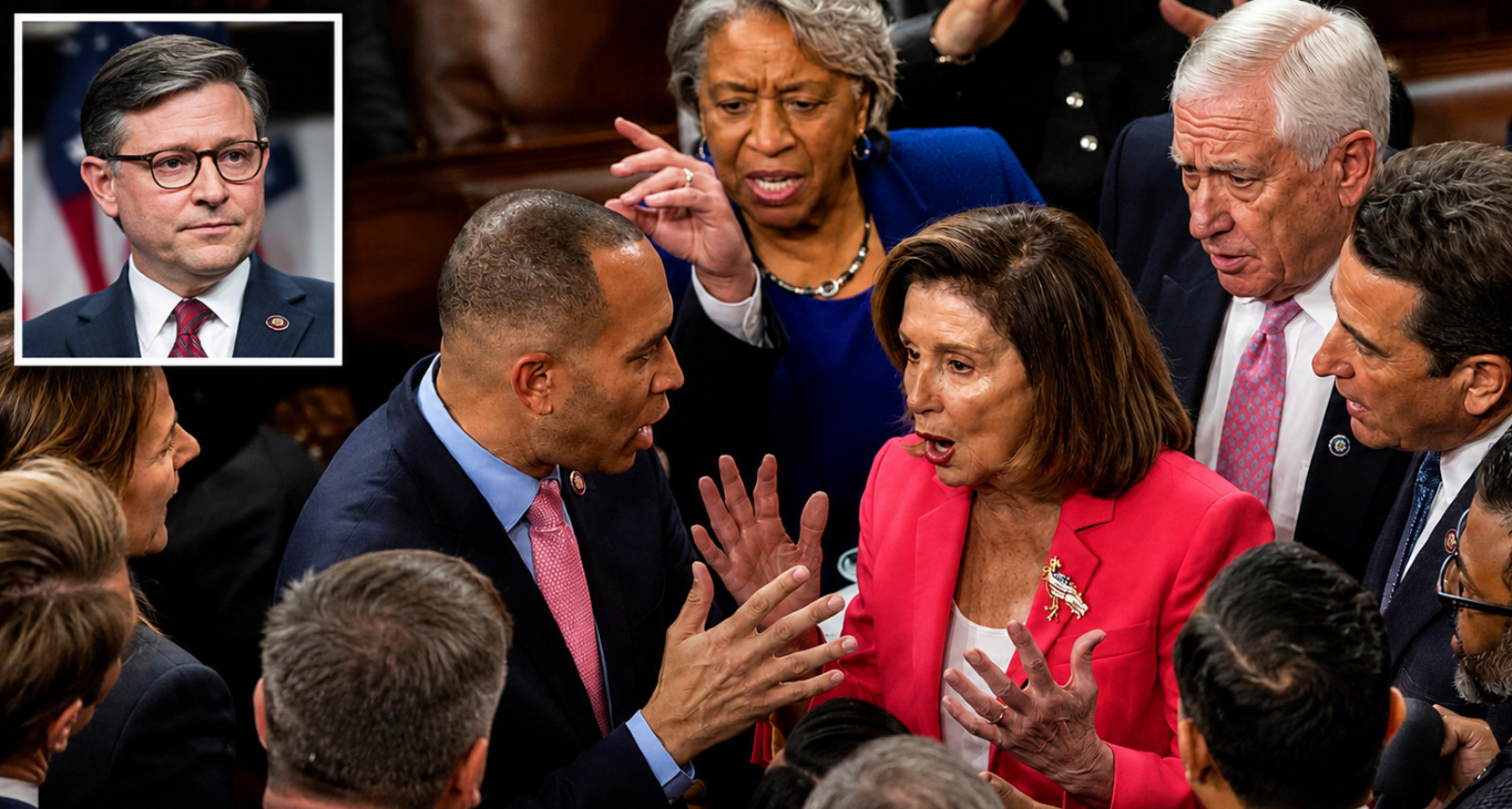
House Democrats fractured again Thursday as 33 members broke with their party and joined Republicans to approve legislation that could cut off federal funding to colleges participating in certain boycotts of Israel.
The House passed H.R. 4795, the Protect Economic and Academic Freedom Act of 2026, in a decisive 237-169 vote.
Thirty-three Democrats backed the measure, while 167 Democrats joined just two Republicans in voting against it.
House Minority Leader Hakeem Jeffries opposed the legislation, putting him on the other side of the vote from dozens of Democrats who supported new federal consequences for colleges participating in anti-Israel boycotts.
Former Speaker Nancy Pelosi and longtime Democratic Rep. James Clyburn also voted against the bill, exposing a significant divide among House Democrats over Israel, campus activism and the limits of politically motivated boycotts.
Republican Reps. Thomas Massie of Kentucky and Warren Davidson of Ohio were the only GOP lawmakers to oppose the measure.
North Carolina Republican Virginia Foxx sponsored the legislation, with New Jersey Democrat Josh Gottheimer serving as its Democratic co-sponsor.
At the heart of the bill is a potentially powerful financial penalty.
The legislation would amend federal higher-education law to make covered colleges participating in a “nonexpressive commercial boycott” of Israel ineligible for specified federal higher-education funding.
Federally supported institutions would also be required to certify that students are not “unreasonably obstructed” from participating in academic programs located in Israel.
Supporters argue the measure is aimed at institutional commercial discrimination—not at students protesting, speaking out against Israel or expressing political opinions.
Critics see something very different: a federal funding threat that could chill constitutionally protected political expression and interfere with the independence of American colleges and universities.
Foxx argued that university boycott policies have created hostile environments by “marginalizing Jewish students” and discriminating against people of Jewish faith.
Progressive Democrats fiercely opposed the legislation, arguing Congress is effectively turning political opposition to Israel into grounds for stripping educational institutions of federal support.
New York Democrat Jerry Nadler said he opposes the Boycott, Divestment and Sanctions movement but maintains that Americans who support it retain constitutional protections for political advocacy.
Michigan Democrat Rashida Tlaib went further, delivering a blistering denunciation of the legislation and accusing lawmakers of attempting to suppress pro-Palestinian activism.
“This is an attack on free speech and academic freedom,” Tlaib declared during debate before the final vote.
Tlaib also described Israel as a “genocidal apartheid state,” highlighting the intense rhetoric that has increasingly surrounded the Israel debate among progressive Democrats.
Supporters of the bill rejected that characterization of the legislation, maintaining that it targets institutional commercial conduct rather than individual political speech.
The contentious vote came as House Speaker Mike Johnson faced a separate round of criticism over his decision to send lawmakers home ahead of the November midterm elections.
Johnson canceled votes scheduled for Friday, effectively ending the House’s legislative work until after the election and sending members away from Washington for more than six weeks.
It follows Johnson’s decision to cancel votes during the final two weeks of September.
“The House has done its work,” Johnson, a Louisiana Republican, told reporters at the Capitol.
“It’s time for our members to go home to their districts and make their case to the American people,” Johnson added.
Not every Republican was willing to accept that explanation.
South Carolina Republican Rep. Ralph Norman blasted the decision as “unacceptable.”
“The House has now canceled at least 63 scheduled voting days this Congress, including nine days this month alone, and now we’re leaving Washington until after the election,” Norman wrote on X.
“The Founders did not envision taking this much time off and still getting paid. If Members of Congress want to go home and campaign instead of doing the job taxpayers sent us here to do, then their campaigns ought to be paying them, NOT the American taxpayer. We still have work to do,” Norman added.
Johnson also rejected Democratic demands to cancel the recess so lawmakers could address the rapidly accelerating development of artificial intelligence.
Following warnings from AI researchers and industry leaders about potentially catastrophic risks posed by increasingly capable systems, Democratic lawmakers urged Johnson to keep the House in Washington until Congress could act.
“Congress should not leave town until something is done decisively to protect the safety and the well-being of the American people, in the face of growing concerns being raised by experts within the artificial intelligence industry itself,” Jeffries said Monday.
“Republicans have completely abandoned their responsibility to legislate and engage in public policy efforts in a responsible fashion in the area of artificial intelligence,” Jeffries continued.
The result is a House leaving Washington amid fights on multiple fronts: a bipartisan split over federal funding and Israel boycotts, an escalating battle over free speech and campus policy, mounting criticism over Congress’ lengthy absence from Washington, and unresolved demands for federal action on artificial intelligence.
But Thursday’s 237-169 vote also revealed something increasingly difficult for Democratic leaders to ignore: when it came time to vote on Israel boycotts and federal education dollars, 33 members of their own caucus were willing to break ranks.
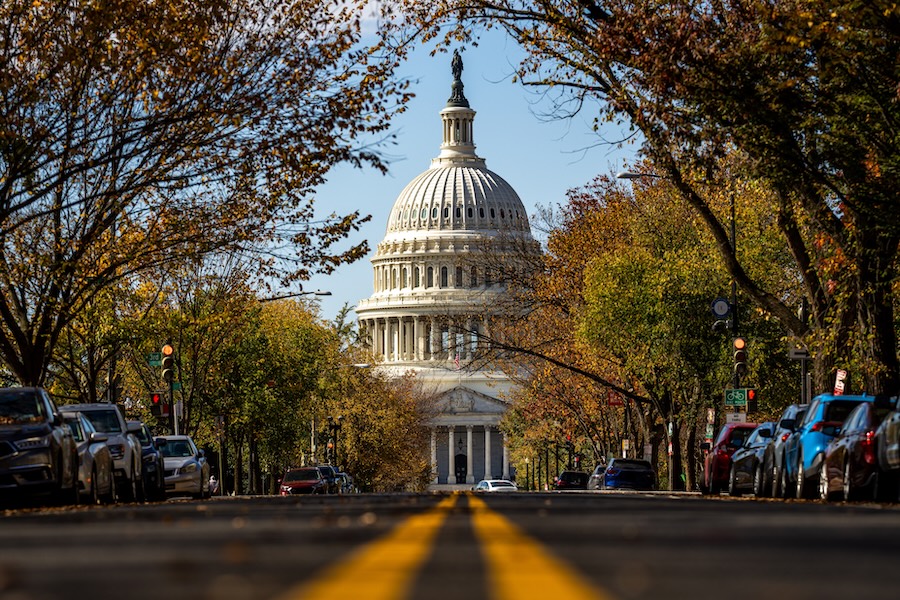
Democrats’ own internal polling has delivered a striking result in one of Ohio’s most closely watched congressional races, showing longtime Democratic Rep. Marcy Kaptur locked in a dead heat with Republican challenger Derek Merrin.
The Democratic Congressional Campaign Committee’s latest survey puts Kaptur and Merrin at exactly 48% each in Ohio’s 9th Congressional District.
Just 4% of likely voters remain undecided with the November election approaching.
The numbers underscore just how competitive the contest has become following Ohio’s mid-decade redistricting, which changed the political makeup of the district Kaptur is fighting to retain.
But another result buried inside the Democrats’ own polling makes the tie particularly notable.
President Donald Trump’s job approval stands at just 35% in the district, while 54% disapprove — a 19-point negative gap, according to the DCCC’s Sept. 29 memo.
Yet Republican Derek Merrin is still running even with the Democratic incumbent.
The DCCC says Trump carried the current district by 11 percentage points in the 2024 presidential election.
Despite Trump’s current approval numbers in the Democratic survey, Merrin still captures 48% against Kaptur.
The DCCC emphasized several numbers it views as encouraging for the incumbent.
According to the committee, Kaptur has consolidated 95% of Democratic voters and is leading among independents, although the memo did not disclose the precise breakdown of independent support.
The committee also said Kaptur is running ahead of both Democratic statewide candidates in the district.
It did not identify those candidates or provide their polling numbers in the memo.
Democrats portrayed the tied race as evidence that Kaptur continues to outperform the underlying political environment of her district, pointing to her record and campaign emphasis on lowering costs and representing Northwest Ohio.
The DCCC also sought to blame Republicans for rising household expenses, citing costs including groceries, gasoline, health care and utility bills.
Those arguments represent the Democratic committee’s characterization of the political environment rather than independent findings from the poll.
And despite the DCCC’s upbeat assessment of Kaptur’s position, its own headline number remains unmistakably close.
Kaptur: 48%.
Merrin: 48%.
Undecided: 4%.
Neither candidate has broken the 50% mark, and the difference between them is zero.
The survey was conducted by the DCCC Analytics Department from Sept. 22 through Sept. 23 among 481 likely general-election voters in Ohio’s 9th District.
Respondents were contacted through phone and text-to-web interviews.
The poll carries a margin of error of plus or minus 4.5 percentage points at the 95% confidence level.
That means the survey should be viewed as a snapshot rather than evidence that either candidate holds a measurable lead.
But with the Democratic Party’s own polling showing its incumbent tied with Merrin, Ohio’s 9th District remains a closely contested battleground heading into the final stretch before November.
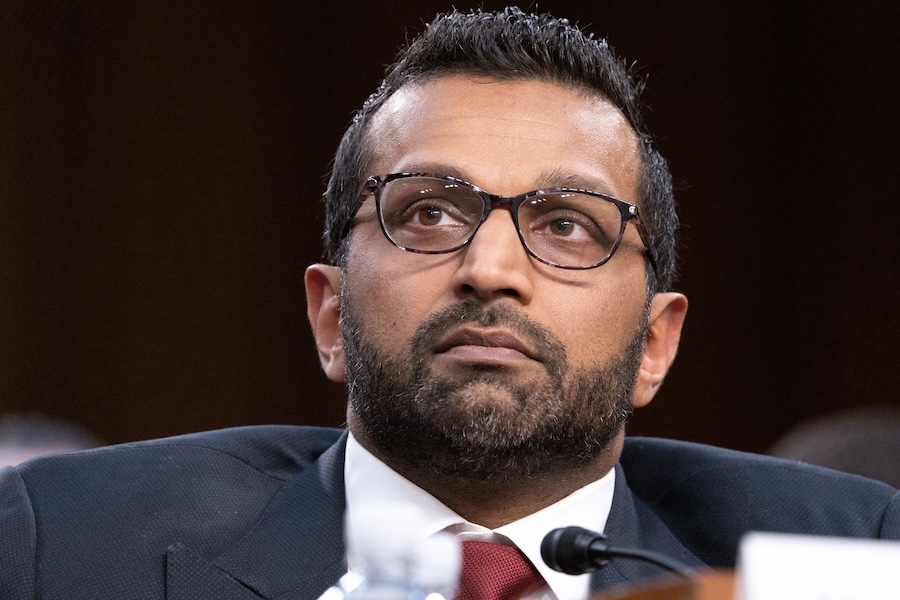
One of FBI Director Kash Patel’s top deputies is abruptly leaving the bureau, creating another opening at the highest levels of an agency already undergoing major organizational changes.
Andrew Bailey, the former Missouri attorney general who has served as one of the FBI’s co-deputy directors, announced Monday that he is stepping down after roughly a year at the bureau and returning home to his family in Missouri.
His final day will be Friday, Oct. 2.
“With great pride in what we have accomplished, I am announcing that I am stepping down to return to my family in Missouri,” Bailey said.
Bailey joined the FBI in 2025 after leaving the Missouri attorney general’s office and became part of an unusual leadership structure under Patel, serving alongside another co-deputy director.
His departure comes as Patel continues implementing major personnel and organizational changes at the FBI amid longstanding political disputes over the bureau and allegations of political bias in federal law enforcement.
Bailey, a Republican who previously served as Missouri’s top law enforcement official, has been a vocal supporter of Patel’s efforts to reshape the agency.
And despite his sudden departure, Bailey made clear that he continues to support Patel and the direction of the bureau.
“I am confident Director Patel will continue to reform the FBI, combat violent crime, defend the homeland, ensure strong organizational accountability, and restore public trust in this institution of excellence,” he added.
Bailey also thanked President Donald Trump, Attorney General Todd Blanche and Patel for giving him the opportunity to serve.
During his tenure, Bailey became a visible member of the FBI’s leadership team, appearing alongside federal and state officials during law enforcement operations and promoting the bureau’s emphasis on combating violent crime.
He also participated in major investigations and enforcement initiatives as Patel’s leadership team sought to redirect bureau resources and address concerns among conservatives who had become deeply skeptical of the FBI.
The bureau has undergone extensive personnel and organizational changes since Patel became director in February 2025.
Patel has argued that the FBI needs to move away from what he describes as politicized enforcement and refocus the bureau on traditional law enforcement priorities, including violent crime, counterterrorism and threats to national security.
Those efforts have made Patel’s tenure closely watched in Washington as the Trump administration pursues broader changes across the federal government.
Bailey’s resignation now creates another vacancy near the top of the FBI less than two years into Patel’s tenure.
But Bailey said his decision was personal.
According to his public announcement, he is leaving Washington to return to Missouri and spend more time with his family.
Nothing in Bailey’s announcement indicated that he had been forced from his position or that his departure resulted from a dispute with Patel.
Instead, Bailey used his exit announcement to praise the FBI’s work during his tenure and publicly reaffirm his confidence in Patel.
His departure nevertheless removes a prominent member of Patel’s leadership team at a consequential moment for the bureau.
With Bailey preparing to leave Washington on Friday, Patel will now move forward without one of the senior officials who helped carry out the FBI overhaul during its first year under his leadership.

Charlie Kirk’s Mother Breaks Her Silence After Erika Kirk’s Public Statement

Jaw-Dropping Details Emerge From Hijacking Attempt On Israel-Bound Flight

House Passes It 237-169 –Dems FLIP And Humiliate Hakeem Jeffires

NEW: Trump Family Rocked After Sudden Hospitalization

Longtime Democrat Rep. Losing Grip On Key Seat

Commercial Flight Makes Emergency Landing After Co-Pilot Stabs Captain, Nose Dives Plane

‘The Five’ Gets Emotional As Greg Gutfeld Announces Tragic News

Joe Biden’s Daughter Just Dropped Massive Public Bombshell On Her Dad

Removed From the Country — Ilhan Omar Hit With Horrid News

Obama Calls It QUITS After Wild Video Goes Viral

Get Ready — Mike Pence Makes Stunning 2028 Announcement

Schumer Loses! Court Sides With Trump In Historic Move
-
 Economy6 months ago
Vance Leaves Meeting, Looks Straight Into Camera, Announces Stunning Arrest
-
 Economy6 months ago
Adam Schiff Facing 30 Years In Prison After Bank Records Leak
-
 Economy6 months ago
Supreme Curt Sides With Trump — He Can Remove The All
-
 Culture3 months ago
Michelle Obama Drops Nasty Bomb About ‘Useless’ Daughter
-
 Economy6 months ago
All Hell Breaks Loose On Fox When Jesse Watters Asks Fetterman One Question
-
 Economy4 months ago
Prayers Pour In After Fox Host Dies: ‘Senseless Murder’
-

 Latest3 months ago
Fox News Stuns With Announcement About 5 Fired Hosts
-

 Border & Security2 months ago
Top Trump Admin And Wife Found Dead — Chilling Update Just Released