
Latest
Rai does it his way to win PGA, pointless Aronimink criticism, player grades and an important message

The 2026 PGA Championship was a game of patience and precision. In an era where picking apart golf courses, even major championship ones, with a flavor of violence has become the expectation, there was a welcome shock factor seeing a someone like Aaron Rai emerge from the pack of certified killers to get his hands on the Wanamaker Trophy.
Rai was an unexpected winner. Even halfway through the final round at Aronimink Golf Club, when nobody else in the field was able to get a hand on the door to slam it shut, the Englishman stepped up and did so with authority. Classy, tasteful, and respectful authority, but authority nonetheless.
The golf course itself and the setup took criticism from both fans and players throughout the week, and while the debates back and forth are woven into the rhetoric of every major championship, it felt pointless at Aronimink. We’ll explain why down below.
With such a jam-packed leaderboard and so many big-name players in contention over the weekend, player grades are in order. Spoiler: Ludvig Aberg’s grade is putrid.
This is Par Talk, a weekly read to get you caught up on all the happenings that took place in professional golf that you need to know. You can follow Mark on X @itismarkharris and email him at [email protected]
The 2026 PGA Championship was expected to be a test that favored long hitters with the bomb and gauge strategy to be deployed by everyone who has it in their bag. While longer hitters, including the likes of Jon Rahm, Rory McIlroy, Ludvig Aberg, and Justin Thomas, were in the mix come late Sunday afternoon, Rai reminded the world that hitting fairways and greens, and letting a scorching-hot putter go to work, can still get the job done just about anywhere.
Rai entered the week ranked 160th on the PGA Tour in average driving distance and finished the week ranked 66th in driving distance among the 82 players who made the cut. He was forced to slowly carve up Aronimink instead of aggressively picking it apart, and he did so better than anyone else in the field.
The Englishman closed out the week ranked second in strokes gained: approach, fourth in driving accuracy, hit 74% of his greens in regulation, and led the entire field with 22 birdies or better.
While Rai’s 70-foot birdie putt on the 17th hole will understandably garner tons of attention for days to come, his birdie on the drivable par-4 13th hole was, up to this point, the defining moment of his career.
After driving it into a greenside bunker, Rai was left with a 40-yard shot that most players holding a one-shot lead would play with extreme caution. He chose to be aggressive, however, and fly his golf ball onto a shelf where disaster was lurking, yet walked off the green with a birdie and a two-shot advantage.
Rai played his final 10 holes in six-under par before signing for a final-round 65, his lowest score in a major championship by two strokes.
The 31-year-old is known as being among the nicest and most humble players in professional golf, but inside the ropes on Sunday, he was as mean as they come. With his victory, Rai became the first Englishman to hoist the Wanamaker Trophy since Jim Barnes won the original tournament back in 1919.
Maybe we see Rai back in contention at a major championship soon; maybe he never sees the first page of a major leaderboard again. Regardless of what the future holds, he seized the moment at Aronimink on a Sunday in May and entered golf’s history book.
The media — both those watching from home and those with boots on the ground — could not have been more wrong about expectations of how the golf course was going to play throughout the week than they were at Aronimink.
That is not an indictment of anyone, either. I think it’s more of a reflection of how our default setting has become “the long hitters will climb to the top, separate themselves, and scores will be shockingly low.”
I predicted the winning score to be 17-under myself, and thought that was on the more conservative side, so Rai’s 9-under total was a surprise, and a pleasant one at that.
With scores being on the high side and the leaderboard remaining extremely crowded at the top — there were 21 players within four of the lead heading into Sunday — the discourse began that the setup of the golf course was poor.
Shane Lowry, who was never in contention, said the course “has been set up pretty poorly” after the third round. Rory McIlroy explained that the lack of separation on the leaderboard is typically “a sign of not a great setup.” Scottie Scheffler said that he had never seen tougher pin locations in his entire career.
On the flip side of that coin, you have fans at home, enjoying seeing the best players in the world struggle to make birdies on a golf course that played just over 7,100 yards each of the final two rounds.
Without getting too into the weeds, I think the overall consensus of the situation is straightforward.
It’s not the responsibility of golf fans to worry about whether the players love or hate a golf course setup. Most fans seemed to enjoy Aronimink because it is entertaining to see the best players look confused on a golf course. In that same light, McIlroy, Lowry, or any other player is absolutely entitled to share their opinions of a setup, and outside of an egregious statement, shouldn’t take flak. They’re the ones playing the golf course with millions of dollars on the line.
This leads us to a PSA: It is totally acceptable to say you enjoyed this year’s PGA Championship. It was quirky and fun. It resembled a typical U.S. Open more than a typical PGA and it was enjoyable seeing an old Donald Ross track baffle players. And most importantly, it was a great test.
We’re constantly screaming for the best players to be tested more often, and just because it came at a PGA Championship that most expected to be a birdie fest doesn’t mean it should be disparaged.
Aaron Rai: He won the golf tournament…by three. A+
Jon Rahm: Nobody knew what version of Rahm we’d get at Aronimink entering the week. After a T-38 finish at the Masters and with his future in golf up in the air as the Saudis pull funding from LIV Golf, the Spaniard could have no-showed and pouted while doing so. Instead, he had a noticeably good attitude throughout the week and finished T-2 after a 67-68 weekend.
He did leave a couple of shots out there on Sunday, however, and still carries incredibly high expectations. B
JON RAHM APOLOGIZES AFTER HITTING VOLUNTEER WITH FLYING DIVOT AT PGA CHAMPIONSHIP: ‘INEXCUSABLE’
Ludvig Aberg: His final round 69 may as well have been a 79. After essentially going through the motions in his opening nine holes yet still being firmly in contention, a three-putt from 34-feet on the 10th hole ended his day while serving as a great representation for Aberg these days.
He has every physical tool to be in the conversation as the best player in the world, but it’s clear that between the ears, he’s battling and losing. It feels like he’s struggling to find the balance of caring too much and caring too little. He also needs to throw the blade putter into an inferno and start putting with a mallet. C-, even if he did finish T-4.
Alex Smalley: When you grab a two-shot lead after 54 holes at a major championship, you’re doing a lot of things right. His Sunday played out as expected with nervy shots early on and the dreaded double bogey coming at the sixth, but he hung in there a lot better than most predicted, myself included, to begin the day.
Shooting even par in the final round wasn’t enough to get it done, but he probably would have taken that score to begin the day. A- to go along with his T-2 finish.
Cameron Smith: He’s back (maybe, hopefully). Oh, how I missed watching Cam Smith stand over any putt on the property and thinking he’s going to drain it. After six consecutive missed cuts in majors, it was a ton of fun seeing the Aussie back in the mix and finishing T-7. If he gets the driver figured out, he could turn into a factor sooner rather than later again at majors. A-
Rory McIlroy: McIlroy could have packed it in after shooting four-over in the opening round, but instead answered back with rounds of 67-66-69. The one knock against McIlroy, and I believe a justified one, was that he brought exactly zero juice to the course on Sunday. It happens, but not too often on a major championship Sunday when beginning the round just three shots back of the lead. The game was good, nowhere close to great. Two birdies on Sunday, pars on both Par 5s, and a bogey on a 299-yard Par 4. A T-7 finish gets a C+ all things considered.
Scottie Scheffler: From tee to green, Scheffler played well enough to win the golf tournament, but when he stepped on the green, he looked nothing like the No. 1 player in the world. For the week, he finished 72nd out of 82 players who made the cut in strokes gained: putting. A very forgettable T-14. C


After months of public scrutiny, damaging revelations and signs of turmoil behind the scenes, a major change in former Homeland Security Secretary Kristi Noem’s personal life has now become official.
Noem has filed for divorce from her husband, Bryon Noem, bringing their marriage of more than three decades toward an end.
Court documents filed in South Dakota cite “irreconcilable differences” as the reason for the split. The filing was submitted April 6 but did not appear on Hamlin County’s online court system until Monday.
The couple married in 1992 and share three adult children.
The filing follows months of controversy surrounding Bryon’s reported private online activity, including allegations of explicit exchanges with adult models and participation in an online cross-dressing fetish community.
Photos published earlier this year reportedly showed Bryon wearing pink shorts, a crop top and exaggerated prosthetic breasts as part of what was described as a “bimbofication” fetish.
He was also reported to have sent at least $25,000 to online models through PayPal and Cash App while allegedly using the alias “Jason Jackson.”
One model said she discovered his identity after accidentally calling a number and hearing a voicemail greeting for Noem Insurance, the South Dakota insurance agency Bryon operates.
A spokesman for Kristi said at the time that she was “devastated” and that the family had been “blindsided” by the revelations.
Asked about the divorce proceedings by a South Dakota news outlet, Bryon offered little indication that he planned to discuss the matter publicly.
“I can’t comment right now.”
For members of Kristi’s family, however, the split apparently did not come as a surprise.
Kristi’s mother, Corinne Arnold, said in July that her daughter had already told relatives she intended to end the marriage and had hired an attorney in Sioux Falls.
“It has been difficult, but we knew this was coming, that they were going to get divorced,” Arnold told the Daily Mail.
“I feel bad, sick that they’re getting a divorce, but what else can you do?” she added.
By that point, Bryon had reportedly moved out of the couple’s Castlewood home and was living approximately 20 miles away.
The marriage had also faced years of public speculation surrounding Kristi’s relationship with longtime political adviser Corey Lewandowski.
Both Noem and Lewandowski have denied allegations that they had a romantic affair, and no independently verified evidence has publicly established that such a relationship occurred.
The two were photographed together in Minnesota in August, including at a lunch and while cycling near Lake Minnetonka.
Their professional relationship had previously attracted scrutiny during Noem’s tenure at the Department of Homeland Security, where Lewandowski served as an unpaid adviser.
During a congressional hearing in March, Noem was directly questioned about allegations involving Lewandowski and dismissed the questioning as tabloid material.
The turmoil surrounding her marriage intensified around the same period that she left the Department of Homeland Security and later assumed a State Department position as special envoy for the Shield of the Americas.
President Donald Trump also publicly reacted after reports concerning Bryon’s alleged online activity surfaced.
“Wow, well, I feel badly for the family if that’s the case, that’s too bad.”
Noem later returned to Pierre, South Dakota, for the unveiling of a life-sized bronze statue honoring her tenure as governor.
Her mother and grandchildren attended the ceremony.
Bryon did not.
After months of reported separation, family acknowledgment of the impending split and intense public attention surrounding the couple’s marriage, the matter has now moved into court.
More than three decades after Kristi and Bryon Noem married, their divorce filing makes the breakup official.
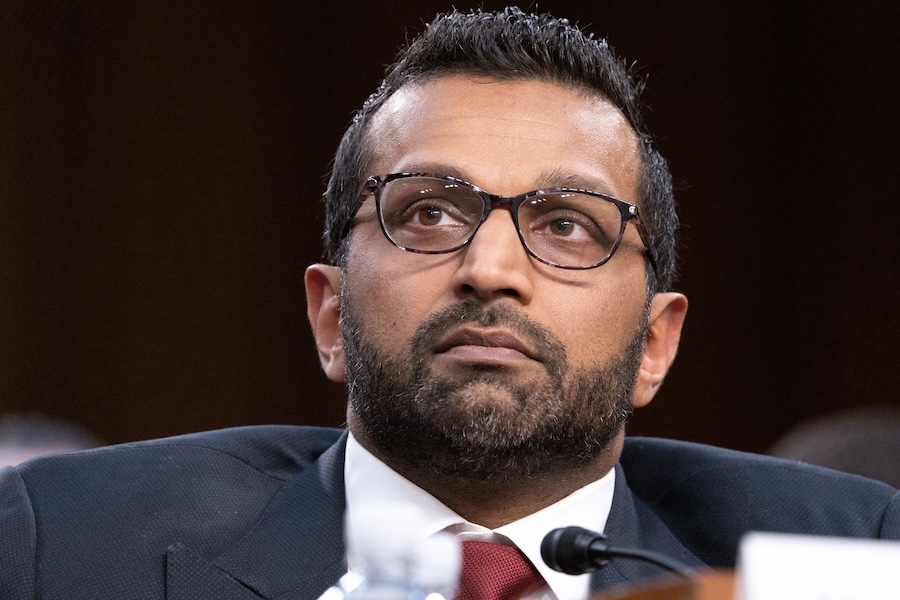
One of FBI Director Kash Patel’s top deputies is abruptly leaving the bureau, creating another opening at the highest levels of an agency already undergoing major organizational changes.
Andrew Bailey, the former Missouri attorney general who has served as one of the FBI’s co-deputy directors, announced Monday that he is stepping down after roughly a year at the bureau and returning home to his family in Missouri.
His final day will be Friday, Oct. 2.
“With great pride in what we have accomplished, I am announcing that I am stepping down to return to my family in Missouri,” Bailey said.
Bailey joined the FBI in 2025 after leaving the Missouri attorney general’s office and became part of an unusual leadership structure under Patel, serving alongside another co-deputy director.
His departure comes as Patel continues implementing major personnel and organizational changes at the FBI amid longstanding political disputes over the bureau and allegations of political bias in federal law enforcement.
Bailey, a Republican who previously served as Missouri’s top law enforcement official, has been a vocal supporter of Patel’s efforts to reshape the agency.
And despite his sudden departure, Bailey made clear that he continues to support Patel and the direction of the bureau.
“I am confident Director Patel will continue to reform the FBI, combat violent crime, defend the homeland, ensure strong organizational accountability, and restore public trust in this institution of excellence,” he added.
Bailey also thanked President Donald Trump, Attorney General Todd Blanche and Patel for giving him the opportunity to serve.
During his tenure, Bailey became a visible member of the FBI’s leadership team, appearing alongside federal and state officials during law enforcement operations and promoting the bureau’s emphasis on combating violent crime.
He also participated in major investigations and enforcement initiatives as Patel’s leadership team sought to redirect bureau resources and address concerns among conservatives who had become deeply skeptical of the FBI.
The bureau has undergone extensive personnel and organizational changes since Patel became director in February 2025.
Patel has argued that the FBI needs to move away from what he describes as politicized enforcement and refocus the bureau on traditional law enforcement priorities, including violent crime, counterterrorism and threats to national security.
Those efforts have made Patel’s tenure closely watched in Washington as the Trump administration pursues broader changes across the federal government.
Bailey’s resignation now creates another vacancy near the top of the FBI less than two years into Patel’s tenure.
But Bailey said his decision was personal.
According to his public announcement, he is leaving Washington to return to Missouri and spend more time with his family.
Nothing in Bailey’s announcement indicated that he had been forced from his position or that his departure resulted from a dispute with Patel.
Instead, Bailey used his exit announcement to praise the FBI’s work during his tenure and publicly reaffirm his confidence in Patel.
His departure nevertheless removes a prominent member of Patel’s leadership team at a consequential moment for the bureau.
With Bailey preparing to leave Washington on Friday, Patel will now move forward without one of the senior officials who helped carry out the FBI overhaul during its first year under his leadership.

Fox News is bringing one of former New York Gov. Andrew Cuomo’s most prominent former aides onto its platform — a move that immediately triggered a furious response from one of the network’s own former personalities.
Melissa DeRosa, Cuomo’s longtime top lieutenant and former secretary to the governor, has been hired as a Fox News contributor and will appear on the network’s new weekly podcast, “The Girls.”
DeRosa will make her debut when the program premieres Oct. 1, Fox News Media announced Monday.
But the announcement quickly reopened one of the most bitter controversies surrounding Cuomo’s administration: New York’s handling and reporting of nursing home deaths during the COVID-19 pandemic.
Former Fox News meteorologist Janice Dean blasted the decision.
Dean’s mother-in-law and father-in-law died of COVID-19 in 2020 after living in New York long-term care facilities. Their deaths turned Dean into an outspoken critic of Cuomo and his administration as she pushed for answers about the state’s nursing home policies.
Following news of DeRosa’s Fox role, Dean unloaded.
“Melissa DeRosa helped smear the women who came forward about Andrew Cuomo’s harassment, and played a hand in undercounting nursing home deaths during COVID. Also tried to silence my advocacy.”
DeRosa served as secretary to the New York governor, becoming the first woman to hold the powerful position.
She resigned in August 2021 as sexual harassment allegations engulfed Cuomo’s administration.
But DeRosa had already become a central figure in the controversy surrounding the Cuomo administration’s handling of nursing home death information.
Months before her resignation, DeRosa acknowledged during a private call with Democratic state lawmakers that the administration had withheld nursing home death data while facing concerns about a possible investigation by President Donald Trump’s Justice Department.
The February 2021 disclosure intensified scrutiny over New York’s accounting of COVID-19 deaths among nursing home residents.
At the time, the state’s nursing home tally did not include residents who died after being transferred from nursing homes to hospitals, leaving thousands of deaths outside that particular count.
DeRosa later maintained that the administration had placed state lawmakers’ request for the information on hold while it prioritized responding to the federal inquiry.
The controversy did not end there.
A New York State Assembly investigation released in November 2021 concluded that Cuomo had not been fully transparent about nursing home resident deaths.
The investigation also concluded that Cuomo sexually harassed women and used state resources in connection with the production and promotion of his pandemic memoir.
Now DeRosa is returning to the political-media spotlight through Fox News.
She will appear on “The Girls,” a new weekly podcast featuring a rotating group of female co-hosts discussing politics, careers, family life and pop culture.
The premiere will also feature Fox personalities Rachel Campos-Duffy, Harris Faulkner and Kat Timpf.
New episodes are scheduled to be released Thursdays on YouTube, Spotify and Apple Podcasts.
The launch will also bring former ESPN personality Sam Ponder back into the spotlight following her 2024 departure from the sports network.
Ponder, the former host of “Sunday NFL Countdown,” will join DeRosa and the Fox personalities for the premiere episode.
But it is DeRosa’s addition that has already generated controversy before the first episode even airs.
For Dean, the issue is deeply personal.
She spent years publicly challenging Cuomo’s administration over its handling of nursing homes after losing two family members during the pandemic.
Now the former governor’s onetime top aide is joining the same media organization where Dean became one of the most visible critics of that administration.
And Dean made clear exactly what she thinks of the decision.

Kristi Noem Shares Huge Relationship News After Months Of Speculation

BREAKING: FBI Rocked By Sudden Shocking Resignation

Fox News Under Fire After Hiring Notorious Democrat; Ex-Host Explodes

Fireworks Erupt On Capitol Hill After 52-45 Vote For Trump!

NEW: Justice Alito Abruptly Reverses Course In Key SCOTUS Case

National Emergency Declared — Trump Called In

‘The Five’ Gets Emotional As Greg Gutfeld Announces Tragic News

Joe Biden’s Daughter Just Dropped Massive Public Bombshell On Her Dad

Removed From the Country — Ilhan Omar Hit With Horrid News

Obama Calls It QUITS After Wild Video Goes Viral

Get Ready — Mike Pence Makes Stunning 2028 Announcement

Schumer Loses! Court Sides With Trump In Historic Move
-
 Economy6 months ago
Vance Leaves Meeting, Looks Straight Into Camera, Announces Stunning Arrest
-
 Economy6 months ago
Adam Schiff Facing 30 Years In Prison After Bank Records Leak
-

 Economy6 months ago
Supreme Curt Sides With Trump — He Can Remove The All
-
 Culture3 months ago
Michelle Obama Drops Nasty Bomb About ‘Useless’ Daughter
-
 Economy6 months ago
All Hell Breaks Loose On Fox When Jesse Watters Asks Fetterman One Question
-

 Economy4 months ago
Prayers Pour In After Fox Host Dies: ‘Senseless Murder’
-

 Latest3 months ago
Fox News Stuns With Announcement About 5 Fired Hosts
-
 Border & Security2 months ago
Top Trump Admin And Wife Found Dead — Chilling Update Just Released