
Latest
Red wealth, dark money: How an American tycoon deploys Mao’s playbook against the West

Part 2 of a five-part Fox News Digital series investigating the House of Singham examines the “United Front,” a key element of Chinese communist leader Mao Zedong’s “People’s War” strategy.
As CodePink co-founders Jodie Evans and Medea Benjamin ended their activist group’s pilgrimage to communist Cuba yesterday, their sojourn reflected a strategy years in the making: a “united front” aligning far-left, socialist and communist revolutionaries across borders.
In late October 1944, Chinese Communist Party leader Mao Zedong delivered a speech, outlining a strategy to unite disparate groups under a shared ideological framework, telling followers: “For this struggle a broad united front is indispensable.”
More than two decades later, in 1966, Cuban leader Fidel Castro convened revolutionaries in Havana for the Tricontinental Conference, where he pledged “support to any revolutionary movement in any corner of the earth,”
And more recently, an American-born Marxist businessman named Neville Roy Singham sold his technology company, Thoughtworks, for an estimated $785 million in 2017, and a Fox News Digital investigation reveals that he set about building his own version of Mao’s united front.
The investigation, using large language models to analyze hundreds of pages of tax records, organizational messaging, online content and historical records, found Singham pumped at least $278 million into a layered network of 2,000 nonprofits, think tanks, activist groups and media organizations with shared messaging and ideology matching the communist ideals of Mao and Castro, operating across borders while appearing independent. What emerges isn’t a loose coalition but a tightly knit system.
At the time of the sale, Thoughtwork’s chief scientist, Martin Fowler, acknowledged the proceeds would fund Singham’s “activist work.” The sale created a war chest that would flow into the constellation of nonprofits that now comprise the “House of Singham.”
Policymakers and law enforcement officials have gotten a glimpse into pieces of Singham’s influence, from anti-Israel protests in the U.S. to a propaganda machine in India and the hijacking of a labor union in South Africa. But the broader picture is more expansive: a transnational network buried in layer upon layer of companies entangled with shared leaders, shared addresses and a shared mission to spread Marxism and promote China as a global counterweight to the U.S. in a new Cold War.
IRS records show that three entities transferred $278 million from 2017 through 2023 into six core U.S. nonprofits in Singham’s network, but those six nonprofits haven’t operated in isolation. They have functioned as hubs in a broader system, receiving and redistributing funding, and coordinating activity across a widening network of affiliated groups.
In 2017, when Singham married Evans, he relied on many of their wedding guests as lieutenants, consiglieres, strategists, propagandists and field marshals to mobilize thousands of foot soldiers to promote China’s interests. One recurring theme is promotion of China’s Belt and Road Initiative, a global infrastructure and trade effort designed to expand China’s economic and geopolitical influence.
Liu Pengyu, a spokesman for the Embassy of the People’s Republic of China in Washington, D.C., told Fox News Digital, he wasn’t familiar with “the specifics of this particular case.”
Pengyu added that China “welcomes and hopes that more people in the United States will view China in an objective and fair light, and lend their voices to the sound and stable development of China–U.S. relations.”
Rep. Jason Smith, chair of the House Ways and Means Committee, has described Singham as “an individual who lives in Shanghai, maintains business ties with companies and individuals linked to the CCP, works with and physically alongside a foreign propaganda company, and attends CCP forums on how to promote the party abroad.”
According to people familiar with the transactions, Singham used GS Donor Advised Philanthropy Fund For Wealth Management Inc., affiliated with Goldman Sachs Group Inc., to anonymously direct tax-deductible donations to a new tranche of nonprofits established after his marriage to Evans. Goldman Sachs spokesman Tony Fratto said that the company’s philanthropy arm “terminated” Singham’s donor-advised fund in February 2024.
FAR-LEFT ACTIVIST GROUP FACES BACKLASH OVER ‘TONE-DEAF’ PROTESTS AT CUBA LUXURY HOTEL
Fox News Digital also identified two fly-by-night companies – Likewise Conceptions LLC and Mutod LLC – that appear in the network’s financial architecture.
Likewise Conceptions listed an address outside Chicago, while Mutod used the address of a hotel in downtown Chicago. Two other organizations linked to Singham used a hotel and a cocktail lounge as addresses. Fox News Digital reviewed incorporation papers, state registrations, property records and other open-source materials but couldn’t identify meaningful public footprints for either entity. Singham and Evans didn’t respond to requests for comment.
Those entities functioned as conduits, moving large sums into nonprofits that would then redistribute funds across additional layers of the network.
Over months of reporting, Fox News Digital built organizational charts tracing the network’s structure. At least 18 guests from the “Jodie and Roy” wedding of “One Love” in Jamaica appear within a wider network of about 80 people serving in core leadership across about 15 central organizations.
The network contains members of Singham’s family, including his son Nathan Singham, his niece Alicia Singham Goodwin and his sister, Shanti Singham, who has academic ties to East China Normal University in Shanghai. The university, which is administered by the Chinese Community Party (CCP), co-sponsored the Global South Academic Conference where Singham appeared last fall, lambasting the U.S. as a “fascist” nation. East China Normal University didn’t respond to a request for comment.
The wider circle of wedding guests included actor Danny Glover, playwright Eve Ensler, now known as V, and “Democracy Now” TV host Amy Goodman.
Another guest, Ben Cohen, the co-founder of Ben & Jerry’s ice cream, has more recently appeared, getting arrested with CodePink activists as he interrupted Health and Human Services Secretary Robert F. Kennedy, Jr. during a Congressional hearing over Gaza and then called for the defunding of ICE earlier this year.
FBI agents arrested another wedding guest, Ibrahim AlHusseni, last year for alleged securities fraud and he later entered a guilty plea. Late last year, Evans allegedly helped pay his $3 million bail, according to court-related reporting. He is scheduled to be sentenced in July.
Within this period, the People’s Forum’s organizing work and BreakThrough News coverage became central to nationwide demonstrations, coordinated through the Party for Socialism and Liberation and the ANSWER Coalition.
FOX NEWS DIGITAL ANALYSIS: HOW MINNEAPOLIS AGITATOR NETWORKS USE INSURGENCY TACTICS TO HINDER ICE
One of the nonprofits Singham funded immediately in 2017 with his newfound wealth was Tricontinental Ltd., based in Massachusetts, led by his friend and wedding guest, Vijay Prashad. It was named for the 1966 Tricontinental Conference.
In a letter to one of the Singham organizations, Tricontinental, Smith warned that “interlocking ownership and management roles” across the entities suggest a strategy to embed CCP propaganda “under the guise of independent scholarship and commerce.” Tricontinental hasn’t made any public responses to the letter, but it posted a video from Brazil last month on Instagram, inviting followers to read the “Communist Manifesto” for “Red Book Day.”
Fox News Digital found that one nonprofit that Singham funded, the People’s Support Foundation, reported investments for years in the China-U.S. Industrial Cooperation Partnership Parallel LP, an investment vehicle tied to a partnership between Goldman Sachs and the China Investment Corporation, the state-sanctioned investment arm of the Chinese Communist Party.
In its 2019 tax filing, the People’s Support Foundation disclosed a $75,165 holding. By 2024, the holding had grown to $410,484, according to tax records.
The amounts were modest. But they placed a Singham-linked nonprofit inside a financial structure designed to blend U.S. private-equity management with Chinese state capital during a time of heightened national security scrutiny. While the records do not prove coordination or intent, they reveal overlapping interests at a sensitive geopolitical intersection.
In 2019, that partnership purchased Boyd Corporation, a California-based manufacturer.
Fratto said those investments were legal and “intended to increase foreign direct investment in the United States.” He added the investments “don’t confer any control over the companies by an individual investor.”
Less than three weeks after the Singham-Evans wedding, on Feb. 27, 2017, the People’s Forum was registered in New York state, according to state records.
Singham initially funneled $2.5 million into the People’s Forum. It had some familiar names on the board: Evans and Claudia De la Cruz, a wedding guest and a leader in two organizations that would become critical in sowing mayhem on the streets of the U.S., the People’s Forum and the Party for Socialism and Liberation.
Another key board member was Manolo De Los Santos, a self-avowed Marxist born in the Dominican Republic. Outside the People’s Forum headquarters in New York City recently, he refused to answer questions from a Fox News Digital investigative team.
De Los Santos has publicly posted photos of himself with Venezuelan leader Nicholas Maduro, Cuban President Miguel Diaz-Canel and Fernando Gonzalez, one of the “Cuban 5,” Cuban intelligence officers arrested in 1998 in the U.S. for spying and later convicted.
Brian Becker, a longtime Marxist organizer, also became a key figure around the People’s Forum, turning it into a base for expanding protest infrastructure he’d already cultivated with the ANSWER Coalition and Party for Socialism and Liberation, organizing anti-American demonstrations as the son of an American Marxist leader from the 1960s. He also refused to answer questions from Fox News Digital, calling a journalist a “terrorist.”
Ismail Royer, a former extremist imprisoned for supporting the Lashkar-e-Taiba militant group in Pakistan, remembers Becker and his socialist crew taking over protests and telling Muslim groups to step aside.
“They told us, ‘Just show up. We’ll take care of everything,” Royer told Fox News Digital.
Over the following years, Singham doled out a total of $22.4 million to the People’s Forum, according to Fox News Digital’s analysis.
The organization operated not just as a physical space, but as a coordination hub in the emerging Mao-style united front, linking funding, messaging and protest activity. It was also moving money into protest infrastructure, including funding tied to large demonstrations.
In its first year, the People’s Forum said it spent $428,470 developing a space to “foster collaboration and exchange between diverse social movements,” to “build unity across historic lines of division at home and abroad” and “nurture the next generation of visionaries and organizers who believe that through collective action, a new world is possible.
In late 2021, the People’s Forum hosted a day-long conference on “China and the Left,” featuring Singham’s friend, Prashad, the Qiao Collective and Tings Chak, Prashad’s colleague at Tricontinental with close ties to academic institutions in China.
Sessions included “Poverty Alleviation in China,” China “as a Model for Third World Development” and “China as a Challenge to Capitalism.”
The day’s speakers blasted “The U.S. Hybrid War on China,” “Anti-Asian Violence” in the U.S. and an American bias they dubbed “yellow peril.”
In 2023, the People’s Forum gave the ANSWER Coalition’s fiscal sponsor, Progress Unity Fund, $26,400 it raised at the anti-Israel “National March on Washington” on Nov. 4, 2023, less than a month after the Oct. 7 attack. It wasn’t a lot of money, but the payment reveals the way these organizations work in lock-step with each other.
The next year, Progress Unity Fund reported a $267,756 payment to the ANSWER Coalition for “mobilizing hundreds of thousands of people in a [sic] mass actions in Washington, D.C. and around the country,” according to its tax filing.
It gave $35,000 to BreakThrough BT Media Inc., which broadcast the anti-U.S. protests to the world.
Not long ago, according to property records, the People’s Forum purchased a multi-million dollar building on 14th Street on Manhattan’s Lower East Side.
Fox News Digital found that Singham allegedly used two mystery companies to pour money into another new nonprofit, the People’s Support Foundation Ltd., again with Evans on the board, along with former Thoughtworks executives.
IRS filings show that in 2017, Mutod LLC, just established on Sept. 11, 2017, in Delaware, transferred $160.2 million into the People’s Support Foundation. In IRS filings, Mutod used the address of a hotel on E. Wacker Drive, suite no. 256.
Meanwhile, Likewise Conceptions LLC, which shared an address with a FedEx store on Liberty Road in Crystal Lake, Il., north of Chicago, poured $3.5 million into the People’s Support Foundation. And Mutod LLC put another $3.8 million into the organization in 2018.
The People’s Support Foundation then became a funding source for another tier of entities with generic names, including the People’s Welfare Association and the United Community Fund.
Both were registered as 501(c)(4) political nonprofits. Both used UPS Stores as mailing addresses. Both included familiar names from the House of Singham on their boards.
They repeated a recurring pattern in the network: new nonprofit layers appear with generic names, limited public footprints and overlapping leadership, as money continues to move outward.
The United Community Fund listed its tax code as “Q01: International, Foreign Affairs, and National Security Alliances and Advocacy.”
The United Community Fund had some strong anti-American voices on its board: Layan Fuleihan, a fiery Palestinian American leader at the People’s Forum who has led virulent anti-Israel protests; and Chak, a trusted figure in the Singham inner circle and Tricontinental official with ties to Chinese universities.
The money flowing from the People’s Support Foundation into the United Community Fund followed a familiar pattern: one layer funding another, with overlapping personnel and funding.
A question hangs over the structure Fox News Digital traced: why does the House of Singham rely on multiple nonprofit layers, recurring addresses and recycled leadership to move money and organize activity?
As the network expanded across nonprofits, media platforms and activist groups, it promoted the old ideas of Mao and the “United Front.” In February, at the launch of a new book, “Tricontinental, Havana 1966,” filled with speeches and documents from the conference, Prashad and De Los Santos regaled an audience at the People’s Forum with stories of the global communist “revolutionaries” at the conference led by “our commander Fidel,” as Prashad described Castro. De Los Santos noted the participants “weren’t armchair leftists,” who were “shifting from one hotel to the other doing international left tourism.”
“We believe strongly that communism is the actual movement of history,” Prashad said.
Earlier this month, the State Department identified the People’s Forum and CodePink as vectors of threat because of their alignment with the People’s Republic of China. The State Department said the groups “denigrate the United States, whitewash the violence of Marxist regimes, and run cover for narco-terrorists like {former Venezuelan dictator Nicolas] Maduro while enjoying an influx of cash from a donor network with connections to the Chinese Communist Party.”
Meanwhile, the House Ways and Means Committee and House Oversight Committee are investigating the Singham network for potential violations of nonprofit law. Justice, State and Treasury Department officials are also investigating Singham and the organizations he has funded, according to people familiar with the investigations.
Last September, the House Committee on Oversight and Government Reform Chairman James Comer, R-Ky.), and the Task Force on the Declassification of Federal Secrets Chairwoman Anna Paulina Luna, R-Fla., asked Treasury Secretary Scott Bessent to conduct a “comprehensive evaluation to determine whether federal sanctions, civil remedies or criminal penalties—including asset freezes or seizures—should be applied to far-left entities organized and funded by Mr. Singham.”
The Trump administration has precedent to act. The Justice Department prosecuted a nonprofit in USA v. Babakov, ECF for serving “as a front for a global foreign influence campaign to advance Russia’s foreign policy objectives.” That case didn’t have any connection to Singham or his network.
Smith said at a recent hearing, “This is something every American should care about.” The investigations are ongoing, and no one in the Singham network has been charged with any crimes nor has any action been taken against any organizations or individuals in the Singham network. No one from the Singham network has been found liable for any legal violations.
The White House recently created a new National Security Council position, called the “Director of Cognitive Advantage,” held by Shawn Chenoweth, to address what officials describe as information warfare, a critical element of a nation’s “soft power.”
In public remarks, Chenoweth has described the job as putting the “I,” for “information,” back into a national power framework known as DIME: diplomatic, information, military and economic power.
The Singham network sits at that intersection, and as Evans’ and Benjamin’s CodePink delegation departed Cuba, the convoy reflected the outward expression of a structure built over years, following Mao’s strategy of connecting international travel, coordinated messaging and on-the-ground activism in a “United Front.”
“Viva Cuba!” Benjamin shouted from the airport, as her fellow radicals flashed “V” for victory signs.
Nikolas Lanam, Brooke Curto and Kyle Schmidbauer contributed to this report.
Up next in Part 3: How the House of Singham funds and distributes pro-China, anti-America “Propaganda Work” through media ventures, content networks and transnational messaging platforms.

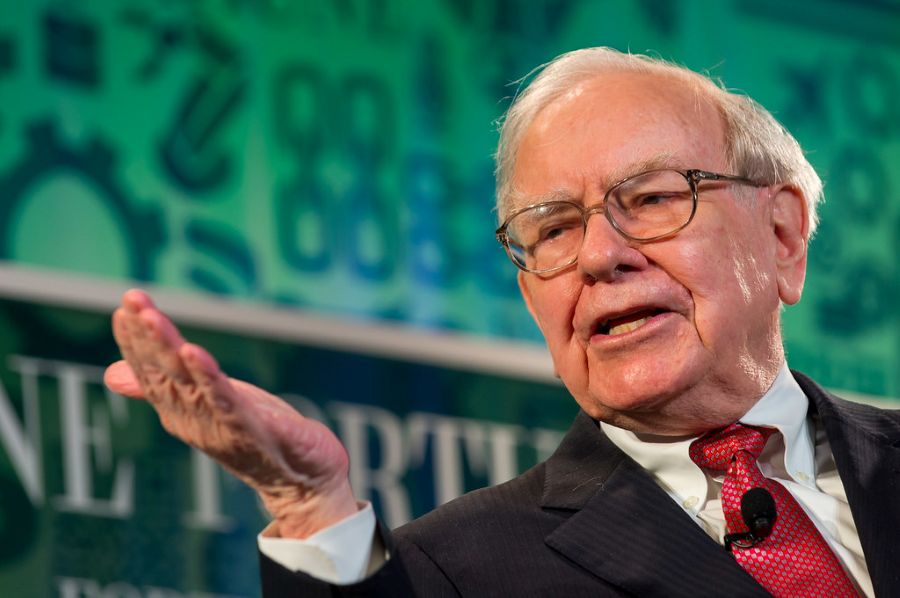
An extraordinary era in American business is coming to an end.
Warren Buffett is officially stepping away from the chairman’s seat at Berkshire Hathaway, closing another chapter in a remarkable run that stretched for more than half a century and turned the legendary investor into one of the most influential figures in modern business.
Berkshire announced Friday that Buffett, 96, will become chairman emeritus effective immediately. He isn’t cutting ties with the company entirely, however, and will remain on Berkshire’s board of directors.
Taking his place as chairman will be his son, Howard Buffett.
Howard has served as a Berkshire director since 1993 and has spent decades leading the Howard G. Buffett Foundation. His elevation to chairman represents another major piece of a succession plan Berkshire has been preparing for years.
For Warren Buffett, the announcement marks the latest — and one of the most significant — steps away from the company he spent decades building into a corporate powerhouse.
Buffett had served as Berkshire Hathaway’s chairman since 1970.
During that time, he oversaw an extraordinary transformation, taking what had once been a struggling textile business and building it into a massive conglomerate with operations spanning insurance, railroads, energy, manufacturing, retail and services.
His influence over the company’s day-to-day operations had already begun to diminish.
Buffett stepped down as Berkshire’s chief executive late last year, turning control of the company over to longtime lieutenant Greg Abel.
Now the chairman’s title is changing hands as well.
Friday’s announcement means Berkshire is entering a new era in which Abel runs the company’s operations while Howard Buffett oversees the board.
Warren Buffett, however, isn’t disappearing.
As chairman emeritus, he will remain a director and continue providing his judgment and perspective to the company’s leadership — preserving a connection between Berkshire’s future and the man who shaped its identity for generations.
Following the announcement, Abel paid tribute to the enormous impact Buffett has had on the company.
“Warren’s impact on Berkshire and its owners is without parallel in the history of American business,” Abel said in a statement. “The culture Warren built and the values he championed will remain at the heart of Berkshire, and Howard will be their guardian.”
That culture became almost as famous as Buffett himself.
Rather than chasing every new market trend, Buffett built his reputation around patience, long-term investing, disciplined acquisitions and a straightforward approach to evaluating businesses.
Under his leadership, Berkshire accumulated an enormous portfolio of operating companies while also becoming famous for taking major stock positions in some of America’s most recognizable corporations.
Along the way, Buffett became more than a corporate executive.
His annual shareholder letters, public appearances and Berkshire shareholder meetings turned the Omaha investor into one of the world’s most closely followed voices on investing, business and the American economy.
But the transition away from Buffett has been unfolding for some time.
Last year, Buffett announced that Abel would become Berkshire’s top executive. He later signaled that his own public presence would shrink, including fewer appearances at Berkshire’s annual meeting and an end to writing the company’s annual shareholder letter.
Howard Buffett’s move into the chairman’s position wasn’t unexpected either.
The younger Buffett had long been identified as an important part of Berkshire’s eventual succession structure, with his father previously describing the chairman’s role as a safeguard for the company’s distinctive culture and values once he was no longer overseeing daily operations.
That succession plan is now becoming reality.
Greg Abel is running Berkshire as CEO.
Howard Buffett is taking control of the board as chairman.
And Warren Buffett — after more than five decades at the center of one of the most remarkable corporate transformations in American history — is moving into an advisory role as chairman emeritus.
The legendary investor may still have a seat at the table.
But the company he built is officially moving into its post-Buffett leadership era.
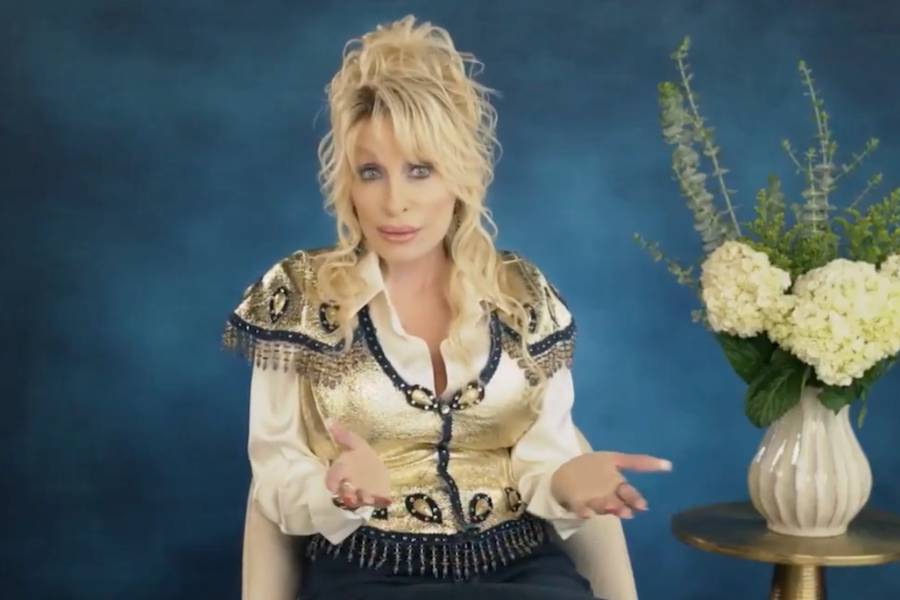
Dolly Parton had one final message for the music world — and it was delivered after her death.
The country music legend appeared on screen Wednesday night during the 2026 Americana Honors & Awards, where she was posthumously honored with the Americana Lifetime Achievement Award.
Parton died Aug. 25 at the age of 80 following what was described as a “brief battle with cancer.”
But before her death, Parton had recorded a video accepting the prestigious honor. When it played before the audience Wednesday night, fans were given one more chance to hear from the woman whose unmistakable voice, personality and songwriting helped define generations of American music.
And in classic Dolly fashion, she opened simply.
“Well, hey, it’s Dolly. I’m honored to be receiving a Lifetime Achievement Award from the Americana Music Association.”
Parton then looked back at where it all began — in Tennessee’s Smoky Mountains, surrounded by the roots music that would eventually help propel her from humble beginnings to worldwide fame.
“I mean, roots music, or what is now called Americana music, is what I grew up playing back in the Smoky Mountains,” Parton continued. “It’s that same music that drew me back to East Tennessee in 1997 to write and record my album, Hungry Again. And that project really opened the door to a series of bluegrass and acoustic albums that changed the course of my career in so many ways.”
Those projects brought Parton back to the acoustic sounds of her childhood while introducing her music to another generation of listeners.
Looking back, Parton recognized just how important that chapter had become.
“Now, new fans discovered these albums, new Americana music communities embraced them, and now looking back at it all, I see this era of my career as a musical renaissance of sorts,” Parton said. “I want to thank everyone at the AMA for recognizing me with this award. It’s a great honor truly, and just know that I will always love you.”
Those final words carried unmistakable weight.
“I will always love you” wasn’t merely a farewell. It was also a poignant reference to one of the most famous songs Parton ever wrote — turning the closing moments of her prerecorded acceptance into an especially emotional goodbye.
The tribute didn’t end there.
Dolly Parton posthumously accepts award in pre-recorded Lifetime Achievement speech 🤍 pic.twitter.com/dRzCHuzc0Q
— TMZ (@TMZ) September 17, 2026
Longtime friend and fellow country music icon Emmylou Harris took the stage to remember Parton’s extraordinary journey from a young Tennessee singer with enormous ambitions to one of the most recognizable entertainers in the world.
Harris recalled the pivotal moment in 1967 when Parton joined Porter Wagoner’s television program, an opportunity that helped introduce her to a national audience.
But Harris made clear that Parton was never destined to remain in someone else’s shadow.
“In 1967, Dolly got a good start on her big dream when she landed a gig as the girl singer with Porter Wagoner. Their duets were a hit on the show and on the charts, but Dolly was nobody’s sidekick. She wanted more and she deserved more, and she set out to get it always, always on her own terms,” Harris, 79, said. “And we all know what happened when Dolly set her sights on something.”
What happened was a career that exploded far beyond the boundaries of country music.
Parton became a crossover pop success, a movie star and an internationally recognized entertainer while maintaining the East Tennessee identity that remained central to her public image and music.
Her songwriting alone established an enormous legacy. But Harris reminded the audience that Parton’s talents went far beyond the songs she wrote.
“She was one of our all-time greatest songwriters, but she shined just as brightly on stage,” Harris shared. “She lit up the TV screen and then she, she lit up the movie screen.”
Then there was the personality.
Parton’s ability to move an audience with a song and, moments later, make that same audience laugh became one of the trademarks of her decades in the spotlight.
“Her stunningly beautiful, pure mountain voice could make us cry and then crack us up with a well-aimed, sometimes body joke,” Harris said. “There was nothing Dolly couldn’t do, and so she did it.”
The evening’s tribute ultimately returned to the music.
Brandi Carlile and I’m with Her performed Parton’s “Coat of Many Colors,” one of the songs most closely associated with her upbringing and remarkable journey from the Smoky Mountains to international superstardom.
Parton was honored alongside other recipients at Wednesday’s ceremony, including Led Zeppelin frontman Robert Plant.
But it was Parton’s own prerecorded words that provided one of the night’s most poignant moments.
A final appearance. A final thank-you.
And an ending that could hardly have been more fitting:
“Just know that I will always love you.”
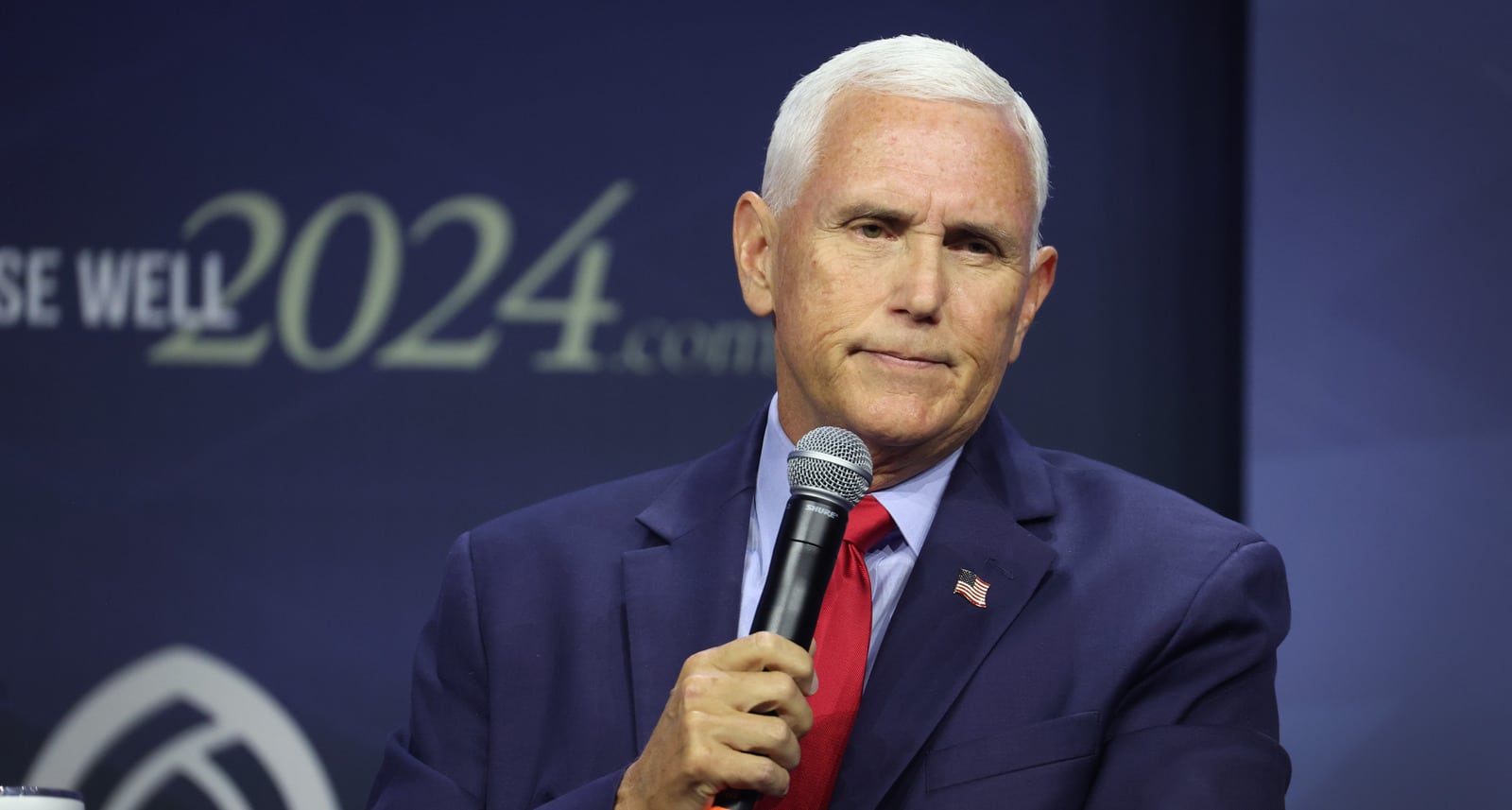
Former Vice President Mike Pence is making his plans for 2028 clear — and another run for the White House apparently isn’t part of them.
After years of political upheaval, a failed 2024 presidential campaign and a dramatic break with President Donald Trump, Pence said this week that he currently has no plans to seek the presidency — or any other elected office — in 2028.
The former vice president addressed his political future during an appearance at the Economic Club of Washington, D.C., where chairman David Rubenstein pressed him about whether voters could see his name on another presidential ballot.
“What I can tell you is that we have no plans,” Pence replied.
Rather than gearing up for another campaign, Pence said his attention is centered on his family and Advancing American Freedom, the conservative policy organization he founded after leaving the White House.
Pence said he intends to use his public platform to continue advocating for the conservative principles that have defined much of his career, including lower taxes, limited government, reduced regulation, traditional values and opposition to abortion.
“The calling of my life right now is to be a champion for these principles,” Pence said.
The comments put considerable distance between Pence and the emerging 2028 presidential contest, even as Republicans begin looking ahead to the next battle for the White House.
Pence has been down that road before.
In 2023, he launched a Republican presidential campaign that put him directly against Trump, his former running mate and the president he served alongside for four years. But Pence struggled to gain traction and suspended his campaign in October 2023, months before Republican voters began casting primary ballots.
He later declined to endorse Trump in the 2024 election.
Trump ultimately secured the Republican nomination and returned to the White House.
But the political split between the two men goes back much further.
Pence served as Trump’s vice president from 2017 until 2021 after previously serving as Indiana governor and a member of Congress. Their once-close political alliance fractured following the 2020 presidential election and the events surrounding Jan. 6, 2021.
Trump urged Pence, who was presiding over the congressional certification of the Electoral College vote, to reject or delay certification of Joe Biden’s victory.
Pence refused, concluding that the Constitution gave him no authority to do so.
Years later, he remains unapologetic about that decision.
“It was the easiest decision I’ve ever made,” Pence said. “By God’s grace I did my duty that day.”
Since leaving office, Pence has remained active in Republican politics, but increasingly as a voice arguing for a more traditional strain of conservatism as parts of the GOP have embraced populist policies.
Through Advancing American Freedom and his public appearances, Pence has continued promoting free markets, limited government, a strong American role overseas and socially conservative policies.
Earlier this year, he argued that Republicans should determine what principles they want their party to stand for before becoming consumed with the question of who should carry the GOP banner in 2028.
Now Pence appears to be taking himself out of that conversation — at least for the time being.
Notably, he stopped short of declaring that he would never seek public office again. His wording was narrower: He has “no plans” to run in 2028.
For the foreseeable future, however, Pence says his focus is on advancing his political philosophy rather than launching another campaign.
And his willingness to publicly challenge Trump hasn’t disappeared.
Earlier this year, Pence broke with the president over the possibility that people involved in the Jan. 6 Capitol riot could receive taxpayer-funded compensation.
Speaking with Axios while discussing his book *What Conservatives Believe*, Pence described Jan. 6 as a “tragic day” and drew a firm line when it came to people who committed violence against law enforcement.
“I didn’t agree with the President when he pardoned people who engaged in violence against law enforcement officials,” Pence said.
Then he went further.
“And it would be my hope that anyone who engaged in violence against law enforcement or at the Capitol building would never be rewarded with taxpayers’ money.”
The comments underscored a political divide that has persisted years after Pence left the vice presidency.
For now, Pence appears prepared to remain part of the conservative debate — just not as a candidate in 2028.

Warren Buffett Makes Shocking Announcement

Dolly Parton Delivers Stunning Video Message Weeks After Her Death

Get Ready — Mike Pence Makes Stunning 2028 Announcement

Trump Chief Of Staff Susie Wiles Shares Shocking Personal News

JD Vance Issues Stunning New Warning – Didn’t Expect This!

Removed From the Country — Ilhan Omar Hit With Horrid News

‘The Five’ Gets Emotional As Greg Gutfeld Announces Tragic News

‘EFFECTIVE IMMEDIATELY’ — Barack Obama Gets Devastating News

Everyday Americans Being Treated As Criminals — Including You, Right Now

Schumer Loses! Court Sides With Trump In Historic Move

HUGE: 9/11 Widow Goes Rogue, Makes Damning Call Out During Ground Zero Ceremony
Removed From the Country — Ilhan Omar Hit With Horrid News
-
 Economy5 months ago
Vance Leaves Meeting, Looks Straight Into Camera, Announces Stunning Arrest
-
 Economy5 months ago
Adam Schiff Facing 30 Years In Prison After Bank Records Leak
-
 Economy5 months ago
Supreme Curt Sides With Trump — He Can Remove The All
-
 Culture3 months ago
Michelle Obama Drops Nasty Bomb About ‘Useless’ Daughter
-
 Economy5 months ago
All Hell Breaks Loose On Fox When Jesse Watters Asks Fetterman One Question
-

 Economy3 months ago
Prayers Pour In After Fox Host Dies: ‘Senseless Murder’
-

 Latest3 months ago
Fox News Stuns With Announcement About 5 Fired Hosts
-
 Economy5 months ago
NBC Stops LIVE Broadcast — Breaks Big Trump News