
Latest
Report: Chinese propaganda, Singham network, foreign dark money linked to campaigns against data centers

On Sunday, CodePink, a far-left, pro-China, pro-communism nonprofit activist group, published a video on Instagram attacking a proposed data center project in Utah backed by investor Kevin O’Leary.
According to a new report, obtained by Fox News Digital, that wasn’t a coincidence.
The report, “Foreign Influence in the Campaign against American AI,” by the Bitcoin Policy Institute, alleges that there are “three vectors of foreign influence converging on the push to block U.S. AI data center construction.”
They include a nonprofit network funded by tech tycoon Neville Roy Singham, a U.S. expatriate living in Shanghai promoting Chinese propaganda; Chinese Communist Party state media; and dark money funding tied to foreign billionaires including Swiss billionaire Hansjörg Wyss and British billionaire Alan Parker.
The report alleges nonprofits funded by Singham — including CodePink — have spent years fueling opposition to U.S. AI infrastructure and data center expansion in coordination with Chinese propaganda narratives and foreign-funded activist networks. As reported, in February 2017, Singham married Jodie Evans, the co-founder of CodePink in a lavish wedding in Jamaica, and, according to a Fox News Digital investigation, Singham pumped $285 million into six nonprofits over the next several years, using a series of shell companies and a donor-advised fund established at a philanthropy arm of Goldman Sachs. A spokesman for Goldman Sachs told Fox News Digital that the company “terminated” Singham’s donor-advised fund in early 2024.
Still, the network of organizations that Singham has funded have continued to act as proxies for the propaganda of the Chinese Communist Party.
On March 25, amid campaigns by Singham organizations against U.S. technology firms, Sen. Bernie Sanders and Rep. Alexandria Ocasio-Cortez introduced the “AI Data Center Moratorium Act.” Weeks later, on April 29, Sanders hosted a Capitol Hill event titled “The Existential Threat of AI.”
According to the report, two of the four panelists at that event were affiliated with the Chinese government: Zeng Yi, founding dean of the Beijing Institute of AI Safety and Governance, and Xue Lan, a counselor of China’s State Council and chair of China’s National AI Governance Committee.
Singham, Evans, Wyss, Parker Sanders, Ocasio-Cortez didn’t respond to requests for comment. The organizations named in the report didn’t respond to requests for comment.
BERNIE SANDERS’ PLANS TO SCHMOOZE WITH TOP BEIJING AI EXPERTS IGNITES BACKLASH: ‘HOLY SH–‘
The report states that, using a U.S. Senate platform, Xue argued that the U.S.-China AI race was “an inaccurate narrative” and promoted “safe zones” of cooperation on AI governance, messaging the report says paralleled years of Chinese state media narratives surrounding AI policy and American technological development.
Sam Lyman, head of research at the Bitcoin Policy Institute and a former senior speechwriter for Treasury Secretary Scott Bessent, said, “Ensuring that AI is safe and empowers American workers must be a top priority for US policymakers. But the discussion about AI safety should not be influenced by geopolitical rivals, especially China, whose leaders have publicly stated their intentions to accelerate AI development to ‘gain the initiative in global science and technology competition.’”
“Depending on advances in this field, there may come a time when the United States and China must engage in bilateral negotiations to ensure the safe development of AI,” Lyman said. “But until then, an honest conversation about AI safety requires filtering any foreign influence. This report provides the transparency citizens and lawmakers need to see who is funding and influencing the campaigns shaping the AI policy debate.”
STEVE FORBES: THE AI COLD WAR HAS BEGUN AND AMERICA CANNOT AFFORD TO LOSE
The convergence of interest groups opposing data centers isn’t a coincidence, the report alleges.
“These events did not take place in isolation,” says the report. “They were the culmination of a multi-year influence campaign against American AI conducted across three vectors of foreign influence.”
The report specifically alleges that Beijing’s state-run media outlets — including CGTN, China Daily and Global Times — have pushed anti-data-center narratives inside the United States while China simultaneously subsidizes domestic AI infrastructure development.
“The asymmetry is what gives the operation away,” the report argues. “While Beijing’s state media warns American audiences that data centers are environmentally and economically dangerous, the Chinese state subsidizes up to half of the energy costs of its own AI data center operators.”
The report further alleges that the Singham network “has spent nearly five years producing parallel domestic content opposing U.S. AI infrastructure, AI labs, and AI export controls.”
It points to multiple examples involving organizations linked to the network.
GORDON CHANG: A LOT OF OUR ANTI-AMERICAN PROTESTS ARE MADE IN CHINA
In January 2026, CodePink published an article titled “The War Intervention: AI, Data Centers, and the Environment,” directly targeting U.S. AI data centers, including Meta’s Hyperion project in Louisiana and Meta Cheyenne in Wyoming, while framing the fight as opposition to “the new Cold War on China.”
The report also cites Tricontinental: Institute for Social Research, a Singham-funded think tank, for repeatedly opposing U.S. semiconductor export controls and criticizing efforts to limit China’s AI development.
On March 27, Tricontinental published an article, “Breaking the Stranglehold: How China Is Shattering US Technological Hegemony,” arguing against U.S. AI chip restrictions and portraying American export controls as an attempt to suppress China’s rise.
That same day, Peoples Dispatch — which is also part of the Singham ecosystem — published “Kill Chain: Silicon Valley, AI, and the war on Iran,” attacking AI companies including Anthropic and Palantir Technologies. The report describes the same-day publication pattern across affiliated outlets as evidence of coordinated messaging operations.
By May 1, CodePink published an article, “The Dark Side of the Data Center Boom,” adding to the cacophony of coordinated protests against U.S. data centers.
The House Ways and Means Committee, House Oversight Committee and the House Select Committee on the Chinese Communist Party are investigating whether some of the nonprofits should register under the Foreign Agents Registration Act, or FARA. The House Ways and Means Committee has issued letters to Singham-funded organizations, seeking internal documents related to their funding, operations and connections to Singham and the Chinese Communist Party.
On foreign funding, the report alleges that charitable organizations tied to Wyss and Parker have routed billions of dollars into U.S.-based advocacy infrastructure now aligned against AI infrastructure projects and data centers.
It specifically highlights a Dec. 8, 2025, letter organized by Food & Water Watch, a nonprofit, calling for a national moratorium on new AI data centers. According to the report, about 230 organizations signed the letter, including groups receiving funding from networks linked to Wyss and Parker.
The report notes that the Sanders-Ocasio-Cortez moratorium legislation was introduced 107 days after the coalition letter was circulated.
“That kind of efficiency typically distinguishes coordinated advocacy infrastructure from spontaneous grassroots opposition,” the AI Policy Institute states.
The report argues that “ensuring that AI is safe and empowers American workers must be a top priority for U.S. policymakers,” but says the debate over AI safety and data centers “should not be influenced by a geopolitical rival.”
In its conclusion, the report frames the debate in stark geopolitical terms, arguing that “the choice facing policymakers is not between AI or no AI but between American AI or Chinese AI.”
By early afternoon on Monday, the CodePink video opposing the Utah data center project had acquired 356 likes, many of them from the pro-China, pro-communist activist ecosystem.

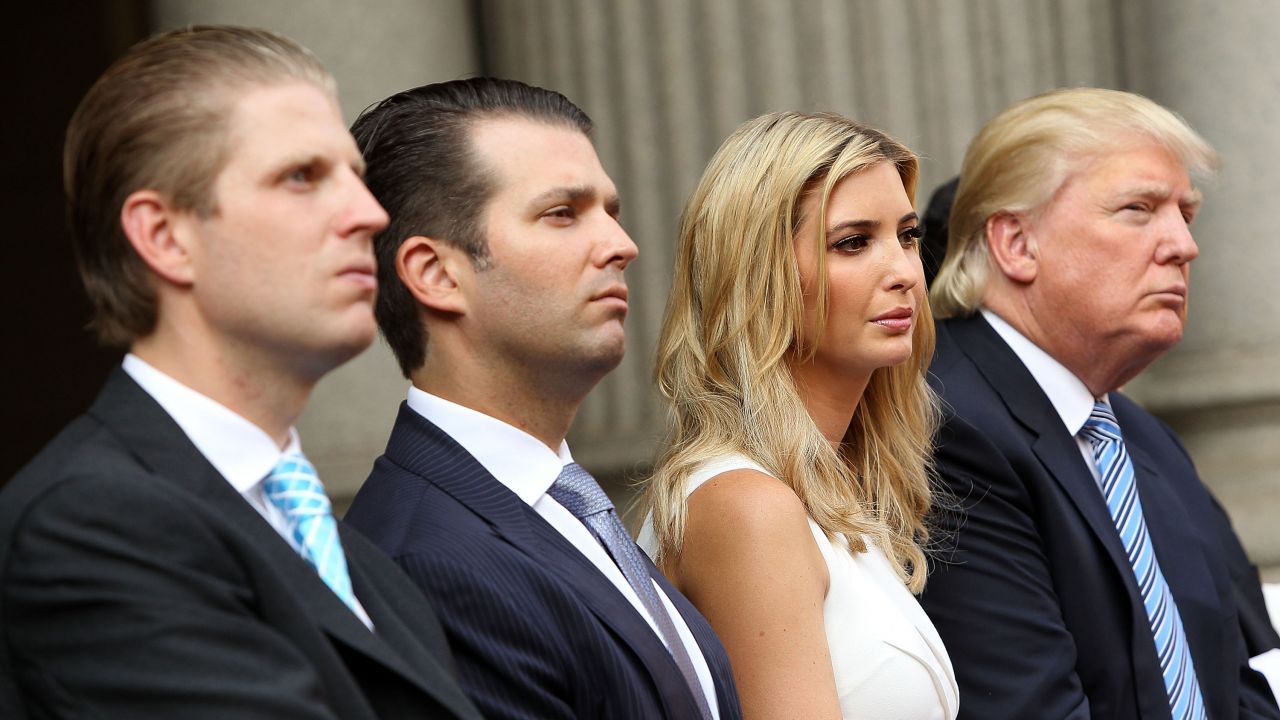
A member of President Donald Trump’s family is undergoing an unconventional treatment after a painful setback threatened to derail a highly anticipated athletic debut — and initially raised fears that another surgery could be ahead.
The athlete is Trump’s 19-year-old granddaughter, Kai Trump, who reinjured her surgically repaired wrist while making her college golf debut for the University of Miami at South Carolina’s Golfweek Fall Challenge.
The frightening moment came when Kai struck the ground near a cart path and immediately felt a shock shoot through her arm.
“Let’s just say there must have been some cart path underneath that ground because it was very hard,” Kai explained.
She managed to keep playing, but several holes later, things took a more alarming turn.
“Then on the tenth hole, I hit my driver, and I felt like I tore it again,” she said.
That sensation was particularly concerning because Kai had already undergone surgery on the same wrist earlier this year.
The procedure addressed damage to her triangular fibrocartilage complex as well as stabilizing tissues surrounding the extensor carpi ulnaris tendon.
Kai had been working toward returning pain-free in time to begin her freshman season with the Miami Hurricanes.
Suddenly, during her college debut, she feared she had damaged the repaired area all over again.
Medical testing after the tournament, however, delivered some encouraging news.
Kai said she had not completely torn the repaired area.
Instead, she described the new damage as a “little sliver” involving cartilage and ligaments inside her wrist.
Most importantly, she said doctors determined that another surgical procedure was not necessary.
Kai instead turned to stem cell injections administered by pain-management specialist Dr. Jeffrey Weigers.
In a video documenting her recovery, Kai identified the treatment she received as Dezawa MuseCells as she works toward getting back onto the golf course.
The treatment comes during what has already been a challenging transition into collegiate competition.
Despite the wrist pain, Kai completed all three rounds of the Golfweek Fall Challenge at Caledonia Golf and Fish Club.
She finished tied for 102nd in the 120-player field.
But the final leaderboard did not reflect the physical setback she was dealing with after aggravating a wrist that had already required surgery.
Kai committed to the University of Miami in 2024 after establishing herself as a competitive junior golfer.
Miami coach Janice Olivencia previously described her as a developing player who would bring considerable energy and excitement to the Hurricanes program.
Her arrival at Miami generated substantial attention because of her family, large social-media following and aspirations in competitive golf.
Kai is the eldest child of Donald Trump Jr. and Vanessa Trump and President Trump’s eldest grandchild.
She stepped onto the national political stage during the 2024 Republican National Convention, where she delivered a speech about her grandfather.
But golf has increasingly become a major part of her public profile.
Kai won club championships at Trump International Palm Beach and developed a competitive handicap before beginning her college career.
She also made her LPGA Tour debut last November, becoming the youngest player in that tournament’s field.
Her move into college athletics has brought challenges away from the course as well.
Kai documented leaving her home in Jupiter, Florida, and acknowledged the emotional difficulty of saying goodbye to her family and friends as she began college.
“I’m not a very emotional person at all, so this is like really weird for me to cry,” she said.
Despite those emotions, Kai expressed excitement about beginning the next stage of her life as a student-athlete.
Now the wrist injury has added another obstacle just as that chapter begins.
Kai has publicly documented the setback, including both the frightening moment when she believed she had torn the wrist again and the subsequent medical findings indicating she could avoid another operation.
That could prove significant for her freshman season.
The Hurricanes are scheduled to compete in the Ruth’s Chris Tar Heel Invitational beginning Oct. 16 in North Carolina.
That gives Kai several weeks to undergo treatment, monitor the injury and determine whether her wrist can withstand a return to competitive golf.
Whether she can participate will ultimately depend on her recovery and whether she can swing without triggering additional pain.
For now, avoiding another surgery represents an encouraging development after a debut that suddenly threatened to turn into a much longer setback.
Kai’s famous last name ensures that her performances will receive more attention than those of most freshman golfers.
But after surgery, months of rehabilitation and now another painful injury to the same wrist, her immediate challenge is one familiar to athletes at every level: getting healthy enough to compete again.
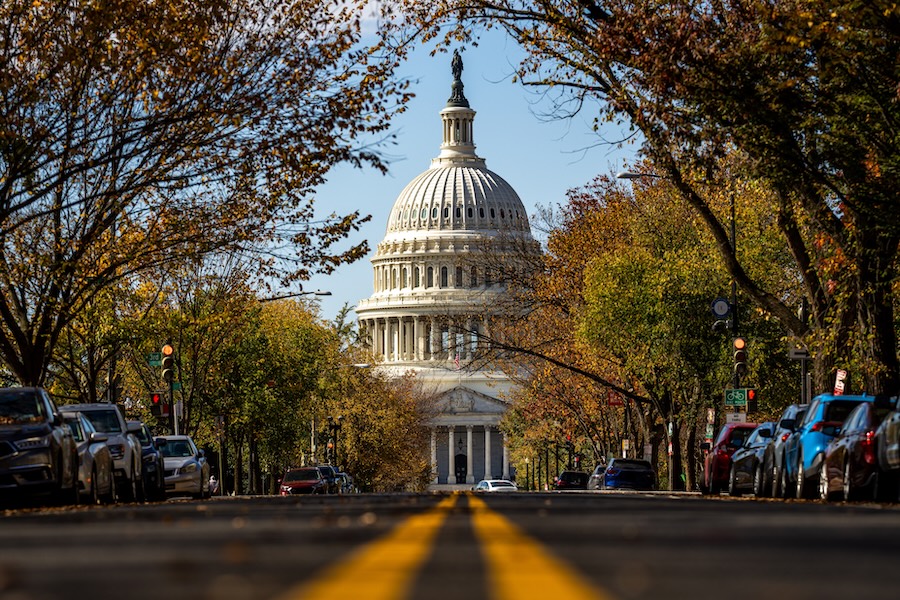
Democrats’ own internal polling has delivered a striking result in one of Ohio’s most closely watched congressional races, showing longtime Democratic Rep. Marcy Kaptur locked in a dead heat with Republican challenger Derek Merrin.
The Democratic Congressional Campaign Committee’s latest survey puts Kaptur and Merrin at exactly 48% each in Ohio’s 9th Congressional District.
Just 4% of likely voters remain undecided with the November election approaching.
The numbers underscore just how competitive the contest has become following Ohio’s mid-decade redistricting, which changed the political makeup of the district Kaptur is fighting to retain.
But another result buried inside the Democrats’ own polling makes the tie particularly notable.
President Donald Trump’s job approval stands at just 35% in the district, while 54% disapprove — a 19-point negative gap, according to the DCCC’s Sept. 29 memo.
Yet Republican Derek Merrin is still running even with the Democratic incumbent.
The DCCC says Trump carried the current district by 11 percentage points in the 2024 presidential election.
Despite Trump’s current approval numbers in the Democratic survey, Merrin still captures 48% against Kaptur.
The DCCC emphasized several numbers it views as encouraging for the incumbent.
According to the committee, Kaptur has consolidated 95% of Democratic voters and is leading among independents, although the memo did not disclose the precise breakdown of independent support.
The committee also said Kaptur is running ahead of both Democratic statewide candidates in the district.
It did not identify those candidates or provide their polling numbers in the memo.
Democrats portrayed the tied race as evidence that Kaptur continues to outperform the underlying political environment of her district, pointing to her record and campaign emphasis on lowering costs and representing Northwest Ohio.
The DCCC also sought to blame Republicans for rising household expenses, citing costs including groceries, gasoline, health care and utility bills.
Those arguments represent the Democratic committee’s characterization of the political environment rather than independent findings from the poll.
And despite the DCCC’s upbeat assessment of Kaptur’s position, its own headline number remains unmistakably close.
Kaptur: 48%.
Merrin: 48%.
Undecided: 4%.
Neither candidate has broken the 50% mark, and the difference between them is zero.
The survey was conducted by the DCCC Analytics Department from Sept. 22 through Sept. 23 among 481 likely general-election voters in Ohio’s 9th District.
Respondents were contacted through phone and text-to-web interviews.
The poll carries a margin of error of plus or minus 4.5 percentage points at the 95% confidence level.
That means the survey should be viewed as a snapshot rather than evidence that either candidate holds a measurable lead.
But with the Democratic Party’s own polling showing its incumbent tied with Merrin, Ohio’s 9th District remains a closely contested battleground heading into the final stretch before November.

Passengers aboard an Israel-bound jet were thrown into a terrifying midair emergency Wednesday after a violent incident inside the cockpit sent the aircraft plunging and triggered initial fears that the plane had been hijacked.
The Flydubai flight ultimately made an emergency landing in Saudi Arabia — but Israeli officials say the crisis began when the co-pilot allegedly stabbed the captain.
Flight FZ1073 had departed Dubai for Ben Gurion Airport near Tel Aviv when the confrontation erupted aboard the Boeing 737.
Two Israeli officials told Reuters that the co-pilot was believed to have stabbed the captain before cabin crew entered the cockpit and helped bring the situation under control.
Israeli authorities are now investigating whether the incident may have been an attempted “terror attack.”
For the passengers trapped aboard the aircraft, the moments that followed were terrifying.
One passenger described panic throughout the cabin as the aircraft suddenly began losing altitude.
“There are many different accounts, but apparently the co-pilot stabbed the captain and collapsed onto the controls, shutting down the entire instrument panel. We began plunging downward for several minutes. Everyone on the plane was screaming, the overhead compartments opened, and the power went out. We were sure we were going to die. It was very scary,” the passenger said.
Flydubai has confirmed that an incident occurred aboard the aircraft and that the plane landed safely in Tabuk, Saudi Arabia.
The airline has not publicly confirmed the reported stabbing or explained what caused the confrontation inside the cockpit.
Both pilots were hospitalized with injuries, according to Reuters.
Flight-tracking data showed just how severe the emergency became.
The aircraft reportedly dropped nearly 14,000 feet in less than 30 seconds before transmitting an emergency signal.
The jet initially squawked 7700 — the universal transponder code indicating a general emergency.
It then briefly switched to 7500.
That code signals possible unlawful interference with an aircraft and immediately intensified concerns that a hijacking or other security incident could be unfolding.
The aircraft later switched back to 7700 before safely landing in Tabuk.
Israeli authorities responded rapidly as the crisis developed.
With more than 100 Israeli passengers reportedly aboard, officials initially feared the aircraft could have been hijacked and scrambled fighter jets.
A regional official confirmed that an altercation apparently involving the pilots had occurred inside the cockpit, although investigators were still working to establish exactly what happened.
“The crew have been questioned as part of the investigation,” the regional official said, according to The Associated Press, without specifying whether anyone had been detained.
Passengers told Israeli media that shouting could be heard near the front of the aircraft shortly before the plane suddenly descended.
Capt. Meidan Barr, former chairman of the Israel Airline Pilot Association, said a rapid loss of altitude of that magnitude would ordinarily resemble an emergency maneuver used after a serious problem such as cabin depressurization.
“Losing like 15,000 feet in two or three minutes, that is something that you do in, like, an emergency descent when you lose pressure,” Barr said.
Barr noted that the aircraft’s successful landing was particularly important because investigators would now have access to the plane and its systems as they attempt to reconstruct exactly what occurred.
After touching down in Tabuk, passengers reportedly remained aboard while Saudi security forces surrounded the aircraft.
The incident also prompted an immediate response at the highest levels of the Israeli government.
Israeli Prime Minister Benjamin Netanyahu convened security consultations and cleared the remainder of his schedule while officials worked to determine whether the incident was connected to a broader security threat.
Israel’s airspace was temporarily closed before reopening after the Flydubai aircraft landed safely.
Flydubai subsequently acknowledged the diversion while stopping short of confirming the more serious allegations surrounding what happened inside the cockpit.
“Our teams are working closely with the relevant authorities,” the carrier said. “Further updates will be issued as additional confirmed details become available.”
The motive behind the reported cockpit attack remains under investigation.
Israeli officials are examining whether the episode could constitute a terror incident, while Flydubai has so far publicly confirmed only that an in-flight incident occurred, the aircraft diverted safely to Saudi Arabia and the passengers were safe.
Investigators must now determine what triggered the confrontation, exactly what happened between the two pilots and whether the incident was an isolated act or something more serious.

NEW: Trump Family Rocked After Sudden Hospitalization

Longtime Democrat Rep. Losing Grip On Key Seat

Commercial Flight Makes Emergency Landing After Co-Pilot Stabs Captain, Nose Dives Plane

Kristi Noem Shares Huge Relationship News After Months Of Speculation

BREAKING: FBI Rocked By Sudden Shocking Resignation

Fox News Under Fire After Hiring Notorious Democrat; Ex-Host Explodes

‘The Five’ Gets Emotional As Greg Gutfeld Announces Tragic News

Joe Biden’s Daughter Just Dropped Massive Public Bombshell On Her Dad

Removed From the Country — Ilhan Omar Hit With Horrid News

Obama Calls It QUITS After Wild Video Goes Viral

Get Ready — Mike Pence Makes Stunning 2028 Announcement

Schumer Loses! Court Sides With Trump In Historic Move
-
 Economy6 months ago
Vance Leaves Meeting, Looks Straight Into Camera, Announces Stunning Arrest
-
 Economy6 months ago
Adam Schiff Facing 30 Years In Prison After Bank Records Leak
-
 Economy6 months ago
Supreme Curt Sides With Trump — He Can Remove The All
-

 Culture3 months ago
Michelle Obama Drops Nasty Bomb About ‘Useless’ Daughter
-
 Economy6 months ago
All Hell Breaks Loose On Fox When Jesse Watters Asks Fetterman One Question
-
 Economy4 months ago
Prayers Pour In After Fox Host Dies: ‘Senseless Murder’
-

 Latest3 months ago
Fox News Stuns With Announcement About 5 Fired Hosts
-

 Border & Security2 months ago
Top Trump Admin And Wife Found Dead — Chilling Update Just Released