
Politics
Republicans block Jeffries’ gambit to curb Trump’s Iran war powers


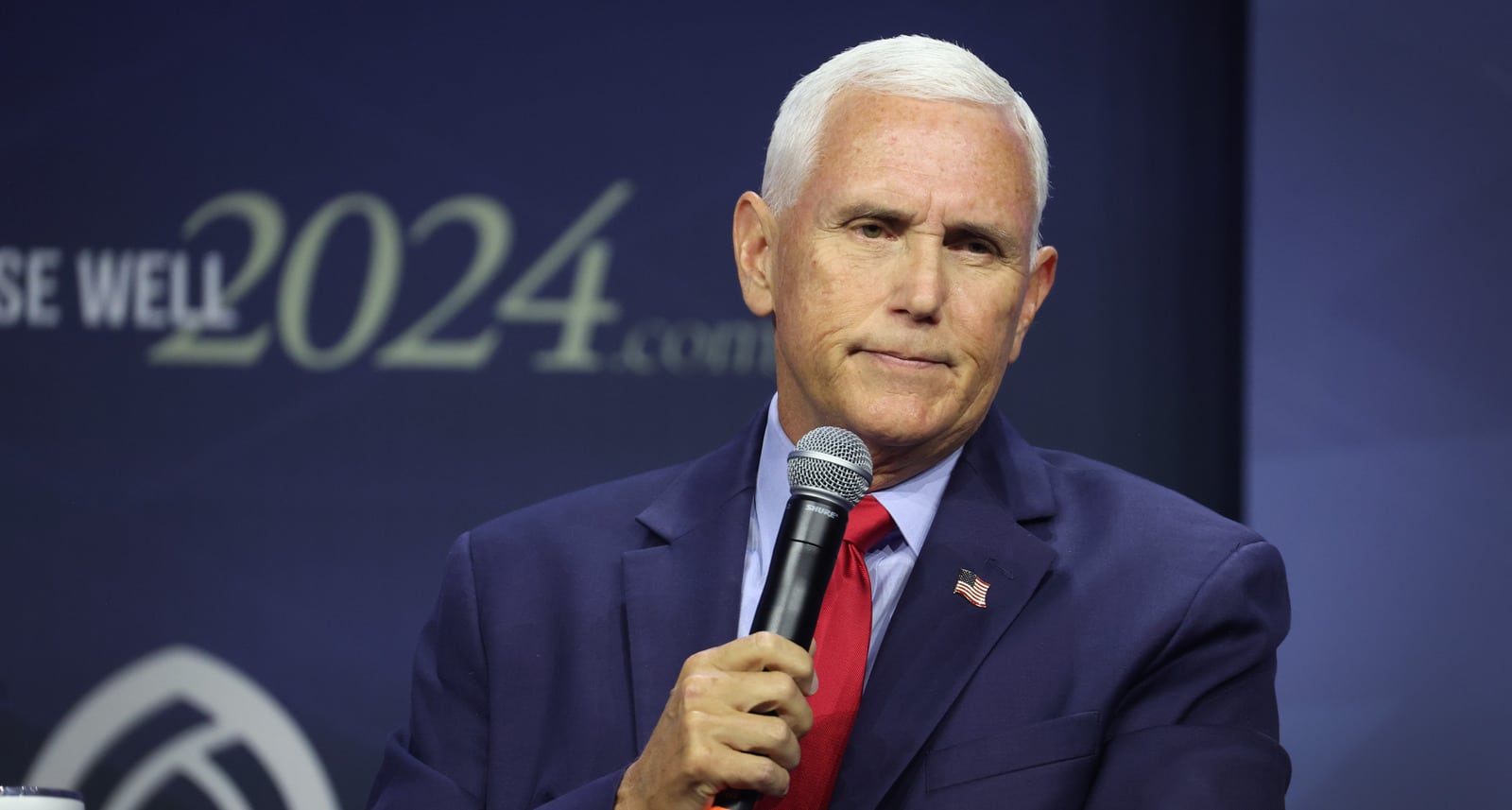
Former Vice President Mike Pence is making his plans for 2028 clear — and another run for the White House apparently isn’t part of them.
After years of political upheaval, a failed 2024 presidential campaign and a dramatic break with President Donald Trump, Pence said this week that he currently has no plans to seek the presidency — or any other elected office — in 2028.
The former vice president addressed his political future during an appearance at the Economic Club of Washington, D.C., where chairman David Rubenstein pressed him about whether voters could see his name on another presidential ballot.
“What I can tell you is that we have no plans,” Pence replied.
Rather than gearing up for another campaign, Pence said his attention is centered on his family and Advancing American Freedom, the conservative policy organization he founded after leaving the White House.
Pence said he intends to use his public platform to continue advocating for the conservative principles that have defined much of his career, including lower taxes, limited government, reduced regulation, traditional values and opposition to abortion.
“The calling of my life right now is to be a champion for these principles,” Pence said.
The comments put considerable distance between Pence and the emerging 2028 presidential contest, even as Republicans begin looking ahead to the next battle for the White House.
Pence has been down that road before.
In 2023, he launched a Republican presidential campaign that put him directly against Trump, his former running mate and the president he served alongside for four years. But Pence struggled to gain traction and suspended his campaign in October 2023, months before Republican voters began casting primary ballots.
He later declined to endorse Trump in the 2024 election.
Trump ultimately secured the Republican nomination and returned to the White House.
But the political split between the two men goes back much further.
Pence served as Trump’s vice president from 2017 until 2021 after previously serving as Indiana governor and a member of Congress. Their once-close political alliance fractured following the 2020 presidential election and the events surrounding Jan. 6, 2021.
Trump urged Pence, who was presiding over the congressional certification of the Electoral College vote, to reject or delay certification of Joe Biden’s victory.
Pence refused, concluding that the Constitution gave him no authority to do so.
Years later, he remains unapologetic about that decision.
“It was the easiest decision I’ve ever made,” Pence said. “By God’s grace I did my duty that day.”
Since leaving office, Pence has remained active in Republican politics, but increasingly as a voice arguing for a more traditional strain of conservatism as parts of the GOP have embraced populist policies.
Through Advancing American Freedom and his public appearances, Pence has continued promoting free markets, limited government, a strong American role overseas and socially conservative policies.
Earlier this year, he argued that Republicans should determine what principles they want their party to stand for before becoming consumed with the question of who should carry the GOP banner in 2028.
Now Pence appears to be taking himself out of that conversation — at least for the time being.
Notably, he stopped short of declaring that he would never seek public office again. His wording was narrower: He has “no plans” to run in 2028.
For the foreseeable future, however, Pence says his focus is on advancing his political philosophy rather than launching another campaign.
And his willingness to publicly challenge Trump hasn’t disappeared.
Earlier this year, Pence broke with the president over the possibility that people involved in the Jan. 6 Capitol riot could receive taxpayer-funded compensation.
Speaking with Axios while discussing his book *What Conservatives Believe*, Pence described Jan. 6 as a “tragic day” and drew a firm line when it came to people who committed violence against law enforcement.
“I didn’t agree with the President when he pardoned people who engaged in violence against law enforcement officials,” Pence said.
Then he went further.
“And it would be my hope that anyone who engaged in violence against law enforcement or at the Capitol building would never be rewarded with taxpayers’ money.”
The comments underscored a political divide that has persisted years after Pence left the vice presidency.
For now, Pence appears prepared to remain part of the conservative debate — just not as a candidate in 2028.
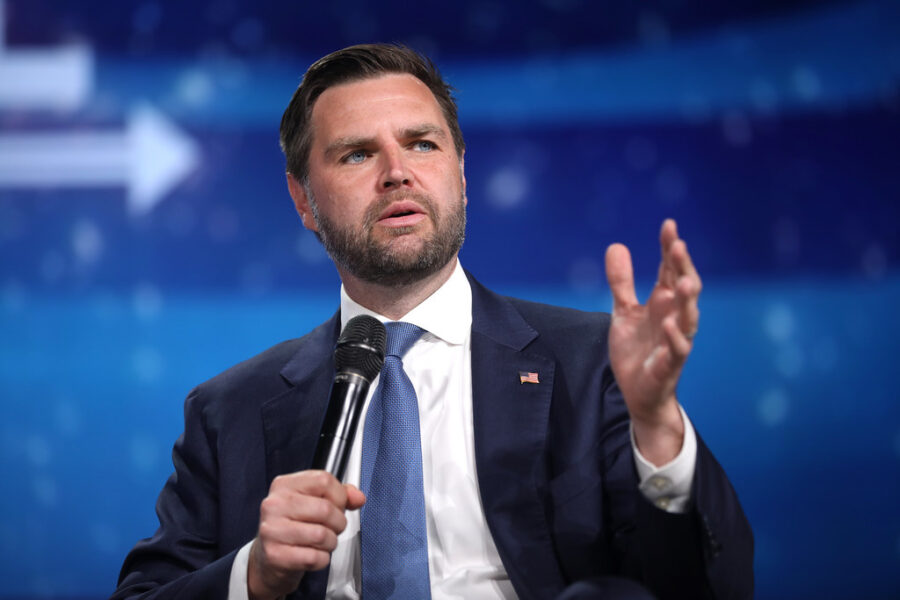
Vice President JD Vance delivered a pointed message about one of America’s closest Middle Eastern partners this week, arguing that even longstanding alliances have limits when another country’s priorities diverge from those of the United States.
Speaking by video at the All-In Summit in Los Angeles, Vance said Israel remains an important American partner — particularly in military technology and intelligence — but made clear that partnership does not require Washington to follow the Israeli government’s position on every issue.
“Obviously Israel has been an important partner when it comes to military technology, when it comes to intelligence sharing, but also sometimes the United States doesn’t always agree with Israel,” Vance said.
He then laid out what he described as the guiding principle for the relationship.
“Rooting this relationship, like all relationships, in America’s interest is the way to actually have a rational conversation here.”
Let’s all take a moment to actually watch this exchange in full, where the VP was specifically asked about Israel.
Q: JD, before we wrap here, I want to ask you another hard question. This one about our relationship with the state of Israel and the president’s relationship… https://t.co/mvGI0RFc8A pic.twitter.com/tbHwS0XHpq
— Taylor Van Kirk (@VPCommsDir) September 16, 2026
The vice president’s comments came during a discussion with All-In Podcast co-host Jason Calacanis that touched on the U.S.-Israel alliance, President Donald Trump’s relationship with Israeli Prime Minister Benjamin Netanyahu and concerns among some on the political right about the degree of American alignment with Israel.
Vance argued that Trump has demonstrated a greater willingness than other recent presidents to break with Netanyahu when the two governments’ interests conflict.
“I think that more than frankly any president in the last 40 years, he has shown a willingness to actually part ways with Bibi Netanyahu when he feels like the interests of the American people are different from the interests of the government of Israel,” the vice president continued.
Vance expanded on that argument, portraying Trump’s approach as one in which cooperation with Israel remains important but does not override decisions the administration believes should be made in America’s interests.
“Donald Trump is the one president of the last 40 years who’s been willing to say, ‘You know what? Yeah, Bibi’s a good partner, but also Bibi and I have a different opinion on this, or Bibi’s wrong about this, or maybe Bibi’s right about this from the perspective of Israel, but the American people need us to go in a different direction.’”
Vance also called it “a little ironic” that some Democrats have criticized Trump’s relationship with Netanyahu, given what Vance characterized as Trump’s willingness to disagree with the Israeli leader.
But Vance’s most striking remarks came when he broadened the discussion beyond Israel and compared the relationship to America’s alliances within NATO.
His argument was straightforward: having an important ally does not mean allowing that ally to determine U.S. foreign policy.
“There are obviously a lot of important relationships, a lot of important partnerships in NATO, but that doesn’t mean that we’re going to completely make our European foreign policy subservient to NATO in the same way that we cannot let our Middle Eastern foreign policy be subservient to the State of Israel,” Vance said.
He then summarized the administration’s approach in unmistakable terms.
“We’re going to work with people when we work with them. We’re going to disagree when we disagree, and we’re going to pursue America’s interests. That’s the only way to have a rational foreign policy.”
The remarks draw a distinction between maintaining the U.S.-Israel alliance and automatically aligning American policy with the Israeli government’s position.
Vance did not argue for ending or downgrading the partnership. Instead, he specifically cited military technology and intelligence sharing as areas in which Israel remains an important U.S. partner.
At the same time, his comments emphasized that disagreements between Washington and Jerusalem are possible — and, in his view, should not be avoided when American and Israeli priorities diverge.
That approach was at the center of Vance’s message throughout the discussion: alliances remain valuable, but decisions made in Washington should ultimately be based on what the administration determines serves American interests.
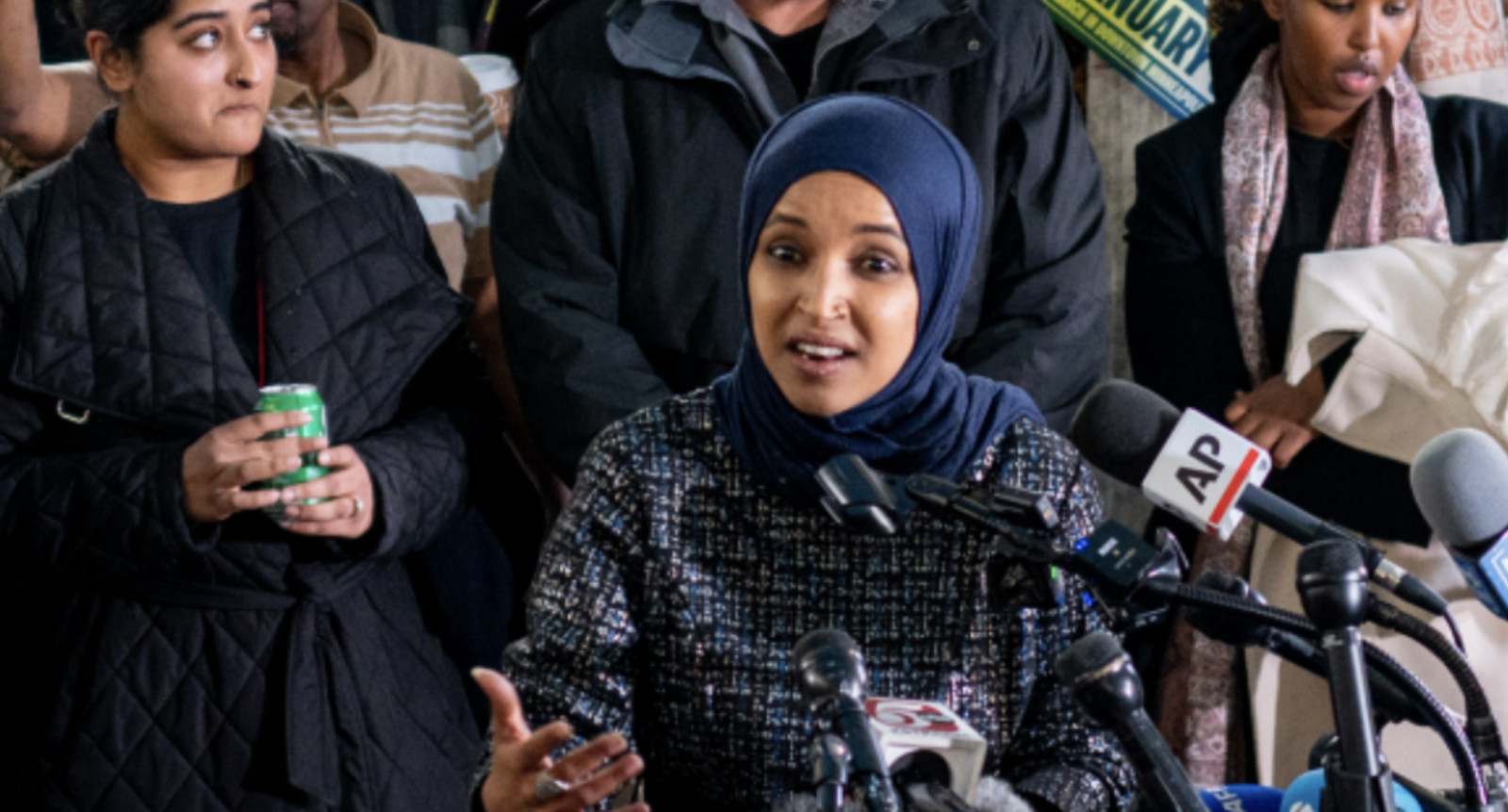
The federal investigation involving Democratic Rep. Ilhan Omar is drawing renewed attention — but the issue investigators may ultimately focus on could be very different from the explosive allegation that has followed the Minnesota congresswoman for years.
Current and former immigration officials say questions surrounding Omar’s path to U.S. citizenship could present a more consequential legal issue than longstanding accusations involving her former husband, Ahmed Elmi.
White House border czar Tom Homan recently confirmed that Homeland Security Investigations is conducting what he described as an ongoing criminal investigation involving Omar. He stopped short of revealing precisely what investigators are examining or whether authorities have uncovered evidence of wrongdoing.
“I know things are going on, but I can’t give specifics of what’s happening,” Homan said.
Homan said investigators would pursue immigration violations or marriage fraud regardless of the person involved, adding that “no one’s above the law.”
Homeland Security Secretary Markwayne Mullin has separately made allegations concerning Omar’s marriage and suggested federal officials are examining her family’s broader immigration history.
“Something’s going to happen,” Mullin said.
But despite the escalating rhetoric from administration officials, federal authorities have publicly announced no charges or findings against Omar.
The Marriage Allegation Faces Major Legal Questions
For years, critics have alleged that Omar’s 2009 marriage to British national Ahmed Elmi was fraudulent and that Elmi was actually her brother.
Omar has repeatedly and emphatically denied those accusations.
The allegation has circulated through political circles and portions of Minnesota’s Somali community for years, but it has never been established by a criminal conviction, civil judgment or publicly released government finding.
And according to immigration attorneys and former officials cited in recent reporting, even proving wrongdoing connected to that marriage would not necessarily create a straightforward route toward removing Omar from the country.
Omar was already a U.S. citizen when she married Elmi.
There is another major complication: time.
The marriage legally ended in divorce in 2017, potentially creating substantial statute-of-limitations problems for any criminal prosecution based solely upon alleged marriage fraud.
That has pushed attention toward a different question — one reaching much further back into Omar’s history.
Investigators Could Examine How Omar Became a Citizen
Omar has said she arrived in the United States as a refugee after her family fled Somalia and later became an American citizen at 17 through her naturalized father, Nur Said Mohamed.
That timeline could prove important.
Under the citizenship rules applicable at the time, derivative citizenship for a child depended on several legal requirements, including age, parental citizenship, custody and permanent-residency circumstances.
Omar says she obtained citizenship in 2000 while she was still 17.
Some critics have challenged her reported birth year, claiming she may have been older when she became a citizen. The New York Post reported that archived versions of a Minnesota legislative biography listed her birth year as 1981 before later identifying it as 1982.
Those claims, however, have not been publicly proven.
Current congressional records identify Omar’s birth date as October 4, 1982.
Omar has previously said that original documentation from Somalia was destroyed during the country’s civil war.
Questions Also Surround Her Father’s Immigration History
Former officials cited in the reporting raised another avenue investigators could potentially examine: information supplied by Omar’s father during the family’s immigration process.
Nur Said Mohamed, who died in 2020, was publicly described as an educator. Other accounts, including Somali reporting and statements attributed to a former Somali prime minister, have described him as a former colonel in the Somali National Army.
That distinction alone would not establish immigration fraud.
For it to become legally significant, investigators would need evidence showing that material information was knowingly concealed or falsely represented during the immigration process.
The stakes would be substantially different if authorities could establish that Omar’s citizenship was obtained through a material misrepresentation during the naturalization process.
Federal law provides a process for denaturalization in certain circumstances when citizenship was illegally procured or obtained through concealment or willful misrepresentation of a material fact.
But such an outcome would require a formal legal proceeding and admissible evidence — not political accusations or unresolved suspicions.
DNA Testing Has Also Been Raised
One former official told the Post that investigators could potentially seek DNA samples from Omar and Elmi as part of an effort to determine whether they are biologically related.
Neither would ordinarily be required to provide a sample voluntarily.
Even a biological relationship, standing alone, would not prove why the marriage occurred or establish that immigration fraud took place.
Omar and Elmi did not respond to the Post’s requests for comment. Omar and her representatives have repeatedly rejected allegations surrounding her marriage and citizenship, characterizing them as false and politically motivated.
For now, the most important distinction remains between allegations and established facts.
Federal officials have publicly acknowledged an investigation involving the Minnesota congresswoman, but they have not disclosed its full scope, announced charges or presented public evidence establishing immigration or naturalization fraud.
What happens next will depend on what investigators can actually prove — and whether any evidence uncovered can withstand scrutiny in court.

Warren Buffett Makes Shocking Announcement

Dolly Parton Delivers Stunning Video Message Weeks After Her Death

Get Ready — Mike Pence Makes Stunning 2028 Announcement

Trump Chief Of Staff Susie Wiles Shares Shocking Personal News

JD Vance Issues Stunning New Warning – Didn’t Expect This!

Removed From the Country — Ilhan Omar Hit With Horrid News

‘The Five’ Gets Emotional As Greg Gutfeld Announces Tragic News

‘EFFECTIVE IMMEDIATELY’ — Barack Obama Gets Devastating News

Everyday Americans Being Treated As Criminals — Including You, Right Now

Schumer Loses! Court Sides With Trump In Historic Move

HUGE: 9/11 Widow Goes Rogue, Makes Damning Call Out During Ground Zero Ceremony
Removed From the Country — Ilhan Omar Hit With Horrid News
-
 Economy5 months ago
Vance Leaves Meeting, Looks Straight Into Camera, Announces Stunning Arrest
-
 Economy5 months ago
Adam Schiff Facing 30 Years In Prison After Bank Records Leak
-
 Economy5 months ago
Supreme Curt Sides With Trump — He Can Remove The All
-
 Culture3 months ago
Michelle Obama Drops Nasty Bomb About ‘Useless’ Daughter
-
 Economy5 months ago
All Hell Breaks Loose On Fox When Jesse Watters Asks Fetterman One Question
-

 Economy3 months ago
Prayers Pour In After Fox Host Dies: ‘Senseless Murder’
-

 Latest3 months ago
Fox News Stuns With Announcement About 5 Fired Hosts
-
 Economy5 months ago
NBC Stops LIVE Broadcast — Breaks Big Trump News